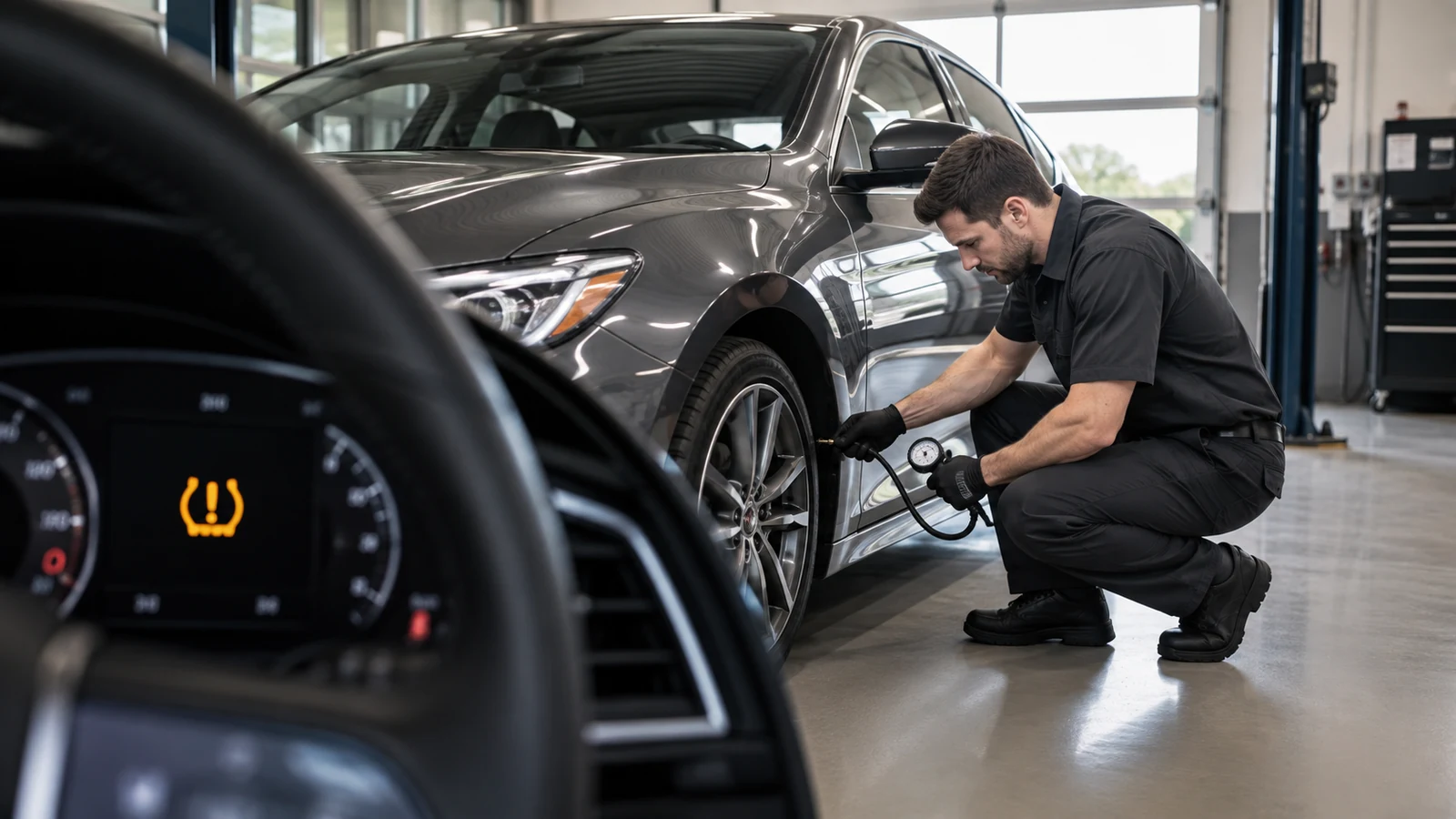
A tire pressure light that keeps returning is more than an annoying dashboard warning. It can point to low pressure, a slow leak, temperature changes, or a problem with the tire pressure monitoring system.
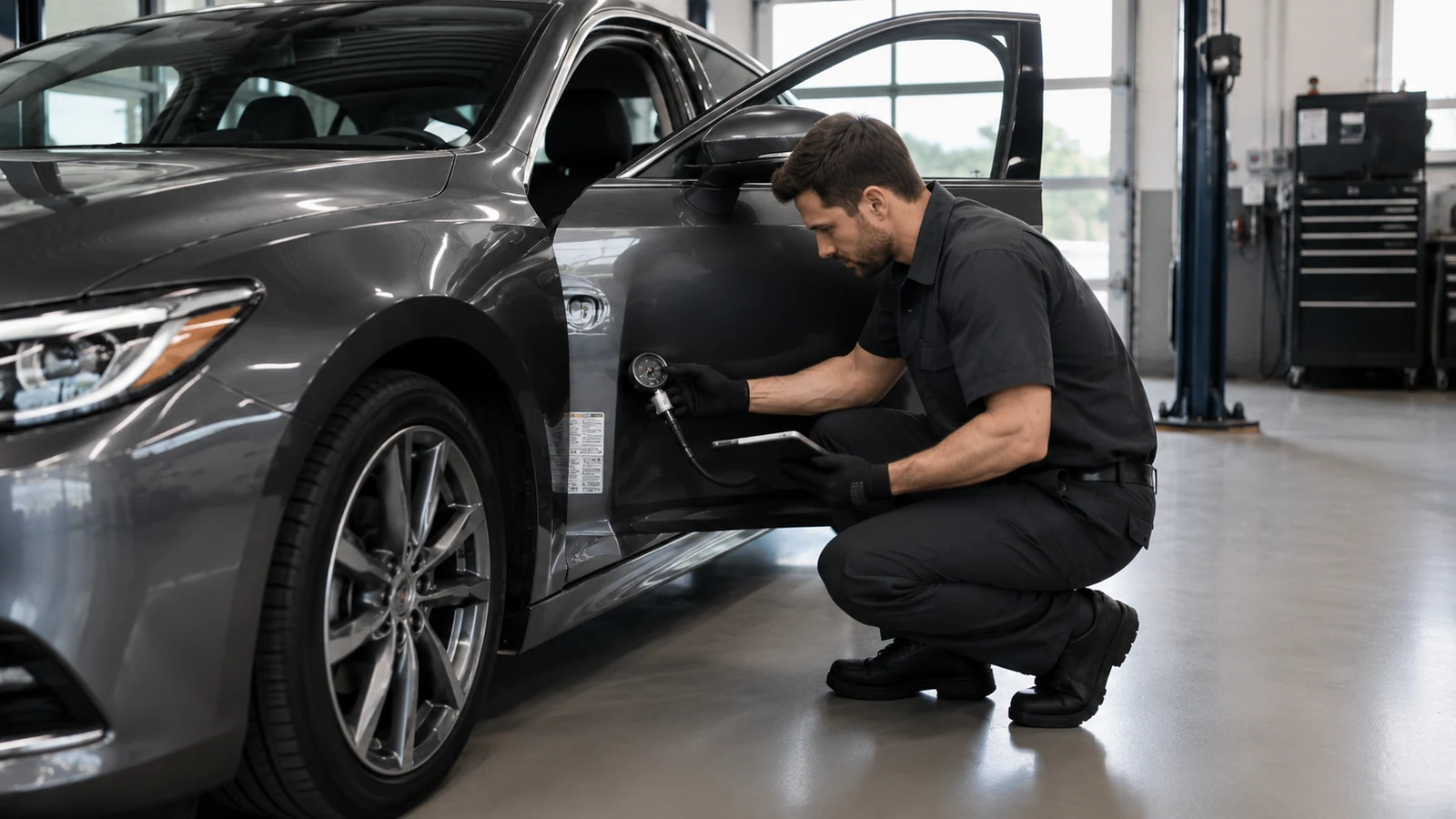
Start by checking cold tire pressure against the PSI listed on the driver-side door placard. Don’t use the maximum pressure printed on the tire sidewall as your target.
The pattern of the warning matters. Below, you’ll learn what repeated TPMS warnings usually mean, how to narrow down the cause, and when adding air is no longer enough.
Why Does My Tire Pressure Light Keep Coming On: 7 Causes to Check First
Your tire pressure light keeps coming on because the system is repeatedly detecting low pressure or a TPMS-related fault. Cold weather can push marginal pressure below the warning point, while punctures, valve leaks, wheel-sealing problems, and sensor faults can keep the warning on. The fastest diagnosis starts with accurate cold PSI readings and the warning light’s behavior.
| What you notice | Likely direction | Best next check |
|---|---|---|
| Light appears on cold mornings | Pressure near warning threshold | Measure all tires cold |
| One tire repeatedly loses PSI | Slow air leak | Inspect tire, valve, bead, and wheel |
| All tires read correctly | TPMS or calibration issue | Check warning-light behavior |
| Light flashes, then stays on | TPMS malfunction | Diagnose the monitoring system |
| Light returns soon after adding air | Leak or incorrect pressure setting | Recheck cold PSI and compare tires |
| Warning follows tire service | Possible relearn or sensor issue | Check vehicle-specific TPMS procedure |
Start With a Cold PSI Check
Before blaming a sensor, get a reliable baseline. NHTSA recommends checking tires when they’re cold, generally after the vehicle has been parked for at least three hours. The correct PSI is listed on the vehicle’s Tire and Loading Information label, commonly on the driver-side door area, or in the owner’s manual.
Check every road tire with the same accurate gauge. Write the readings down rather than relying on memory.
If the placard calls for 35 PSI and one tire measures 29 while the others are near 35, that difference matters. Inflate the low tire correctly, then check it again later under similar cold conditions.
A TPMS warning shouldn’t replace manual pressure checks. NHTSA notes that TPMS generally warns after a tire becomes significantly underinflated, so the system isn’t designed to tell you every tire is at its ideal maintenance pressure.
Cold Weather Lowers Tire Pressure
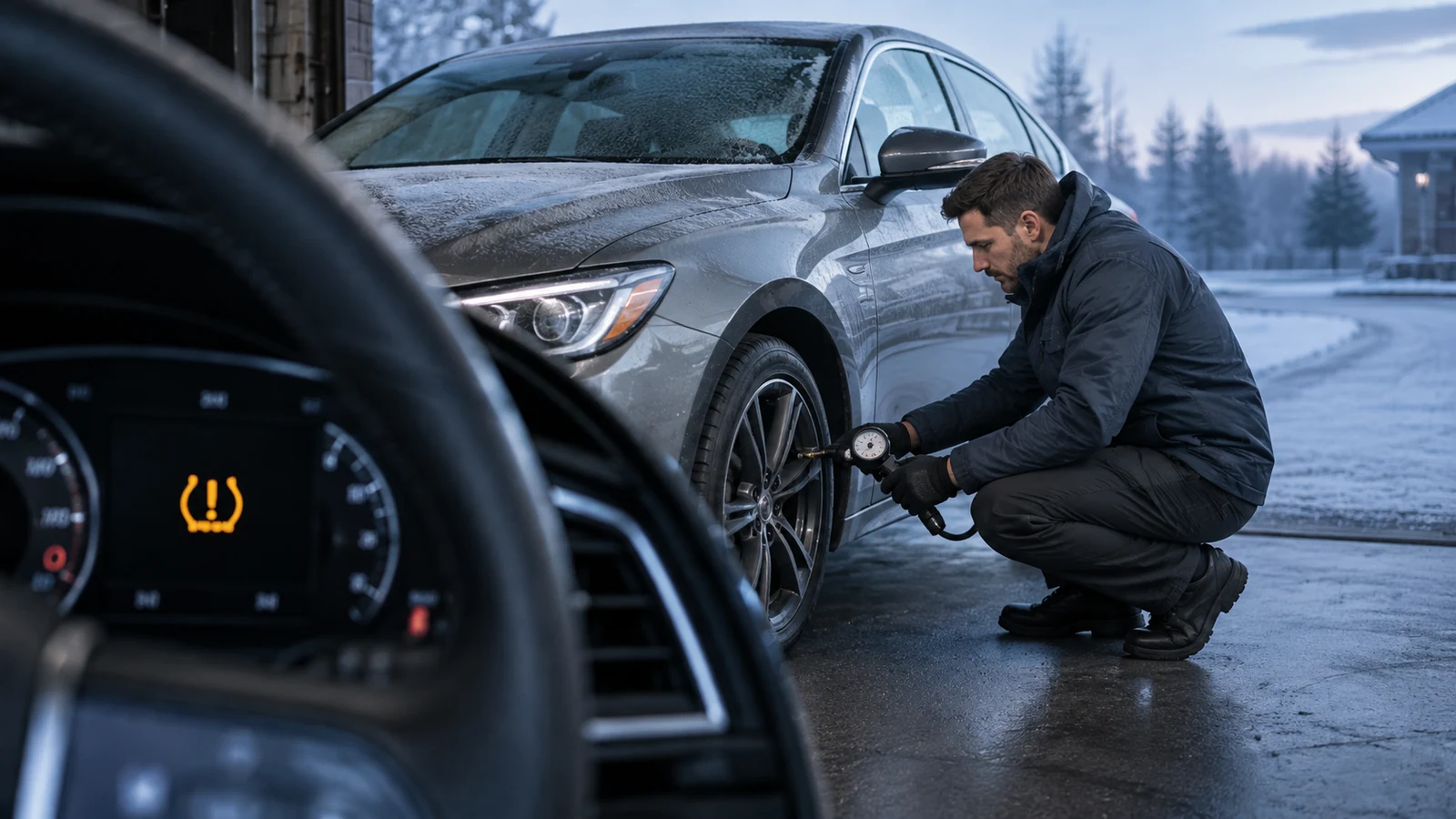
A common pattern is simple: the light appears during a cold morning, then disappears after driving.
As outdoor temperature falls, tire pressure falls too. Michelin states that pressure can drop by about 1 PSI for every 10°F decrease in temperature. A tire that was already close to the warning threshold can therefore trigger the TPMS after an overnight temperature drop.
Driving warms the tire and raises its pressure. That can move the reading back above the system’s warning threshold, making the dashboard light disappear.
Don’t treat that disappearance as proof that nothing is wrong. NHTSA specifically advises checking the tires when a TPMS warning goes on and off during cold conditions.
Set pressure to the cold PSI specification, not a warmed-up reading taken after a drive.
A Slow Puncture Keeps Losing Air
If the same tire needs air every few days or weeks, temperature probably isn’t the entire explanation.
A small puncture can release air slowly enough that the tire still looks normal. Michelin identifies accidental punctures as one cause of continuing pressure loss and notes that tires also lose some pressure naturally over time.
Track each tire separately. If three tires remain nearly unchanged while one repeatedly drops several PSI, focus the inspection on that wheel position.
Don’t make repeated inflation your long-term repair strategy. A tire that can’t maintain its specified pressure needs inspection to find the leak source.
This is where structured diagnosis matters. A good diagnostic flowchart helps separate evidence from assumptions, especially when several possible causes produce the same dashboard warning.
The Valve Can Leak Slowly
The tire itself isn’t the only place air can escape.
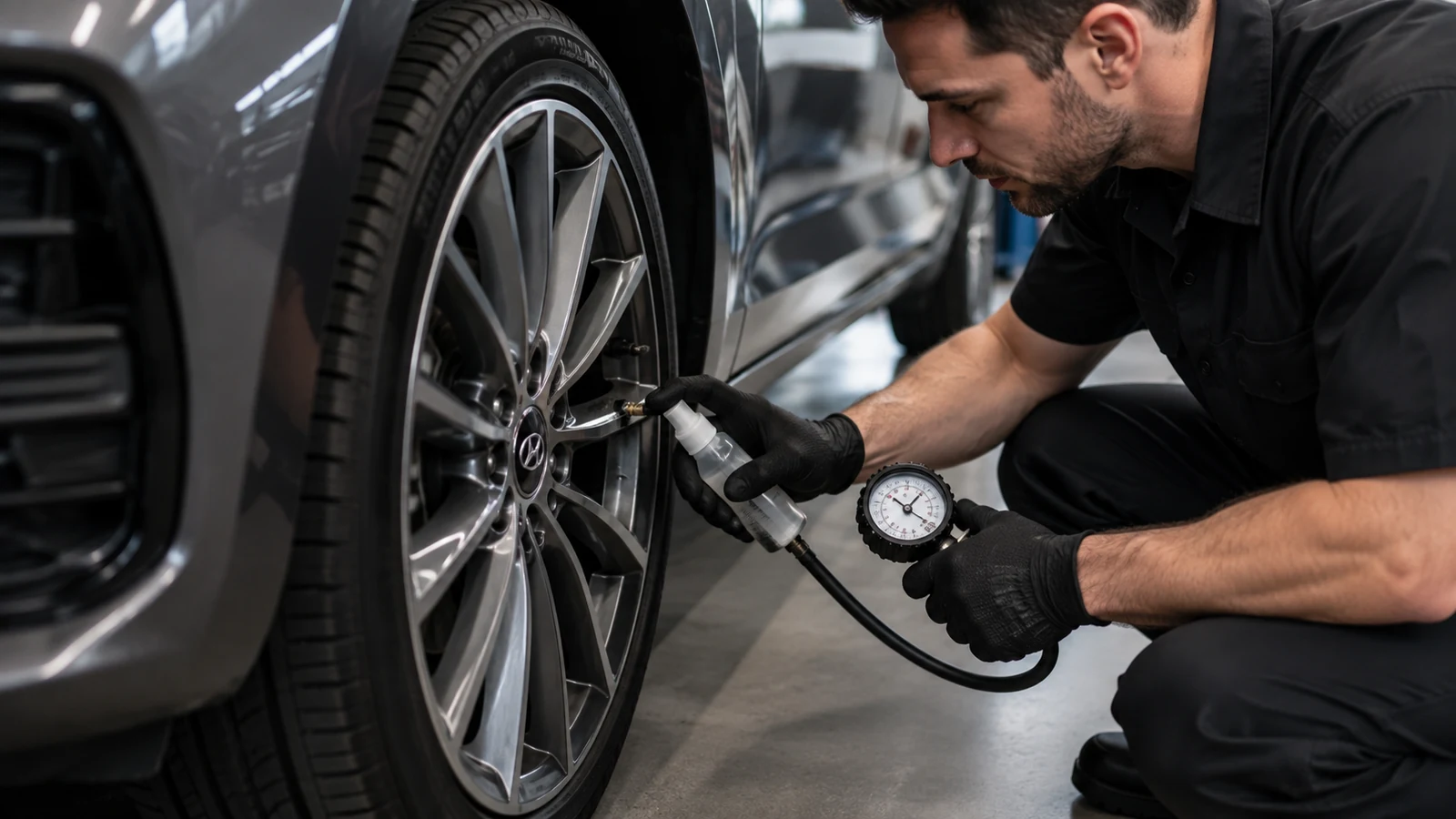
The valve stem and valve components also form part of the tire’s sealing system. Michelin lists defective valves as one condition that can contribute to pressure loss.
A valve-related leak can be confusing because the tread may have no obvious puncture. You add air, the warning disappears, and several days later the same tire is low again.
Compare pressure loss by wheel position. If one tire consistently loses pressure while the others stay stable, ask them to check the valve and its sealing area along with the tire.
This approach reduces the chance of replacing a tire unnecessarily when the real problem is elsewhere in the wheel assembly.
The Bead or Wheel Can Lose Air
Air can also escape where the tire seals against the wheel.
Michelin identifies rim condition as another factor that can contribute to pressure loss. Damage or sealing problems around the tire-to-wheel interface can therefore create a recurring low-pressure condition even when there is no obvious object in the tread.
This possibility matters more when a tire repeatedly loses air, but a basic tread inspection finds nothing obvious.
Tell the technician how quickly the pressure drops and which wheel is affected. That information helps narrow the inspection instead of turning the visit into a parts-guessing exercise.
If you’re diagnosing recurring automotive problems yourself, understanding how to avoid replacing the wrong part is especially useful when several components could create similar symptoms.
A TPMS Fault Changes the Pattern
A solid tire pressure warning and a flashing warning don’t always mean the same thing.
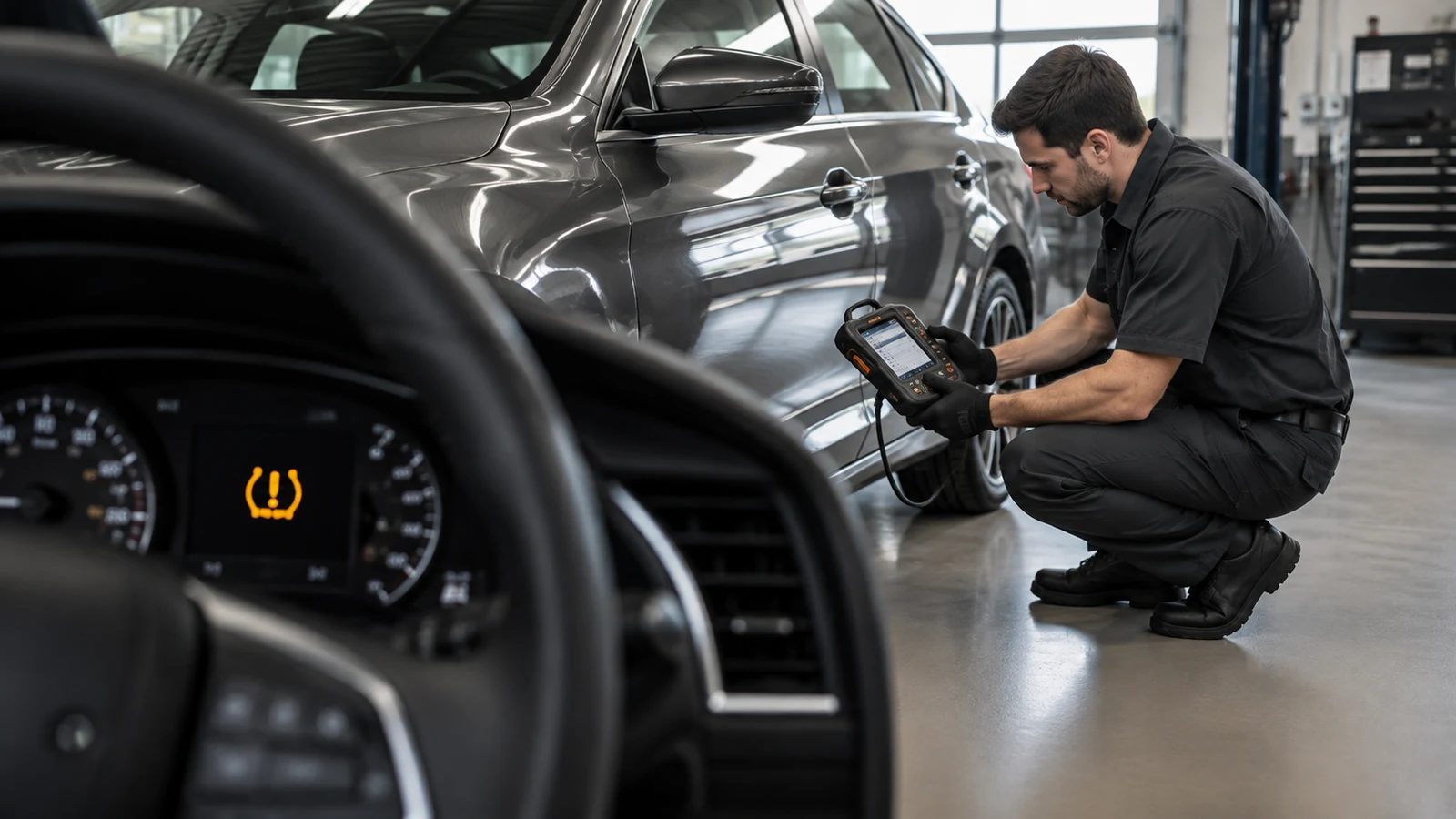
NHTSA says a TPMS malfunction may be indicated when the warning symbol flashes for roughly 60 to 90 seconds and then remains illuminated. The sequence can repeat on later vehicle startups until the malfunction is corrected.
That pattern should change your diagnostic direction. Instead of repeatedly adding air to tires that already measure correctly, investigate the monitoring system.
Depending on the vehicle, TPMS can use pressure sensors or infer a problem through wheel-speed and other vehicle data. NHTSA recognizes both direct and indirect monitoring approaches.
If sensor data appears suspicious, test a suspected sensor before replacing it. Systematic testing is more useful than assuming every persistent TPMS light means a failed wheel sensor.
The System May Need a Relearn
A warning that begins after tire or wheel service deserves extra context.
Some vehicles use vehicle-specific TPMS reset, initialization, or relearn procedures after certain sensor or wheel changes. The exact process varies, so the owner’s manual or factory service information should control the procedure rather than a generic sequence.
First, confirm the actual pressure in every tire. Don’t use a reset to hide genuinely low pressure.
Next, establish when the warning started. If it appeared immediately after tire rotation, wheel replacement, sensor work, or other tire service, that timing gives the technician useful diagnostic information.
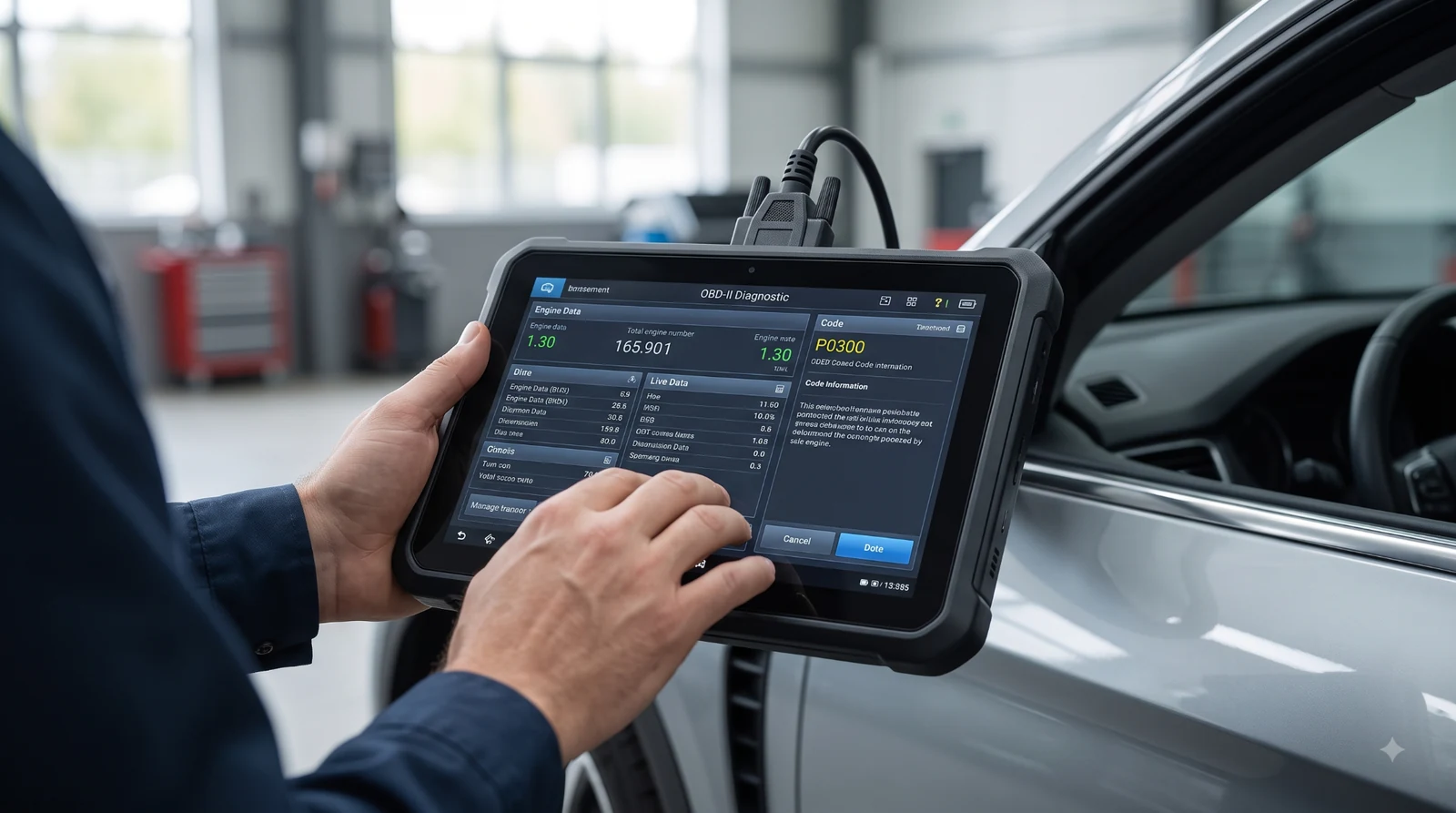
If the system stores diagnostic information, use trouble codes as a starting point, then confirm what the code means for that specific vehicle before replacing anything.
One Tire Was Set Incorrectly
Sometimes the repeated warning comes from a simpler problem: the tire was never inflated to the correct specification.
The number molded into a tire’s sidewall isn’t the vehicle’s normal inflation target. NHTSA instructs drivers to use the vehicle manufacturer’s recommended cold pressure from the tire placard or owner’s manual.
Also check whether the front and rear specifications differ. Don’t assume every vehicle calls for the same PSI in all four positions.
After adding air, recheck each tire with your gauge. A compressor’s display and your handheld gauge may not always show exactly the same reading, so consistent measurement matters.
Then monitor the tires again when cold. If the pressure stays stable and the light stays off, the original issue may have been simple underinflation.
Know When to Stop Driving
Don’t judge tire pressure by appearance alone. NHTSA warns that underinflated tires can be difficult to identify visually and recommends using an accurate gauge.
If the warning appears, inspect the tires and check pressure as soon as it is safe to do so.
A visibly damaged tire, a tire that is rapidly losing air, unusual handling, or a tire that won’t hold pressure needs prompt professional attention. Proper pressure affects tire durability, vehicle handling, and safety.
Don’t keep driving just because the TPMS light has temporarily turned off. A warming tire can raise pressure enough to change the warning without correcting the underlying reason the tire was low.
The useful question is not just, “Did the light go away?” It is, “Did every tire maintain the correct cold pressure?”
What to Do When the Light Returns
Use the same diagnostic order each time instead of guessing.
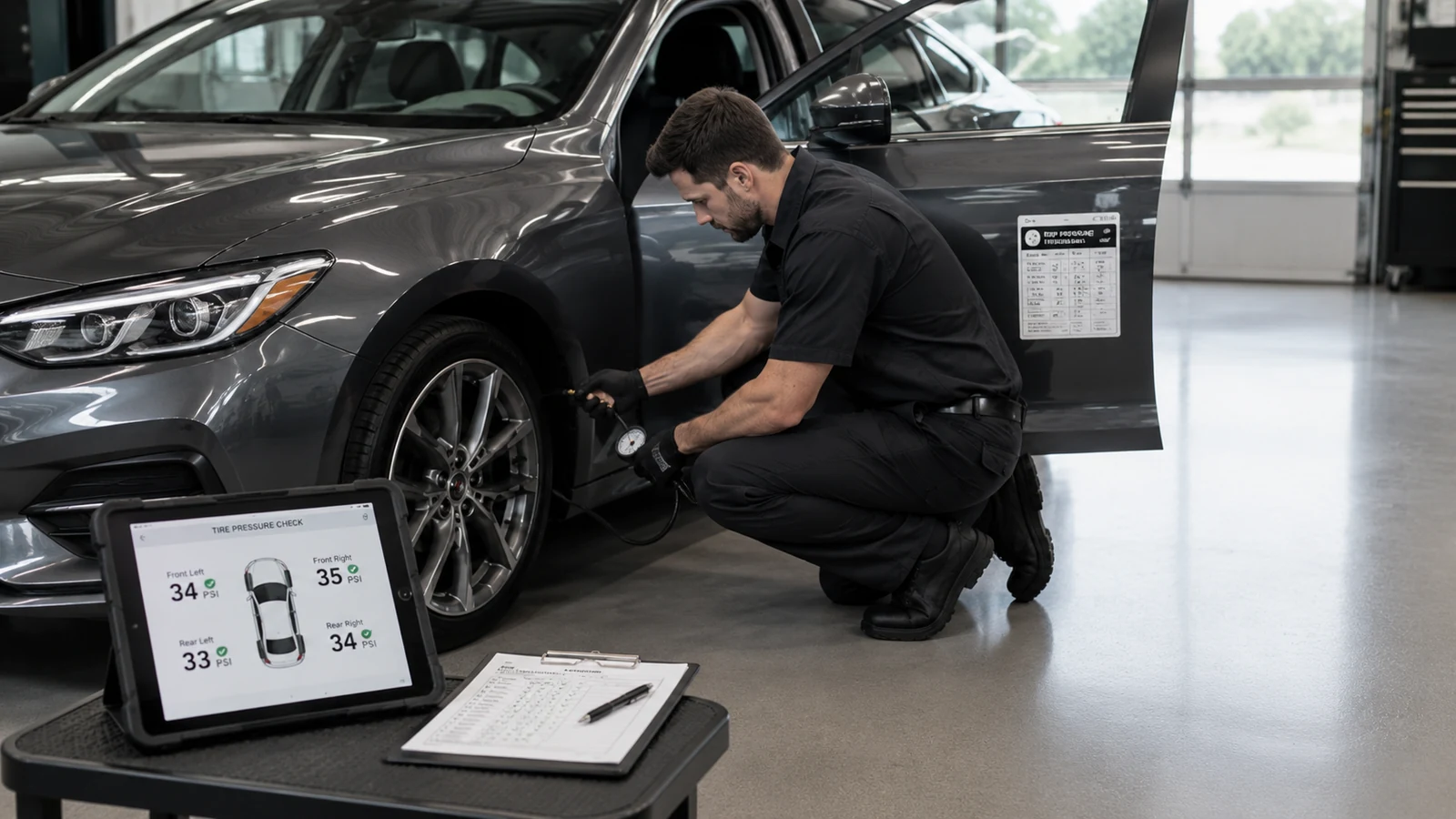
First, record all four cold PSI readings and compare them with the door placard. Correct any low tire, then note which position needed air. NHTSA recommends monthly cold-pressure checks even on vehicles equipped with TPMS.
Second, watch for a pattern. A general pressure drop after colder weather suggests a different problem from one tire repeatedly losing air.
Third, distinguish a solid low-pressure warning from a warning that flashes before staying illuminated. That difference can tell you when to shift from tire-pressure diagnosis toward TPMS system diagnosis.
Finally, don’t replace parts until the evidence points to them. A recurring tire pressure light can come from pressure, a leak, the wheel or valve, or the monitoring system itself.
Following that sequence gives you a much better answer to why your tire pressure light keeps coming on, and it prevents a simple warning from becoming an expensive guessing game.
Commonly Asked Questions About Tire Pressure Light Keep Coming On
How long should the TPMS light stay on after adding air?
After you set every tire to the vehicle manufacturer’s recommended cold pressure, the light may not disappear instantly. Some vehicles update after a short drive, while others need a reset or relearn procedure described in the owner’s manual.
If the light remains on, don’t assume the pressure is correct; verify all tires again with an accurate gauge when cold. Also check for a tire that is slowly losing air.
If the warning flashes for about 60 to 90 seconds before staying on, NHTSA says that pattern can indicate a TPMS malfunction. At that point, pressure checks alone may not resolve the warning, so system diagnosis is the next step.
Can a tire lose pressure without a nail in it?
Yes. A puncture is only one possible source of air loss. Pressure can drop gradually through normal permeation, and Michelin notes that tires may naturally lose around 1 PSI per month. Leaks can also develop at the valve, valve core, wheel rim, or tire bead area.
Temperature changes can make a marginally low tire appear worse, especially after a cold night. If one tire repeatedly loses more pressure than the others, treat that pattern as evidence of a leak rather than topping it off repeatedly.
Record the cold PSI, refill it to the placard value, and compare the reading again later. A persistent difference deserves a proper tire and wheel inspection.
Should all four tires have the same PSI?
Not always. The correct target is the pressure listed on the vehicle’s Tire and Loading Information label or in the owner’s manual, not a number copied from another vehicle or from the tire sidewall.
Some vehicles specify the same cold PSI front and rear, while others use different front and rear pressures. NHTSA recommends following the vehicle manufacturer’s placard pressure and checking tires cold. If one axle has a different specification, setting every tire to one number can leave some tires underinflated or overinflated.
Check the label first, then adjust each position to the correct pressure. If your vehicle has changed wheel or tire sizes, confirm the correct specification for that setup before relying on the dashboard warning alone.
Does nitrogen stop the tire pressure light from coming back on?
No. Nitrogen does not remove the need to check tire pressure or diagnose leaks. A tire can still lose pressure through a puncture, valve problem, bead leak, wheel damage, or other sealing issue.
Michelin also advises that nitrogen-filled tires still require regular pressure checks. The TPMS warning still responds to pressure or system conditions, not simply to the type of gas inside the tire.
If the light keeps returning, use the same process you would with ordinary compressed air: verify cold PSI against the door placard, compare all four tires, look for repeated loss in one position, and investigate the TPMS if the lamp flashes before remaining illuminated.
Can the spare tire trigger the TPMS warning?
It depends on the vehicle. Some systems monitor only the road wheels, while certain vehicles may also monitor a full-size spare. That means the owner’s manual or vehicle-specific service information is the best source for confirming the TPMS layout.
Even when a spare doesn’t trigger the dashboard warning, its pressure still matters. NHTSA recommends including spare tires in routine pressure checks, and Michelin also advises checking spare-tire inflation periodically.
If all four road tires are correctly inflated and the warning persists, confirming the spare’s pressure and the vehicle’s monitoring configuration can prevent wasted diagnostic time. If the lamp flashes before staying on, focus on a TPMS malfunction rather than pressure alone.