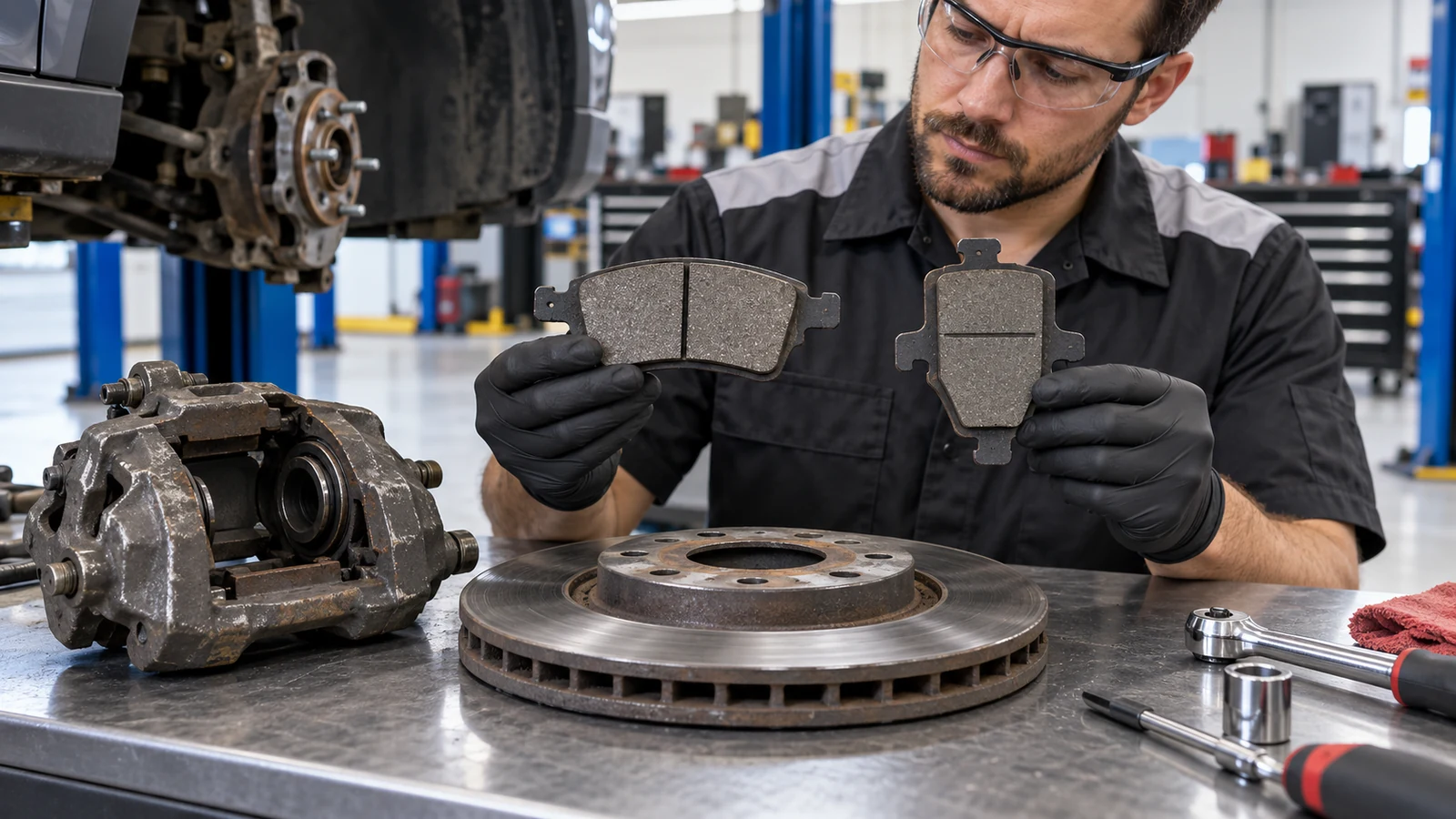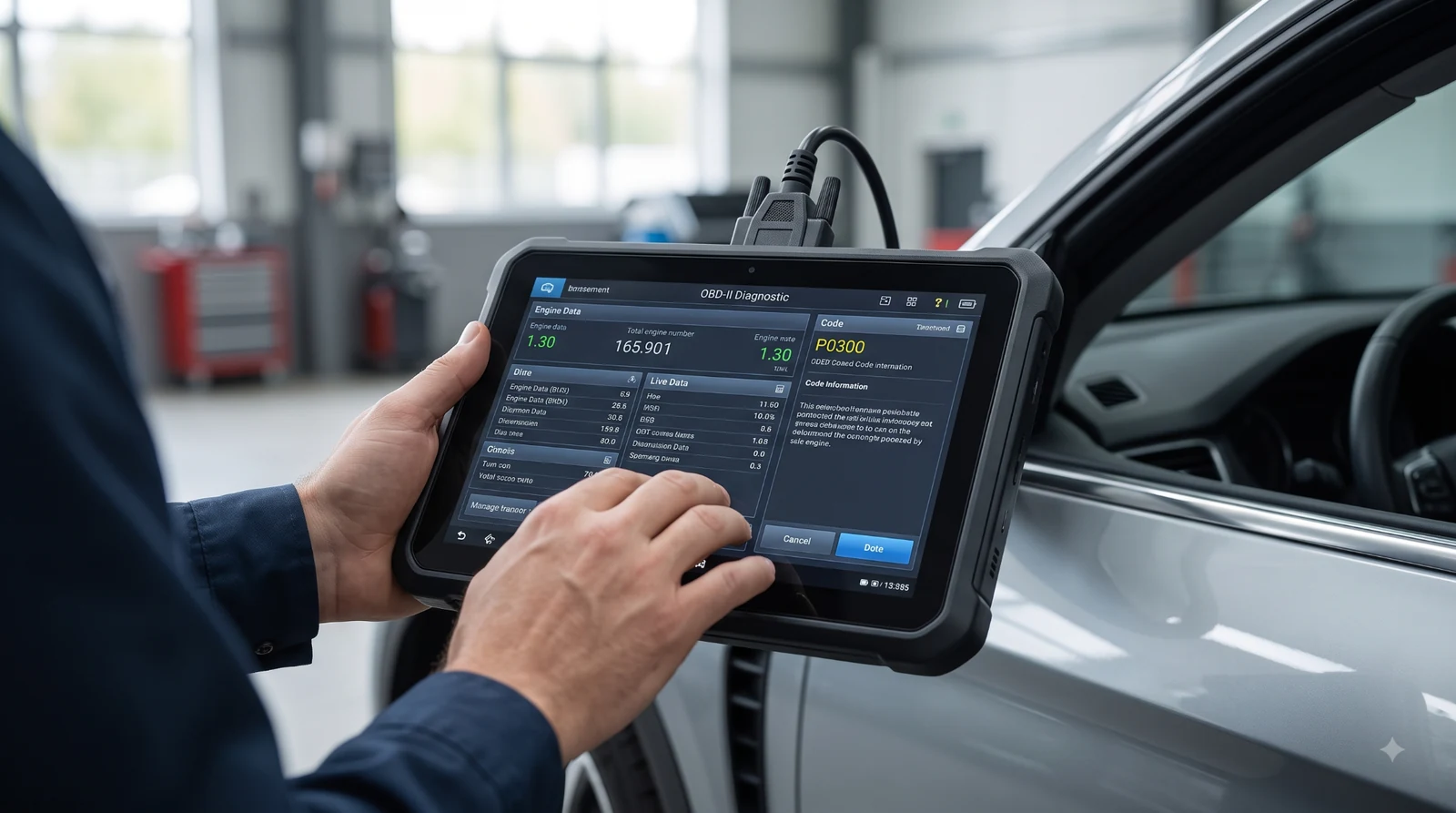
A P0300 code means your engine computer has detected random misfires that affect multiple cylinders or don’t stay tied to one cylinder. The car may idle rough, hesitate, lose power, or illuminate the check-engine light. Guessing at parts can make the repair expensive fast.
The best first clue is usually the ignition system. Worn spark plugs and weak coils deserve early attention, but P0300 does not prove either one has failed.
The right path is to compare scan data, operating conditions, ignition condition, fuel delivery, air leaks, and engine mechanical health. That sequence narrows the fault before you buy parts.
Most Common Cause of a P0300 Code: Start With Spark
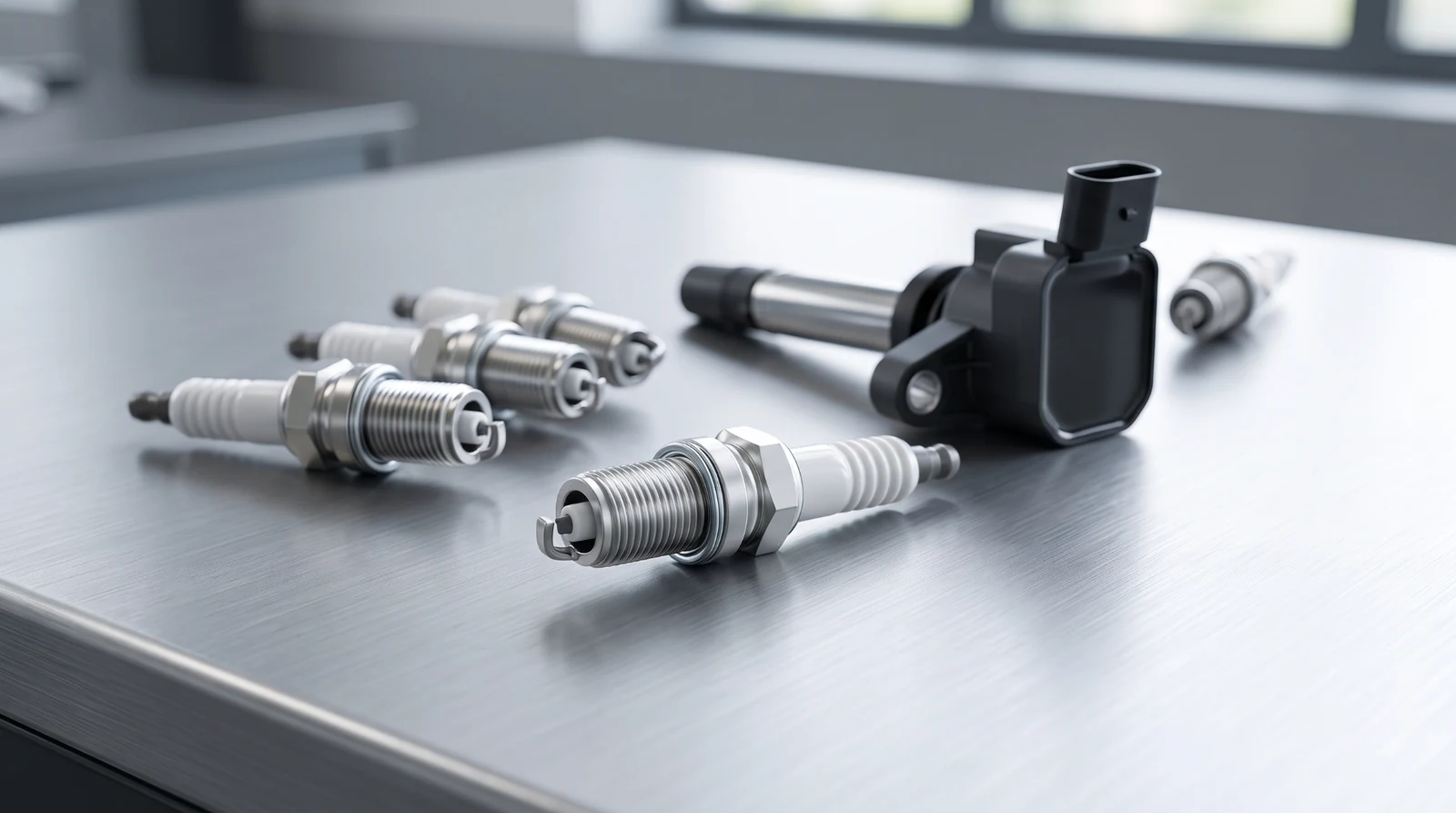
There is no single cause that wins on every engine. Still, ignition faults are usually the most productive place to begin, especially worn or fouled spark plugs and weak ignition coils. P0300 can also come from fuel delivery, intake-air problems, injector faults, timing issues, or low compression, so the goal is to test by pattern instead of replacing parts by guesswork.
| What you notice | Likely area | First useful check | What the result tells you |
|---|---|---|---|
| Rough idle, overdue tune-up | Spark plugs | Inspect condition and gap | Worn or fouled plugs can misfire across cylinders |
| Misfire worsens under load | Coils or spark delivery | Compare misfire counts and coil behavior | Weak ignition becomes more suspicious |
| Rough idle with positive fuel trim | Vacuum or intake leak | Inspect hoses, ducts, and leak points | Extra unmetered air may create a lean misfire |
| Misfire under load on several cylinders | Fuel delivery | Verify pressure and volume to OEM spec | Low supply can affect multiple cylinders |
| Ignition and fuel tests pass | Mechanical condition | Compression or leak-down test | Compression, valve, or timing faults move higher |
Why Ignition Problems Lead the List
P0300 is a misfire code, not a parts code. A cylinder needs adequate spark, the correct air-fuel mixture, and sufficient compression at the correct time. If combustion becomes unstable across more than one cylinder, the computer may store P0300 rather than only a cylinder-specific P0301, P0302, or similar code.
For a general first pass, ignition is the most practical category to inspect. Spark plugs can wear, foul, overheat, or develop excessive gap, while coils can develop faults that show up under certain operating conditions. AutoServicePlus places ignition and fuel delivery among the primary P0300 suspects and checks plugs and coil operation early in its misfire process.
Start with the service history. If the plugs are beyond the manufacturer’s interval, visibly fouled, damaged, or incorrectly gapped, that evidence matters. Do not replace coils simply because they sit above the plugs. Test or compare coil operation first.
For vehicle-specific steps, the OEM misfire diagnostic process shows how factory-manual diagnosis sequences spark, injector, compression, and fuel-pressure checks.

What P0300 Actually Tells You
P0300 means the control module detected a random or multiple-cylinder misfire pattern. It does not identify the failed component. A fuel-supply problem, ignition fault, intake problem, injector issue, or mechanical fault can create the same code.
Pull every stored and pending code before clearing anything. A P0300 paired with P0301 can focus attention on cylinder 1. Freeze-frame information can also show whether the fault appeared at idle, during cruise, on a cold start, or under heavier load. AutoServicePlus recommends recording code and freeze-frame information before following the diagnostic path.
That is why a scanner should start the diagnosis, not end it. AutoServicePlus explains the same principle in its guide on how to read trouble-code steps in factory manuals: the code identifies where diagnosis begins, while testing confirms the actual fault.

Run These 5 Checks in Order
Diagnosing a P0300 code requires a systematic approach to identify the root cause before replacing any parts. By following this sequence of diagnostic checks, you can isolate the fault based on evidence rather than guesswork.
1. Record codes, freeze frame, and misfire data.
Do this before clearing the check-engine light. Note engine speed, load, coolant temperature, fuel trims, and any cylinder-specific misfire counters your scan tool provides. You are looking for a pattern, not simply the presence of P0300.
If one cylinder has far more misfire events than the others, treat that cylinder as a lead. If several cylinders rise together, investigate systems they share, such as fuel supply, intake air, ignition feeds, grounds, or mechanical timing.
2. Inspect spark plugs and ignition parts.
Follow the vehicle’s service procedure when accessing the plugs. Check them for excessive gap, heavy deposits, cracked insulation, oil contamination, or obvious damage. Compare the plugs across cylinders because one that looks substantially different can reveal a localized problem.
Then test coil operation using the vehicle-specific method. Some diagnoses can compare components between cylinders, while others require scan-tool or electrical tests. The objective is evidence before replacement.
3. Check for unmetered air.
An intake or vacuum leak can disturb the air-fuel mixture enough to create unstable combustion, particularly at idle. Inspect damaged intake ducts, disconnected hoses, PCV plumbing, brake-booster vacuum connections, and intake sealing areas.
Fuel-trim behavior can help narrow the direction. Compare the readings at the operating conditions where the misfire appears, and use the manufacturer’s specifications rather than treating one generic value as a universal limit.
4. Verify fuel delivery.
If the misfire becomes stronger during acceleration or higher engine load, confirm that fuel pressure and delivery meet the exact vehicle specification. Shared fuel-delivery problems can affect several cylinders and therefore produce a random or multiple-cylinder misfire pattern.
Do not assume the injectors are faulty because P0300 is present. Compare the available injector data, fuel pressure, and cylinder contribution information. If diagnosis moves into electrical measurements, AutoServicePlus’s guide to factory sensor testing methods explains how vehicle-specific power, ground, signal, and specification checks should be approached.
5. Test compression and timing.
Move here when ignition, intake, and fuel checks do not explain the pattern, or when the engine has a steady mechanical miss. Compression testing can identify a weak cylinder, while additional mechanical tests can help determine where that cylinder is losing efficiency. AutoServicePlus includes compression testing in its factory-style misfire diagnostic sequence.
If several cylinders show an unusual mechanical pattern, valve timing or another shared mechanical condition deserves attention. Compare every measurement with the exact engine’s service information because test conditions and acceptable values vary by design.
Use Fuel Trim to Split the Search
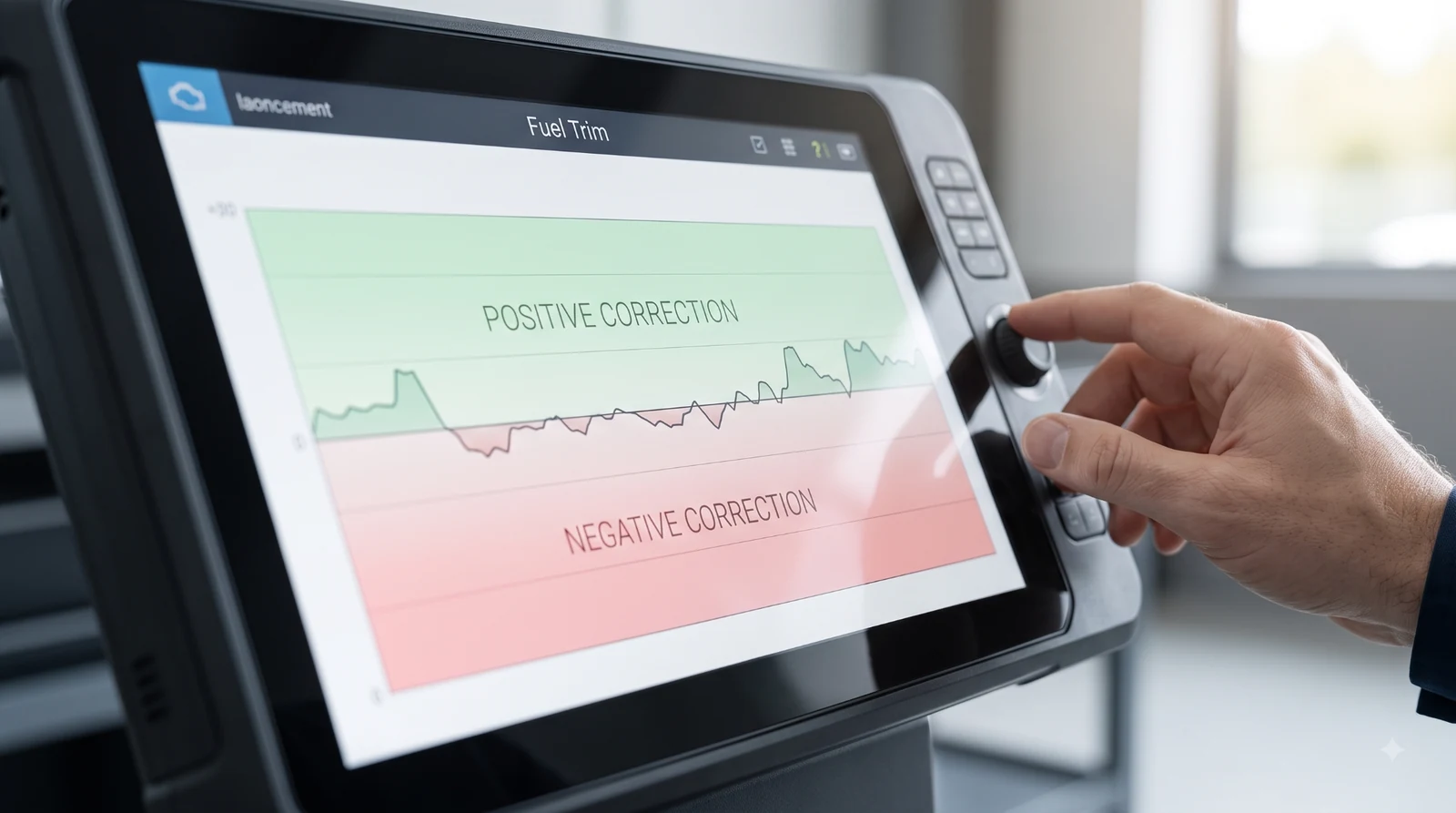
Fuel trim can help decide whether P0300 is leaning toward an air-fuel problem. Positive correction means the engine computer is adding fuel, while negative correction means it is reducing fuel. The change across different operating conditions is usually more informative than one isolated reading.
If the unusual correction is strongest around idle, investigate unmetered air more closely. If the misfire instead becomes worse as fuel demand rises, fuel delivery deserves additional testing. If fuel-related data looks reasonable while one cylinder’s misfire count rises, return to that cylinder’s spark, injector, and compression.
Treat fuel trim as diagnostic evidence, not a universal pass-or-fail rule. The factory procedure should provide the final specifications.
When Compression Becomes the Suspect
Mechanical problems move higher on the list when a misfire remains after ignition, air, and fuel checks pass. Valve sealing problems, worn internal components, valve-train faults, incorrect cam timing, or other compression losses can prevent a cylinder from burning the mixture correctly.
The important step is confirmation. Use the compression and mechanical tests specified for the engine instead of assuming an internal fault from the code alone.
When following OEM service information, factory diagnostic flowcharts help keep tests in the intended sequence and reduce the risk of skipping a decision branch.

What Not to Replace First
Do not treat P0300 as permission to install a full set of coils, injectors, or sensors. A diagnostic code identifies a detected condition, and AutoServicePlus’s factory-manual guidance emphasizes confirming measurements before replacing components.
Also avoid clearing codes before recording freeze-frame and pending-code information. Removing that evidence can make it harder to reproduce the conditions that originally triggered the fault.
A better rule is simple: replace a component after the symptom, scan data, inspection, and test result support the same diagnosis. If the evidence conflicts, continue testing.
When You Should Stop Driving
A steady check-engine light with a mild misfire still deserves prompt diagnosis, but a flashing malfunction indicator during an active misfire is more urgent. Honda’s current owner information states that its malfunction indicator blinks when cylinder misfire is detected and warns that continued driving with certain emissions-system faults can cause damage.
If the engine shakes heavily, power drops sharply, or the check-engine light flashes, stop in a safe place and arrange proper diagnosis rather than continuing to drive unnecessarily. A severe active misfire deserves immediate attention.
Commonly Asked Questions About the Common Cause of a P0300 Code
Can bad spark plugs cause a P0300 code?
Yes. Worn, fouled, damaged, or incorrectly gapped spark plugs can cause misfires across multiple cylinders and contribute to P0300. They are especially suspicious when the plugs are overdue for service, the engine misfires more under load, or several plugs show similar wear.
Still, P0300 does not prove the plugs are bad. Inspect them and compare their condition with the manufacturer’s specifications.
If only one plug looks abnormal, investigate that cylinder for oil contamination, injector trouble, or compression loss. If the plugs are healthy, continue with coil testing, air-leak checks, fuel delivery, and mechanical testing instead of replacing more ignition parts by guesswork.
Can a vacuum leak trigger P0300?
Yes. A vacuum or intake leak can let unmetered air enter the engine, creating a mixture problem that becomes unstable enough to misfire. This may show up strongly at idle because the unwanted airflow can have a larger effect under low-airflow conditions.
Look for damaged intake boots, disconnected hoses, PCV plumbing faults, brake-booster vacuum leaks, and intake-manifold sealing problems. Scan-tool fuel trim can strengthen the diagnosis when interpreted against the vehicle’s specifications.
Compare readings at idle and other operating conditions. Confirm the leak using the vehicle’s approved diagnostic procedure before replacing sensors, coils, injectors, or other components that have not actually failed.
Can low fuel pressure cause random misfires?
Yes. Low fuel pressure or inadequate fuel delivery can create random or multiple-cylinder misfires because several cylinders depend on the same fuel supply. The problem may become more obvious during acceleration, hill climbing, or other higher-load conditions when the engine requires more fuel.
Possible causes include a fuel-delivery fault, pressure-control problem, electrical supply issue, or a condition affecting injector operation. Do not diagnose fuel pressure by sound or by P0300 alone.
Measure it under the conditions specified for the vehicle and compare the result with OEM data. If fuel pressure is correct, continue with injector operation, ignition, intake-air checks, and compression testing.
Why does P0300 appear only at idle or under load?
The operating condition is an important clue. A P0300 that is strongest at idle can move intake leaks, unstable fuel delivery, compression problems, or similar low-speed combustion faults higher on the list.
A misfire that appears mainly under load can make weak ignition or inadequate fuel delivery more suspicious because engine demand changes. Cold-only misfires create another useful pattern that should be compared with ignition, fuel, and mechanical data. Record freeze-frame information before clearing the code.
Then reproduce the same rpm, load, and temperature range during diagnosis when it is safe and appropriate. Matching the conditions that trigger the failure often narrows the search faster than testing every possible cause equally.
Can I clear P0300 and keep driving?
Clearing P0300 only removes stored diagnostic information; it does not repair the misfire. Before clearing anything, save freeze-frame data, pending codes, and available cylinder-misfire information because those details may reveal when and where the fault occurs.
If the check-engine light is steady and the vehicle can be moved safely, arrange diagnosis promptly and avoid unnecessary hard driving. If the light flashes, the engine shakes heavily, or power drops sharply, treat the problem as urgent and stop driving when it is safe.
Honda, for example, identifies a blinking malfunction indicator with detected cylinder misfire. Repeatedly clearing the code is not a substitute for finding and correcting the cause.