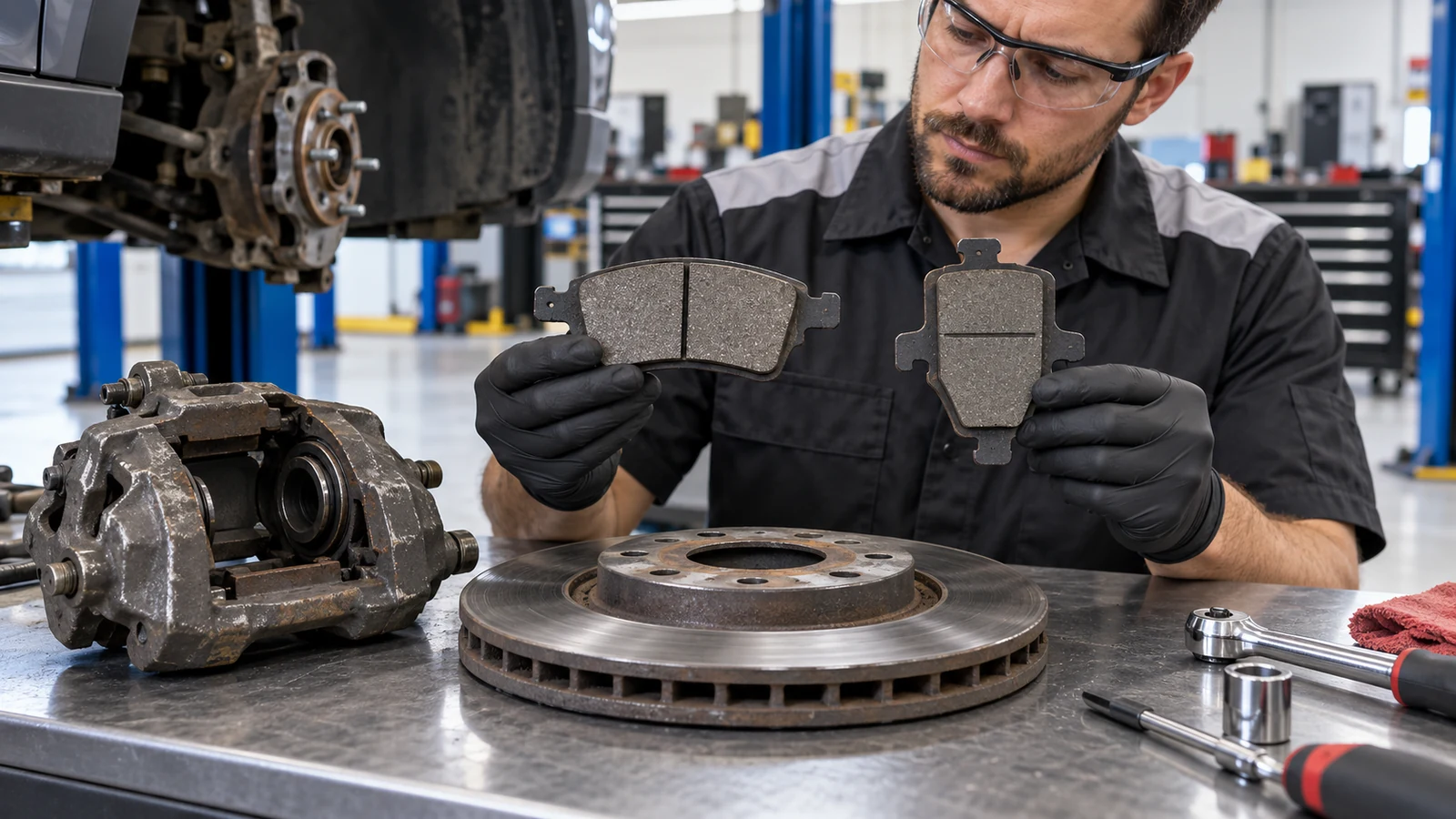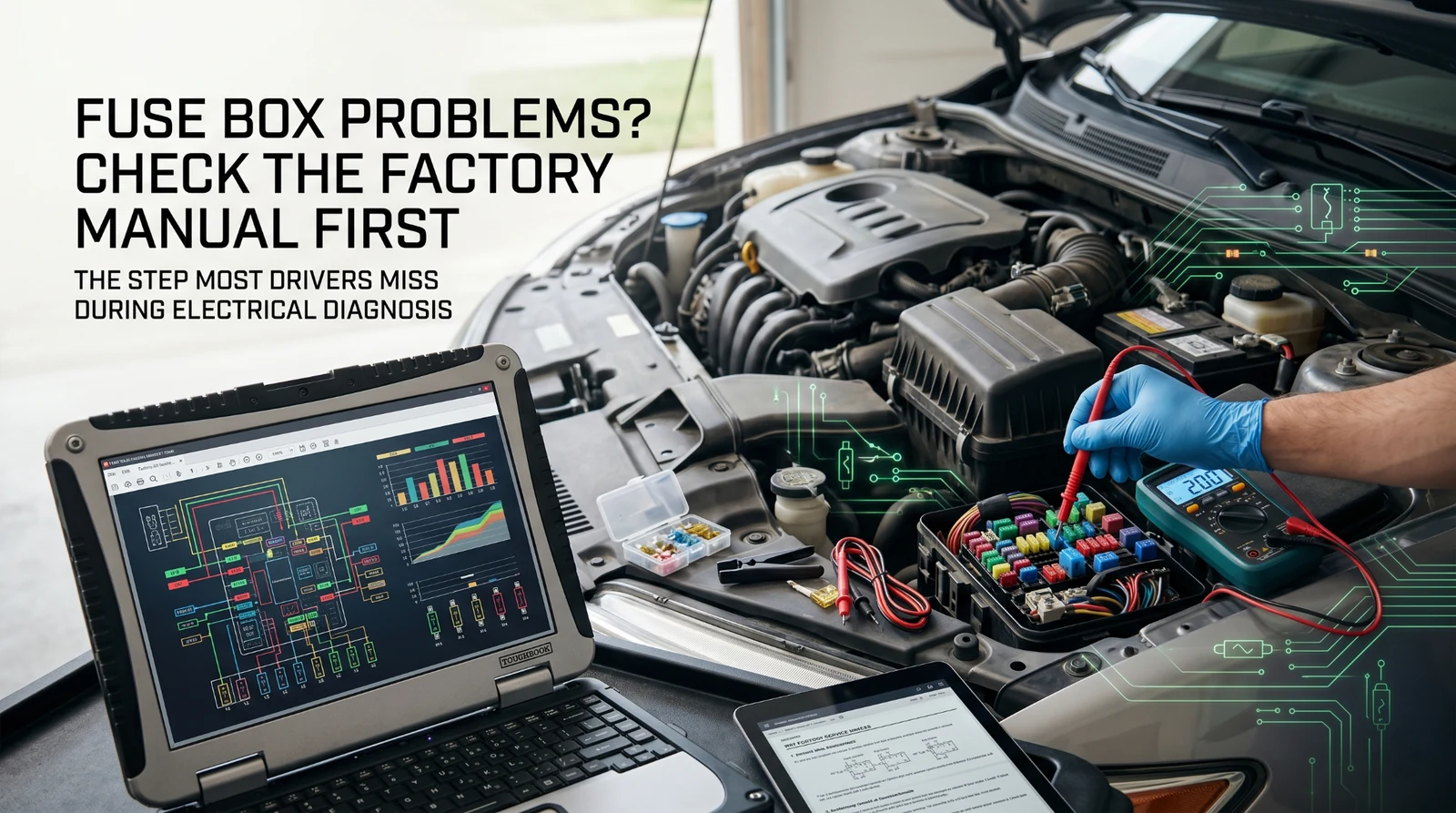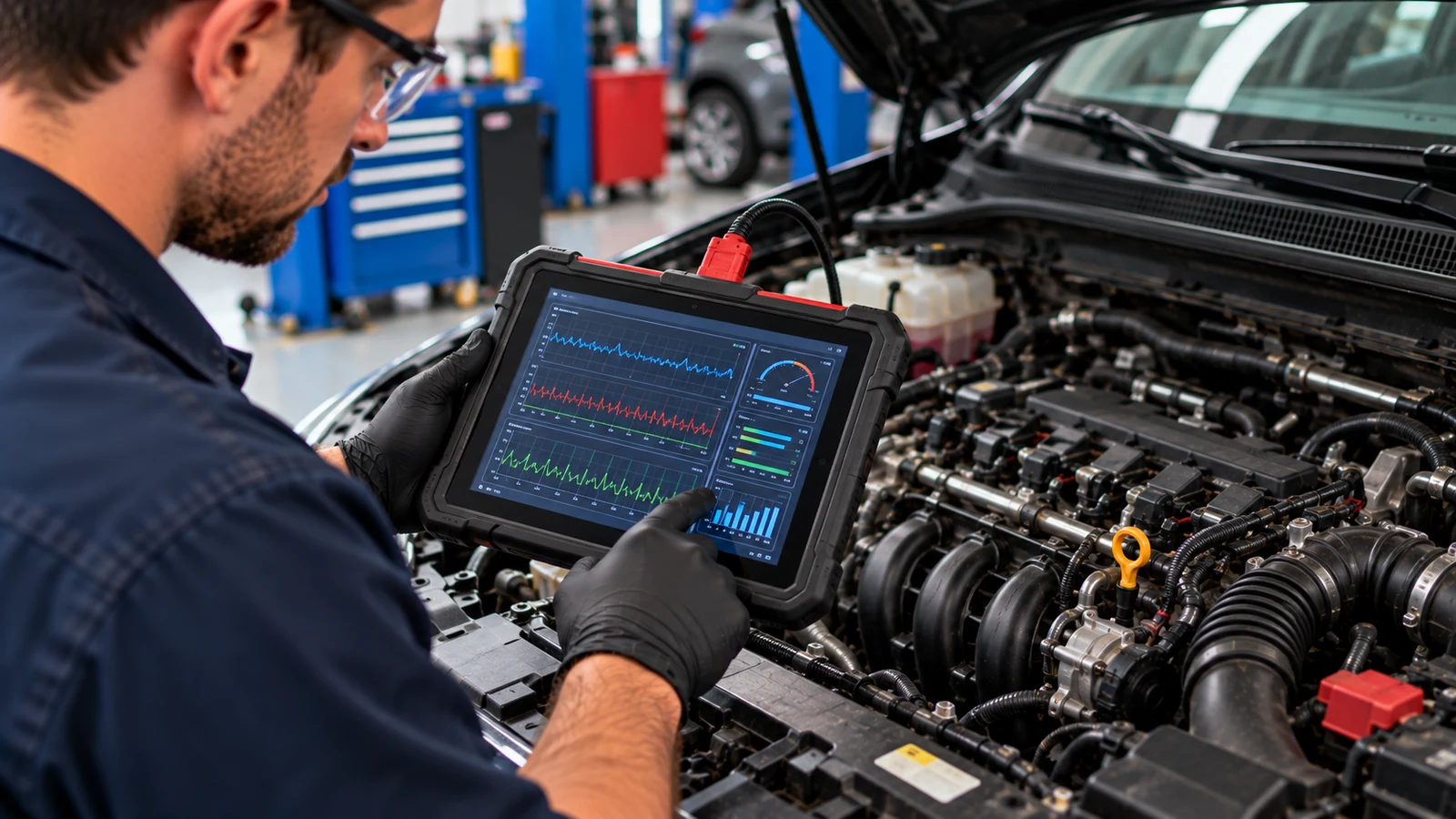
If you are asking, “Why is my engine idling rough or sputtering?”, the important thing to understand is that the shaking itself is only a symptom. Ignition faults, vacuum leaks, fuel delivery problems, incorrect sensor data, and internal engine problems can all make an engine stumble in similar ways.
Idle is especially sensitive because the throttle is nearly closed and the engine is operating with relatively little airflow. The engine control module, or ECM, must constantly adjust fuel delivery, ignition timing, and idle airflow to keep every cylinder contributing evenly. A problem that seems minor at cruising speed can become obvious when the vehicle is stopped.
The fastest route to the actual fault is not replacing common parts one after another. It is identifying when the symptom occurs, checking fault codes and live data, and then using targeted tests to separate ignition, air, fuel, and mechanical problems.
Key Takeaways
- A rough idle is commonly related to ignition misfires, unmetered intake air, fuel delivery problems, or incorrect sensor information.
- The timing of the symptom matters. Cold starts, warm idle, acceleration, refueling, humid weather, and accessory loads each provide useful diagnostic clues.
- Fuel trims, cylinder misfire counters, smoke testing, and fuel-pressure checks can narrow the fault before replacing parts.
- A flashing check engine light, repeated stalling, raw fuel smell, overheating or an oil-pressure warning should be treated as urgent.
- Vehicle-specific specifications matter. Firing order, fuel pressure, plug gap, relearn procedures, sensor limits, and idle speed can vary substantially between engines.
Start With the Symptom Pattern, Not a Parts List
Two vehicles can both shake at a traffic light while having completely different faults. Before opening the toolbox, note exactly how the engine behaves.
| Symptom pattern | First areas worth checking |
|---|---|
| Rough only during a cold start | Coolant-temperature input, leaking injector, vacuum leak, direct-injection intake deposits |
| Rough only after the engine is hot | Heat-sensitive coil, sensor fault, EGR problem |
| Rough immediately after refueling | EVAP purge valve or fuel contamination |
| Worse in wet or humid weather | Plug wires, coil boots or ignition insulation |
| Rough with A/C or electrical loads on | Idle control, charging voltage or accessory drag |
| Rough in Drive but smoother in Park or Neutral | Engine mounts, low idle speed or drivetrain load |
| Sputters mainly during acceleration | Ignition breakdown, fuel-pressure loss, restricted injectors or exhaust restriction |
| RPM repeatedly rises and falls | Vacuum leak, throttle-body contamination, idle-control fault or unstable sensor feedback |
This pattern-based approach is useful because a vacuum leak often has its greatest effect at idle, while a weak fuel pump may become much more obvious as engine load rises. A coil can also appear acceptable at light load but fail as cylinder pressure increases during acceleration.
What a Rough Idle Actually Means
A rough idle does not always mean the engine has a misfire or combustion problem. Understanding how the engine normally controls idle, along with checking for worn mounts or accessory loads, helps distinguish a true engine fault from vibration caused by other components.
How a Healthy Engine Maintains Idle
At idle, airflow through the engine is limited. Electronic throttle systems hold the throttle plate at a carefully controlled position, while older engines may use an idle air control valve or separate bypass passage.
The ECM monitors inputs such as engine speed, airflow, coolant temperature, and oxygen-sensor feedback, then continuously corrects fuel and spark. A smooth idle depends on each cylinder producing a reasonably even power contribution.
A cold engine may idle faster immediately after starting and then settle as it warms. That differs from an engine that shakes, misfires, repeatedly dips in RPM, or feels as though it is about to stall.
Make Sure the Vibration Is Really an Engine Problem
Not every vibration at a stop is a combustion fault. Worn engine or transmission mounts can transmit normal engine pulses into the body and make a healthy engine feel rough.
A mount-related vibration may be noticeably stronger in Drive than in Park or Neutral even though the tachometer remains stable.
Accessory loads can create a similar impression. When the air-conditioning compressor engages, the engine must compensate for the added load. If the vibration occurs only when the compressor runs, check the idle-control response and the accessory system instead of assuming a cylinder misfire.
A Practical Diagnostic Order for Rough Idle and Sputtering
A good diagnostic sequence moves from simple observations toward more invasive testing. That reduces the chance of buying coils, sensors, injectors, or throttle components that were never faulty.
A practical order is:
- Check oil and coolant levels, the air filter, intake ducting, and obvious loose hoses.
- Scan stored and pending diagnostic trouble codes before clearing anything.
- Record freeze-frame information and observe live data at idle.
- Check fuel trims and cylinder misfire counters.
- Smoke-test the intake if unmetered air is suspected.
- Isolate a misfiring cylinder using ignition and injector tests.
- Measure fuel pressure when the symptom becomes worse under load.
- Perform compression or leak-down testing if electrical, air, and fuel checks pass.
Read Codes, Freeze Frame, and Live Data
There is no single OBD-II code that simply means “rough idle.”
You may instead find P0300 for random or multiple-cylinder misfires, P0301 through P0308 for individual cylinders, lean-mixture codes such as P0171 and P0174, idle-control codes, or sensor-related faults.
Freeze-frame data is valuable because it records conditions such as RPM, engine load, and coolant temperature when the ECM recognized the fault. Pending codes can also expose a developing problem before it becomes severe enough to illuminate the warning light permanently.
The code should tell you what system needs testing, not automatically which component to order.
Use Fuel Trims to Separate Air and Fuel Problems
Short-term and long-term fuel trims show how the ECM is correcting the air-fuel mixture.
Positive trim means the computer is adding fuel because it is detecting a lean condition. Negative trim means it is subtracting fuel because the mixture appears rich.
As a broad diagnostic guide, short-term trim on a healthy engine often remains within roughly ±10%, with long-term trim usually closer to ±5%. These are not universal pass/fail specifications. Vehicle-specific limits should always take priority.
| Fuel-trim pattern | What it can suggest |
|---|---|
| Strong positive trim at idle that improves around 2,500 RPM | Vacuum or intake leak |
| Positive trim becomes worse under load | Fuel-pressure or fuel-volume problem |
| Positive trim remains high across the RPM range | MAF error or possible upstream exhaust leak |
| Negative trim at idle | Leaking injector, excessive purge flow, high fuel pressure, or incorrect sensor input |
| Trims look normal, but one cylinder has repeated misfires | Ignition, injector, or compression problem on that cylinder |
Isolate Ignition and Cylinder-Specific Misfires
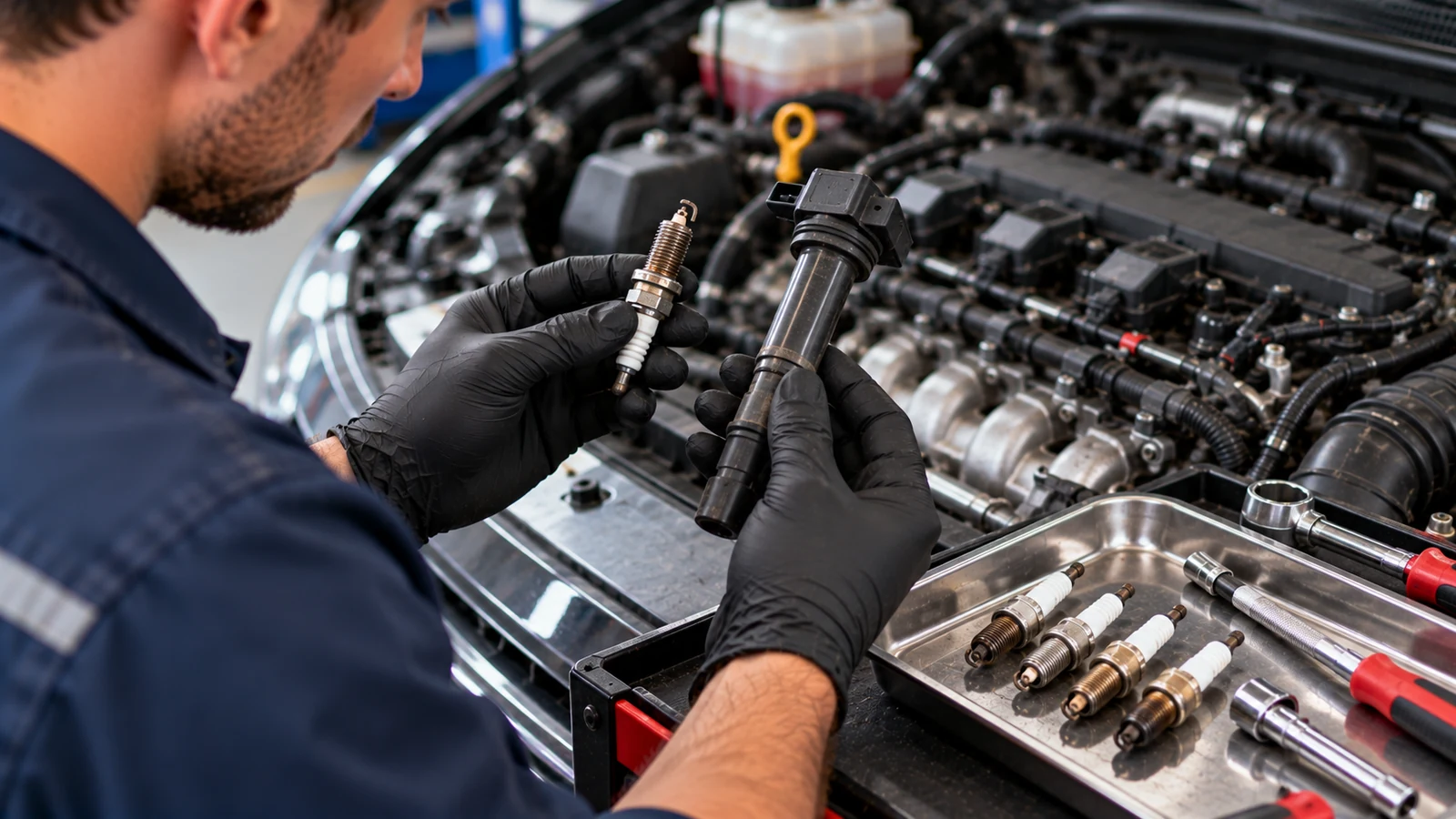
If the scan tool identifies one cylinder, work on that cylinder before replacing components across the entire engine.
Start with the spark plug and ignition coil. On a coil-on-plug engine, moving the suspect coil to another cylinder is a useful test. If the misfire moves with the coil, the coil becomes a strong suspect. If it remains on the original cylinder, continue checking the plug, injector, wiring, and compression.
Cylinder numbering is not standardized across all engines. Before moving coils or interpreting codes, confirm the firing order and cylinder layout for the exact vehicle. For example, the supplied Honda workshop-manual collection and the 2016–2018 Honda Civic FC/FK factory workshop manual provide a vehicle-specific starting point rather than relying on a generic cylinder diagram.
Spark-plug condition can also reveal useful information. One plug that is unusually wet, oily, carbon-fouled, or otherwise different from the remaining plugs points attention toward that cylinder.
Smoke-Test the Intake for Unmetered Air
A vacuum leak allows air into the engine without the ECM accounting for it correctly. Because total airflow is low at idle, even a relatively small leak can have a noticeable effect.
Common leak points include:
- Cracked vacuum hoses.
- Intake-manifold gaskets.
- Split intake ducts.
- PCV hoses and diaphragms.
- Brake-booster hoses.
- Broken plastic fittings.
A smoke machine introduces low-pressure visible vapor into the intake with the engine off. Smoke escaping from a hose, gasket, or fitting gives direct evidence of the leak location.
This is generally a more controlled method than introducing flammable spray around a running engine.
Check Fuel Pressure Before Blaming Injectors
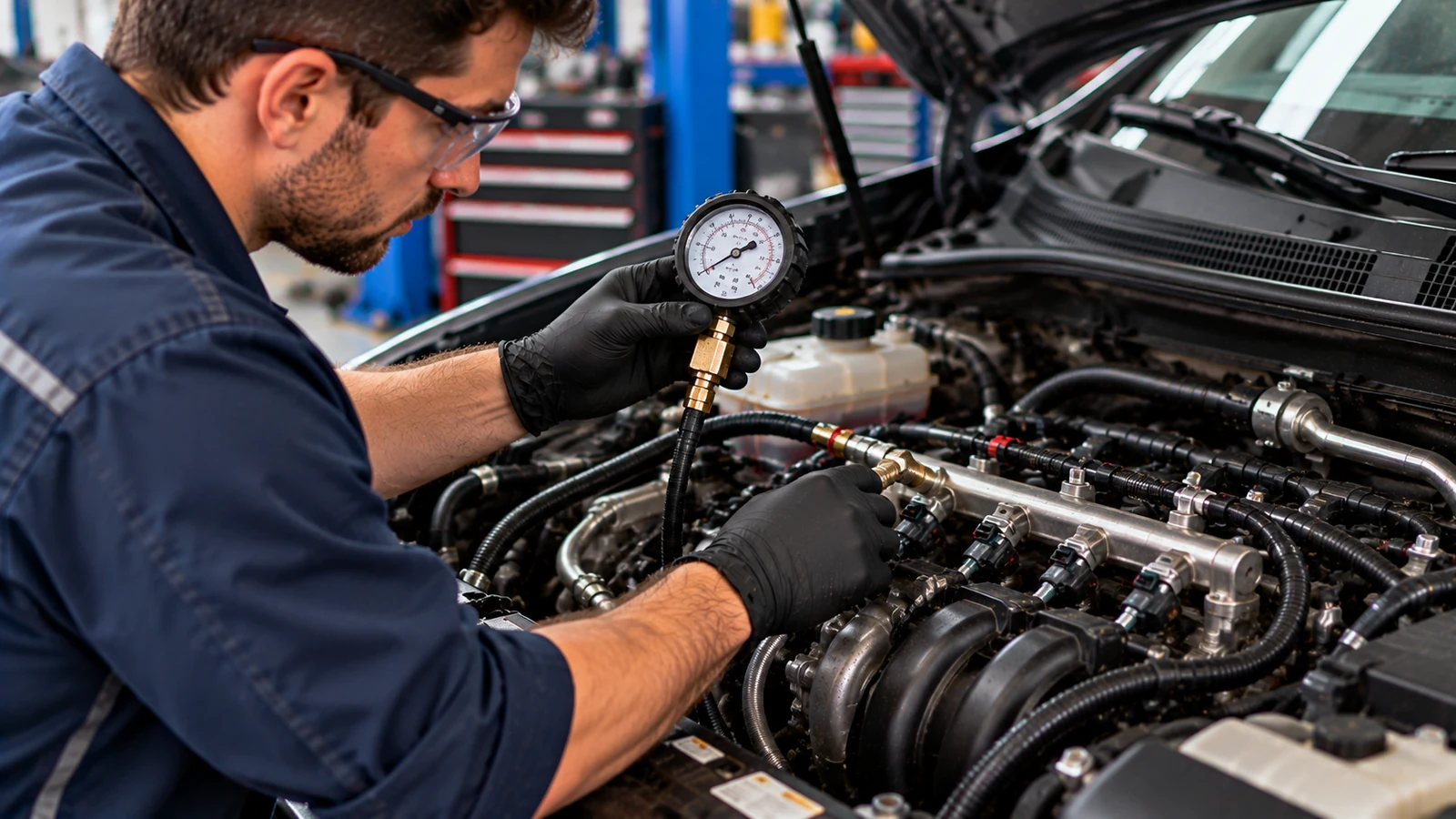
A weak fuel pump, restricted filter, or faulty pressure regulator can affect every cylinder and often becomes more noticeable as fuel demand increases.
Typical clues include hesitation during acceleration, sputtering on hills, long cranking, and fuel trims that move farther positive as engine load rises.
Fuel-pressure specifications can differ significantly between systems, so use the specification for the exact engine rather than a generic target. A model-specific reference, such as the2015 Toyota Camry XV50 factory workshop manual, can help you confirm the correct test method and service values.
Fuel systems can retain pressure after the engine is switched off. Follow the specified depressurization procedure before opening a fuel connection, particularly on high-pressure direct-injection systems.
Test Compression When Electrical Checks Pass
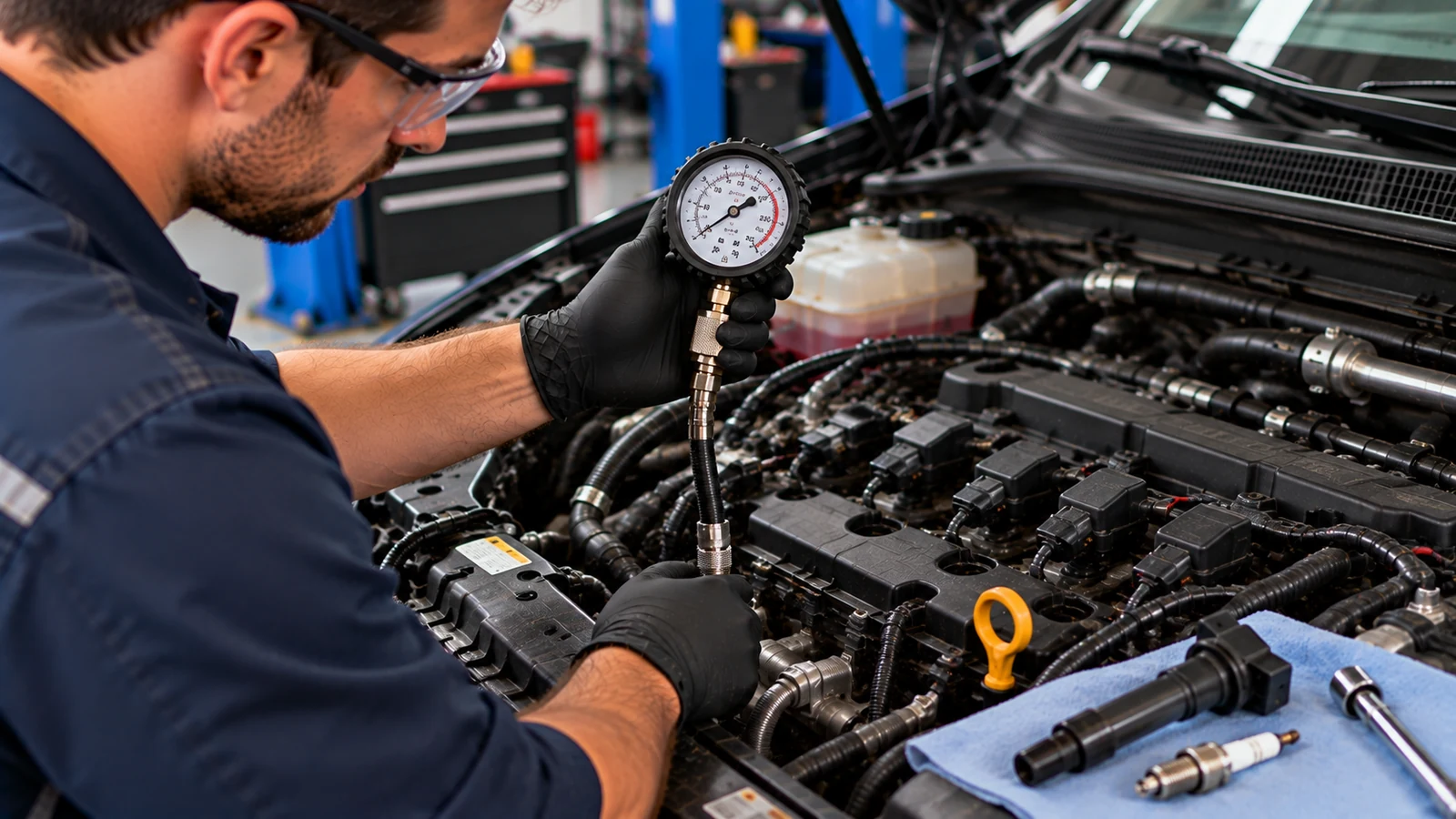
When spark, injection, airflow, and fuel pressure appear correct, but one cylinder still misfires, check whether the engine can seal that cylinder properly.
A compression test compares cylinder sealing ability. Consistency between cylinders is often as important as the absolute reading.
A leak-down test provides more information by showing where pressure escapes. Air heard through the intake can indicate an intake-valve sealing problem, while leakage through the exhaust, crankcase, or cooling system points elsewhere.
Internal problems can include burnt valves, incorrect valve clearance, worn piston rings, or a head-gasket leak.
Common Causes and How to Separate Them
A rough or sputtering engine can result from ignition faults, vacuum leaks, airflow problems, fuel delivery issues, sensor errors, electrical faults, or mechanical problems. Comparing symptoms and testing each system in the right order helps separate similar-looking faults and avoid unnecessary part replacements.
Spark Plugs, Ignition Coils and Secondary Ignition Faults
Spark-plug electrodes wear with use, increasing the voltage needed to fire the plug. An excessive gap, oil contamination, carbon deposits, or fuel fouling can all cause an uneven idle.
Coils and secondary ignition components can fail in different ways. A coil may work when cold but break down when hot, or it may misfire only under higher cylinder pressure. Older vehicles with plug wires and distributor components can develop insulation leaks that become noticeably worse in damp weather.
For engines where plug access, firing order, or coil testing differs by configuration, model documentation is useful. The supplied BMW workshop-manual collection and 2012–2018 BMW 3 Series F30 factory workshop manual show how vehicle-specific procedures prevent guesswork.
Vacuum Leaks, PCV Faults and Throttle-Airflow Problems
Any air entering downstream of the airflow measurement point can create a lean mixture.
The positive crankcase ventilation system is particularly important because a stuck PCV valve or torn diaphragm can behave like a large vacuum leak. Depending on the engine design, the regulating diaphragm may be a separate component or integrated into the valve cover.
Throttle-body deposits can also disturb idle airflow. A thin carbon ring around a nearly closed throttle plate can have a proportionally large effect at idle.
Older engines may use a separate idle air control valve. Carbon buildup in the valve or bypass passage can cause low idle, hunting, or stalling.
After throttle cleaning or component replacement, some vehicles require an idle or throttle relearn. Do not assume a generic relearn sequence will work.
For another example of a modern service-information path, the Mazda workshop-manual collection and 2014 Mazda 3 BN/BM factory workshop manual can be used to locate the procedure specified for that platform.
MAF Sensor and Intake-Duct Problems
The mass airflow sensor measures incoming air so the ECM can calculate fuel delivery. Contamination on its sensing element can alter its reading, but you shouldn’t condemn the sensor before checking the surrounding intake system.
A split intake boot downstream of the MAF can cause the same lean-running symptoms because air enters without being measured correctly.
Check clamps, ducts, and connectors first. Then compare live sensor readings with the appropriate service data.
The same principle applies across manufacturers. The Hyundai service-manual collection and 2015–2016 Hyundai Sonata LF factory workshop manual illustrate why the correct model documentation is more useful than assuming one airflow value suits every engine.
Fuel Injectors, Pump Pressure and Contaminated Fuel
An injector can fail in several ways.
A partially restricted injector may produce a poor spray pattern or reduced fuel flow, causing one cylinder to run lean. A leaking injector can create a rich start after the vehicle has been parked. An electrically inactive injector can look almost identical to an ignition misfire until you test the cylinder.
A mechanic’s stethoscope can help confirm that an injector is being actuated, but electrical testing may still be necessary.
Low fuel pressure affects the system differently. Instead of a single-cylinder problem, the engine may hesitate or sputter as a whole when load increases.
If the problem started immediately after filling the tank, contaminated fuel or water in the fuel should also remain on the list.
For vehicle-specific fuel-system procedures, the Kia workshop-manual collection and 2011–2013 Kia Optima factory workshop manual provide an example of matching the test to the actual vehicle.
EVAP Purge Valve Problems After Refueling
The EVAP system captures fuel vapors and later feeds them into the intake under controlled conditions.
If the purge valve sticks open, too much vapor or additional airflow can enter at idle. A rough start, stumbling idle, or stall immediately after refueling is therefore an important clue.
An EVAP-related code may also be present. P0496, for example, can indicate excessive purge flow on applications that use that code definition.
Do not replace the purge valve solely because the symptom happens after refueling. Confirm the fault through the appropriate diagnostic test.
Oxygen Sensors, Coolant Temperature and EGR Faults
Upstream oxygen sensors provide mixture feedback to the ECM. A slow or incorrect signal can interfere with fuel control, but a sensor reporting a lean exhaust may simply be detecting a genuine vacuum leak.
The engine coolant temperature sensor has a different job. It tells the ECM how warm the engine is so cold-start enrichment and idle strategy can be adjusted. An incorrect temperature reading can make a cold engine too lean or keep a warm engine unnecessarily rich.
After an overnight soak, coolant-temperature live data should normally be reasonably close to ambient temperature before the engine is started.
A thermostat stuck open can create a similar warm-up problem by preventing the engine from reaching normal operating temperature.
An EGR valve that remains open when it should be closed or nearly closed at idle can dilute the intake charge and cause stumbling or stalling.
Charging Voltage and Ground Connections
Coils, injectors, sensors, and the ECM all depend on a stable electrical supply.
Corroded ground connections can create intermittent faults and misleading sensor behavior. Low charging voltage can also become more obvious when you switch on headlights, fans, rear-window heating, or other high-current loads.
If the idle falls sharply as electrical loads increase, test battery condition, alternator output, and engine/chassis grounds as part of the diagnosis.
The Volvo workshop-manual collection and the 2001–2009 Volvo S60 T5 factory workshop manual show how model-specific wiring and grounding information can support electrical diagnosis.
Carbon Buildup, Compression and Valve Timing
Gasoline direct-injection engines inject fuel directly into the combustion chamber. Unlike port injection, the fuel does not continuously wash the backs of the intake valves.
Oil vapor from the crankcase ventilation system can therefore contribute to hard deposits on the intake valves. Significant buildup can interfere with airflow and contribute to cold-start misfires, rough idle, and reduced performance.
Fuel additives added to the tank cannot directly wash intake-valve deposits on a pure direct-injection system.
Mechanical faults also belong on the list once easier causes have been excluded. Tight or damaged valves, worn rings, head-gasket leakage, and camshaft-timing problems can all reduce cylinder contribution.
A jumped timing belt or a stretched timing chain can disturb valve timing and may be accompanied by crankshaft/camshaft correlation codes such as P0016.
For vehicles with direct injection, variable valve timing, or engine architecture changes, the diagnostic procedure changes; references such as the Volkswagen workshop-manual collection and 2008–2012 Volkswagen Golf Mk6 GTI factory workshop manual are useful for checking the exact system before disassembly.
The Timing of the Problem Can Narrow It Faster
The conditions surrounding a rough idle often contain more useful information than the vibration itself.
Rough Only When Cold
A cold-start problem that gradually disappears can point toward incorrect coolant-temperature information, a vacuum leak whose effect changes as components warm, a leaking injector or intake-valve deposits on some direct-injection engines.
Observe coolant-temperature data before starting the engine and watch misfire counts during the first minute.
Rough Only When Fully Warm
Heat can expose weak coils or electronic components that work normally when cold. EGR operation and closed-loop sensor feedback also become more relevant after warm-up.
If the problem appears consistently at the same temperature, capture live data before and after the change.
Rough Immediately After Filling the Tank
A repeatable post-refueling stall or unstable idle should move the EVAP purge system higher on the diagnostic list.
If the symptom began after one specific fuel purchase and continues under load as well as at idle, contaminated fuel is another possibility.
Rough With the Air Conditioning or Electrical Loads On
The engine should compensate when you apply the A/C compressor or major electrical loads.
If it cannot maintain idle speed, look at throttle or idle control, accessory drag, charging voltage, and engine mounts. A weak engine-management system may look acceptable unloaded but become unstable as soon as it demands extra work.
Sputtering During Acceleration
Sputtering under acceleration moves fuel delivery and ignition breakdown higher on the list.
Watch whether fuel trims become increasingly positive as load rises. That pattern supports a fuel-supply problem. If misfire counts climb on one cylinder while trims remain reasonable, focus more closely on ignition, injector operation, or that cylinder’s mechanical condition.
Vehicle-Specific Cases Where the Workshop Manual Matters
Certain vehicles demonstrate why generic rough-idle advice is not always enough. Component design and required relearn procedures can change the diagnosis.
Chevrolet Cruze 1.4L Turbo: PCV Leak Symptoms
On the 1.4L turbocharged engine used in the Chevrolet Cruze, the crankcase pressure-regulating diaphragm is incorporated into the camshaft cover.
A failed diaphragm can create a significant air leak. Reported symptoms can include whistling or hissing, rough idle, oil contamination around the engine compartment, and codes such as P0171, P0106, or P0507.
Because the PCV arrangement is engine-specific, identify the engine before ordering parts. AutoServicePlus provides a Chevrolet workshop-manual collection as well as the 2011–2013 Chevrolet Cruze factory workshop manual for model-specific service information.
Audi 2.0 TFSI: PCV, Ignition and Intake Deposits
Audi 2.0 TFSI direct-injection applications are a useful example of several different faults producing similar symptoms.
A PCV diaphragm fault can introduce unmetered air, while ignition-coil problems can create individual-cylinder misfires. Intake-valve carbon deposits can also contribute to cold-start misfires and uneven running.
The engine code matters because procedures and specifications can change between versions. Start with the Audi workshop-manual collection or the 2006–2013 Audi A3 Quattro 8PA factory workshop manual when diagnosing that platform.
Nissan Altima: Idle Relearn After Throttle Work
On many electronically controlled Nissan applications, throttle-body work may require specific learning procedures, such as Throttle Valve Closed Position Learning and Idle Air Volume Learning.
If you skip the necessary relearn, or it doesn’t complete correctly, idle speed may stay outside the expected range, and P0507 may appear.
The procedure depends on the exact engine and operating conditions, so follow the vehicle documentation rather than a generic internet sequence. AutoServicePlus lists Nissan factory workshop manuals, including the 2002–2008 Nissan-Datsun Altima factory workshop manual.
Older Carbureted Vehicles Need a Different Approach
A carbureted engine does not use the same diagnostic strategy as a modern fuel-injected vehicle.
Idle-mixture circuits, choke operation, float level, base-gasket leaks, distributor condition, and mechanical ignition timing matter much more. A scan tool may contribute little or nothing compared with a vacuum gauge, timing light, and correct service specifications.
The Plymouth workshop-manual collection includes older vehicles such as the 1983 Plymouth PB 100–350 Vans factory workshop manual, where the service approach is fundamentally different from late-model electronic engine management.
Diesel and Hybrid Engine Behavior
Diesel engines naturally sound different from gasoline engines, so diagnosis begins by separating normal diesel combustion noise from a genuinely uneven idle.
A true rough idle on a diesel may involve uneven injector delivery, air entering the fuel system, filter restriction, contaminated fuel, or cold-start problems such as glow-plug faults.
The supplied Ford workshop-manual collection includes diesel coverage such as the 2000–2006 Ford Transit Diesel factory workshop manual.
Hybrid vehicles require another distinction. The gasoline engine can stop and restart by design, so normal hybrid operation should not be mistaken for stalling. If the engine is running unevenly, conventional ignition, air, fuel, and mechanical causes still apply, but high-voltage components add extra safety requirements.
Examples in the supplied inventory include the 2014–2018 Ford C-MAX Hybrid factory workshop manual and, through the Toyota workshop-manual collection, the 2010–2013 Toyota Prius factory workshop manual.
Is It Safe to Drive With a Rough Idle?
The answer depends on the severity and any accompanying warnings.
| What you notice | Recommended response |
|---|---|
| Mild roughness, no warning lights, and normal driving behavior | Diagnose soon and avoid ignoring a worsening symptom |
| Steady check engine light with rough idle | Read the codes promptly and limit unnecessary driving |
| Flashing check engine light | Reduce load and arrange immediate diagnosis |
| Repeated stalling at intersections | Avoid normal driving until the cause is corrected |
| Raw fuel odor, smoke, or visible fuel leak | Stop the engine and address the safety risk |
| Oil-pressure or overheating warning | Stop safely and switch the engine off |
A flashing check engine light commonly indicates a misfire severe enough to send unburned fuel into the exhaust. Continuing to drive can overheat the catalytic converter.
Stalling creates a different risk because steering or braking effort can change if the engine stops while the vehicle is moving.
Typical Repair Difficulty and Relative Cost
You can’t accurately estimate the cost of fixing a rough idle until you identify the cause. A vacuum hose and an internal engine repair belong at opposite ends of the repair spectrum.
| Repair | Typical difficulty | Relative cost |
|---|---|---|
| Replace an engine air filter | Easy | Low |
| Clean throttle body and complete required relearn | Easy to moderate | Low |
| Repair a cracked hose or basic PCV component | Easy to moderate | Low |
| Replace spark plugs or accessible ignition coil | Easy to moderate | Low to moderate |
| Replace purge valve, MAF, oxygen sensor, or EGR component | Easy to moderate | Moderate |
| Replace intake gasket, fuel pump or injectors | Moderate to difficult | Moderate to high |
| Remove intake components for valve-to-carbon cleaning | Difficult | High |
| Repair timing, valves, compression loss, or head gasket | Difficult | High |
This is why diagnosis has financial value. Spending time confirming the fault can prevent several unnecessary component replacements.
What to Confirm in a Factory Workshop Manual
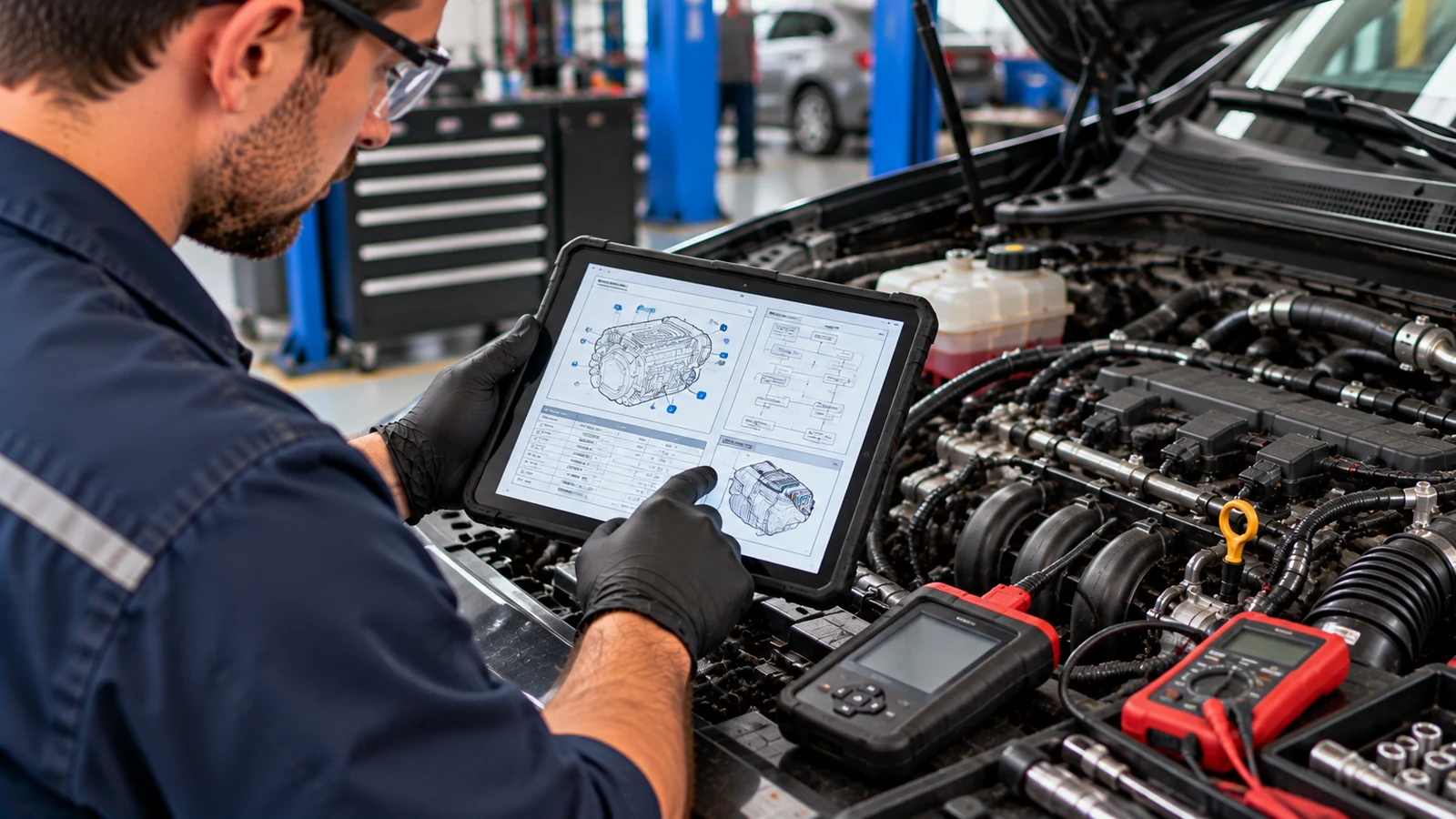
A generic diagnostic process can identify the correct system, but the final test often depends on vehicle-specific data.
Useful factory information includes:
- Firing order and cylinder numbering.
- Correct spark-plug type and gap.
- Specified idle speed.
- Fuel-pressure test values.
- Sensor voltage or resistance specifications.
- Vacuum-routing diagrams.
- Ground locations.
- Injector and ECM wiring diagrams.
- Compression specifications.
- Valve-clearance values.
- Throttle or idle relearn requirements.
- Component-removal procedures and torque specifications.
The supplied AutoServicePlus inventory covers a wide range of vehicle platforms. The examples below show how model-specific documentation can support the same rough-idle diagnostic process without assuming that every manufacturer uses identical specifications.
| Manufacturer and model coverage | Why the manual can matter during rough-idle diagnosis |
|---|---|
| Volkswagen workshop manuals and the 2008–2012 Volkswagen Golf Mk6 GTI manual | Intake, ignition, engine-management and component-removal procedures |
| BMW workshop manuals and the 2012–2018 BMW 3 Series F30 manual | Sensor testing, cylinder identification and electrical diagnostics |
| Honda workshop manuals and the 2016–2018 Honda Civic FC/FK manual | Ignition, valve, fuel and engine-control specifications |
| Toyota and the 2015 Camry XV50 factory workshop manual | Fuel pressure, sensor values and model-specific test procedures |
| Hyundai workshop manuals and the 2015–2016 Hyundai Sonata LF manual | Temperature, airflow, ignition and throttle-system diagnostics |
| Kia workshop manuals and the 2011–2013 Kia Optima manual | EVAP, fuel-delivery and ignition diagnostic procedures |
| Mazda workshop manuals and the 2014 Mazda 3 BN/BM manual | Airflow, electronic-throttle and sensor checks |
| Jeep workshop manuals and the 2003–2006 Jeep Wrangler manual | Vacuum routing, ignition, fuel and engine-control information |
| Volvo workshop manuals and the 2001–2009 Volvo S60 T5 manual | Electrical diagrams, intake-system checks and engine-management tests |
| Lexus workshop manuals and the 2006–2012 Lexus IS 250 RWD manual | Model-specific ignition, air-fuel and mechanical specifications |
| Subaru workshop manuals and the 2003–2011 Subaru Impreza manual | Cylinder layout, ignition, fuel and mechanical diagnosis |
| Mercedes-Benz workshop manuals and the 2008–2012 Mercedes-Benz C 300 4MATIC manual | Manufacturer diagnostic procedures, wiring and service specifications |
The key is matching the documentation to the correct model, year, and engine. A fuel-pressure specification, firing-order diagram, or relearn procedure from a similar-looking engine is not a safe substitute for the correct service information.
How to Reduce the Chance of Future Rough-Idle Problems
Good maintenance will not prevent every sensor or component failure, but it can remove several common causes.
Replace spark plugs at the appropriate interval with the specified plug type and gap. Keep engine oil at the correct level and change it on schedule because degraded oil can affect PCV and variable valve timing systems.
Inspect vacuum hoses and intake ducts whenever you service the engine bay. Small cracks are often easier to find before they cause a severe lean condition.
Use fresh fuel, particularly on vehicles that sit unused for long periods. Address warning lights promptly, rather than letting a small misfire or mixture problem continue long enough to cause secondary damage.
After throttle, battery, or engine-management work, also check whether the vehicle requires an idle or throttle-learning procedure.
Conclusion
If your engine idles rough or sputters, start with evidence, not replacement parts. Pay attention to when the problem occurs, scan the vehicle before clearing codes, examine fuel trims and misfire data, then choose the next test based on the results.
Vacuum leaks, ignition faults, fuel-pressure problems and sensor errors account for many rough-running engines, but compression, valve timing and other mechanical faults must remain on the list when simpler checks pass.
Most importantly, use the specifications and diagnostic procedure for the exact vehicle. Idle speed, cylinder numbering, sensor values, fuel pressure, and relearn requirements vary enough between engines that the correct workshop manual can turn a vague symptom into a controlled diagnosis.
Frequently Asked Questions
Why Does My Car Idle Rough But Seem Normal While Driving?
Small airflow and ignition faults can have a much larger effect at idle because total airflow is low. A modest vacuum leak, dirty throttle body, or slightly weak ignition component may therefore be obvious at a stop but less noticeable once the throttle opens.
Fuel trims that are strongly positive at idle and improve as RPM rises are particularly useful evidence for an intake or vacuum leak.
Why Does My Engine Sputter When I Accelerate?
Acceleration increases both fuel demand and ignition-system load. A weak pump, fuel restriction, worn plugs, or a coil that breaks down under load can therefore create hesitation or sputtering.
Watch fuel trims and misfire counters during the event. Increasing positive fuel trim suggests inadequate fuel delivery, while a sharp increase in misfires on one cylinder points more toward that cylinder’s ignition, injector, or mechanical condition.
Can A Dirty Throttle Body Cause Rough Idle?
Yes. Deposits around the throttle plate can interfere with the small amount of airflow needed at idle.
Cleaning can help when deposits are the actual cause, but electronically controlled throttle systems may require a relearn afterward. Check the model-specific procedure before assuming the repair is complete.
Why Does My Car Run Rough Right After I Fill The Fuel Tank?
A purge valve that remains open can introduce excessive fuel vapor or airflow into the intake after refueling. Contaminated fuel is another possibility, particularly when the symptom starts immediately after one specific fill-up and continues while driving.
Can A Weak Battery Or Alternator Cause Rough Idle?
Low system voltage can affect ignition coils, injectors, sensors, and ECM operation. Poor ground connections can also create intermittent or misleading electrical symptoms.
A recent battery disconnection may additionally erase learned idle values on some vehicles, making a relearn necessary.
Will Fuel-Injector Cleaner Fix A Rough Idle?
Only if mild injector deposits are actually causing the problem.
Injector cleaner cannot repair a vacuum leak, failed coil, wiring fault, bad sensor, low compression, or timing problem. It also cannot wash intake-valve deposits on an engine where fuel is injected directly into the combustion chamber rather than across the valve.
How Much Does It Cost To Repair A Rough Idle?
There is no useful single price because the possible repairs vary dramatically.
A hose, plug, or throttle-cleaning job can be relatively inexpensive. Injector, fuel-pump, intake-carbon, timing, or internal-engine repairs can cost substantially more. Diagnose first so the repair estimate is based on the actual fault.
Should I Stop Driving If The Check Engine Light Flashes?
Yes, treat a flashing check engine light with a rough-running engine as urgent. It commonly indicates a severe active misfire that can send unburned fuel into the exhaust and overheat the catalytic converter.
Reduce engine load and arrange diagnosis rather than continuing to drive normally.