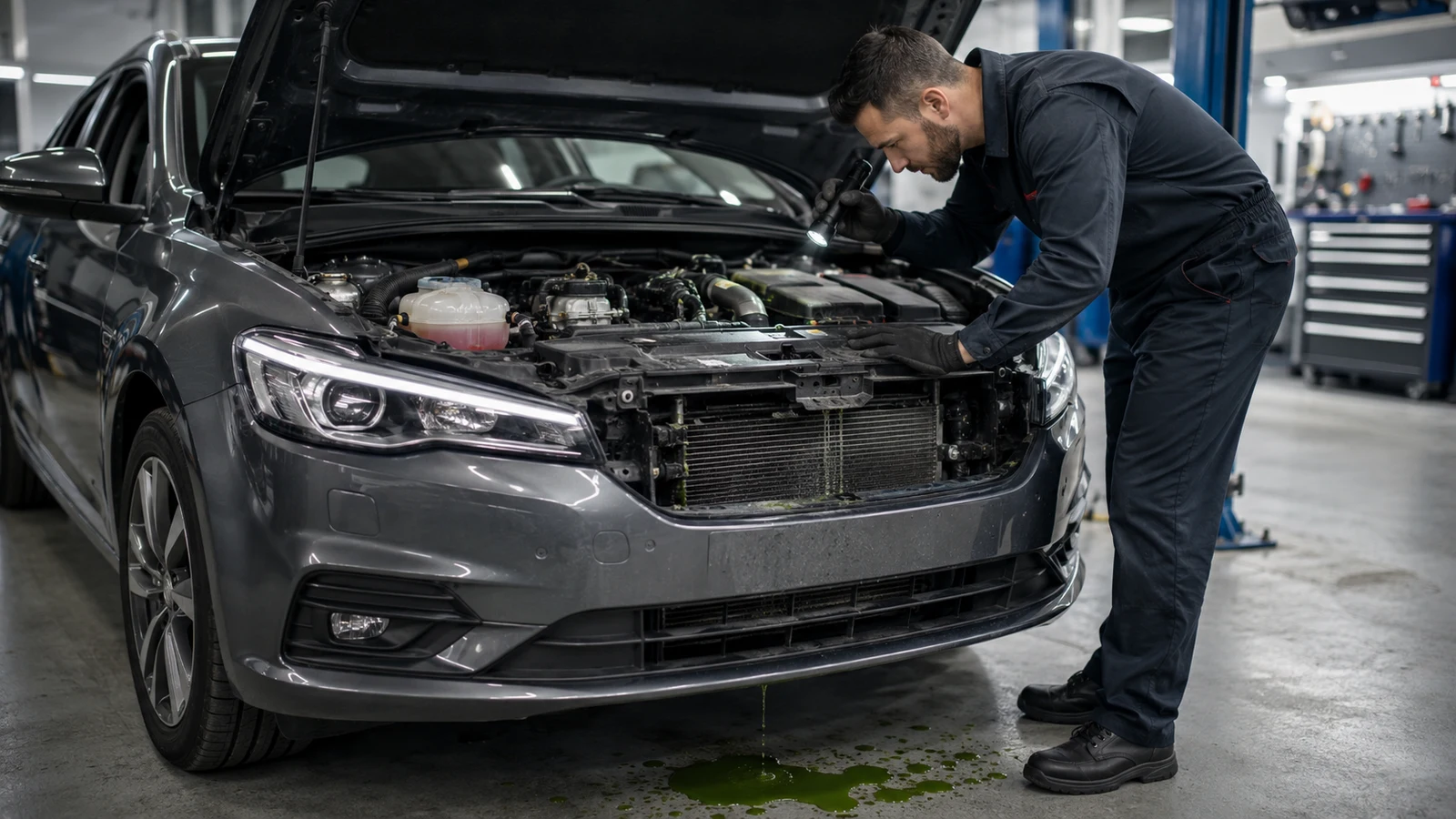
If your coolant level keeps dropping, pay attention. A small coolant leak can turn into overheating, poor heater performance, or expensive engine damage if the system loses too much fluid.
Start by checking the vehicle only when the engine is fully cold. Look for wet areas, dried coolant residue, and changes in the reservoir level. The leak may be easier to find than you expect, but some leaks never leave a puddle.
The key is matching the symptoms to the part most likely responsible. Below, you’ll see the common leak points, warning signs, safe checks, and the next diagnostic step.
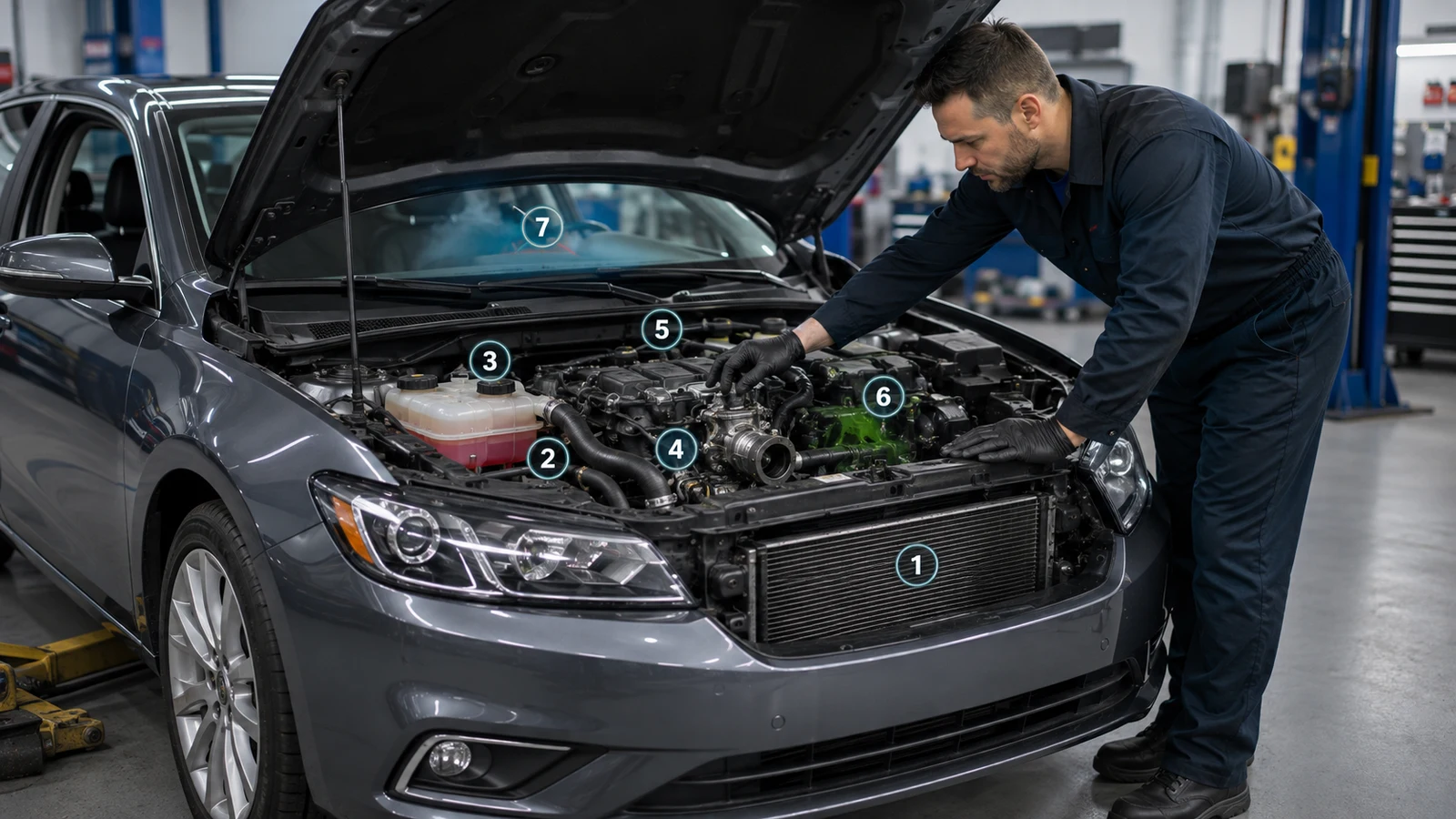
Why Is My Coolant Leaking: 7 Causes to Check First
Coolant usually escapes through a damaged hose, radiator, cap, water pump, thermostat housing, heater core, or an internal engine problem. The location is not always obvious because coolant can evaporate on hot components or collect on shields before reaching the ground. Use the clues below to narrow the problem before replacing parts.
| What You Notice | Likely Area | Urgency | Best Next Step |
|---|---|---|---|
| Puddle near the front of the car | Radiator or hose | High | Inspect cold radiator and hose connections |
| Dried crust around reservoir or cap | Cap or reservoir | Medium to high | Check for cracks and failed sealing surfaces |
| Coolant around belt-side engine area | Water pump | High | Have pump and surrounding area inspected |
| Wetness near engine coolant outlet | Thermostat housing | High | Inspect housing, gasket, and nearby hoses |
| Sweet smell through cabin vents | Heater core | High | Check carpet and HVAC symptoms |
| Coolant drops, but no puddle appears | Small external or internal leak | High | Request a cooling-system pressure test |
| Overheating with rapid coolant loss | Major cooling-system fault | Critical | Stop driving and arrange diagnosis |
A Hose or Connection Is Leaking
Radiator and heater hoses carry coolant between the engine, radiator, and cabin heating system. Over time, a hose can develop a split, damaged sealing surface, or leak where it attaches to another component.
With the engine completely cold, inspect accessible hose connections for dampness, colored residue, or dried crust. Pay close attention to the area directly beneath each connection because gravity can make the actual leak appear lower than its source.
A hose leak may also occur only after the cooling system warms up and pressurizes. That means a dry driveway does not automatically rule it out.
Don’t assume tightening a clamp will fix every connection leak. A damaged hose end, fitting, or plastic neck may require replacement rather than additional clamp pressure.
The Radiator Has Developed a Leak
A radiator can leak from its core, a seam, a drain area, or where the metal and plastic sections connect. Road debris, corrosion, age, or repeated heating and cooling can contribute to failure.
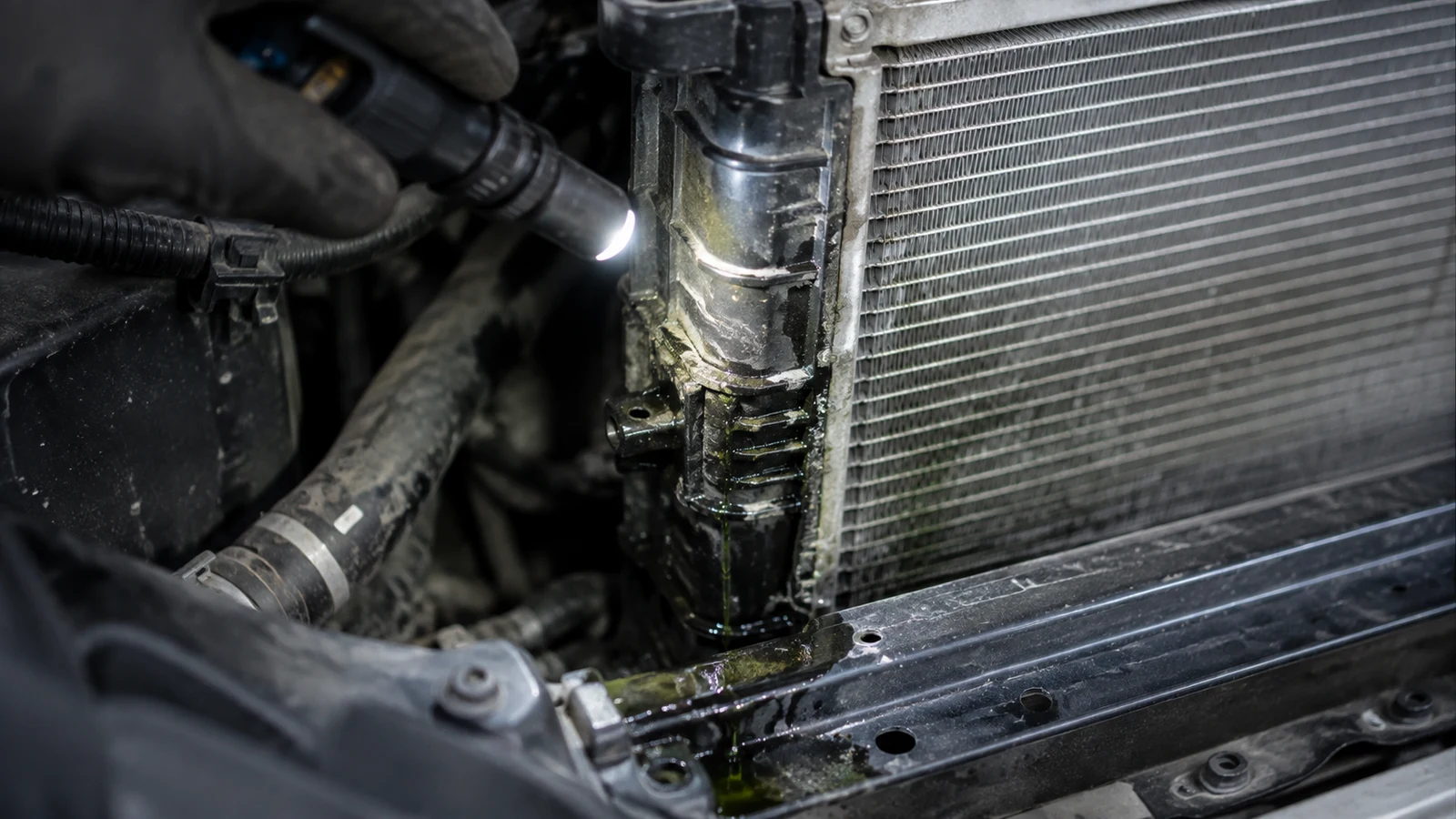
Look through the front of the engine compartment when the vehicle is cold. Wet spots or dried coolant deposits around the radiator can reveal a slow leak even when no liquid reaches the pavement.
Leaks near an end tank can be especially confusing because coolant may travel along the radiator before dripping. A splash shield can also catch the fluid.
If the radiator is confirmed as the source, repair cost depends heavily on where the damage is located and the vehicle involved. AutoServicePlus has a separate breakdown of typical radiator leak repair costs that can help you understand the likely repair path.
A severely cracked or deteriorated radiator may need replacement rather than a temporary repair. Before approving that work, compare the diagnosis with the cost of a radiator replacement.
The Pressure Cap Is Not Sealing
The radiator cap or pressurized reservoir cap does more than cover an opening. It helps the cooling system maintain its designed operating pressure.
If its seal becomes damaged, coolant may escape as vapor or liquid when the engine warms up. The amount can be small enough that you notice a falling coolant level without finding a large puddle.
Inspect the surrounding reservoir or filler neck when the engine is cold. Look for staining, crusty residue, moisture, or coolant tracks around the cap.
A cracked coolant reservoir can create similar symptoms. Plastic tanks may develop fine cracks around seams, hose connections, or mounting points.
Do not remove a radiator or pressurized reservoir cap while the system is hot. Hot coolant can be released under pressure and cause serious burns.
The Water Pump Is Leaking
The water pump circulates coolant through the engine and radiator. When its seal or housing starts leaking, coolant may appear around the pump area or travel down the engine before becoming visible.
The pump’s location varies significantly between vehicles. On some engines, it is easy to see; on others, it sits behind covers or other components.
A slow pump leak can leave dried coolant residue without a constant drip. A larger leak may cause the reservoir level to fall quickly.
Do not reach near belts, pulleys, or fans while the engine is running. If the suspected leak is in that area, a professional inspection is the safer diagnostic choice.
Replacing a water pump without confirming the source can become expensive guesswork. Coolant from a thermostat housing or nearby hose may run toward the same area and make the pump appear responsible.
The Thermostat Housing Is Leaking
The thermostat sits in the coolant circuit and is commonly installed inside a metal or plastic housing. The housing, gasket, seal, or nearby coolant connection can develop a leak.
These leaks often leave residue where the housing meets the engine. Depending on its position, escaped coolant may run across the transmission or engine instead of falling directly onto the ground.
That is one reason drivers sometimes ask why coolant is disappearing even though the driveway stays dry.
Inspect only what you can safely see with the engine cold. If the housing is buried beneath other components, diagnosis may require a pressure test rather than unnecessary disassembly.
When adding coolant after any repair, use the manufacturer-specified coolant type and quantity. Factory documentation can help confirm the correct fluid capacity and specification instead of relying on a generic estimate.
The Heater Core May Be Leaking
The heater core is a small heat exchanger inside the vehicle’s HVAC system. Engine coolant flows through it so the climate system can provide warm air.
A heater-core leak may never create an obvious puddle beneath the engine. Instead, common clues can include a sweet smell inside the cabin, unusual windshield fogging, damp carpet, or gradually falling coolant.
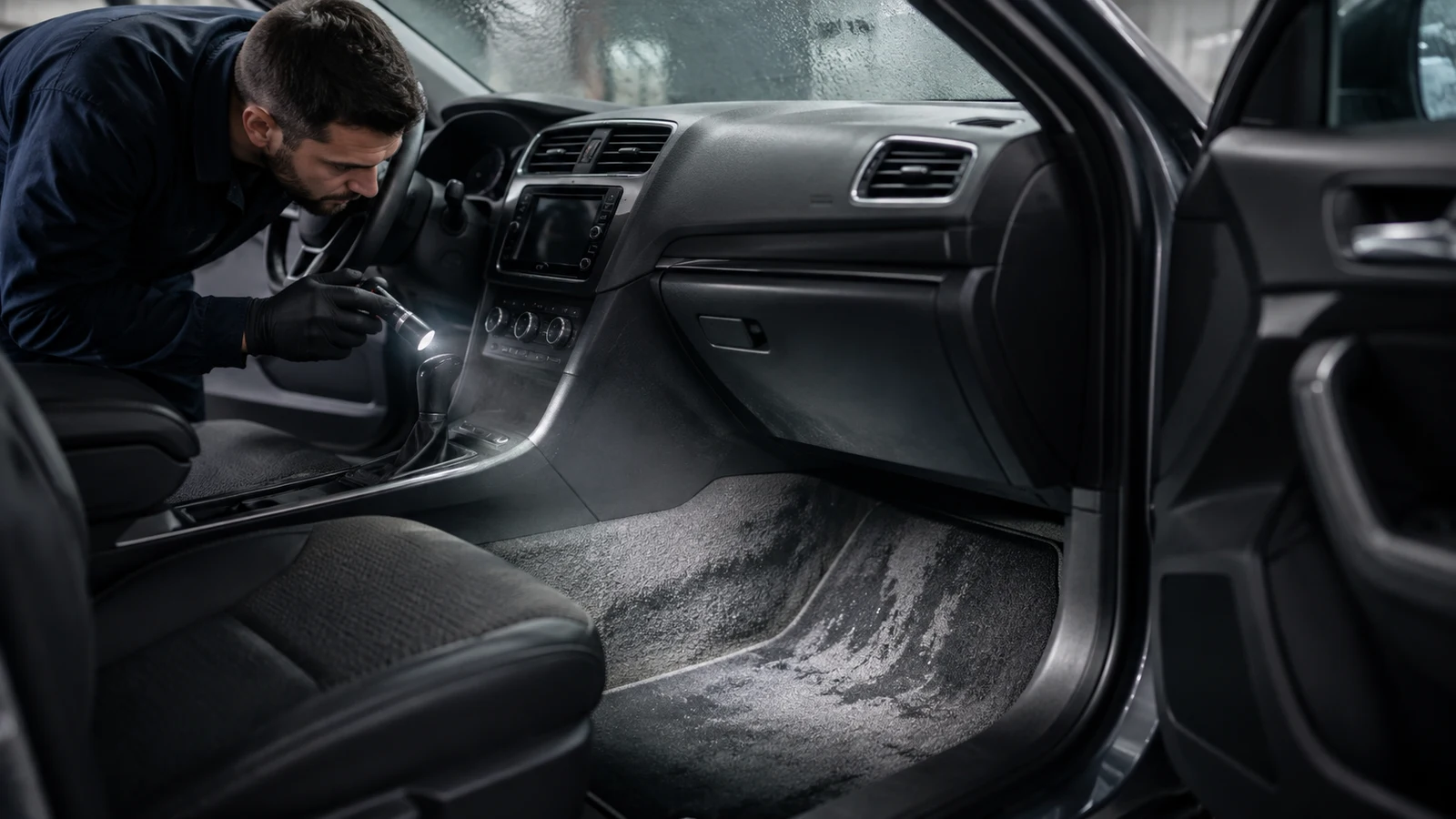
Not every sweet odor proves the heater core is bad. Coolant leaking elsewhere in the engine bay can sometimes produce an odor that reaches the cabin.
Check for several symptoms together rather than relying on smell alone. If coolant is entering the passenger compartment, arrange professional diagnosis instead of continuing to top off the reservoir.
Coolant May Be Leaking Internally
An external leak is not the only way coolant can disappear. In some cases, coolant enters the engine through a failed gasket, damaged sealing surface, or other internal fault.
Possible warning signs include persistent coolant loss, overheating, unusual exhaust behavior, cooling-system pressure problems, or contaminated fluids. No single symptom proves that a head gasket has failed.
That distinction matters because a head-gasket repair is much more involved than replacing a hose or cap. A technician may use pressure testing, combustion-gas testing, cooling-system inspection, and other vehicle-specific procedures before reaching that conclusion.
If internal leakage is suspected, avoid replacing major parts based only on internet symptom lists. AutoServicePlus explains common causes of a blown head gasket and why overheating itself can contribute to serious sealing problems.
Trace The Leak Without Guessing
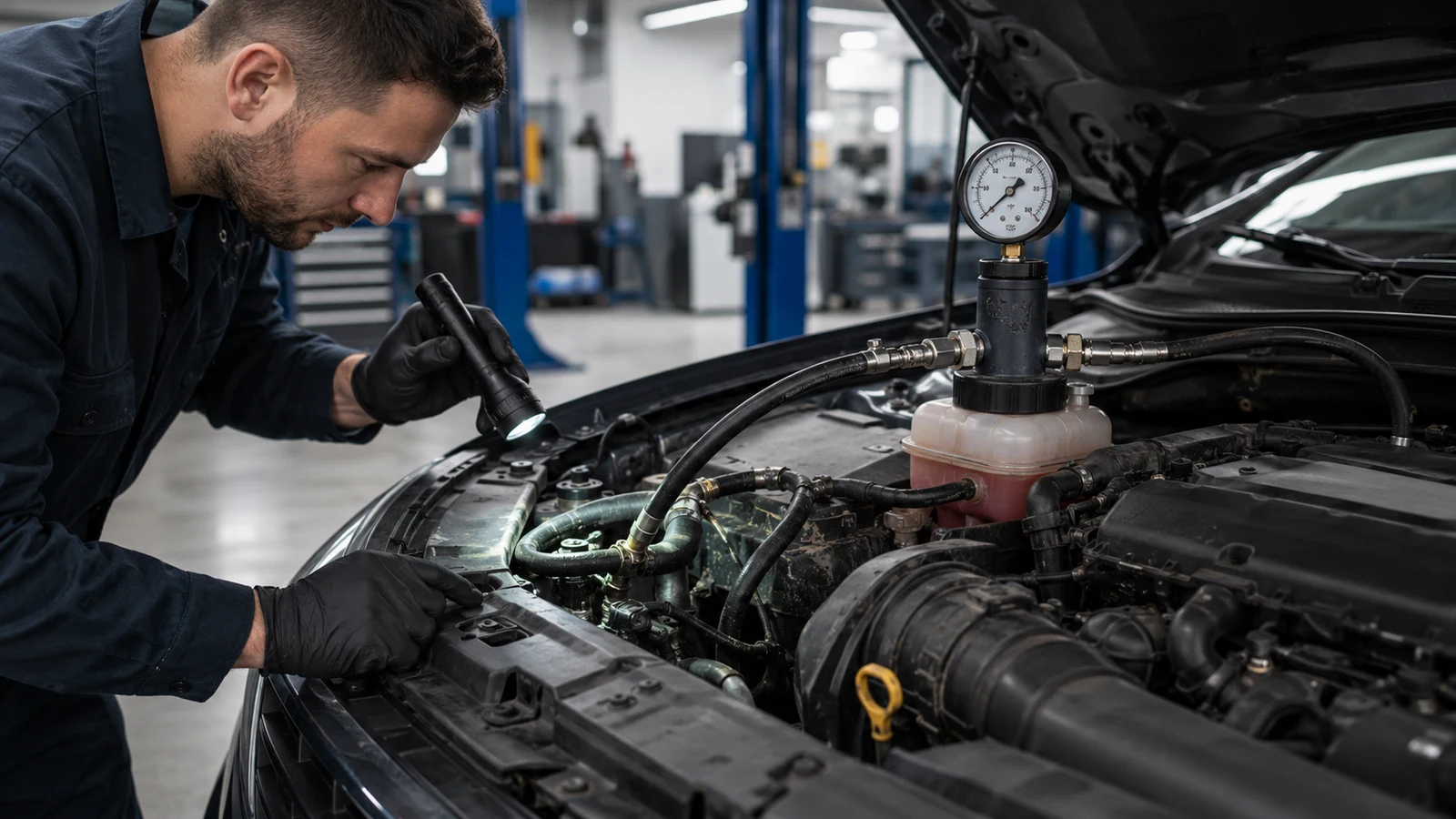
Begin with the coolant level when the vehicle is parked on level ground and completely cold. Compare the reservoir level against the correct cold markings and note any change over several checks.
Next, inspect accessible areas with a flashlight. Look around the reservoir, radiator, hose connections, thermostat housing, and visible engine surfaces for wetness or dried deposits.
Do not identify automotive fluids by color alone. Coolant comes in many colors, and other fluids can also look bright or tinted.
Also consider where the liquid appears. Clear, odorless water beneath a vehicle after air-conditioner use may simply be normal condensation rather than coolant.
If coolant continues disappearing but the visual inspection reveals nothing, a professional cooling-system pressure test is a logical next step. Pressure testing can expose small leaks that are difficult to see under normal cold conditions.
A shop may also inspect areas hidden by covers or splash shields. That is often more effective than replacing the most common failure part and hoping the leak stops.
Know When The Car Should Stay Parked
A slowly dropping reservoir still deserves diagnosis, but some symptoms require faster action. Overheating, a temperature warning, visible steam, or rapid coolant loss can mean the engine no longer has enough cooling capacity.
If the temperature rises abnormally, stop driving as soon as it is safe. Continuing to run an overheating engine can turn a cooling-system repair into major engine work.
Never open a hot cooling system to check the level. Let the vehicle cool, then follow the manufacturer’s instructions for inspection and coolant service.
Repeatedly topping off coolant is not a repair. If the level drops again, focus on finding why it is leaving the system.
The most efficient diagnosis follows evidence. Find the leak location, confirm the failed component, use the correct coolant specification, and repair the source before overheating creates a second problem.
Frequently Asked Questions About Coolant Leaks
Can Coolant Leak Only When The Engine Is Hot?
Yes. A cooling system builds pressure as the engine reaches operating temperature, so a small opening may leak only after the system becomes hot and pressurized. A hose connection, radiator seam, plastic housing, reservoir, or cap can look dry when the engine is cold and still lose coolant during a drive. The escaping coolant may also land on a hot component and evaporate before forming a puddle. That is why dried residue can be an important clue. Do not inspect a hot, pressurized system closely or remove its cap. If a cold visual inspection cannot locate the source, a professional pressure test can help reproduce the leak under controlled conditions.
Why Is Coolant Disappearing With No Puddle?
Coolant can disappear without leaving a visible puddle for several reasons. A small external leak may evaporate on a hot engine, collect on a splash shield, or run along another component before drying. Leaks from a water pump, thermostat housing, cap, or heater core can behave this way. An internal engine leak is another possibility, but coolant loss alone does not prove one exists. Start by recording the cold reservoir level and looking for dried residue, damp areas, cabin odors, or unusual windshield fogging. If the level keeps falling and you can’t find a source, have the cooling system pressure-tested before replacing parts based on symptoms alone.
Is It Safe To Drive With A Small Coolant Leak?
Don’t treat a coolant leak as harmless just because it looks small. Cooling systems rely on the proper fluid level, and a slow leak can become a larger one without much warning. If the coolant level is dropping, the safest approach is to diagnose the source before continuing to drive normally. Do not drive if the engine is overheating, the temperature warning appears, steam is visible, or coolant is escaping rapidly. Those signs can indicate that the system is no longer controlling engine temperature correctly. If the vehicle remains cool but loses a small amount over time, arrange an inspection promptly rather than relying on repeated top-offs as a long-term strategy.
Can I Use Water When My Coolant Level Is Low?
Use the coolant type and mixture the vehicle manufacturer specifies whenever possible. Modern cooling systems may require a particular coolant chemistry, and mixing incompatible products can create additional problems. Plain water also does not provide the same freezing, boiling, corrosion, and lubrication protection as the correct coolant mixture. If the reservoir is unexpectedly low, focus first on why fluid was lost rather than treating refilling as the repair. Never add fluid by opening a hot, pressurized cooling system. Check the owner’s information or factory service data for the correct procedure, specification, and capacity. If the reservoir repeatedly becomes low, the cooling system needs leak diagnosis.
How Does A Mechanic Find A Slow Coolant Leak?
A technician normally begins by confirming the coolant level and inspecting common leak points for moisture, staining, or dried residue. They may check the radiator, hoses, reservoir, cap, thermostat housing, water pump area, and heater circuit. If the leak is too small to appear during a cold inspection, a cooling-system pressure test can help reveal where pressure is escaping. Additional testing may be appropriate if no external leak appears and you suspect an internal engine problem. The exact process depends on the vehicle and symptoms. The key is to identify the failed area before replacing expensive components. That reduces guesswork and unnecessary repair costs.