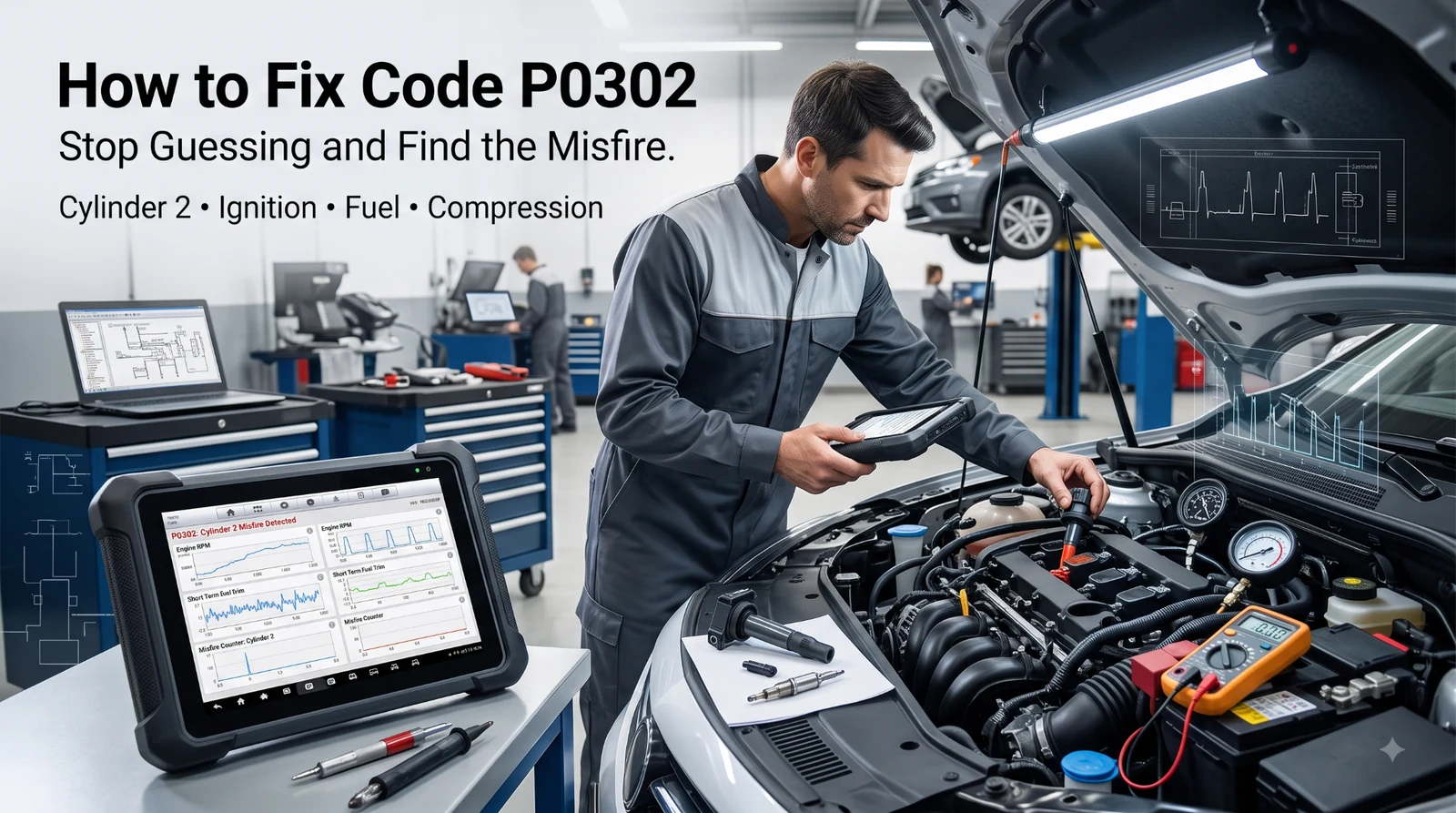
Code P0302 means the engine computer has detected a misfire associated with cylinder 2. The problem matters because a persistent misfire can cause rough running, weak acceleration, poor fuel economy, and additional engine or emissions-system problems.
The fastest repair isn’t automatically a new spark plug or ignition coil. Start by confirming the misfire, checking related trouble codes, and testing components in an order that separates ignition, fuel, air, and mechanical faults.
This guide uses a practical diagnostic path. You’ll learn what P0302 tells you, which checks should come first, how component-swapping tests work, when to investigate the fuel injector, and when compression testing becomes necessary.
How to Fix Code P0302: Test Before Replacing Parts
The best way to fix P0302 is to prove why cylinder 2 is misfiring before buying parts. OBD-II systems monitor engine misfire, but a trouble code identifies the affected system or cylinder rather than guaranteeing which component failed. Start with easy comparisons, then move toward electrical, fuel, air-leak, and mechanical testing.
| Diagnostic step | What you’re checking | What the result suggests |
|---|---|---|
| 1. Scan all codes | P0302 plus related codes | Shows whether the misfire is isolated |
| 2. Inspect cylinder 2 | Plug, coil, wiring, connectors | Finds visible ignition faults |
| 3. Swap test parts | Coil or suitable plug | Shows whether the fault follows a part |
| 4. Check injector operation | Fuel delivery and injector circuit | Finds cylinder-specific fuel problems |
| 5. Check for air leaks | Intake runner and nearby vacuum leaks | Finds a lean cylinder condition |
| 6. Test compression | Cylinder sealing and mechanical health | Finds internal engine problems |
Confirm P0302 Before Touching Parts
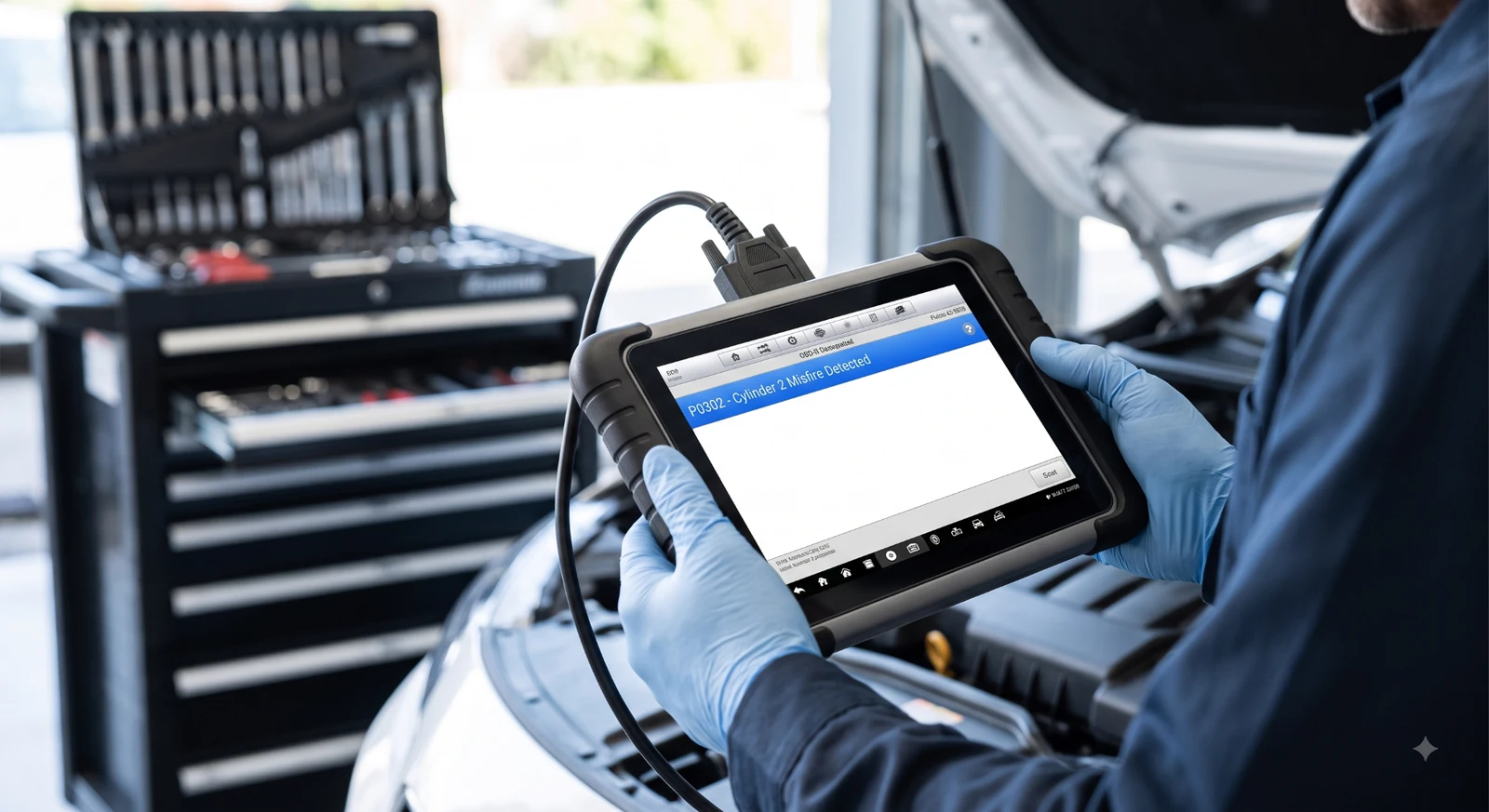
Connect a capable scan tool and record all stored, pending, and related trouble codes. Don’t clear them immediately. Freeze-frame data can show engine speed, load, temperature, and operating conditions when the fault was detected.
Look for clues such as additional cylinder misfire codes, random misfire P0300, fuel-trim faults, injector-circuit codes, or ignition-related faults. A vehicle with P0302 alone needs a different diagnostic approach from an engine showing several cylinders misfiring.
A structured trouble-code diagnostic process can help you avoid treating a stored code as proof that one specific part has failed.
If the check-engine light is flashing while the engine runs, reduce driving and arrange diagnosis promptly. EPA guidance associates a flashing malfunction indicator light with a severe misfire that can damage emissions components, particularly the catalytic converter.
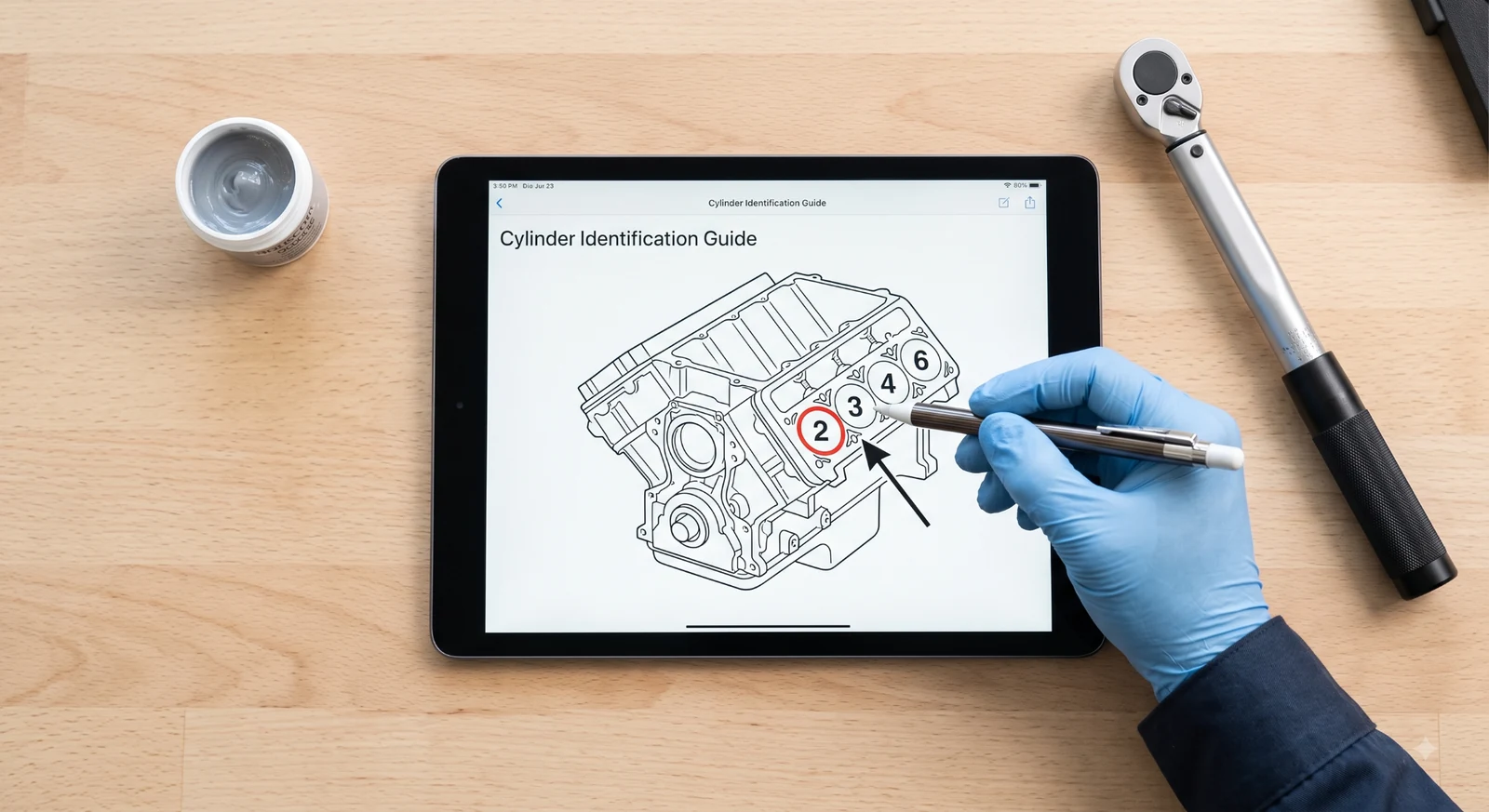
Find Cylinder 2 Correctly
Before testing anything, verify the manufacturer’s cylinder numbering and firing order. Cylinder 2 isn’t always the second cylinder you see when standing in front of the vehicle.
Engines can number cylinders differently depending on manufacturer, layout, and engine family. Using the wrong cylinder wastes diagnostic time and can make a good coil, injector, or plug appear faulty.
Use reliable vehicle-specific service information when the cylinder arrangement isn’t obvious.
Inspect the Spark Plug and Coil
Once you’ve identified cylinder 2, inspect the accessible ignition components. Look for a loose coil connector, damaged wiring, contamination around the plug well, a visibly damaged coil boot, or a spark plug showing abnormal wear.
Don’t replace the coil simply because P0302 and ignition-coil failure commonly appear together. The code reports the misfire event, not the failed component.
If you’re building a broader diagnostic process, AutoServicePlus’s guide to engine misfire diagnosis and repair provides useful context for separating ignition faults from other causes.
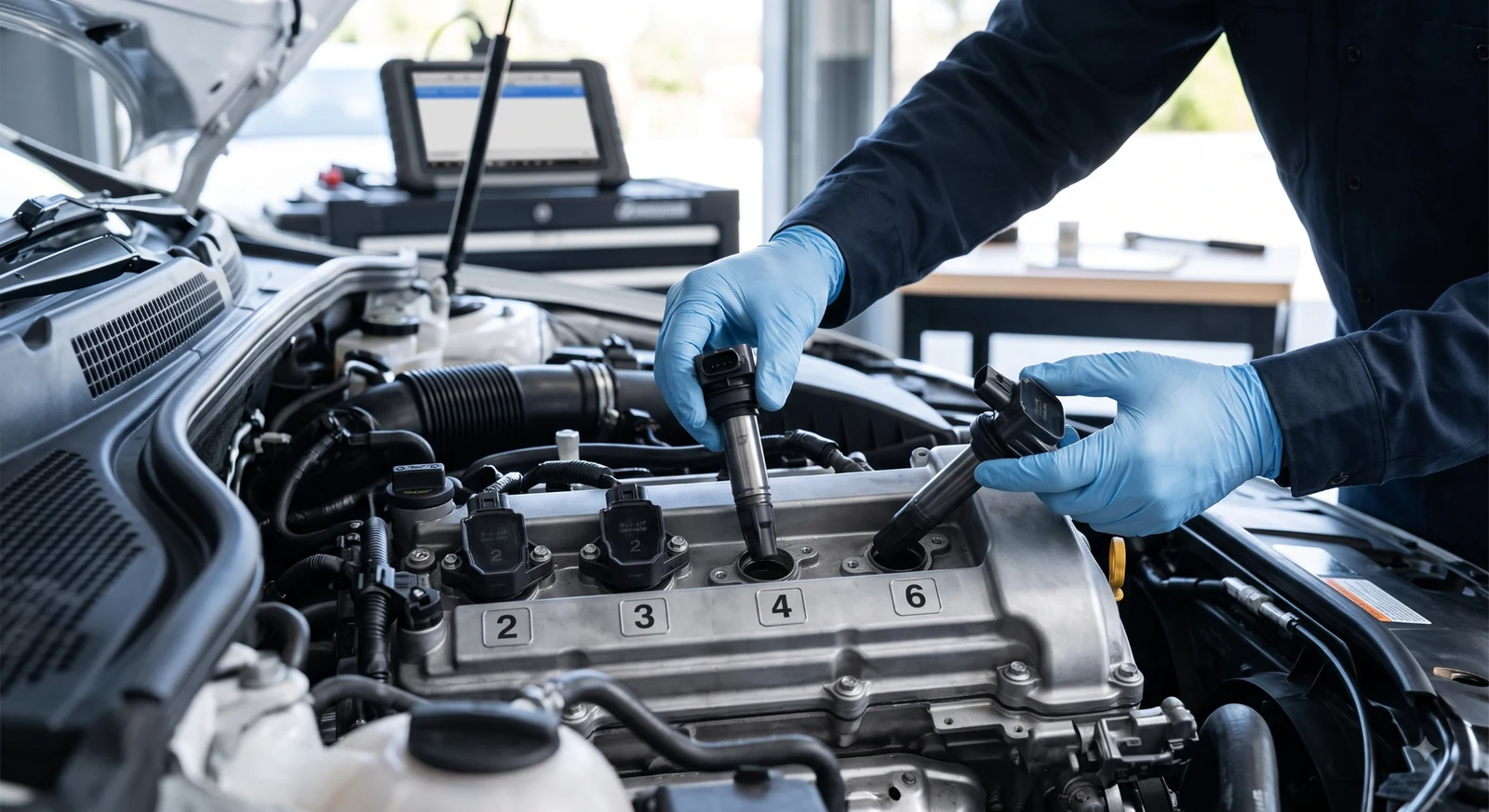
Use a Swap Test to Isolate the Fault
A swap test can be one of the most useful checks on engines with individual ignition coils.
Move the cylinder 2 ignition coil to another cylinder and move that cylinder’s coil to cylinder 2. Reassemble everything correctly, then operate the vehicle under appropriate conditions and rescan it.
If the misfire moves to the cylinder receiving the original cylinder 2 coil, that strongly points toward the moved coil or related removable component.
If P0302 returns and the other cylinder remains normal, don’t keep buying ignition parts. The problem may involve the plug, wiring, injector, intake sealing, compression, or another cylinder-specific condition.
This is exactly why avoiding unverified part replacement can save both diagnostic time and money.
Check the Cylinder 2 Fuel Injector
If ignition checks don’t reveal the problem, move to fuel delivery.
Inspect the cylinder 2 injector connector and nearby harness for looseness, corrosion, damaged insulation, or obvious terminal problems. Compare injector behavior with neighboring cylinders using the correct vehicle-specific diagnostic method.
A clogged injector may deliver too little fuel. An electrical fault can prevent correct injector operation. An injector that leaks can create a different set of symptoms.
Don’t assume every injector problem means the injector itself is defective. The circuit, connector, power supply, control side, or fuel-delivery condition may be responsible.
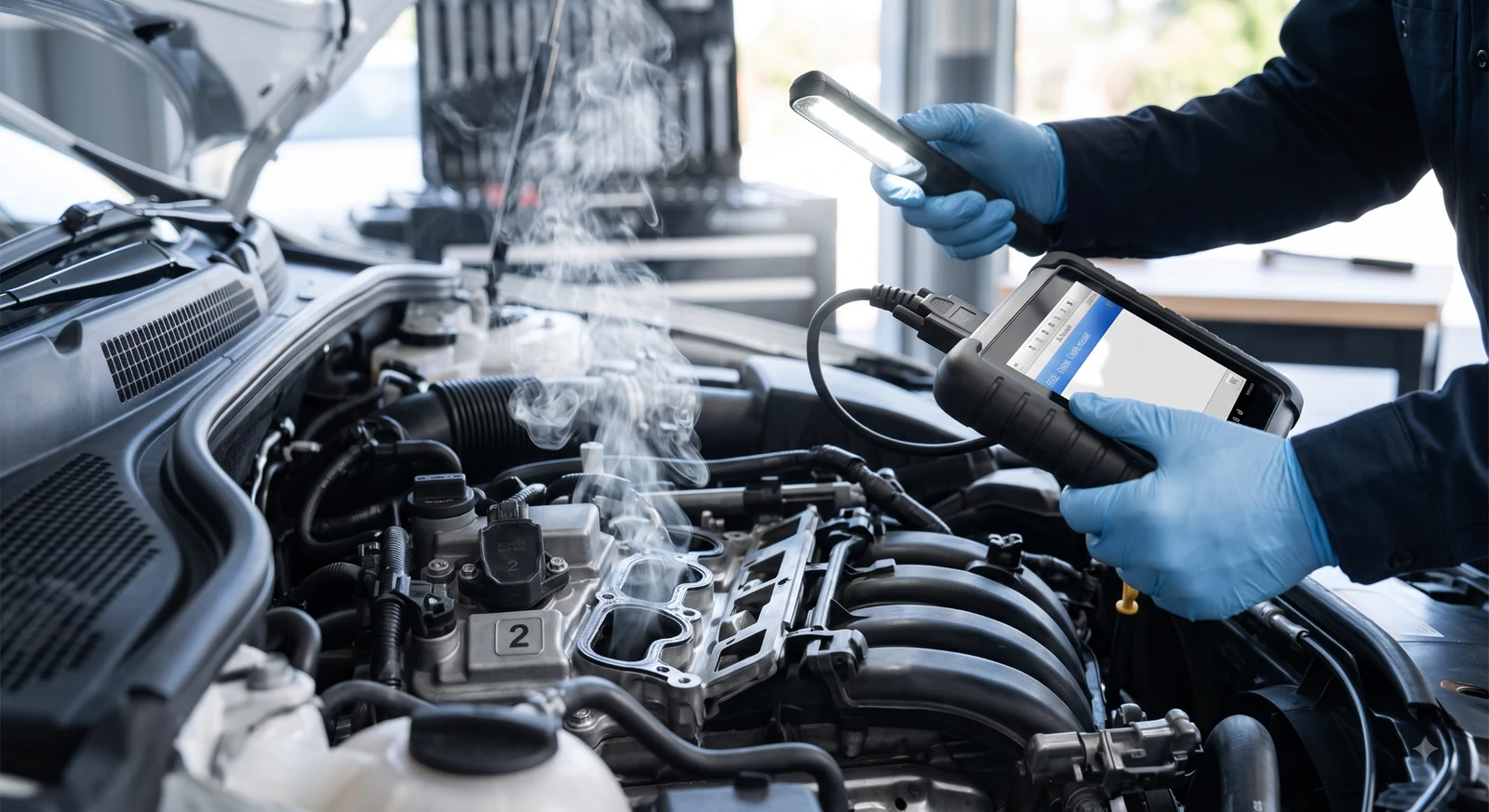
Look for a Cylinder-Specific Air Leak
An intake leak can create a mixture problem severe enough to affect one cylinder more than the others.
Inspect the intake area serving cylinder 2. Pay attention to damaged hoses, disturbed connections, intake manifold sealing areas, and components recently removed during other repairs.
Fuel-trim information can add context. If the engine shows evidence of a lean condition, don’t ignore the possibility that the misfire and mixture problem share the same cause.
For complicated cases, following a manufacturer-style diagnostic flowchart helps prevent jumping between unrelated tests.
Test Compression When P0302 Stays
If spark, ignition, injector operation, wiring, and obvious air leaks check out, investigate the engine’s mechanical condition.
A cylinder needs adequate compression to burn the air-fuel mixture correctly. Low compression on cylinder 2 can result from valve-sealing problems, piston or ring issues, head-gasket problems, or other internal faults.
Compare cylinder 2 with the other cylinders using the manufacturer’s specified procedure. The comparison matters as much as the raw reading because acceptable values and test methods vary by engine.
If cylinder 2 is significantly weaker, additional mechanical testing can determine where pressure is escaping before internal repairs are considered.
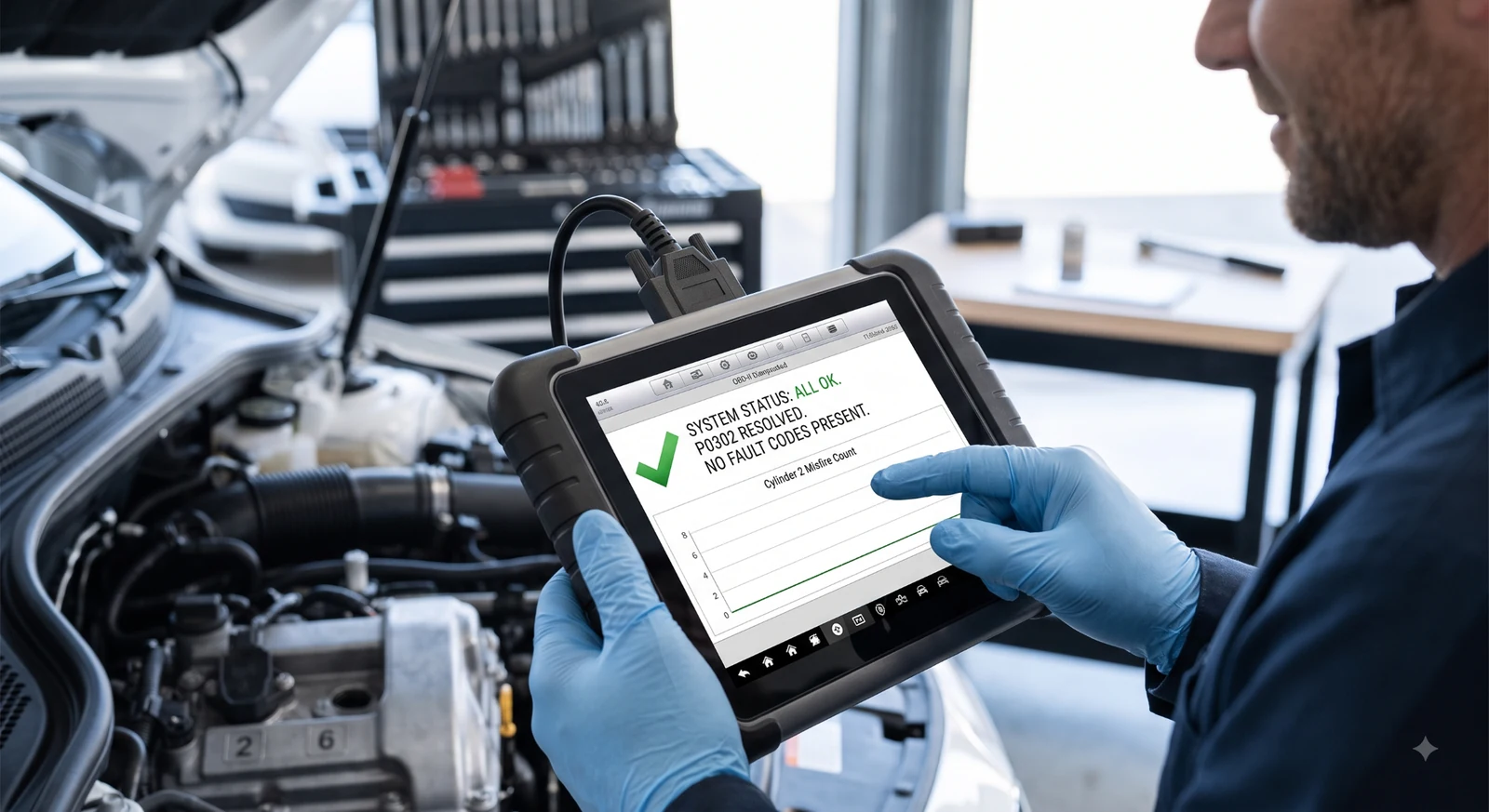
Recheck the Repair Instead of Clearing P0302
After correcting the confirmed fault, clear the code with a scan tool only when appropriate and operate the vehicle through suitable conditions.
Then rescan the system. Confirm that P0302 doesn’t return and check for pending codes instead of relying only on the dashboard light.
Also verify that the engine runs smoothly at idle and during acceleration. A repair isn’t proven simply because the check-engine light stays off for the first few minutes.
The key is a repeatable result: the original failure should disappear, the misfire should no longer be detected, and no new related fault should appear.
Know When Diagnosis Needs a Technician
Professional diagnosis makes sense when the misfire persists after basic checks, multiple cylinders are affected, wiring faults are suspected, or mechanical testing points toward an internal engine problem.
Advanced diagnosis may require vehicle-specific wiring information, scan-tool data, circuit testing, compression comparisons, or additional equipment.
The objective remains the same: identify the failed system first and replace parts second. That approach turns P0302 from a guessing problem into a controlled diagnostic process.
Commonly Asked Questions About the Code P0302
Can I drive with code P0302?
A short, gentle trip may be possible if the engine runs reasonably well and the check-engine light remains steady, but P0302 shouldn’t be ignored. A misfire means cylinder 2 isn’t contributing correctly, and continued operation can increase emissions, reduce performance, and potentially create additional problems.
If the check-engine light flashes, the situation is more serious. Reduce speed and avoid unnecessary driving because a severe misfire can overheat and damage the catalytic converter.
If the engine shakes heavily, loses substantial power, stalls, or develops other severe symptoms, stop using the vehicle and arrange proper diagnosis rather than continuing to drive it.
Will changing spark plugs clear P0302?
Changing spark plugs will clear P0302 only when a faulty or unsuitable spark plug is actually causing the cylinder 2 misfire. A worn, contaminated, damaged, or incorrectly specified plug can create ignition problems, but P0302 can also result from the ignition coil, injector, wiring, intake leak, or low compression.
Inspect the cylinder 2 plug and compare it with plugs from healthy cylinders. If replacement is justified by condition or maintenance history, use the correct specification for the engine. After repairs, clear the code when appropriate and retest the vehicle. If P0302 returns, continue diagnosing instead of repeatedly replacing ignition parts without evidence.
Can a bad ignition coil cause P0302?
Yes. On engines with individual coils, a weak or failed ignition coil on cylinder 2 can cause P0302. However, the code itself doesn’t prove the coil is defective. A practical test is to move the suspected coil to another cylinder, provided the components are interchangeable and the vehicle’s service procedure allows it.
If the misfire follows the coil and a code appears for the cylinder receiving that coil, the evidence strongly supports a coil-related fault. If P0302 remains on cylinder 2, investigate the spark plug, coil connector, wiring, injector, intake sealing, and mechanical condition. Testing first prevents an unnecessary coil replacement.
Can a fuel injector trigger code P0302?
Yes. Cylinder 2 needs the correct amount of fuel at the correct time, so an injector problem can create a cylinder-specific misfire. The injector may be restricted, electrically inoperative, intermittently connected, or affected by a wiring or control-circuit fault. Start by inspecting the cylinder 2 injector connector and harness.
Then compare its operation with known-good cylinders using an appropriate vehicle-specific test. Don’t assume the injector needs replacement simply because ignition components test normally.
A circuit problem can imitate a failed injector, while a lean condition or mechanical fault can produce similar symptoms. Confirm the cause before replacing any fuel-system component.
Why does P0302 return after replacing parts?
P0302 usually returns after a parts replacement because the original cause wasn’t corrected, another fault exists, or the repair wasn’t verified under the conditions that originally triggered the misfire. For example, replacing a spark plug won’t correct a weak injector, damaged coil wiring, intake leak, or low compression.
Review the original freeze-frame data and check for pending or companion codes. Determine whether the misfire occurs at idle, under acceleration, during cold starts, or under another repeatable condition. Then work through ignition, injector operation, air leaks, and mechanical testing in order. The goal isn’t to clear P0302 temporarily. It’s to make the cylinder operate normally.