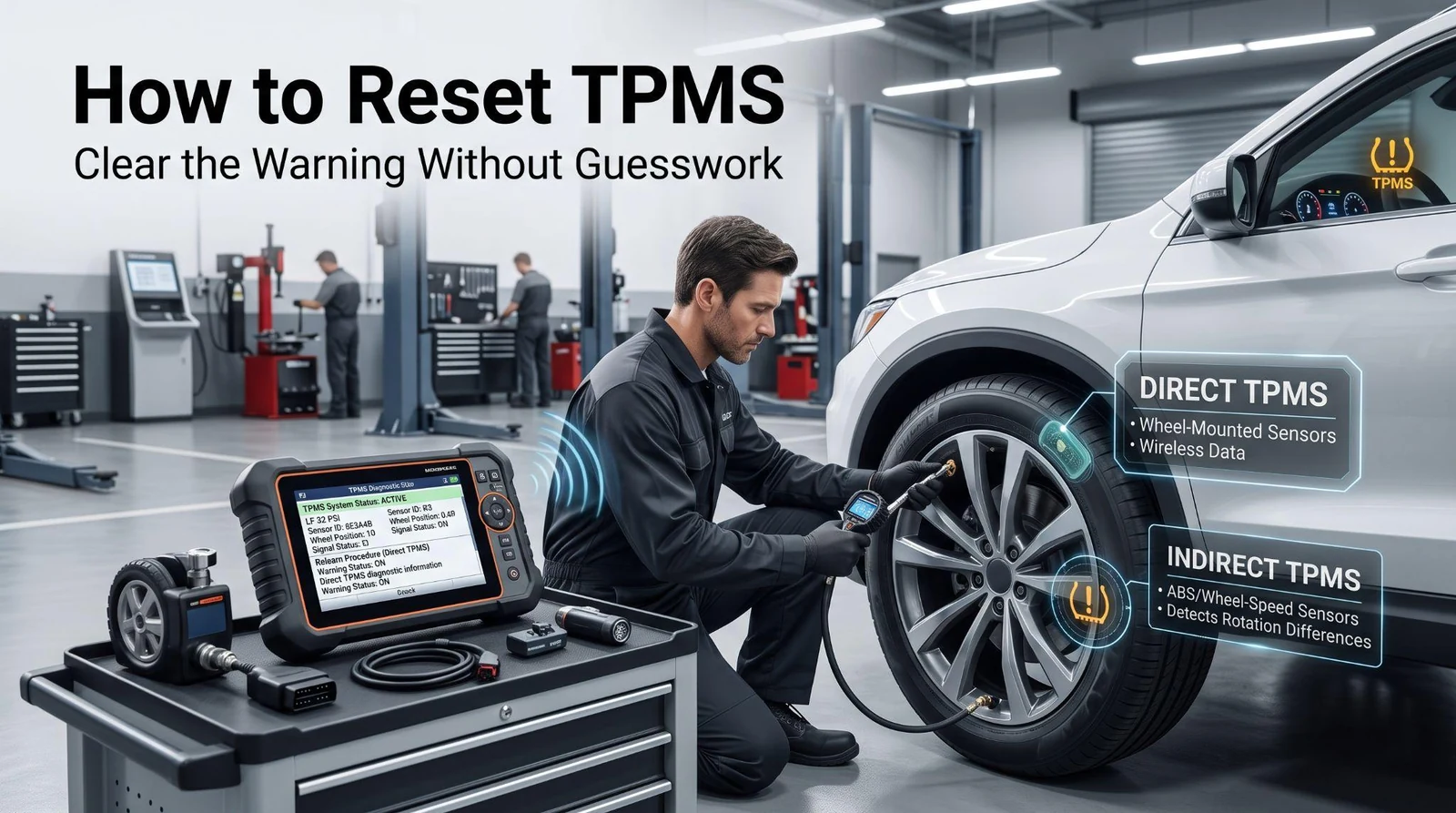
A TPMS warning can look simple, but pressing reset before checking the tires can hide the real problem. Low pressure, a slow leak, a failed sensor, or a lost sensor ID can all leave the light on. The correct first move is to find out what the system is actually reporting.
Start with cold tire pressure at the vehicle placard specification. Then identify whether the vehicle uses direct or indirect TPMS. The reset method depends on that distinction, not on a universal button sequence.
This guide walks through the safe order: check pressure, identify the system, reset or relearn, drive verification, and diagnosis if the warning returns.
How to Reset TPMS: Match the Reset to Your System
A TPMS reset works only after you correct the underlying tire condition. Direct TPMS uses pressure sensors in the wheels, while indirect TPMS estimates pressure loss from wheel speed and other vehicle data. That difference determines whether you need a simple calibration, a drive cycle, a stationary relearn, or an OBD-based sensor registration.
| What you see | Most likely next step | What not to do |
|---|---|---|
| Solid TPMS light | Check all cold tire pressures, correct leaks, then follow the vehicle reset procedure | Do not reset first and assume the tire is safe |
| Light returns after pressure correction | Check for a leak or incorrect placard pressure | Do not keep adding air without finding the cause |
| Light flashes, then stays on | Treat it as a TPMS system fault and diagnose sensors or communication | Do not assume more air will clear it |
| Tires or sensors were replaced | Confirm sensor programming and perform the required relearn | Do not confuse sensor programming with vehicle relearn |
| Indirect TPMS was serviced | Set pressures correctly, then run the vehicle’s calibration or initialization | Do not calibrate with one tire underinflated |
Step 1: Check Cold Tire Pressure First
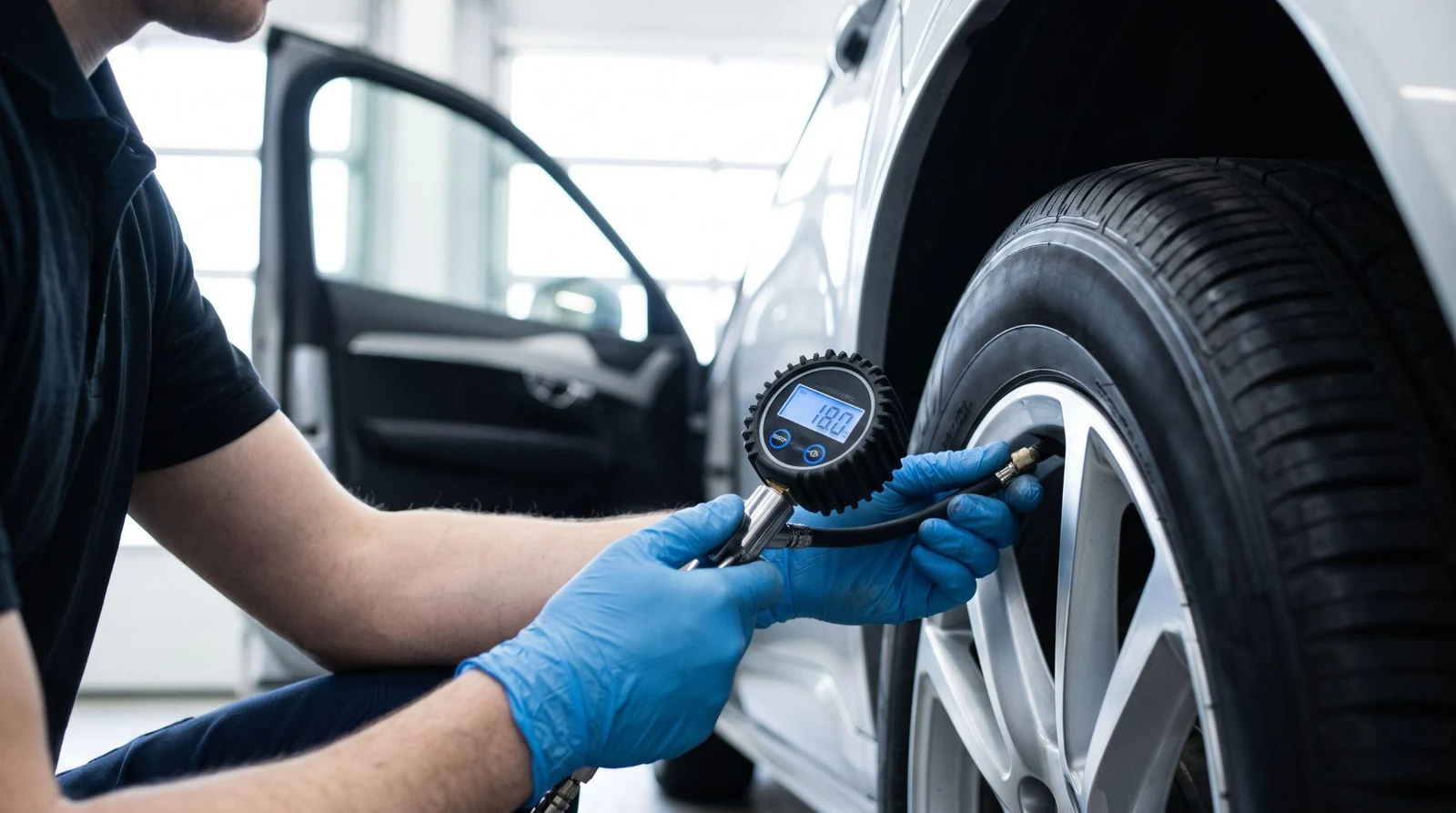
Park the vehicle long enough for the tires to cool. Use a reliable gauge on every road tire and compare each reading with the pressure listed on the driver-side door placard or in the owner’s manual.
Do not use the maximum pressure molded on the tire sidewall as the target. NHTSA recommends checking tire pressure when the tires are cold and using the vehicle placard or owner’s manual for the correct inflation specifications.
If one tire is low, inflate it to the specified cold pressure and inspect for a puncture, a valve leak, a damaged wheel, or another cause if the pressure keeps dropping. A reset cannot repair an air leak.
TPMS is a warning system, not a substitute for regular pressure checks. NHTSA notes that the warning may not appear until a tire is already significantly underinflated.
Step 2: Read the TPMS Light Pattern
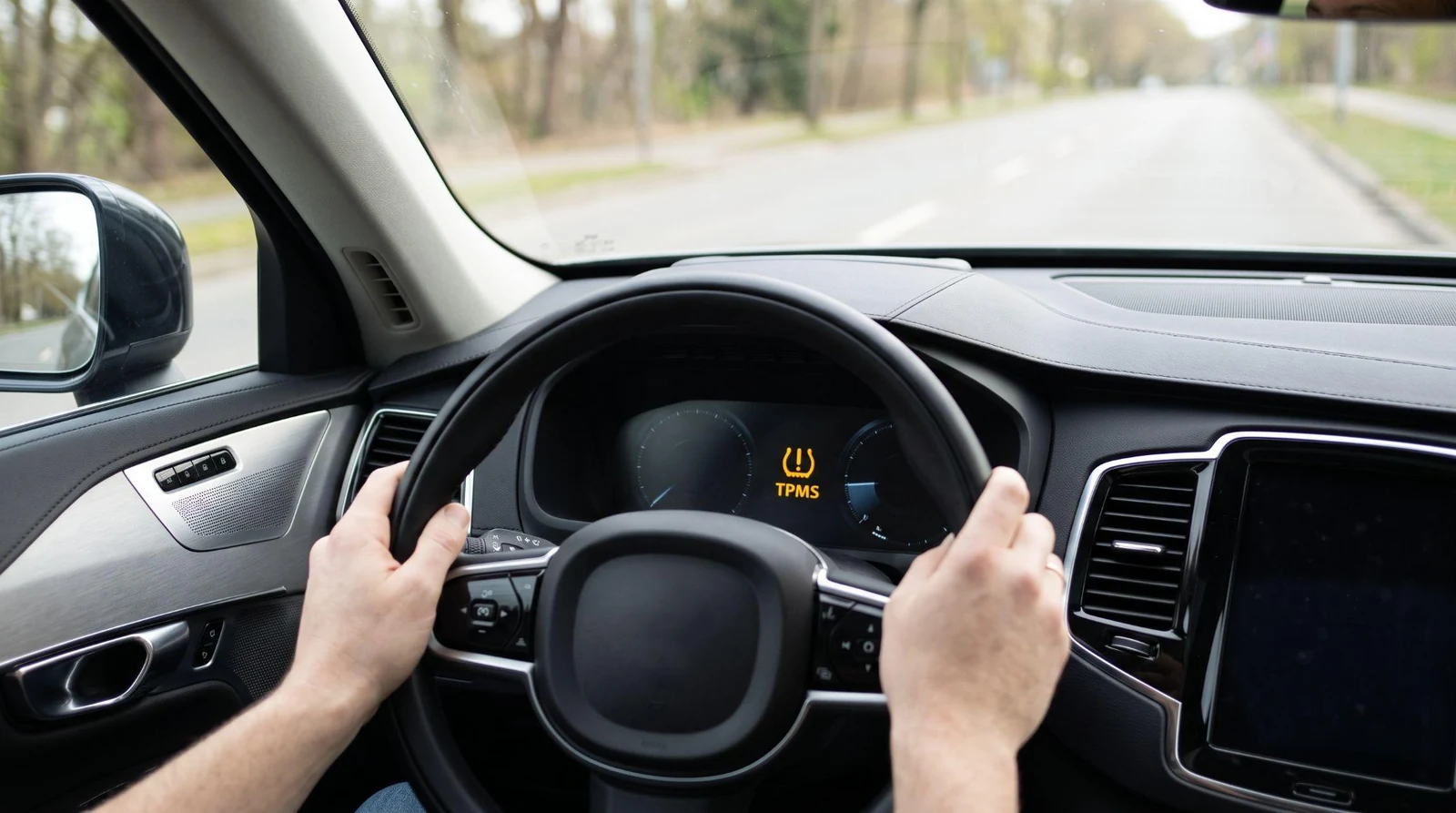
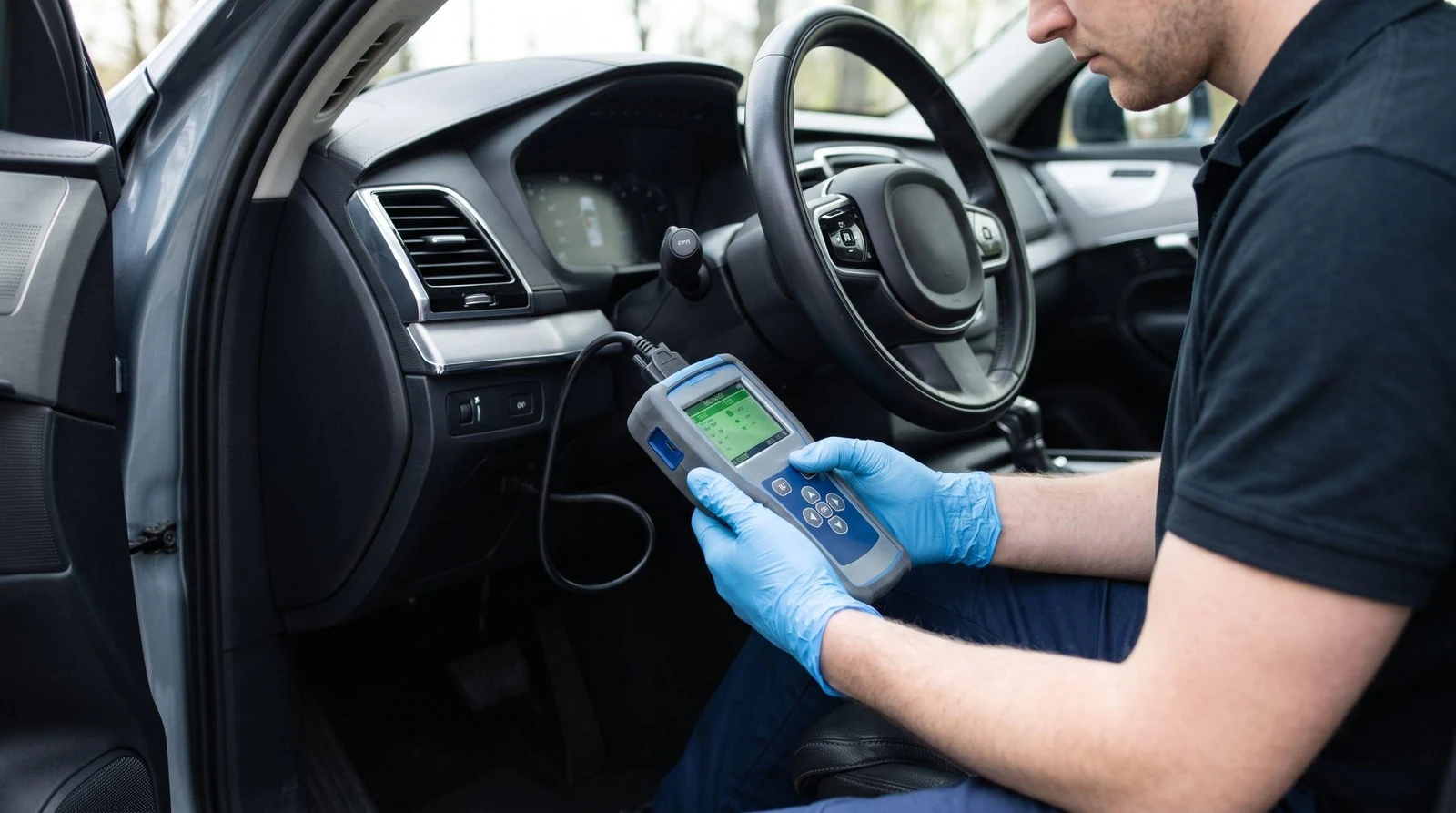
A solid TPMS light usually indicates significant underinflation. Check pressure before using menus, buttons, or scan tools.
A flashing light that later remains illuminated indicates a system malfunction in vehicles covered by the federal TPMS malfunction requirement. NHTSA describes a malfunction indication as flashing for about 60 to 90 seconds, then staying steadily lit.
That difference saves time. A pressure warning signals a tire issue or a leak. A malfunction may indicate sensor communication issues, sensor IDs, receiver issues, or stored TPMS faults.
If you suspect a failed sensor, follow a structured process to test a vehicle sensor before replacing it. That helps separate a non-communicating sensor from a module, circuit, or procedure problem.
Step 3: Identify Direct or Indirect TPMS
Direct TPMS uses pressure sensors located at the wheels. The vehicle receives sensor information and may display individual tire pressures. After sensor replacement, wheel service, or certain rotations, some vehicles require relearning the sensor IDs or wheel positions.
Indirect TPMS does not use an in-wheel pressure sensor to measure each tire directly. It relies on wheel-speed information and other vehicle data to recognize changes associated with pressure loss.
This distinction matters because indirect systems generally initialize or calibrate after pressure is corrected. Direct systems can use auto relearn, stationary relearn, OBD relearn, or a manufacturer-specific combination.
If you cannot identify the system in the dashboard menu or the owner’s manual, consult the model-specific service information before attempting a reset.
Step 4: Choose the Correct Reset Method
No single TPMS reset procedure works for every vehicle. Relearn steps vary by make, model, year, ignition configuration, software, and TPMS design. TPMS equipment manufacturers therefore provide vehicle-specific relearn procedures rather than one universal sequence.
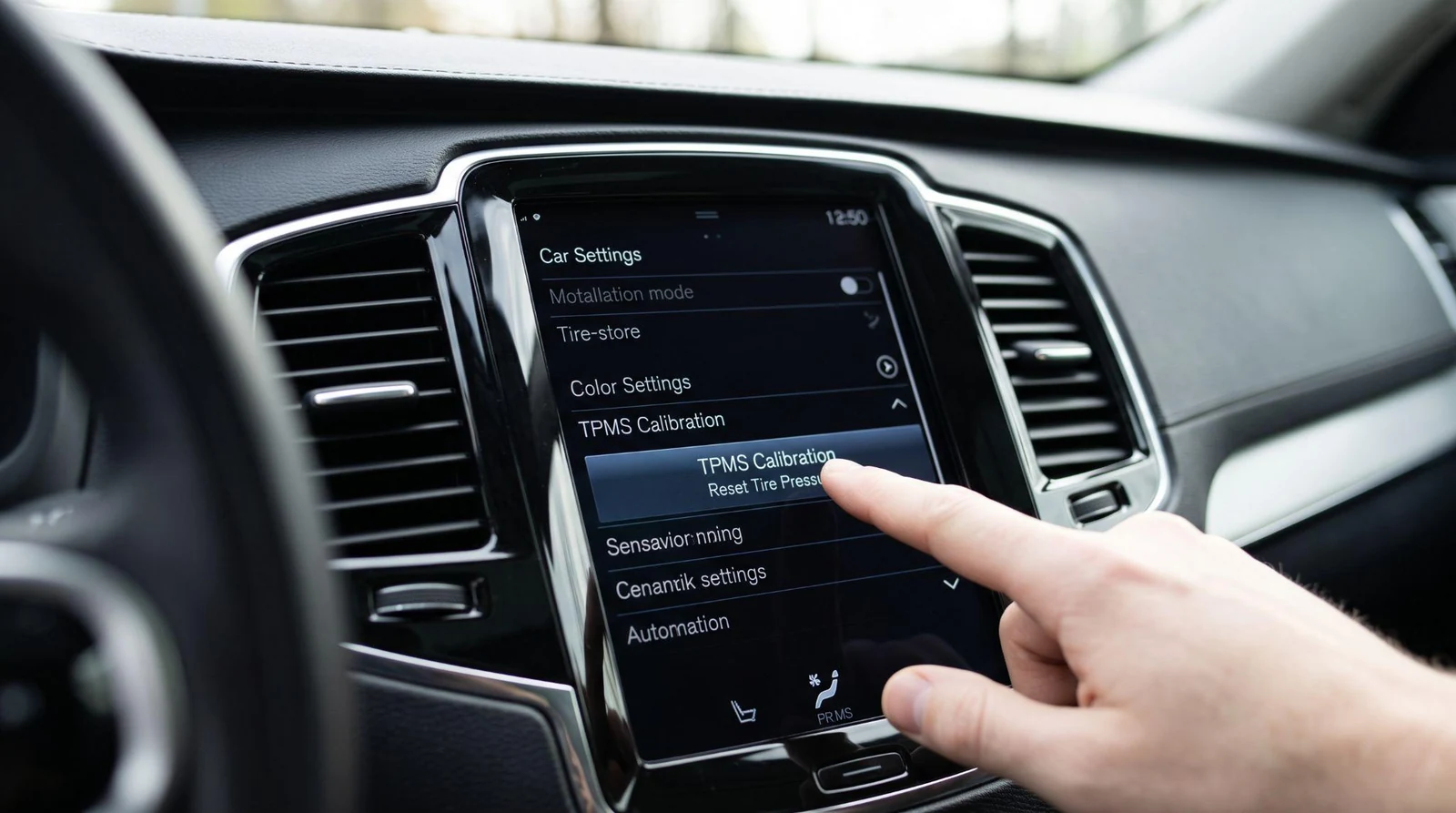
For a menu-based calibration, correct all tire pressures first. Then use the vehicle’s TPMS, tire pressure, or calibration menu and follow the manufacturer’s prompts. This approach applies to indirect systems and some manufacturer-specific configurations.
For an auto relearn, the vehicle learns sensor information during a specified drive procedure. Follow the exact conditions in the owner’s or service manual. Do not copy a speed or drive duration from a different model.
For a stationary relearn, the vehicle enters a learn mode while parked. A TPMS activation tool may then trigger each wheel sensor in the manufacturer’s required order. ATEQ and Autel both document stationary relearn as a common direct-TPMS method.
For an OBD relearn, a compatible TPMS or scan tool writes sensor IDs or relearn information through the diagnostic connector. This becomes especially relevant after replacing sensors when the vehicle does not automatically learn the new IDs.
When model-specific steps become difficult to follow, factory diagnostic flowcharts can help ensure the reset and diagnostic sequence is in the correct order.
Step 5: Separate Programming From Relearn
A replacement TPMS sensor may need programming before the vehicle can relearn it. These are separate tasks. Programmable aftermarket sensors may first need the correct vehicle protocol or sensor information written to them.
Programming prepares the compatible replacement sensor. Relearning tells the vehicle which sensor IDs it should recognize and, on some systems, associates those IDs with wheel positions.
This distinction explains why a brand-new sensor can still leave the warning light on. If the sensor was never programmed for the application, or the vehicle never learned its ID, repeating a dashboard reset may accomplish nothing.
Before buying another sensor, confirm the part matches the exact vehicle application and that you completed all required programming and relearning steps.

Verify the Reset Before Calling It Done
After completing the correct procedure, cycle the ignition as instructed and verify the warning state. If the vehicle requires a drive relearn, follow the manufacturer procedure under normal, legal driving conditions. Continental specifically advises following the vehicle user manual or the applicable automatic or manual relearn procedure.
Then check the dashboard. The TPMS warning should stay off, and vehicles displaying individual pressure values should show believable readings that reasonably match a trusted tire gauge.
If the light returns, recheck cold pressures. A tire that drops again probably has an air-loss problem that needs inspection. A flashing malfunction pattern points back toward system diagnosis rather than another pressure adjustment.
When the TPMS Light Will Not Reset
Start by checking TPMS-related diagnostic information when the vehicle and diagnostic equipment support it. Record the fault information before clearing anything. Then work through the trouble codes in order, rather than replacing the first component mentioned in a code description.
Possible causes include a sensor that doesn’t transmit, a replacement sensor using the wrong protocol, unregistered IDs, a relearn performed with the wrong procedure, or an initialization completed with incorrect tire pressures. TPMS tools can read sensor IDs and other sensor data, which helps determine whether the problem is at one wheel or in the relearn process.
The best next step is to gather evidence, not try another reset. If sensor data is available, compare all wheel IDs and pressure readings. If one wheel does not respond, test that sensor. If every sensor responds but the vehicle will not learn them, verify the exact relearn procedure and tool coverage for that model year.
This approach also reduces wrong-part replacement, which can occur when a warning light is taken as proof that a specific component has failed.
Reset TPMS Only After the Cause Is Clear
The practical rule is simple: check pressure first, reset second, and diagnose third if the warning remains. This order protects the tires and prevents wasted relearn attempts.
Use the vehicle’s placard pressure, identify direct versus indirect TPMS, and follow the exact manufacturer procedure. If the light flashes, returns quickly, or remains after a verified relearn, stop repeating the reset and move to sensor and fault diagnosis.
Commonly Asked Questions About the Reset TPMS
Why is my TPMS light still on after inflating the tires?
First, recheck every tire when cold and compare the readings to the driver-side door placard, not the tire sidewall. If one tire has already lost pressure again, look for a puncture, a valve leak, or a wheel-sealing problem before attempting another reset.
If pressures are correct, the vehicle may still require a calibration or relearn procedure. A light that flashes for roughly 60 to 90 seconds and then stays on points more toward a TPMS malfunction than simple underinflation.
In that case, check sensor communication, stored TPMS faults, and the model-specific relearn method instead of repeatedly adding air or pressing a reset control.
Can I reset TPMS without a scan tool?
Sometimes. Many vehicles can initialize TPMS through a dashboard menu, steering-wheel controls, a dedicated reset control, or a manufacturer-specified drive relearn. Indirect TPMS often uses a calibration procedure after you set all tires to the correct cold pressure.
Other direct systems require a stationary relearn using a TPMS activation tool, while others require an OBD-capable tool to register sensor IDs. The deciding factor is the exact make, model, year, and system design.
Check the owner’s manual or factory service information before starting. If you installed a replacement sensor, confirm whether it also needs programming, because programming the sensor and relearning it to the vehicle are separate tasks.
How long does TPMS take to relearn after a reset?
There is no universal relearn time. Some vehicles accept a calibration immediately after you confirm it in the menu, while others learn sensor information only after a manufacturer-defined drive cycle.
A stationary or OBD relearn may finish while the vehicle is parked if you use the correct tool and sequence. The safest approach is to follow the exact procedure for the vehicle instead of using a generic time or speed from another model.
Afterward, verify that the warning stays off and that any displayed tire pressures look reasonable compared with a trusted gauge. If the light returns, diagnose the cause rather than extending the drive and hoping the system eventually learns.
Do I need to reset TPMS after rotating the tires?
It depends on how the vehicle tracks wheel position. Some direct TPMS vehicles can automatically recognize sensor positions, while others require a relearn after rotation so that the control module can associate each sensor ID with the correct wheel location.
A vehicle that displays individual tire pressures may show them in the wrong positions if you skip the location relearn. Indirect systems may also call for recalibration after tire service because their learned wheel-speed baseline can change.
Check the rotation and TPMS procedure for the exact model year. If a relearn is required, set all tires to placard pressure first, then follow the listed sensor order or drive procedure exactly.
Can a bad TPMS sensor stop the system from resetting?
Yes. A direct TPMS relearn can fail if a sensor doesn’t transmit, uses the wrong protocol, isn’t programmed correctly, or isn’t compatible with the vehicle. The vehicle may also reject an otherwise good sensor if its ID was never registered through the required relearn procedure.
Before replacing parts, use appropriate TPMS diagnostic equipment to verify that each wheel sensor responds and that the control module stores a corresponding fault code. Compare sensor IDs and pressure data where available.
If all sensors respond, verify the relearn sequence and tool coverage. That prevents a procedure mistake from being misdiagnosed as a failed sensor and reduces unnecessary parts replacement.