When the engine revs but the car doesn’t accelerate normally, the tachometer is giving you an important diagnostic clue. If engine speed rises quickly while road speed barely changes, the engine is usually producing power, but something between the crankshaft and the driven wheels is failing to transfer it effectively.
That can mean low transmission fluid, internal automatic-transmission slip, a worn manual clutch, a torque converter problem, CVT or dual-clutch trouble, an electronic control fault, or a broken axle or driveline component. The same complaint can also come from normal CVT operation, wheelspin, limp mode, or an engine that is actually short of power.
The quickest way to avoid an expensive misdiagnosis is to identify where the power is being lost before replacing parts.
Key Takeaways
- Engine RPM rising sharply without a matching increase in vehicle speed usually points to transmission, clutch, or driveline slip.
- Rule out low, overheated, overfilled, contaminated, or incorrect transmission fluid before major transmission work.
- A transmission-control scan and live data can help distinguish internal slip from sensor, solenoid, torque-converter, and limp-mode problems.
- Manual clutch slip usually becomes most obvious under heavy load or in higher gears.
- A broken axle, driveshaft fault, differential problem, or transfer case in neutral can let the engine rev while the vehicle barely moves or doesn’t move at all.
- Repeated slipping, a burning smell, an over-temperature warning, or complete loss of drive are reasons to stop testing and avoid continued driving.
Is Power Being Lost After the Engine?
Before focusing on the transmission, watch how the engine behaves when you press the accelerator.
A slipping drivetrain usually lets the engine rev easily. An engine with a fuel, ignition, airflow, or exhaust restriction generally sounds strained and gains RPM more slowly.
| What the vehicle does | What it suggests | First area to inspect |
|---|---|---|
| RPM rises quickly but road speed barely changes | Power is slipping after the engine | Transmission, clutch, converter, CVT, axle |
| RPM flares during one shift and then catches | One shift element may be slipping | Fluid pressure, solenoid, clutch pack or band |
| Engine stays at unusually high RPM and will not upshift | Possible limp mode or shift-control fault | TCM codes, sensors, solenoids, wiring |
| Engine struggles to build RPM under load | Engine may be short of power | Fuel, ignition, intake, exhaust, throttle |
| Engine revs normally, but vehicle does not move | Drive may be disconnected completely | Axles, driveshaft, transfer case, linkage |
| One wheel spins on a slippery surface | Traction is being lost | Tires, road surface, traction-control operation |
Normal Behavior That Can Feel Like Transmission Slip
Not every rise in engine speed indicates a failure.
A CVT can hold the engine at a relatively steady, elevated rpm while vehicle speed continues to increase. That is part of how a continuously variable transmission changes ratio.
A conventional automatic may also raise engine speed sharply when it downshifts under heavy throttle. That is normal if road speed then increases appropriately.
Wheelspin is another common look-alike. On snow, mud, wet grass, or other low-grip surfaces, the driven wheels can spin while the vehicle moves very little.
Common Causes When the Engine Revs but the Car Doesn’t Accelerate
When engine RPM rises without a matching increase in vehicle speed, the problem is often related to clutch or transmission slip, but drivetrain, linkage, and engine faults can create similar symptoms. Identifying how and when acceleration is lost helps narrow the problem to the transmission, clutch, axles, controls, or engine.
Automatic Transmission Fluid and Hydraulic Pressure
Conventional automatic transmissions depend on fluid pressure to apply internal clutch packs and, on some designs, bands. The same fluid also lubricates components, removes heat, and operates the torque converter.
If the level is too low, the pump may draw air along with the fluid. Hydraulic pressure falls, and the internal clutches may not hold firmly enough. The result can be delayed engagement, an RPM flare during shifts, or slipping under load.
The symptom may become more obvious:
- When the transmission is cold
- During a long climb
- While cornering or braking hard
- When towing or carrying a heavy load
- After the fluid becomes very hot
Overfilling can also cause trouble. Rotating components can aerate the fluid, reducing its ability to transmit hydraulic pressure.
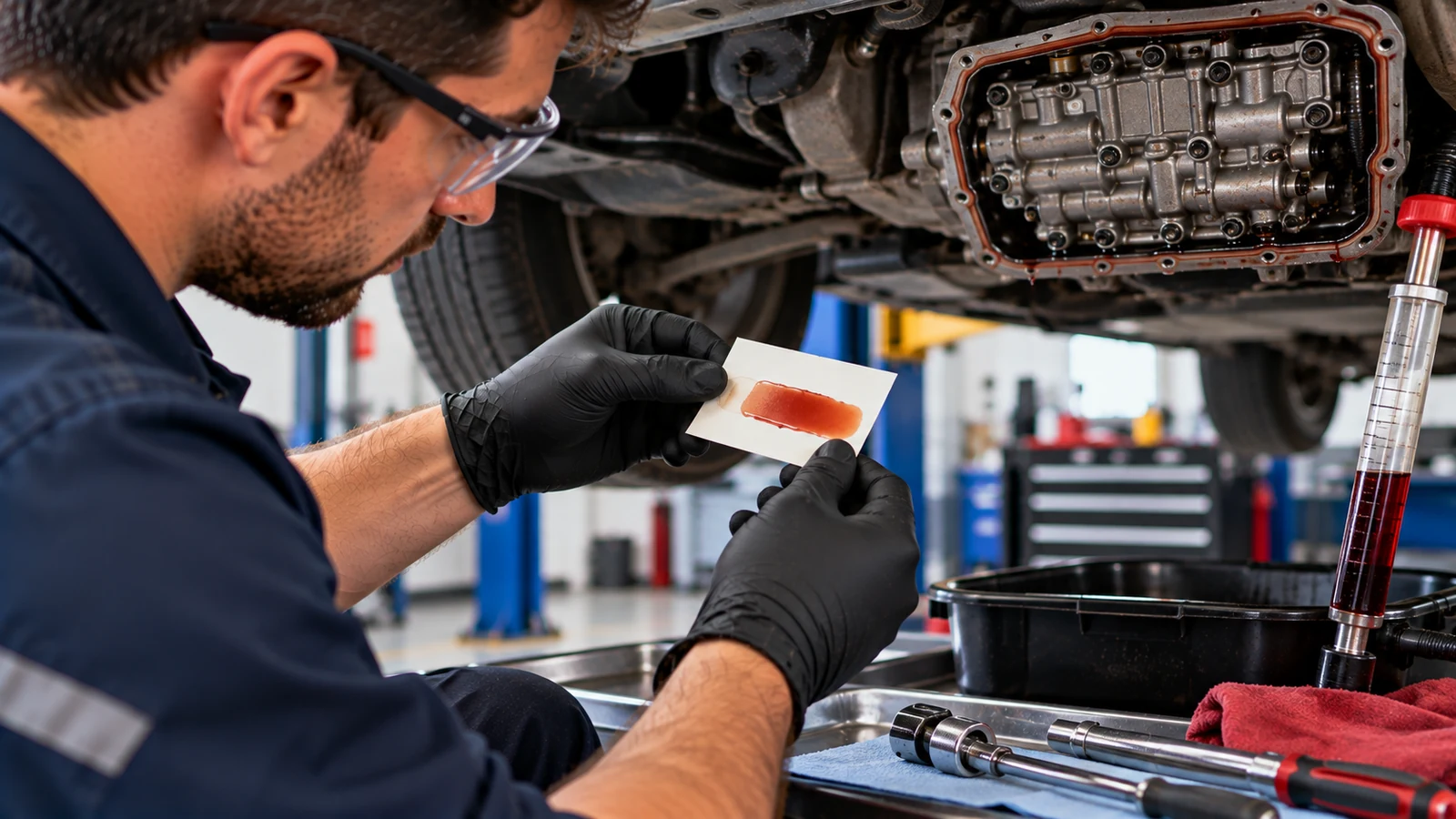
Fluid condition matters too. Dark fluid with a burnt odor suggests overheating and friction-material wear. Milky or frothy fluid may indicate contamination or aeration. Visible metallic debris can indicate more serious internal wear.
Most importantly, use the exact fluid specification and checking method required for the vehicle. Some transmissions use a dipstick, while sealed units may require a level plug and a specific fluid-temperature range.
Worn Internal Clutches and Bands
Inside a conventional automatic transmission, different clutch packs are applied to produce different gear ratios. As their friction material wears, the transmission may require more hydraulic pressure and more time to hold a gear.
Common signs include:
- A noticeable delay after selecting Drive or Reverse
- RPM flaring between two particular gears
- Slip occurring consistently in one gear
- Harsh shifts as the transmission attempts to compensate
- Burnt-smelling transmission fluid
- Slip becoming worse once the transmission is hot
Fresh fluid can correct a level, specification, or contamination problem, but it cannot replace friction material that has already worn away.
Torque Converter Problems
The torque converter transfers engine torque into a conventional automatic transmission.
At cruising speed, many systems apply a torque converter clutch to reduce slip between the engine and transmission. If that clutch fails to hold, engine speed may rise and fall slightly while vehicle speed remains steady. Some drivers describe a shudder that feels similar to driving over a textured road surface.
A torque converter clutch performance problem may produce P0741, although possible causes include the converter itself, degraded fluid, a control solenoid, or valve-body wear.
The converter’s stator also helps multiply torque when the vehicle starts moving. Problems with its one-way clutch can reduce launch performance or contribute to overheating.
Manual Clutch Slip
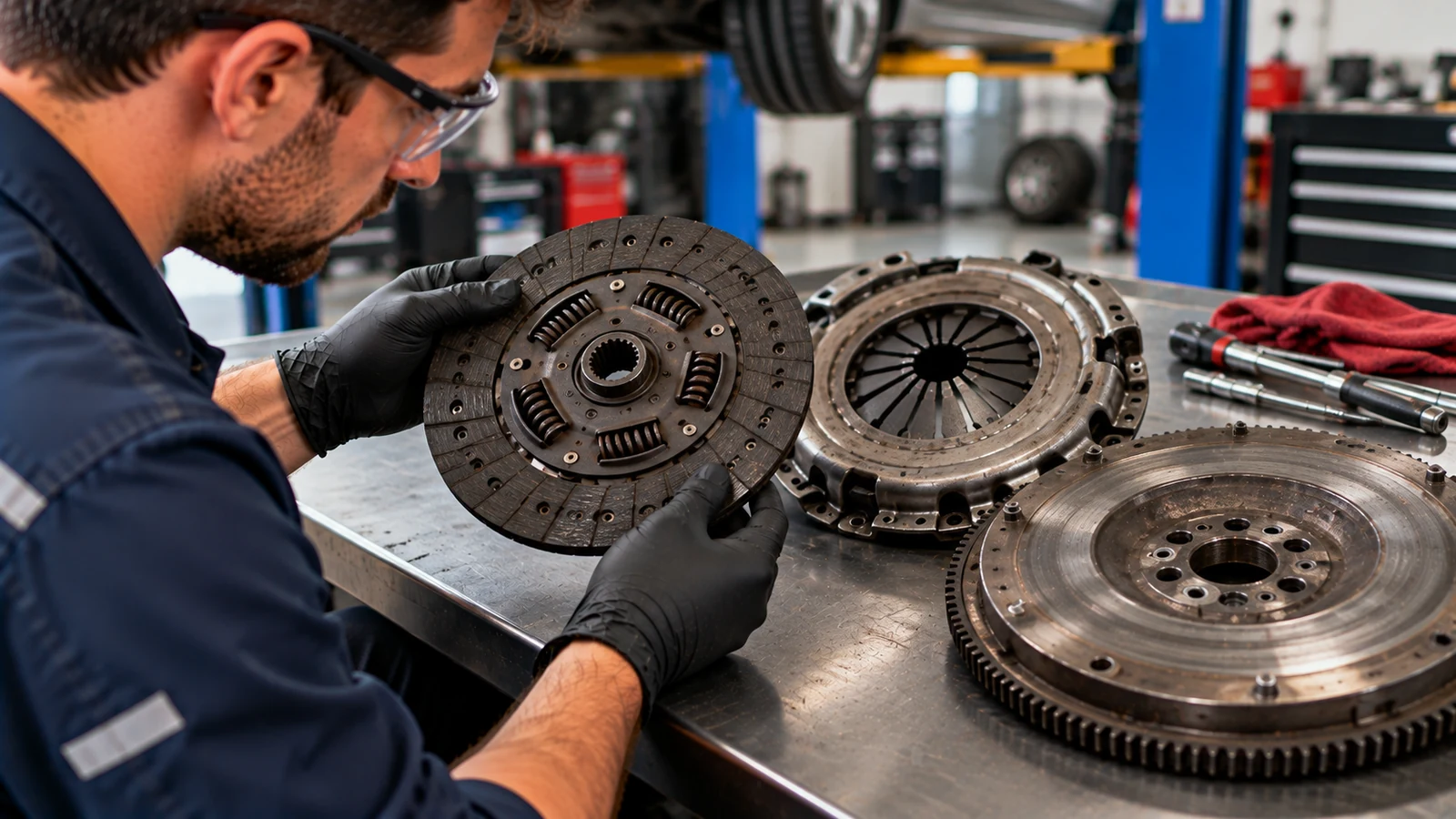
A manual-transmission car can show similar symptoms when the clutch disc no longer grips the flywheel firmly enough.
Typical signs include:
- Engine RPM increasing faster than vehicle speed.
- Slip appearing first in third, fourth, or higher gears.
- Worse symptoms on hills or under heavy load.
- A high clutch engagement point.
- A burnt friction-material smell after hard acceleration.
Possible causes include normal clutch wear, a weak pressure plate, a glazed flywheel, heat damage, or oil contamination from an engine or transmission seal.
A simple confirmation test can sometimes be made on a safe, quiet road by applying firm throttle in a higher gear at moderate engine speed. If RPM jumps sharply without a comparable increase in road speed, the clutch is slipping. Don’t repeat the test unnecessarily, because every slip creates additional heat.
CVT and Dual-Clutch Transmission Problems
A CVT does not use fixed gear ratios like a traditional automatic. Many use a steel belt or chain operating between variable pulleys.
True CVT slip can produce:
- Engine RPM flaring without normal acceleration.
- Shudder when moving away from a stop.
- Whining or droning that changes with road speed.
- Reduced power after the transmission overheats.
- Transmission-temperature warnings.
CVT fluid specification and level are especially important because hydraulic pressure controls pulley clamping force.
A dual-clutch transmission uses two computer-controlled clutches. Wear, overheating, adaptation problems, or control faults may cause hesitation, shudder, or slipping during takeoff and gear changes.
Solenoids, Speed Sensors and the Transmission Control Module
A transmission can behave as though it has a major mechanical failure when the real problem is electronic.
Shift solenoids direct hydraulic pressure to the required clutch circuits. Pressure-control solenoids regulate line pressure. A sticking or electrically failed solenoid can cause a missed shift, flare, harsh engagement, or limp mode.
The transmission control module also compares input and output shaft speeds. If their relationship doesn’t match the commanded gear ratio, it may determine the transmission is slipping.
That makes input and output speed sensors critical. A bad sensor, damaged connector, wiring fault, weak ground, or low charging voltage can cause incorrect readings or force the transmission into protective mode.
Axles, Driveshafts and Transfer Cases
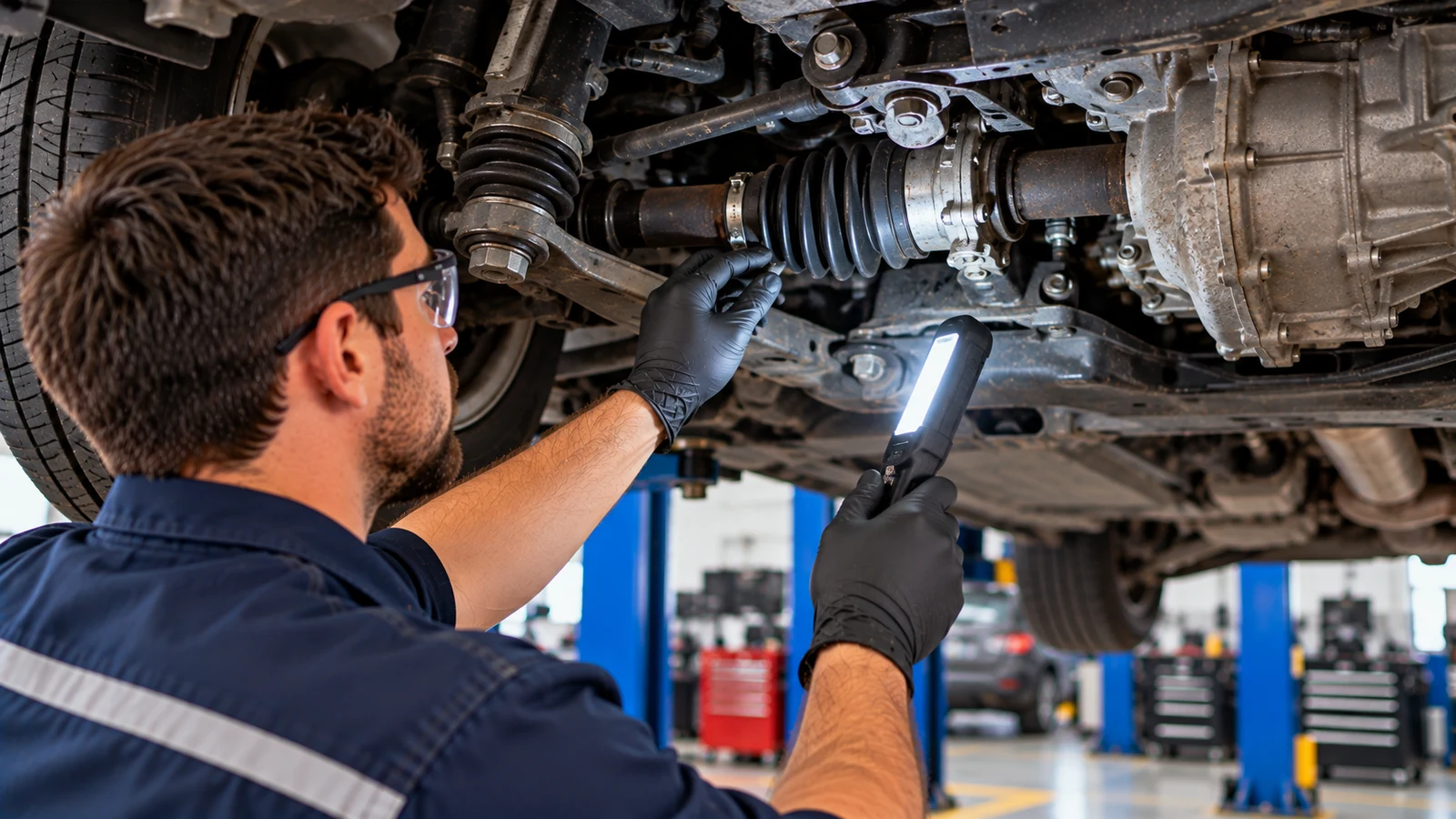
Not every case of high RPM and no acceleration originates inside the gearbox.
A failed CV axle can allow an open differential to send power toward the broken side. The engine and transmission may operate normally while little or no torque reaches the road.
Before a CV joint fails completely, you may notice:
- Clicking during tight turns.
- Grease thrown from a torn CV boot.
- Vibration during acceleration.
- Clunking as the drivetrain takes up load.
Rear-wheel-drive and many four-wheel-drive vehicles add a driveshaft, universal joints, differential, and sometimes a transfer case to the power path.
A failed U-joint, axle shaft, differential, or driveshaft can therefore create similar symptoms.
On some 4WD systems, the transfer case also has a Neutral position. If it is left in Neutral or sits between ranges, the engine and transmission can operate while neither axle is driven.
Shift Cable or Linkage Problems
The gear selector may show Drive even though the transmission itself is not fully in Drive.
A stretched cable, damaged linkage, or broken cable bushing can leave the transmission in Neutral or between ranges. A suddenly loose shifter is a useful clue.
If Park also fails to hold the vehicle, treat the problem as a rollaway hazard. Set the parking brake and secure the wheels until you repair the linkage.
Engine-Side Problems That Mimic Transmission Slip
If the engine itself struggles to build rpm, investigate the engine before blaming the transmission.
Possible causes include:
- Weak ignition coils.
- Worn spark plugs.
- Low fuel pressure.
- Restricted catalytic converter.
- Dirty or faulty mass-airflow sensor.
- Split intake ducting.
- Turbocharger boost leaks.
- Electronic throttle faults.
- Engine reduced-power mode.
The key difference is how the engine sounds and responds. A slipping drivetrain generally lets it rev freely. An underpowered engine usually labors, hesitates, surges, or misfires.
Diagnose the Problem in the Right Order
A good diagnosis moves from simple checks to expensive, invasive work.
- Confirm the controls. Make sure the parking brake is released, the selector position matches the transmission, and any 4WD transfer case is fully engaged in a drive range.
- Check transmission fluid correctly. Follow the required temperature, engine-running or engine-off procedure, and use the specified fluid.
- Inspect fluid condition. Look for a burnt odor, aeration, contamination, or metallic debris.
- Scan every relevant control module. A basic engine-only code reader may miss transmission-specific faults.
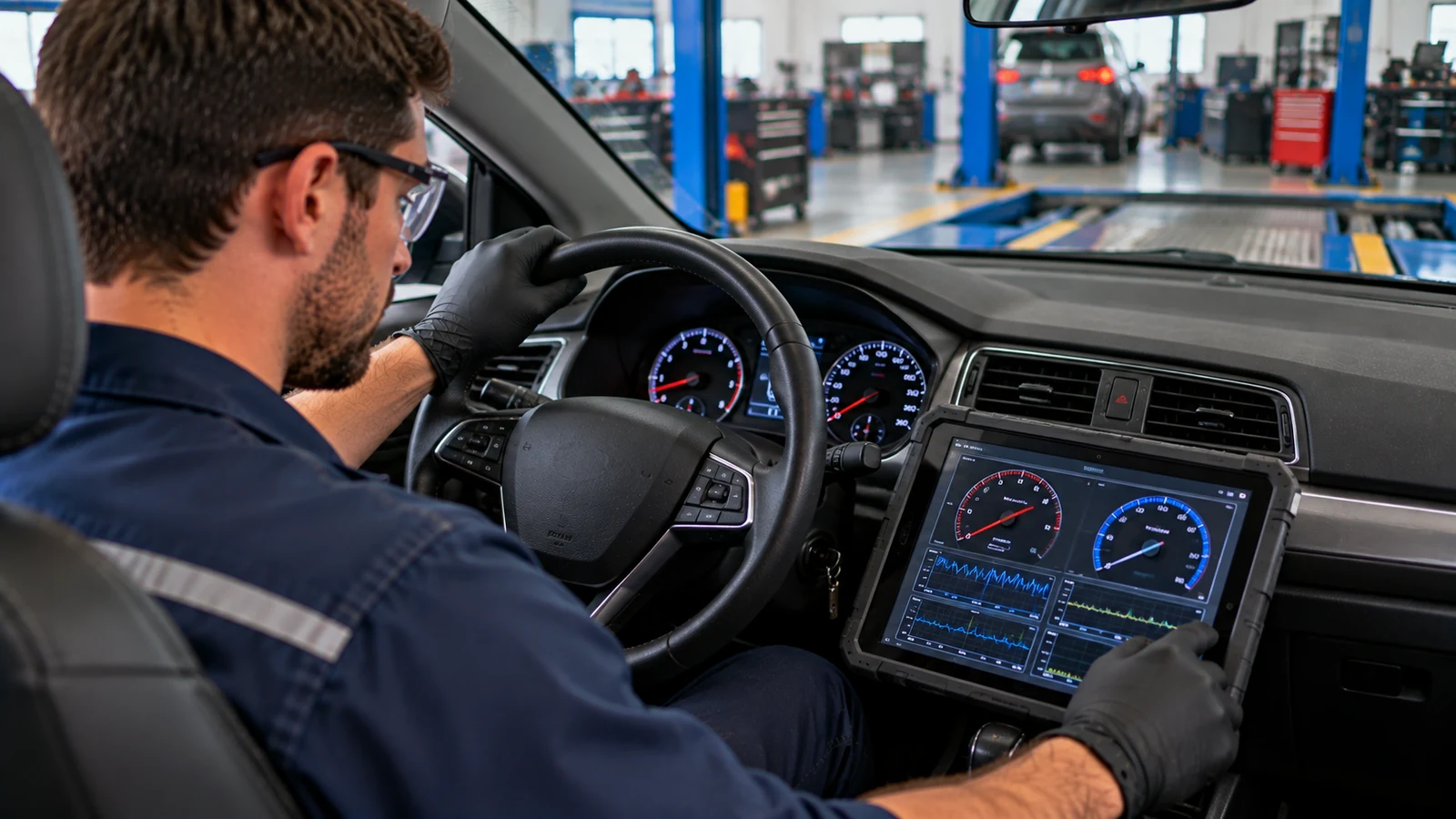
- Record live data. Compare engine rpm, transmission input speed, output speed, commanded gear, converter-clutch status, and fluid temperature where available.
- Identify the operating pattern. Note whether the problem appears cold, hot, uphill, during one shift, or at steady cruising speed.
- Inspect the driveline. Check CV axles, driveshafts, joints, transfer-case engagement, and visible leaks.
- Perform factory tests before replacing components. Resistance checks, line-pressure tests, relearns, and adjustment procedures vary by vehicle.
If the vehicle slips severely or will not move, do not continue hard road testing.
Scan Codes and Compare Live Data

Transmission codes do not prove a part has failed, but they can dramatically narrow the search.
| Code | General meaning | Practical next step |
|---|---|---|
| P0700 | Transmission control system has requested a warning | Access the TCM and read its specific faults |
| P0715 | Input or turbine-speed sensor circuit | Check sensor, wiring and connector |
| P0720 | Output-speed sensor circuit | Test sensor and compare with vehicle speed |
| P0730 | Incorrect gear ratio | Check fluid, pressure, and internal clutch operation |
| P0731-P0735 | Incorrect ratio in a specific gear | Identify components used for that gear |
| P0741 | Torque converter clutch performance | Check fluid, TCC control, and converter |
| P0894 | Transmission component slipping | Check pressure, fluid, and internal wear |
| P0218 | Transmission over-temperature | Find the cause of excessive heat |
Live data is particularly useful because it shows what is happening rather than only what fault was stored.
In a fixed gear, input speed, output speed, and vehicle speed should maintain a predictable relationship.
- Engine rpm increasing while output speed stays almost flat confirms that power is being lost somewhere downstream.
- An incorrect input-to-output ratio points toward internal transmission slip.
- Engine speed running ahead of transmission input while the converter clutch is commanded on can indicate torque-converter clutch slip.
- Normal transmission input and output readings with no vehicle movement point to the axles, differential, driveshaft, or transfer case.
Vehicle-Specific Patterns Worth Checking
Some symptoms deserve extra attention on particular vehicles because the source material identifies known transmission behaviors, protective strategies, or service history. Vehicle year, engine, transmission, and VIN still matter, so use the correct factory procedure before deciding on a repair.
Nissan CVT Temperature Protection and Fluid Checks
For Nissan vehicles with CVTs, the reference material highlights transmission-temperature protection as a possible cause when acceleration becomes poor after extended load.
The supplied Nissan workshop manual catalog includes vehicle-specific service information such as the 2003-2014 Nissan Murano FWD workshop manual and 2008-2013 Nissan Rogue 2WD workshop manual.
The source reference describes CVT temperature-protection behavior affecting 2008-2013 Rogue models as well as certain Altima and Sentra applications. Conditions worth checking include overfilled CVT fluid, incorrect fluid, and cooling-system concentration that reduces heat-transfer performance.
AutoServicePlus also lists a 2002-2012 Nissan Altima workshop manual and a 2007-2012 Nissan Sentra workshop manual for model-specific fluid, cooling, and diagnostic procedures.
The important point is not to assume every high-rpm CVT complaint means the transmission has mechanically failed. Confirm fluid level, fluid specification, temperature behavior, stored faults, and cooling-system condition first.
Ford Focus and Fiesta Dual-Clutch Complaints
The source reference identifies Ford PowerShift dual-clutch applications in the Focus and Fiesta as vehicles where shudder, hesitation, clutch slip, and delayed acceleration can require careful separation of clutch wear from control or software issues.
Start with the correct Ford workshop manual coverage and match the exact year and drivetrain. Relevant supplied examples include the 2012-2013 Ford Focus workshop manual and 2010-2017 Ford Fiesta workshop manual.
Do not assume that every Focus or Fiesta uses the same gearbox. Identify the transmission before applying a test procedure, ordering a clutch assembly, or performing an adaptation or relearn.
Honda Odyssey and Pilot Transmission Service History
The source material also notes a 2004 Honda transmission recall affecting certain 2002, 2003, and early-2004 Odyssey vehicles, with some related Honda and Acura applications. The issue involved insufficient lubrication around second gear, which could lead to overheating and damage.
For an older Odyssey with slipping, abnormal shift behavior, or transmission noise, check recall history and previous repairs, then perform a standard diagnosis.
AutoServicePlus provides broader Honda workshop manual coverage, including the 1999-2013 Honda Odyssey workshop manual and 2003-2005 Honda Pilot workshop manual.
Use the VIN and exact transmission identification before applying any recall-era repair information to a specific vehicle.
Dodge Grand Caravan Limp Mode
The Grand Caravan is a useful example of why high RPM does not automatically mean uncontrolled transmission slip.
The source notes that the 62TE automatic used in later Grand Caravan applications can enter a fail-safe strategy and remain in a fixed gear after the controller detects a serious problem. The van may pull away slowly and then run at unusually high rpm because it cannot shift normally.
The Dodge workshop manual catalog and the supplied 2017-2020 Dodge Grand Caravan workshop manual provide the model-specific diagnostic procedures needed to interpret stored transmission faults.
In this situation, reading the TCM is more useful than replacing parts based only on the way the vehicle feels.
Jeep Wrangler and Transfer-Case Neutral
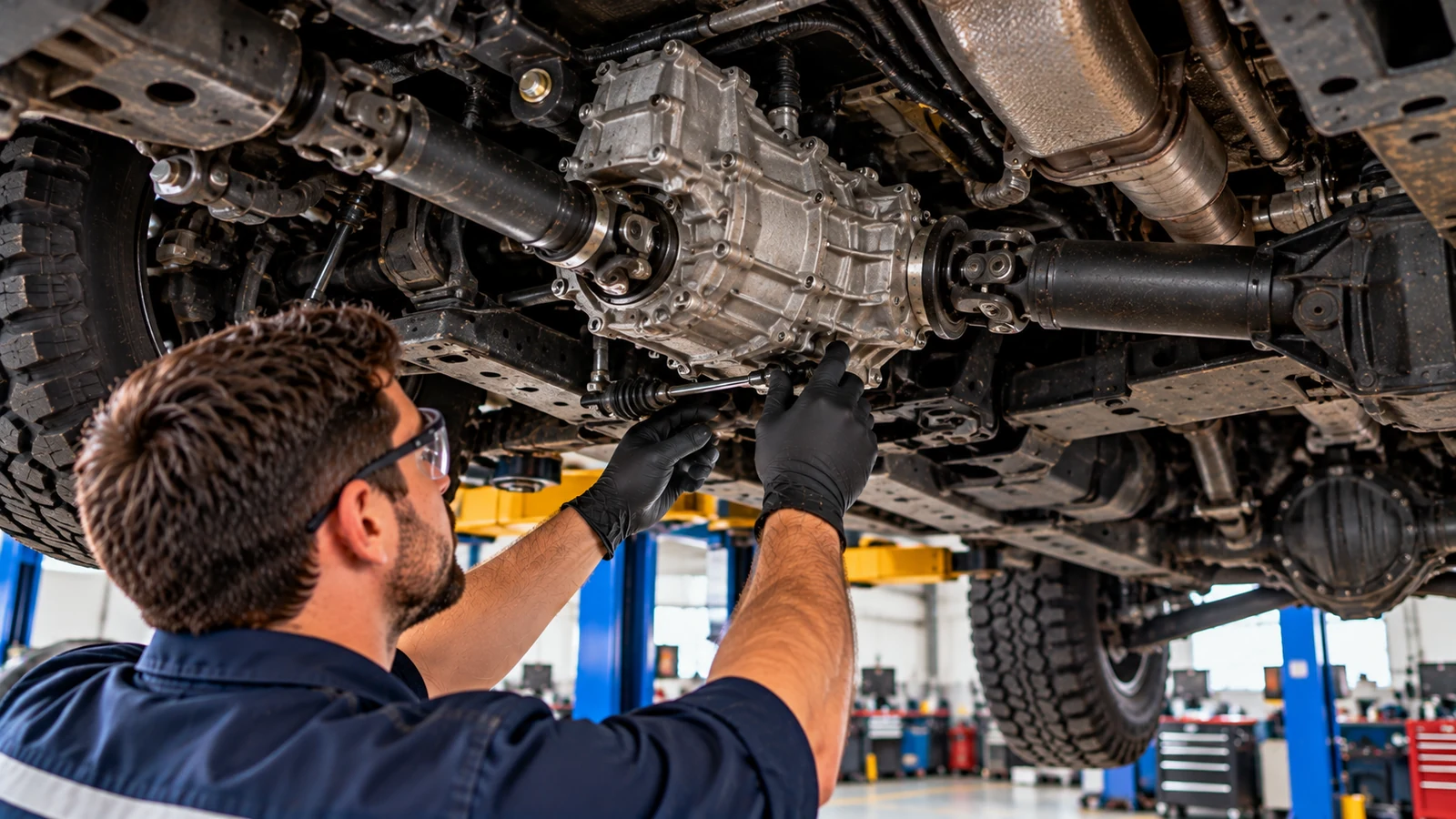
A 4WD vehicle adds another simple but important possibility: the transmission may be operating normally while the transfer case is not sending torque to the axles.
Wranglers used for flat towing may have a transfer-case Neutral position. If the case remains in Neutral or isn’t fully engaged afterward, the engine can rev in Drive without moving the Jeep.
The supplied Jeep workshop manual catalog includes a 1998-2010 Jeep Wrangler 4WD workshop manual you can use to confirm model-specific transfer-case operation, linkage, and driveline procedures.
Always secure the vehicle before investigating a transfer-case or selector problem because a vehicle with the driveline disconnected may roll unexpectedly.
Why the Factory Workshop Manual Matters
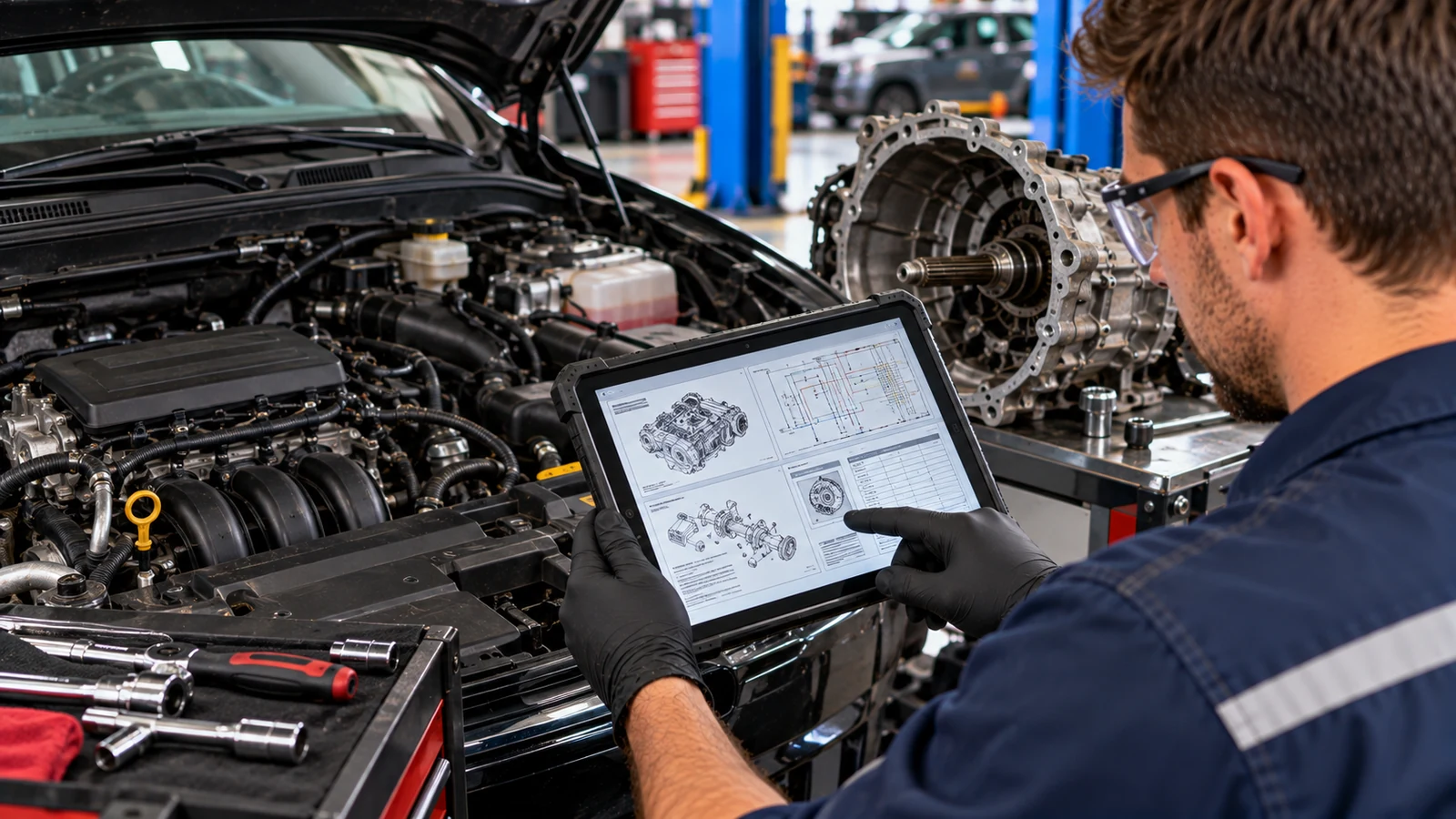
Transmission diagnosis is unusually dependent on exact model information. Two versions of the same vehicle can use different gearboxes, fluids, sensor values, fill procedures, torque specifications, and relearn routines.
A generic diagnosis can identify the likely system. The factory procedure tells you how to test that system correctly.
Fluid Level, Temperature and Fill Procedures
A transmission that appears low because you used the wrong checking procedure may actually be filled correctly. Conversely, a sealed gearbox can be genuinely low even though there is no dipstick to reveal it.
Factory documentation becomes especially important for:
- Required transmission-fluid specification.
- Engine-running versus engine-off level checks.
- Fluid-temperature windows.
- Fill-plug and overflow procedures.
- Drain-and-refill quantities.
- Cooler-line servicing.
- Adaptation or reset procedures after service.
The supplied inventory includes Toyota workshop manuals such as the 2015 Toyota Camry XV50 workshop manual, Volkswagen workshop manuals including the 2008-2012 Volkswagen Golf Mk6 GTI workshop manual, and BMW workshop manuals such as the 2009-2015 BMW 7 Series F01/F02 workshop manual.
The same rule applies to more complex performance vehicles. The Porsche workshop manual catalog includes the 2015-2016 Porsche Macan workshop manual for model-specific procedures rather than relying on a generic fluid-check method.
Electrical Tests, Solenoids and Speed Sensors
An electronic transmission fault often requires exact connector pin locations, resistance specifications, wiring diagrams, ground locations, and module test procedures.
Those details cannot safely be generalized from another model.
Examples in the supplied AutoServicePlus inventory include Audi workshop manuals and the 2009-2013 Audi A4 Quattro Sedan 8K2 workshop manual, Mercedes-Benz workshop manuals with the 2006-2011 Mercedes-Benz ML 350 4MATIC workshop manual, and Hyundai workshop manuals including the 2015-2016 Hyundai Sonata LF workshop manual.
Use the wiring and diagnostic information for the exact model before condemning a solenoid, speed sensor, control module, or transmission assembly.
Axles, Driveshafts and Transfer Cases
Once live data suggests the transmission itself is producing normal output, diagnosis moves farther downstream.
Factory information can show:
- CV axle removal procedures.
- Hub-nut torque.
- Driveshaft alignment.
- Universal-joint servicing.
- Differential inspection.
- Transfer-case operating positions.
- Transfer-case actuator testing.
- Fluid specifications.
- Propeller-shaft fastener torque.
- Safe lifting and support points.
The supplied Subaru workshop manual catalog includes the 2010-2013 Subaru Legacy workshop manual, while Kia workshop manuals include a 2009 Kia Borrego 4WD workshop manual.
For dedicated four-wheel-drive systems, useful supplied examples include Land Rover workshop manuals and the 1999-2004 Land Rover Discovery II workshop manual, plus RAM workshop manuals with the 1997-2013 RAM 2500 4WD workshop manual.
The same approach applies to other truck and SUV drivetrains. The supplied Chevy workshop manual catalog includes a 1999-2006 Chevy Suburban 1/2 Ton 4WD workshop manual. Other relevant 4WD examples in the supplied inventory include the 1997-2014 Ford Expedition 4WD workshop manual and 1998-2003 Dodge Durango 4WD workshop manual.
The point is not that these models share one failure. They do not. The value of the manual is that you must test each driveline according to its own layout and specifications.
Is It Safe to Drive When the Engine Revs but the Car Doesn’t Accelerate?
How urgently you should stop depends on the symptom.
| Situation | Recommended response |
|---|---|
| One brief flare, no warning lights, normal fluid condition | Diagnose soon and drive gently |
| Repeated slipping or delayed engagement | Minimize driving and inspect promptly |
| Burnt smell or badly discolored fluid | Avoid further driving if possible |
| Transmission over-temperature warning | Pull over safely and allow the system to cool |
| Transmission stuck in one gear | Limit driving to reaching a safe location if necessary |
| Bang followed by complete loss of drive | Stop and arrange recovery |
| Vehicle will not move in any gear | Do not continue revving the engine |
| Park selected, but vehicle can roll | Secure the vehicle and repair before use |
Repeated slipping creates heat. Heat accelerates wear of the friction material and fluid, which can turn a smaller hydraulic or control problem into major internal damage.
Loss of acceleration can also create a traffic hazard when entering an intersection, climbing a grade, or merging.
Repair Difficulty and Relative Cost
The source material does not provide fixed dollar figures, and actual prices vary greatly by vehicle, transmission design, labor rate, and local parts availability. The useful comparison is therefore relative.
| Repair | Typical difficulty | Relative cost |
|---|---|---|
| Correct transmission-fluid level | Easy to moderate | Low |
| Replace incorrect or contaminated fluid | Easy to moderate | Low |
| Repair selector cable or linkage | Easy to moderate | Low |
| Repair wiring, connector or ground | Moderate | Low to moderate |
| Software update or relearn | Moderate | Low to moderate |
| Replace speed sensor or accessible solenoid | Moderate | Moderate |
| Replace CV axle or U-joint | Moderate | Moderate |
| Replace manual clutch and related components | Difficult | Moderate to high |
| Replace valve body or torque converter | Difficult | High |
| Rebuild or replace transmission or CVT | Very difficult | Highest |
This is why diagnosis should come before parts replacement. A broken axle, inaccurate speed sensor, bad connector, low fluid level, and worn internal clutch pack can all produce symptoms that a driver simply describes as “the engine revs, but the car won’t accelerate.”
Common Diagnostic Mistakes to Avoid
Several mistakes make this symptom more expensive than it needs to be.
- Assuming the transmission is destroyed before checking the fluid. A level or specification problem is much cheaper to identify.
- Changing fluid without finding the leak. A low transmission has lost fluid somewhere.
- Using color alone to judge fluid. Different fluids may start with different colors, so odor, clarity, contamination, and specification also matter.
- Using only an engine-code reader. Transmission faults may be stored in a separate control module.
- Replacing a solenoid only because a solenoid code exists. Wiring faults, contamination, hydraulic problems, or internal debris can create the same code.
- Ignoring the driveline. A broken axle or transfer-case problem can make a healthy transmission appear completely failed.
- Repeating full-throttle slip tests. Every slip adds heat and wear.
- Applying a procedure from a similar model. Fluid level, torque values, wiring, and adaptation routines may differ.
- Continuing to drive after a temperature warning or burning smell. The additional heat can increase the eventual repair cost.
Conclusion
When the engine revs but the car doesn’t accelerate, start by deciding whether the engine is producing power that is being lost downstream or the engine itself is struggling.
For a freely revving engine, check the transmission fluid level and condition, scan the transmission controller, compare live input and output speeds, then inspect the clutch, converter, CVT, axles, driveshaft, differential, transfer case, and selector linkage as appropriate.
Do not replace a transmission simply because the rpm rises. A fluid-level problem, sensor fault, limp mode, broken axle, or transfer-case position can create remarkably similar symptoms.
Most importantly, use the correct vehicle-specific workshop information for fluid specifications, test values, torque settings, wiring diagrams, relearn procedures, and driveline service. If the vehicle will not move, repeatedly slips, smells burnt, or shows an over-temperature warning, stop driving and diagnose the fault before additional heat turns a repairable problem into major transmission damage.
Frequently Asked Questions
Can Low Transmission Fluid Cause High RPM With Poor Acceleration?
Yes. An automatic transmission requires enough fluid to maintain hydraulic pressure. If the level is low, the pump may draw air, and the internal clutches may slip. Correcting the level only solves the problem permanently if you also repair the source of the fluid loss.
Is High RPM During Acceleration Normal With A CVT?
It can be. A healthy CVT may hold engine speed relatively high while the transmission continuously changes ratio and road speed rises.
It becomes more suspicious when RPM suddenly spikes without an increase in road speed, the vehicle shudders, a new whine appears, or a transmission-temperature warning appears.
How Can I Tell A Slipping Clutch From A Gearbox Problem?
A worn clutch usually lets engine RPM rise while the selected gear stays engaged and road speed fails to increase proportionally. The symptom often appears first under heavy load or in higher gears.
Gearbox faults are more likely to produce difficulty selecting a gear, grinding, abnormal bearing noise, or a gear that jumps out of engagement.
Will Changing Transmission Fluid Stop Transmission Slip?
Only when the fluid itself is part of the cause.
Correcting a low level, wrong specification, or certain fluid-condition problems may restore proper operation if the friction components are still serviceable.
New fluid cannot restore worn clutch material. Persistent slipping combined with burnt fluid or debris raises concern for internal damage.
Can A Sensor Make The Transmission Feel Like It Is Slipping?
Yes. The transmission controller uses speed-sensor information to calculate gear ratios and decide whether the transmission is operating correctly.
A faulty input or output sensor, wiring problem, connector fault, bad ground, or low system voltage can create false ratio information or trigger limp mode.
Why Does The Car Accelerate Poorly Only When The Transmission Gets Hot?
Heat can expose several problems. Fluid that has lost its properties may control pressure less effectively, worn internal clutches may slip more readily, and some transmissions deliberately reduce performance when fluid temperature gets too high.
Record transmission temperature and stored codes rather than assuming the same repair applies to every vehicle.
Why Does the Engine Rev But the Vehicle Not Move in Drive or Reverse?
Complete loss of movement suggests a more severe disconnect. Possibilities include axle failure, driveshaft or differential failure, the transfer case in Neutral, a selector linkage problem, or a major internal transmission fault.
Stop revving the engine and inspect the drivetrain rather than repeatedly applying throttle.
How Do I Know If the Problem Is the Transmission or the Engine?
Watch how the engine gains RPM.
If the engine revs freely but vehicle speed does not follow, investigate the transmission, clutch, torque converter, and driveline.
If the engine itself struggles, hesitates, misfires, or cannot build RPM under load, investigate fuel delivery, ignition, intake airflow, exhaust restriction, boost control, or throttle operation.