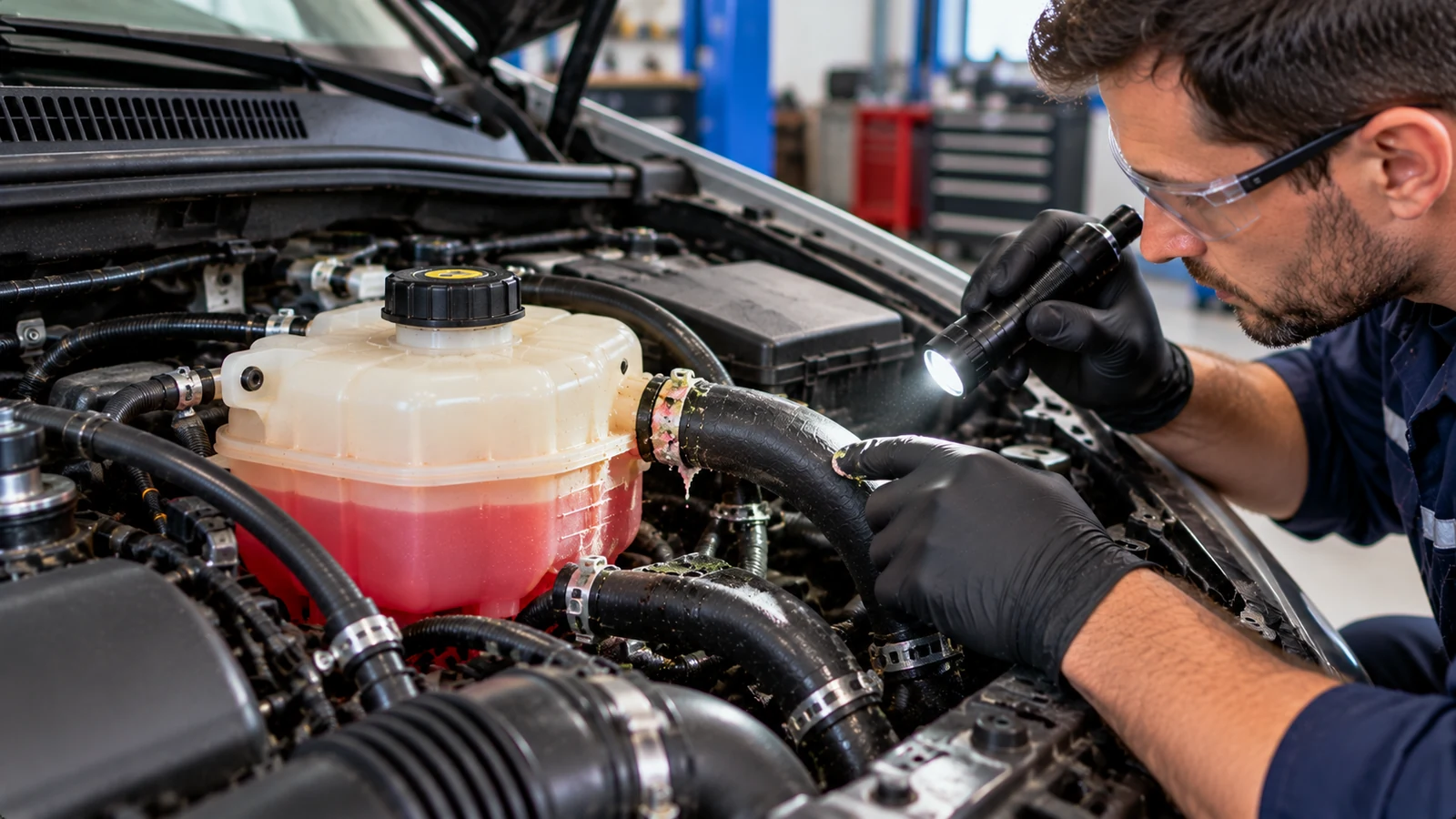
A P0402 code can turn a normal drive into a rough, unpredictable one. The code points to excessive exhaust gas recirculation, and related drivability complaints can include rough running, surging, or loss of power.
A short drive may be possible if the check engine light is steady and the car still runs normally. The deciding factor is not the code alone. It is how the vehicle behaves right now.
The safest approach is to judge the symptoms, confirm the fault, and diagnose the EGR system before replacing parts. Below, you will see when driving is reasonable, when to stop, and what should be checked first.
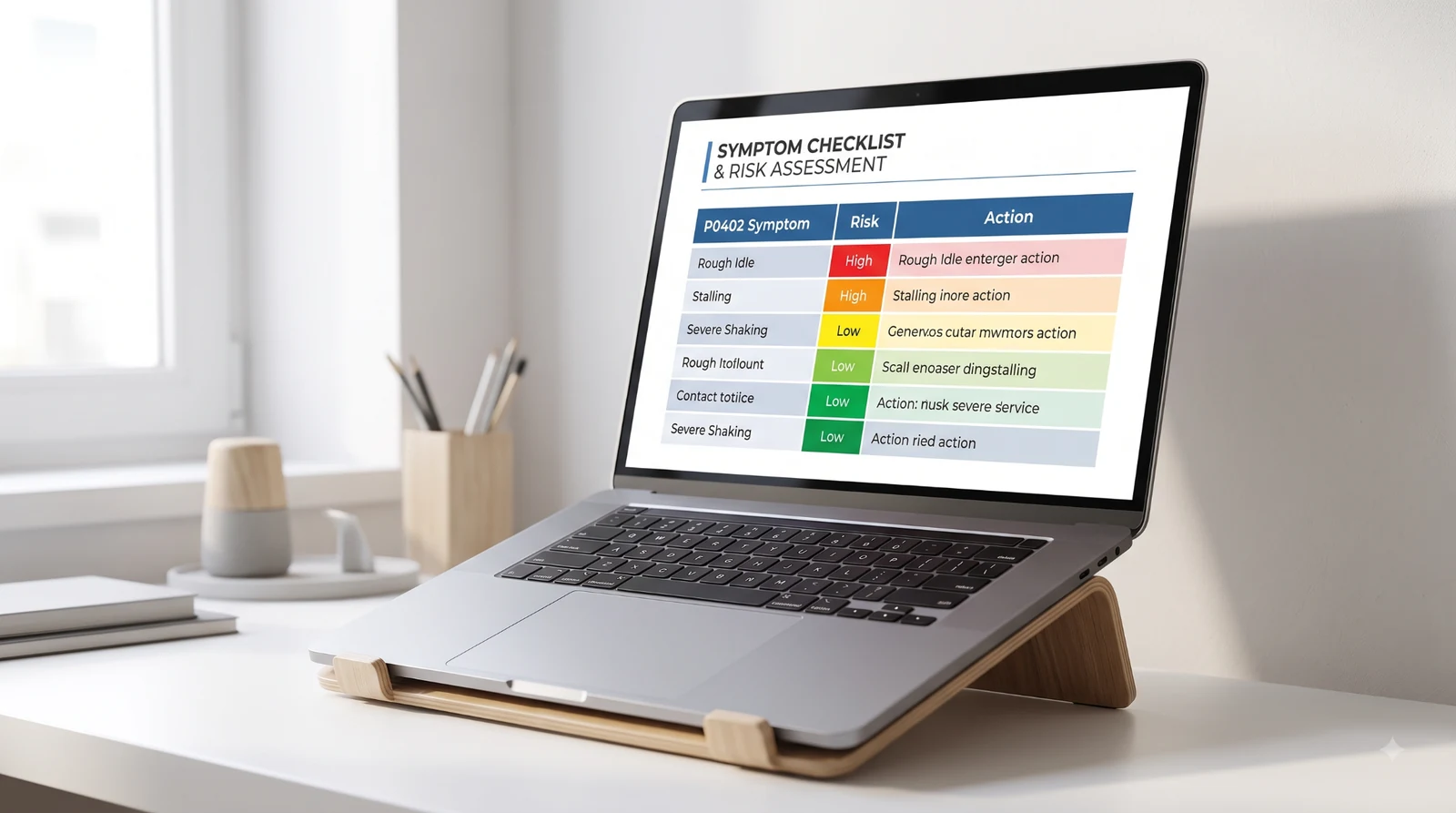
Can I Drive With a P0402 Code: Know the Risk
You can sometimes drive briefly with P0402, but only when the vehicle remains stable and no urgent warning signs appear. The code concerns excessive EGR flow, and EGR faults can affect engine performance. Ford service information also shows that P0402 can involve different EGR-system components rather than one guaranteed failed part.
| What you notice | What it may mean | Driving choice |
|---|---|---|
| Steady check engine light, normal idle | Fault is present, but drivability is stable | A short necessary trip may be reasonable |
| Rough idle or hesitation | EGR operation may be disturbing combustion | Limit driving and arrange diagnosis soon |
| Stalling at stops | The engine cannot maintain stable idle | Stop driving if it can stall in traffic |
| Flashing check engine light or severe shaking | An active misfire or another urgent fault may be present | Stop driving and arrange professional assistance |
| Overheating, oil-pressure warning, or major power loss | A separate serious problem may be occurring | Stop immediately and do not continue |
What P0402 actually means
P0402 is a generic OBD-II powertrain trouble code associated with the exhaust gas recirculation system. Generic P0-series codes are standardized across manufacturers, although manufacturers can use different monitoring strategies and diagnostic procedures.
The EGR system routes a controlled portion of exhaust gas back toward the intake under appropriate operating conditions. Its purpose includes reducing combustion temperature and nitrogen oxide emissions. The amount of recirculation changes with engine operating conditions.
That is why P0402 is not simply a “bad emissions sensor” message. The problem can involve the EGR valve, its control system, its feedback system, or another condition affecting how EGR flow is calculated.
Why driving risk changes by symptom
The safest decision depends on drivability, not just the stored code. A steady check engine light with a smooth idle is very different from a car that repeatedly loses power or becomes unstable.
If the engine runs normally, a short trip to a repair location may be reasonable. Do not treat that as permission for days of normal driving. An intermittent problem can behave differently as engine temperature and operating conditions change.
If you are using a scan tool, follow a consistent diagnostic trouble-code workflow. Record all stored and pending codes before clearing anything. Other codes can reveal whether P0402 is part of a broader airflow, sensor, electrical, or combustion problem.
5 signs you should stop driving
-
The engine stalls at stops. A vehicle that can shut off in an intersection or while entering traffic is not predictable enough for normal driving.
-
The check engine light flashes. A flashing malfunction light can indicate a more urgent engine problem than a steady P0402 warning alone. Do not assume P0402 is the only active fault.
-
Power drops suddenly. If acceleration becomes insufficient to maintain a safe traffic speed, continued driving poses unnecessary risk.
-
Another critical warning appears. An overheating warning or oil-pressure warning should take priority over diagnosing P0402. Stop the vehicle safely and have the serious warning investigated.
-
The idle becomes severely unstable. Strong surging, repeated near-stalls, or heavy shaking may make the vehicle unpredictable at low speed. Ford has documented rough running, power loss, and surging among the drivability symptoms associated with EGR-related codes, including P0402.
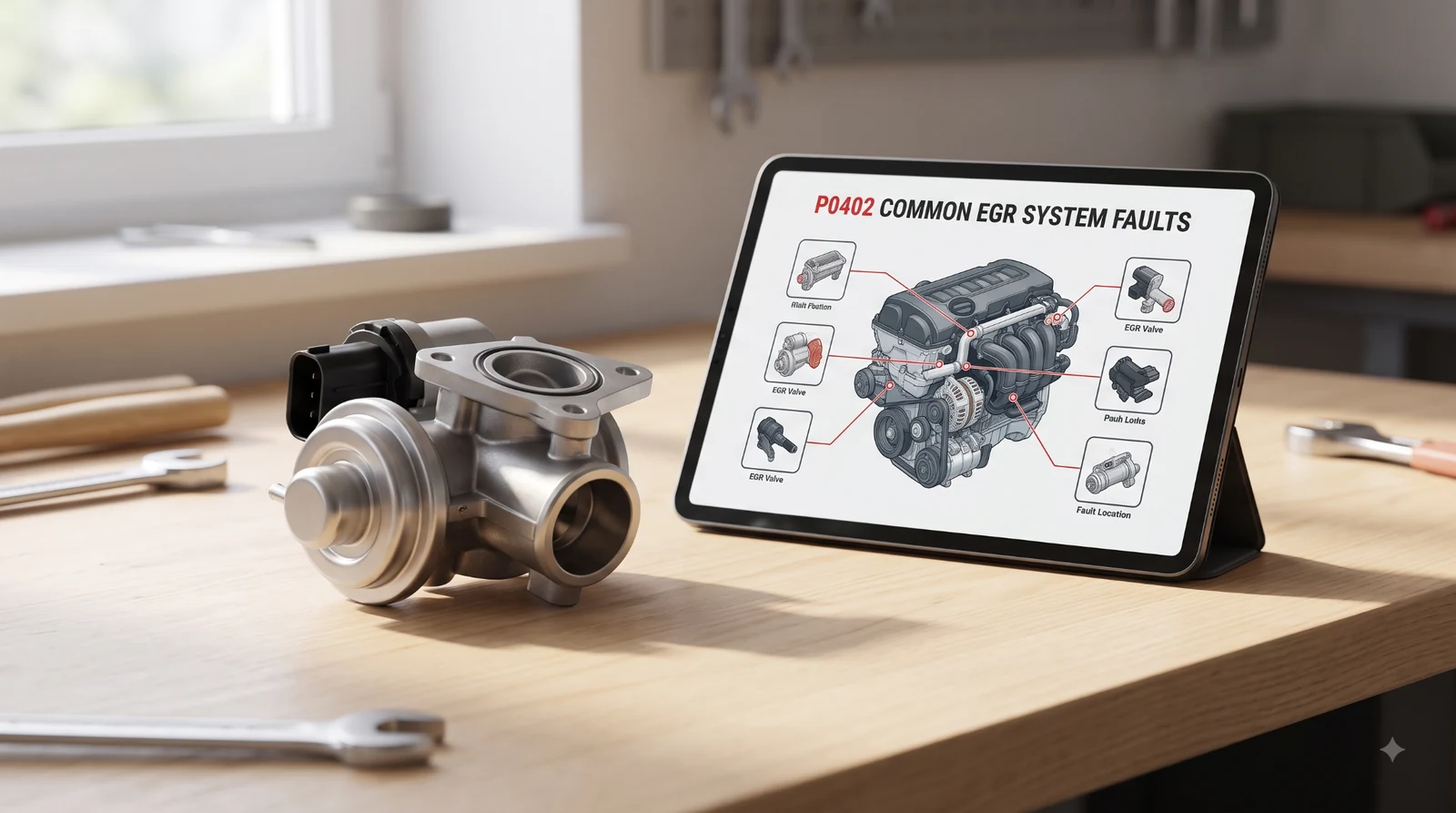
Common causes of P0402
A sticking or malfunctioning EGR valve can cause excessive flow. Deposits can also interfere with EGR operation on certain engines. Ford service information documents both EGR component faults and deposit-related EGR problems on specific applications.
The fault can also come from the feedback or control side of the system. Depending on the vehicle, that may involve a differential-pressure sensor, position feedback, airflow or manifold-pressure data, vacuum controls, wiring, connectors, or related components. Ford has documented DPFE sensor faults that can cause P0402 on some vehicles.
That is why it is worth learning how to test sensors before replacing them. A sensor can report the symptom without automatically being the failed component.
A smart diagnosis order
Start by scanning all relevant codes, not only P0402. Save freeze-frame information when your scanner provides it. Engine speed, temperature, load, and other captured data can help show the conditions present when the fault was detected.
Next, compare the code with the actual symptom. Does the engine run rough only after it warms up? Does the problem happen during deceleration? Is the fault constant or intermittent? These details help narrow the diagnostic path.
Inspect accessible EGR wiring, connectors, and vacuum hoses only with the vehicle safely parked and the engine off. Avoid hot exhaust and engine components. Vehicle manufacturers warn that hot components and moving parts can cause injury during maintenance.
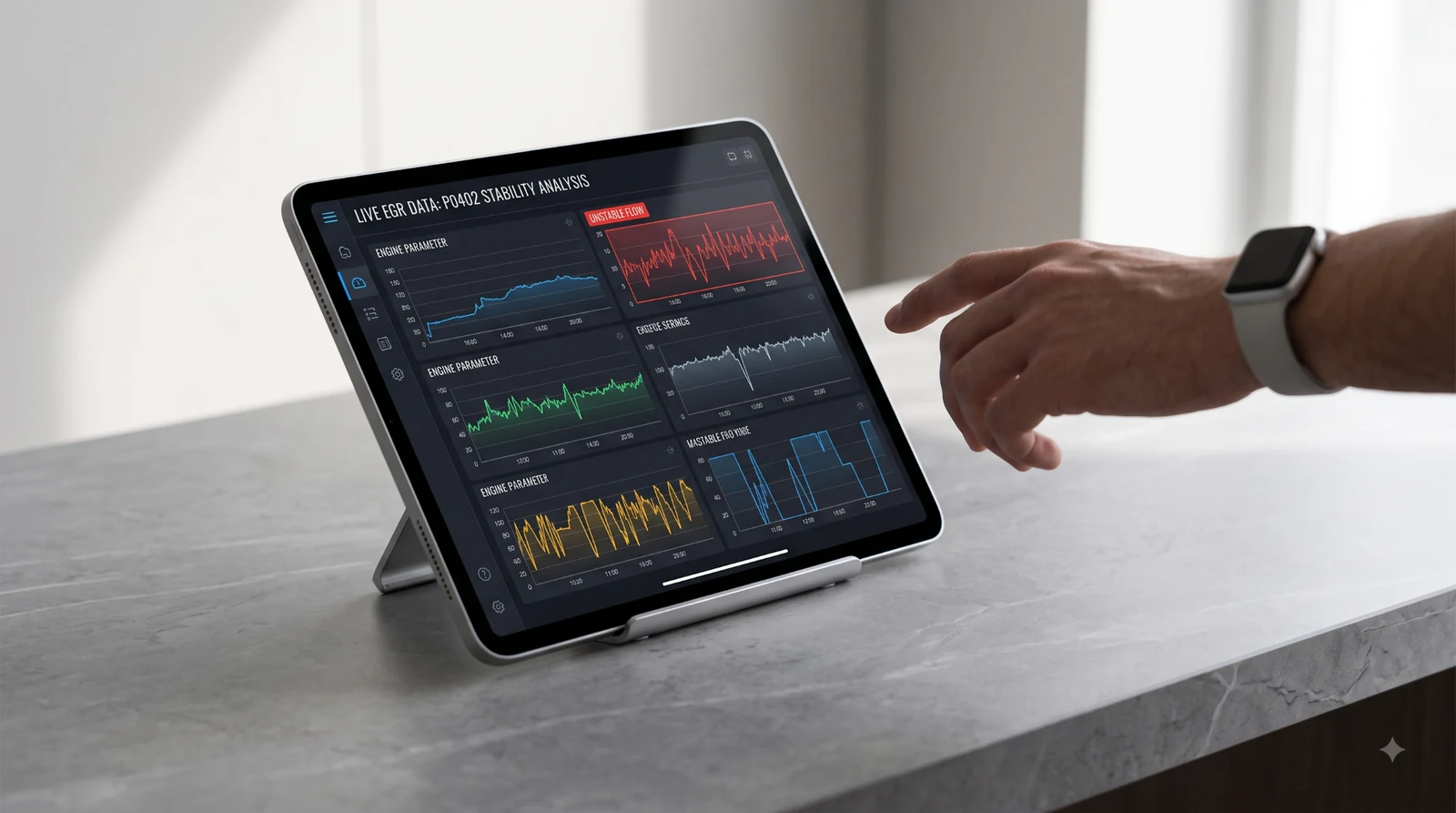
If your scan tool supports live data, compare the EGR command with the relevant feedback. Parameter names and expected readings vary by manufacturer, so one generic number should not be used to condemn a component.
Use factory diagnostic flowcharts when available for the specific model year, engine, and emissions system. Manufacturer service procedures can establish the proper order for circuit checks, sensor tests, and EGR component diagnosis.
Finally, repair the confirmed fault and verify that P0402 does not return after the appropriate monitor conditions are met. Do not use code clearing as a substitute for diagnosis.
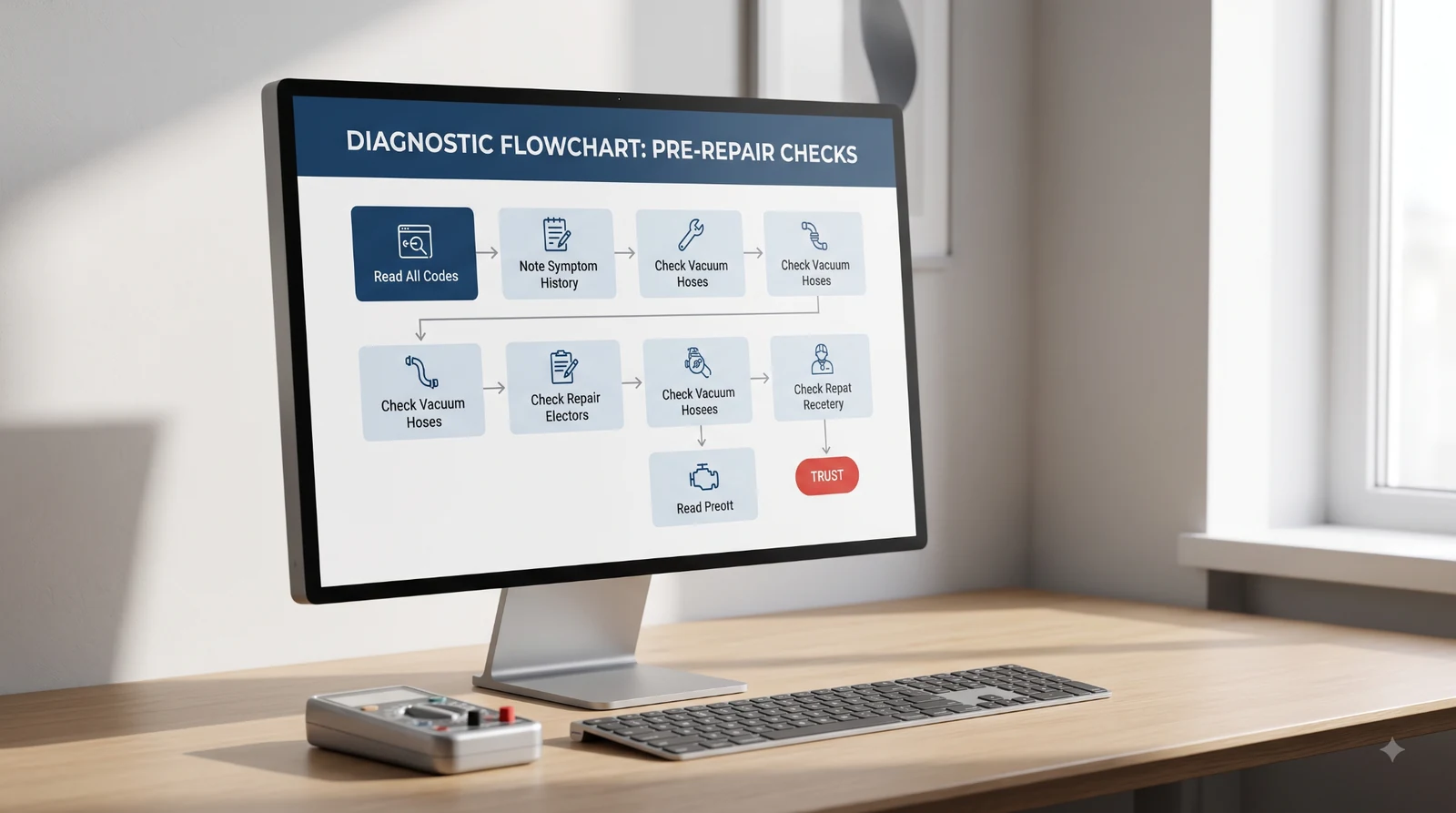
What you can check before a repair
You can gather useful information without immediately removing the EGR valve. Write down every code, note when the warning first appeared, and record symptoms such as poor idle, hesitation, surging, or power loss.
Check recent repair history too. If an intake component, EGR component, sensor, wiring harness, or vacuum hose was recently disturbed, that information can help focus the inspection.
If the vehicle runs smoothly, avoid assuming the valve must be replaced. Ford documentation provides a useful example: on certain vehicles, a DPFE sensor fault could produce P0402 and related drivability complaints.
This is also a good time to avoid replacing the wrong part. Confirm the failure before spending money, especially on systems where several inputs contribute to EGR monitoring.
Can P0402 clear itself?
An intermittent OBD fault may stop triggering the warning light after successful monitoring cycles, but that does not automatically prove the underlying problem is permanently gone. OBD systems can keep diagnostic information while monitoring whether a fault returns.
Do not repeatedly clear P0402 simply to turn off the light. Clearing diagnostic memory can reset readiness monitors to a “not ready” state, which may matter during emissions inspection. EPA guidance specifically notes that clearing fault memory also clears readiness information.
If the light goes out, scan the vehicle again and watch for stored or pending faults. Pay attention to whether the same drivability symptoms return.
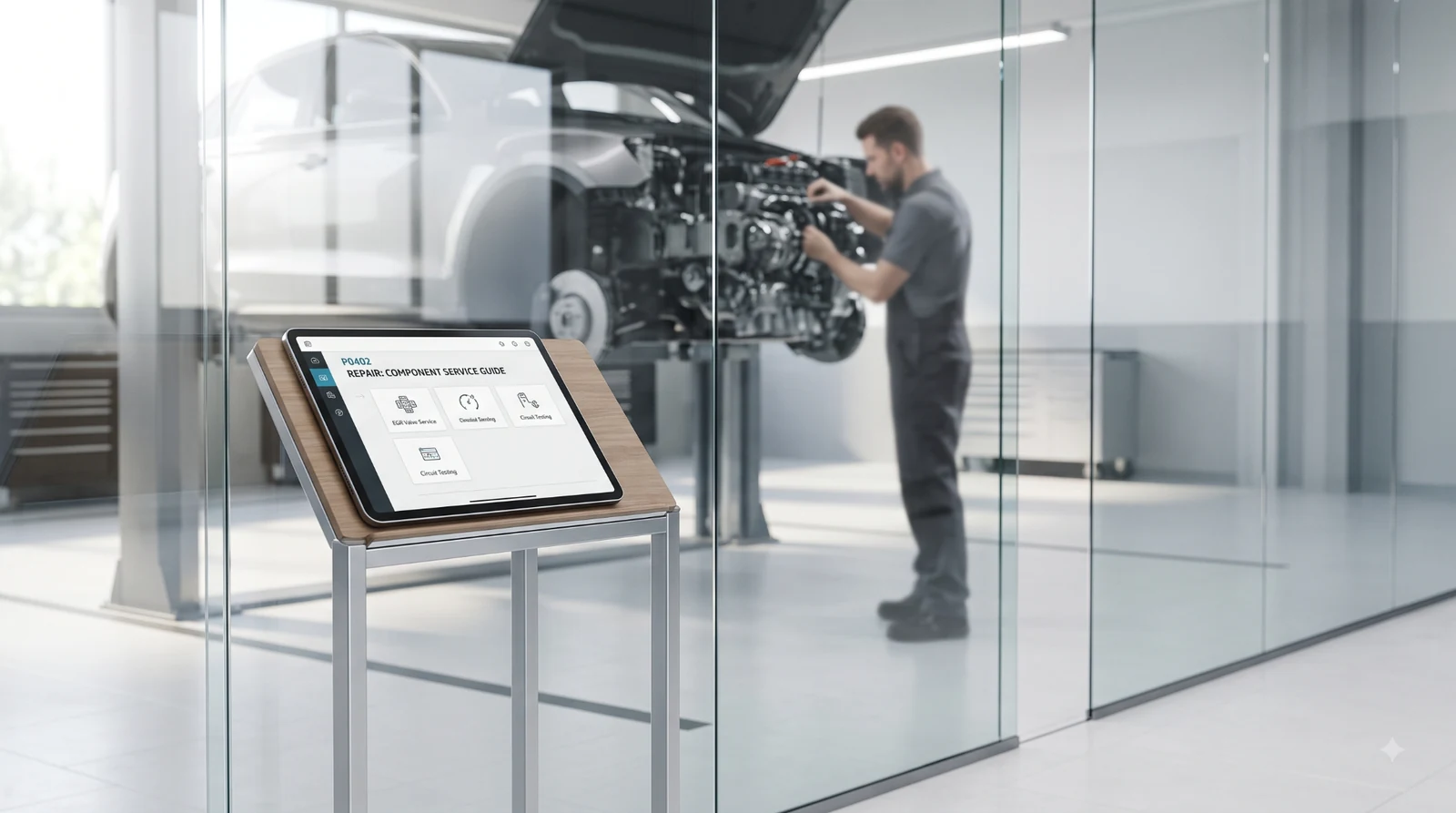
What repair usually involves
The correct repair depends on the test results. A malfunctioning EGR valve may require service or replacement under the manufacturer’s procedure. Damaged wiring, connectors, vacuum controls, feedback sensors, or related airflow faults require different repairs.
Some vehicles also use manufacturer-specific verification or readiness procedures after repairs. This is another reason generic parts replacement is less reliable than following the proper service information.
Most importantly, do not buy an EGR valve only because the scanner shows P0402. The code identifies an EGR flow problem, while the diagnosis identifies the failed component.
The practical driving decision
If the car starts normally, idles smoothly, accelerates normally, has a steady check engine light, and shows no other serious warnings, a short necessary drive to a safe diagnostic or repair location may be reasonable.
Keep that trip limited. Avoid unnecessary long-distance driving or situations where a stall or sudden power loss would create extra risk. If the engine begins to surge badly, stall, shake heavily, or lose substantial power, stop driving.
P0402 deserves prompt diagnosis because EGR-related faults can affect both drivability and emissions. The useful order is simple: judge the symptoms first, confirm the cause second, and replace parts only after testing points to them.
Commonly Asked Questions About the Drive With a P0402 Code
How long can I drive after P0402 appears?
There is no single safe mileage limit for every P0402 code. The useful question is how the vehicle is behaving. If the check engine light is steady, the engine idles smoothly, acceleration feels normal, and no other warnings are present, a short trip to a diagnostic or repair location may be reasonable.
If the car begins to stall, shake badly, lose significant power, overheat, or show an oil-pressure warning, stop driving. Do not use a smooth first trip as proof that the fault is harmless. EGR problems can be intermittent, and symptoms may vary with engine temperature, load, or operating conditions.
Will P0402 cause my car to stall at a stop?
Yes, an excessive EGR-flow problem can contribute to unstable low-speed engine operation, although the exact symptoms depend on the vehicle. EGR-related P0402 faults have also been associated with rough running, surging, and reduced power in manufacturer service information.
A sticking EGR valve is one possible cause, but it is not the only one. Feedback sensors, controls, wiring, or other manufacturer-specific faults can also be involved. If the engine repeatedly stalls as you slow down or stop, do not keep driving in normal traffic. Scan all codes, record the symptoms, and have the EGR system properly diagnosed.
Can a bad EGR sensor trigger P0402 if the valve is good?
Yes. P0402 does not guarantee that the EGR valve itself has failed. Depending on the vehicle, the computer may evaluate EGR operation using pressure feedback, valve position data, airflow information, manifold pressure data, or other inputs.
Ford has documented vehicles in which an intermittently functioning DPFE sensor can produce P0402 along with drivability complaints. A biased sensor, damaged circuit, or poor connector can therefore change the diagnostic direction.
That is why replacing the EGR valve immediately can be a mistake. Check related codes, inspect the appropriate circuits, review supported live data, and follow the manufacturer’s diagnostic sequence before deciding which component actually failed.
Does cleaning the EGR valve always clear P0402?
No. Cleaning may help when deposits are interfering with EGR operation, but P0402 can have other causes. Manufacturer service information shows that EGR-related faults can involve sensors, wiring, controls, the valve itself, airflow conditions, or deposits depending on the vehicle.
Some EGR components also require vehicle-specific diagnostic or verification procedures. Before removing parts, confirm the code, inspect related systems, and, when appropriate, compare commanded operation with available feedback data.
If cleaning does not address the root cause, the code can still return even if the valve appears cleaner. Diagnosis should determine whether cleaning is actually relevant.
Will clearing P0402 help me pass an emissions test?
Usually not by itself. Clearing diagnostic memory may temporarily turn off the warning light, but it can also reset OBD readiness monitors. EPA guidance explains that after fault memory is cleared, readiness codes can return to “not ready” until the required monitoring conditions occur again.
Honda owner information similarly notes that readiness information can be erased and must be re-established through driving conditions. If the underlying problem remains, P0402 can return when the system runs its checks again. The better approach is to diagnose and repair the cause first, then allow the required monitors to complete before an emissions inspection.