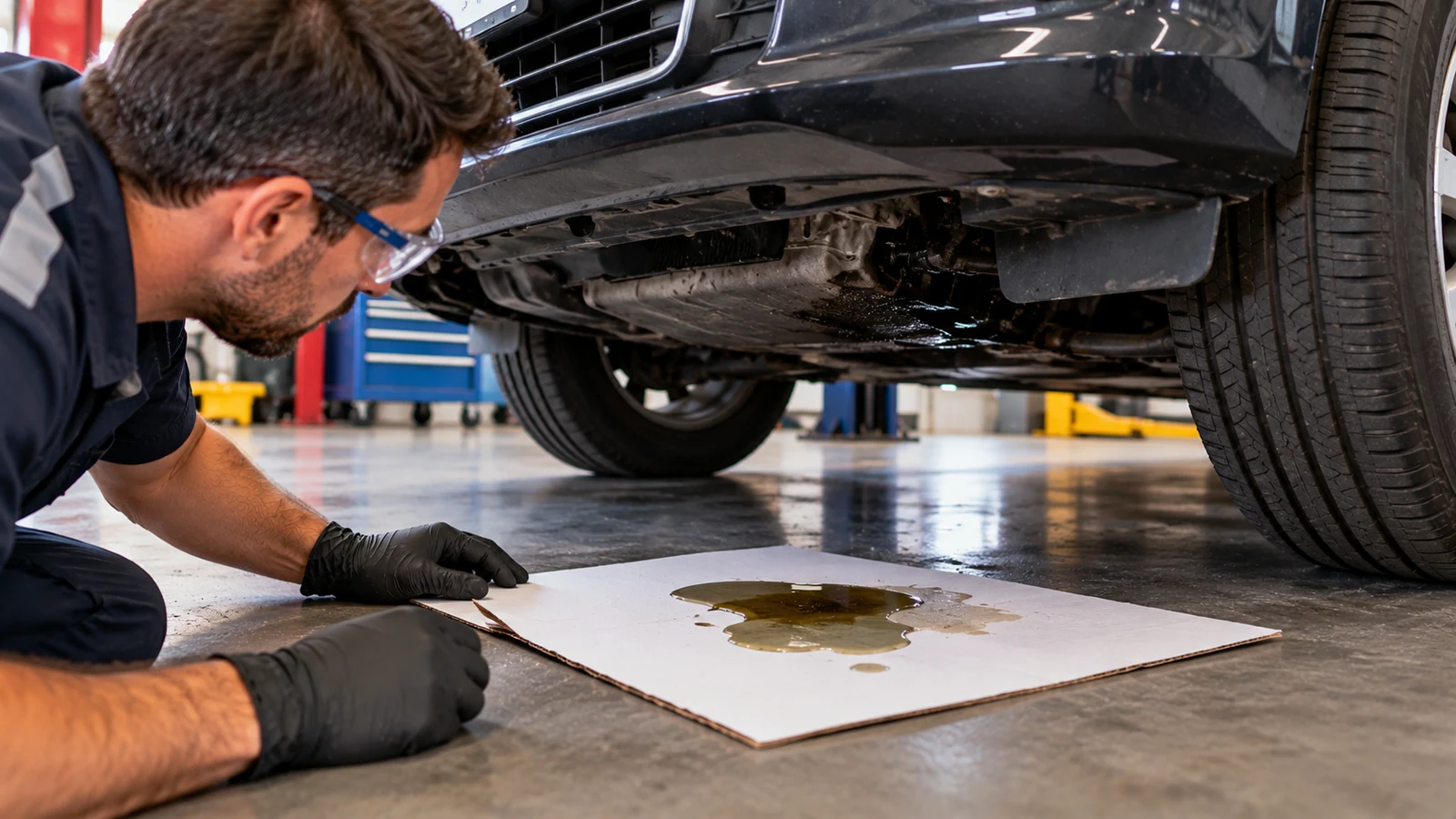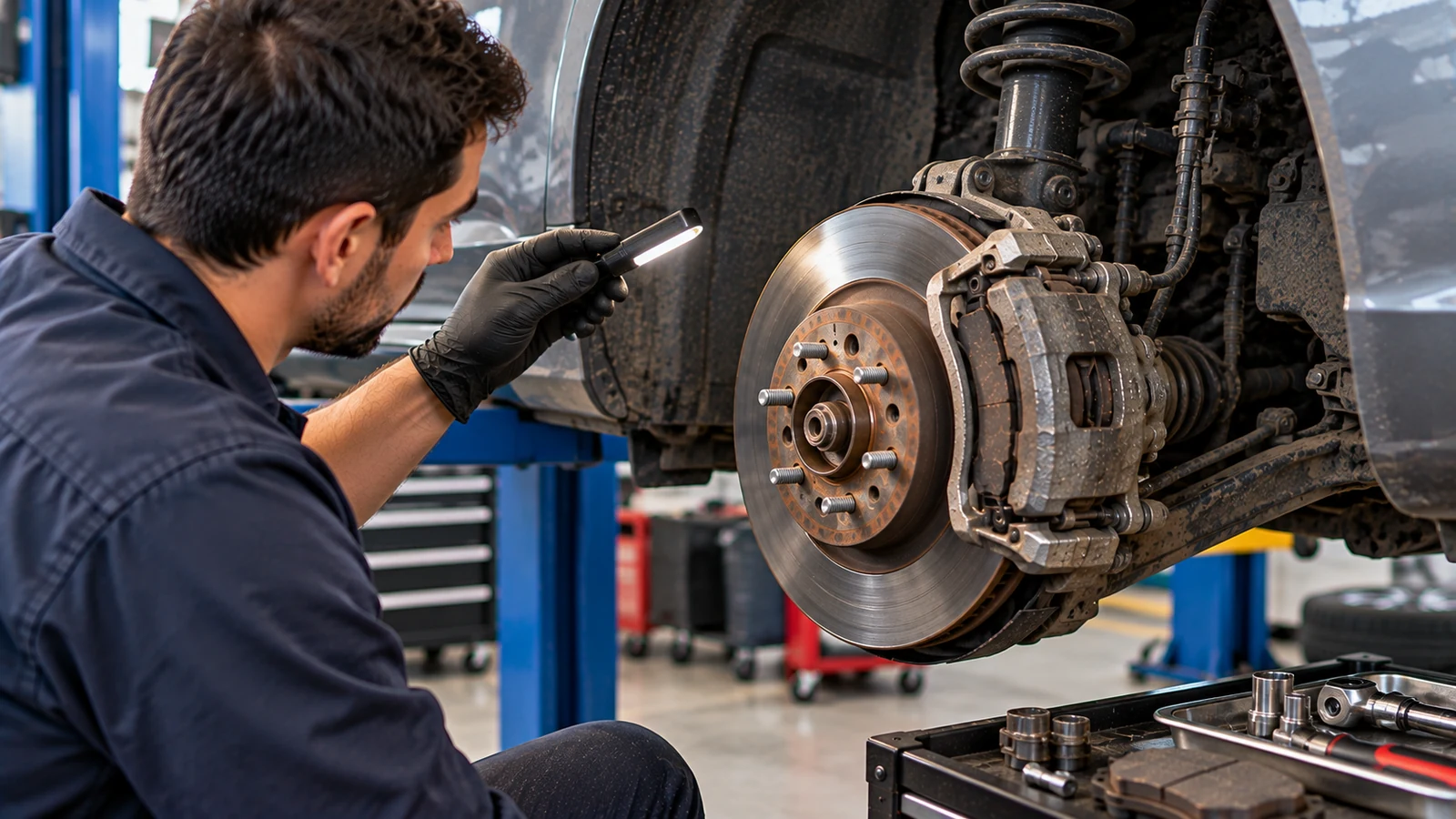
Don’t treat a brake squeal and a brake grind as the same problem. A brief squeak on the first damp morning stop can come from surface rust. A recurring high-pitched squeal may be a brake pad’s wear indicator. A rough metallic grinding sound can mean that a worn pad’s steel backing plate is cutting into the rotor, although trapped debris and dragging components are other possibilities.
The useful question is not simply, What noise is that? It is when does it happen, how does the pedal feel, and what does an inspection show? This guide takes a workshop-style approach: decide whether the vehicle should move, match the sound to its circumstances, inspect the parts that can produce it, and use vehicle-specific service information before making repairs.
Key Takeaways
· Grinding deserves urgent attention. Loud or persistent metal-like grinding, reduced braking performance, or a soft pedal are reasons to stop driving and arrange an inspection or tow.
· Squealing has several explanations. Wear indicators, temporary rust, glazed pads, pad compound, dust, and poorly fitted hardware can all produce high-pitched noise.
· Measure rather than guess. Around 3 mm of remaining pad lining is a common replacement point, but you must check the correct limits and rotor specifications for the vehicle.
· Treat the whole brake assembly as a system. New pads will not cure noise caused by seized slide pins, damaged rotors, missing shims, or debris.
Decide Whether the Brake Noise Requires an Immediate Stop
Before testing anything, pay attention to braking feel and any dashboard warnings. Do not make repeated test stops if you suspect that braking performance is compromised. A technician can inspect the car where it is parked or arrange safe transport to a workshop.
| What you notice | What it may indicate | Sensible response |
| Brief light squeak after rain that clears within a few ordinary stops | Moisture or light surface rust | Monitor; inspect if it returns or persists |
| Repeating, sharp squeal when applying the pedal | Wear indicator or pad/hardware vibration | Schedule a prompt brake inspection |
| Continuous scraping or pronounced metallic grinding | Worn pads, trapped debris, or a dragging component | Stop driving and arrange inspection |
| Noise plus a soft or sinking pedal, unusual stopping distance, or brake warning | A potentially serious brake-system problem | Stop in a safe location and arrange professional help |
A sound alone cannot confirm the cause. Grinding matters because continued use may damage a rotor that was still serviceable when the noise began. Even a light squeal warrants investigation if it becomes more frequent, louder, or remains after the brakes have dried.
Match the Brake Sound to Its Timing
When a vehicle arrives at a workshop, a good description of the circumstances can save time. Make a note of the first moment you hear the sound, the weather, the speed, and any recent brake work.
| Noise pattern | Possible explanations | Check first |
| Squeak on the first few stops of the day | Moisture and light rotor rust | Does it disappear after a few normal stops? |
| High-pitched squeal mainly while braking | Wear tab, pad compound, glazing, or vibrating hardware | Inner and outer pad lining thickness |
| Chirp after recent pad replacement | Bedding-in or incorrectly fitted clips, shims, or contact points | Installation and manufacturer’s bedding instructions |
| Rough scraping while the vehicle rolls | Debris, a bent dust shield, or a dragging caliper | Rotor area and freedom of moving parts |
| Grinding primarily during braking | Severely worn lining or rotor damage | Pad backing plates and rotor faces |
| Noise with pedal pulsation | Rotor thickness variation or uneven deposits may also be involved | Multiple rotor measurements and pad condition |
A Squeal that Disappears after A Damp Start
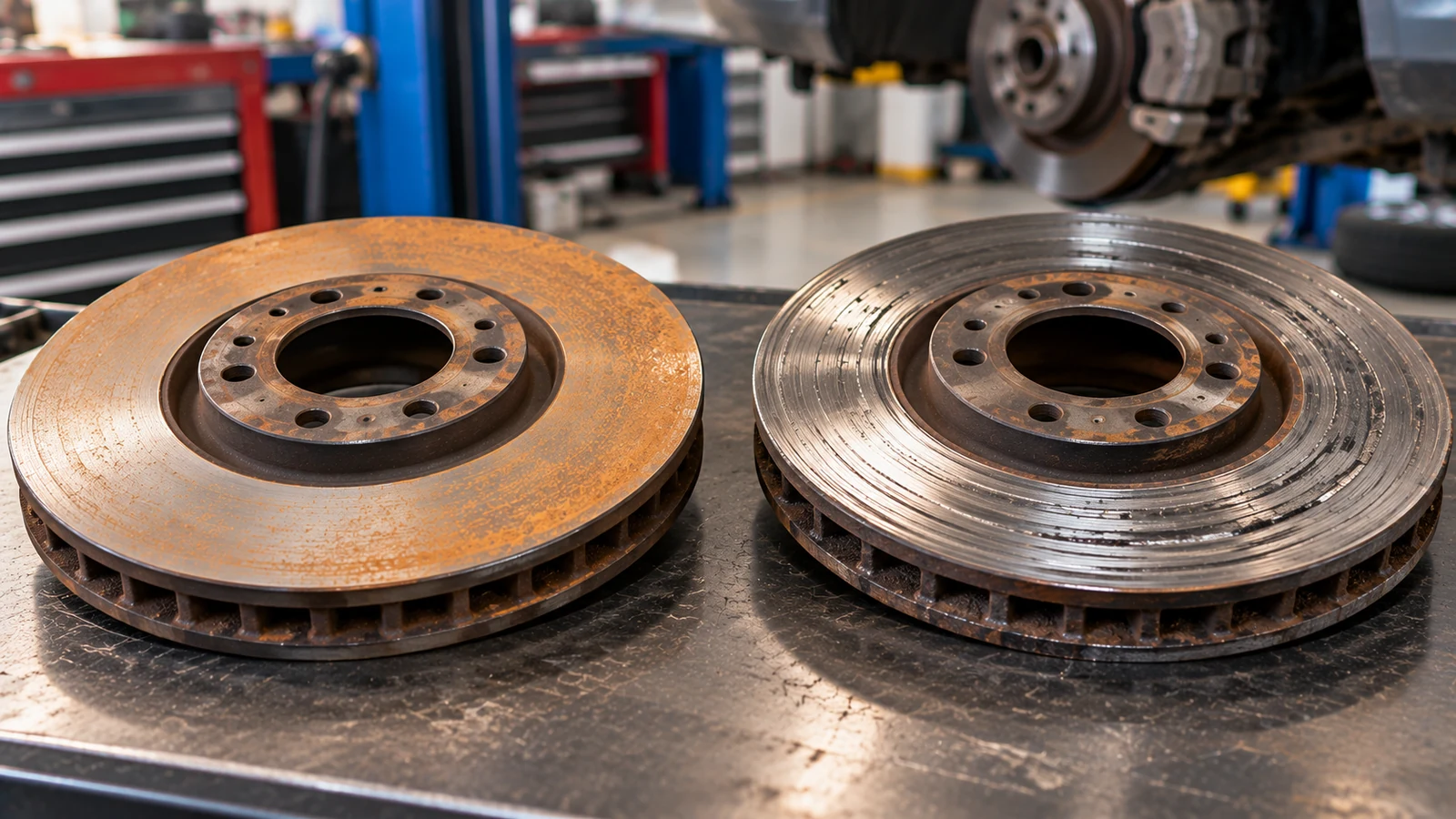
Cast-iron rotors can develop a thin layer of rust after rain, washing, or overnight humidity. The pads may make a light scraping or squeaking sound while clearing that film. When the sound disappears after a handful of ordinary stops and braking otherwise feels normal, the cause may be temporary.
Do not apply the same explanation to a vehicle that has sat unused for weeks. Heavier corrosion, deep marks, or noise that does not clear calls for an inspection, not repeated hard braking.
A Sharp Squeal that Keeps Returning
Many pads have a metal wear-indicator tab designed to touch the rotor as the lining becomes thin. Other systems have electronic wear sensors. A recurring squeal may therefore be a service warning even when the car still stops normally. Pad dust, a shiny glazed surface, and missing anti-squeal hardware can create similar sounds; a visual and dimensional check is needed to confirm the cause.
A Grind That Occurs With or Without Pedal Pressure
If the sound appears mainly during braking, inspect for pads worn to their steel backing plates and for rotor scoring. If scraping continues while rolling, also look for a stone caught near the rotor, a distorted dust shield, or a caliper that is failing to release. Distinguishing those situations helps narrow the inspection, but neither justifies driving with ongoing grinding.
Inspect the Parts That Most Often Create Brake Noise
Assess the pads, rotor faces, caliper movement, and small pieces of retaining hardware together. A quick look through the wheel spokes may show the outer pad, but it will not reliably reveal the thickness of the inner pad.
Pad Lining, Wear Indicators, and Uneven Wear
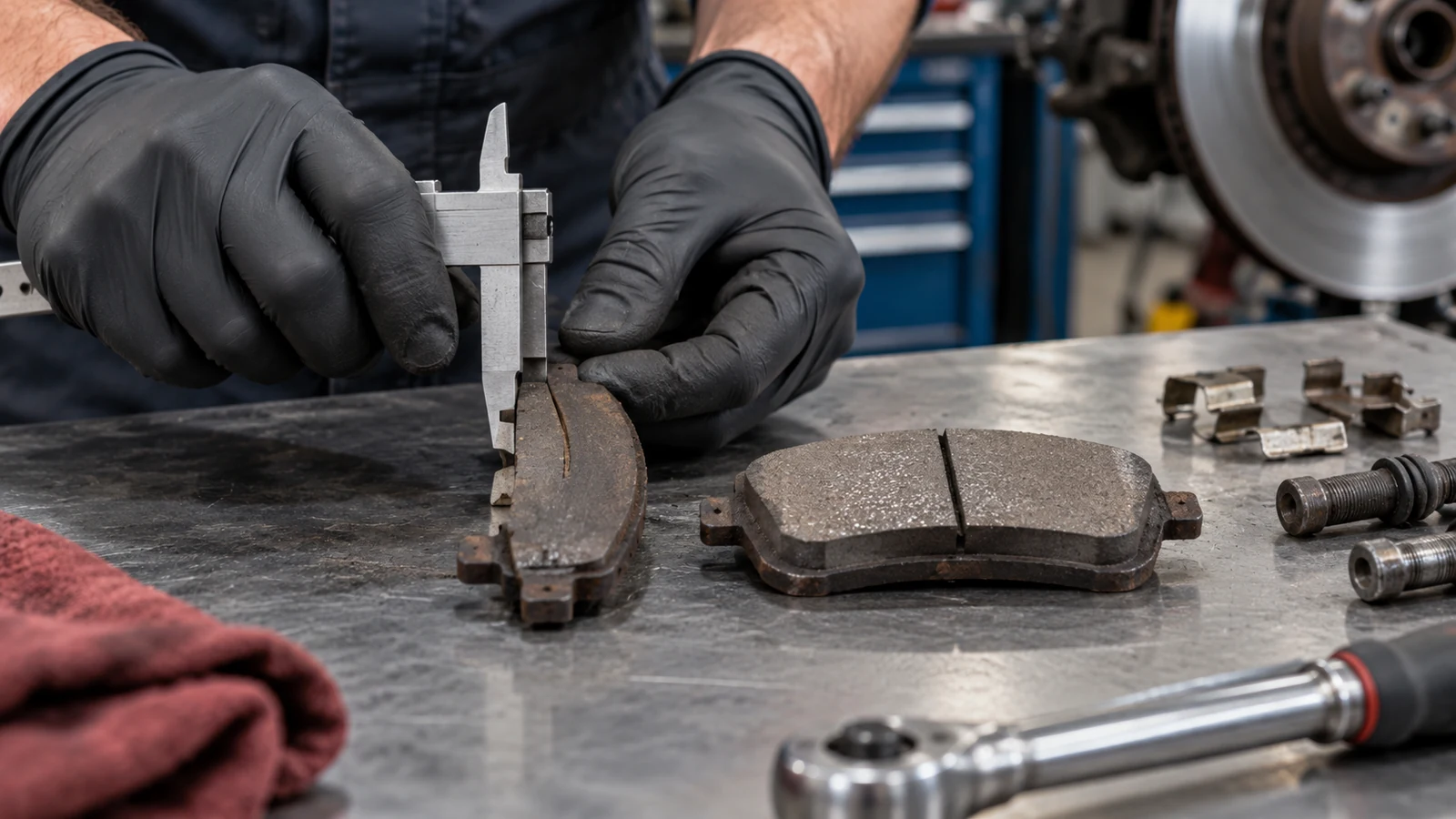
Disc brakes commonly use an inner and an outer pad at each wheel. Many new passenger-car pads have roughly 10–12 mm of friction material. Around 3 mm is a useful replacement planning point; 2 mm or less is critical. Treat those as general guidance, not universal factory limits.
Measure only the friction material, excluding the steel backing plate, and examine both pads. Uneven side-to-side wear can point toward restricted caliper movement or rust in the pad guides. For vehicle-specific procedures, the Toyota repair-manual selection and the 2015 Toyota Camry XV50 workshop manual show how to narrow the documentation to the correct vehicle. If the inner pad is hard to see, the Honda workshop-manual catalog and the 2016–2018 Honda Civic FC/FK manual show the value of selecting the exact model rather than relying on a generic diagram.
Rotor Condition And Minimum Thickness
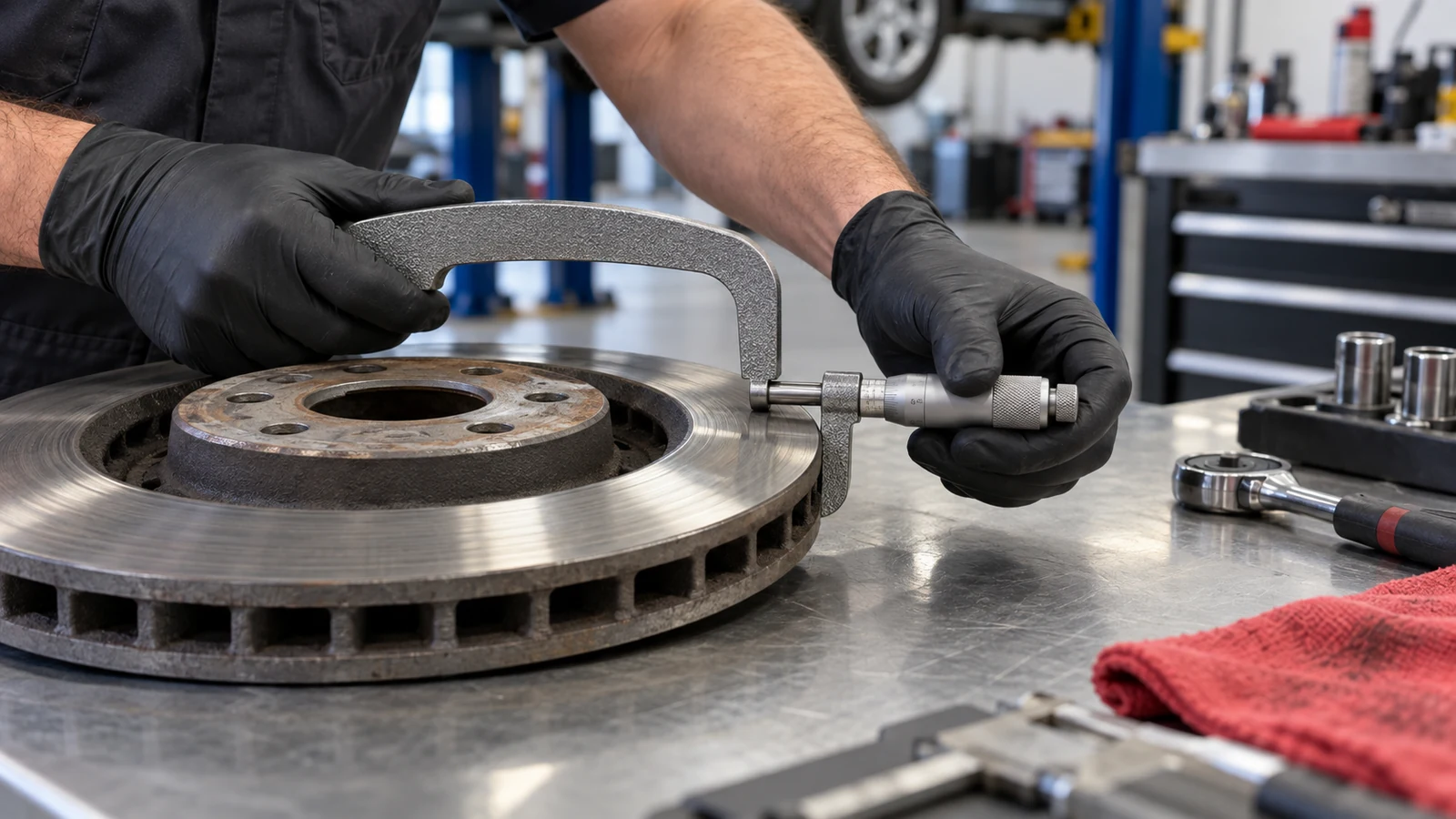
Look for deep grooves, cracking, heavy rust, heat discoloration, or an uneven contact pattern. A rotor’s appearance alone does not establish that it is within specification. Use a suitable brake micrometer at several positions around the friction surface and compare the lowest measurement with the rotor’s specified minimum. The source guide describes checking roughly eight to ten positions.
For an example of matching service information to a production generation, use the Hyundai factory-manual catalog to locate the 2015–2016 Hyundai Sonata LF manual. Confirm the rotor’s actual specification from the manual or rotor marking for the vehicle being repaired. Do not machine a rotor unless it will remain within the applicable service limit afterward and is otherwise suitable for machining.
Clips, Shims, Slide Pins, and Caliper Pistons
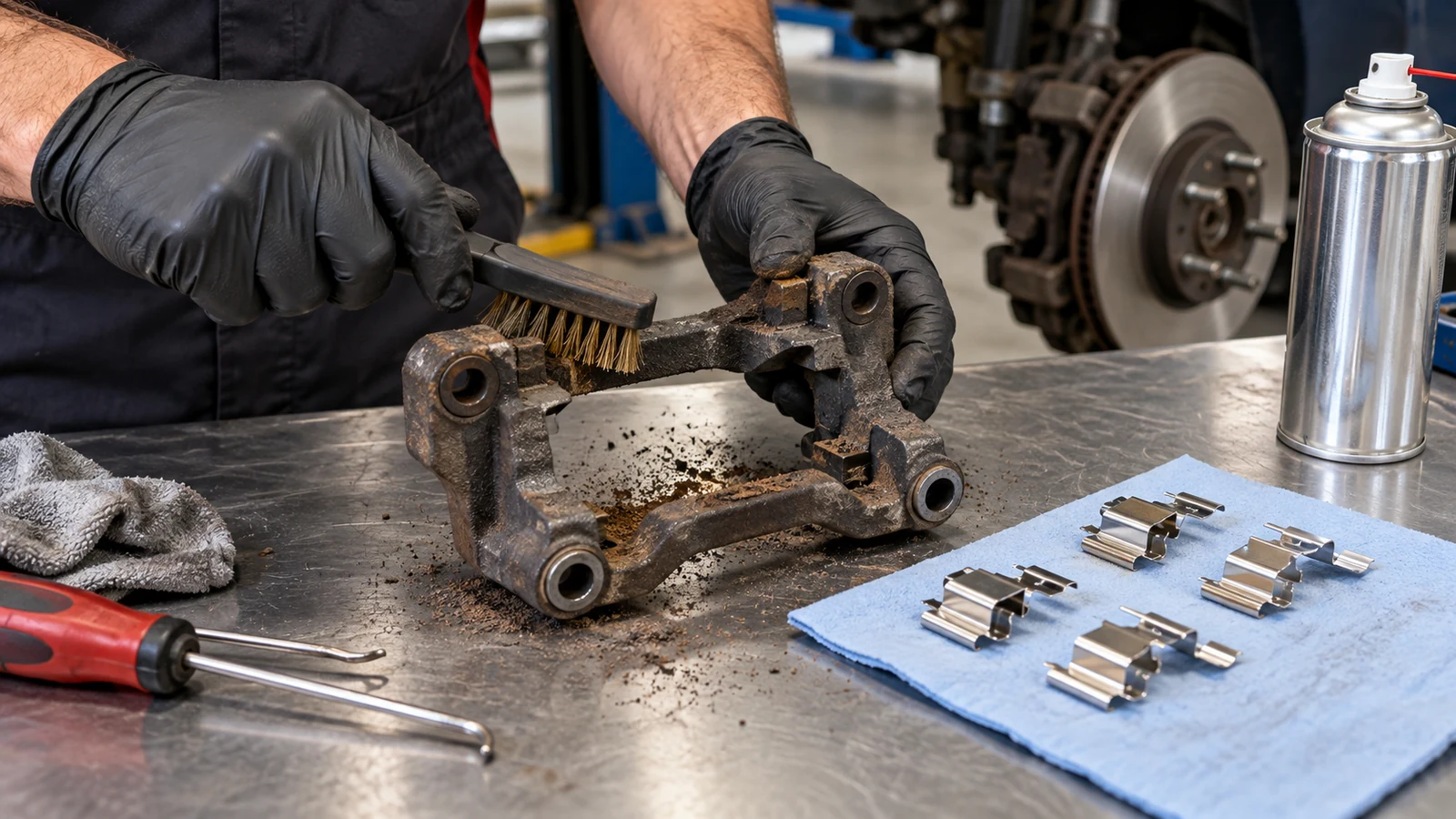
A pad can have plenty of material left and still squeal if the parts controlling its movement are dirty, rusty, dry, or incorrectly installed. Examine the abutment clips, anti-squeal shims, caliper slides, guide-pin boots, and pad seating. Glazing and brake dust may also contribute to noise.
Use brake-compatible grease sparingly and only where the applicable service procedure specifies. It must never touch the rotor face or pad friction material. If noise started after a brake job, compare the reassembly against the correct diagrams. The Volkswagen workshop-manual range includes model-specific listings such as the 2008–2013 Golf Mk6 manual. A different example for checking installed hardware is the 2006–2010 Kia Optima service manual.
Warning Lights and Changes In Pedal Feel
A pad-wear alert, a general brake warning, and an ABS warning do not necessarily describe the same fault. Record any dashboard messages and scan for relevant diagnostic codes before assuming that a mechanical squeal explains them. A soft or sinking pedal needs immediate attention because the hydraulic system may be involved. One model-specific starting point for locating electrical and brake-system information is the 2013 Nissan-Datsun Altima sedan manual, but actual diagnosis must follow the vehicle’s warning and diagnostic procedures.
A Practical Brake-Noise Inspection Sequence
If you lack appropriate equipment or experience, have a qualified technician do the inspection. Brakes are safety-critical, and a stationary examination is preferable to driving a car with suspected grinding or poor braking.
1. Record the symptoms. Note whether the noise occurs while rolling, during light or firm braking, after rain, or following a recent repair. Record vibration, changes in pedal travel, and dashboard warnings.
2. Inspect safely before dismantling. Park on level, solid ground. If you must lift the vehicle, use the prescribed lifting points, suitable stands, and the vehicle-specific procedure. Never work beneath a car supported only by a jack. The 2014 Mazda 3 BN/BM manual is one example of documentation that matches the exact vehicle configuration.
3. Inspect both sides and both pads. When necessary, remove the wheel and measure the inner and outer pad linings, then compare wear patterns on the same axle.
4. Measure and examine the rotors. Record the minimum measured thickness and inspect for deep grooves, cracks, and signs of overheating. Confirm the relevant specification before deciding to reuse or replace each rotor.
5. Check for interference and restricted movement. Look for trapped stones, a bent shield, corroded pad guides, seized pins, damaged boots, and a caliper piston that does not move or release correctly.
6. Review recent brake work. Verify that the pads and clips are properly seated, shims are fitted where required, lubrication is correct, and the correct bedding procedure was used. A 2013 Ford Focus factory workshop manual is another example of why the model and year must match the procedure being followed.
7. Confirm the repair without taking risks. Reassemble to the specified torque values and use the prescribed checks. If braking remains abnormal or grinding persists, do not return the vehicle to normal service.
Do not compress a rear caliper piston until you have established its design. Some electronic parking brake systems require a specific service mode and diagnostic-tool procedure. Hydraulic work may also require vehicle-specific bleeding steps, particularly when ABS components are involved.
Fix the Cause: From Simple Squeal to Major Brake Repair
Noise is a symptom, not a parts list. Choose the repair only after examining the pads, rotors, moving parts, and hardware.
When cleaning and hardware service may be enough
If lining thickness and rotor condition are acceptable, a technician may resolve a light squeal by cleaning the bracket guides, replacing damaged clips or shims, and lubricating the specified contact points. A brief new-pad squeal may settle after the manufacturer’s correct bedding procedure. Do not assume it is normal if the sound is getting worse or feels like grinding.
A typical bedding method mentioned in the source involves five or six moderate slowdowns from around 40 mph to 10 mph with cooling intervals, without stopping completely. However, follow the instructions for your specific pad compound and vehicle rather than treating one method as universal.
When The Pads, Rotors, Or Caliper Need Attention
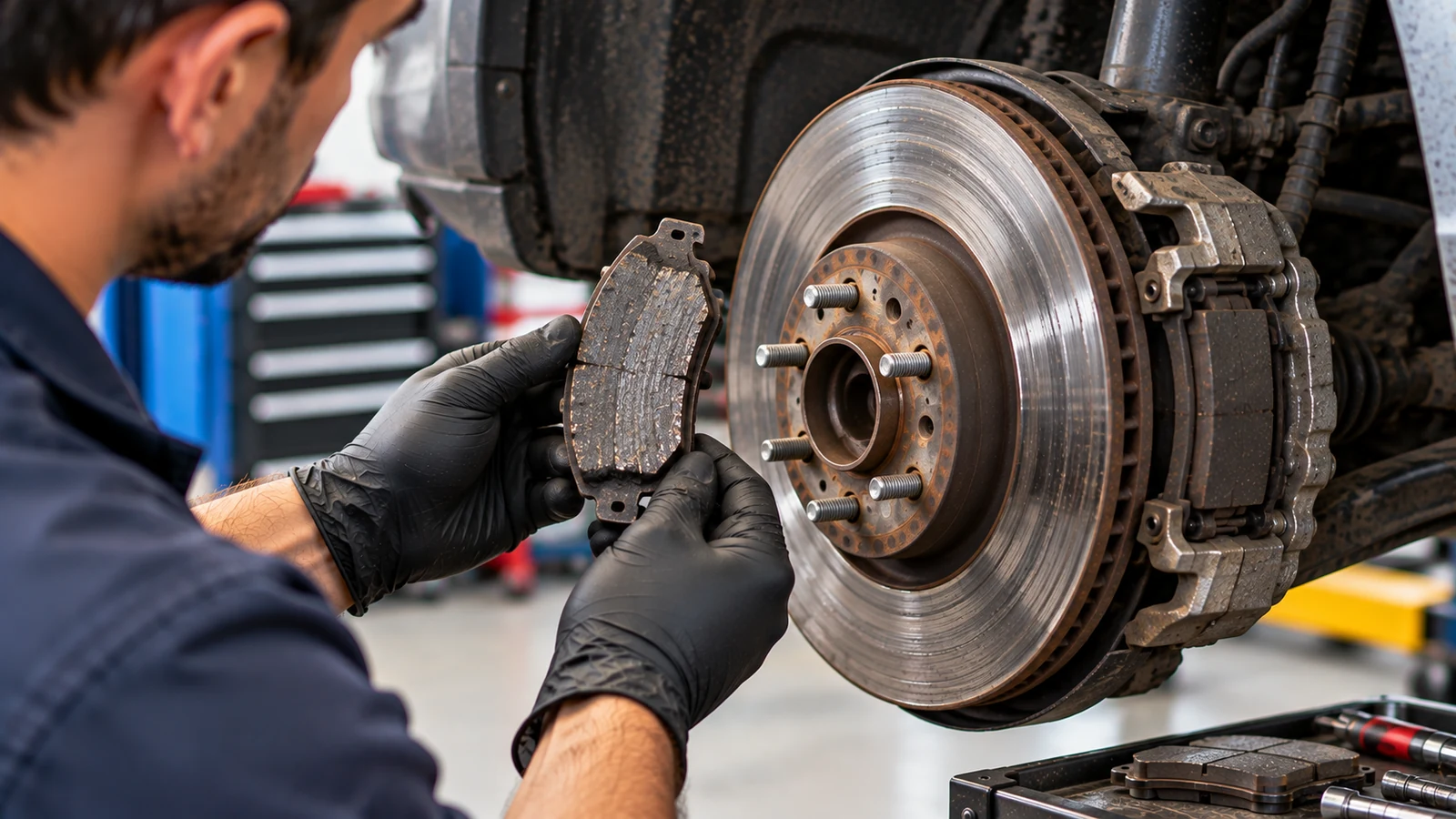
Replace pads as an axle set when they reach their service limit. If a steel backing plate has damaged a rotor, or the rotor is below its minimum, cracked, or deeply scored, you may need to replace it. When replacement is necessary, replace rotors in matched axle pairs. Fix stuck guide pins or a seized piston at the same time, or the fresh pads may wear unevenly and become noisy again.
If the car has been driven through gravel or off-road conditions, check for debris before automatically buying pads. The Jeep workshop-manual catalog and the 1987–2006 Jeep Wrangler manual listing show the range of model-specific documentation available, but the actual brake design must be confirmed for the model year and configuration. For heavier vehicles, the Chevy manual catalog and the 2004–2007 Chevy Silverado 1500 2WD manual provide another route to the correct service information rather than a one-size-fits-all repair.
Typical brake repair costs
The NXT reference supplies the following approximate per-axle figures. They are illustrative, not live AutoServicePlus prices or quotes for a particular vehicle; regional labor and parts prices will change the final bill.
| Repair scope | DIY parts | Independent repair shop | Dealership |
| Pads only | Why Are My Brakes Squealing or Grinding? Diagnose the Noise image 665 | Why Are My Brakes Squealing or Grinding? Diagnose the Noise image 7250 | Why Are My Brakes Squealing or Grinding? Diagnose the Noise image 8370 |
| Pads and rotors | Why Are My Brakes Squealing or Grinding? Diagnose the Noise image 9180 | Why Are My Brakes Squealing or Grinding? Diagnose the Noise image 10450 | Why Are My Brakes Squealing or Grinding? Diagnose the Noise image 11600+ |
These estimates show why early inspection matters: a small squeal from worn pads can become a more expensive rotor job if the lining wears away. They do not include every possible problem. Seized calipers, hydraulic faults, unusual pad compounds, and large commercial-vehicle components can change the scope and cost substantially.
Vehicle Design Changes Which Checks Matter Most
All the examples below are taken from the supplied AutoServicePlus URL inventory. They identify real manual listings, not confirmed diagnoses or proof that a particular model has a given brake feature. Identify the exact year, drivetrain, trim, and installed brake system before following a procedure.
Everyday Sedans and Compact Vehicles
For a daily driver, start by separating a morning-only squeak from a repeated pad-wear sound. Short trips, moisture, new pads, and pad-hardware condition can all affect what you hear, but inspection remains the deciding factor. The manuals referenced earlier for Toyota, Honda, Hyundai, Kia, Nissan, Volkswagen, Mazda, and Ford show how to narrow service information to a particular model instead of relying on a generic brake diagram.
Do not choose a pad solely because a retailer says it fits the model name. Match the actual brake package and hardware. A replacement that is physically similar but has the wrong clips, shims, or dimensions can leave the original problem unresolved.
Pickups, Towing Vehicles, and Commercial Vans
Vehicle load and repeated braking can increase heat, but grinding still requires inspection rather than an assumption that the vehicle was simply worked hard. In the supplied inventory, the GMC workshop-manual range includes a 2003–2013 GMC Sierra Denali AWD manual, while the Ram service-manual listings include a 2003–2008 Ram 1500 4WD manual. These examples have different driveline descriptions, so confirm the brake configuration for the actual truck.
The same principle applies to the 1998–2001 Ford F150 4WD manual. Commercial-vehicle work is even less suited to generic passenger-car estimates: the Freightliner manual catalog includes a 2002–2006 Sprinter 3500 manual. Establish the specified components, inspection limits, and torque procedures before ordering parts or estimating labor.
AWD, Rough-Road, and SUV Applications
When a vehicle regularly encounters mud or loose gravel, pay extra attention to grit near the rotors, damaged shields, and hardware that no longer lets the pads move freely. This is an inspection consideration, not an assertion that an entire brand shares a fault. The Land Rover workshop-manual collection includes the 2015–2017 Discovery Sport L550 manual; the Subaru manual listings include the 2001 Impreza 2.5 RS AWD manual as well as the 2005–2009 Outback manual.
Evaluate large SUVs and all-wheel-drive crossovers corner by corner if the noise location is uncertain. The Volvo factory-manual range offers a 2004–2013 XC90 AWD manual listing. The supplied inventory also includes a 2011–2013 Mitsubishi Outlander Sport AWD manual. Check both inner and outer pads, compare the two sides, and follow the correct vehicle-specific steps if rear parking-brake hardware is involved.
Performance Vehicles and European Platforms
Brake-pad compounds and service procedures can vary considerably. A mild low-speed squeal does not, by itself, establish whether the pad is worn, unsuitable, glazed, or installed incorrectly. Record the circumstances and confirm the actual pad and rotor condition. Model-specific information is especially useful when the vehicle has additional sensors or specialized caliper hardware.
Examples in the supplied inventory include the BMW manual catalog with its 2012–2018 3 Series F30 manual, the Audi manual range with the 2007–2009 A4 Cabriolet manual, and the Mercedes-Benz manual selection with the 2008–2011 C 350 manual. The Porsche workshop-manual collection includes a 2015–2016 Macan manual. Do not assume that the service-mode, wear-sensor, or caliper procedure used on one model applies to another.
The inventory also covers less frequently used examples, including the 2013 Mini Cooper JCW Countryman R60 manual, 2017 Jaguar XE X760 manual, and 2013–2015 Cadillac ATS manual. For any of these, match the documentation to the installed brakes before diagnosing a noise or retracting a rear caliper piston.
Use the Right Workshop Manual Before Reassembly
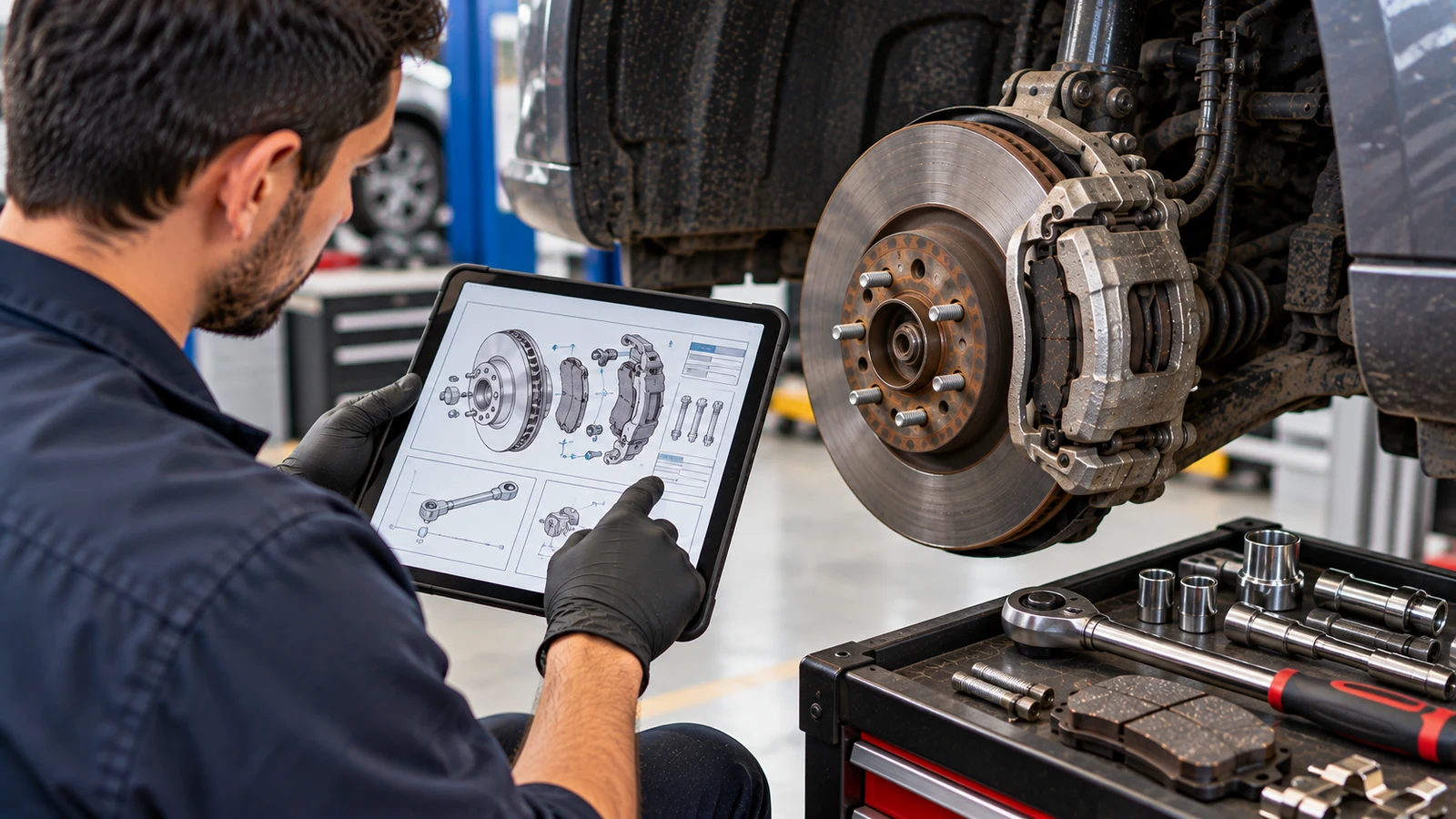
A parts catalog can identify a likely replacement pad; it generally cannot substitute for a complete model-specific service procedure. Once you narrow down the symptom, consult a manual that matches the vehicle’s model year and configuration. This matters particularly for rear brakes with electronic parking brakes, caliper removal, torque values, and hydraulic or ABS work.
Look for the following in the relevant brake-system chapter:
· Minimum pad lining and rotor thickness, including any separate front and rear specifications.
· Caliper guide-pin, bracket, and wheel-fastener torque values.
· Shim and retaining-clip diagrams, approved lubricants, and specified lubrication points.
· Electronic parking brake service instructions, where fitted.
· Bleeding procedures and diagnostic steps if a hydraulic or ABS component was serviced.
Do not interchange specifications between the different models or generations linked above. If a manual listing covers multiple years, verify that the procedure applies to the actual model and brake configuration. After repairs, a final functional check matters more than simply confirming that the squeal has disappeared.
Conclusion
When brakes squeal or grind, timing gives you a clue and inspection gives you the answer. A brief damp-weather squeak may be harmless; a repeating wear-indicator squeal calls for a timely pad check; ongoing metallic grinding or a change in braking feel calls for stopping and professional inspection. Measure both pads and rotors, examine the caliper and hardware, and use the correct vehicle-specific workshop procedure before completing the repair.
Frequently Asked Questions
Can I Drive A Short Distance with Squealing Brakes?
Sometimes a light squeal with normal pedal feel is fine for a careful trip to a repair location, but the sound alone doesn’t mean it is safe. Have the pads inspected promptly. If the pedal feels abnormal, stopping ability changes, a brake warning appears, or the sound becomes a metal-like grind, stop driving and arrange assistance.
Why Do My Brakes Squeak Only When I First Leave Home?
Overnight humidity or rain can put a thin rust film on cast-iron rotors. A sound that clears after a few normal stops may be temporary. Noise that continues or returns frequently needs pad, rotor, and hardware inspection.
Why Did My Brakes Start Making Noise After New Pads Were Fitted?
Possible causes include the initial bedding period, overlooked shims or clips, incorrect lubrication, a restricted caliper slide, debris, or a pre-existing rotor problem. Don’t ignore grinding after a brake job. Recheck the installation against the correct service procedure before using the vehicle normally.
Does Grinding Always Mean That I Need New Rotors?
No. A trapped object or other mechanical interference can make a similar sound. However, metal-to-metal contact can quickly score a rotor. Measure thickness, inspect the surface, and follow replacement limits before deciding to reuse or machine it.
What If The Brakes Squeal Only Under Light Braking?
Dust, pad compound, glazing, and hardware vibration can all become noticeable during gentle low-speed stops. A wear indicator can also squeal. Check the lining and contact surfaces rather than assuming that a quiet stop under heavy braking proves the pads are healthy.
How Much Can Waiting Turn A Brake Repair Into?
The reference cost ranges put a pad-only independent-shop repair at approximately $250 per axle, compared with $450 for pads and rotors. Actual bills vary. The larger concern is safety: ongoing grinding or poor pedal feel deserves immediate professional attention regardless of estimated cost.