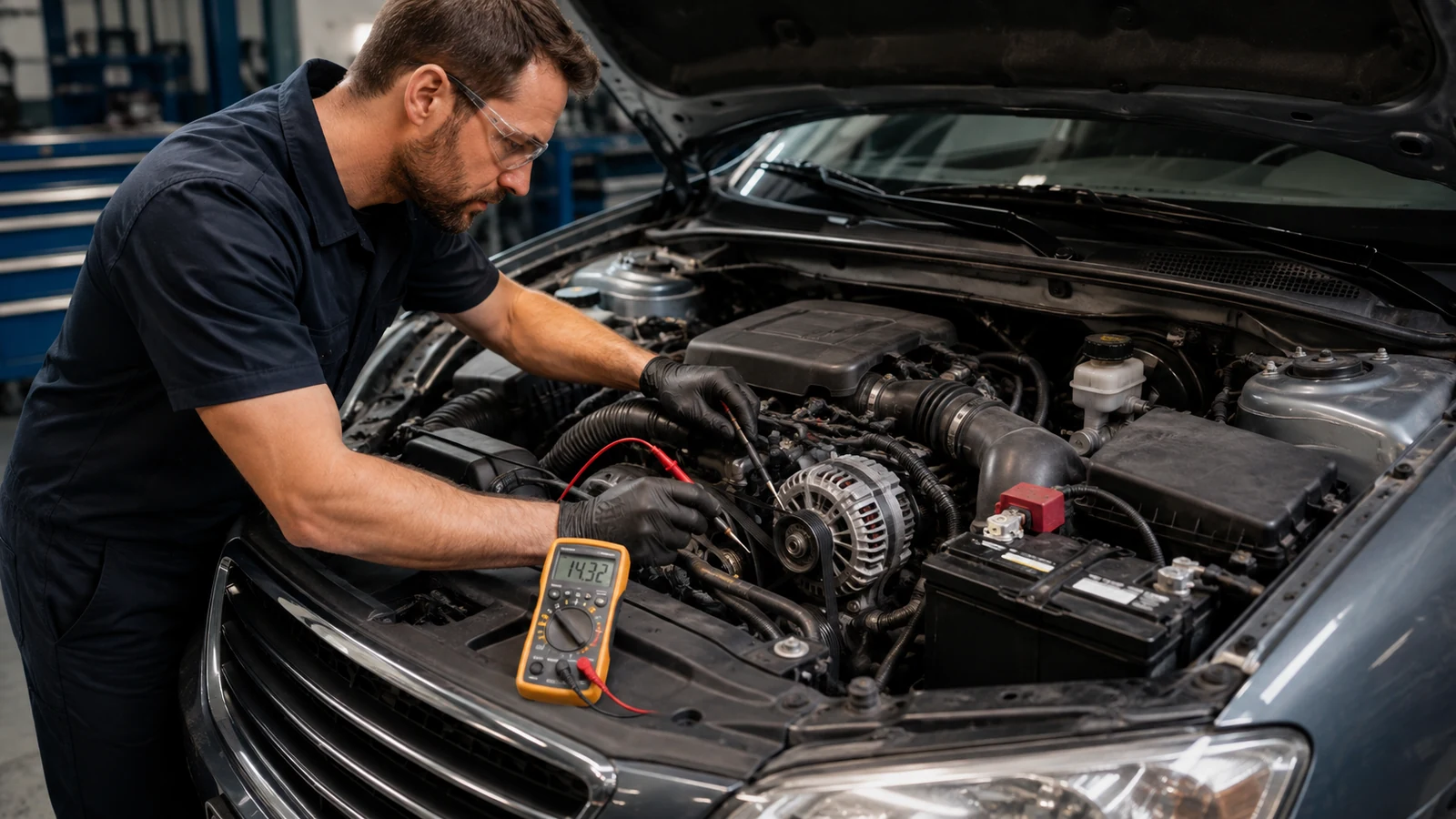
A puddle under your car can mean anything from harmless condensation to a leak that makes the vehicle unsafe to drive. The quickest way to judge the risk is to look at four things together: what the fluid appears to be, how fast it is leaking, whether the fluid level is dropping, and whether the car is showing warning signs.
Clear, odorless water after using the air conditioner is usually normal. Brake fluid and actively dripping fuel are different: both are reasons to keep the vehicle parked. Coolant, engine oil, transmission fluid, power steering fluid, and gear oil fall between those extremes because the level, leak rate, and vehicle symptoms determine how urgent the problem is.
Key Takeaways
- Clear water with no smell or oily residue is commonly A/C condensation or exhaust moisture, especially after humid-weather driving or a short trip.
- Do not drive with a confirmed brake fluid leak, an active fuel leak, steam, smoke, a rising temperature gauge, or an oil-pressure warning combined with low oil or engine noise.
- A few isolated drops can be a slow seep, but a growing puddle or a measurable level drop needs prompt diagnosis.
- Automotive fluids can be hazardous to people, pets, and the environment, so clean spills with absorbent material rather than washing them into a drain.
What to Do Before You Drive the Car
Do not start by guessing the fluid from the stain alone. First decide whether the vehicle is safe to move.
- If you smell gasoline or diesel, leave the engine off. Keep flames, heaters, sparks, and power tools away from the area.
- Check the puddle’s size and location. Note whether it is still dripping and where it sits in relation to the front axle, transmission area, rear axle, and wheels.
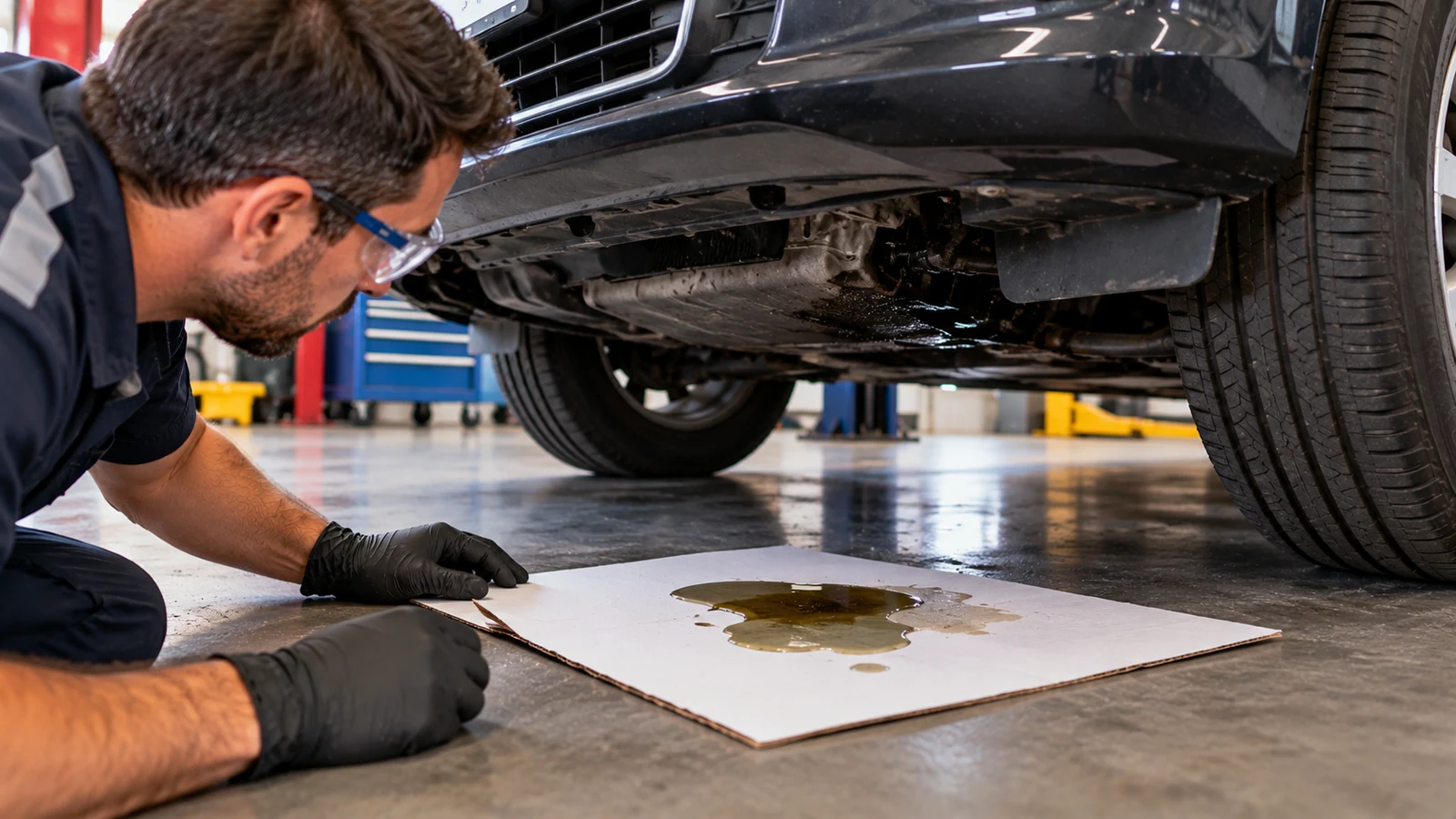
- Use white cardboard or paper to collect a fresh sample. Color, thickness, residue, and odor are easier to judge on a light background than on concrete.
- Let the vehicle cool before checking levels. Never open a hot radiator cap or pressurized coolant reservoir.
- Check the appropriate fluid levels. A fresh puddle matters more when the matching reservoir or dipstick is suddenly low.
- Look for warning lights and abnormal behavior. A temperature warning, oil-pressure light, soft brake pedal, smoke, steam, harsh shifting, or heavy steering changes the decision immediately.
If you need to look underneath, work on firm, level ground and never rely on a jack by itself. Use properly placed stands, wheel chocks, gloves, and eye protection.
When the Car Should Stay Parked
Arrange a tow rather than driving when any of these apply:
- Brake fluid is leaking.
- Gasoline is leaking, or diesel is actively dripping.
- The temperature gauge is climbing, or steam is coming from under the hood.
- A red oil-pressure warning is on, and the engine is low on oil, ticking, or knocking.
- A fluid reservoir has emptied or is dropping rapidly.
- The puddle continues spreading while the vehicle is stationary.
- Steering or braking behavior has suddenly changed.
A slow leak with the level still correct and no warning signs may allow a short trip to a repair shop, but only if the fluid isn’t safety-critical and the vehicle is behaving normally. If you can’t confidently identify the fluid, towing is the safer choice.
Identify the Fluid Before You Judge the Risk
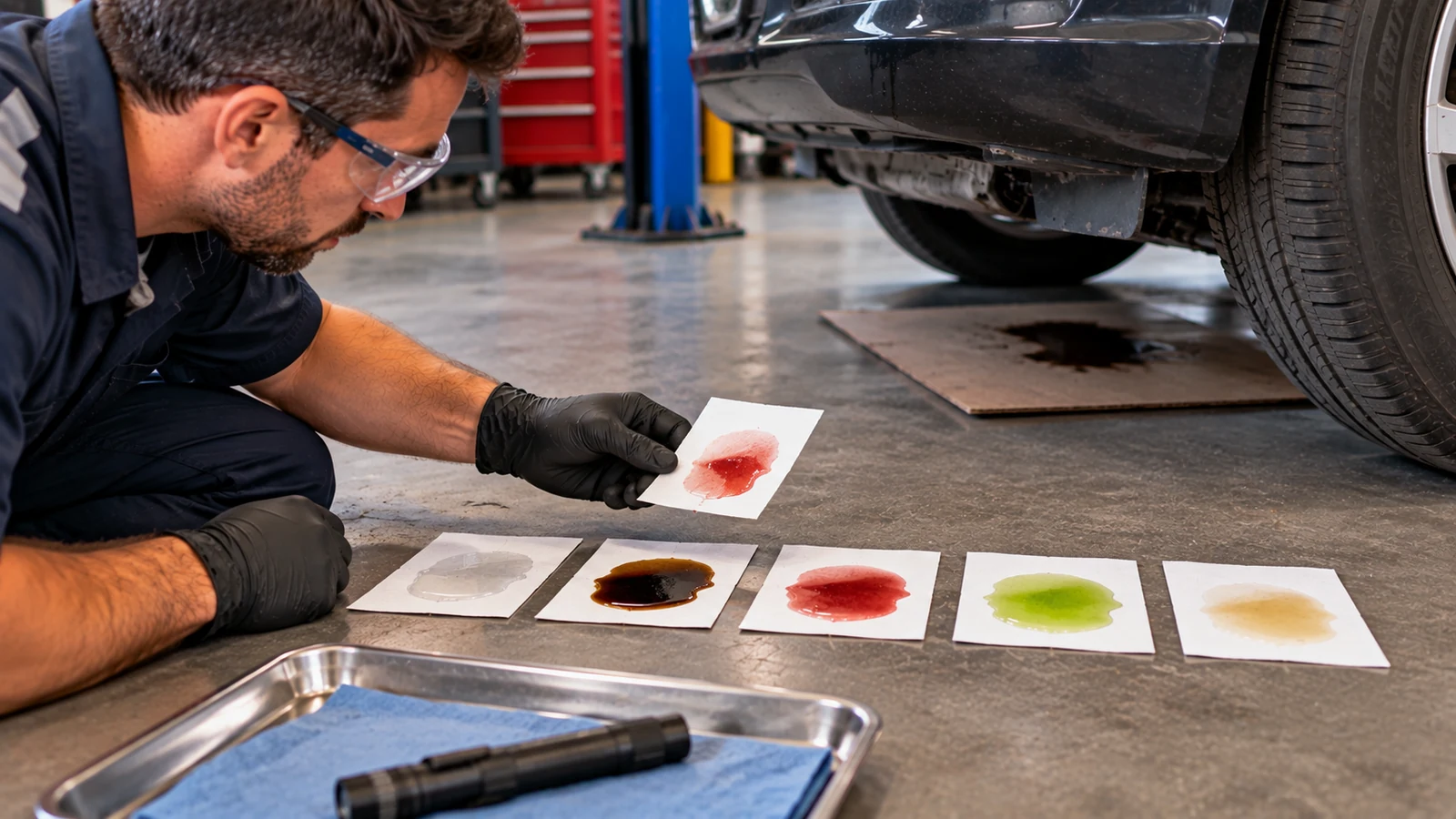
Fluid color is useful, but it is not a perfect identifier. Age, contamination, aftermarket products, and lighting can change appearance. Use color together with smell, texture, puddle location, fluid level, and vehicle symptoms.
| Fluid or source | Typical clues | Common location | Main concern | General response |
|---|---|---|---|---|
| A/C condensation | Clear, odorless, water-like | Front area near firewall | Usually none | Normal if it dries clean |
| Exhaust condensation | Clear water from tailpipe | Rear of vehicle | Usually none | Normal on cold starts or short trips |
| Washer fluid | Often blue, green, pink, or orange; thin | Front corner near reservoir | Poor visibility if reservoir empties | Repair soon |
| Engine oil | Amber to dark brown or black; slick | Engine area | Engine damage if level drops | Check level and repair source |
| Coolant | Brightly dyed, sweet odor | Engine bay, radiator, hoses, under dash if heater core | Overheating, toxicity | Repair promptly; stop if overheating |
| Automatic transmission fluid | Often red/pink to brown; oily | Center/front underside | Transmission damage | Verify level by correct procedure |
| Power steering fluid | Red, amber, clear, or green depending on system | Pump, hoses, steering rack | Heavy steering, pump damage | Repair before level falls |
| Gear oil | Thick, sticky, strong sulfur-like smell | Differentials, axles, transfer case | Bearing/gear damage, brake contamination | Repair soon |
| Brake fluid | Clear to amber or brown; thin and slippery | Inside wheel, brake lines, master cylinder area | Loss of braking | Do not drive |
| Gasoline | Thin, strong fuel odor, evaporates quickly | Tank, lines, engine bay | Fire and vapor hazard | Do not start; tow |
| Diesel fuel | Oily, persistent fuel odor, may leave sheen | Tank, lines, filter, engine area | Fire and severe slip hazard | Tow if actively leaking |
| Diesel exhaust fluid | Clear, watery, dries to white crystals | DEF tank, lines, dosing system | Emissions warnings and operating restrictions | Clean residue and repair |
| Battery electrolyte | Wet battery case, corrosion/crust nearby | Battery tray | Chemical burns, electrical problems | Protect skin/eyes; inspect battery |
These identification clues and risk levels follow the source article’s leak chart and safety guidance.
Harmless Water Can Look Like a Leak
Air-conditioning systems remove moisture from cabin air and drain it under the vehicle. On warm or humid days, that can create a surprisingly large clear puddle near the front of the car. If it feels like water, has no odor, and dries without a greasy mark, it is usually normal condensation.
Water can also drip from the exhaust while the system is warming up. Rainwater, car-wash water, sunroof drains, or melting snow can leave puddles that appear after you park the car. Before assuming there is a mechanical leak, place clean cardboard underneath overnight and check whether a new stain appears.
A/C Water Versus Refrigerant-System Leakage
A/C condensation is plain water. Refrigerant itself normally escapes as a gas, but the refrigerant circuit also carries compressor oil. An oily stain around an A/C fitting or hose connection can therefore point to an A/C system leak rather than normal drainage. That is a different diagnosis and requires the correct refrigerant and oil quantities during repair.
How Fast Is the Leak and Is the Level Falling?
Leak rate often matters as much as fluid type. A small valve-cover seep that leaves a few drops over several days is not the same problem as an oil-filter seal that creates a large puddle overnight.
A simple overnight test can establish whether the leak is stable or getting worse:
- Park on clean, level ground after normal driving.
- Place white cardboard under the suspected area and mark the front-tire positions so you can compare location accurately.
- Record the related fluid level before leaving the car.
- Check the cardboard and fluid level the next morning.
A few separate drops suggest a slow seep. A palm-sized stain deserves a repair appointment soon. A puddle large enough to step in, fluid that visibly drips, or a reservoir that drops noticeably between checks should be treated as an active leak.
What Different Leaks Mean for the Vehicle
Engine Oil Leaks: Usually Gradual Until Oil Pressure Is Lost
Engine oil is typically amber when fresh and becomes dark brown or black in service. Common leak points include the drain plug, oil filter, valve-cover gasket, oil-pan gasket, and crankshaft seals.
A slow seep is usually a maintenance problem rather than an immediate emergency, but it still needs monitoring. Oil on rubber components can shorten their service life, and oil reaching a hot exhaust may smoke. More importantly, an ignored leak can lower the sump level far enough to starve the engine.
If the red oil-pressure warning comes on, the dipstick shows no oil, or the engine starts ticking or knocking, switch the engine off as soon as it is safe. The source material treats that combination as a stop-driving condition because internal damage can happen quickly once lubrication pressure is lost.
Vehicle layout changes where oil can travel before it reaches the ground. On models covered by BMW workshop manuals, a technician still needs to trace the highest fresh wet point rather than assuming the lowest drip is the source. The 2009-2015 BMW 7 Series F01/F02 factory workshop manual can support model-specific component access and tightening procedures when the leak source is known.
The same principle applies to Volkswagen workshop manuals and a model-specific reference such as the 2010-2019 Volkswagen Jetta Mk6 workshop manual. For a different engine layout, the 2015 Toyota Camry XV50 workshop manual helps avoid assuming that a gasket, drain point, or fastener sequence matches another vehicle.
Coolant Leaks: Urgency Depends on Temperature and Loss Rate
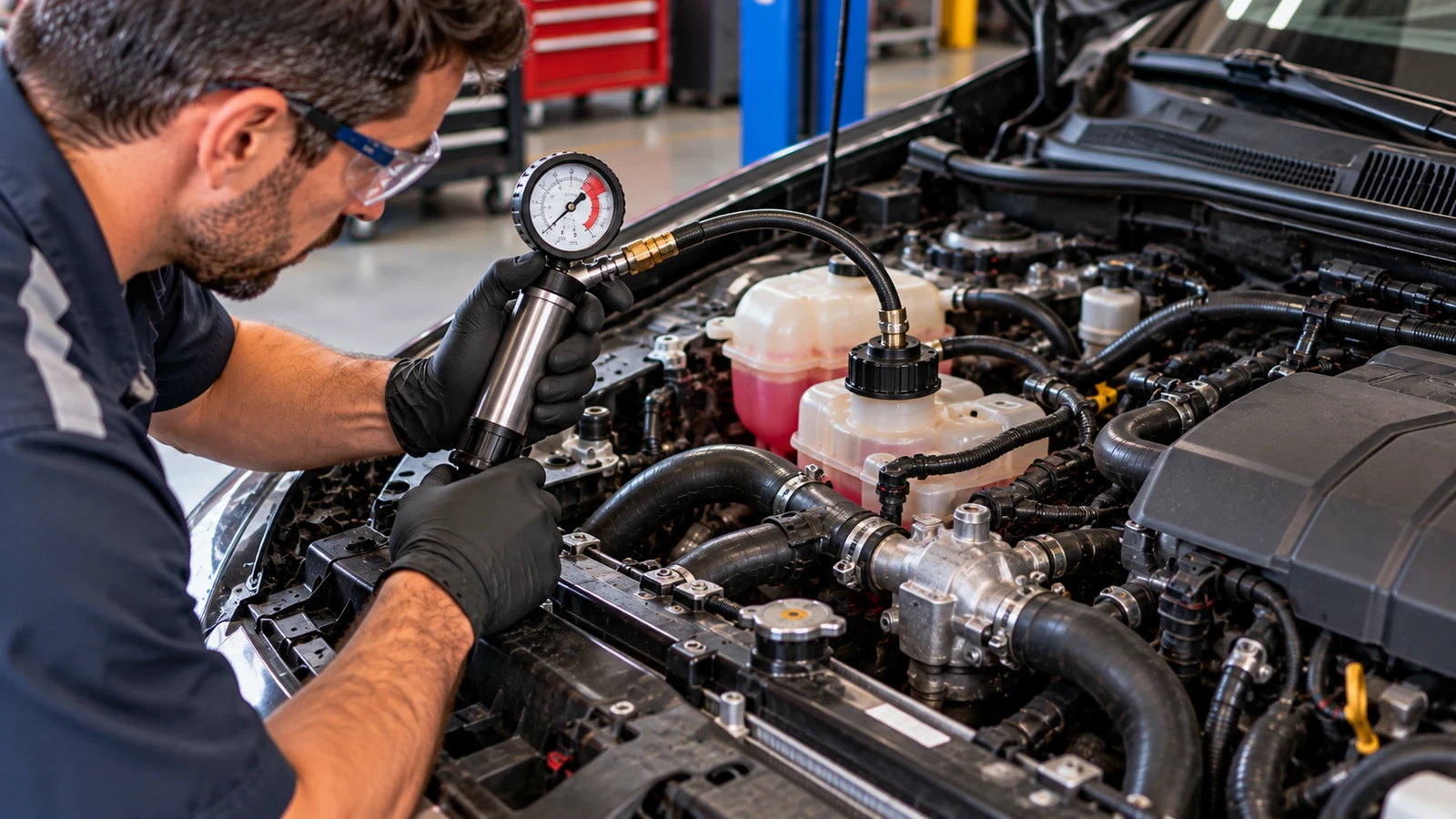
Coolant can be green, orange, pink, yellow, blue, purple, or another manufacturer-specific color. It often has a sweet odor and may leave a crusty deposit where a slow seep dries.
A small coolant seep with a stable level and normal temperature still deserves repair. A coolant leak becomes an immediate stop-driving problem when the temperature gauge rises, steam appears, a coolant warning comes on, or the system loses fluid quickly. Continuing to run an overheating engine can lead to cylinder-head or head-gasket damage. Never remove a hot pressure cap.
Common sources include hose connections, radiator seams, thermostat housings, water-pump weep holes, and heater-core connections. A sweet smell inside the cabin, damp front carpet, or greasy film on the windshield can point toward the heater core rather than an external engine-bay leak. Slow coolant loss can be deceptive because the car may drive normally until the level becomes too low.
For vehicle-specific cooling layouts, Hyundai workshop manuals provide a starting point, while the 2005-2010 Hyundai Tucson JM workshop manual is the better reference when component locations, refill steps, or bleeding procedures depend on that platform. Likewise, Chevrolet workshop manuals and the 2011-2013 Chevrolet Cruze workshop manual help keep cooling-system work tied to the correct vehicle instead of a generic procedure.
Transmission and Power Steering Leaks: Check the System the Right Way
Automatic transmission fluid is often red or pink when fresh and darkens toward brown with age. Low fluid can cause delayed engagement, slipping, flare between shifts, or harsh operation. Many modern transmissions do not have a conventional dipstick, so checking the level may require a specified fluid temperature and a defined fill or level-check procedure.
That makes vehicle-specific information especially important. A Ford workshop manual can establish the correct service method for the exact vehicle, and the 2005-2008 Ford Escape 4WD factory workshop manual is more useful than a universal transmission-fluid guide when the fill/check sequence or driveline layout is model-specific.
The same applies to Porsche workshop manuals. The 2015-2016 Porsche Macan workshop manual is the appropriate place to confirm model-specific service information before opening or refilling a transmission or related driveline unit.
Hydraulic power steering fluid can be red, amber, clear, or green depending on the system. A falling level may bring pump whining and heavier steering, especially at low speed. Some newer cars use electric power steering and have no steering fluid at all, so a red puddle beneath such a vehicle likely comes from another system.
Brake Fluid and Fuel Leaks: Treat Them as Safety Problems
Brake fluid leaks are not “monitor and see” problems. Hydraulic pressure transfers pedal force to the brakes, so fluid loss can cause a soft or sinking pedal and eventually reduce braking ability. A confirmed brake-fluid leak means the car should not be driven.
A slightly lower brake reservoir with no visible leak does not automatically prove fluid loss. As brake pads wear, caliper pistons move outward, and the reservoir level can fall gradually. That’s why you should check pad condition and the entire hydraulic system before assuming the master cylinder or a brake line is leaking.
Gasoline and diesel leaks also demand caution. Gasoline evaporates quickly, and its vapor can ignite. Diesel evaporates more slowly, leaves a persistent oily film, and creates a major slip hazard. If fuel is actively dripping, keep the engine off, ventilate an enclosed garage when safe to do so, remove ignition sources, and arrange recovery rather than drive.
Gear Oil Leaks: AWD and 4WD Vehicles Have More Potential Sources
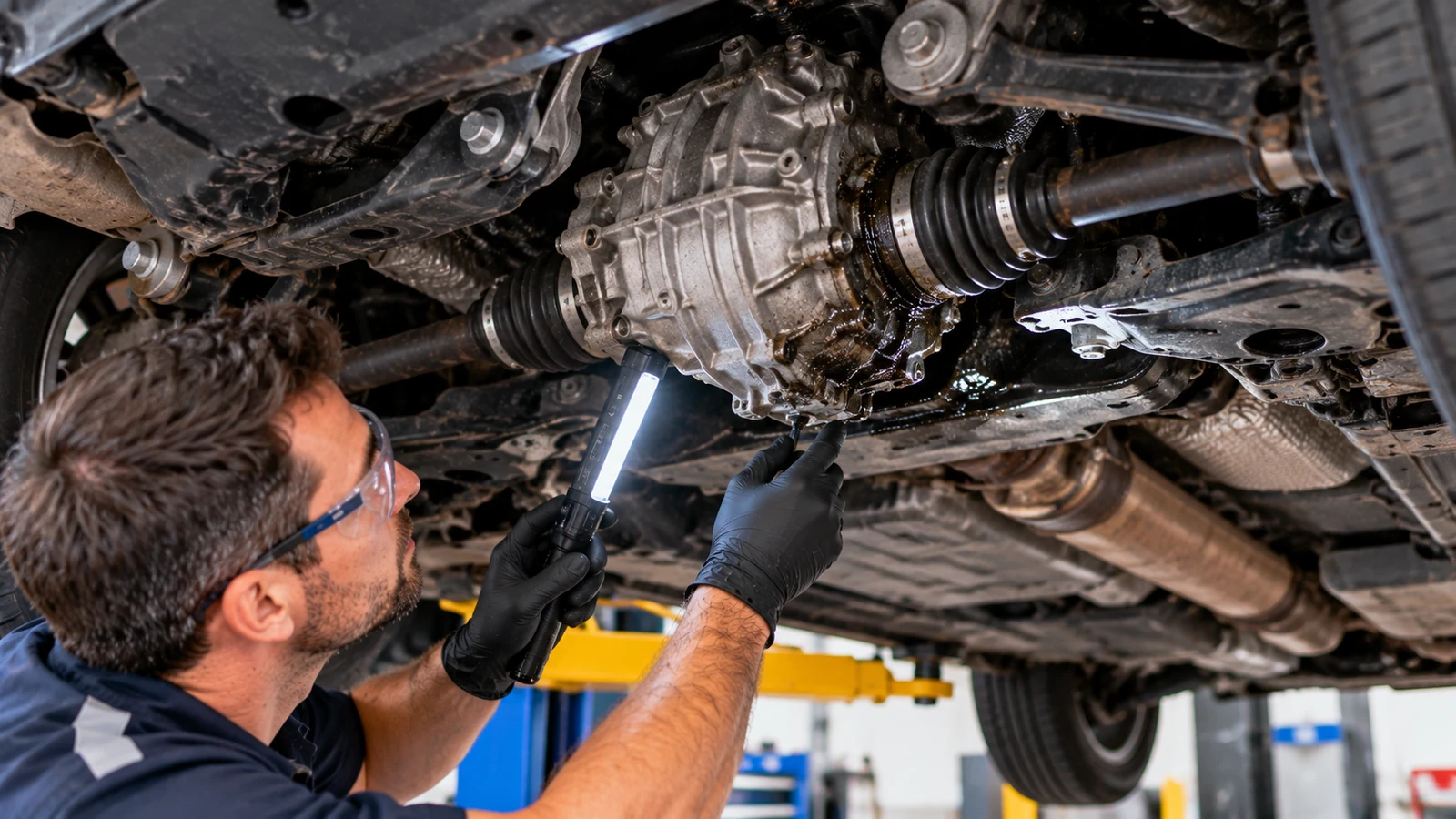
Gear oil is thicker than engine oil and often has a strong sulfur-like odor. It can leak from differential covers, pinion seals, axle seals, or transfer cases. Low lubricant can lead to whining, humming, bearing wear, and gear damage. An axle seal leak can also reach brake components, turning a driveline leak into a braking concern.
Four-wheel-drive and all-wheel-drive vehicles may have several separate lubricated units, so trace the puddle to the correct housing before topping anything up. The catalog includes Ram workshop manuals and a 1997-2013 RAM 2500 4WD factory workshop manual for truck-specific service information.
For AWD SUVs and passenger vehicles, examples include Volvo workshop manuals with the 2003 Volvo XC90 2.5T AWD manual, Subaru workshop manuals with the 1991-1994 Subaru Legacy Sedan 4WD manual, and Mitsubishi workshop manuals with the 2011-2013 Mitsubishi Outlander Sport AWD manual.
Other 4WD examples in the supplied AutoServicePlus inventory include Kia workshop manuals and the 2009 Kia Borrego 4WD manual, plus Suzuki workshop manuals and the 1986-1989 Suzuki Samurai 4WD manual.
Platform layout also matters on performance and luxury AWD vehicles. The 1996-1997 Porsche 911 Turbo AWD manual, Land Rover workshop manuals with the 2015-2017 Land Rover Discovery Sport L550 manual, and Cadillac workshop manuals with the 2010-2013 Cadillac CTS Sedan AWD manual all reinforce the same point: identify the exact leaking unit before selecting a lubricant or repair procedure.
Vehicle-Specific Leak Diagnosis Matters
A puddle can look similar across different vehicles, but the correct inspection and repair process can change substantially. Fluid type, reservoir location, fill method, bleeding sequence, torque values, sealants, and component-removal steps can vary by engine, transmission, drivetrain, and model year.
Hybrids and Multiple Cooling Circuits
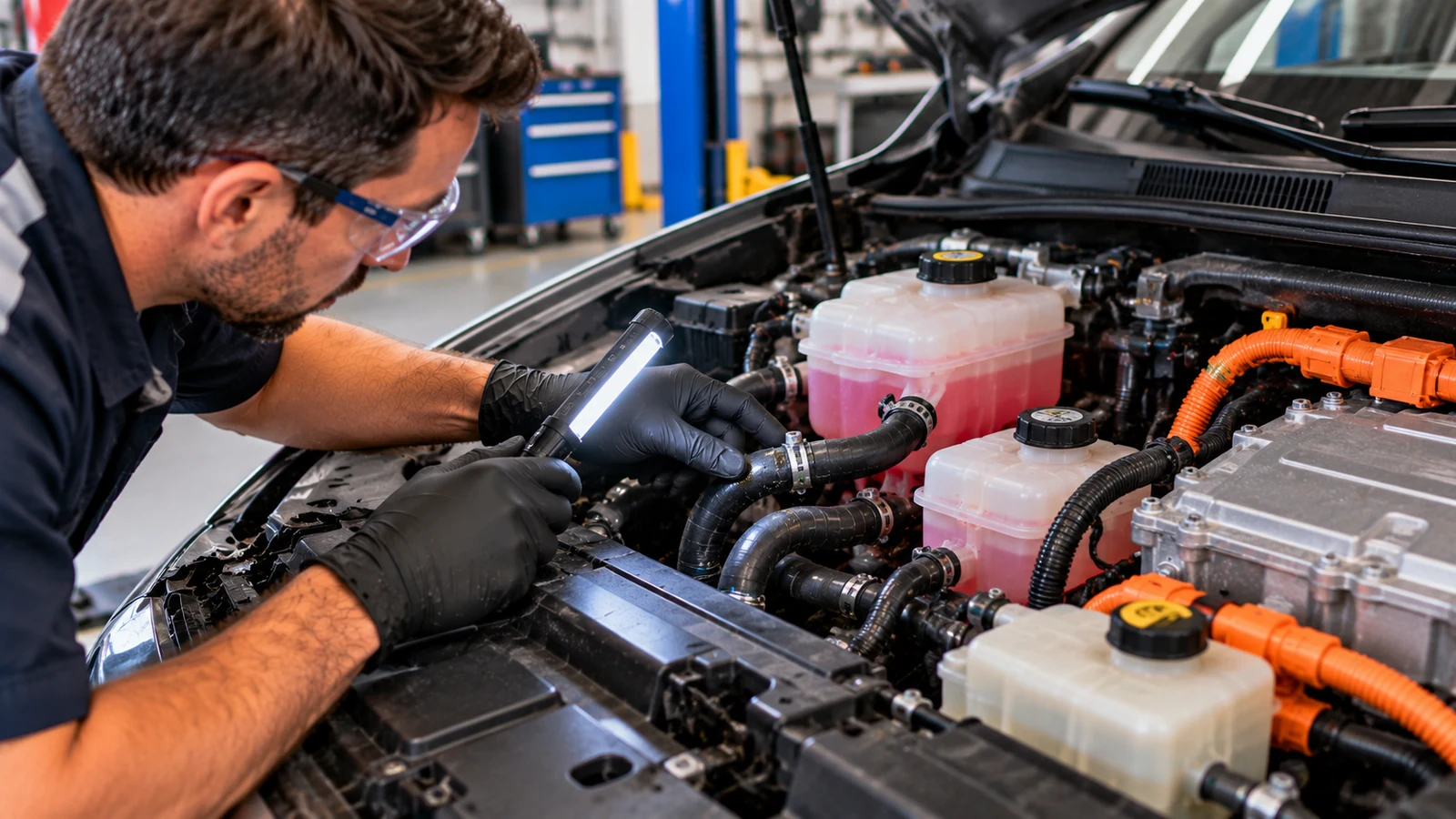
Hybrids can carry the same basic fluids as conventional vehicles while also using additional cooling circuits for hybrid components. Battery-electric vehicles eliminate engine oil, but they still rely on fluids such as brake fluid, washer fluid, A/C refrigerant, oil, drive-unit lubricant, and commonly liquid coolant for battery or power-electronics thermal management. High-voltage components require the correct shutdown and safety procedure before service.
For model-specific hybrid information, Toyota workshop manuals can be narrowed to a specific vehicle, such as the 2001-2009 Toyota Prius factory workshop manual. The supplied catalog also includes the 2014-2018 Ford C-MAX Hybrid workshop manual and the 2014-2015 Hyundai Sonata Hybrid FY HEV manual.
European hybrid layouts also benefit from vehicle-specific documentation. Peugeot workshop manuals include the 2012 Peugeot 508 RXH Hybrid4 factory workshop manual, which is a more appropriate repair reference for that platform than a generic hybrid-fluid article.
Passenger Cars and Diesel Applications
Conventional passenger cars still vary enough that the same visible puddle can lead to different access and service procedures. Honda workshop manuals can support model-specific work such as the 2016-2018 Honda Civic FC/FK factory workshop manual.
Diesel vehicles add fuel-system and, on many newer models, diesel-exhaust-fluid considerations. DEF is clear and watery and often leaves white crystals when it dries. A DEF leak does not lubricate or cool the engine, but faults in that system can trigger warnings and operating restrictions. Diesel fuel itself remains a fire and slip hazard and should not be confused with DEF.
The supplied catalog includes Audi workshop manuals and the 1982-1983 Audi 4000S Turbo Diesel factory workshop manual, illustrating why fuel type and exact model matter when tracing a puddle.
DIY Leak Checks Versus Repairs That Need Factory Procedures
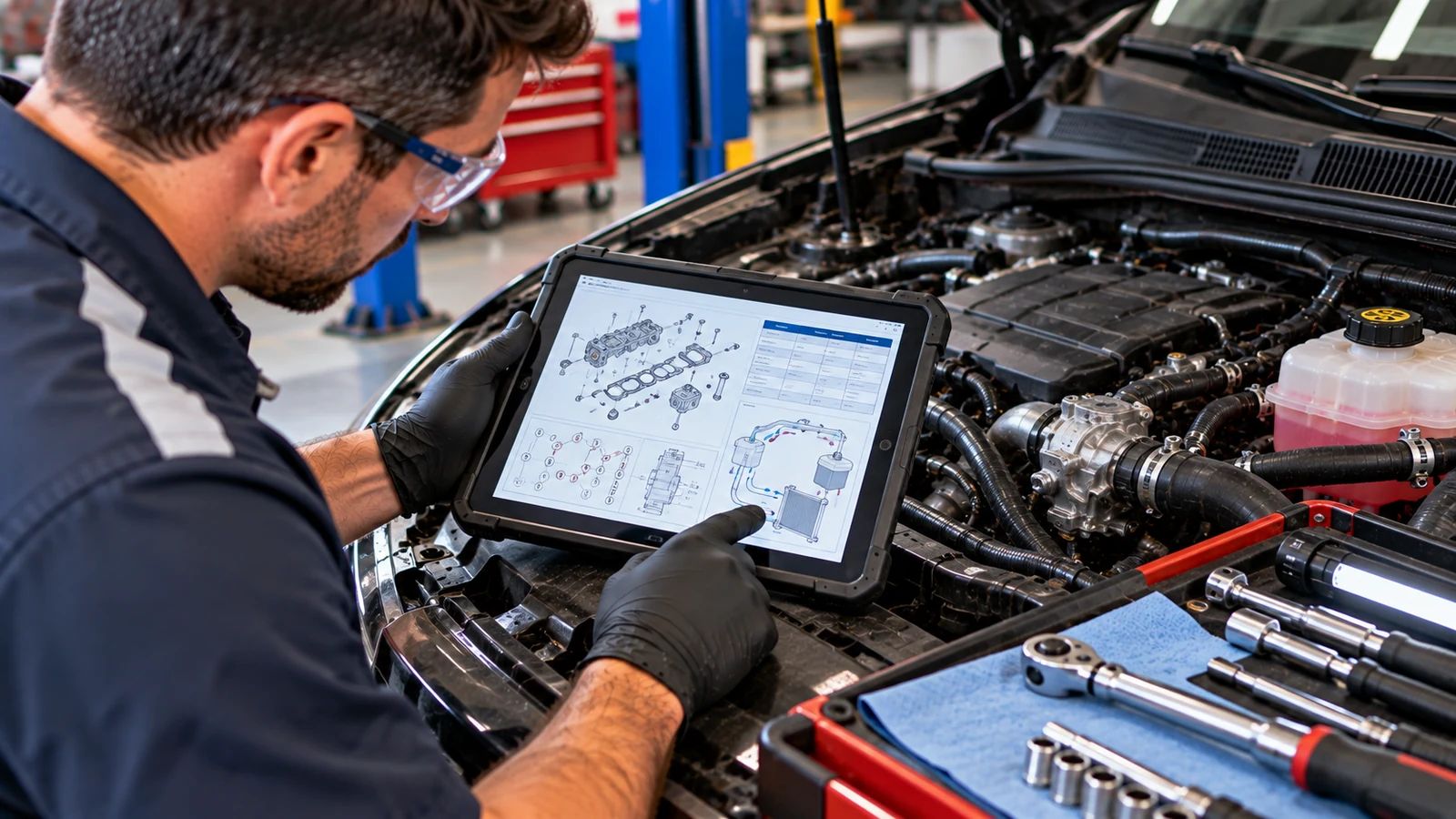
A careful DIY owner can do a useful first diagnosis without dismantling the car. Clean the suspected area when the vehicle is cool, inspect the highest and most forward fresh wet point, then recheck after a short drive. Fluid can run along covers and crossmembers or be blown rearward while driving, so the biggest stain is not always directly below the failed seal.
Simple jobs may include replacing a drain-plug washer, installing an oil filter correctly, replacing an accessible hose or clamp, or replacing a cap or reservoir washer. More involved repairs such as rear main seals, transmission seals, brake hydraulics, fuel-system components, head-gasket work, and driveline seals depend on vehicle-specific procedures.
Technicians may use UV dye to trace slow leaks and a pressure tester to locate cooling-system leaks. Once the failed component is identified, a factory workshop manual is useful for confirming:
- Component removal order and access points
- Fastener torque values and tightening sequences
- Correct gasket, O-ring, or sealant requirements
- Fluid specification and capacity
- Transmission level-check temperature or fill procedure
- Cooling-system and power-steering bleeding steps
- Wiring diagrams and diagnostic flowcharts when warning lights or sensors are involved
This is where a vehicle-specific manual is more valuable than a universal repair shortcut. The source article also emphasizes that even within one model line, engines and transmissions can change the required fluid and procedure.
Cleaning Up Leaked Automotive Fluids Safely
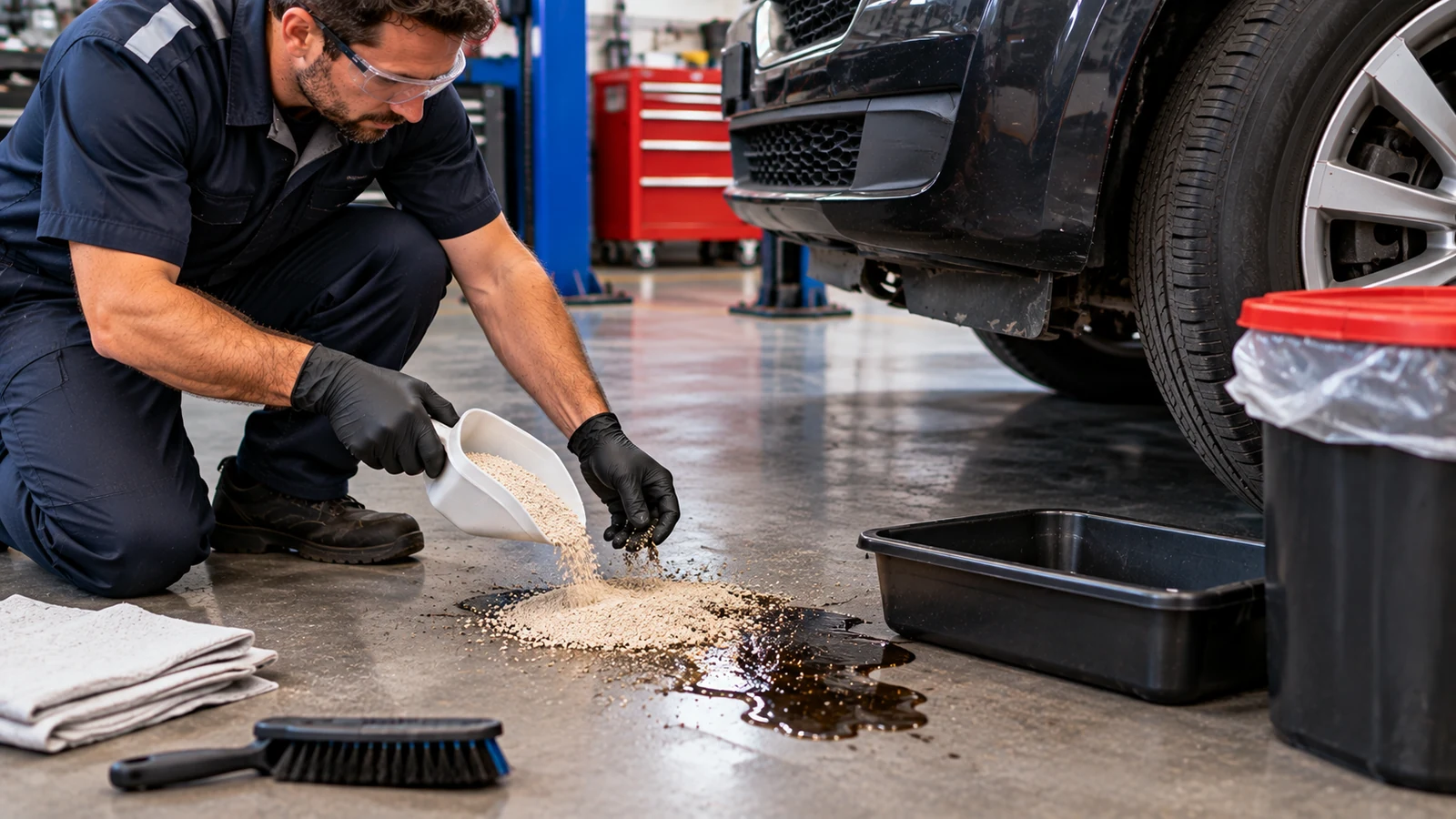
Cleaning the spill is part of the repair process because it protects people and animals and makes it easier to see whether fresh fluid is still escaping.
- Keep children and pets away and ventilate an enclosed garage.
- Wear gloves and eye protection.
- If fuel is involved, remove ignition sources and avoid creating sparks.
- Surround and cover the puddle with cat litter, sand, or a commercial absorbent.
- Let the absorbent collect the fluid, then sweep it up and seal it for proper disposal.
- Clean the remaining stain without washing automotive fluid into a storm drain.
- Place fresh cardboard or a drip tray beneath the vehicle until you repair the leak.
Ethylene-glycol coolant is poisonous if swallowed, so address coolant puddles immediately around pets and children. Oil, transmission fluid, and brake fluid also make smooth garage floors dangerously slippery. Fuel vapor creates an additional fire hazard in enclosed spaces.
Disposal rules vary by location, but leaked or drained automotive fluids and contaminated absorbent should go to an appropriate recycling or hazardous-waste collection point, not into soil, gutters, or drains.
Preventing Small Seeps From Becoming Major Leaks
Most leaks give some warning before they become severe. A few routine habits can catch them earlier:
- Look at your normal parking spot regularly for fresh marks.
- Check fluid levels on schedule and more often after a repair.
- Use the fluid specification required for the exact vehicle.
- Replace sealing washers, O-rings, and gaskets when the procedure calls for them.
- Tighten fasteners to specification instead of relying on feel alone.
- Inspect hoses and clamps for cracks, swelling, looseness, and dried coolant residue.
- Recheck the repaired area after the first few heat cycles or drives.
Hot conditions put additional stress on cooling systems, hoses, and seals, so small leaks that seem stable can become more obvious during sustained heat or a long climb.
Conclusion
A puddle under your car is dangerous when it threatens braking, creates a fire risk, causes a critical fluid level to drop, or appears with warning lights, overheating, smoke, steam, unusual noises, or a sudden change in how the vehicle drives.
Start with a clean sample and a fluid-level check, then judge the leak by fluid type, loss rate, level change, and symptoms. Clear water is often harmless. Brake fluid and active fuel leaks are not. Oil, coolant, transmission fluid, steering fluid, and gear oil need a more careful decision based on how quickly they are being lost and what the vehicle is doing.
Once you identify the source, use the correct vehicle-specific service information for the repair. Fluid specifications, capacities, torque values, fill methods, and bleeding procedures aren’t universal, and getting those details right turns a temporary clean-up into a proper fix.
Commonly Asked Questions About Whether a Puddle Under a Car Is Dangerous
Is Clear Water Under My Car After Using The A/C Normal?
Usually, yes. A/C condensation is clear, odorless, feels like water, and normally drains near the front of the vehicle. It should dry without leaving an oily stain. If the front carpet is wet instead, the drain may be blocked.
How Large Does A Puddle Need to Be Before Driving Is Unsafe?
The fluid matters more than the diameter of the spot. Any confirmed brake-fluid leak or active fuel leak is unsafe even if the puddle is small. With oil, coolant, transmission fluid, or power-steering fluid, the leak rate, fluid level, warning lights, and vehicle behavior determine urgency.
Why Is There A Puddle If All The Fluid Levels Look Normal?
A/C condensation, exhaust water, rainwater, sunroof drainage, and melting snow do not show up on a dipstick. A slow mechanical seep can also stain the floor before the reservoir level drops enough to notice. Some transmission and driveline fluids must be checked at a specific temperature and using a specific procedure.
Can I Top Up A Leaking System And Drive to A Workshop?
Sometimes, but only for a slow, non-safety-critical leak when the correct fluid is available, the level can be restored correctly, and there are no warning lights or abnormal symptoms. Do not use topping up as a way to keep driving with a known brake-fluid leak. For coolant, remember that some systems need a proper bleeding procedure after fluid loss or service.
Can A Puddle Under the Car Cause A Garage Fire?
Gasoline is the main concern because its vapor ignites easily. Oil is harder to ignite as a puddle, but oil reaching a hot exhaust can smoke and may burn. If you smell fuel in an enclosed garage, keep the engine off, ventilate the area when safe, avoid sparks and flames, and arrange recovery.
What Should I Do If A Pet May Have Swallowed Coolant?
Contact a veterinarian or animal poison service immediately, even if the animal looks normal. Ethylene glycol poisoning can become serious quickly, so absorb and remove any remaining spill so no other animal can reach it.
Why Did The Leak Appear Immediately After A Service?
Fresh drips after service can come from spilled fluid, a drain-plug sealing problem, an incorrectly seated oil-filter seal, a loose hose clamp, or an overfilled reservoir. Recheck the fluid level, note the drip location, and return to the repairer promptly if the leak continues.