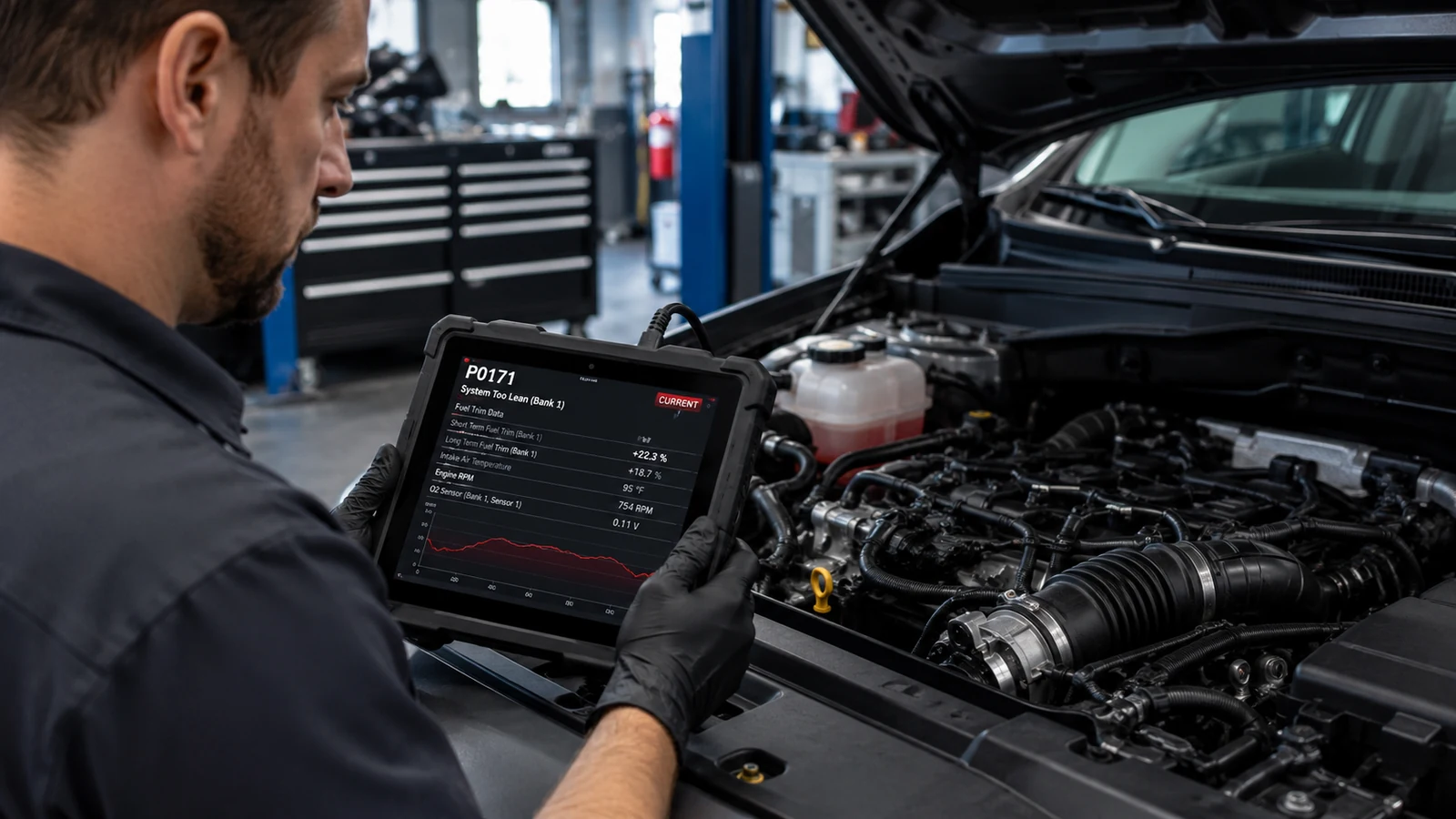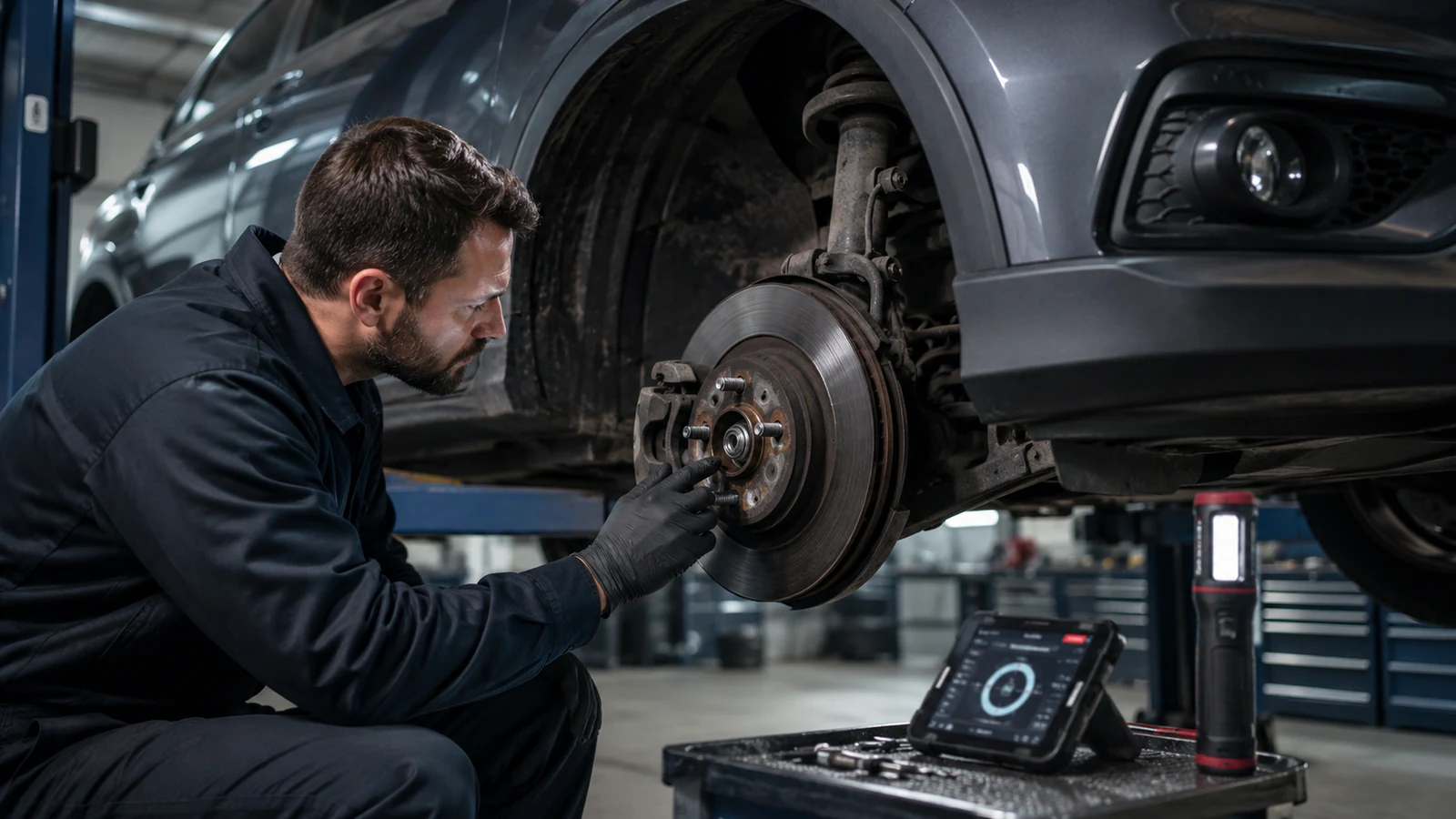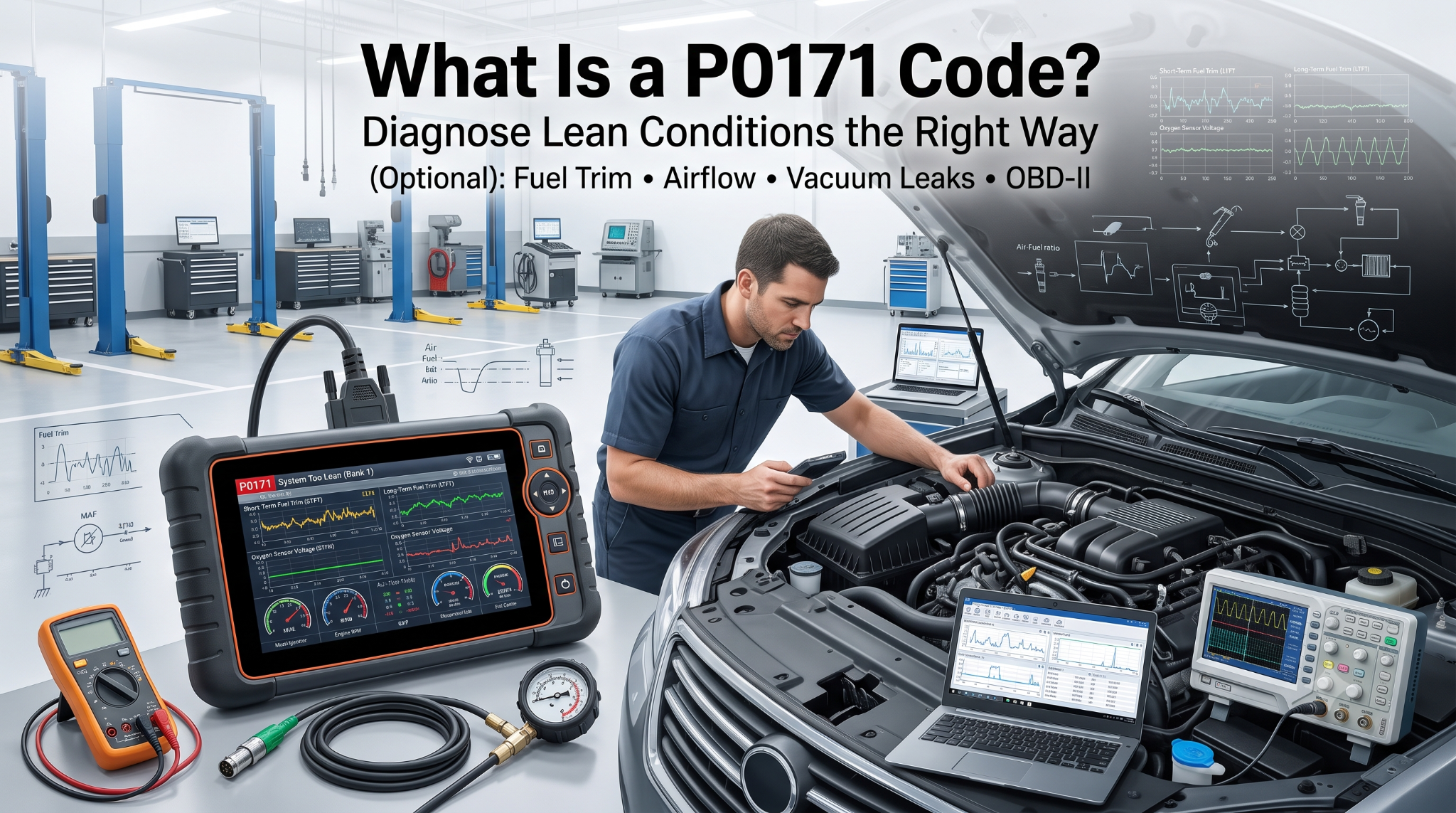
A P0171 code means your engine computer detects too much air or too little fuel on Bank 1. That can trigger rough idle, hesitation, poor fuel economy, and extra heat inside the engine.
The first clue is not the oxygen sensor. It’s the fuel trim data. Your scan tool can show whether the computer is adding fuel because the mixture is running lean.
AutoServicePlus explains how to narrow the cause without guessing. You’ll learn what P0171 means, what to check first, and when a part actually deserves replacement.
What Is a P0171 Code: Find the Cause Before Replacing Parts
A P0171 code means System Too Lean Bank 1. Bank 1 is the side of the engine with cylinder 1. The code sets when the engine control module keeps adding fuel, but the air-fuel mixture still appears lean. The right path starts with scan data, then moves through air leaks, MAF readings, fuel delivery, and sensor checks.
| What You Notice | Most Likely Area | First Check | Why It Matters |
|---|---|---|---|
| Rough idle | Vacuum leak | Intake hoses, PCV, brake booster | Extra air enters after the MAF |
| Hesitation on acceleration | Fuel delivery | Fuel pressure and volume | The engine may not get enough fuel |
| Poor MPG | MAF or fuel trim issue | MAF grams per second and trims | Bad airflow data changes fueling |
| P0171 after parts swap | Wrong diagnosis | Recheck freeze frame data | The original cause may remain |
| P0171 with misfire | Lean cylinder or intake leak | Misfire data and plug condition | Lean burn can trigger misfires |
What Does the Code Mean on Bank 1?
P0171 does not mean one single part failed. It means the engine computer sees a lean condition on Bank 1 and has reached the point where normal fuel correction is no longer enough.
The computer watches oxygen sensor feedback and fuel trim behavior. When short-term and long-term fuel trims stay high, it stores the lean code. OBD-II data includes Bank 1 short-term and long-term fuel trim, MAF airflow, fuel pressure, MAP, and oxygen sensor data that help confirm the direction of diagnosis.
That’s why a P0171 diagnosis should start with data, not parts. A clear trouble code testing process helps you connect the code to the condition that caused it.
Signs the Mixture Is Too Lean
A lean mixture can show up before the check engine light appears. Common signs include rough idle, stumbling when you press the throttle, surging at steady speed, or a higher-than-normal idle.
Some vehicles still drive normally at first. That does not make the code harmless. A lean engine can run hotter, misfire under load, and damage the catalytic converter if the problem continues.
Pay attention to when the symptom happens. A rough idle that improves at higher RPM often points toward a vacuum leak. A lean condition that worsens under load can point to weak fuel delivery.
Check Vacuum Leaks First
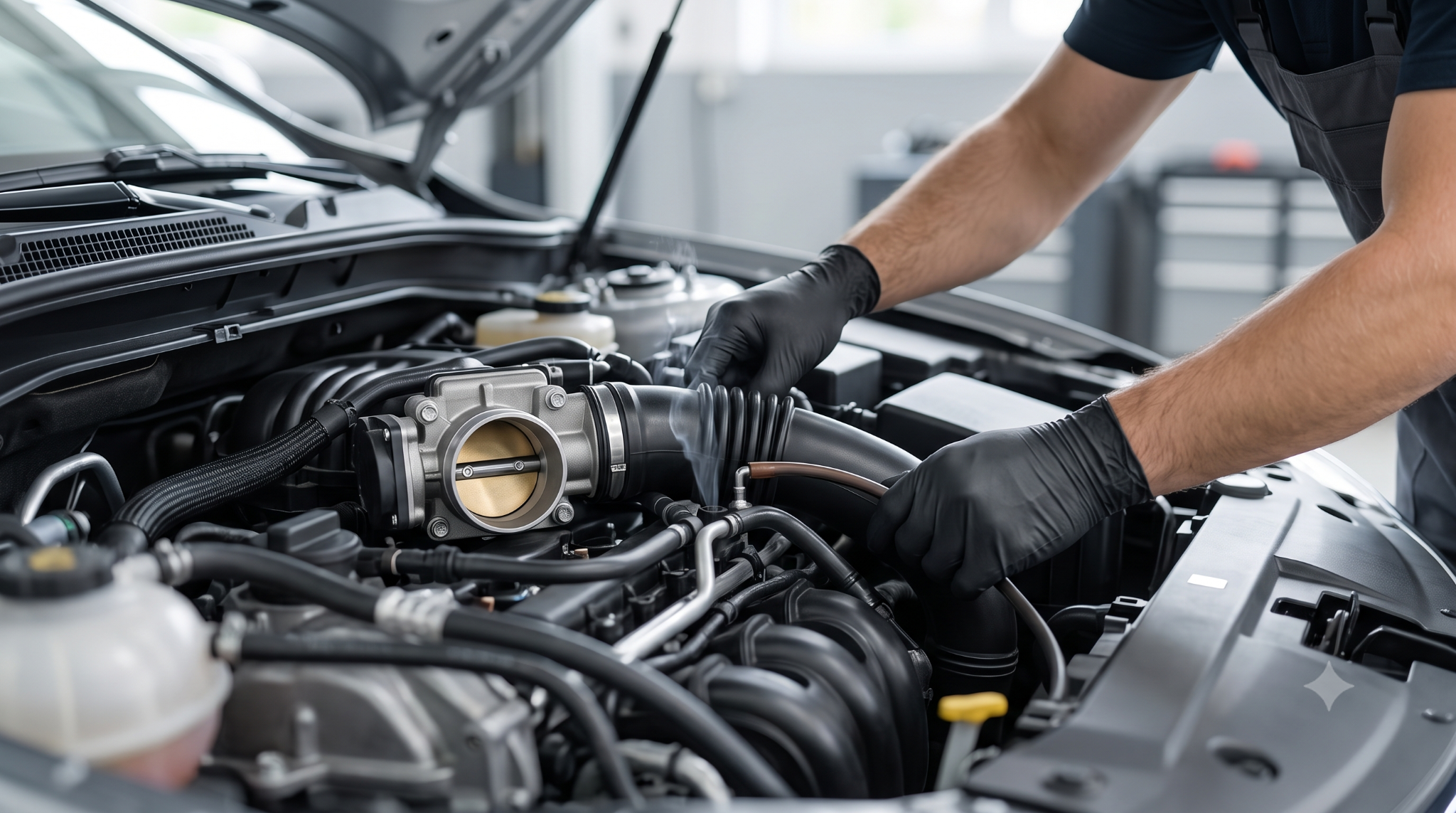
Vacuum leaks are among the most common causes of a P0171 code. Extra air enters the engine after the MAF sensor, so the computer does not measure it. The oxygen sensor then reports a lean mixture, and the computer adds fuel.
Start with the simple areas. Inspect the intake boot, PCV hose, brake booster hose, vacuum lines, intake gasket area, and any cracked plastic fittings.
A smoke test is stronger than a visual check. Small leaks can hide under the intake or open only when the engine moves. If fuel trims improve when the leak is sealed, you’ve found a real cause.
Read Fuel Trims Before Parts

Fuel trims tell you how hard the computer is working to correct the mixture. Positive fuel trim means the computer is adding fuel. High positive trims at idle often suggest unmetered air.
Check the short-term and long-term fuel trims at idle, then again at around 2,500 RPM. If trims are high at idle but improve at higher RPM, look harder for a vacuum leak. If trims stay high under load, check fuel pressure, MAF readings, and exhaust leaks before the upstream oxygen sensor.
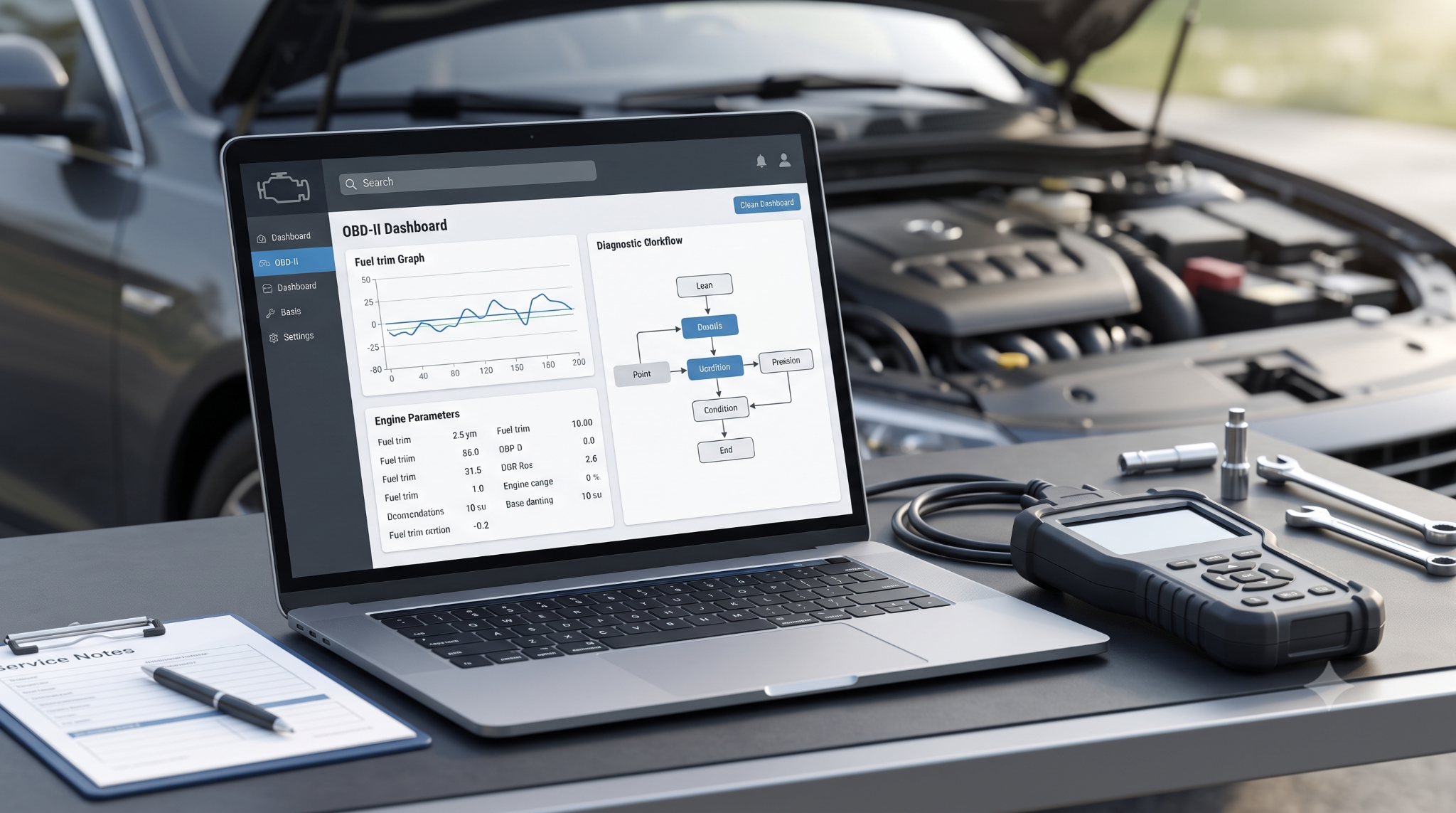
For a cleaner workflow, use diagnostic flowcharts instead of jumping between random tests. A flowchart keeps the repair path controlled.
Test MAF and Oxygen Sensor Data
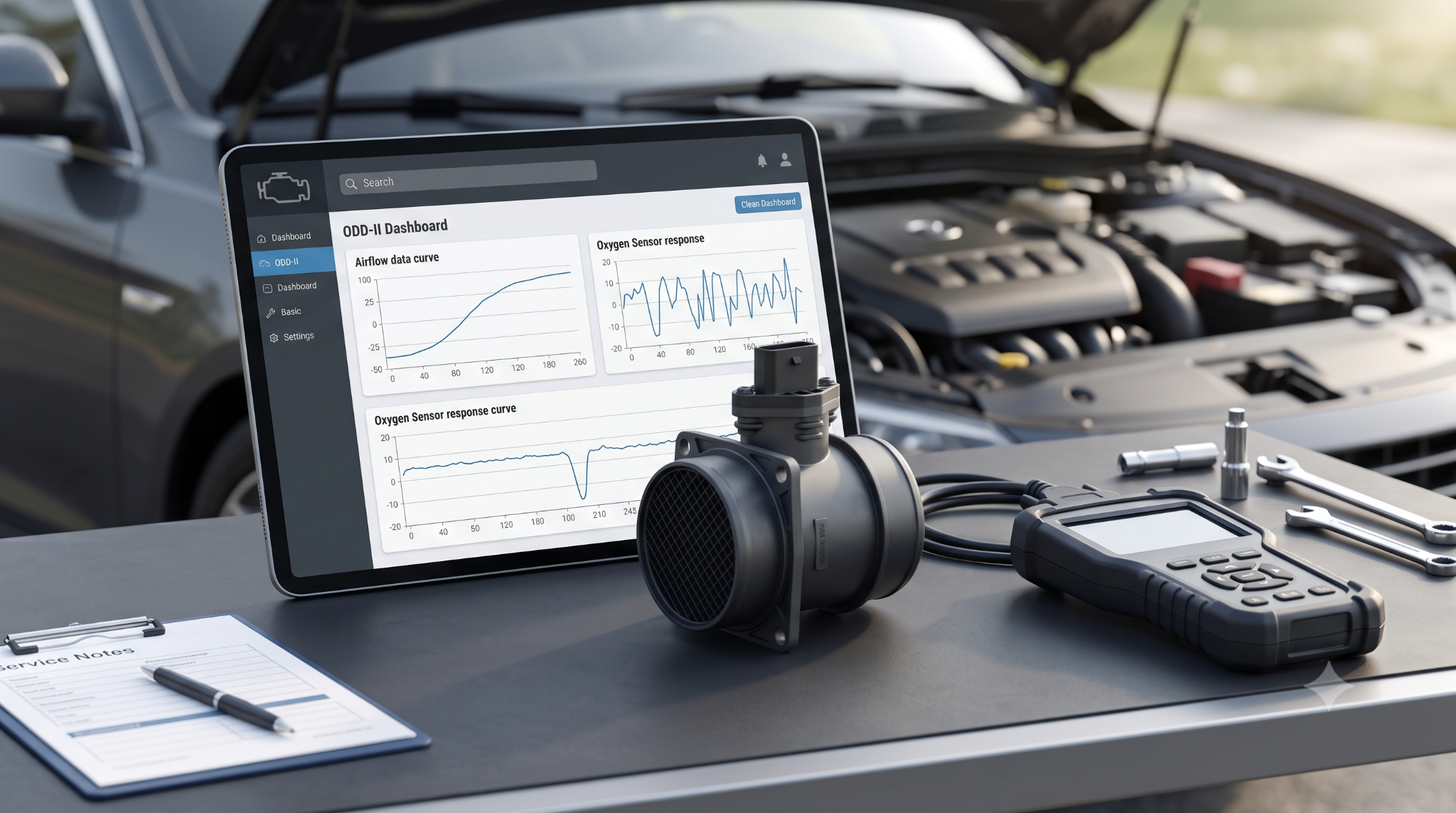
A dirty or underreporting MAF sensor can cause P0171 because the computer thinks less air is entering the engine than is actually entering. That makes the commanded fuel amount too low.
Do not clean or replace the MAF solely because the code is present. Compare MAF readings against engine size, RPM, and load. Also inspect the air filter box, intake clamps, and ducting.
The oxygen sensor can be involved, but it is often blamed too early. Use sensor testing before replacement to confirm response speed, voltage behavior, and fuel trim reaction before buying parts.
Check Fuel Delivery Under Load
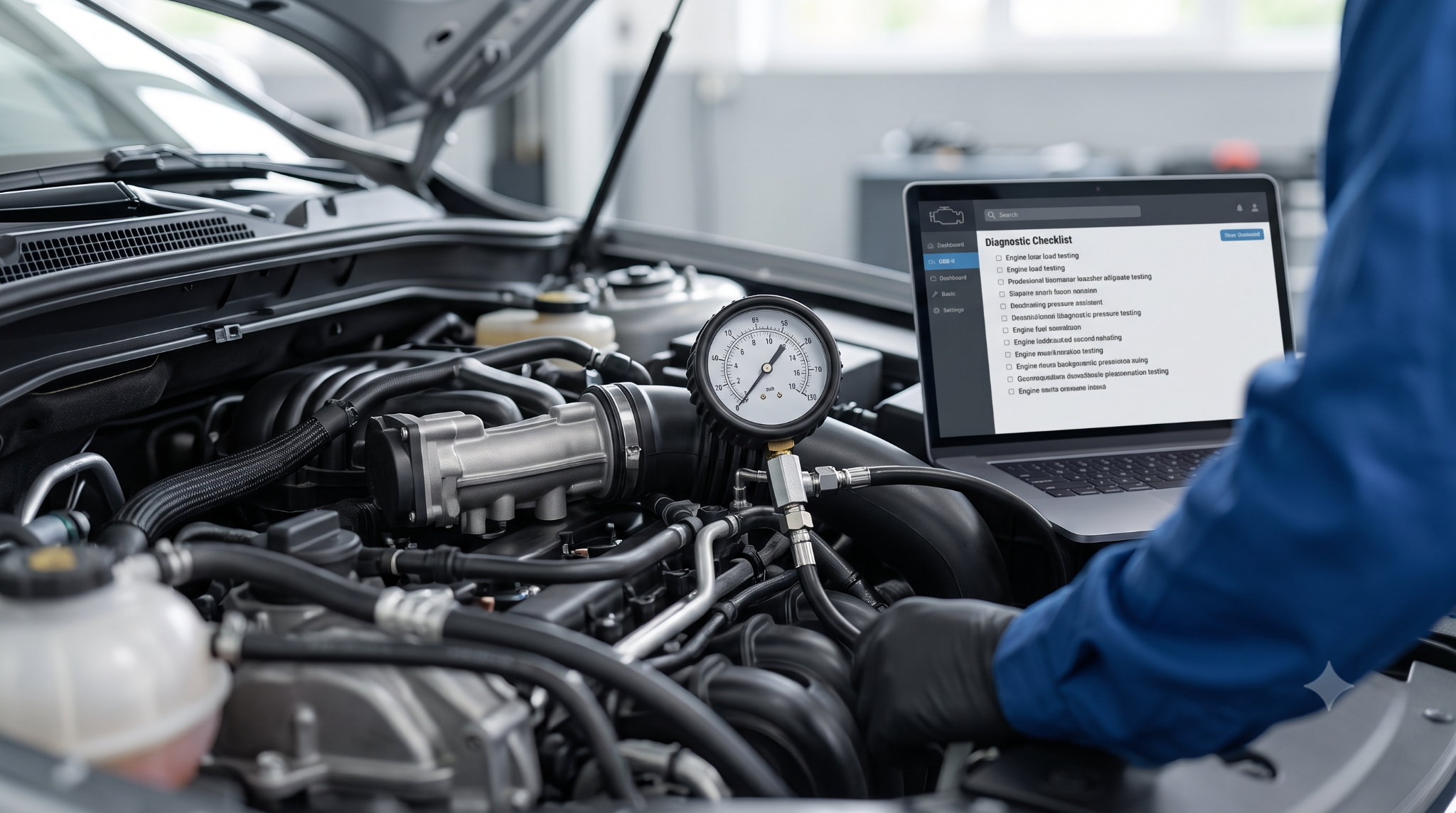
A weak fuel pump, clogged filter, restricted injector, or low fuel pressure can create a true lean condition. This is more likely when the vehicle hesitates during acceleration or sets a P0171 code during high-load driving.
Do not rely only on idle fuel pressure. Some pumps pass an idle test but fail under load. Check pressure, volume, and pressure drop if the service procedure calls for it.
Fuel injector problems can also affect a single bank or cylinder. If P0171 appears with a misfire, inspect spark plugs, injector balance, and cylinder-specific data.
Avoid the Oxygen Sensor Trap
Many drivers replace the upstream oxygen sensor first because the code appears to be related to exhaust feedback. That can waste money.
The oxygen sensor may only be the messenger. It reports that the exhaust mixture appears lean, but the cause may be a torn intake boot, a vacuum leak, a weak fuel pump, an MAF error, or an exhaust leak before the sensor.
This is where many repairs go wrong. AutoServicePlus explains why incorrect part replacements often occur when codes are treated as part names.
Confirm the Repair with Data
After the repair, clear the code and drive the vehicle under conditions similar to those shown in the freeze frame data. Watch the fuel trims again.
A good repair should bring trims closer to normal and stop the code from returning. Do not judge success only by turning the light off. The scan data should prove the lean condition is gone.
If trims remain high, return to the test path. Recheck for hidden air leaks, fuel pressure loss, incorrect MAF data, or an exhaust leak near the upstream oxygen sensor.
Commonly Asked Questions About the P0171 Code
Can I drive with a P0171 code?
You can often drive a short distance with a P0171 code, but you should not ignore it. The risk depends on how the vehicle behaves. If the engine runs smoothly and the light is steady, drive gently and diagnose it soon.
If the engine misfires, hesitates badly, smells hot, or the check engine light flashes, stop driving and inspect it. A lean condition can raise combustion temperature and cause misfires.
Continued driving can stress the catalytic converter. The safest move is to scan freeze-frame data, check fuel trims, and inspect for obvious intake leaks before using the vehicle for longer trips.
Does P0171 always mean a vacuum leak?
No. A vacuum leak is common, especially when fuel trims are worse at idle, but it is not the only cause. P0171 can also be caused by a dirty or inaccurate MAF sensor, low fuel pressure, restricted injectors, exhaust leaks upstream of the upstream oxygen sensor, or incorrect sensor feedback.
The pattern matters. If fuel trims improve as RPM rises, suspect unmetered air. If the trims stay high while driving under load, fuel delivery or MAF issues are more likely. The best test is to compare fuel trims at idle, at higher RPM, and under load, rather than replacing parts based on a guess.
Is P0171 caused by a bad oxygen sensor?
It can be, but it is less common than many people assume. The upstream oxygen sensor is often blamed first because it reports a lean condition. In many cases, the sensor does its job, warning the computer that the mixture is off. Before replacing it, check vacuum leaks, intake ducting, MAF readings, fuel pressure, and exhaust leaks.
Then test the oxygen sensor response. A sensor that reacts properly when fuel is added or a vacuum leak is introduced is probably not the cause. Replace the oxygen sensor only when testing shows slow, stuck, or inaccurate behavior.
Why did P0171 return after I cleared it?
Clearing the code does not repair the lean condition. It only erases the stored warning until the engine computer sees the same problem again. P0171 often returns after the monitor runs under similar load, temperature, and speed conditions.
That is why freeze-frame data matters. It shows when the code was stored. If the code comes back, the computer is still adding too much fuel to correct a lean mixture. Recheck the data, not just the parts already replaced.
Hidden vacuum leaks, weak fuel delivery, and inaccurate MAF readings are common reasons the code returns.
Can a dirty air filter cause P0171?
A dirty air filter alone is not the most common cause of P0171, as it usually restricts airflow rather than introducing extra unmetered air. However, air filter problems can still contribute when the filter box is not sealed, the intake duct is cracked, or the MAF sensor becomes contaminated.
If debris reaches the MAF, it can underreport airflow, causing the computer to command less fuel than needed. Inspect the filter, air box, intake clamps, and ducting together. A clean filter helps, but the real goal is making sure all incoming air is measured before it reaches the engine.