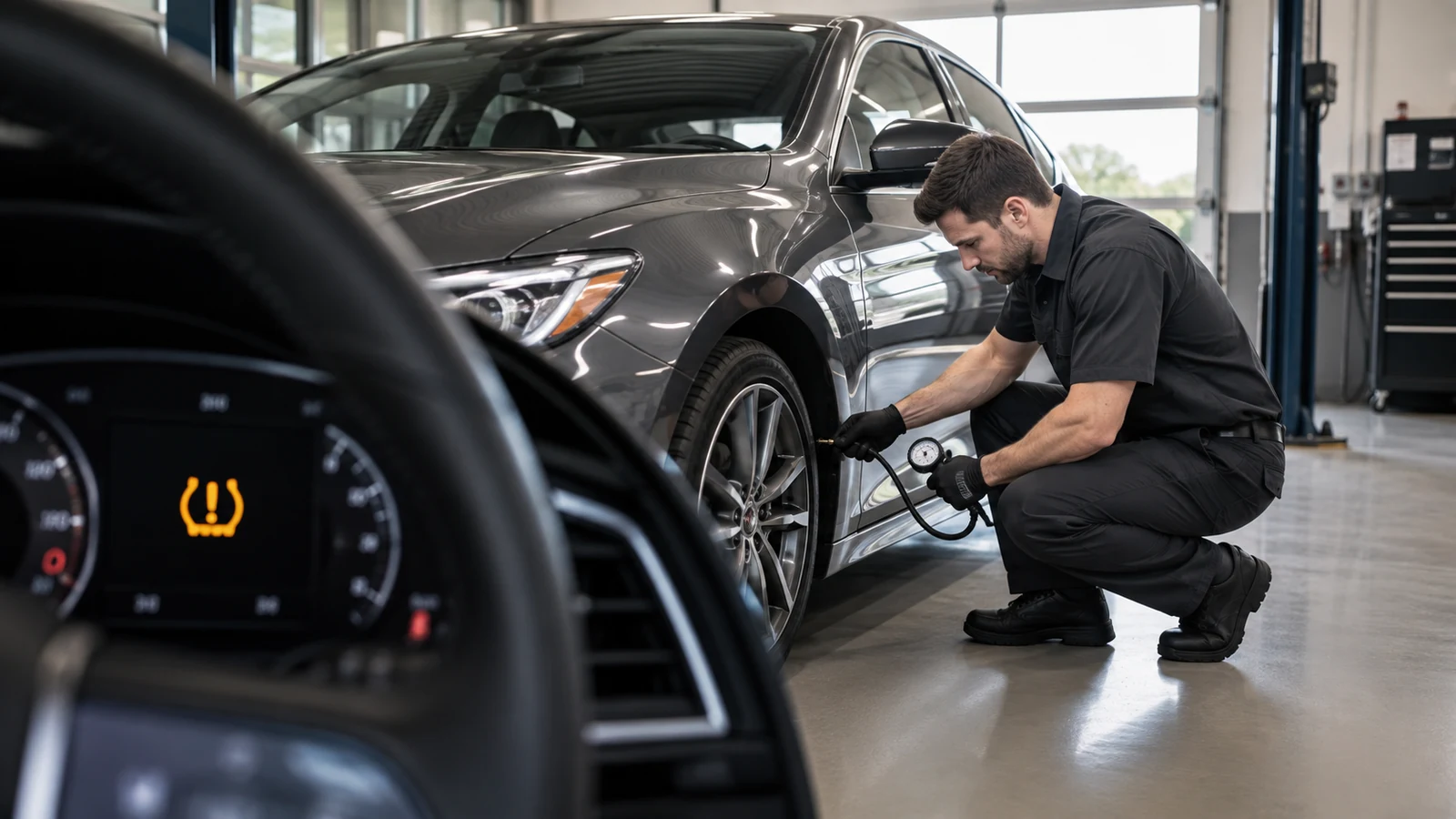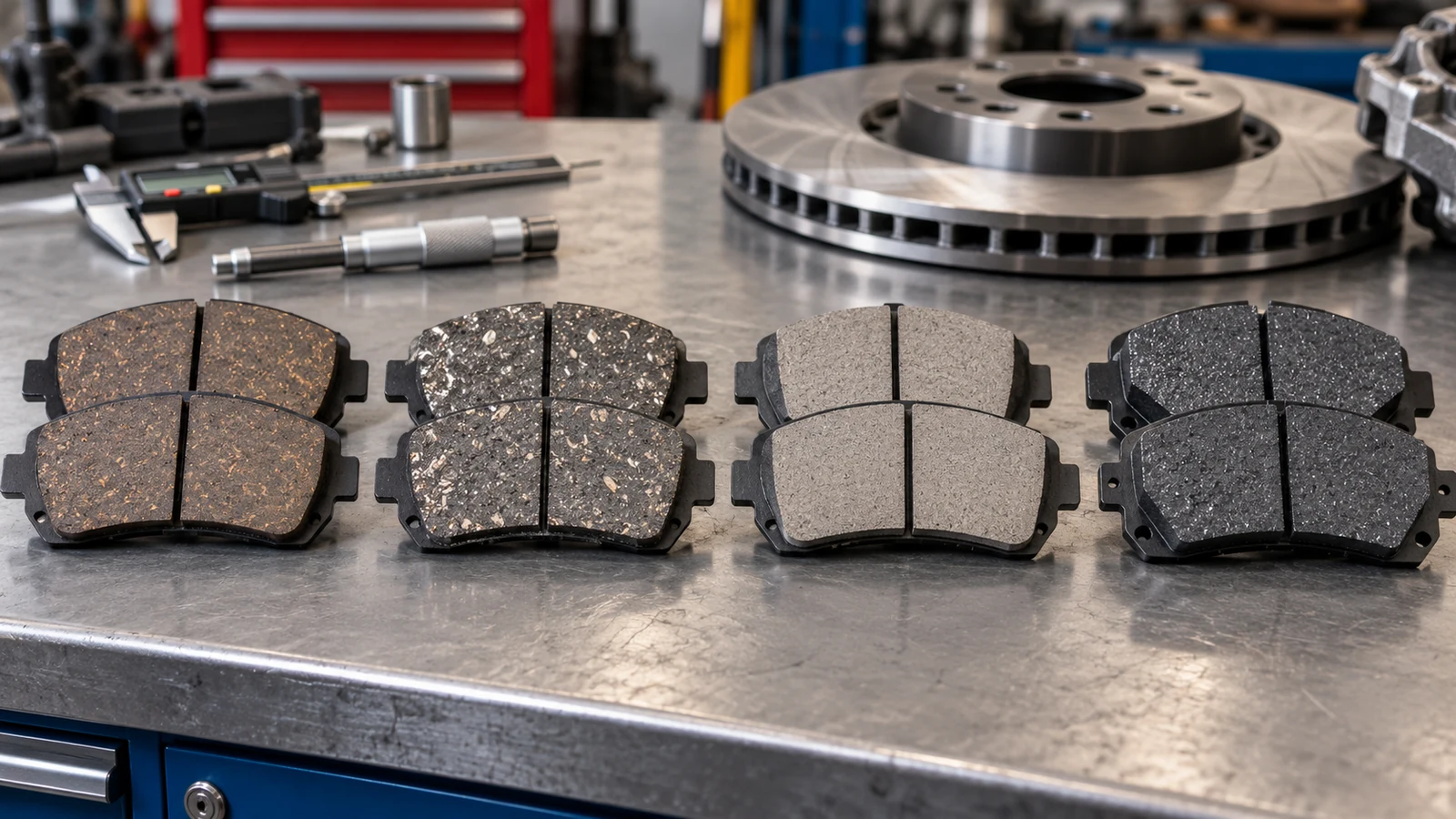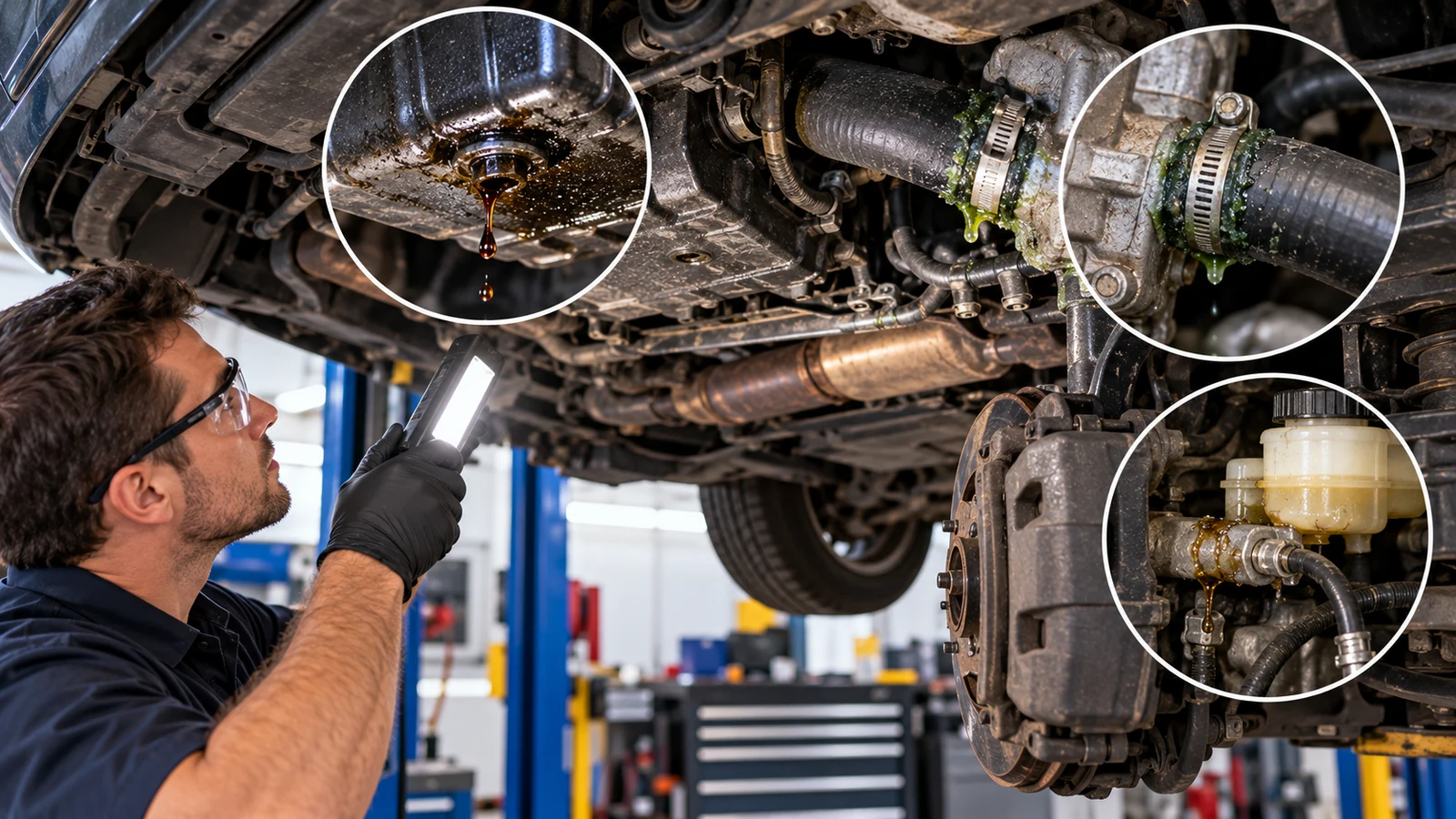
You don’t judge a fluid leak only by its size. A few drops from the wrong system can be more dangerous than a larger seep from a low-risk area. The quickest way to decide which fluid leaks require immediate repair is to ask what the leak can affect next: braking, steering, fire risk, engine lubrication, cooling, transmission operation, or visibility.
As a practical rule, do not drive a vehicle with a confirmed brake fluid leak, an active fuel leak, coolant loss accompanied by overheating, an engine-oil leak with a pressure warning, or any fluid dripping onto very hot exhaust or turbocharger parts. Other leaks may allow a short trip or a scheduled repair, but only if the fluid level remains safe and no warning signs develop.
Quick Repair Priority: Tow, Repair Soon, or Monitor
Use this table as a first-pass decision guide. The vehicle’s condition always matters more than the fluid label.
| Leak or condition | Typical priority | Main reason |
|---|---|---|
| Brake fluid leak | Stop driving and repair before use | Hydraulic braking can fail |
| Gasoline leak or strong raw-fuel smell | Stop driving and tow | Fire and vapor risk |
| Diesel fuel actively dripping | Stop driving and repair | Fire risk and road contamination |
| Any fluid reaching exhaust/turbo hot surfaces | Stop driving and repair | Fire and smoke risk |
| Coolant leak with overheating, steam, or warning light | Stop driving | Rapid engine damage can follow |
| Oil leak with low-pressure warning or fast loss | Stop driving | Loss of lubrication |
| Coolant mixed with oil, or transmission fluid mixed with coolant | Stop driving | Internal component damage |
| Transmission or power-steering leak with normal operation | Repair within days | Low fluid can quickly damage components |
| Slow coolant seep with normal temperature | Repair within days | Can turn into overheating if level falls |
| Slow gear-oil seep away from brakes | Schedule soon and monitor | Bearing and gear wear if level drops |
| A/C refrigerant leak | Schedule repair | Cooling loss and possible compressor damage |
| Washer-fluid leak | Usually next service | Mostly a visibility/convenience issue |
Any leak moves up the priority list when it is paired with a warning light, a rapidly falling level, smoke, steam, a burning smell, unusual steering or pedal feel, new mechanical noise, or fluid appearing where it can contaminate brakes or tires.
Why Some Small Leaks Are More Dangerous Than Large Ones
Leak urgency is best judged by consequence, not puddle diameter. Three questions usually decide the answer.
Does The Leak Affect Control of The Vehicle?
Brake fluid is the clearest example. Hydraulic pressure is what transfers pedal force to the brakes. A leaking line, hose, caliper, wheel cylinder, master cylinder, or related seal can allow fluid out and air in. Even if the pedal still feels acceptable during light braking, the system has already lost integrity.
Clutch hydraulics deserve similar attention when the clutch uses brake fluid. A failed clutch master or slave cylinder may leave the pedal on the floor or prevent the clutch from releasing. On many vehicles, the correct bleed sequence, reservoir arrangement, and component access are model-specific. Owners withHonda workshop manuals can use exact service information for their vehicle, and a2016-2018 Honda Civic FC/FK factory workshop manual is the kind of model-specific reference that confirms hydraulic procedures rather than relying on a generic sequence.
Can The Leaking Fluid Ignite or Create A Secondary Hazard?
Fuel is an immediate concern, but location matters for other fluids too. Engine oil, transmission fluid, power-steering fluid, and coolant can become hazardous if they reach a hot exhaust manifold, catalytic converter, or turbocharger area.
A leak that would normally be classified as “repair soon” can therefore become a “do not drive” fault because of where the fluid lands. This is especially important on crowded engine bays where hoses, oil lines, heat shields, and exhaust components are close together.
Is The Leak Draining A System That Cannot Safely Run Low?
Engine oil, coolant, automatic-transmission fluid, gear oil, and hydraulic steering fluid all protect expensive components. A slow seep may be manageable for a short time if the level stays stable. A fast leak, a level below minimum, or a system warning changes the decision immediately.
Internal leaks are even harder to judge because there may be no puddle at all. Coolant entering engine oil, coolant entering a combustion chamber, or coolant mixing with automatic-transmission fluid can cause serious damage while the driveway remains dry.
Which Fluid Leaks Require Immediate Repair Right Away?
The following conditions are the strongest reasons to park the vehicle and arrange repair before driving again.
Brake Fluid Leaks and a Sinking Brake Pedal
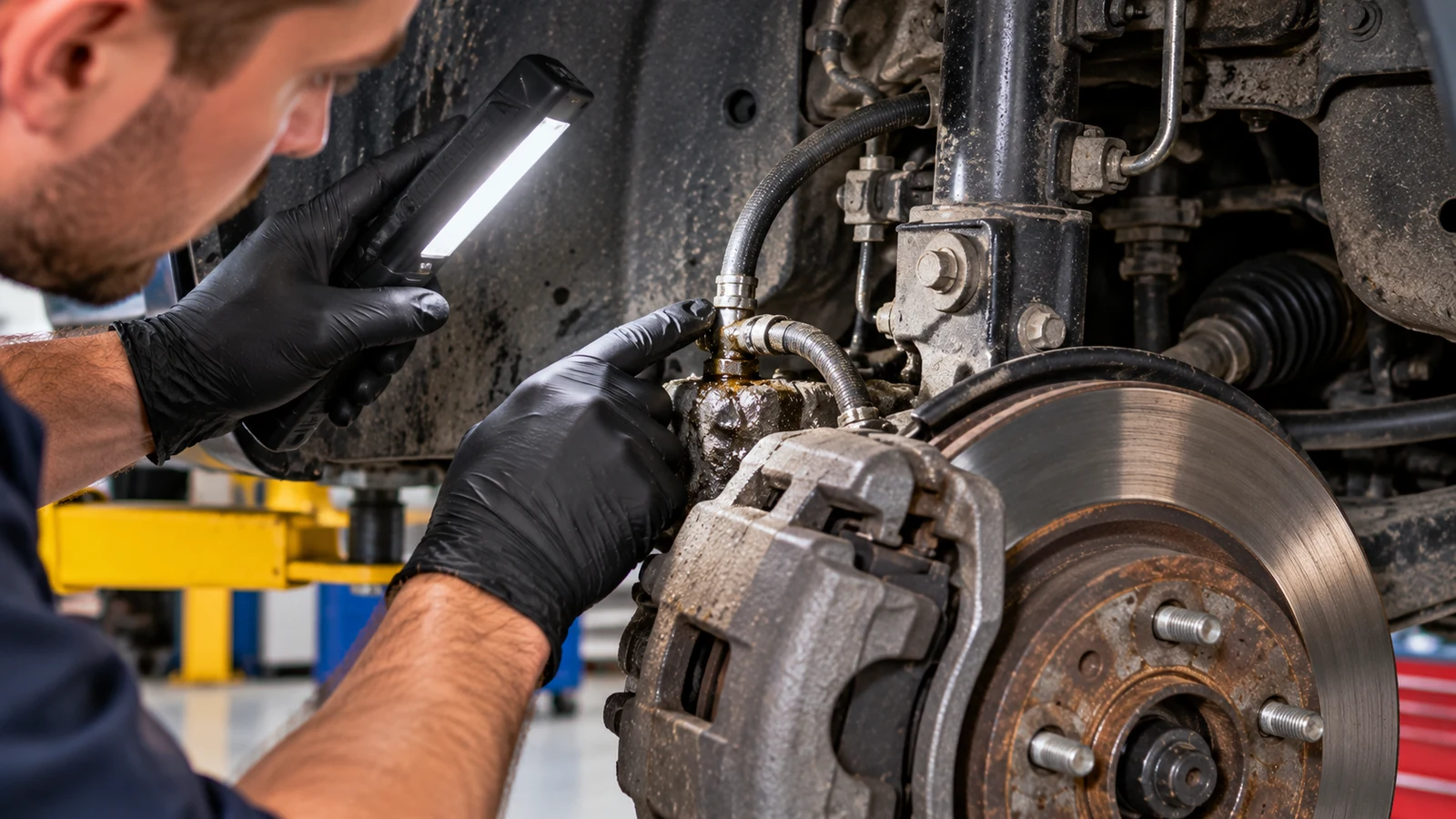
Treat a confirmed brake fluid leak as an immediate repair. Common clues include fresh wetness around a wheel, a damp flexible brake hose, a wet steel line, fluid near the master cylinder, a low reservoir, or a pedal that feels softer or travels farther than usual.
A brake pedal that slowly sinks while you hold steady pressure can also indicate an internal master-cylinder bypass, even when no external leak is visible. That still represents a braking fault.
Do not use repeated brake-fluid top-ups as a way to keep driving. Repair the leak source and properly bleed the system before returning the vehicle to service.
Fuel Leaks, Raw Fuel Odors, and Wet Fuel-System Components
Visible gasoline leakage is an immediate stop-driving condition. Keep the engine off, avoid sparks or open flames, and have the vehicle moved safely for diagnosis. A strong fuel odor in the cabin also deserves immediate attention even if a wet spot is not obvious.
Diesel does not evaporate as readily as gasoline, but an active diesel leak can still reach hot components and can make the road surface slippery. Model-specific fuel-line routing and pressure-release procedures matter. The Ford workshop manual collection includes vehicles with very different fuel systems, and the 2000-2006 Ford Transit Diesel workshop manual is a relevant example for diesel-specific service procedures. Likewise, Mercedes-Benz repair manuals and the 2010-2013 Mercedes-Benz Sprinter 2500 Panel manual can help a technician confirm component locations and removal steps before opening the system.
Oil or Other Fluid Dripping Onto Hot Exhaust Components
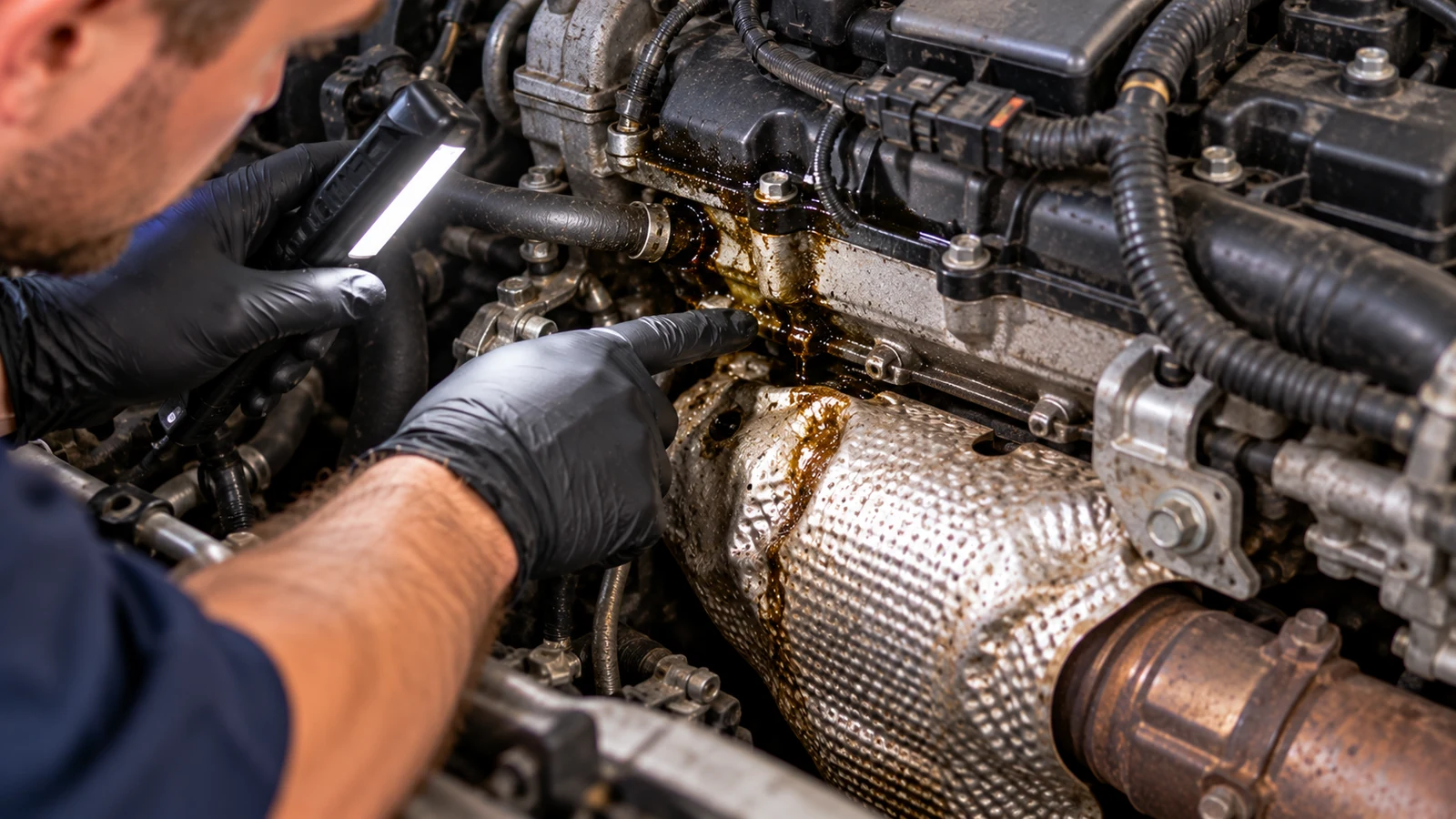
A valve-cover seep may be inconvenient when it stays on a cool part of the engine. The same seep becomes much more serious if it runs onto an exhaust manifold or turbocharger area and produces smoke or a burning smell.
Inspect heat shields, exhaust-adjacent oil lines, valve-cover edges, and turbo oil-feed or return areas where applicable. On tightly packaged vehicles, access and sealing procedures can vary considerably. The Porsche workshop manual section and a model-specific reference such as the 2015-2016 Porsche Macan workshop manual are more useful for confirming fastener sequences and component access than a one-size-fits-all gasket guide.
Coolant Leaks With Overheating, Steam, or Internal Contamination
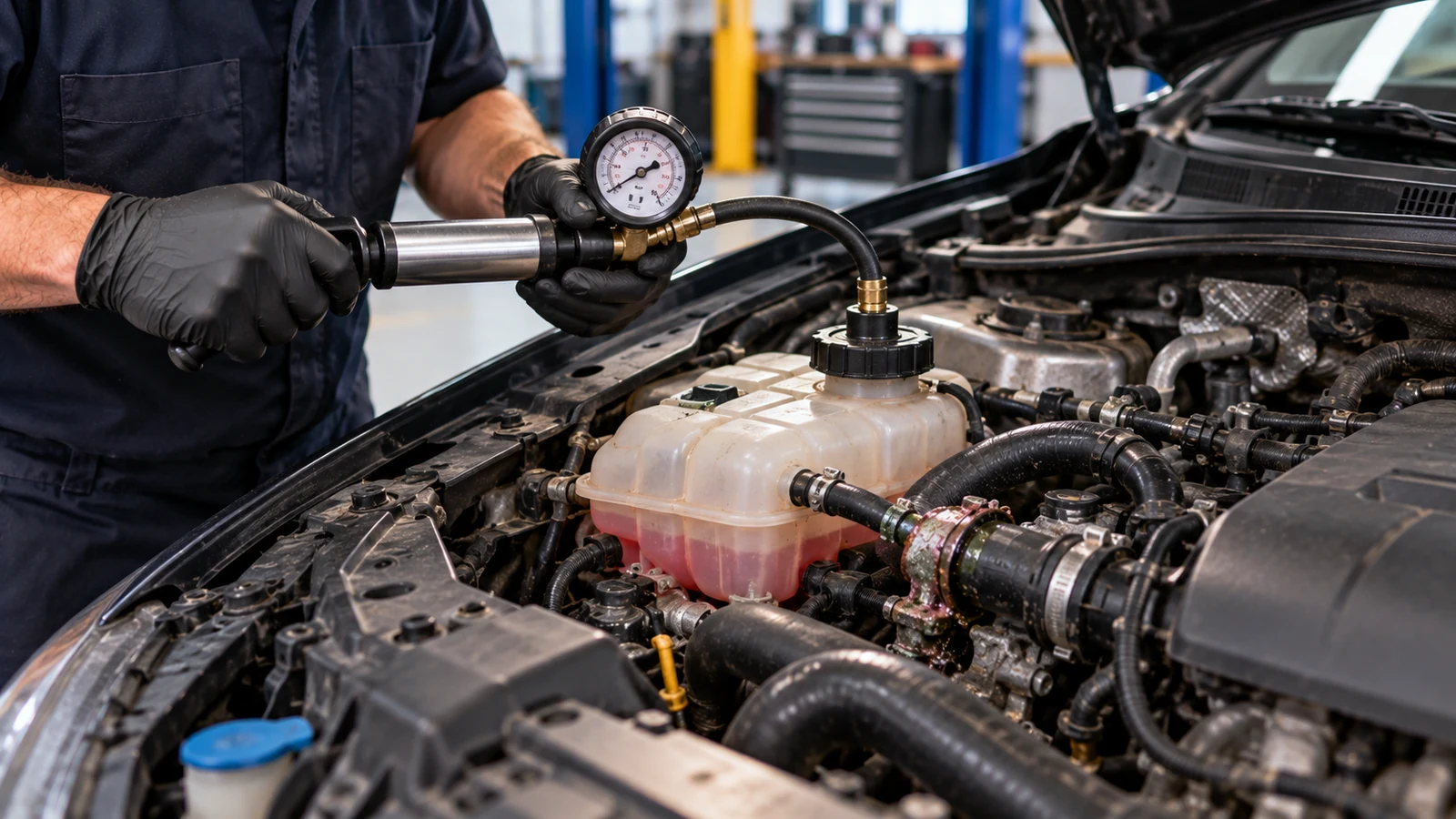
A minor external coolant seep is not automatically an emergency, but the situation changes when the temperature gauge rises, steam appears, a coolant warning comes on, the heater suddenly stops producing heat, or the reservoir level drops rapidly.
Stop the engine and allow it to cool fully. Never open a pressurized radiator cap or expansion tank while hot.
Coolant can also leak internally. Milky or light-brown oil, persistent white exhaust after the engine is fully warm, repeated unexplained coolant loss, or an oily film in the coolant reservoir can indicate a problem that requires urgent diagnosis. A failed oil cooler, head gasket, cylinder-head issue, or radiator-integrated transmission cooler can allow fluids to mix.
Cooling-system layout differs by model. Chevrolet factory workshop manuals can confirm the correct pressure-test, drain, refill, and bleed process, while the2011-2013 Chevrolet Cruze workshop manual provides vehicle-specific service information for that platform. For other layouts, the same principle applies: Volvo workshop manuals and the 2004-2013 Volvo XC90 AWD manual, or Hyundai service manuals and the 2007-2013 Hyundai Santa Fe AWD manual, help prevent guesswork about component locations, coolant specifications, and bleeding steps.
Engine Oil Leaks With Low Pressure or Rapid Loss
Most engine-oil leaks start as seeps. They become urgent when the oil-pressure warning appears, the level falls below the safe range, oil is dripping steadily, or the leak begins immediately after an oil service.
A loose drain plug, damaged filter seal, oil-cooler line problem, or failed gasket can empty the sump much faster than a long-term seep. If the oil-pressure light comes on while oil is visibly escaping, switch the engine off as soon as it is safe.
European platforms often have multiple covers, housings, and seals that can spread oil over a wide area before it reaches the ground. The Volkswagen workshop manual library and the 2007-2010 Volkswagen Passat Wagon 3C5 manual can help trace the repair path for the exact vehicle. The same applies to Audi workshop manuals and the 2006-2013 Audi A3 Quattro 8PA manual when confirming component removal, sealing surfaces, and refill requirements.
Leaks That Usually Need Repair Within Days
These faults may not require a tow if the level is correct, the vehicle operates normally, and no fluid is reaching hot or safety-critical components. They still should not be ignored for weeks or months.
Automatic Transmission Fluid Leaks
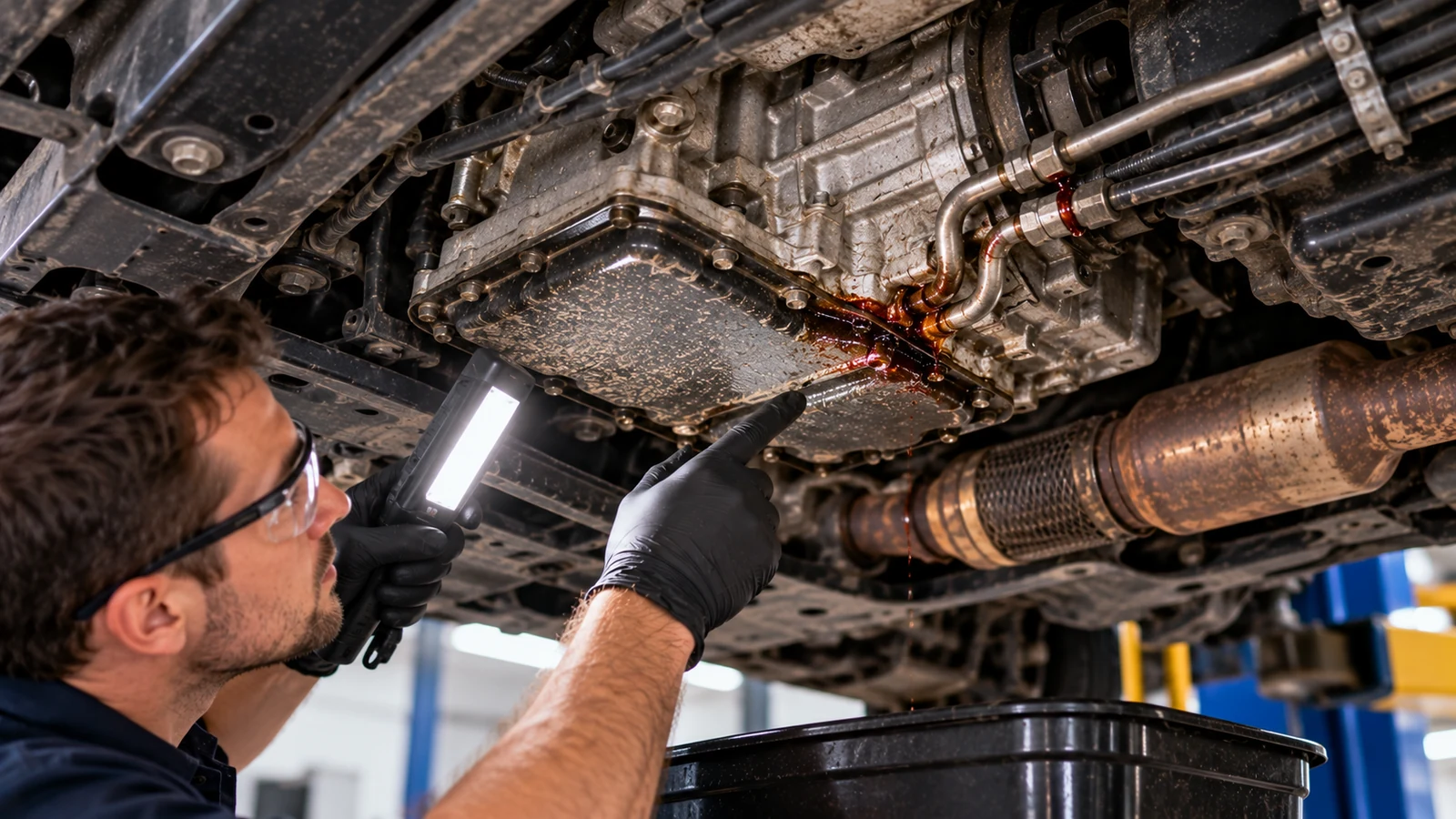
Transmission-fluid leaks commonly develop around pans, cooler lines, fittings, seals, and case connectors. Low fluid can cause delayed engagement, slipping, flare between shifts, harsh shifting, or overheating.
Many transmissions use a temperature-dependent level-check procedure instead of a simple dipstick. Overfilling can be a problem too, so do not guess the level or use an arbitrary “universal” fluid.
For model-specific fill procedures, Subaru workshop manuals can guide the correct approach, with the 2005-2009 Subaru Outback factory manual providing one vehicle-specific example. The same logic applies to Kia workshop manuals and a 2005-2014 Kia Sorento 4WD repair manual when you must distinguish a driveline leak from an engine-oil or transfer-case leak.
Transmission fluid that turns milky or pink after mixing with coolant is not a “repair within days” problem. Treat cross-contamination as urgent because coolant can damage transmission friction materials.
Power-Steering Fluid Leaks
Hydraulic power-steering systems can leak at the pump, reservoir, pressure hose, return hose, or steering rack. A falling level may first show up as whining at low speed or heavier steering.
If a hose suddenly bursts or steering assistance changes sharply, stop driving. Fluid reaching a drive belt or hot exhaust also raises the priority.
Some vehicles use electric power steering and have no steering fluid at all, so identify the system before ordering parts. BMW workshop manuals help confirm the steering system fitted to a particular build, and the2000-2003 BMW X5 E53 workshop manual is a model-specific reference for repair procedures and fluid specifications.
Gear Oil, Differential, and Transfer-Case Leaks
Gear oil is normally thicker than engine oil and often has a strong sulfur-like odor. Seepage may come from differential covers, pinion seals, axle seals, transfer-case seals, or manual-transmission housings.
A slow leak away from the brakes can often be scheduled soon while you monitor the level. An axle seal that lets gear oil reach brake shoes or pads is different. Contaminated friction material can reduce braking on that wheel, so you should repair it immediately.
Truck and 4WD drivetrains contain more than one lubricant-filled housing, making source identification especially important. Ram workshop manuals and the 2003-2013 RAM 2500 4WD factory manual can help distinguish axle, transfer-case, and transmission service points. For SUVs, Land Rover repair manuals and the 2010-2013 Range Rover Sport LS workshop manual provide vehicle-specific procedures. The same applies to Toyota workshop manuals and the 2020 Toyota Hilux workshop manual when tracing a 4WD driveline leak.
Slow External Coolant Leaks
A radiator seam, hose connection, thermostat housing, water-pump weep point, or clamp can slowly lose coolant while the temperature gauge stays normal. Repair it within days rather than repeatedly topping up.
Check the level only when the system is cold and use the coolant specification required for the vehicle. If the leak accelerates, the heater suddenly turns cold, or the temperature rises, stop driving.
DEF/AdBlue Leaks and Battery Acid
Diesel exhaust fluid is watery and can leave white crystalline deposits as it dries. A DEF leak generally does not damage the engine directly, but the emissions system may trigger warnings, reduced-power strategies, or restart restrictions depending on the vehicle. Treat an active leak as a prompt repair and follow the dashboard message for the specific vehicle.
A wet, cracked, or swollen lead-acid battery case also needs prompt replacement. Battery acid can burn skin and corrode metal and wiring. Crust around a terminal is often corrosion rather than a leaking case, but it still needs safe inspection with eye and hand protection.
Lower-Priority Leaks That Can Often Be Scheduled
A lower priority does not mean “ignore it.” It means the leak can normally be booked with less urgency if the fluid level remains stable and none of the danger signs appear.
Slow Oil Seeps Away From Heat
A damp oil-pan gasket, a slightly oily rear-main-seal area, or light valve-cover sweating can often wait for a planned repair. Check the engine oil level regularly and watch whether the wet area turns into an active drip.
The location matters. A slow seep that begins reaching an exhaust manifold is no longer low priority.
Air-Conditioning Refrigerant Leaks
An A/C refrigerant leak is usually not a roadside emergency, but it should be repaired rather than repeatedly recharged. Refrigerant carries compressor lubricant, so a low charge can contribute to compressor damage. An oily stain around a condenser or fitting can be a useful clue.
Clear, odorless water dripping near the firewall while the air conditioner is running is usually condensation, not refrigerant.
Washer-Fluid Leaks and Normal Water Drips
A leaking washer reservoir, pump seal, or hose is usually fine until the next service visit, though it becomes more important before bad weather or a long trip because washer fluid supports visibility.
Not every puddle is a vehicle-fluid fault. A/C condensation and water dripping from a cold exhaust after short trips can be normal. A genuine fluid leak usually has color, odor, an oily feel, residue, or a measurable drop in a reservoir or sump.
How Vehicle Type Changes Fluid-Leak Diagnosis
The same puddle can mean something different on a hybrid, EV, diesel, or 4WD vehicle because the number and purpose of fluid circuits change.
Hybrids and Electric Vehicles
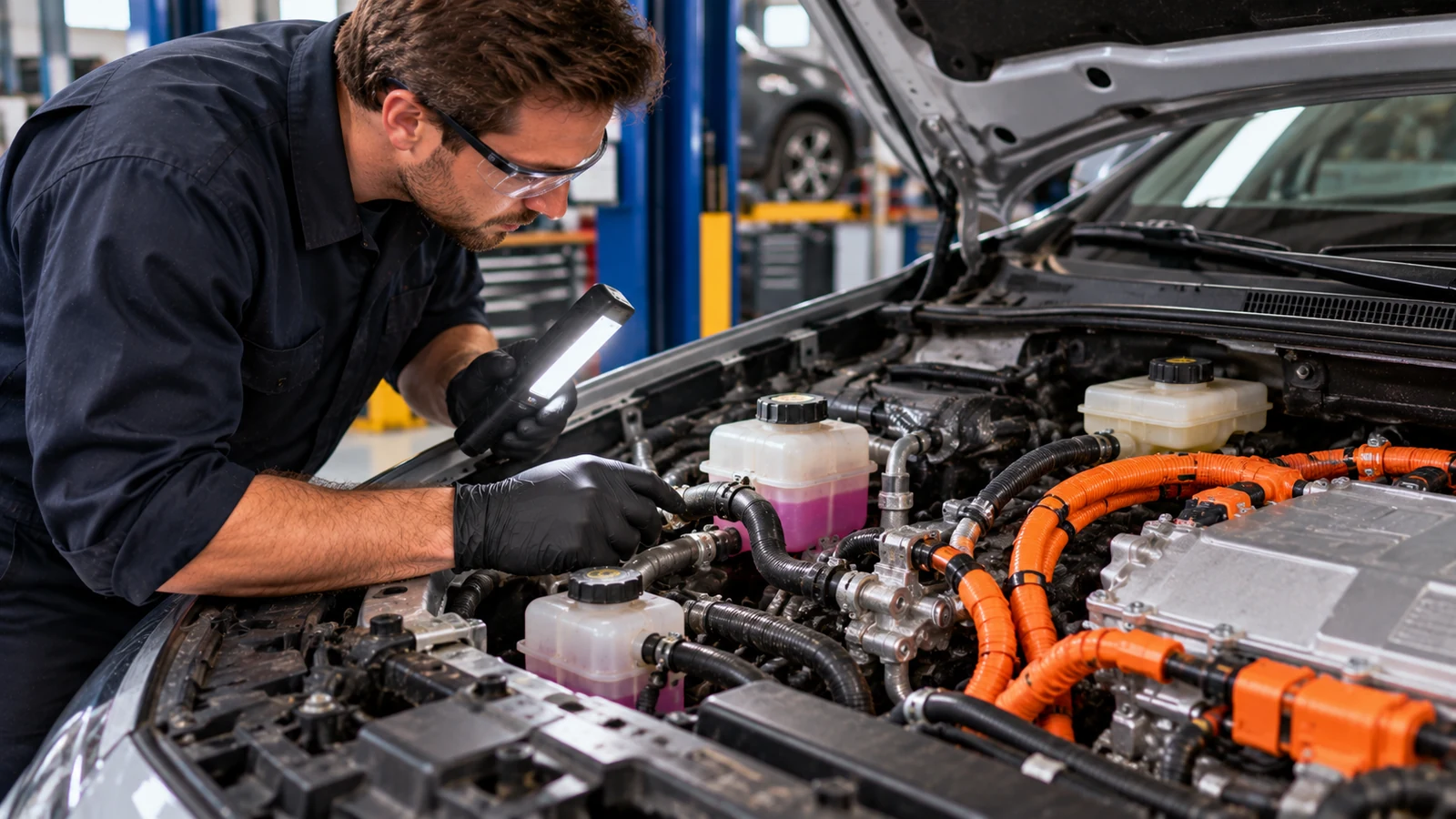
A battery-electric vehicle has no engine oil, but it may still use coolant for the battery, power electronics, motor, or cabin thermal-management system. Hybrids retain engine-related fluids and may add separate cooling circuits for hybrid components.
High-voltage areas require additional precautions. Do not treat orange cables and high-voltage components like ordinary 12-volt wiring. Use the manufacturer’s shutdown and isolation procedure before working near those systems.
AutoServicePlus has model-specific examples that show why one generic fluid-leak procedure is not enough. The 2010-2013 Toyota Prius factory workshop manual can support hybrid-specific cooling and service checks. The 2005-2008 Ford Escape 4WD workshop manual helps confirm the exact system fitted to an Escape build. The 2011-2013 Chevrolet Volt repair manual provides model-specific procedures for that electrified platform.
For battery-electric vehicles, the Nissan workshop manual collection includes EV coverage such as the 2011-2013 Nissan-Datsun Leaf manual. AutoServicePlus also lists a 2020 Volkswagen ID.4 workshop manual, which is the kind of vehicle-specific source needed before tracing thermal-system leaks around high-voltage components.
Diesels, Trucks, and Commercial Vehicles
Diesel fuel leaks may look less dramatic than gasoline leaks, but wet injector lines, filter housings, tanks, or fuel hoses still deserve urgent repair, especially near hot engine or exhaust parts.
Some diesel vehicles also add DEF/AdBlue plumbing and multiple driveline housings. Heavy 4WD vehicles may have front and rear differentials plus a transfer case, giving technicians several possible sources for a thick oil leak.
For diesel SUV service, Jeep workshop manuals include model-specific coverage such as the 2014 Jeep Grand Cherokee WK2 factory manual. Commercial vans require the same exact-match approach. Freightliner workshop manuals include the 2007-2013 Freightliner Sprinter 2500 Automatic manual, which can help technicians confirm transmission, fuel, cooling, and driveline procedures for the correct vehicle.
A Practical Workflow for Finding the Source of a Leak
Fluid moves. Gravity pulls it downward, road airflow pushes it rearward, and rotating parts can throw it across nearby components. The wettest spot is not always the source.
Use a controlled diagnostic process:
- Check the fluid levels first. Record engine oil, coolant, brake fluid, transmission fluid where serviceable, power-steering fluid where fitted, and other relevant reservoirs.
- Let hot systems cool. Do not open a hot pressurized cooling system or reach near hot exhaust parts.
- Clean the suspected area. Remove old residue so fresh fluid is easier to trace.
- Place clean cardboard under the vehicle. Mark the wheel positions so you can relate each spot to the engine, transmission, axle, or rear of the vehicle.
- Reinspect after a short controlled run only if the vehicle is safe to drive. Do not do a road test if you have a brake leak, fuel leak, overheating, low oil pressure, or fluid on hot exhaust components.
- Trace upward to the first fresh wet point. That is often closer to the true source than the bottom of the puddle.
- Use the factory procedure before disassembly. Confirm removal order, sealant requirements, torque values, fluid type, refill quantity, and bleeding steps.
- Recheck after repair. Verify the level, inspect the repaired area, and check the ground again after the first drive.
Technicians may also use UV dye, a cooling-system pressure tester, or other system-specific diagnostic equipment when a leak is too slow to identify visually.
What a Correct Fluid-Leak Repair Should Include
Replacing the leaking gasket or hose is only part of a good repair. The system has to be restored correctly afterward.
Confirm the Exact Component Before Ordering Parts
Many leaks travel far from their source. An oil leak at the top of an engine can make the sump look like it’s leaking. A coolant leak can dry into residue below the actual hose or housing. Gear oil can migrate along a housing and collect at a low point.
Clean first, identify fresh fluid, and compare the location with a model-specific component diagram before buying parts.
Refill, Bleed, or Flush the System Correctly
Different systems need different finishing steps:
- Brakes: repair the fault, refill with the specified fluid, and bleed all required circuits.
- Cooling system: refill with the correct coolant mixture and use the manufacturer’s air-bleeding procedure.
- Power steering: bleed the hydraulic circuit where required and check for foaming or pump noise.
- Automatic transmission: refill with the specified fluid and use the correct temperature/level procedure.
- Contaminated systems: coolant in oil or transmission fluid generally requires proper cleaning or flushing in addition to repairing the source.
Use Factory Data for Torque, Sealant, and Fluid Specifications
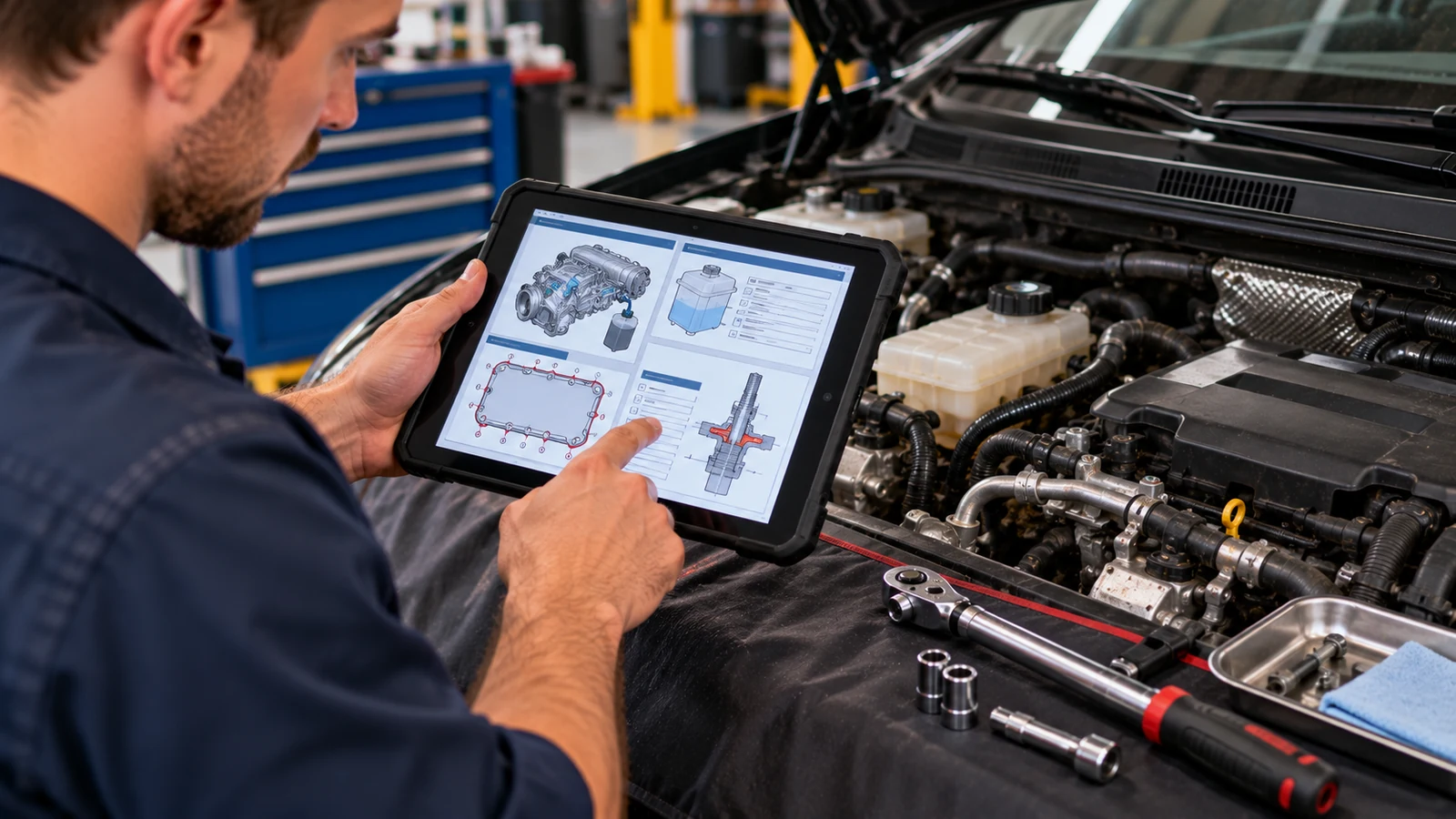
Leak repairs often fail when a technician reuses the wrong sealant, tightens a cover unevenly, guesses at a torque value, or refills with the wrong fluid. The correct workshop manual helps confirm:
- bolt-tightening sequence and torque,
- one-time-use fasteners,
- gasket or sealant type,
- hose and line routing,
- fluid specification and capacity,
- pressure-test limits,
- bleeding procedure,
- component removal order,
- wiring or sensor disconnection steps.
This matters even within one model family because engines, transmissions, drivetrains, and model years can change the repair procedure.
Common Mistakes That Make Fluid Leaks More Dangerous
Several shortcuts can turn a manageable leak into a larger repair:
- Topping up brake fluid and continuing to drive with a known leak.
- Driving with visible fuel leakage or a strong persistent fuel odor.
- Opening a hot radiator cap or expansion tank.
- Using tape on high-pressure fuel or power-steering hoses.
- Mixing incompatible coolant or transmission-fluid types.
- Using plain water as a long-term coolant substitute.
- Assuming a warning light is “just a sensor” while fluid is visibly escaping.
- Cleaning contaminated brake friction material and putting it back into service.
- Repeatedly adding refrigerant without finding the A/C leak.
- Using stop-leak additives as a substitute for diagnosis.
A temporary top-up can sometimes support a short trip to a workshop for a slow, non-safety-critical leak, but only when you know the exact fluid, restore the level correctly, and have no urgent warning signs.
How to Prioritize Several Leaks on the Same Vehicle
Older vehicles can have more than one seep at the same time. If repairs must be staged, prioritize by risk rather than by which leak makes the largest stain.
- Brake and clutch hydraulic leaks.
- Gasoline or active diesel fuel leaks.
- Any fluid contacting exhaust parts, brakes, tires, or belts.
- Internal fluid mixing, including coolant in oil or transmission fluid.
- Coolant loss that needs regular topping up.
- Engine oil or transmission leaks that are becoming faster.
- Power-steering and gear-oil leaks.
- DEF leaks with warnings or countdowns.
- Slow oil seeps, A/C refrigerant leaks, and washer-fluid leaks.
If two repairs share labor access, it can be efficient to replace a nearby lower-priority seal while the assembly is already apart, but safety-critical faults still come first.
Conclusion
Knowing which fluid leaks require immediate repair depends on what the leak threatens next. Brake fluid and fuel leaks are immediate safety problems. Coolant leaks become urgent when they cause overheating or internal contamination. Oil leaks become urgent when pressure drops, loss is rapid, or oil contacts hot exhaust parts. Transmission, steering, gear-oil, DEF, A/C, and washer-fluid leaks vary in priority based on loss level, location, and symptoms.
For DIY work and professional repairs alike, diagnose the source before replacing parts, use the exact specified fluid, and finish the job with the correct bleeding, flushing, torque, and refill procedure. Vehicle-specific workshop information matters most when the same model line can use different engines, transmissions, drivetrains, or thermal-management systems.
Frequently Asked Questions
Can I Drive to A Mechanic With A Fluid Leak?
Sometimes, but not with a brake-fluid leak, an active fuel leak, an overheating coolant leak, a low-oil-pressure warning, or fluid dripping onto hot exhaust components. A slow oil, coolant, transmission, steering, or gear-oil seep may permit a short direct trip when the level is correct, the vehicle operates normally, and no warning light or smoke is present.
Which Fluid Leaks Require Immediate Repair Even Without A Puddle?
Internal leaks can be urgent without leaving anything on the ground. Coolant mixing with engine oil, coolant entering a combustion chamber, transmission fluid mixing with coolant, or a brake master cylinder bypassing internally can all require immediate repair.
Is A Small Engine Oil Leak an Emergency?
Not always. A damp gasket with a stable oil level can often be scheduled. It becomes urgent if the oil-pressure warning appears, the level falls below minimum, the leak becomes a steady drip, or oil reaches a hot exhaust or turbocharger area.
When Does A Coolant Leak Become Unsafe To Drive?
Stop driving if the temperature rises above normal, steam appears, a coolant warning comes on, the heater suddenly blows cold, the level drops rapidly, or there are signs of coolant mixing with oil. A small external seep with normal temperature and a stable level still needs repair soon.
Why Is Any Brake-Fluid Leak Treated As Urgent?
Because hydraulic braking depends on maintaining fluid pressure. A leak can reduce available fluid, let air into the system, and cause sudden failure under hard braking. Repair and bleed the system before driving again.
Can Stop-Leak Products Safely Replace A Repair?
They should not be treated as a proper repair. Some cooling-system sealers can restrict small passages, and seal conditioners may only temporarily slow a leak. Stop-leak products are never an appropriate fix for brake or fuel leaks.
What Clear Liquid Under A Car Is Normal?
Clear, odorless water from the air-conditioning drain is common, especially near the firewall after the A/C has been running. Water can also drip from the exhaust during warm-up. If the liquid has color, feels oily, has a strong odor, or is accompanied by a falling fluid level, investigate it as a real leak.