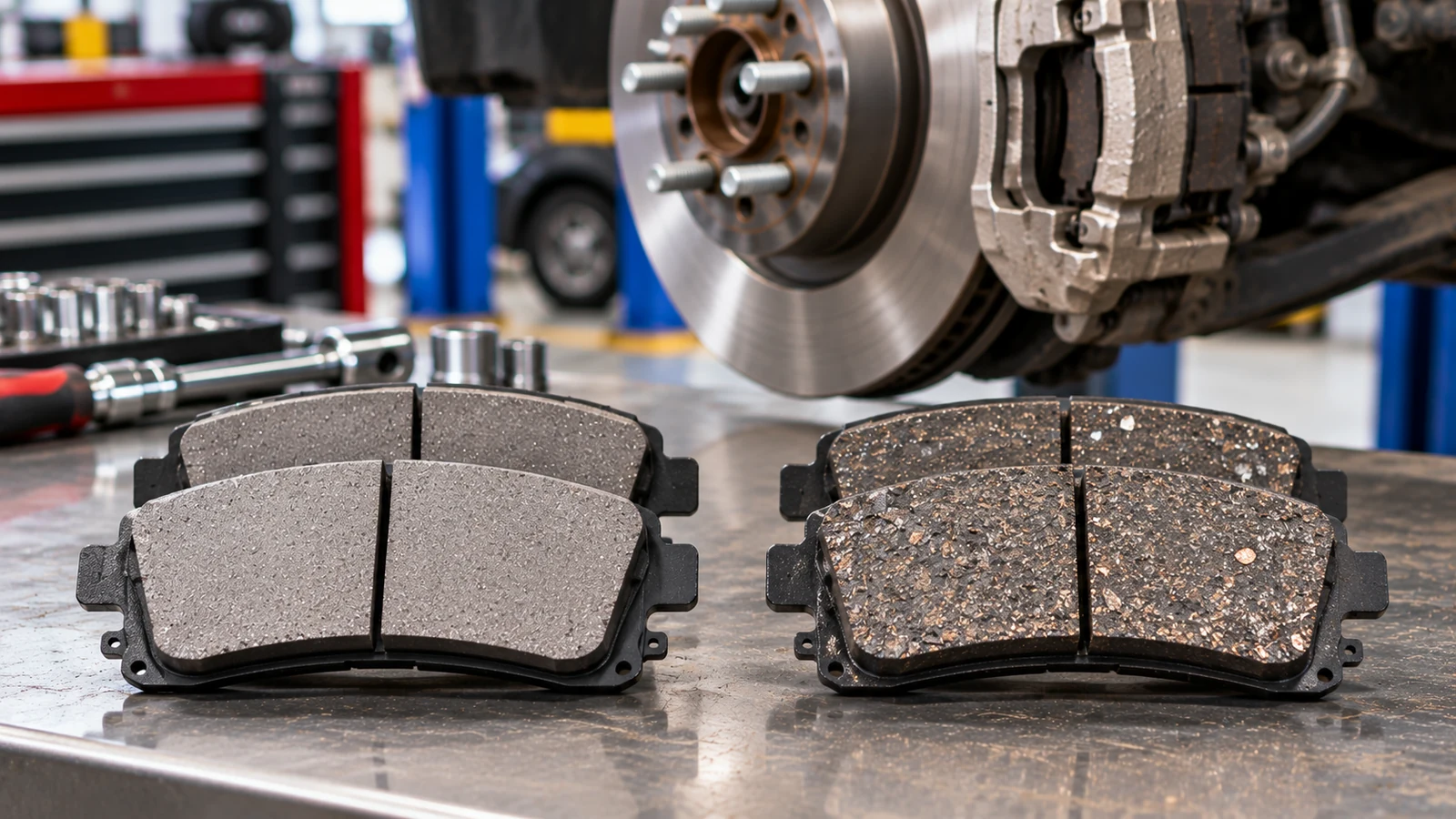
Brake pads usually last between 30,000 and 70,000 miles in normal mixed driving, but mileage alone isn’t a reliable replacement schedule. Pad material, front-to-rear brake balance, traffic, vehicle weight, towing, heat, road contamination, and caliper condition can all change how quickly the friction lining wears.
A city car that spends most of its time in stop-and-go traffic may need pads much sooner than a highway-driven vehicle. At the other end of the range, durable ceramic pads under light highway use can exceed 70,000 miles. A practical approach combines mileage with routine inspection, friction-material thickness, wear patterns, braking symptoms, and the vehicle’s factory service specifications.
Key Takeaways
- A useful general range is 30,000 to 70,000 miles for standard passenger vehicles.
- Organic pads commonly fall around 25,000 to 35,000 miles, semi-metallic pads around 30,000 to 50,000 miles, and ceramic pads around 50,000 to 75,000+ miles.
- Front pads often wear sooner because the front axle handles more of the braking load.
- New pads typically start with about 10 to 12 mm of friction material.
- Plan replacement when lining reaches about 3 mm. At 2 mm or less, service should not be delayed.
- A brake inspection every 6,000 to 10,000 miles can reveal uneven wear, sticking hardware, or rotor problems before they become more expensive.
What Brake Pad Mileage Should You Expect?
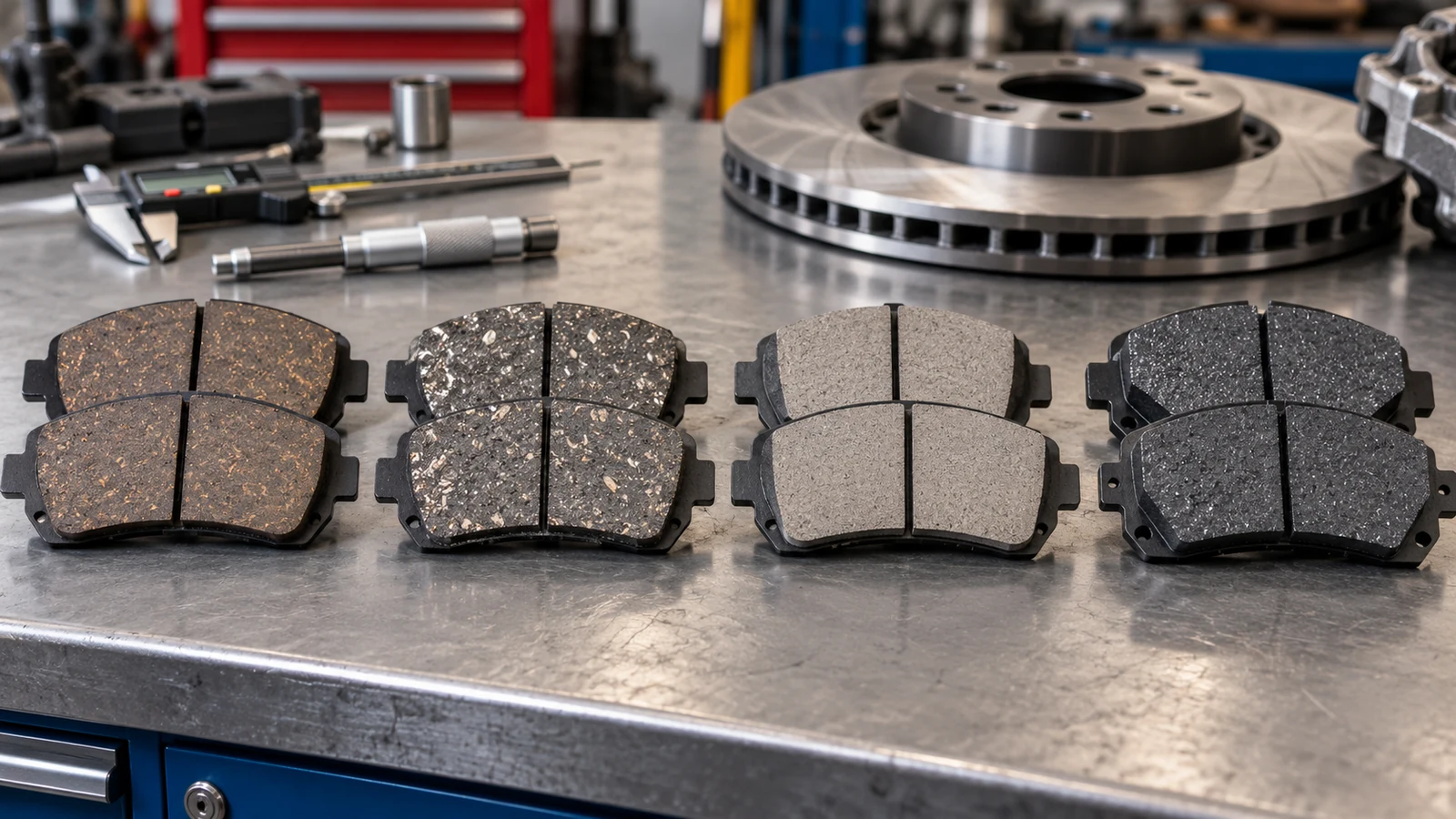
There is no single mileage number that applies to every brake pad. The friction compound strongly affects wear rate, heat tolerance, noise, dust, and rotor interaction. The ranges below are useful planning figures rather than guaranteed service intervals.
| Brake pad type | Typical lifespan | General characteristics | Common use |
| Non-asbestos organic (NAO) | 25,000-35,000 miles | Quiet, softer compound, moderate dust | Light commuters and compact cars |
| Semi-metallic | 30,000-50,000 miles | Strong heat handling, more dust and noise | Trucks, SUVs, heavier vehicles, performance use |
| Ceramic | 50,000-75,000+ miles | Low noise, low dust, stable wear | Modern sedans, crossovers, luxury vehicles |
| Carbon-ceramic | 80,000-100,000+ miles | High-temperature performance, specialized application | High-end performance and track-oriented vehicles |
Actual pad life can move outside these bands. Driving conditions and brake-system condition often matter as much as the material itself.
For passenger-car service, factory information remains more useful than a generic mileage estimate. AutoServicePlus’s Ford workshop manual catalog includes model-specific coverage such as the 2005-2007 Ford Five Hundred 2WD factory manual. The same principle applies to the Toyota service manual collection and the 1986-1987 Toyota Cressida Sedan repair manual, where you should check the correct model-specific procedure before relying on a broad lifespan range.
Minivans and other heavier passenger vehicles can place greater thermal demand on the brakes, especially in urban use. For Honda applications, the Honda factory repair manuals and the 1997-2002 Honda Odyssey LX workshop manual provide a model-specific starting point for brake inspection and service information.
Why Brake Pads Wear Faster on Some Vehicles
Brake pad wear results from friction and heat. Anything that increases braking events, the energy the brakes must absorb, or the time a pad stays in contact with the rotor can shorten service life.
Stop-and-Go Traffic, Braking Habits, and Heat
Urban driving is hard on brake pads because the vehicle repeatedly accelerates and slows. A highway vehicle may travel many miles with almost no brake application, while a city vehicle can make dozens of stops over a short distance.
Late braking, hard stops, and resting a foot on the brake pedal also increase heat. Repeated high-temperature braking can glaze the pad surface, reduce braking consistency, and accelerate friction-material loss.
Performance driving can shorten pad life further. A high-friction setup used aggressively may reach replacement mileage much sooner than in a commuter vehicle. For Chevrolet performance applications, review the Chevrolet workshop manuals and model-specific information such as the 2014-2017 Chevrolet Corvette C7 repair manual.
Vehicle Weight, Towing, Terrain, and Contamination
A heavier vehicle carries more kinetic energy into every stop. Passenger load, tools, cargo, or a trailer can all increase brake temperature. Mountain driving adds another challenge because repeated downhill braking can keep pads and rotors hot for extended periods.
Off-road vehicles can also wear pads quickly when mud, grit, sand, and water reach the brake hardware. Owners working on 4x4 brake systems can start with the Jeep service manual library and a vehicle-specific reference such as the 1996-2002 Jeep Wrangler workshop manual.
All-wheel-drive and older 4WD systems also deserve careful inspection because pad wear patterns may differ by axle and hardware condition. AutoServicePlus lists the Subaru workshop manual catalog, including model coverage such as the 1986-1987 Subaru L-Series 4WD repair manual.
High-performance cars can combine greater speed, aggressive friction materials, and repeated heat cycles. In those cases, inspect more often instead of assuming a long ceramic-pad interval. The Porsche factory workshop manuals and the 1983 Porsche 911 SC Cabriolet workshop manual are examples of model-specific documentation that should take priority over a general mileage estimate.
Measure Brake Pad Thickness Before Trusting Mileage
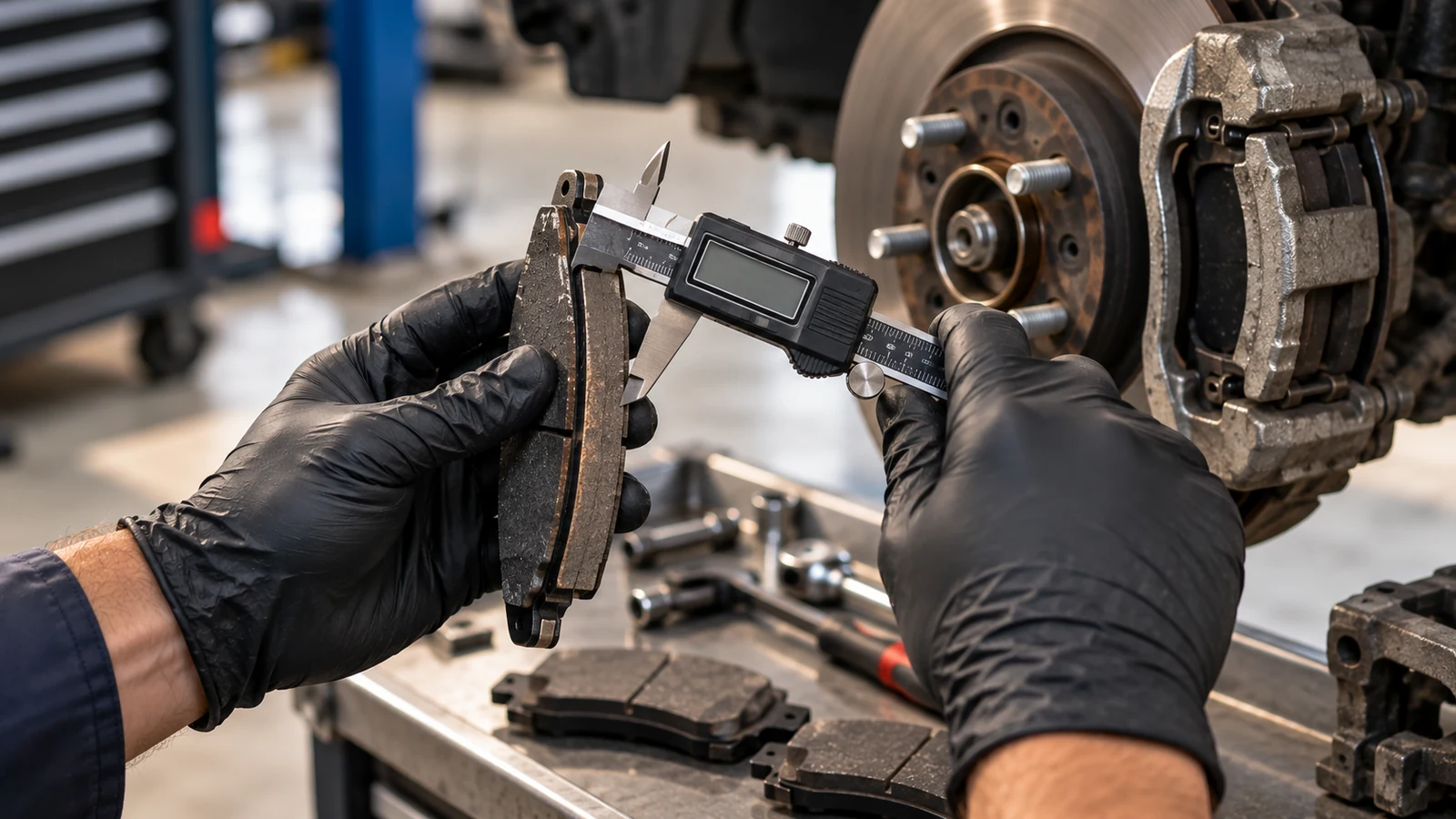
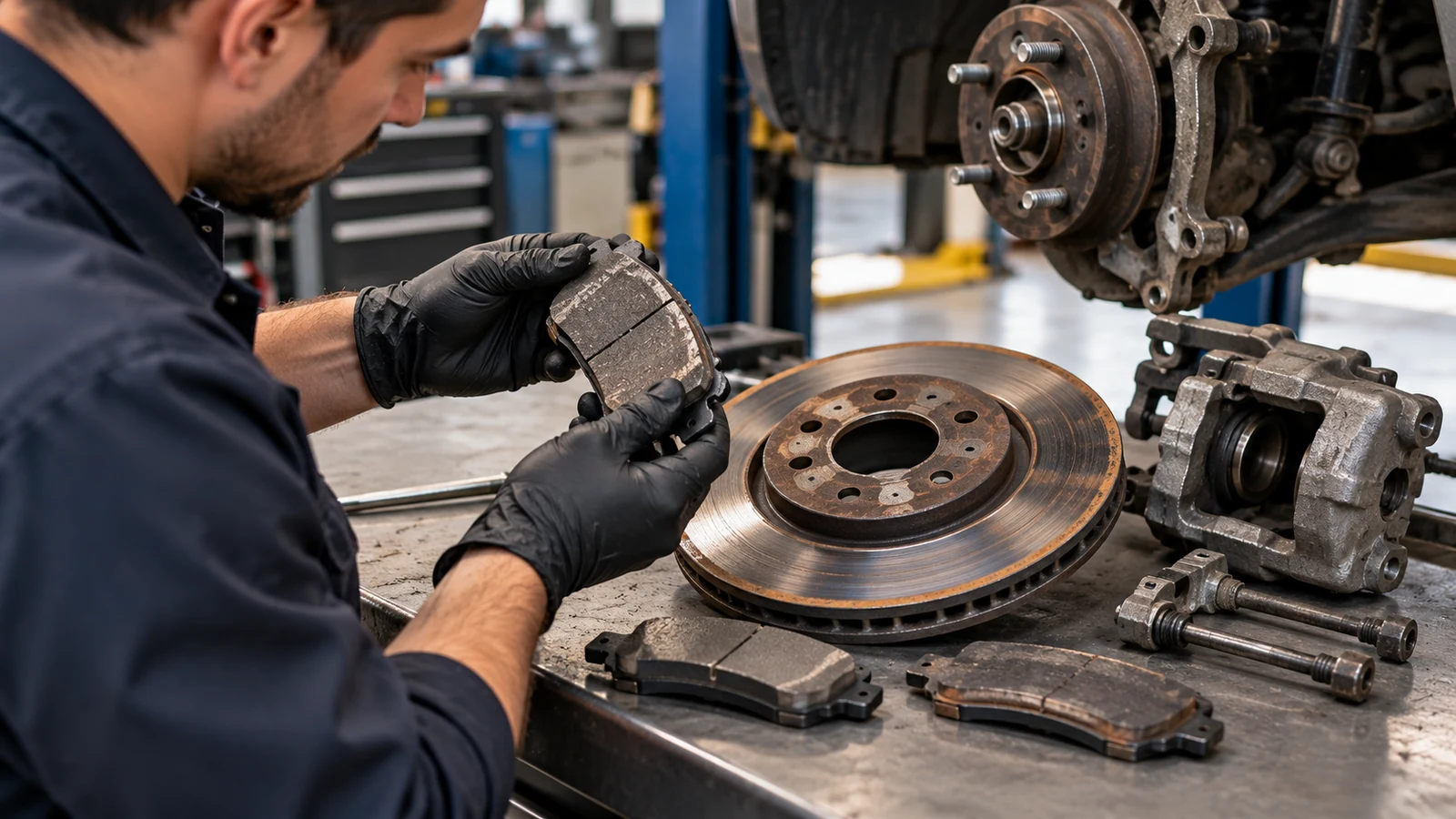
Mileage is useful for planning, but remaining friction thickness tells you what is actually happening at the wheel. A visual inspection should compare the inner and outer pads because a floating caliper can wear one side faster when the slide pins or pad guides don’t move freely.
| Friction lining measurement | Practical interpretation |
| 10-12 mm | Typical thickness for many new pads |
| About 3 mm | Replacement should be planned |
| 2 mm or less | Service should be treated as urgent |
These are broad reference values. The factory workshop manual’s exact service limit should guide the final decision for a specific vehicle.
Front Pads Usually Wear Sooner Than Rear Pads
During braking, vehicle weight transfers toward the front axle. The front brakes may perform roughly 65% to 75% of the stopping work, so front pads often reach their service limit earlier. A general planning range is 25,000 to 45,000 miles for front pads and 50,000 to 80,000 miles for rear pads, although electronic brake-force distribution and stability-control intervention can narrow that difference on some vehicles.
Some vehicles also use electronic pad-wear monitoring. When servicing a BMW, for example, consult the BMW workshop manual catalog and the applicable model procedure such as the 1999-2000 BMW 528i E39 factory manual before replacing sensors or clearing warnings.
On Audi applications, inner-pad inspection and service-indicator procedures can be just as important as the visible outer pad. The Audi factory repair manual collection includes model-specific references such as the 1988-1991 Audi 90 workshop manual.
Rear brake hardware can vary significantly by model, especially where the parking brake is integrated into the caliper or rear disc assembly. For model-specific Nissan procedures, use the Nissan workshop manuals and references such as the 1993-1998 Nissan Quest Minivan repair manual. Volkswagen owners can similarly check the Volkswagen service manual catalog and the 1990-1993 Volkswagen Jetta workshop manual for vehicle-specific brake service information.
Warning Signs and Causes of Premature Brake Pad Wear
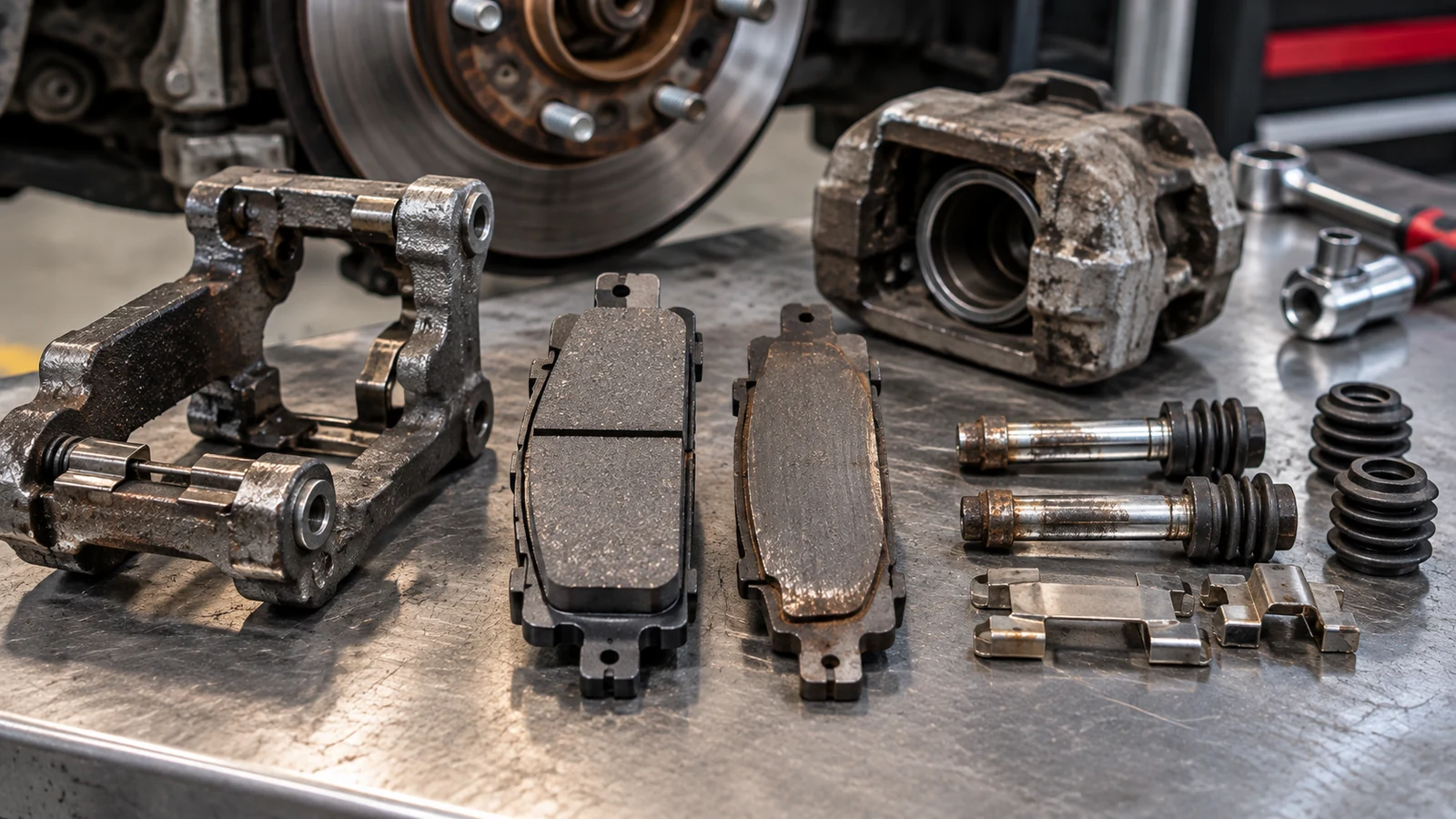
Brake pads that wear out in less than 20,000 miles deserve more than a simple pad replacement. The underlying brake hardware should be inspected so the new pads do not fail for the same reason.
| Symptom or wear pattern | What to inspect |
| High-pitched squeal | Wear indicator contact, pad thickness, rotor surface |
| Grinding or scraping | Pad worn through to backing plate, rotor damage |
| One pad much thinner than its mate | Sticking slide pins, rusted pad guides, caliper movement |
| Vehicle takes longer to stop | Pad condition, rotor condition, overall brake system |
| Pedal feels abnormal or spongy | Brake system condition, hydraulic service needs |
| Steering shake or pedal pulsation while braking | Rotor thickness variation, uneven friction transfer, related brake wear |
| Rapid wear after towing or mountain driving | Heat loading, pad compound, rotor condition |
| Warning light or pad-wear message | Friction thickness, wear sensor, model-specific diagnostic procedure |
Common mechanical causes of premature wear include seized caliper slide pins, rusted caliper bracket pad slides, and a sticking caliper piston. Any of these can keep one pad dragging against the rotor after the pedal is released.
If a pad is wearing unevenly, replacing only the friction material treats the result rather than the cause. Inspect the caliper hardware, boots, slides, pad seating surfaces, and rotor condition before installing a new set.
DIY Brake Inspection and Cost Planning
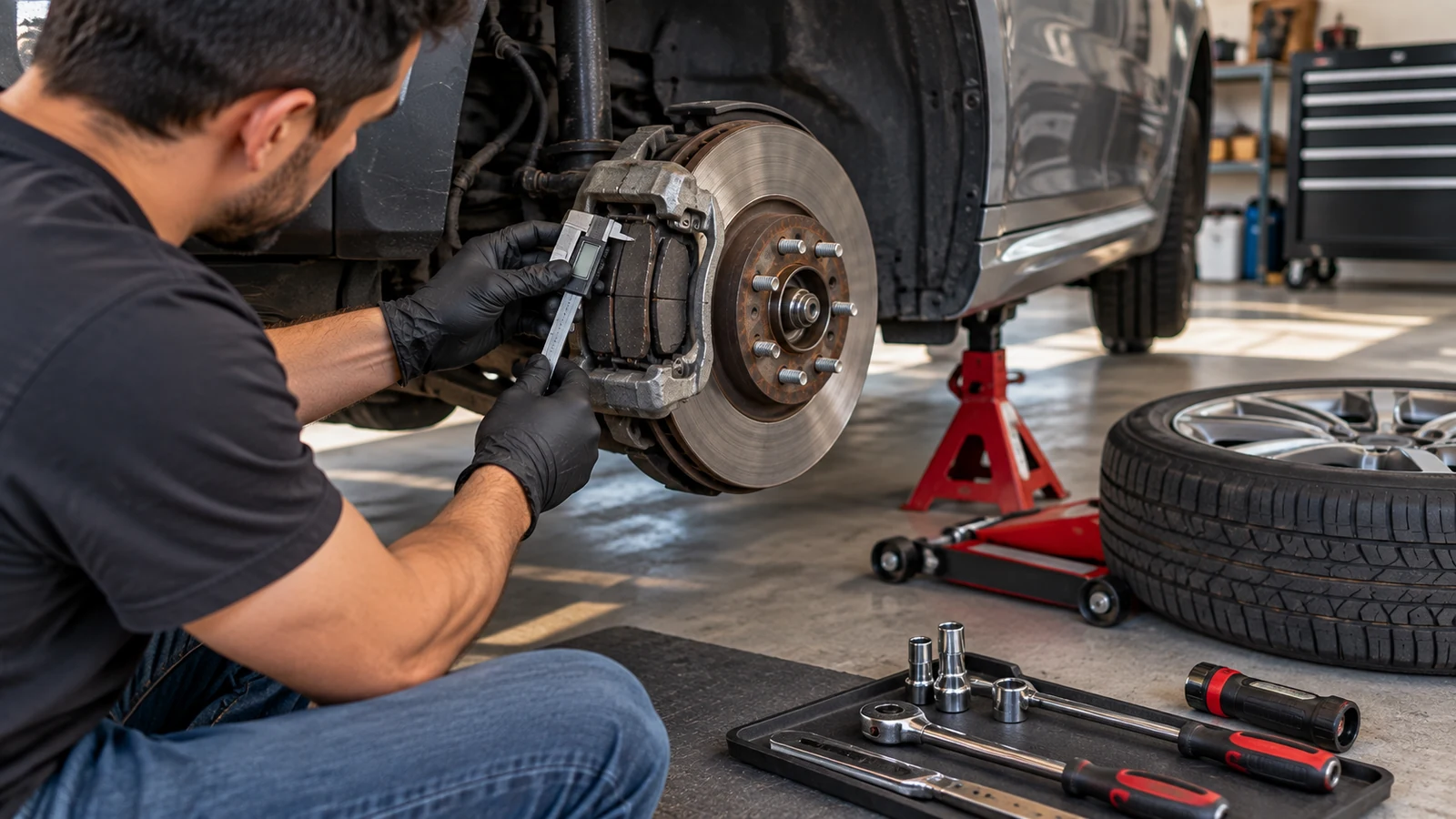
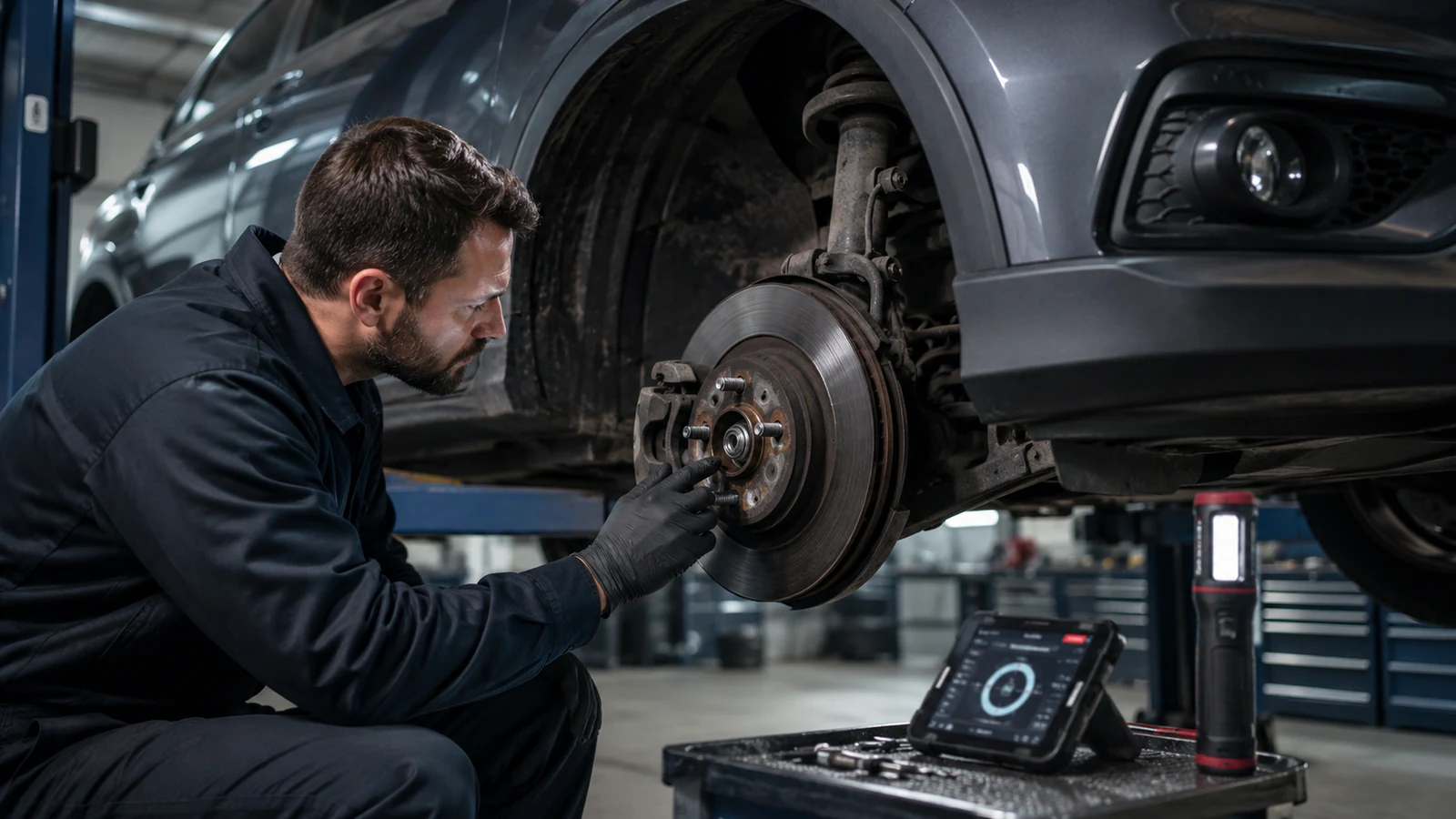
A basic brake inspection can help you track pad wear before it damages the rotor. It also gives you a record of how quickly your own vehicle consumes friction material instead of relying on a generic mileage interval.
A practical inspection sequence is:
- Park on a level surface and use the vehicle’s specified lifting and support points.
- Remove the wheel if needed for a clear view of both inner and outer pads.
- Measure the friction lining, not the steel backing plate.
- Compare inner and outer pad thickness on the same caliper.
- Inspect the rotor face for scoring, heat damage, or unusual wear.
- Check caliper slide movement, guide-pin condition, boots, and pad seating areas.
- Compare the measurements with the factory service limits for the exact model.
- Reassemble using the specified torque values and service procedure.
The reference cost ranges below are useful for planning, but shop rates and tool prices vary by market.
| Cost or time factor | DIY inspection | Professional shop |
| Inspection labor | $0 for your own labor | About How Many Miles Brake Pads Should Last: Lifespan and Inspection Guide image 5120 diagnostic fee |
| Basic tool cost | About How Many Miles Brake Pads Should Last: Lifespan and Inspection Guide image 640 for measuring and support equipment | Shop equipment included |
| Typical inspection time | About 20-30 minutes | About 1-2 hours including shop process |
| Measurement approach | Depth gauge or vernier caliper | Professional measuring tools |
For compact, sport-oriented Hyundai models, Hyundai workshop manuals include references such as the 1996-2001 Hyundai Tiburon RC-series manual. SUV brake work may require different lifting points, wheel-torque values, and hardware procedures, so Volvo owners can use the Volvo factory service manuals and a model-specific reference such as the 2004-2013 Volvo XC90 AWD repair manual.
For newer commuter-car service, AutoServicePlus also lists the Kia workshop manual collection and the 2019-2023 Kia Forte factory workshop manual. The value of the model-specific manual is not a different mileage promise. It lets you verify the correct inspection points, service limits, fastener procedures, and related brake-system information for that vehicle.
What Factory Workshop Manuals Add to Brake Service
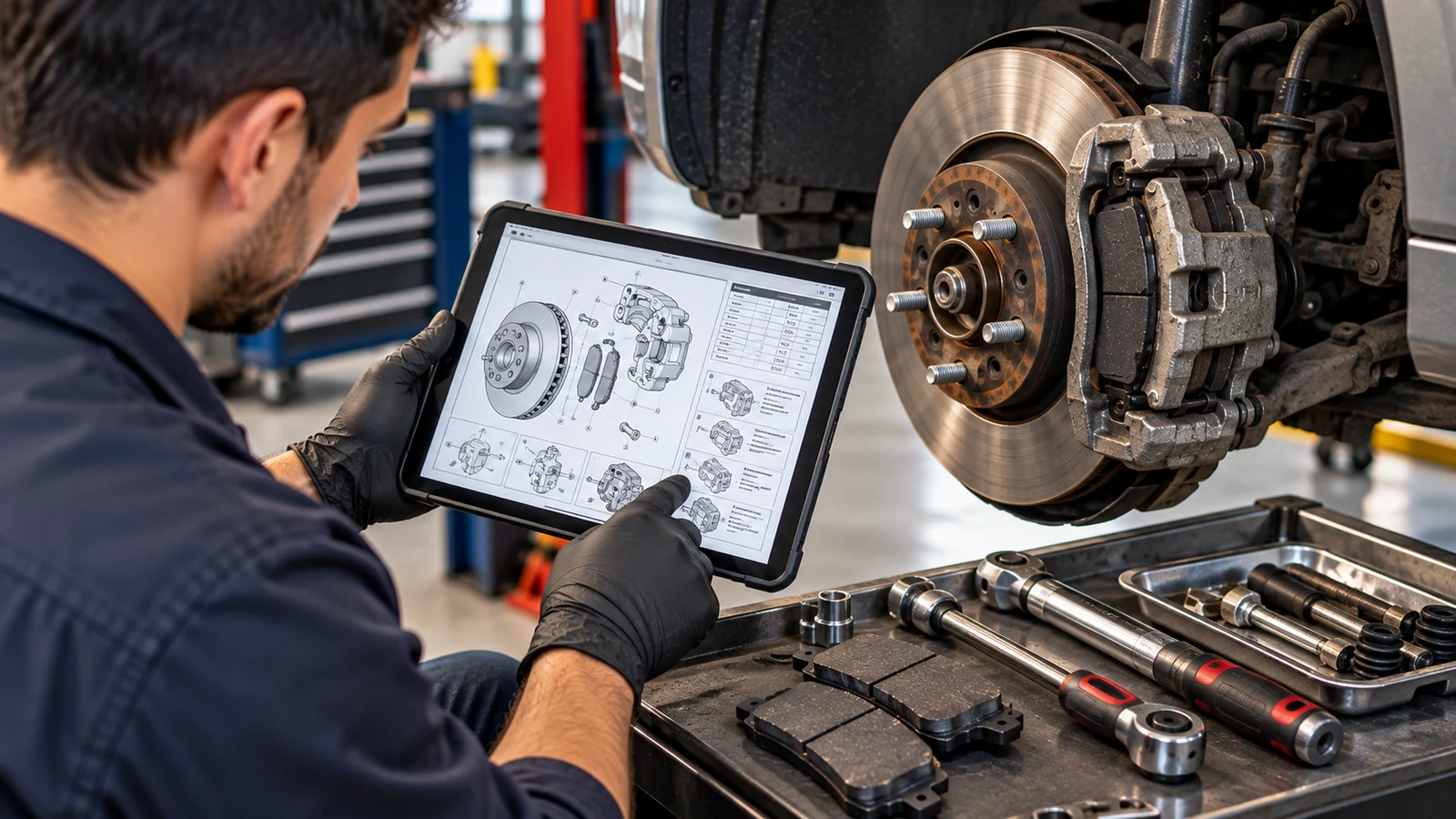
A workshop manual becomes most valuable when the job moves beyond a quick visual check. Generic brake advice can tell you that 3 mm is a common replacement threshold, but the factory manual tells you what applies to the exact vehicle, axle, brake package, and model year.
Useful brake-service information in factory documentation can include:
- Minimum front and rear friction-lining thickness.
- Rotor nominal thickness, refinishing limit, and discard specification.
- Caliper guide-pin and bracket-bolt torque values.
- Wheel fastener torque.
- Anti-rattle clip, shim, and pad orientation.
- Parking-brake or rear-caliper service procedure.
- Hydraulic bleeding sequence.
- ABS-related precautions.
- Approved lifting and support points.
- Wear-sensor diagnosis and replacement procedure.
- Component locations and exploded-view diagrams.
This becomes especially important when different trims use different brakes. For Mercedes-Benz applications, start with the Mercedes-Benz workshop manuals and select the exact vehicle, such as the 2010-2011 Mercedes-Benz ML 350 repair manual.
The same approach applies to luxury sedans. The Lexus factory repair manuals include model-specific coverage such as the 2007-2012 Lexus ES 350 workshop manual.
For smaller crossovers, use the Mazda workshop manual catalog to locate the correct vehicle data, including pages such as the 2019 Mazda CX-3 factory repair manual. For heavier SUVs and off-road-capable vehicles, the Land Rover service manuals and the 2015-2017 Land Rover Discovery Sport L550 manual provide a model-specific path to the correct repair information.
When Mileage and Symptoms Do Not Agree
Brake service decisions should be based on condition, not only the odometer.
A vehicle with 20,000 miles on its pads may already need service if one caliper is dragging, the vehicle tows frequently, or it spends most of its time in congested traffic. Another vehicle may have 60,000 miles on its pads and still retain usable friction material if it sees mostly steady highway driving.
Use the following order of priority:
- Immediate symptoms: Grinding, severe scraping, major loss of braking performance, or other serious brake-system symptoms require prompt inspection.
- Measured friction thickness: A pad near 3 mm is already in replacement territory. At 2 mm or less, do not postpone service.
- Uneven wear: A large difference between inner and outer pads can point to caliper or hardware problems even when one pad still looks thick.
- Rotor condition: Thin, damaged, or heavily scored rotors may change the scope of the repair.
- Mileage history: Mileage helps predict the next inspection, but it should not override physical measurements.
- Factory specifications: Vehicle-specific service limits and procedures should settle any uncertainty.
Conclusion
So, how many miles should brake pads last? For most passenger vehicles, 30,000 to 70,000 miles is a useful starting range, not a fixed replacement schedule. Pad compound, front-to-rear brake balance, driving environment, vehicle load, heat, and caliper condition can push real service life well above or below that range.
Inspect the brakes every 6,000 to 10,000 miles, measure the friction lining, compare both pads on each caliper, and watch for noise, vibration, warning messages, and uneven wear. When the job requires exact thickness limits, rotor specifications, torque values, bleeding steps, or component procedures, use the factory workshop manual for the exact model instead of relying on a generic mileage estimate.
Frequently Asked Questions
How Many Miles Should Brake Pads Last on Average?
For many passenger vehicles, 30,000 to 70,000 miles is a practical average range. Heavy urban use can shorten that interval, while steady highway driving and durable ceramic pads can extend it.
Do Front Brake Pads Wear Out Faster Than Rear Pads?
Usually, yes. Weight transfers forward during braking, so the front axle commonly handles more of the stopping load. A general planning range is about 25,000 to 45,000 miles for front pads and 50,000 to 80,000 miles for rear pads, but the actual balance depends on the vehicle and its electronic brake controls.
How Long Do Ceramic Brake Pads Last?
Ceramic pads commonly fall around 50,000 to 75,000+ miles in the reference ranges used for this guide. Their actual life still depends on driving conditions, vehicle weight, brake-system condition, and the specific pad formulation.
Why Would Brake Pads Wear Out Before 20,000 Miles?
Common causes include aggressive stop-and-go driving, heavy loads, towing, mountain use, seized slide pins, rusted pad guides, or a sticking caliper piston. Uneven inner-to-outer pad wear is a strong reason to inspect caliper movement and hardware.
What Brake Pad Thickness Means Replacement Is Due?
A commonly used replacement point is about 3 mm of friction material. At 2 mm or less, service should be treated as urgent. Always compare the measurement with the vehicle’s factory specification.
Can I Tell Brake Pad Life From Mileage Alone?
No. Mileage is only a planning tool. Pad thickness, inner-versus-outer wear, rotor condition, symptoms, driving pattern, and the vehicle’s factory service limits provide a better basis for deciding when to replace pads.