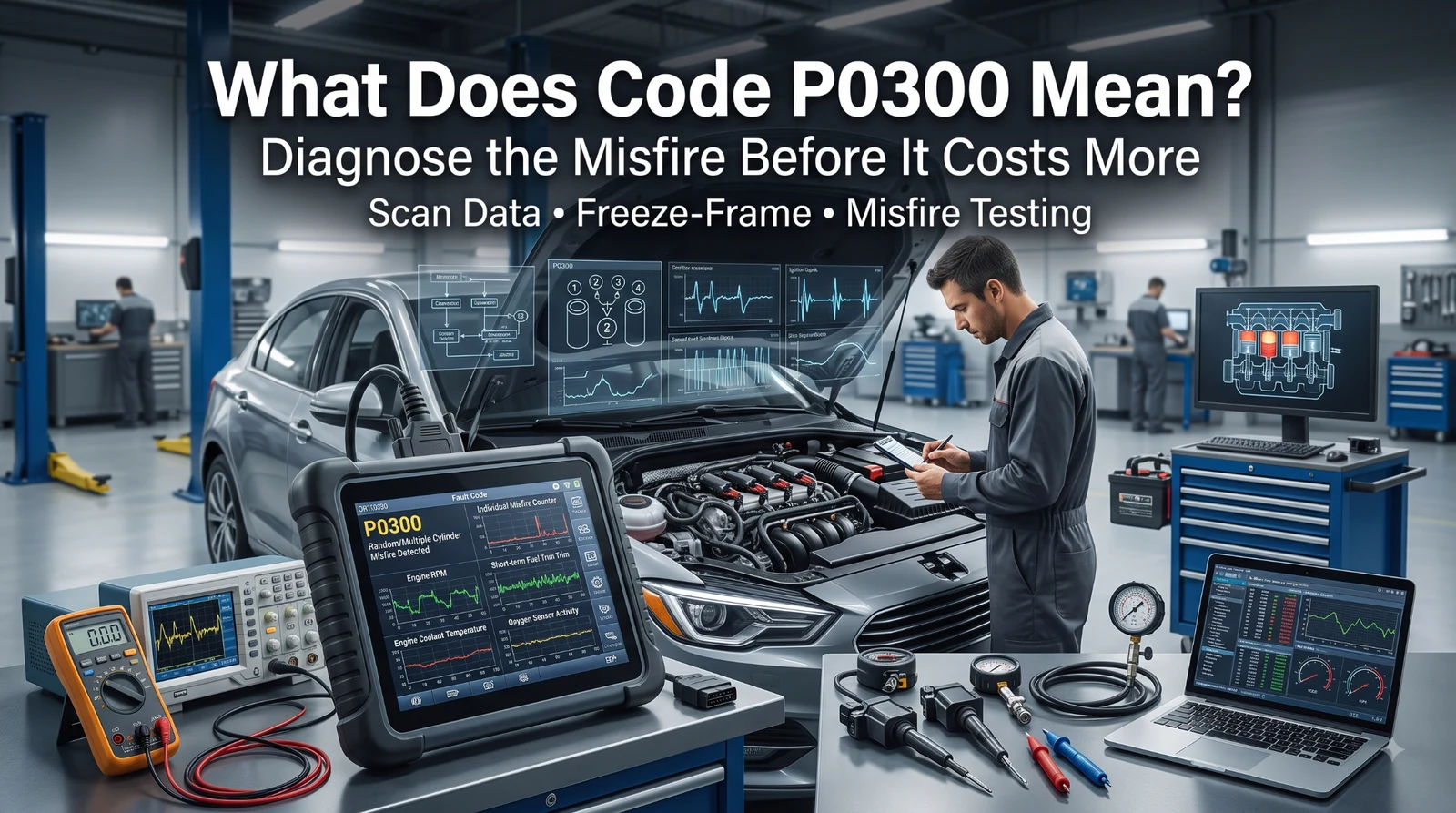
A P0300 code means your engine computer has detected a misfire pattern, but it has not isolated the problem to one cylinder. That matters because a rough idle, hesitation, or flashing check engine light can move from an annoying symptom to a costly catalytic-converter problem.
The best first move is not replacing spark plugs, coils, or sensors at random. Record the stored codes and freeze-frame data, then use the pattern to decide what to test next.
This guide explains what P0300 means, how serious it is, which causes deserve attention first, and a practical seven-step diagnosis path.

What Does Code P0300 Mean: Diagnose It in Order
P0300 is the generic OBD-II code for a random or multiple-cylinder misfire. The ECM or PCM can detect misfires by monitoring changes in crankshaft rotation as individual cylinders contribute power. Unlike P0301 or P0302, P0300 does not isolate the fault to one cylinder. That makes companion codes, operating conditions, and scan data especially important.
| What you notice | What it can suggest | Best next check | Urgency |
|---|---|---|---|
| P0300 with rough idle | Air leak, ignition issue, fuel imbalance | Other codes, fuel trims, visual inspection | Diagnose soon |
| P0300 mainly under load | Weak ignition or fuel delivery problem | Misfire data, plugs, coils, fuel data | Avoid hard acceleration |
| P0300 plus P0301-P0308 | Specific cylinders are also being identified | Focus testing on named cylinders | High |
| Flashing check engine light | Active misfire with higher catalyst risk | Reduce load and arrange service | Immediate |
| P0300 with little or no symptom | Intermittent, calibration, sensor, or early-stage fault | Freeze-frame and vehicle-specific information | Do not ignore |
Why P0300 Is Different From P0301
P0300 tells you the engine is misfiring across random or multiple cylinders. A code such as P0301 identifies cylinder 1 as misfiring, while P0302 identifies cylinder 2. When P0300 appears with cylinder-specific codes, those extra codes can make the diagnosis much more focused.
The key point is that P0300 is a symptom code, not a parts list. The computer detected a combustion problem, but that does not prove a coil, injector, spark plug, sensor, or mechanical component has failed.
Before clearing anything, save the code list and operating conditions. The AutoServicePlus guide to trouble-code diagnostic steps is useful here because the order of your checks matters more than guessing the most familiar part.
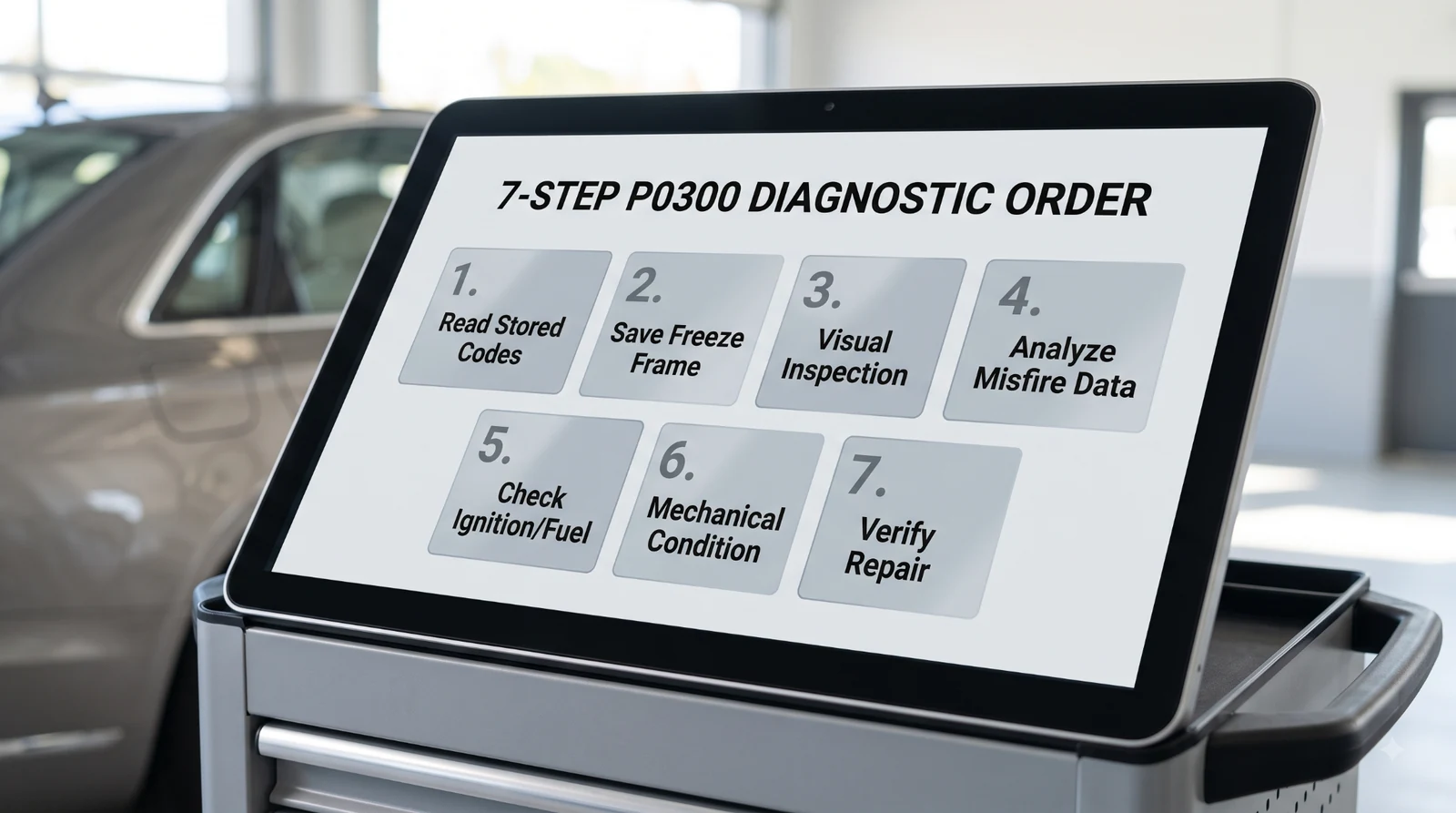
Use This 7-Step Diagnostic Order
- Read every stored and pending code. Look for P0301-P0308, lean codes, fuel-system codes, cam or crank sensor codes, or other clues. One companion code can change the direction of diagnosis.
- Save freeze-frame data before clearing codes. Engine speed, load, temperature, and related scan data can reveal when the misfire occurred. A cold-start fault deserves a different diagnostic direction from one appearing during acceleration.
- Check simple visible causes first. With the engine off and cool, look for disconnected intake hoses, damaged wiring, loose connectors, and obvious signs of neglected ignition components. Avoid working around moving parts or exposed ignition components.
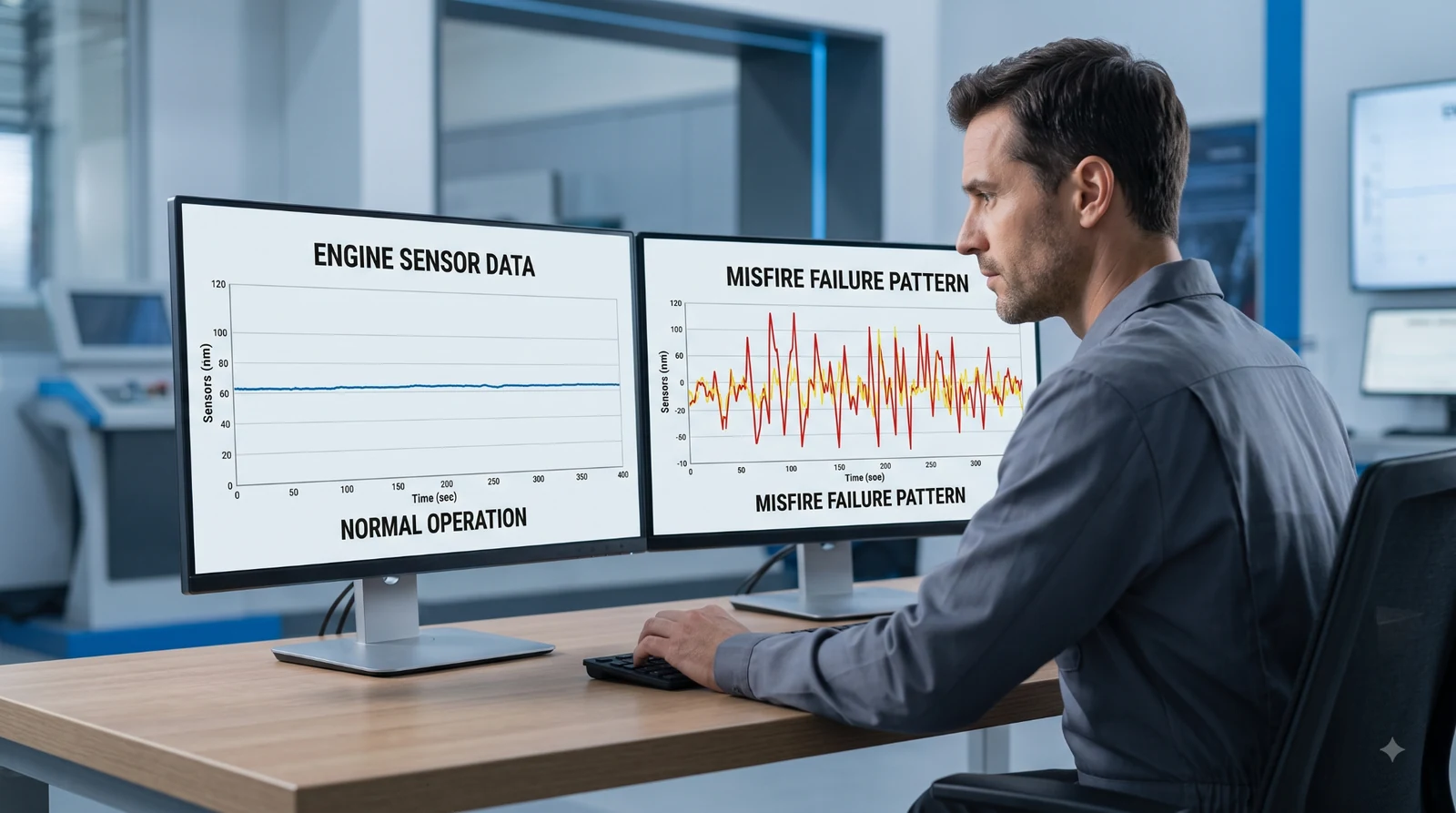
- Use misfire data to find a pattern. If your scan tool provides cylinder misfire counters, see whether one cylinder dominates or several cylinders increase together. That can help separate a localized problem from one affecting the entire engine.
- Evaluate ignition and air/fuel causes. Worn plugs, weak ignition components, intake leaks, injector faults, and inadequate fuel delivery are all recognized misfire causes. Testing should follow vehicle-specific procedures instead of replacing several parts at once.
- Check mechanical condition when basic tests pass. Low compression, valve problems, or incorrect timing can create persistent misfires that new plugs or coils will not correct.
- Verify the repair under the original conditions. After correcting the root cause, rescan the vehicle and confirm the misfire does not return during the conditions that originally triggered it.
A structured diagnostic flowchart approach becomes especially valuable when the first obvious checks do not identify the cause.
Match Symptoms to the Failure Pattern
A rough idle, hesitation, or shudder can accompany P0300, but the condition in which it happens matters. Some manufacturer service information specifically associates P0300 with rough running and hesitation, while other vehicle-specific cases may store misfire codes without noticeable drivability symptoms.
Think of symptom patterns as clues, not proof. A problem that appears only when cold, only under load, or only at certain engine speeds should be diagnosed under those conditions instead of against a generic list of causes.
If the vehicle has a history of repeated misfire repairs, compare the current pattern with previous work. AutoServicePlus’s guide to engine misfire diagnosis and repair can help connect symptoms to the correct system rather than treating every P0300 as the same failure.
Check Common Causes Without Guessing
The easiest way to organize P0300 causes is by system. Ignition causes can include worn or incorrect spark plugs, plug wires where fitted, and faulty ignition components. Air and fuel causes include intake leaks, injector faults, inadequate fuel delivery, and mixture-related problems.
Mechanical causes can include insufficient compression, valve-related faults, or timing problems. Signal and control causes may involve crankshaft or camshaft sensor signals, wiring, or vehicle-specific electronic issues.
That last category matters because manufacturer bulletins show that the correct P0300 repair can vary significantly by vehicle. Ford, for example, has published model-specific misfire procedures involving particular engine conditions and misfire-monitor behavior. Vehicle year, engine, repair history, and technical service information can therefore change the diagnostic path.
Know When to Stop Driving
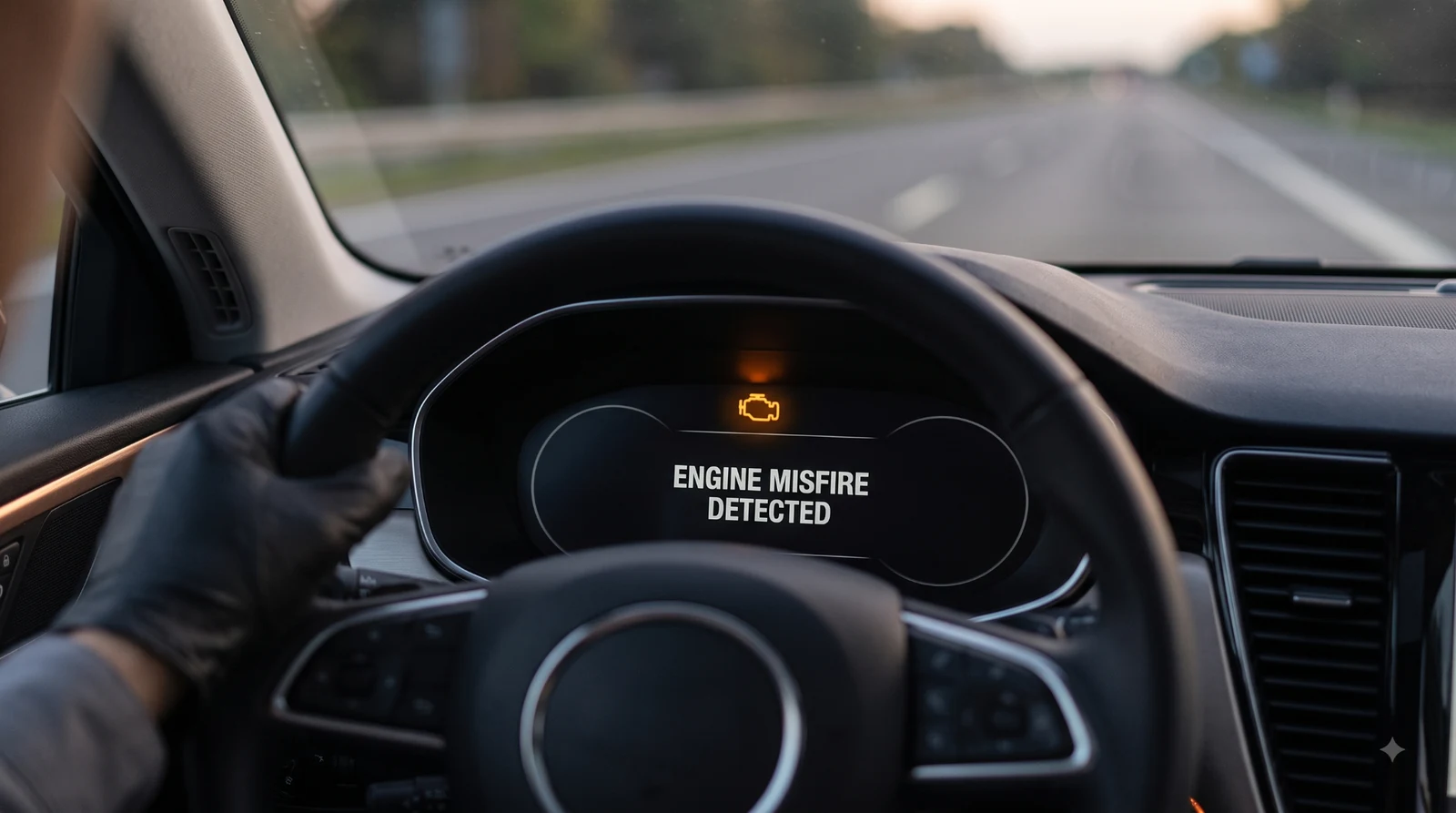
A flashing check engine light is the most important warning sign. Current manufacturer guidance warns that a flashing malfunction indicator may mean engine misfire is occurring and that increased exhaust temperature could damage the catalytic converter or other vehicle components.
If the light flashes, the engine shakes heavily, power drops sharply, or the vehicle feels unsafe to operate, avoid heavy acceleration and arrange professional service. Follow the instructions in the owner’s manual for your specific vehicle.
A steady light is different, but P0300 still deserves prompt diagnosis. Light behavior and drivability symptoms can tell you more about immediate urgency than the code number alone.
Avoid the Parts-Cannon Mistake
Replacing plugs, coils, injectors, and sensors one after another can become expensive without proving what failed. It can also destroy useful diagnostic context when codes and freeze-frame information are repeatedly erased.
Use a simpler sequence: evidence, test, repair, verify. Start with the stored data. Choose a test that separates likely causes. Replace a component only when an inspection, test result, or vehicle-specific procedure supports that decision.
If you have already replaced parts and P0300 keeps returning, review the AutoServicePlus guide to avoiding wrong-part replacement. A disciplined diagnostic reset can be more useful than adding another unproven component.
Verify the Repair Before Calling It Done
A repair is not finished just because the check engine light turns off. Confirm that the engine runs normally under the same operating conditions recorded when the fault occurred.
Then rescan for pending codes and review available misfire information. If P0300 returns, do not automatically repeat the same repair. Reassess the code pattern and move toward the next system supported by the evidence.
The practical answer to “what does code P0300 mean?” is simple: the engine computer detected random or multiple misfires, but the root cause still has to be proven.
Commonly Asked Questions About the Code P0300
Can P0300 appear if the engine seems to run normally?
Yes. P0300 can appear even when the engine seems to run normally. The misfire may be intermittent, may happen only during a specific load or temperature condition, or may have occurred during a previous drive cycle.
Some vehicle-specific faults can also set misfire codes without an obvious drivability complaint. Do not clear the code immediately. Save freeze-frame data, check for pending and cylinder-specific codes, and note engine speed, load, and temperature when the fault occurred.
If the light stays steady and the car feels normal, arrange diagnosis soon. If the light begins flashing or the engine starts shaking, treat the problem as urgent.
What does a flashing light with P0300 indicate?
A flashing check engine light with P0300 usually means an active misfire is occurring and exhaust temperatures may become high enough to damage the catalytic converter or other components. Do not keep driving normally or accelerate hard to see if it clears.
Reduce engine load, move to a safe place if the vehicle is running poorly, and arrange service. The exact response can vary by manufacturer, so the owner’s manual should take priority for your vehicle.
A steady check engine light is different, but it still deserves diagnosis. The flashing light is the key sign that the problem has become more urgent.
Does P0300 automatically mean bad spark plugs?
No. P0300 does not automatically mean the spark plugs are bad. Worn or incorrect plugs are one possible cause, but random or multiple misfires can also come from ignition coils, intake leaks, injector problems, low fuel delivery, compression loss, timing issues, sensor faults, or wiring problems.
Replacing plugs without checking the code pattern can waste money and leave the real fault untouched. Start by reading all stored and pending codes and saving freeze-frame data. If a cylinder-specific code is present, focus there.
If several cylinders misfire together, look for a cause capable of affecting multiple cylinders before buying parts.
What is the difference between P0300 and P0301?
P0300 and P0301 are both misfire codes, but they offer different levels of detail. P0300 means random or multiple-cylinder misfires were detected, while P0301 means cylinder 1 was identified as misfiring. If P0300 appears with P0301, P0302, or other P030X codes, those cylinder-specific codes can narrow the diagnosis.
Do not assume the named cylinder’s coil is automatically bad. The cause could still involve the plug, injector, compression, wiring, or a system affecting several cylinders. Treat the additional code as a direction for testing, not as proof that a specific component has failed and should immediately be replaced.
How long does diagnosing a P0300 code take?
The time required to diagnose P0300 depends on how consistently the misfire occurs and how much useful scan data is available. A visible disconnected hose or clearly identified cylinder can be found relatively quickly.
An intermittent misfire that appears only cold, under load, or during specific conditions can require more investigation. Diagnosis may involve code review, freeze-frame analysis, misfire data, ignition checks, air and fuel evaluation, and mechanical testing when simpler checks pass. The important point is not speed alone.
A short, evidence-based diagnosis is useful, but repeated parts replacement without proof can take longer and cost considerably more overall.