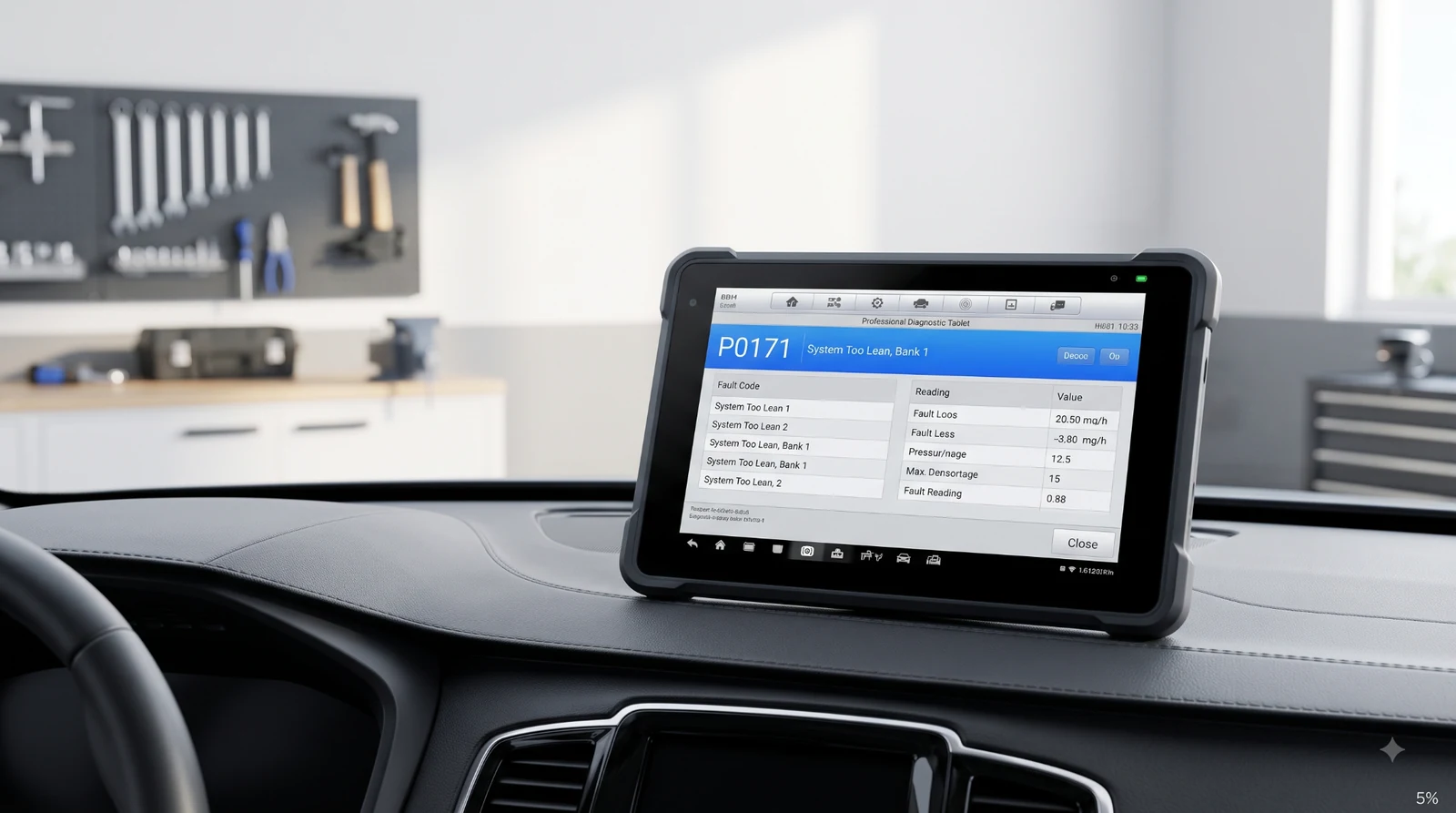
A P0171 code can turn a simple check engine light into an expensive guessing game. The engine may idle rough, hesitate, lose power, or seem almost normal. Replacing the first sensor a scan tool names can waste money because P0171 describes a lean condition, not a failed part.
Start with the evidence the engine computer already saved. Freeze-frame data, fuel trims, related codes, and a careful intake inspection can quickly separate an air leak from a fuel-delivery or sensor problem.
This guide explains what Bank 1 means, the most useful checks, how to read fuel-trim patterns, and when P0171 needs immediate attention.
What Does Code P0171 Mean: Read This Before Replacing Parts
Code P0171 means “System Too Lean, Bank 1.” The engine control module has been adding fuel to correct a mixture it sees as too lean, but the correction has reached the code-setting limit. Bank 1 is the side of the engine that contains cylinder number 1. On an inline engine, there is only one bank.
| What you notice | What it may point to | Best next check | Don’t assume |
|---|---|---|---|
| High positive fuel trim mainly at idle | Vacuum or intake leak | Hoses, PCV system, intake seals | O2 sensor is bad |
| High positive trim at idle and higher RPM | MAF error or low fuel delivery | MAF data and fuel delivery | Intake leak is the only cause |
| P0171 plus P0174 | Engine-wide air or fuel issue | Shared intake, MAF, fuel supply | Two separate bank failures |
| P0171 plus a cylinder misfire | Bank-specific air or fuel problem | Injector, intake leak, ignition data | The spark plug is the root cause |
| Lean code after recent intake work | Loose duct or connector | Recheck serviced area | A new part has failed |
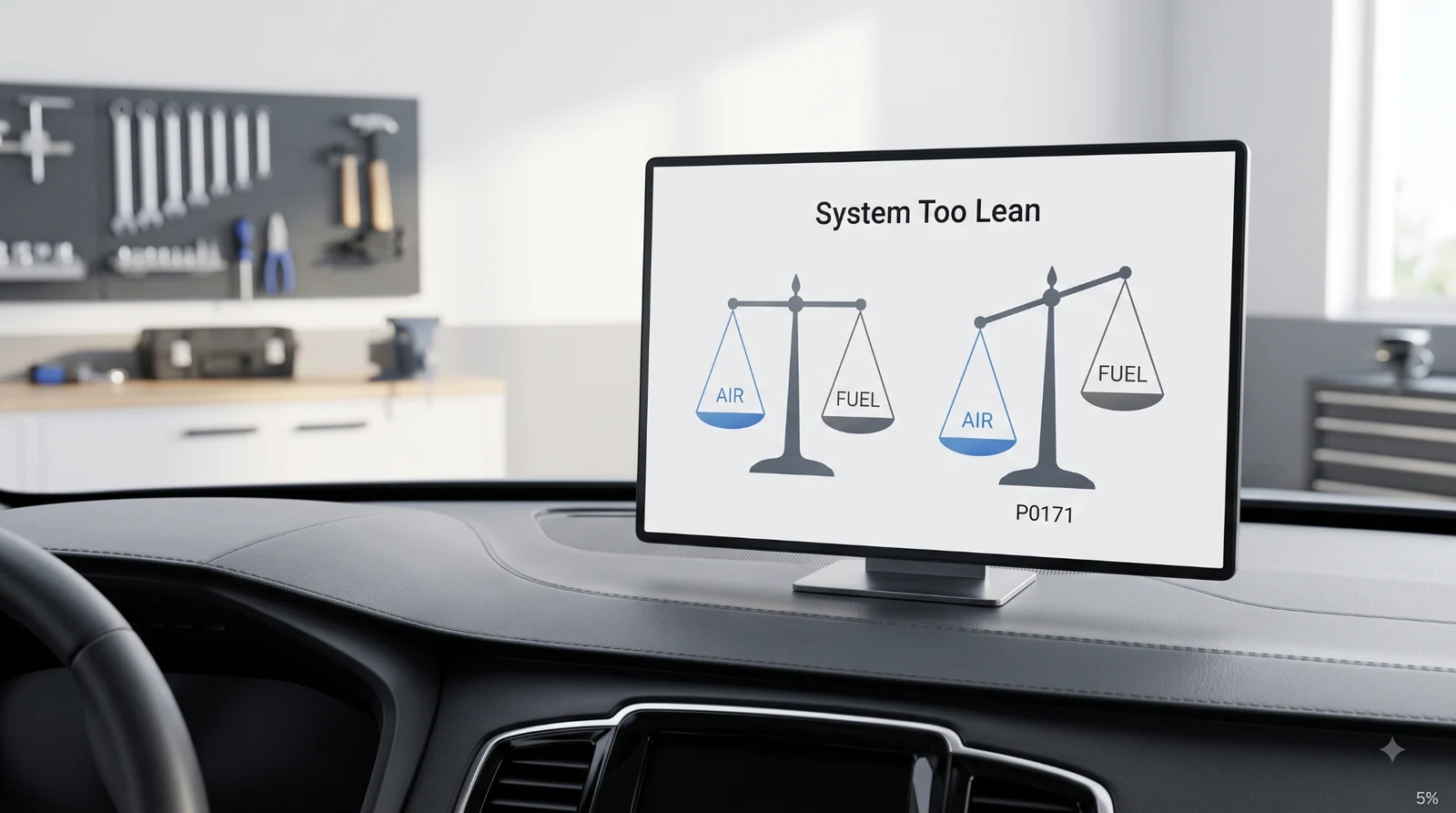
What P0171 Is Telling the ECU
A lean mixture means the engine is getting too much air and too little fuel, or misleading sensor feedback. The upstream oxygen or air-fuel sensor helps the computer judge combustion, while fuel trim shows how much correction the computer is applying. Positive fuel trim means the ECU is adding fuel to compensate.
That distinction matters because the code does not say “replace the oxygen sensor.” Common causes include intake or vacuum leaks, PCV leaks, a contaminated or inaccurate mass airflow sensor, low fuel pressure, restricted injectors, an exhaust leak ahead of the upstream sensor, or a sensor signal that is misleading the ECU.
The smartest first move is to treat P0171 as a diagnostic direction, not a parts list. AutoServicePlus readers can use these diagnostic trouble code steps to organize codes, freeze-frame data, symptoms, and live readings before touching components.
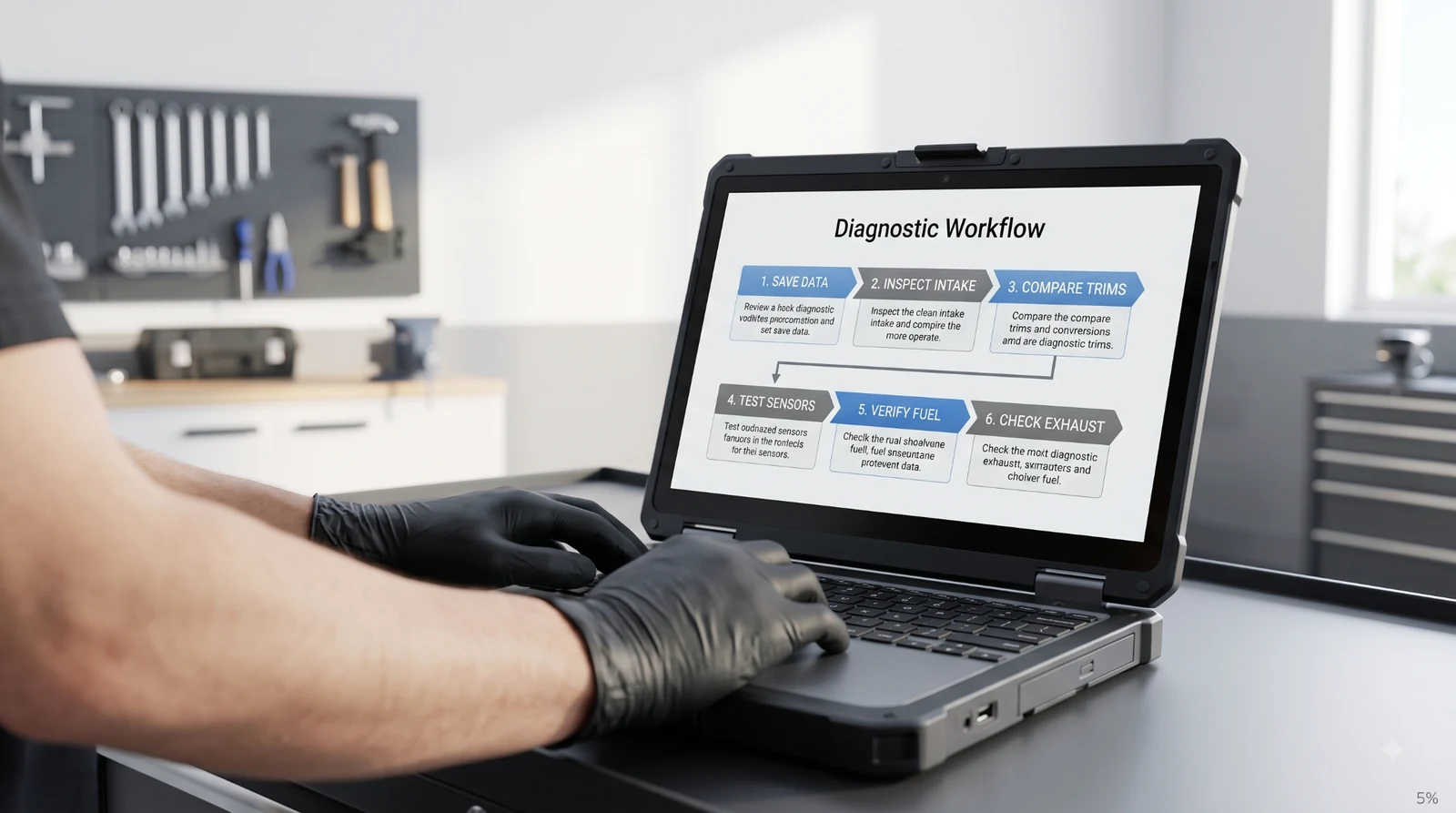
The 6 Checks That Narrow P0171 Fast
To move beyond guessing, you must systematically isolate the root cause of the lean condition. These six diagnostic steps provide a structured approach to identifying whether your engine’s P0171 code stems from an air leak, a sensor inaccuracy, or a fuel delivery issue.
1. Save Codes and Freeze-Frame Data
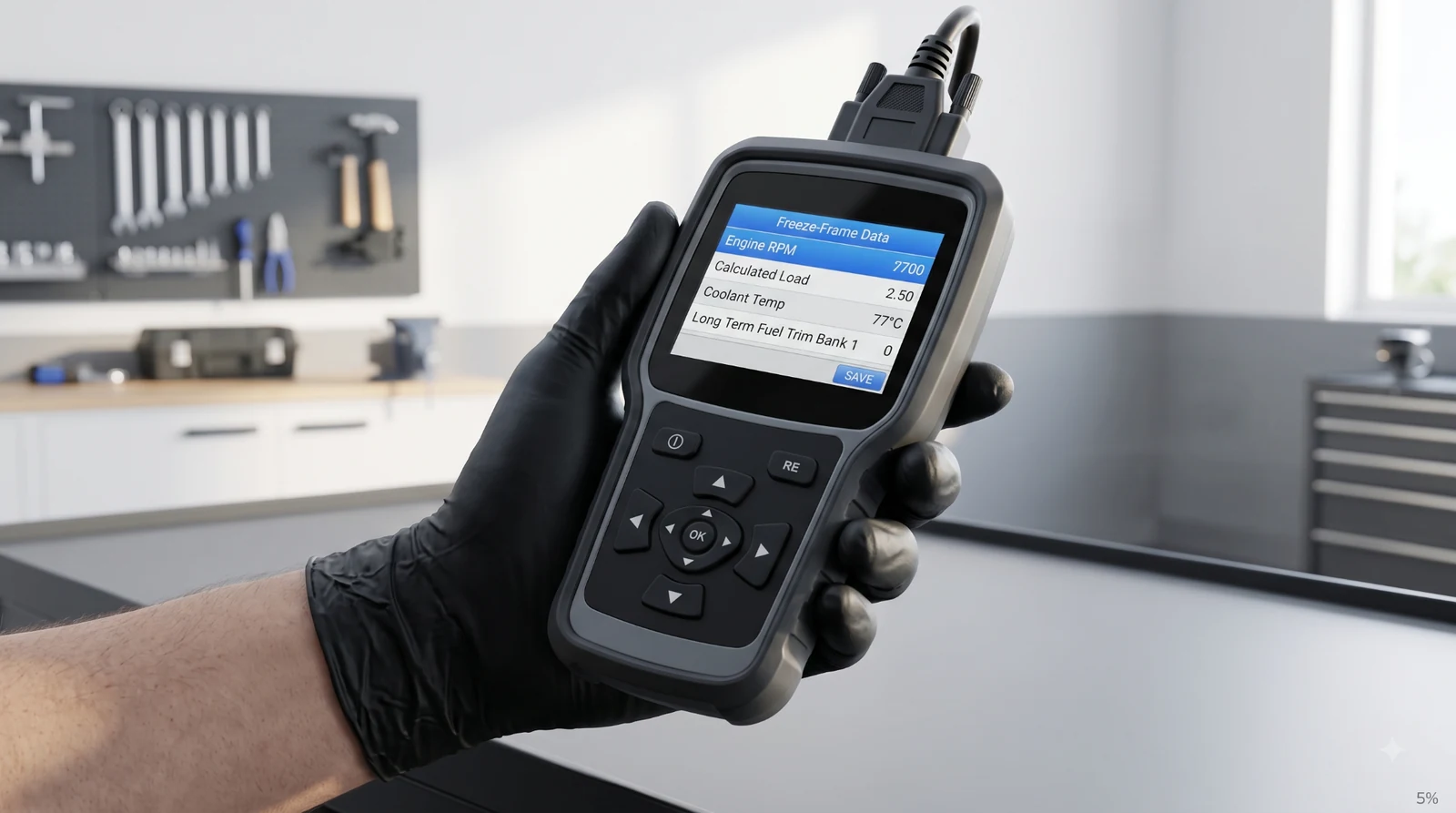
Before clearing anything, record every stored and pending code. Save the freeze-frame data tied to P0171, including engine speed, load, coolant temperature, vehicle speed, and fuel trims if your scanner provides them.
Those details show the conditions present when the fault matured. A code that appears mainly around idle can send diagnosis in a different direction from one that develops during heavier engine load.
2. Inspect the Air Path After the MAF
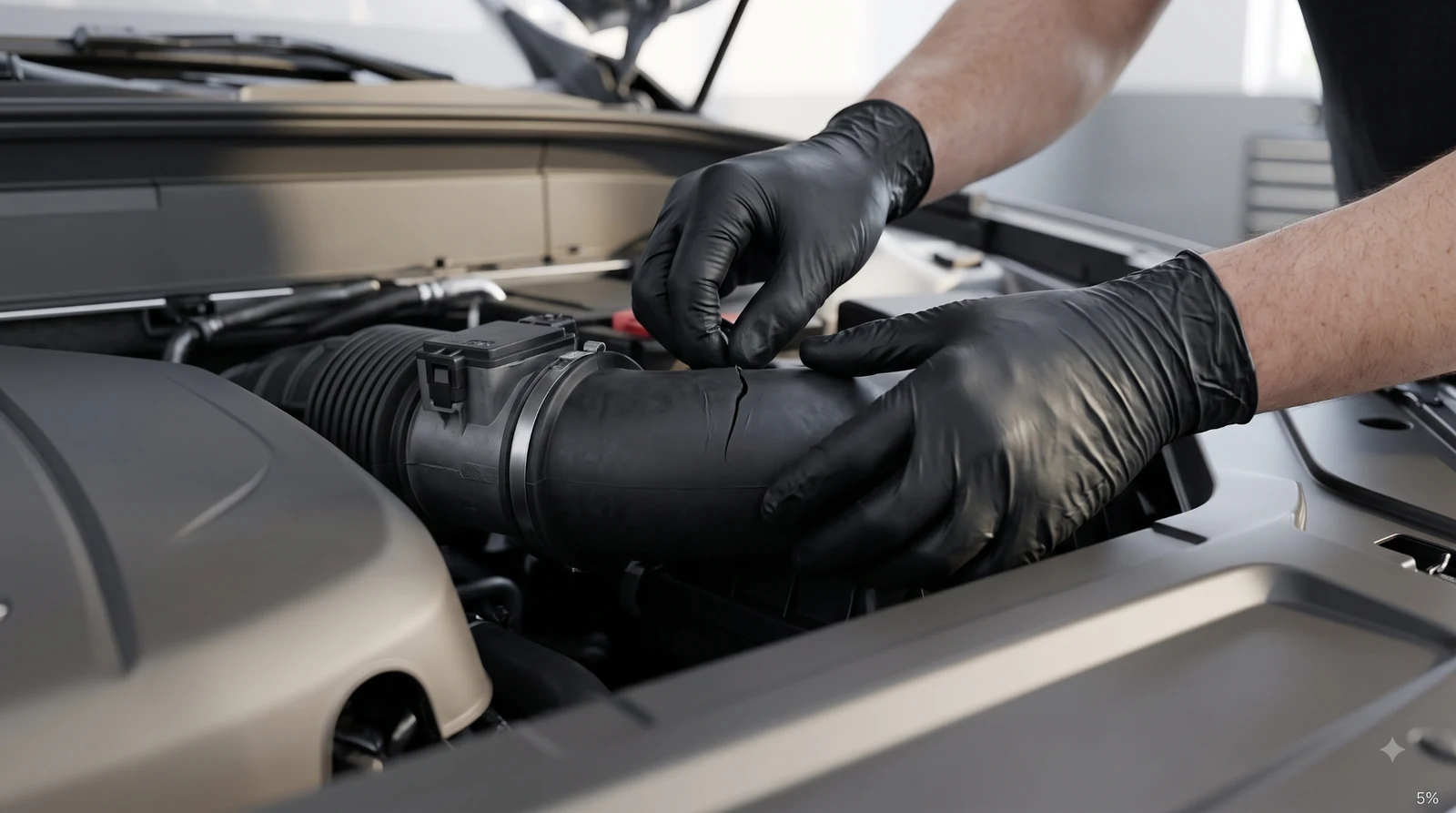
Look for obvious problems between the mass airflow sensor and the intake manifold. A split intake boot, disconnected vacuum hose, leaking PCV connection, loose oil cap, or disturbed intake fitting can let in air the ECU did not measure.
Pay special attention to anything recently serviced. If the code appeared after an air filter, intake, PCV, or throttle-body job, verify the serviced area before assuming a new component has failed.
3. Compare Fuel Trim at Different Loads
Fuel trim is one of the fastest ways to decide what to test next. A technician can compare short-term and long-term fuel trim at warm idle with readings at a higher engine speed under the vehicle manufacturer’s recommended test conditions.
If positive correction is much stronger at idle and improves as airflow rises, an intake or vacuum leak becomes more likely. If correction stays high across operating conditions, MAF accuracy or fuel delivery deserves more attention. Exact thresholds vary by vehicle, so the pattern should be compared with factory specifications.
A structured diagnostic flowchart approach is useful here because it keeps each test tied to a result. It also prevents you from jumping between possible causes without proving anything.
4. Check MAF and Sensor Evidence
A contaminated or biased MAF sensor can under-report incoming air, causing the ECU to command less fuel than the engine actually needs. Do not condemn it from P0171 alone. Compare MAF readings, calculated load, fuel trims, and related sensor data against the vehicle’s service information.
The same rule applies to the upstream oxygen or air-fuel sensor. Test the signal and supporting conditions before replacement. This sensor testing guide can help you separate a bad sensor from one that is correctly reporting another problem.
5. Verify Fuel Delivery
If the air path looks sound and fuel trims remain lean across operating conditions, the fuel side needs verification. Low fuel pressure, insufficient pump output, a restriction, or injector-flow problems can reduce delivery enough to produce P0171.
Fuel-system testing can involve pressurized fuel and fire hazards. The manufacturer’s procedure and proper equipment should be used by someone trained for the test. The diagnostic principle is simple: verify fuel delivery before buying a pump or injectors.
6. Check Exhaust Leaks and Bank Clues
An exhaust leak ahead of the Bank 1 upstream oxygen sensor can affect the oxygen reading and imitate a lean condition. The exhaust path around the manifold, gasket joints, and upstream sensor area should therefore be considered after safer basic checks.
On V-type engines, compare Bank 1 with Bank 2. If both banks are lean, something shared by the engine becomes more suspicious, such as the MAF, fuel supply, PCV system, or a common intake leak. If only Bank 1 is lean, bank-specific intake, injector, exhaust, and sensor problems deserve more attention.
How Fuel Trim Separates Air From Fuel
Fuel trim is more useful when you read it as a pattern instead of chasing one number. Short-term fuel trim reacts to current mixture feedback. Long-term fuel trim represents correction the ECU has learned over time.
Suppose positive correction is strongest at idle but moves much closer to normal as airflow increases. That pattern fits unmetered air because a small leak represents a larger percentage of total airflow when the engine is consuming less air.
If fuel correction remains strongly positive across a wider operating range, the problem may affect overall airflow measurement or fuel supply. A biased MAF reading or weak fuel delivery then deserves greater attention.
Freeze-frame data adds context. If the stored fault developed under a particular load, temperature, or speed, reproduce that condition through an appropriate diagnostic procedure instead of relying only on idle readings.
When P0171 and P0174 Appear Together
P0171 identifies Bank 1. P0174 identifies a lean condition on Bank 2. When a V6, V8, or another multi-bank engine stores both codes, investigate causes that affect both sides before assuming two independent failures.
Shared causes can include a MAF error, low fuel pressure, a significant common intake leak, or a PCV-system problem. If only P0171 is present, bank-specific faults move higher on the diagnostic list.
This is also why replacing an oxygen sensor simply because “Bank 1” appears in the code description often misses the root cause. The bank label identifies where the lean condition is being detected. It does not identify the failed component.
When You Should Stop Driving
A steady check engine light with mild symptoms may still allow a short trip for professional diagnosis, but P0171 should not be ignored. A persistent lean condition can be associated with rough running, hesitation, reduced power, misfires, and other drivability problems.
Stop driving if the check engine light flashes, the engine develops a severe misfire, power drops sharply, the vehicle repeatedly stalls, or the engine shows signs of overheating. Those symptoms deserve immediate attention.
If the vehicle appears to run normally but P0171 keeps returning, arrange diagnosis soon. Clearing the code without addressing its cause removes useful evidence and leaves the underlying problem unaddressed.
Repair the Cause, Then Verify the Result
The correct repair depends on what testing proves. It might involve a cracked hose, PCV component, intake seal, MAF fault, fuel-delivery issue, injector problem, exhaust leak, wiring fault, or upstream sensor.
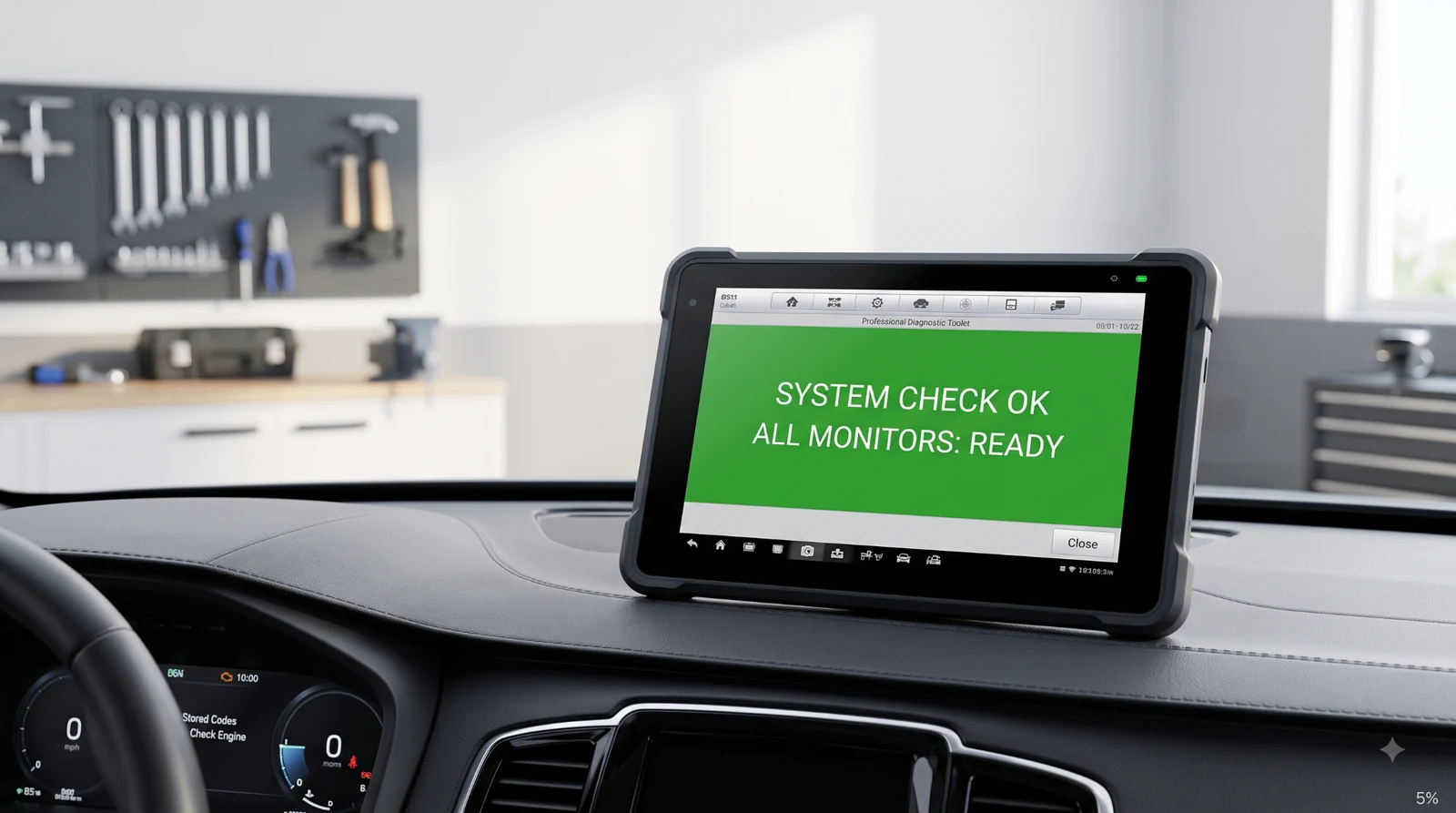
After the repair, verify that the original symptoms and abnormal fuel-trim behavior are gone and that the code does not return under the conditions that originally triggered it. The goal is not simply to switch off the check engine light. The ECU should no longer need excessive correction.
That verification step helps prevent repeat repairs and unnecessary spending. If you are tempted to replace the most obvious component without testing it, review the common causes of wrong-part replacement first.
P0171 becomes easier to solve when the evidence is followed in order: save the data, inspect for unmetered air, compare fuel trims, verify sensor inputs, evaluate fuel delivery, and check bank-specific clues. That process is more reliable than swapping parts based on the code description alone.
Commonly Asked Questions About the Code P0171
Can I drive with a P0171 code?
Sometimes, but the symptoms matter more than the code alone. If the check engine light is steady and the engine runs smoothly, a short trip for diagnosis may be reasonable. Avoid treating that as permission to keep driving for days or weeks. A lean condition can worsen, cause hesitation, trigger misfires, and increase stress on the engine.
Stop driving if the check engine light flashes, the engine shakes badly, power falls sharply, the vehicle stalls, or temperature rises abnormally. If P0171 returns after being cleared, diagnose the cause instead of repeatedly resetting it. The safest choice is prompt testing before the condition becomes more severe.
Is P0171 usually caused by an oxygen sensor?
No. P0171 does not automatically mean the Bank 1 oxygen sensor has failed. The code means the engine computer is seeing a lean condition and has reached its correction limit. A vacuum leak, PCV leak, inaccurate MAF reading, low fuel pressure, injector problem, or exhaust leak can all make a healthy oxygen sensor report lean.
That is why replacing the sensor first can waste money. Check related codes and freeze-frame data, inspect the intake system, compare fuel trims, and verify the sensor signal in context. Replace an oxygen or air-fuel sensor only when testing shows its response, circuit, or reading is actually faulty.
How much does it cost to repair P0171?
There is no reliable single price because P0171 describes a condition, not one failed component. A loose intake connection or damaged vacuum hose may be inexpensive, while a fuel pump, injector, intake gasket, or advanced sensor diagnosis can cost much more. Labor rates and vehicle design also change the total.
The best way to control cost is to pay for diagnosis before approving parts. Ask what test proved the failure, what readings were abnormal, and whether fuel trims returned toward normal after the repair. A low-cost part installed without evidence can become more expensive than a proper diagnosis if the code quickly returns.
Why did P0171 return after I cleared it?
Clearing P0171 erases the stored code, but it does not remove the condition that caused it. The engine computer needs time and the right operating conditions to run its monitors and rebuild fuel-trim information. If the original vacuum leak, MAF error, fuel-delivery problem, exhaust leak, or sensor fault remains, the code can return after one or more drive cycles.
Recheck pending codes and freeze-frame data when it comes back because the new information may show a clearer pattern. Do not keep clearing the light before testing. Repeated resets can remove useful evidence and make an intermittent lean problem harder to diagnose accurately.
Can a dirty MAF sensor cause P0171?
Yes, a contaminated or biased mass airflow sensor can contribute to P0171 if it under-reports the amount of air entering the engine. The ECU may then command too little fuel, creating positive fuel trim as it tries to correct the mixture. But a dirty-looking sensor is not proof that it caused the code. Check for intake leaks, review MAF data with engine load and fuel trims, and compare readings with service information for the vehicle. If cleaning is allowed by the manufacturer, use only the specified method and product. If data remains incorrect afterward, further testing may show that the sensor, wiring, or another system is responsible.