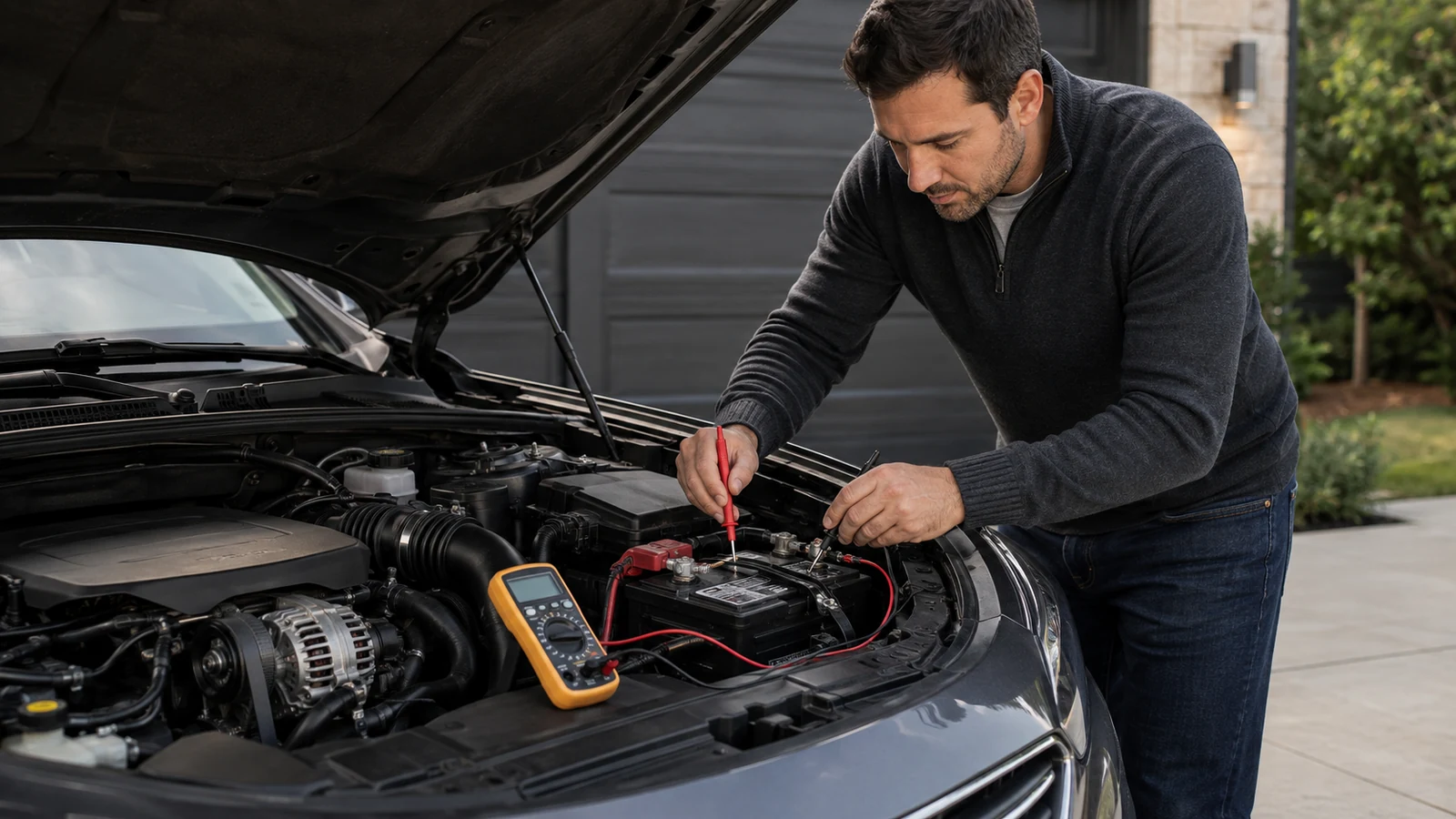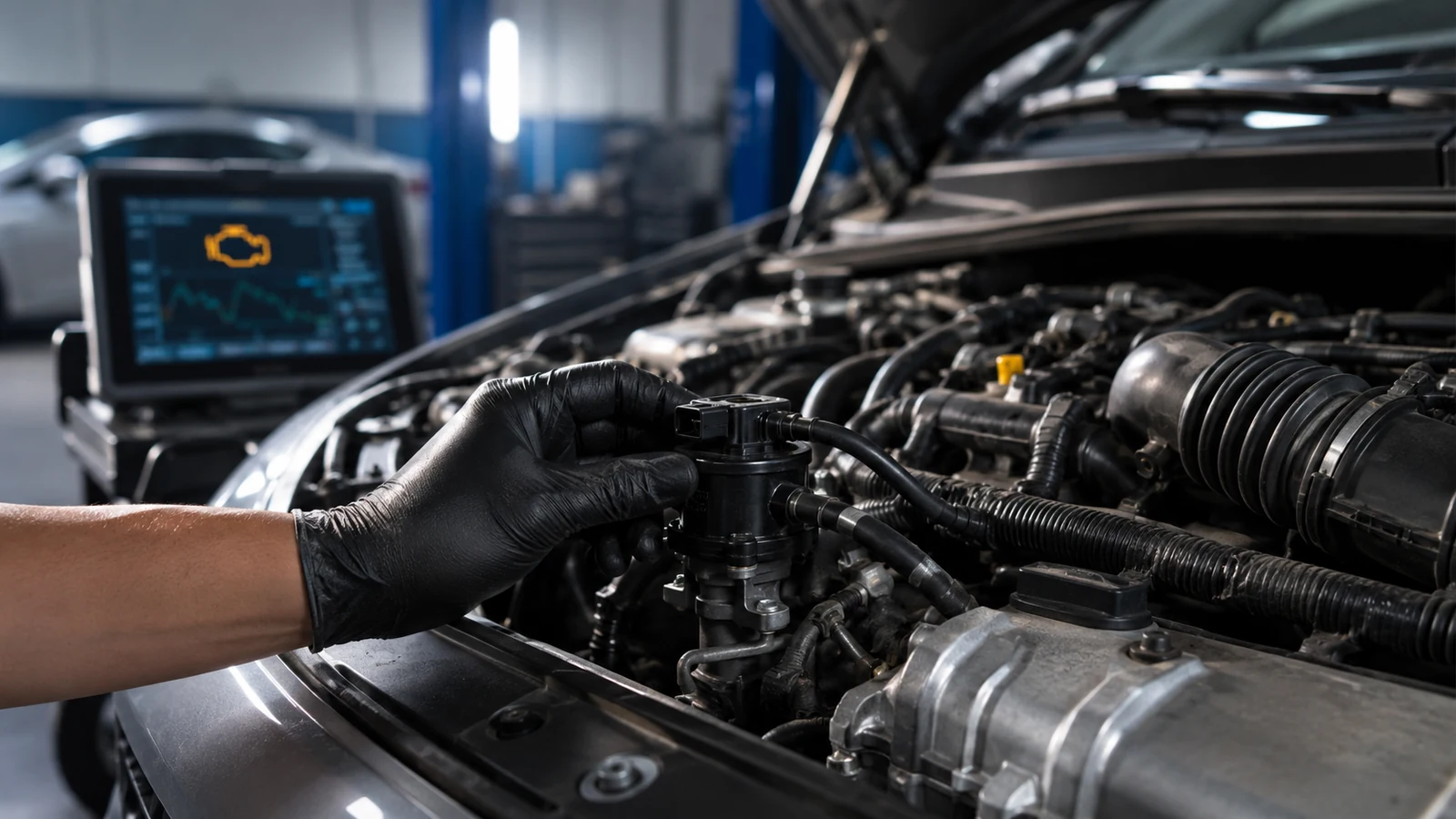
A small purge valve can cause surprisingly frustrating drivability problems. A car may idle badly, trigger a check engine light, or become difficult to start after you fill the fuel tank. Those symptoms can also come from other faults.
The best clue is understanding what the valve controls. It manages when stored gasoline vapor moves from the EVAP system into the engine. Testing that flow is more reliable than replacing the valve based on symptoms alone.
A proper diagnosis combines trouble codes, EVAP-system inspection, valve operation, and vehicle-specific specifications. Below, you’ll see how the purge valve works, what failure changes, and how to test it without guessing.
What Does a Purge Valve Do: Why It Matters
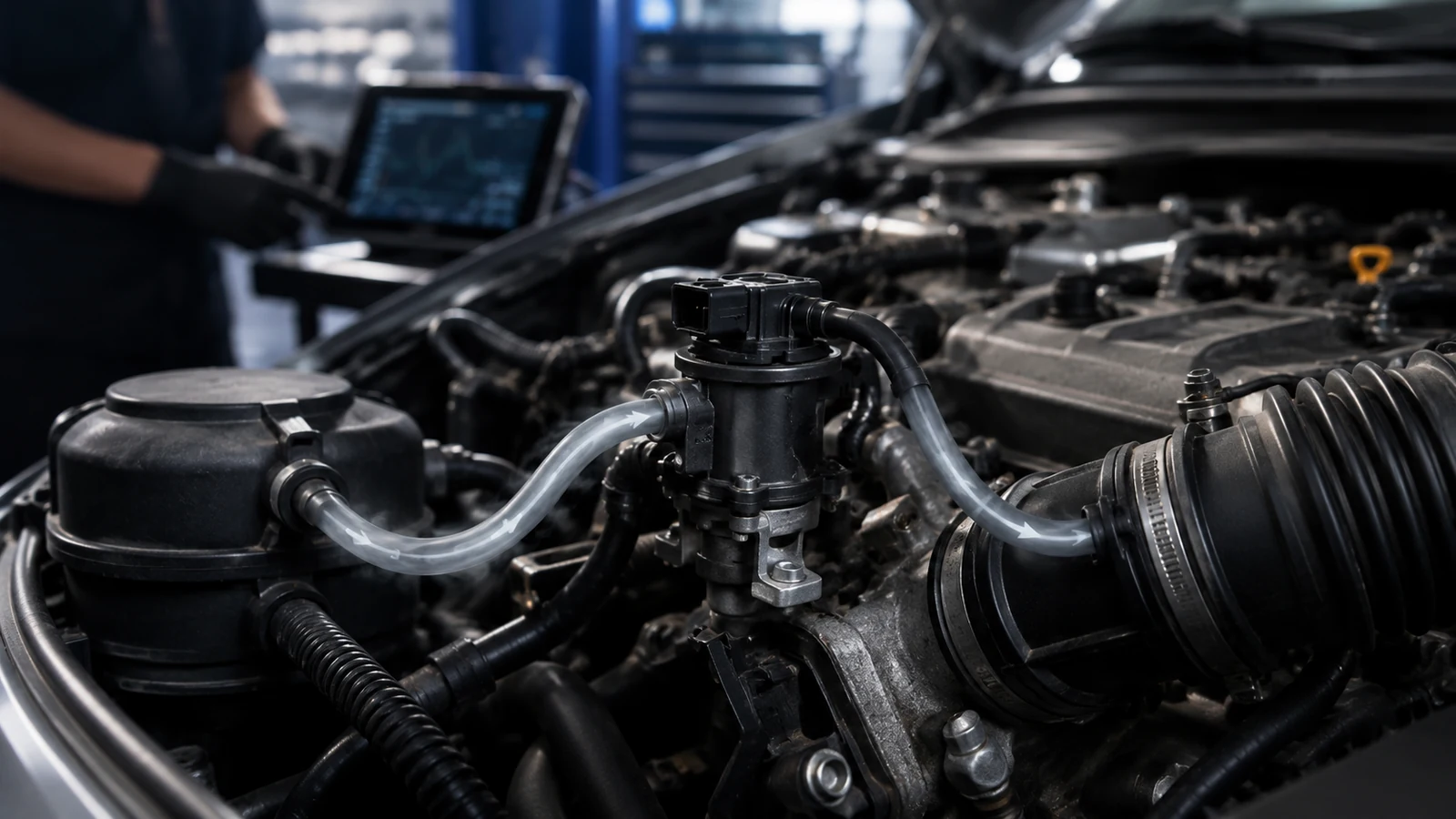
The purge valve, also called a canister purge valve or purge solenoid, controls fuel vapor flow between the EVAP charcoal canister and the engine intake. The engine computer opens it under appropriate operating conditions so captured gasoline vapor can enter the running engine and burn instead of escaping into the atmosphere.
| Purge valve condition | What happens | What you may notice |
|---|---|---|
| Operating normally | Vapor enters the engine only when commanded | Normal starting, idle, and EVAP operation |
| Stuck open | Vapor or unwanted airflow can enter at the wrong time | Hard starting, unstable idle, mixture problems |
| Stuck closed | Stored vapor cannot purge normally | EVAP faults or incomplete vapor management |
| Electrically faulty | PCM cannot control the valve correctly | Check engine light or EVAP-related diagnostic codes |
| Restricted or intermittent | Purge flow becomes inconsistent | Sporadic symptoms that are harder to reproduce |
How the purge valve controls fuel vapor
Gasoline naturally produces vapor inside the fuel system. Instead of allowing that vapor to escape freely, the EVAP system stores much of it in an activated-charcoal canister.
When operating conditions are appropriate, the powertrain control module commands the purge valve to open. Engine vacuum or intake airflow then helps draw the stored vapor through the purge circuit and into the engine.
This flow must be controlled carefully. Purge vapor becomes part of what enters the cylinders, so the engine-management system has to account for it while controlling the air-fuel mixture. EPA technical documentation specifically notes that introducing purge gases affects air-fuel control.
The valve therefore has two important jobs. It helps the vehicle control evaporative emissions and regenerate the charcoal canister so it can continue storing future fuel vapor.
The exact strategy varies by vehicle. Valve location, commanded duty cycle, pressure testing strategy, hoses, sensors, and acceptable test values should always come from the correct service information for that model.

7 signs that justify a purge valve test
A symptom does not prove that the purge valve has failed. These seven clues simply make the EVAP purge system worth testing.
1. Hard starting after refueling
This is one of the more useful clues. Ford has documented certain vehicles with hard-start-after-refueling complaints associated with evaporative-emission purge-valve faults.
If a valve stays open when it shouldn’t, excessive vapor can reach the intake during or immediately after refueling. That can interfere with the mixture needed for a clean start.
2. Rough or unstable idle
Incorrect purge flow can disturb engine airflow and mixture control. A stuck-open valve may have a greater effect at idle because the engine operates with relatively low airflow.
Do not condemn the valve from idle quality alone. Vacuum leaks, ignition faults, injector problems, throttle-body issues, and several sensors can create similar symptoms.
3. Stalling shortly after starting
An engine that starts and then struggles may be receiving an abnormal mixture. If the symptom appears consistently after fueling, purge operation deserves more attention.
Use scan data before replacing anything. Fuel trims, commanded purge, engine speed, and relevant EVAP data can help separate a purge fault from another engine-control problem.
4. A check engine light
The engine computer monitors EVAP operation on modern vehicles. A purge-system problem can contribute to diagnostic trouble codes, but the code identifies the system or detected condition rather than automatically identifying the failed part.
Before buying a valve, follow a disciplined trouble-code diagnostic process. Record the code, freeze-frame information, related symptoms, and test results.

5. A noticeable fuel-vapor odor
A gasoline-vapor smell deserves attention, but it can have many causes. Damaged EVAP hoses, a fuel-system leak, canister trouble, sealing problems, or other vapor-control faults may be responsible.
Because gasoline and fuel vapor are flammable, investigate a strong or persistent fuel smell promptly rather than assuming the purge valve is the only cause.
6. Inconsistent fuel economy
A purge fault can affect fuel-mixture control, but many variables influence fuel economy. Driving conditions, tire pressure, engine temperature, oxygen-sensor feedback, ignition problems, and fueling faults can all play a role.
Treat an economy change as supporting evidence only when it appears alongside stronger EVAP or drivability clues.
7. EVAP-monitor or inspection trouble
A vehicle that repeatedly sets EVAP-related faults or cannot complete the expected diagnostic process needs systematic testing. The purge valve may be involved, but you must also consider hoses, wiring, the vent side of the system, pressure sensing, and leaks.
What stuck open changes
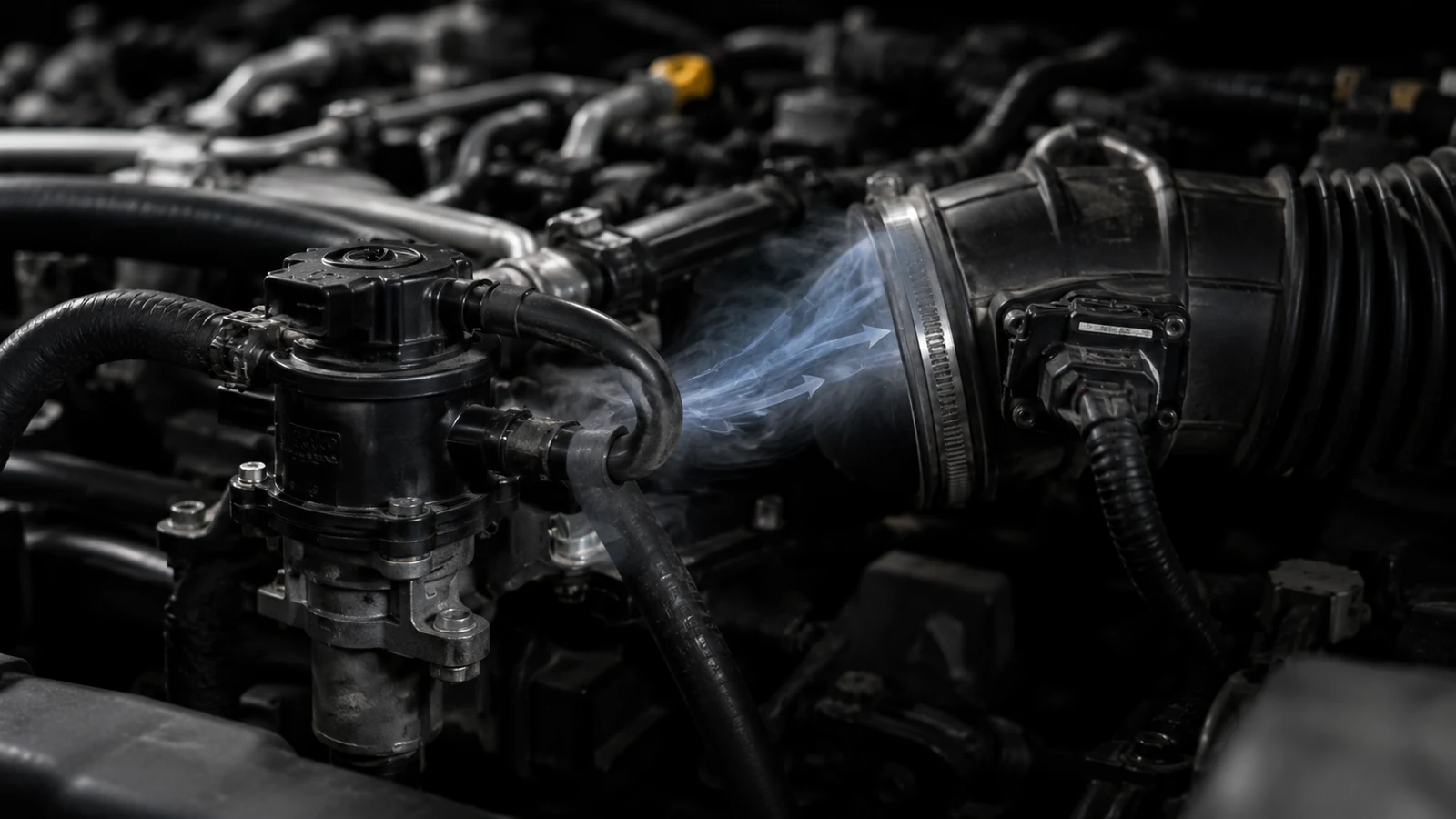
A purge valve should allow vapor flow according to the vehicle’s control strategy. If it mechanically sticks open, the engine may receive vapor or airflow when the PCM is not requesting normal purge.
That explains why a stuck-open valve can be especially noticeable during start or idle. Ford service information has linked purge-valve faults with hard starting after refueling on specific models, reinforcing why refueling-related symptoms are diagnostically useful.
A technician may compare commanded purge with actual engine response. Depending on the vehicle, changes in idle quality, fuel trim, manifold behavior, or fuel-tank pressure data can provide additional evidence.
Vehicle-specific specifications matter. A test that works on one EVAP design should not automatically be applied to another.
What stuck closed changes
A valve that never opens creates a different problem. Fuel vapor stored in the charcoal canister cannot move into the engine through the normal purge path.
The immediate drivability effect may be less dramatic than a valve stuck open, but the EVAP system can no longer manage stored vapor as designed. EPA documentation explains that purging restores the charcoal canister’s capacity for later vapor-storage events.
A no-flow problem can come from more than the valve itself. A blocked hose, restricted canister, electrical problem, failed control circuit, connector issue, or incorrect command can produce similar test results.
That is why component replacement should follow verification.
Diagnose before replacing the valve
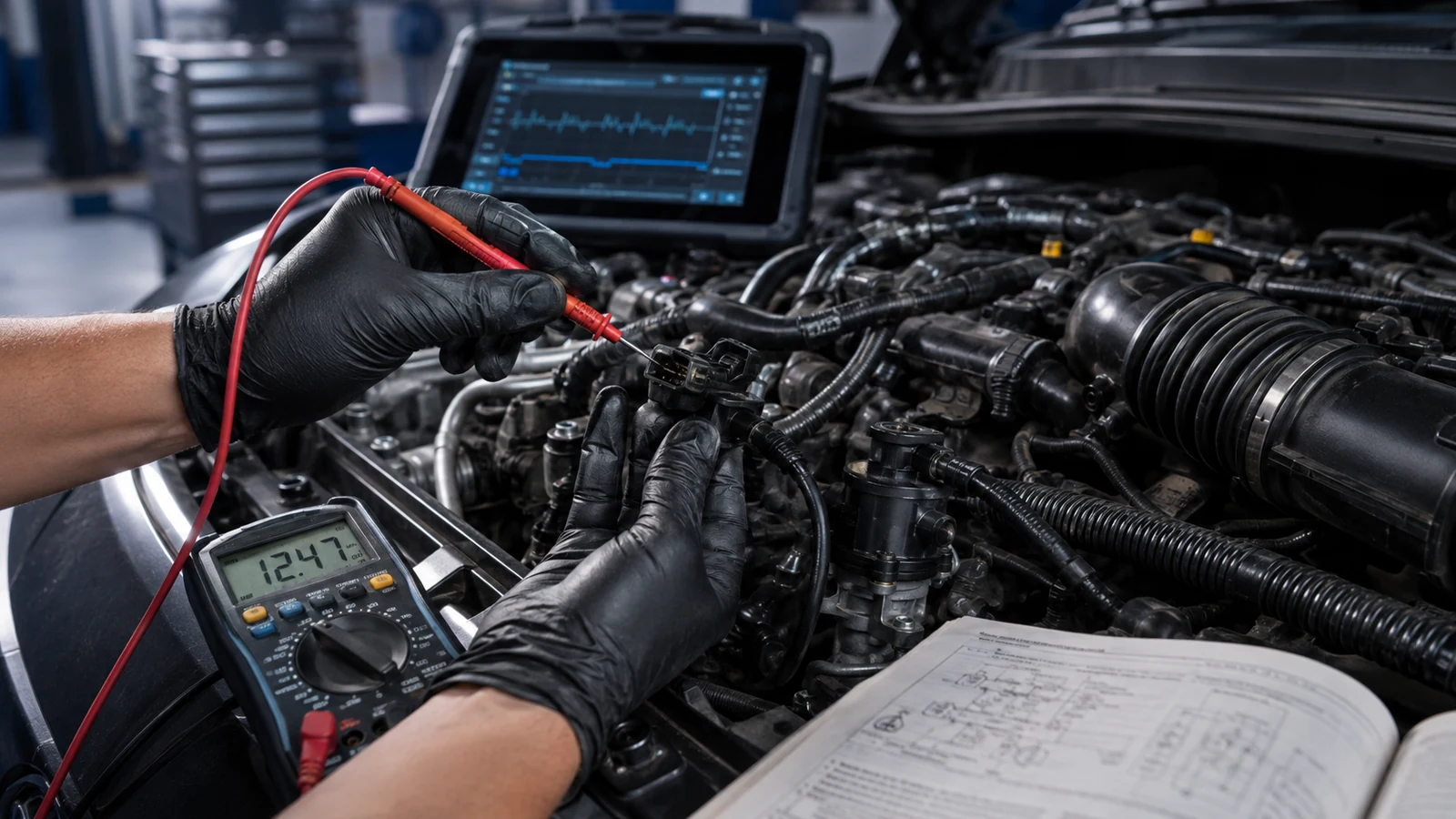
Start with the stored diagnostic trouble codes, but do not stop there.
Record every relevant code and freeze-frame value. If several faults appear together, determine which one occurred first and which systems share wiring, vacuum routing, or operating conditions.
Next, inspect the purge valve, hoses, electrical connector, and nearby EVAP plumbing. Look for cracked hoses, damaged terminals, loose connections, contamination, disconnected lines, and obvious routing problems.
A visual inspection often prevents unnecessary parts replacement. AutoServicePlus also explains why technicians should avoid replacing a part based on a symptom or code without testing.
Then compare the vehicle’s actual behavior with its diagnostic procedure. Factory troubleshooting information may specify when to command a purge, which scan-tool PIDs to monitor, what electrical readings are acceptable, and which tests must happen before component replacement.
Following diagnostic flowcharts in the correct order is especially valuable when multiple EVAP components could produce the same complaint.
Test the valve the right way
The safest first step is identifying the exact valve and diagnostic procedure for the vehicle. Some purge valves are easy to reach under the hood, while other designs place components differently.
On many applications, technicians can use a capable scan tool to command purge operation. They then compare the command with the engine response or EVAP system data.
Electrical testing may also be required. This can include checking supply voltage, control wiring, connector condition, continuity, shorts, or coil resistance per manufacturer specifications.
Do not assume a universal resistance value. Different purge solenoids and control strategies use different specifications.
A vacuum test can sometimes identify a valve that leaks when it should seal. Again, use the factory procedure because valve state and acceptable leakage depend on the system design.
If scan data points toward an electrical control problem, follow proper sensor and circuit testing practices instead of using a new valve as a diagnostic tool.
Smoke testing may also be useful when the complaint involves an EVAP leak. A smoke test identifies leakage paths, while purge-valve functional testing determines whether the valve opens, closes, and responds correctly.
Those are related tests, but they answer different questions.
When replacement makes sense
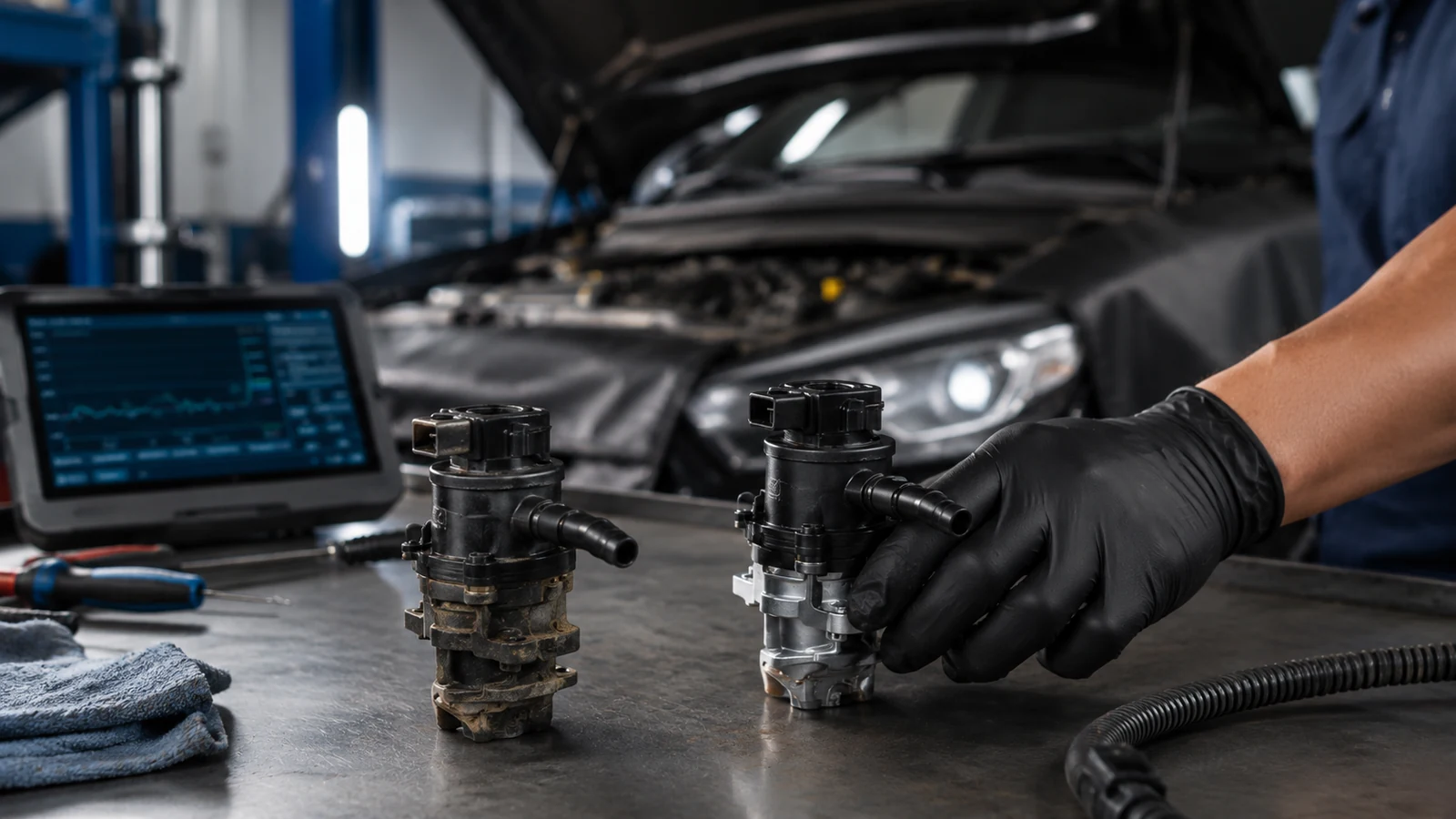
Replace the purge valve when testing shows that it cannot seal, cannot flow correctly, fails its electrical specification, or does not respond properly to a valid control command.
Before installing the new part, inspect the hoses and connector again. A damaged line or electrical terminal can make a good replacement valve appear faulty.
After replacement, clear codes only after saving any diagnostic information you still need. Then operate the vehicle under the manufacturer’s required conditions and confirm the original complaint is gone.
Do not consider the repair verified simply because the check engine light stays off for a few minutes. EVAP monitors often require specific operating conditions before the system evaluates itself.
If the original complaint was hard starting after refueling, reproduce that operating condition safely when practical. If it was an EVAP code, confirm scan data and monitor status rather than relying on the warning light alone.
Avoid the most common misdiagnosis
The biggest mistake is treating “purge valve symptoms” as proof of a bad purge valve.
A rough idle can come from an intake leak. A fuel smell can come from a damaged vapor hose or actual fuel leak. An EVAP code can originate elsewhere in the system. Hard starting can have ignition, fueling, sensor, or mechanical causes.
Use the symptom to choose the next test, not the next replacement part.
The purge valve has a simple purpose: control when stored fuel vapor enters the running engine. Diagnosing it correctly requires proving that the valve’s mechanical flow, electrical control, and surrounding EVAP system match the vehicle manufacturer’s specifications.
Commonly Asked Questions About the Purge Valve
Can you drive with a bad purge valve?
A vehicle may still run with a faulty purge valve, but driving without diagnosing it isn’t a good long-term strategy. A valve stuck open can affect starting and idle quality, while a valve that does not purge correctly can interfere with normal EVAP operation.
The check engine light may also remain on, which can hide a new fault that appears later. If the vehicle smells strongly of gasoline, stalls, becomes difficult to start, or has an actual fuel leak, address the problem promptly.
For mild symptoms, scan the vehicle and inspect the EVAP system before replacing the valve. The important step is determining what failed instead of driving indefinitely with an unresolved warning.
Can a bad purge valve cause a gas smell?
It can contribute to a fuel-vapor smell, but you shouldn’t blame the purge valve for a gasoline odor without inspection. The EVAP system includes vapor hoses, a charcoal canister, sealing points, valves, and other components that can leak or malfunction.
A liquid fuel leak is also possible and presents a more immediate safety concern. Start by checking where the odor is strongest and looking for obvious fuel leakage or damaged vapor lines.
If you don’t see a liquid leak, an EVAP smoke test and purge-system diagnosis may be appropriate. Don’t replace the purge valve just because you smell gasoline. The odor tells you that the fuel or vapor-control system requires attention, not which component has failed.
Can a purge valve cause a no-start after filling up?
A purge-valve fault can contribute to very difficult starting after refueling, especially if the valve lets excessive vapor into the intake when it shouldn’t. Ford has documented hard-start-after-refueling conditions involving evaporative-emission purge valves on certain vehicles.
However, that does not mean every post-refueling no-start is caused by the purge valve. Check stored trouble codes, observe scan data, inspect EVAP hoses, and verify valve operation using the correct service procedure.
The timing of the symptom is valuable diagnostic information. If the engine starts normally most of the time but consistently struggles immediately after adding fuel, the purge system moves higher on the list of systems worth testing.
Is a purge valve the same as a vent valve?
No. They perform different jobs within the EVAP system. The purge valve controls the path that lets stored fuel vapor move from the charcoal canister to the engine for combustion. The vent valve controls another part of the system and is commonly involved in allowing or sealing atmospheric airflow through the EVAP system during specific operating or diagnostic conditions. Exact layouts vary considerably between manufacturers.
That distinction matters because an EVAP trouble code can involve flow or pressure issues on either side of the system. Replacing a purge valve when the actual fault is a vent valve, hose, canister, wiring problem, or leak wastes time. Identify the component in the vehicle-specific EVAP diagram before testing it.
Can you clean a purge valve instead of replacing it?
Cleaning is generally not the first repair to assume for an electronically controlled purge valve. The failure may involve an internal seal, solenoid winding, mechanical sticking, electrical connection, or contamination that cleaning cannot reliably correct.
Spraying chemicals into a valve can also damage materials if the manufacturer does not approve that procedure. Test the valve first. Confirm its electrical specification, commanded operation, ability to seal or flow as required, and the condition of its hoses and connector. If manufacturer service information specifies a cleaning procedure, follow it exactly.
Otherwise, handle a valve that fails the prescribed functional test according to the manufacturer’s replacement procedure rather than cleaning it experimentally and returning it to service.