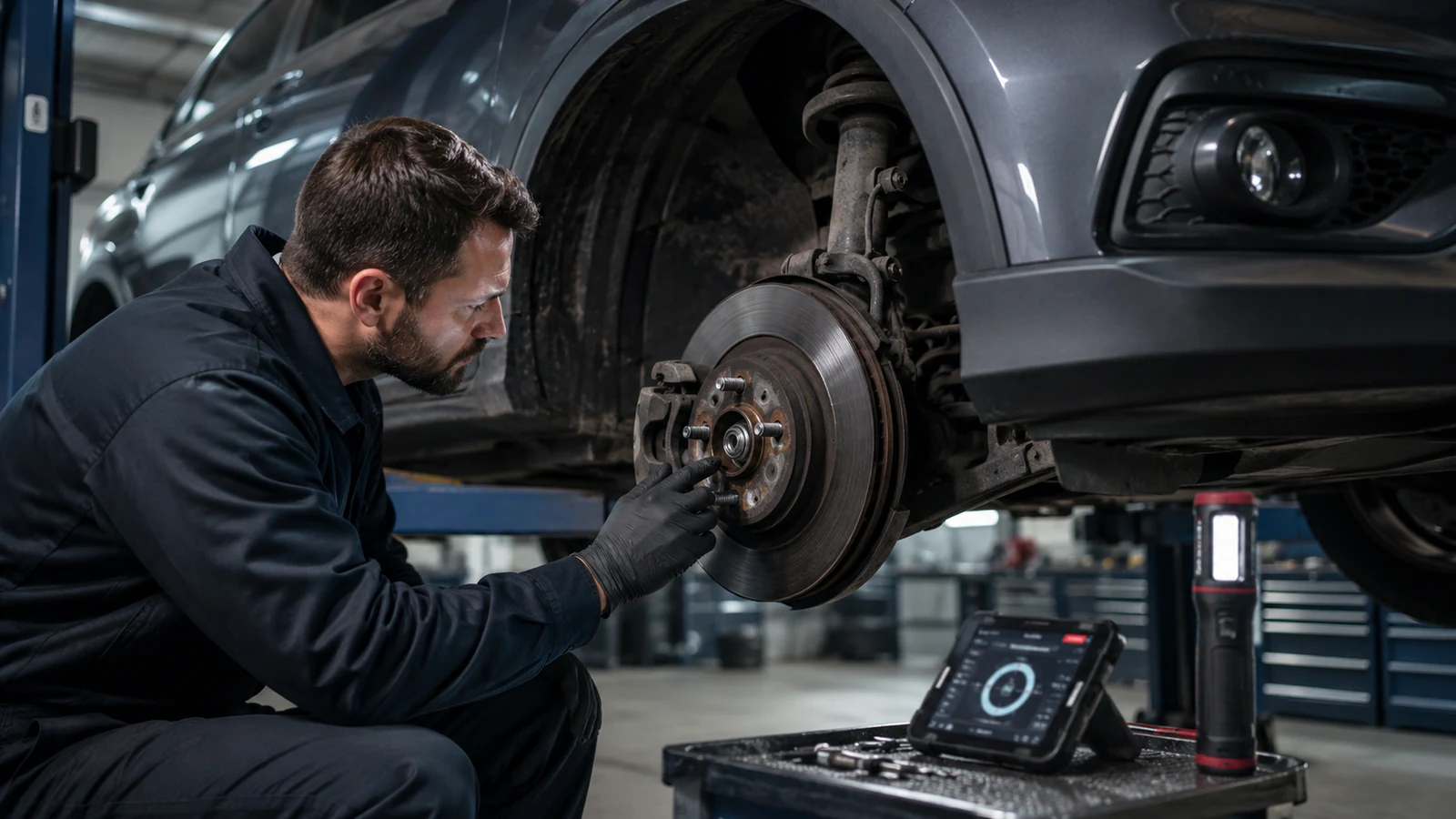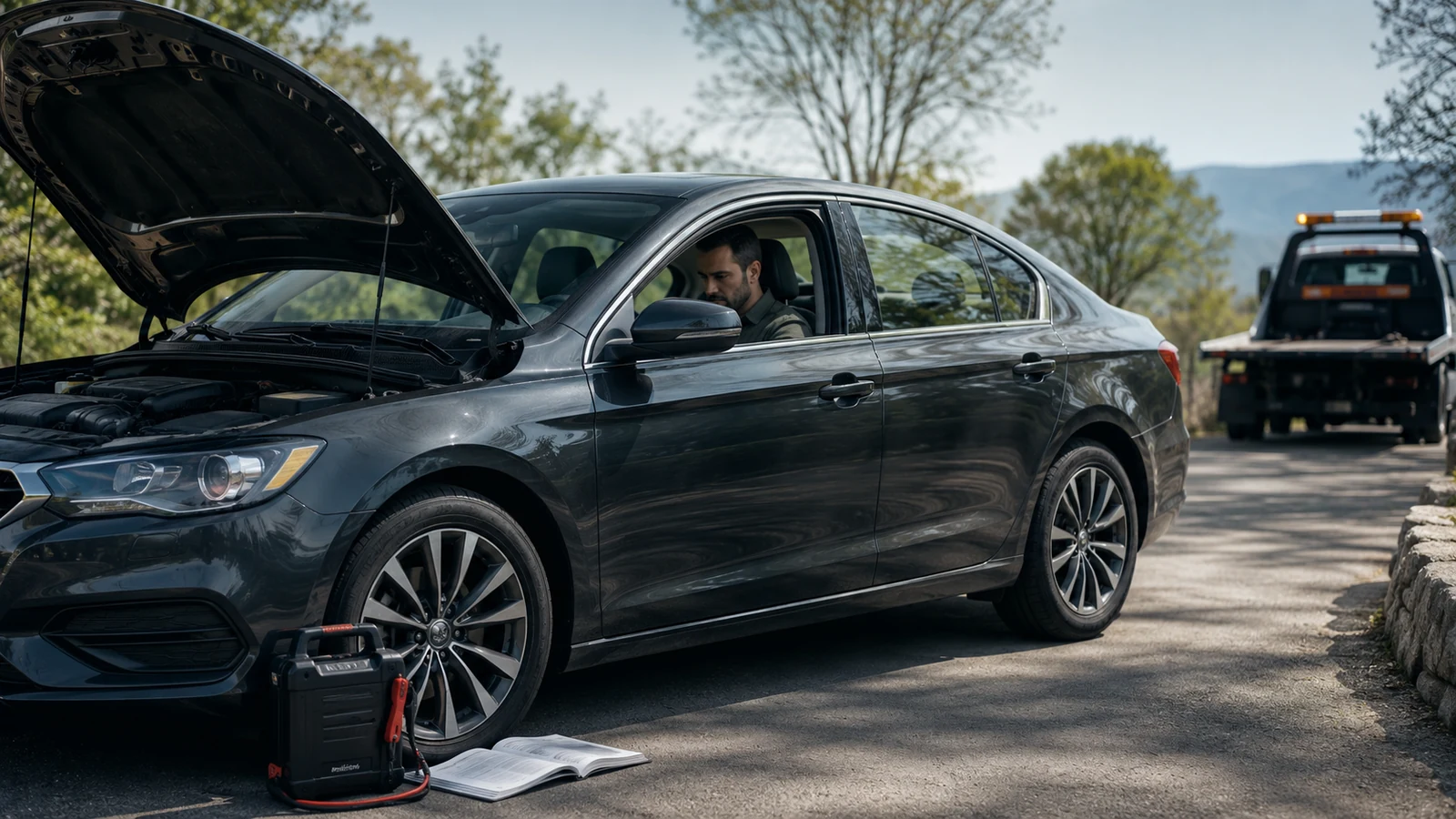
A car that will not crank can feel like a starter failure, but several electrical and safety-interlock problems create the same symptom. Repeatedly turning the key can also drain the battery and make diagnosis harder.
The safest first move is not to bypass the starter. Check what the car does, rule out a weak battery, and try the manufacturer-approved starting positions.
This guide explains five safe checks, the clues that point toward the starter, and when to stop troubleshooting and arrange professional repair.
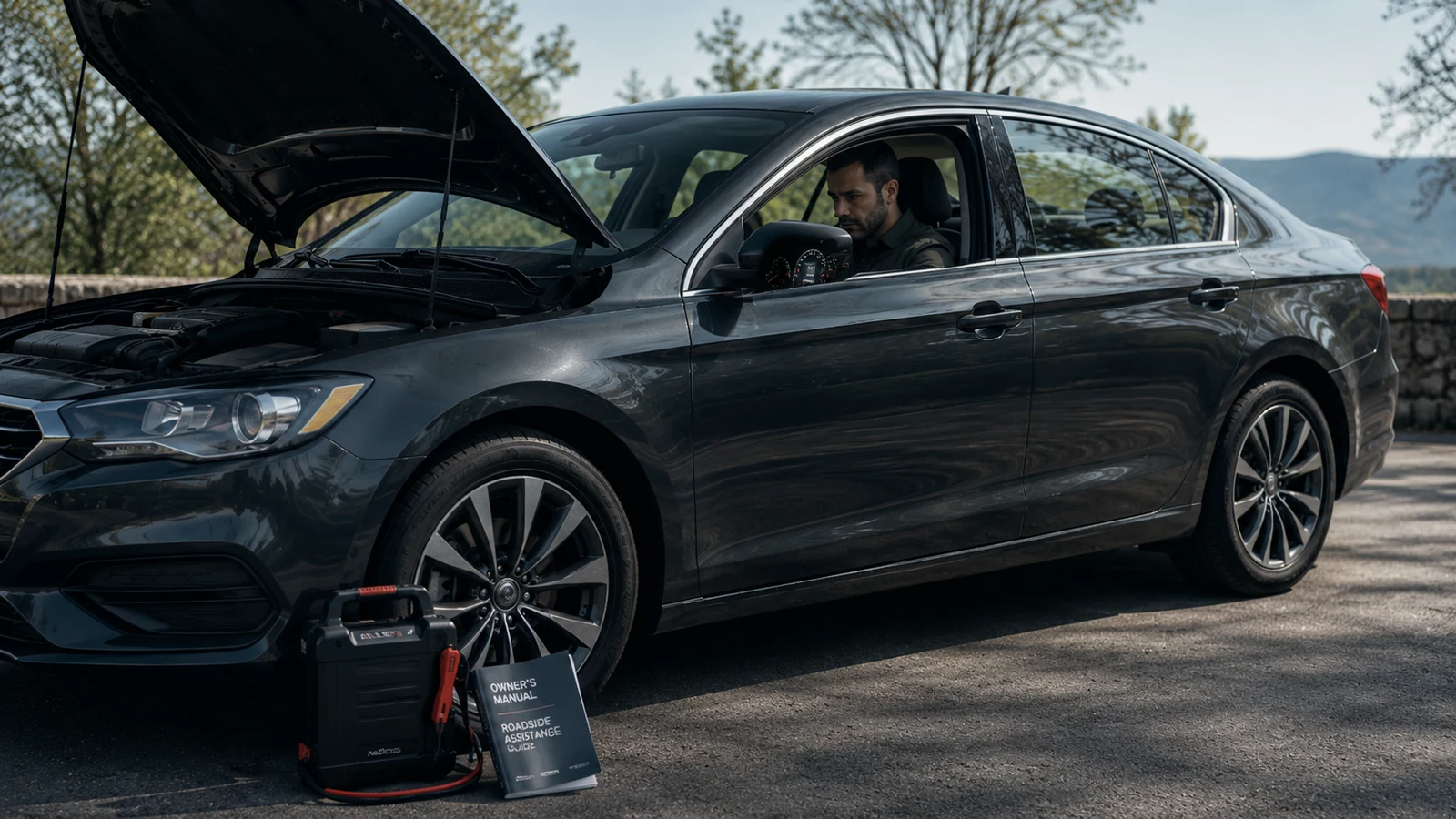
How to Start a Car With a Bad Starter: Try These Safe Checks First
A genuinely failed starter usually needs repair or replacement. No trick can safely make a dead starter work again. Before arranging a tow, however, you can perform several low-risk checks that may reveal a battery, connection, transmission-position, or intermittent starter problem instead. The key is to diagnose the no-crank condition without bypassing safety systems.
| What Happens | Possible Cause | Safe Next Step |
|---|---|---|
| Rapid clicking | Weak battery or poor connection | Check battery condition and seek jump assistance |
| One solid click | Starter, solenoid, cable, or battery issue | Stop repeated attempts and diagnose |
| Dash lights work, no crank | Starter circuit or interlock problem | Try Neutral and check warning lights |
| Slow cranking | Low battery voltage or high resistance | Check battery and charging system |
| Starts in Neutral, not Park | Range or neutral-safety switch issue | Range switch diagnosis |
| Starts after cooling down | Possible intermittent starter problem | Get the starter tested promptly |
| Grinding or smoke | Mechanical or electrical fault | Stop trying to start the vehicle |
Check What Happens When You Start It
Start by paying attention to how the vehicle responds. You do not need to hold the key in the start position repeatedly. One normal attempt can provide useful information.
A rapid clicking sound often suggests the starter isn’t getting enough electrical power. A weak battery, loose connection, or excessive cable resistance can cause this symptom.
A single solid click with no engine rotation points more strongly to the starter circuit. However, it does not prove the starter motor itself has failed.
If the dashboard lights come on normally but nothing happens when you try to crank the engine, the problem may involve the starter, relay, ignition circuit, transmission-range switch, clutch switch, or another starting-system control.
Grinding deserves more caution. Stop repeated attempts because continuing to crank can cause additional damage to the starter drive or flywheel components.
Smoke, a burning smell, or unusually hot electrical components also mean you should stop immediately and arrange professional help.
For a structured approach to these symptoms, AutoServicePlus explains how factory information can support no-start diagnosis without guessing at parts.
Rule Out a Weak Battery First
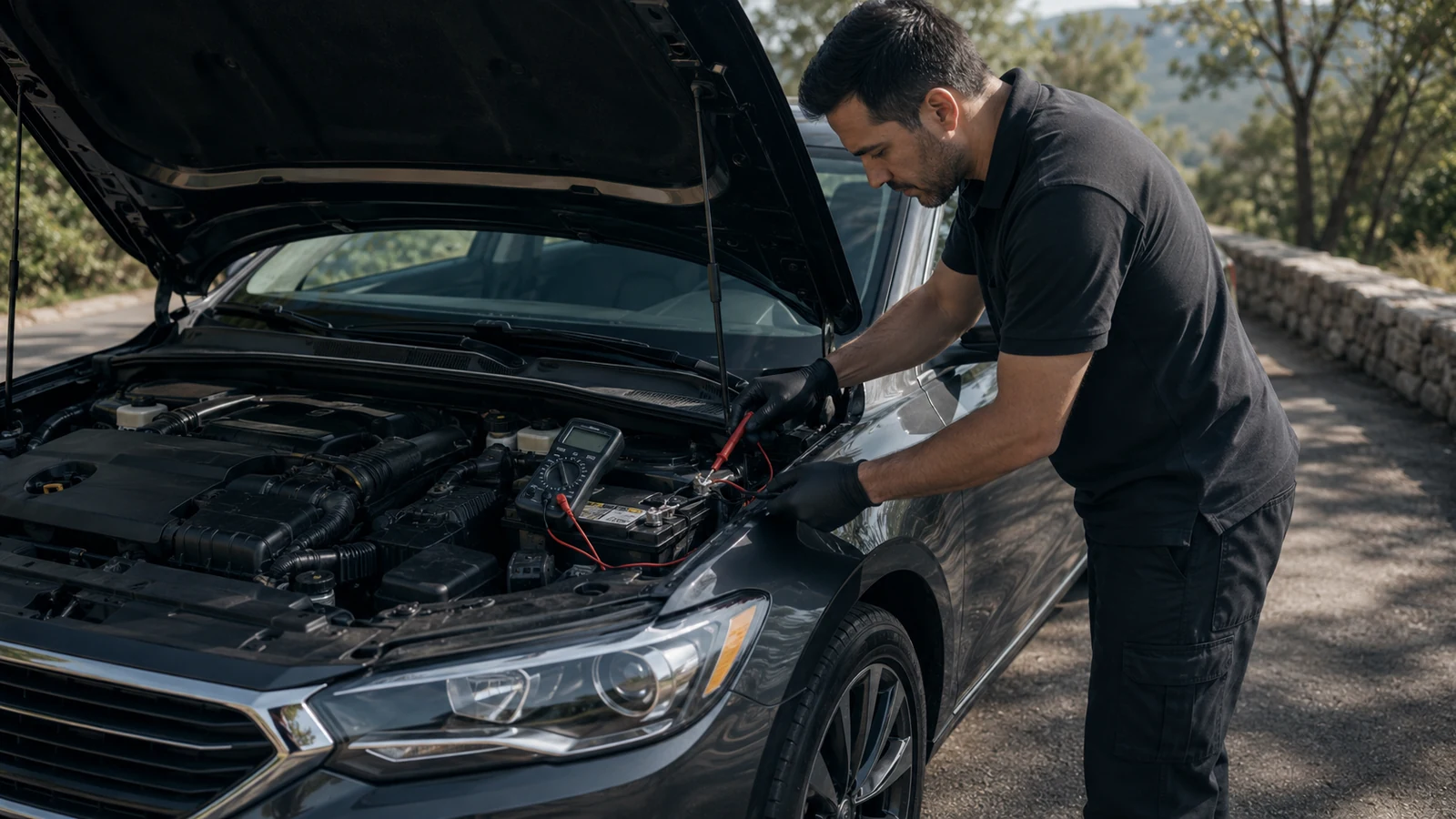
A weak battery can imitate starter failure very convincingly. It may have enough power to light the dashboard but not enough current to crank the engine normally.
Look for obvious clues. Headlights that dim during a start attempt, slow cranking, repeated rapid clicks, or electrical accessories resetting can point to low battery voltage.
Battery connections matter too. A loose or badly corroded connection can restrict current even when the battery itself still has useful charge.
Avoid disconnecting, cleaning, or working around battery terminals unless you follow proper procedures and have the right equipment and supervision. Vehicle batteries can produce high current, and incorrect handling can cause sparks or damage.
If a weak battery seems likely, use roadside assistance or a manufacturer-approved jump-start method rather than improvising electrical connections. A successful jump-start suggests the battery or charging system needs closer inspection.
The alternator can also contribute to repeated battery problems after the engine has been running. If the battery keeps losing charge, these checks for signs of a bad alternator can help separate a starting fault from a charging fault.
If proper battery assistance makes no difference and the engine still will not crank, suspicion shifts back toward the starter circuit.
Try Starting in Neutral
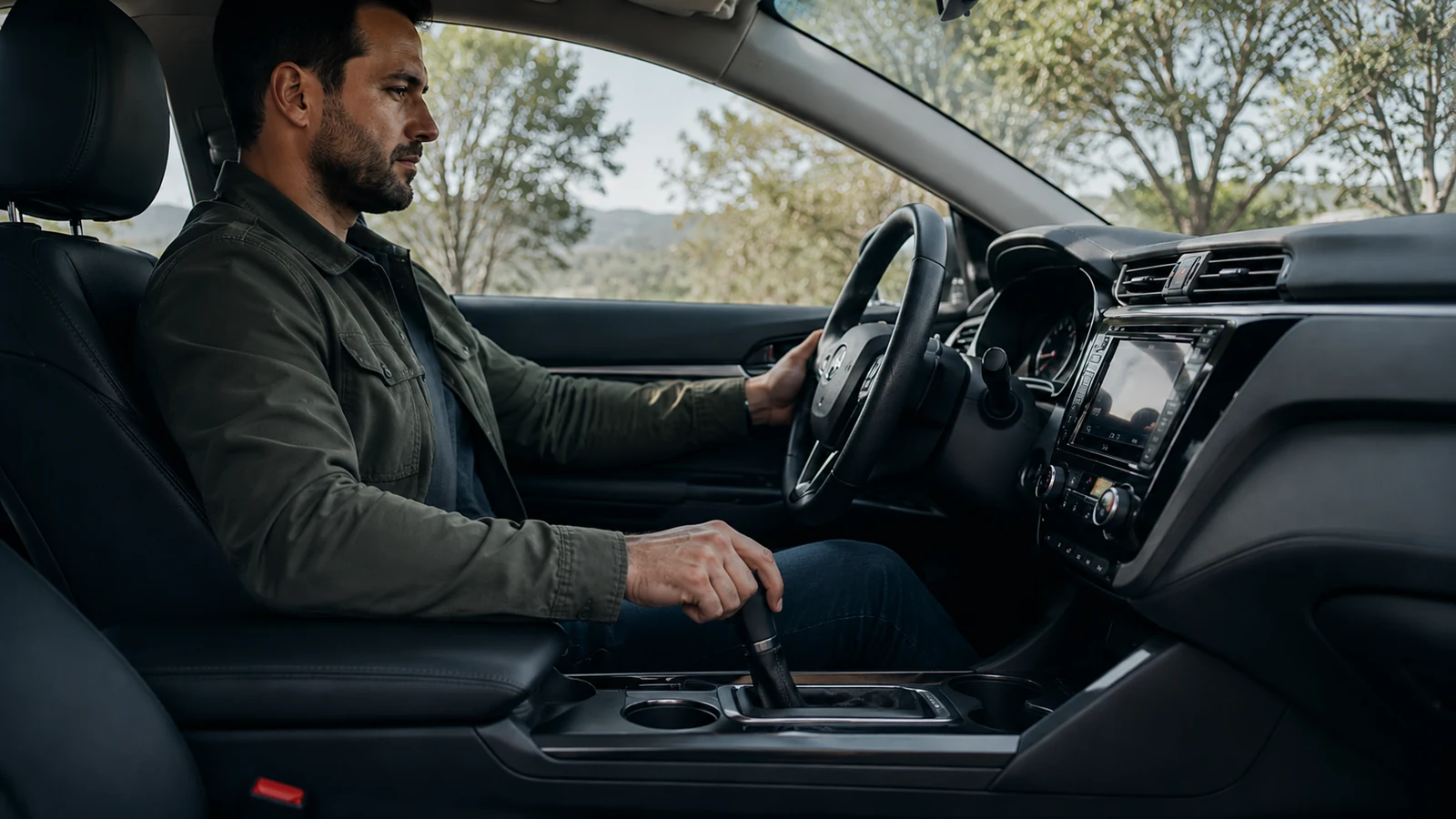
On an automatic-transmission vehicle, the starter circuit normally allows cranking only in Park or Neutral. A transmission-range or neutral-safety switch helps prevent the engine from starting while the vehicle is in a drive gear.
If the car will not crank in Park, keep your foot firmly on the brake, engage the parking brake, select Neutral normally, and make one normal start attempt.
If it starts in Neutral but consistently refuses to crank in Park, the starter motor may not be the primary problem. The range switch, selector adjustment, wiring, or related circuit may need inspection.
Do not repeatedly move the shifter back and forth while holding the key in the start position. Use the controls normally and keep the vehicle stationary.
Many manual-transmission models use a clutch-related safety switch. Pressing the clutch pedal fully before a normal start attempt is appropriate, but bypassing that switch is not.
These safety interlocks exist to prevent unexpected vehicle movement. A failed interlock should receive a proper diagnosis, not a temporary wiring bypass.
Let the Starter Cool Before One Retry
Electrical starter motors generate considerable heat while cranking. Repeated or extended attempts can quickly increase that heat, especially when the engine refuses to turn over.
If you have already made several attempts, stop. Allow the starting system to cool instead of continuing to hold the key or press the start button.
After the vehicle has cooled, one normal retry may reveal an intermittent starter problem. A starter that works when cool but fails again when hot can have an internal electrical or mechanical fault.
That pattern is useful diagnostic information, but it is not a repair. An intermittent starter can leave the vehicle unable to restart without warning.
If it does start, avoid assuming the problem has disappeared. Record what happened, including whether the engine was hot, the sound you heard, and how many attempts it required.
Those details help a technician distinguish starter failure from voltage problems or control-circuit faults. A logical factory diagnostic flowchart can also help prevent random testing.
Know What Not to Bypass
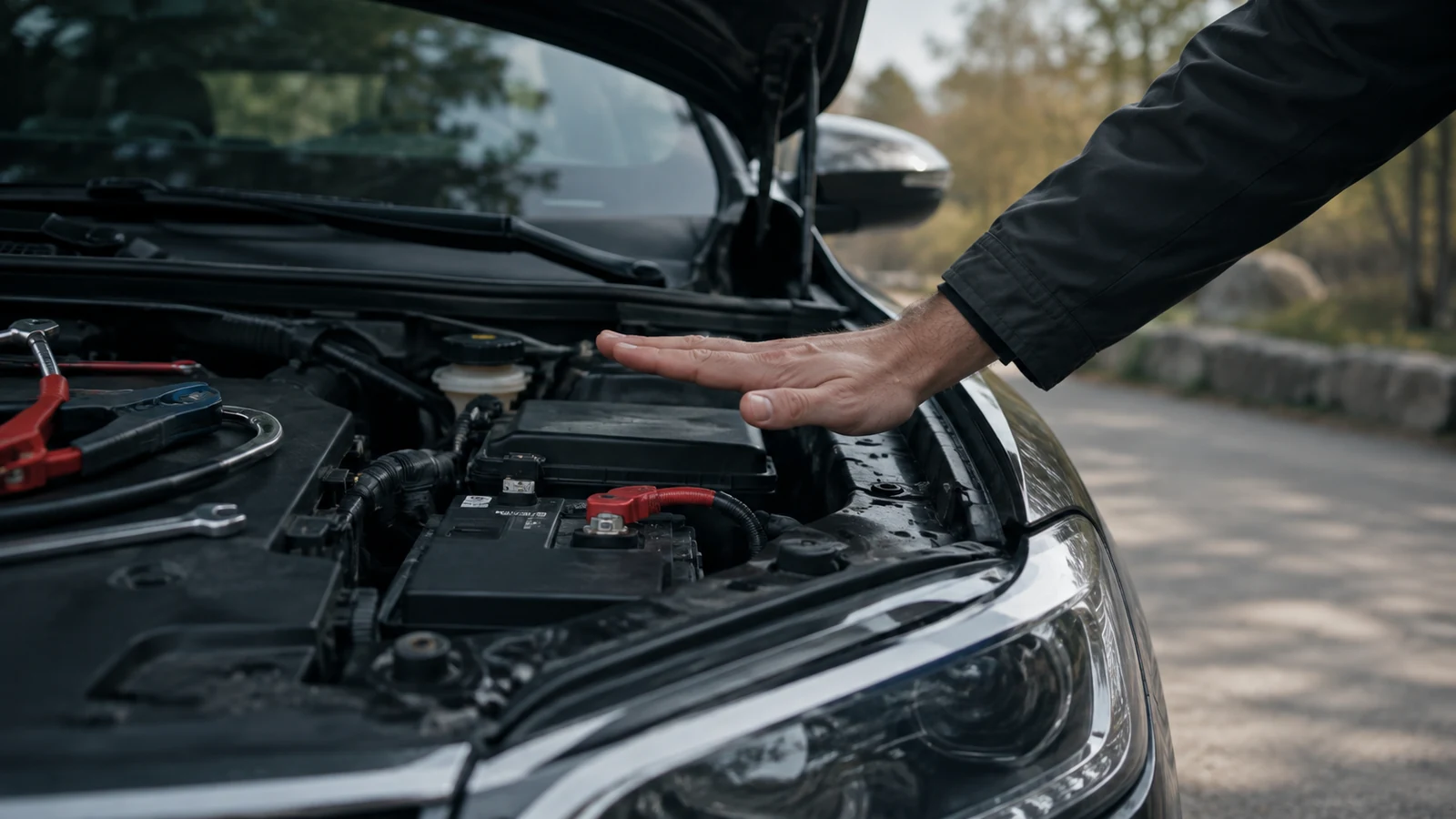
Many online starter guides recommend striking the starter motor, bridging starter terminals with a tool, bypassing the starter relay, or defeating a neutral-safety switch.
Those methods create unnecessary risk. Starter wiring can carry very high electrical current, and bypassing an interlock may allow unexpected vehicle movement.
Accessing the starter can also place someone near hot exhaust components, moving engine parts, or underneath a vehicle. That is not appropriate roadside troubleshooting.
Do not short electrical terminals together. Do not defeat the Park, Neutral, or clutch safety systems. Do not crawl underneath an unsupported vehicle to reach the starter.
The safer goal is diagnosis, not forcing the starter to operate.
Modern starting systems can involve control modules, immobilizers, relays, sensors, and model-specific logic. A shortcut that worked on an older vehicle may damage electronics or trigger a different fault on another model.
This is also why correct diagnosis matters before ordering parts. AutoServicePlus covers how factory procedures can reduce wrong-part replacement when several components can produce similar symptoms.
Check Security and Warning Indicators
Some no-crank situations have nothing to do with the starter motor. Modern vehicles may prevent starting if the immobilizer doesn’t recognize the key or if another required start condition is missing.
Look at the instrument panel before assuming a mechanical failure. A security or key warning indicator can provide an important clue.
If the vehicle uses a push-button start system, also confirm that the key fob is present and that you are following the normal brake or clutch procedure stated in the owner’s manual.
Do not try to bypass an immobilizer or security system. If the vehicle does not recognize an authorized key, follow the manufacturer-approved key procedure or contact roadside assistance.
Warning messages can also indicate conditions such as a missing key, incorrect gear position, or another start-authorization problem.
These clues matter because replacing a starter won’t fix an immobilizer, switch, wiring, or control-module fault.
What to Do If It Starts
If the engine starts after one of these checks, treat that result as diagnostic evidence, not proof that the starter repaired itself.
A vehicle that starts in Neutral but not Park may have a switch problem. A car that starts after battery assistance may need battery or charging-system testing.
A starter that works only after cooling may be failing intermittently. That condition can return the next time the engine is switched off.
If the vehicle starts normally and shows no signs of smoke, grinding, overheating, or unstable operation, arrange inspection as soon as practical. Avoid unnecessary stops that require repeated restarts until a technician diagnoses the underlying problem.
Do not continue driving if warning signs suggest another serious electrical or mechanical problem.
A technician can perform voltage-drop tests, starter-current tests, battery checks, circuit tests, and vehicle-specific inspections to identify the actual cause.
When a Tow Is the Right Answer
Sometimes the safest way to start a car with a bad starter is not to keep trying.
If a properly charged battery doesn’t help, the car still won’t crank, or every attempt produces the same solid click, the starter or its control circuit needs testing.
Stop immediately if you notice smoke, a burning electrical smell, grinding, visible damaged wiring, or unusual heat. Repeated attempts can worsen the fault.
A tow or mobile mechanic is also the right choice when accessing the starter would require working underneath the vehicle or near moving and hot components.
The same applies when the vehicle cannot remain securely parked during troubleshooting.
A failed starter normally needs repair or replacement. The five checks above help identify common problems that mimic starter failure and give the technician better information.
The practical rule is simple: verify the battery, observe the symptoms, try the approved gear position, avoid electrical bypasses, and stop when the vehicle gives you a clear warning that professional diagnosis is needed.
Commonly Asked Questions About the Bad Starter Car
Can a bad starter work sometimes?
Yes. A failing starter can work intermittently, which often makes the problem confusing. Internal electrical contacts, brushes, the solenoid, wiring connections, or heat-related resistance can cause the starter to work during one attempt and fail during the next.
A car that eventually starts after several earlier failures should still receive prompt diagnosis. Do not assume the successful start means the problem has disappeared. Record the symptoms, such as a single click, silence, slow cranking, or failure mainly when the engine is hot.
That information can help a technician test the correct circuit. Repeatedly operating an unreliable starter can also drain the battery and make the original fault harder to identify.
Will jump-starting help if the starter is bad?
A jump start may help when the real problem is a weak battery, but it cannot reliably repair a mechanically or electrically failed starter motor. This is why jump assistance can also serve as a diagnostic clue.
If proper battery assistance produces strong cranking, the battery or charging system may deserve more attention. If the dashboard has normal power but the engine still does not crank, the starter circuit becomes more suspicious.
Use only the vehicle manufacturer’s approved jump-start procedure or roadside assistance. Do not improvise connections around the starter itself. If a properly supported battery still produces a solid click, silence, or no crank, arrange professional testing instead of repeating the attempt.
Does one click mean the starter is definitely bad?
No. A single click can occur when the starter solenoid operates, but the starter motor fails to turn, yet several other problems can create a similar result. Low battery voltage, poor cable connections, excessive resistance, a damaged ground path, or internal starter wear can all be involved.
Begin with the battery and basic starting conditions rather than immediately replacing the starter. Rapid clicking more commonly suggests insufficient electrical power, while a consistent, solid click with a known-good battery increases suspicion of the starter or its heavy-current circuit.
The safest diagnosis uses voltage, current, and circuit testing. Replacing a starter based only on sound can result in an expensive wrong-part repair.
Can a bad starter drain the car battery?
A failing starter can contribute to battery discharge, especially if repeated start attempts draw high current without starting the engine. A starter with an electrical fault can also place abnormal demand on the battery.
However, a dead battery does not automatically mean the starter caused it. Lights left on, an aging battery, charging-system trouble, or another electrical drain may be responsible. Avoid repeatedly holding the key or start button when the engine will not crank normally. Each attempt uses more battery energy and can heat the starter.
If the battery repeatedly becomes discharged, have the battery, charging system, starter circuit, and key-off electrical draw checked rather than focusing on one component.
How do I know when the starter needs replacement?
Replacement becomes more likely after testing confirms that the starter receives the correct electrical supply and control signal but still fails to crank the engine properly. Recurring single clicks, intermittent no-crank conditions, slow starter operation with a healthy battery, or heat-related failures can support that diagnosis.
Grinding may indicate a problem with the starter drive or related gear teeth and deserves prompt inspection. The key step is confirming the issue before replacing parts.
Battery condition, cable voltage drop, grounds, relays, safety switches, and control circuits can imitate starter failure. A qualified technician can test these areas and determine whether the starter itself has failed or another component is preventing it from operating.