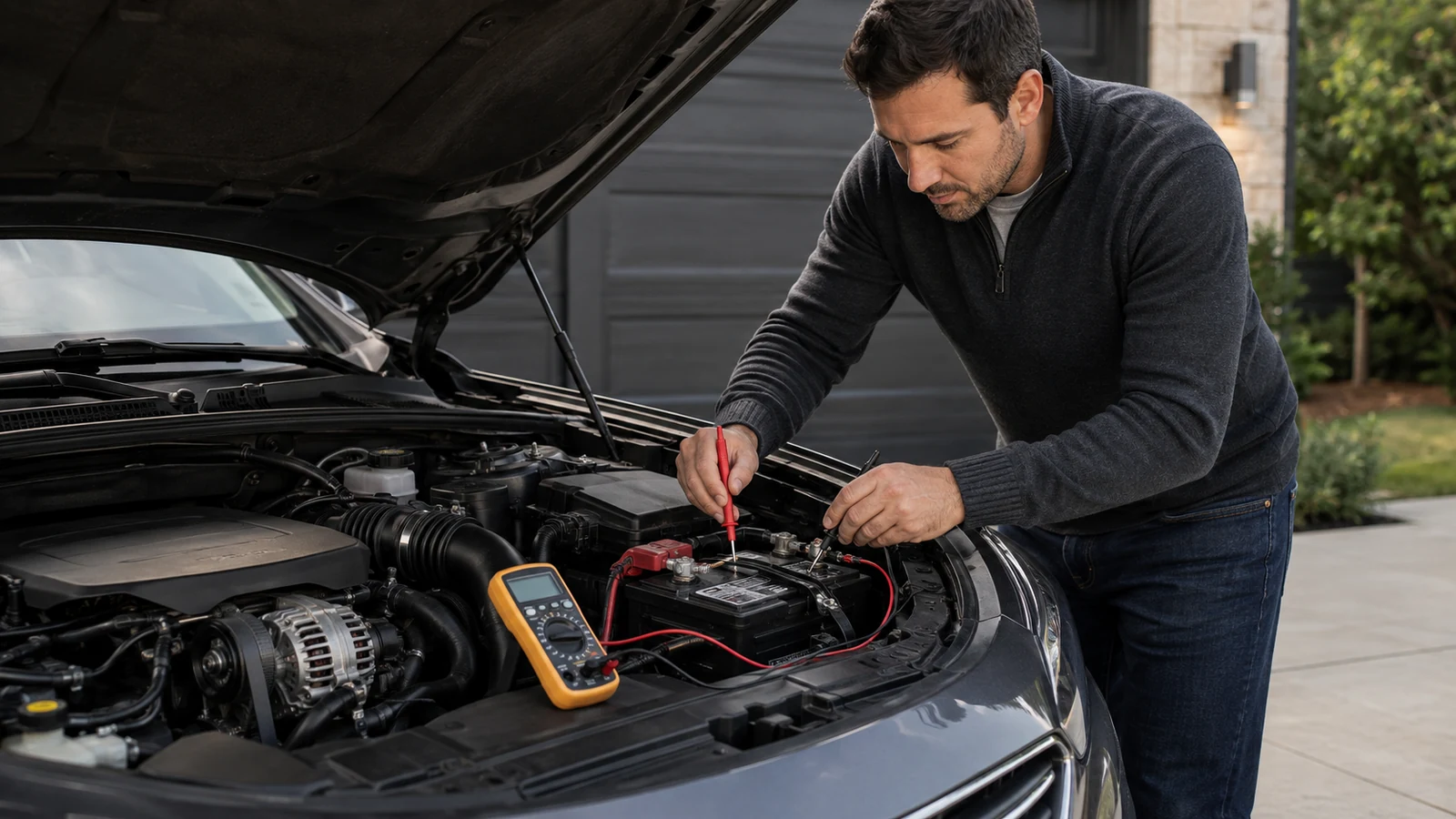
A weak alternator can look like a bad battery. Slow cranking, dim lights, a battery warning lamp, or repeated jump-starts can point to the charging system, but replacing the alternator based on symptoms alone can waste money.
The fastest first check is to use a digital multimeter at the battery. You compare engine-off voltage with engine-running voltage, then see how the system reacts to speed and electrical load.
A reliable diagnosis uses several readings, not one magic number. The steps below narrow the fault to the battery, alternator, wiring, or charging circuit.
How to Test an Alternator: 7 Checks That Narrow It Down
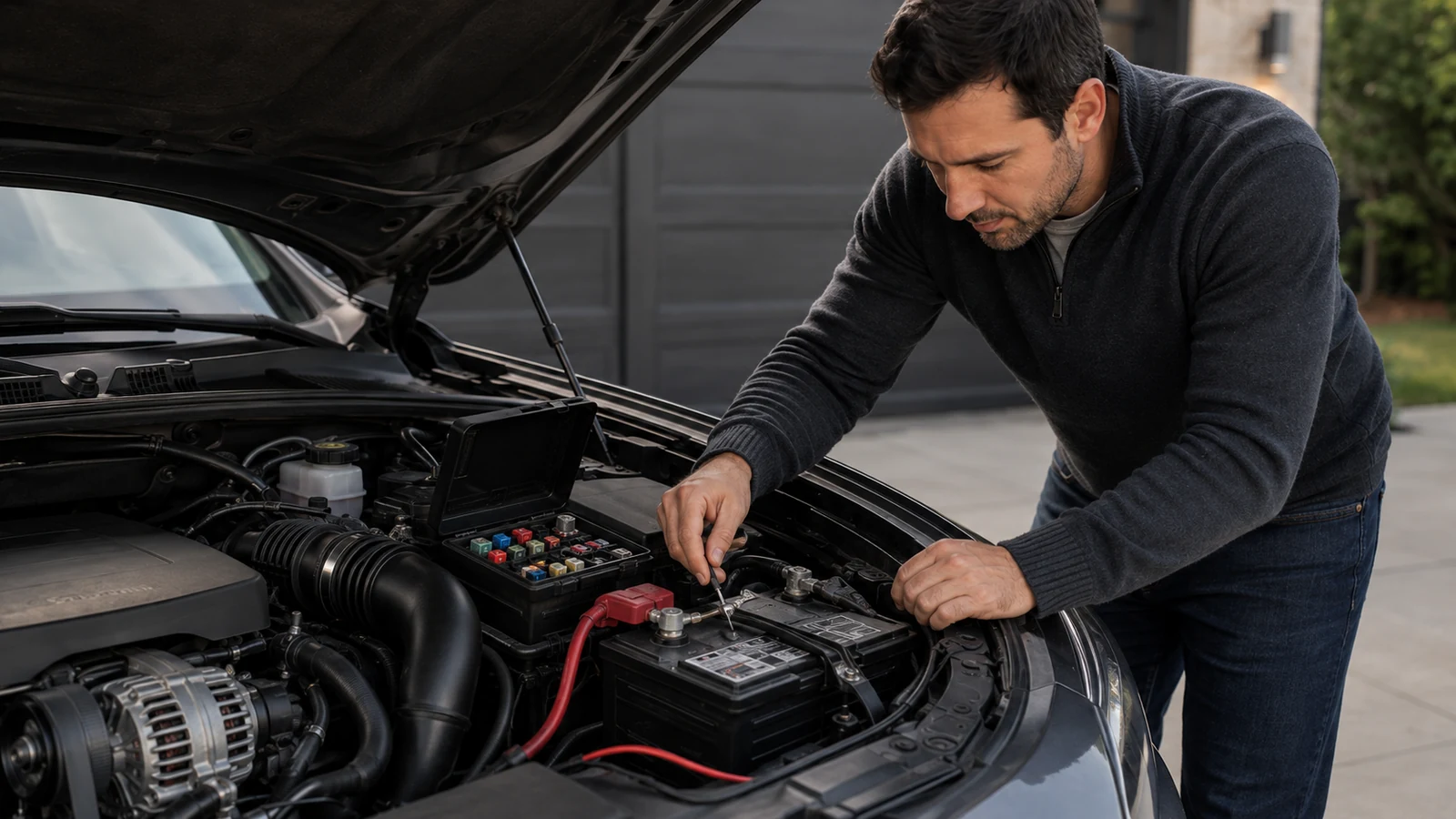
Testing an alternator is really a charging-system diagnosis. Start with a charged battery and sound connections, then measure at the battery posts. Keep hands, leads, clothing, and tools away from belts, pulleys, and fans. If you are not experienced around a running engine, have a qualified adult or technician perform the engine-running checks.
| Check | Meter setting | Useful clue | Next move |
|---|---|---|---|
| Battery at rest | DC volts | About 12.6 V when fully charged | Establish a clean baseline |
| Engine running | DC volts | Commonly about 13.0 to 14.5 V | Compare with vehicle spec |
| Near 2,000 rpm | DC volts | Voltage stays controlled | Check regulator response |
| Electrical load on | DC volts | Voltage does not collapse | Check output under demand |
| Ripple screen | AC volts | Very low AC voltage | Screen rectifier/stator health |
| Circuit path | Visual/spec test | Fuses and connections intact | Rule out wiring loss |

Check 1: Battery State and Connections
Test the battery before judging the alternator. A fully charged 12-volt lead-acid battery is typically around 12.6 volts at rest, and a low state of charge can distort later charging results.
With the engine off, check for loose or corroded battery terminals and obvious belt damage. DENSO also recommends checking the battery, belt, wiring, fuses, and connections before condemning the alternator.
If the car will not start, use a structured no-start diagnosis before assuming the alternator is the cause.
Check 2: Engine-Off Baseline Voltage
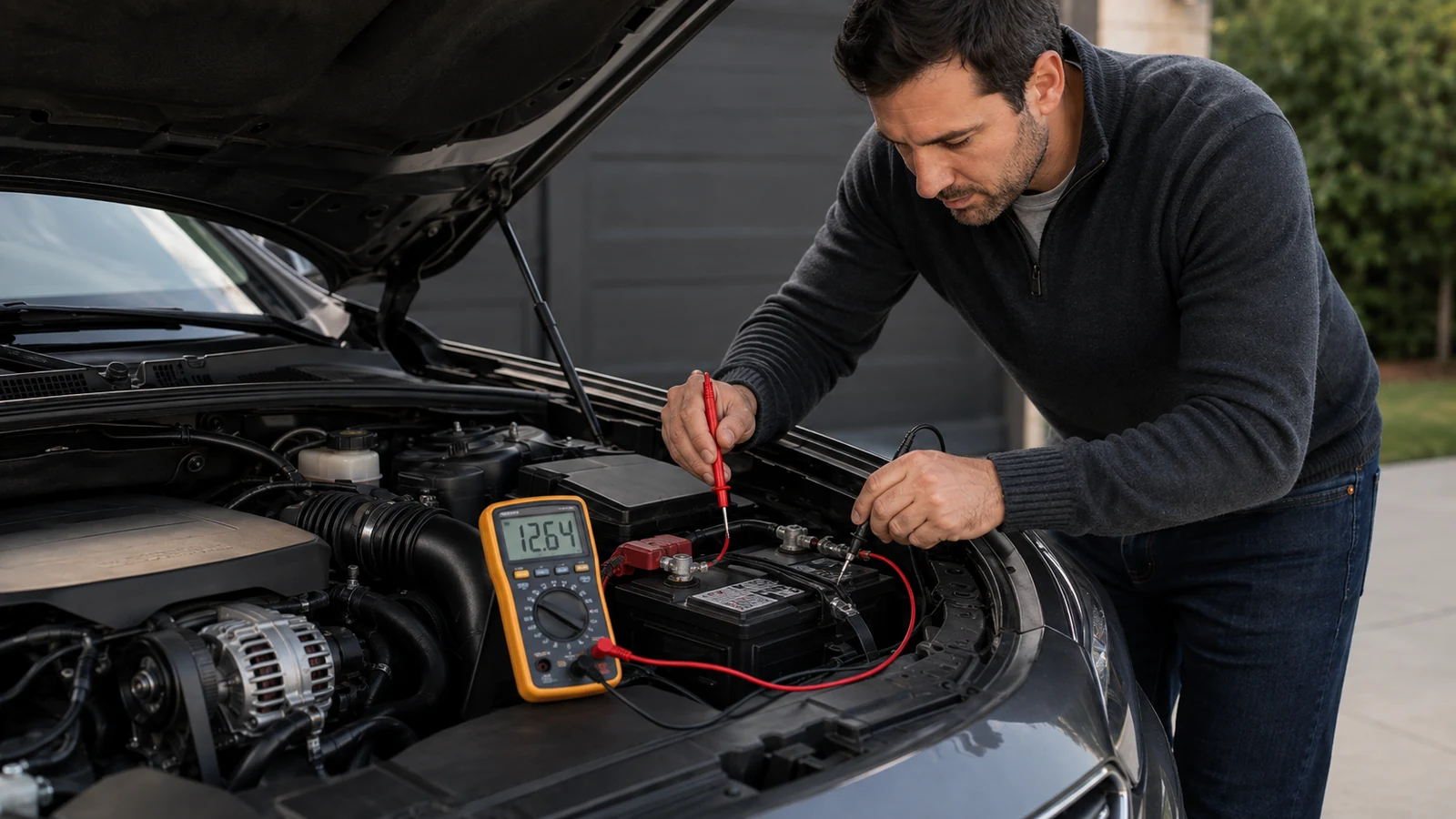
Set the digital multimeter to DC volts. Put the red probe on the positive battery post and the black probe on the negative post.
Record the reading before starting the engine. If the battery is badly discharged, charge and test the battery first. A weak battery can pull charging voltage down and make later alternator readings harder to interpret.
Do not disconnect a battery cable with the engine running. You can diagnose the charging system at the battery posts without using that shortcut.
Check 3: Charging Voltage at Idle
Start the engine and read voltage again at the same battery posts. DENSO gives a general engine-running range of 13.0 to 14.5 volts, while vehicle-specific service information remains the final reference.
If the reading stays close to the engine-off voltage, the battery may not be receiving charge. Do not replace the alternator yet. An open fuse, damaged fusible link, belt problem, poor connection, or wiring fault can cause the same result. DENSO lists those conditions among common charging-system causes.
When charging voltage is missing, the fuse-box problem guide can help you trace that part of the circuit logically.
Check 4: Voltage Near 2,000 RPM
Raise engine speed only as the vehicle manufacturer allows, then observe the meter. DENSO’s general alternator output test uses about 2,000 rpm and a 13 to 15 volt reference range, but it still directs technicians to the vehicle service manual for exact specifications.
You are looking for controlled behavior, not the highest possible number. A reading that stays too low, rises excessively, or changes erratically needs further diagnosis before replacing parts.
Check 5: Charging Under Electrical Load

With the engine running, turn on major loads such as the headlights and cabin blower. Recheck battery voltage without moving the probes.
DENSO recommends repeating the charging output check with loads such as headlights, blower motor, and defrosters switched on. A sustained drop outside the vehicle’s charging specification can point toward weak alternator output or excessive resistance in the charging path.
A diagnostic flowchart helps because the same low reading can have several causes.
Check 6: AC Ripple at the Battery
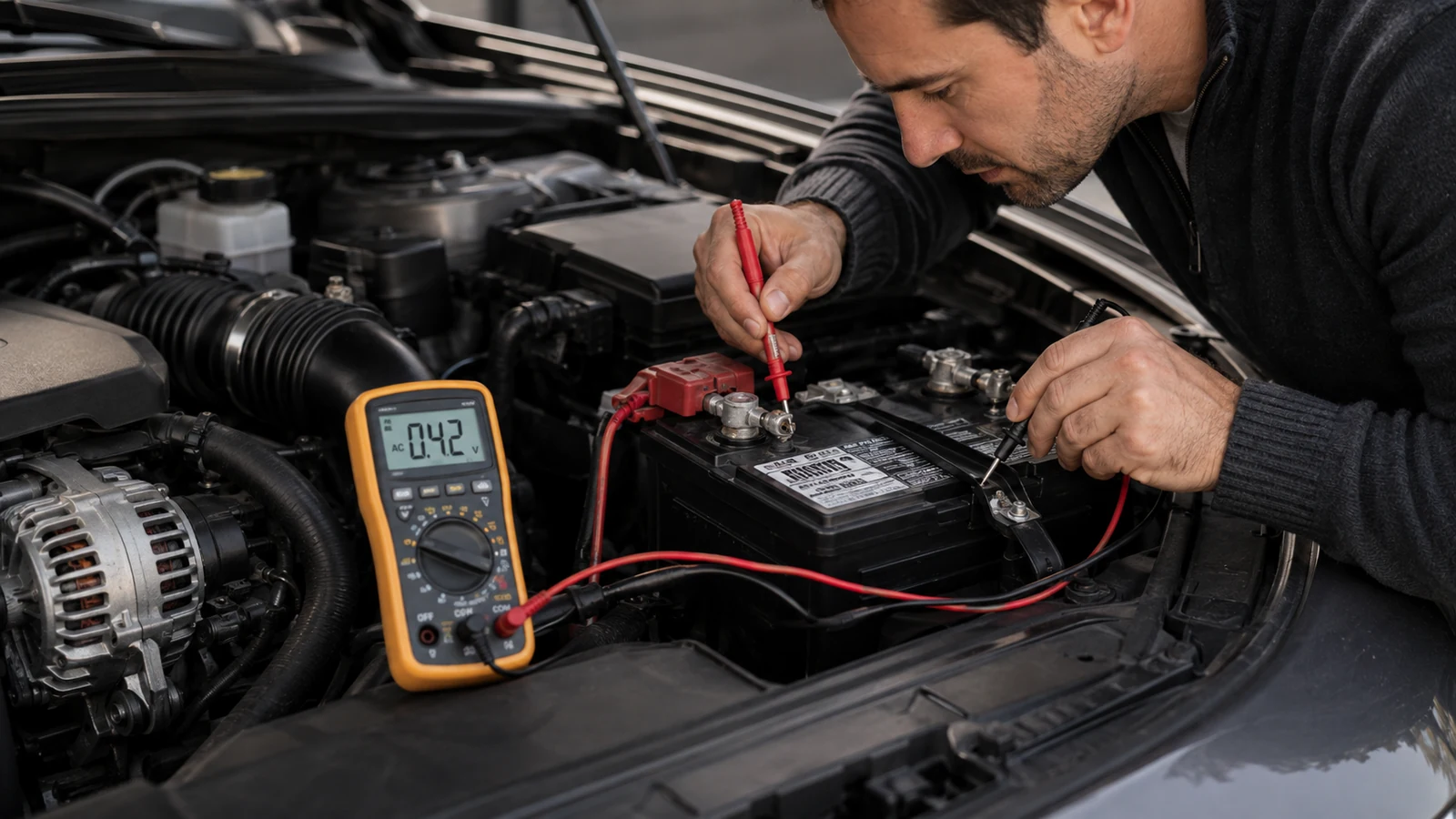
An alternator can produce acceptable DC voltage and still have a rectifier or stator fault. A ripple test screens for unwanted AC voltage riding on the DC charging output.
If your meter supports low-range AC measurement, keep the probes on the battery posts and switch to AC volts. Fluke describes 50 mV AC or less as desirable in its ripple procedure, while roughly 0.30 to 0.50 V AC or more can indicate an internal alternator fault. Meter design and vehicle specifications still matter.
Check 7: Fuses, Cables, and Grounds
If the alternator appears to charge but the battery still goes flat, the fault may be elsewhere. DENSO recommends voltage-drop testing when charging cables or connections are suspect and uses 0.2 volt or less as its guideline for each side of the circuit.
Because that deeper test can require probing near the alternator and high-current connections, use the vehicle’s service procedure or a technician rather than improvising. Before buying a replacement, follow the same principle as avoiding wrong part replacement: prove the failed component first.
Know When to Stop Testing
Stop if you find damaged wiring, a hot or swollen battery, smoke, a burning smell, or a test point close to moving belts or exposed high-current terminals. Shut the engine off and have the system inspected.
Your final decision should be specific: charge and retest the battery, repair the charging path, or confirm the alternator itself has failed. That sequence reduces guesswork and unnecessary replacement.
Commonly Asked Questions About Test an Alternator
Can an alternator be bad and still show 14 volts?
Yes. A charging system can show roughly 14 volts during a quick no-load check and still have a problem under electrical demand, at higher temperatures, or because of excessive AC ripple. One voltage reading is only a screening result.
Repeat the check with headlights and the blower on, then compare the loaded voltage with the vehicle’s specification. If your meter supports it, an AC ripple test can also reveal diode or stator trouble that a DC reading may miss.
If the battery keeps going flat despite acceptable readings, test the battery and charging cables before assuming the alternator is healthy.
What voltage indicates a bad alternator?
No single voltage proves an alternator is bad. DENSO gives a general engine-running range of about 13.0 to 14.5 volts and a 13 to 15 volt range during an output test near 2,000 rpm, but vehicle-specific specifications take priority.
A reading that stays close to resting battery voltage can indicate little or no charging. Excessively high voltage can suggest a regulation problem. Before replacing the alternator, confirm battery condition, belt drive, fuses, connections, and loaded performance.
Modern charging strategies can vary system voltage, so factory service information is the best final reference.
Can a weak battery make an alternator test look bad?
Yes. A deeply discharged or failing battery can pull charging-system voltage down and make the alternator appear weaker than it is. It can also produce unstable results as the regulator responds to battery demand.
Start with battery state of charge and terminal condition before testing alternator output. If the battery is low, charge it and test it separately when possible. Then repeat the alternator checks with a verified battery.
If charging voltage is still low, inspect the drive belt, fuses, cables, and grounds before condemning the alternator. This order prevents a battery problem from turning into an unnecessary alternator replacement.
Is disconnecting the battery a safe alternator test?
No. Do not remove a battery cable while the engine is running to see if the engine keeps running. That test is unnecessary for diagnosing alternator output and puts you closer to a live high-current circuit and moving engine parts.
Use a digital multimeter across the battery posts instead. Measure the battery with the engine off, then compare that reading with the engine running and with electrical loads switched on.
Official charging-system procedures use measured voltage and system checks rather than this shortcut. If those tests are inconclusive, use the manufacturer’s service information or have a technician perform further charging-system testing with suitable equipment.
Why does voltage drop when accessories are on?
Turning on headlights, the blower, rear defroster, or other loads increases electrical demand. Some voltage change can be normal as the regulator and alternator respond. The concern is a large or persistent drop outside the vehicle’s charging specification.
That can point to weak alternator output, belt slip, poor cable connections, excessive resistance, or a battery problem.
Repeat the test at the engine speed the manufacturer specifies, rather than judging only at idle. If wiring resistance is suspected, a technician can use voltage-drop testing to locate loss in the positive or ground side of the charging circuit.