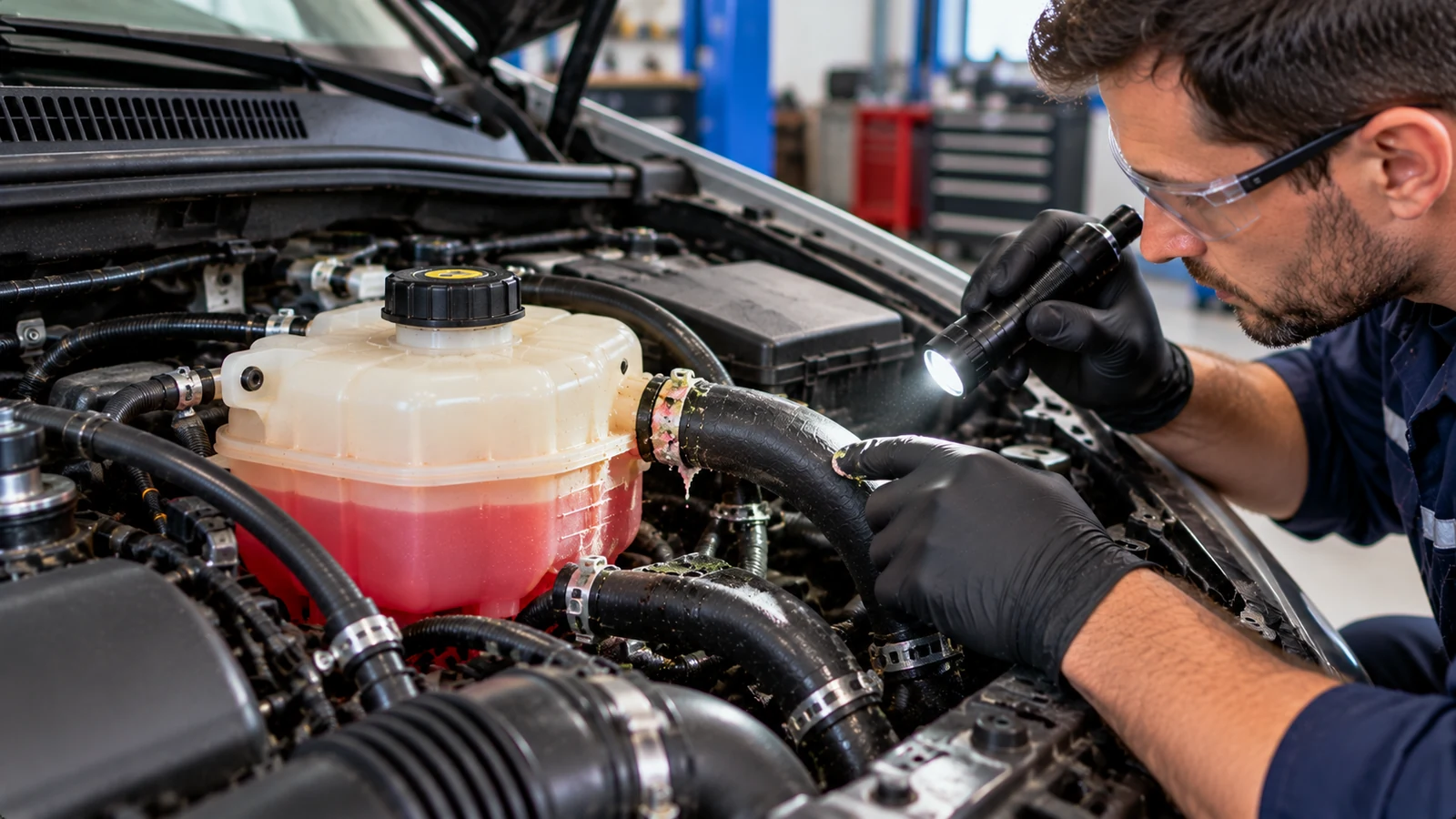
A sweet burning smell from a car is more than an unusual odor. In many cases, it means engine coolant is escaping from the cooling system and reaching a hot surface, entering the cabin through the heater system, or burning inside the engine.
The smell is often described as maple syrup, caramel, or a sugary chemical odor. It comes from the glycol used in most automotive coolants. When leaking coolant reaches a hot engine, exhaust component, turbocharger, or other heated surface, the water evaporates, and the remaining coolant produces a noticeable sweet smell.
The important question is not simply what the smell is. You need to determine where it is coming from, how quickly coolant is being lost, and whether the engine is beginning to overheat.
Never remove a radiator cap or pressurized coolant reservoir cap while the engine is hot. Allow the system to cool before inspecting or opening it.
What a Sweet Burning Smell Usually Means
The location and timing of the odor can quickly narrow the diagnosis.
| What you notice | Likely area to investigate | How urgent is it? |
|---|---|---|
| Sweet smell inside the cabin, especially with heat on | Heater core or heater hose connections | High |
| Sweet smell near the front of the vehicle after driving | Hose, radiator, reservoir, thermostat housing, water pump or cap | Moderate to high |
| Persistent white exhaust with a sweet odor | Internal coolant leak | High |
| Sweet smell mainly after switching the engine off | Small external leak or coolant venting | Moderate |
| Steam plus rising coolant temperature | Major leak, boil-over or cooling-system failure | Very high |
| Sweet odor shortly after cooling-system service | Spilled coolant, unless coolant level continues falling | Usually low initially |
A small leak can create a surprisingly strong odor. Only a few drops need to reach hot metal for coolant vapor to spread through the engine compartment and enter the ventilation intake.
The opposite can also happen. A larger leak that falls directly onto the road may produce very little smell. That is why coolant level and engine temperature matter just as much as your nose.
Decide Whether It Is Safe to Keep Driving
A faint sweet smell does not automatically mean the engine is about to fail, but some accompanying symptoms make continued driving risky.
Stop and investigate as soon as safely possible if you notice:
- A temperature gauge moving above its normal position.
- An overheating warning.
- Steam from under the hood.
- A rapidly falling coolant level.
- Thick white exhaust after the engine has warmed up.
- Coolant pouring onto the road.
- Persistent bubbling in the coolant reservoir.
- A greasy windshield film that interferes with visibility.
- A split radiator or heater hose.
If the temperature remains normal, there is no visible steam, and the coolant level is only slightly low when checked cold, the vehicle may be able to travel a short distance for diagnosis or repair. Continue monitoring the gauge closely.
If the engine has overheated severely, arrange a tow rather than repeatedly topping up coolant and continuing to drive. Overheating can turn a minor hose, cap, or thermostat problem into cylinder-head or head-gasket damage.
What to Do Immediately if the Temperature Starts Rising
If the smell appears while driving:
- Check the temperature gauge and warning lights.
- Move toward a safe place to stop if the temperature is rising.
- Watch for steam from the engine compartment.
- Switch the engine off after stopping.
- Keep clear of the electric cooling fan, which may operate after shutdown.
- Allow the engine to cool fully.
- Inspect for leaks without opening the cooling system while it is pressurized.
- Check the coolant level only after the system is cold.
Using maximum cabin heat can sometimes remove enough heat from the engine to reach a safe stopping location. Do not rely on this if a heater-core leak is fogging the windshield or filling the cabin with coolant vapor.
Use Smell Location to Narrow the Fault
A sweet smell becomes much more useful diagnostically when you identify exactly where and when it appears.
Sweet Smell Inside the Cabin
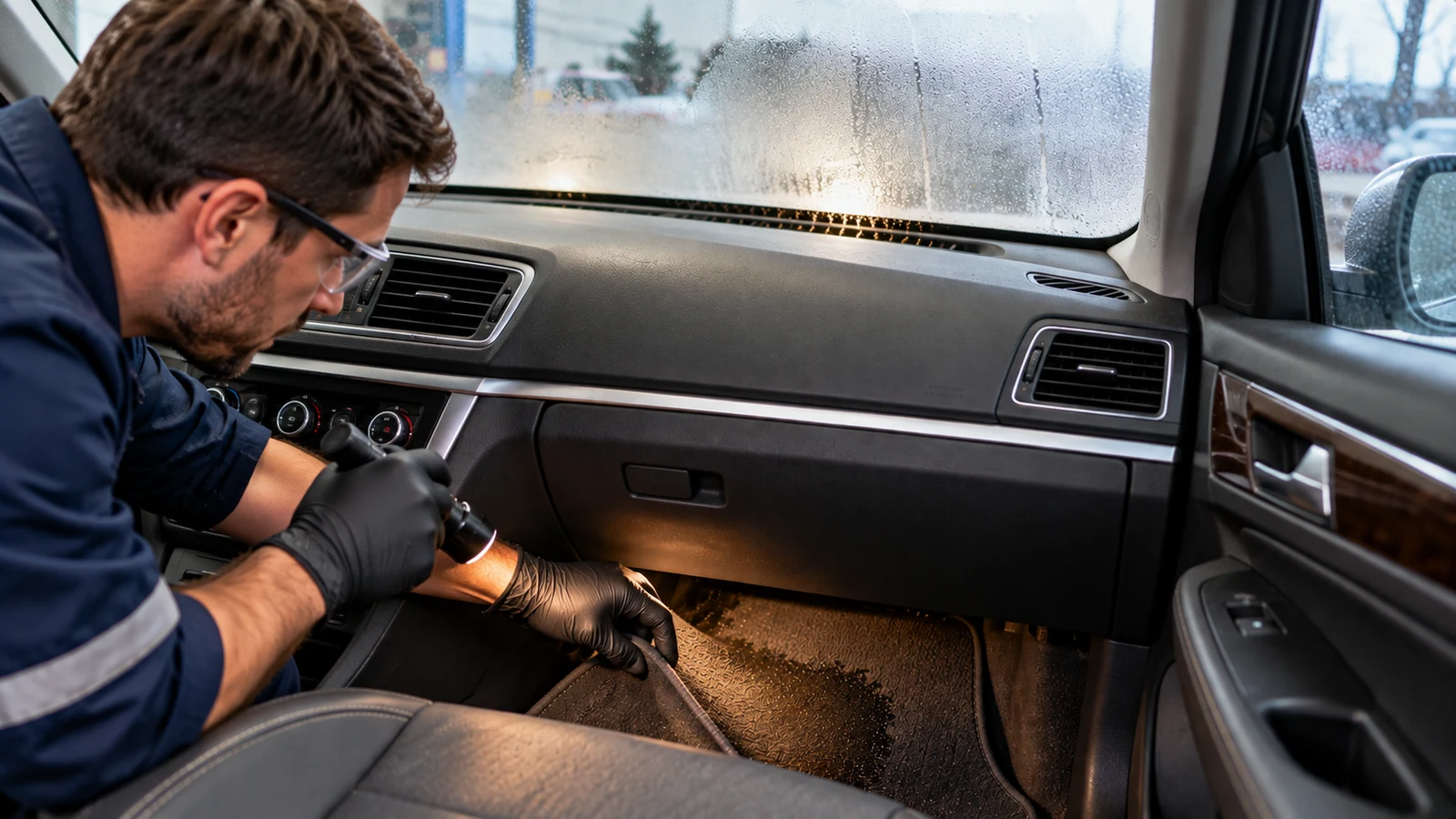
A strong sweet odor from the vents, especially when the heater is operating, puts the heater circuit high on the suspect list.
The heater core is a small heat exchanger behind the dashboard. Engine coolant circulates through it, and the blower moves cabin air across its fins. A leak can therefore release coolant vapor directly into the passenger compartment.
Look for several clues together:
- Windshield fogging that returns quickly.
- An oily or greasy film on the inside of the glass.
- Damp carpet near the front footwells.
- Sticky or colored fluid beneath the dashboard.
- Coolant level gradually falling.
- Smell becoming stronger as cabin heat increases.
Before assuming the heater core itself has failed, inspect the heater hoses and their connections at the firewall. A leaking connection outside the cabin can still allow coolant vapor to enter through the HVAC intake.
Sweet Smell Under the Hood
If the smell is strongest around the grille, hood, or front fenders, begin with external cooling-system components.
Common inspection points include:
- Upper and lower radiator hoses.
- Heater hoses.
- Hose clamps.
- Radiator end tanks and seams.
- Radiator cap or pressure cap.
- Coolant reservoir or expansion tank.
- Thermostat housing.
- Water pump.
- Intake-manifold coolant passages where applicable.
- Cooling-system pipes and fittings.
Dried coolant often leaves a crusty deposit around the source. This can be easier to find than the active leak itself.
Sweet Smell From the Exhaust
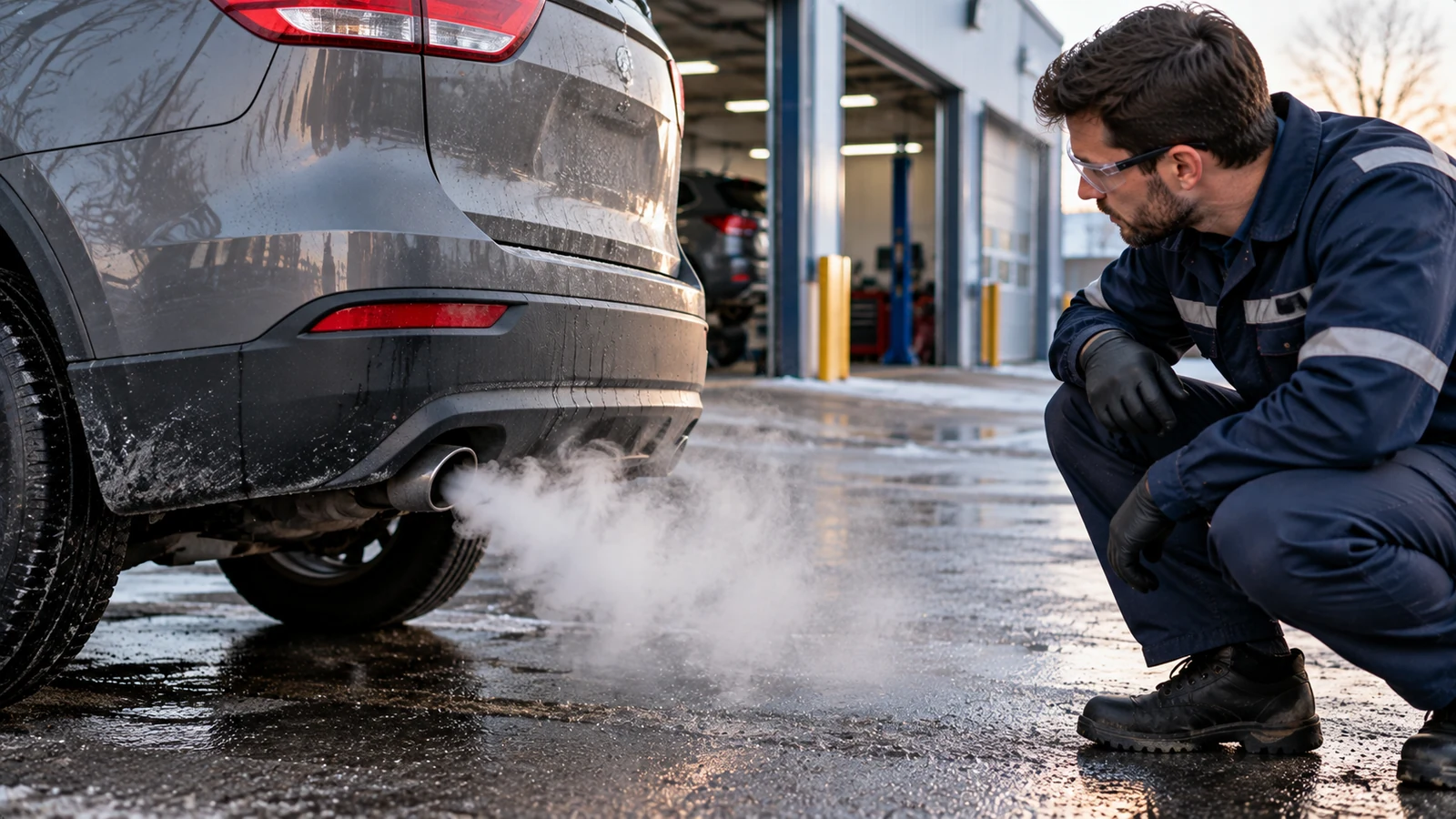
Normal condensation can produce visible white vapor during a cold start, particularly in cool weather. It should reduce as the exhaust warms and normally does not have the characteristic coolant smell.
Persistent white smoke or vapor with a sweet odor after the engine reaches operating temperature is more concerning.
Possible causes include:
- Head-gasket leakage.
- Cracked cylinder head.
- Intake-manifold gasket leakage on engines with coolant passages through the manifold.
- A failed coolant-fed EGR cooler on engines equipped with one.
An internal coolant leak may not leave a puddle, so unexplained coolant loss combined with sweet exhaust deserves further testing.
Sweet Smell After Parking
Some leaks are easiest to smell immediately after you shut off the engine.
Airflow through the engine bay stops when the vehicle is parked, but temperatures remain high for a while. A tiny leak that was difficult to notice while driving can drip onto a hot surface and evaporate once the vehicle is stationary.
A pressure cap that is no longer controlling system pressure correctly can also allow coolant to vent after a drive.
Diagnose the Coolant Leak Before Buying Parts
Replacing the first damp component you find can waste time if the actual source is higher in the system. Start diagnosis with a cold vehicle and move from basic visual checks to pressure and internal-leak testing.
Check the Coolant Level and Fluid Condition
With the engine completely cold, compare the coolant level with the reservoir’s cold-level markings.
A repeated drop confirms that fluid is leaving the system somewhere.
Also inspect the coolant itself. Unusual sludge, heavy discoloration, oily contamination, or rust-colored fluid can indicate neglected coolant or contamination from another system.
Check the engine oil at the same time. Moisture beneath the oil filler cap alone is not enough to diagnose an internal coolant leak, particularly on vehicles driven mainly on short trips. Milky contamination throughout the oil or on the dipstick combined with ongoing coolant loss is much more significant.
Do not choose replacement coolant only by color. Coolant colors vary considerably among manufacturers and formulations. Use the specification required for the vehicle.
Inspect Hoses and Cooling Components Systematically
Instead of jumping randomly from one component to another, follow the cooling circuit.
Start with:
- Radiator and heater hoses.
- Hose connections and clamps.
- Radiator seams and filler neck.
- Coolant reservoir.
- Thermostat housing.
- Water pump area.
- Heater-hose connections at the firewall.
- Any coolant pipes or junctions.
- The underside of the engine and splash shields.
Look for cracks, swollen rubber, hardened hoses, damp connections, staining, dried residue, and coolant tracks.
A water pump may leak through its weep hole when its internal seal starts to fail. Depending on engine design, the pump may be driven by an accessory belt or by the timing system, which can dramatically change repair complexity.
Pressure Test the Cooling System
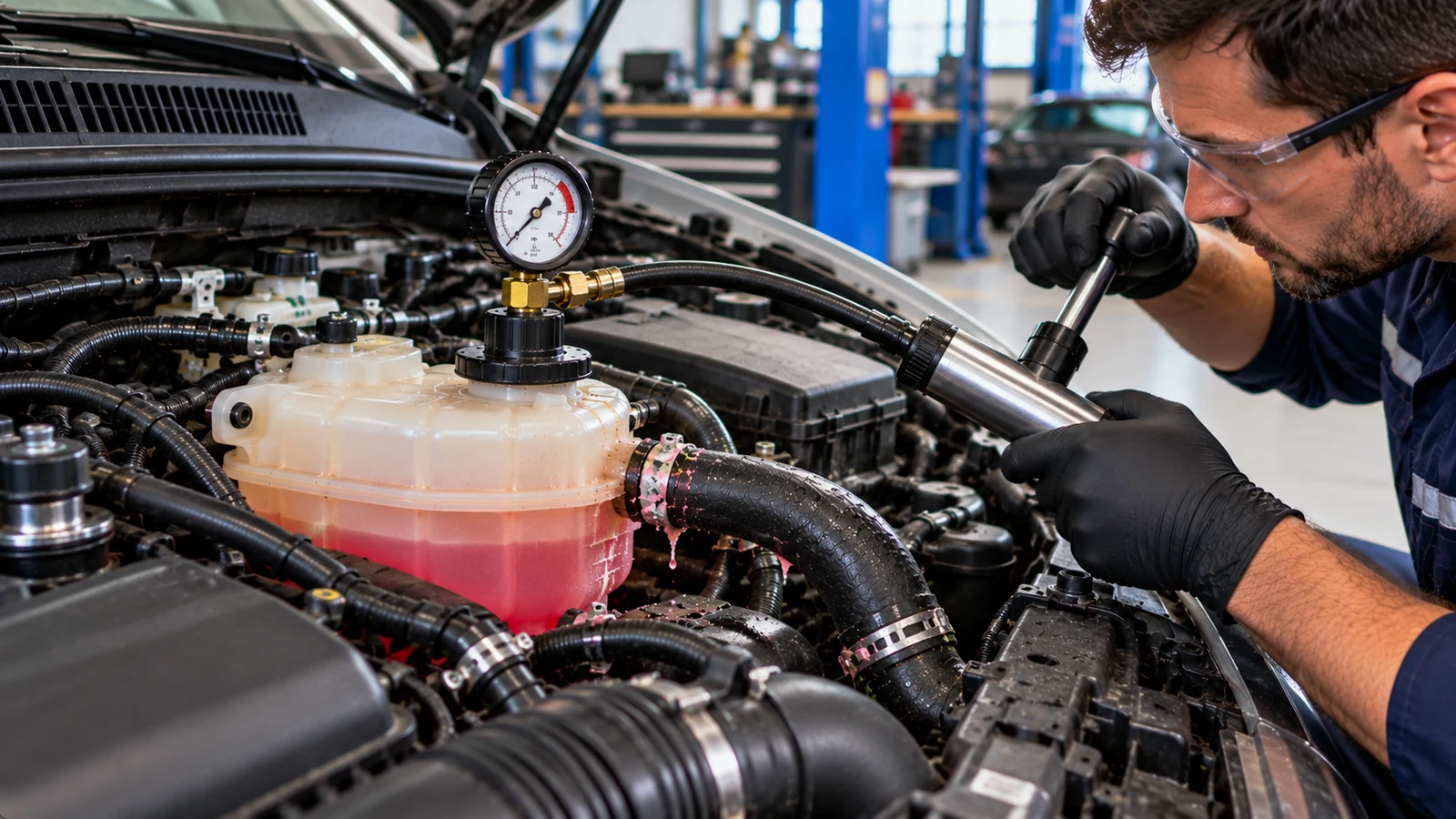
A cooling-system pressure tester is one of the most useful tools for finding small leaks.
The tester pressurizes the cold cooling system to the vehicle’s specified test pressure. A pressure drop indicates that the system is not sealed.
Pressure may reveal leaks from:
- Hose connections.
- Radiator seams.
- Expansion tanks.
- Heater cores.
- Thermostat housings.
- Water pumps.
- Gaskets and coolant pipes.
Never exceed the specified system pressure. The pressure rating varies by vehicle.
If the source remains difficult to locate, compatible fluorescent coolant dye and a UV inspection lamp can help identify the escape point.
Test for Internal Coolant Leakage
When coolant disappears without an obvious external leak, diagnosis needs to move beyond visual inspection.
A combustion-gas test checks vapor above the coolant for signs that combustion gases are entering the cooling system. If the test indicates a problem, compression or cylinder leak-down testing can help narrow the affected cylinder or sealing fault.
Other warning signs include:
- Repeated cooling-system pressurization.
- Persistent bubbles in the reservoir.
- Coolant pushed from the overflow.
- Sweet exhaust.
- White smoke after warm-up.
- Unexplained coolant loss.
- Engine misfires after startup.
Check Routing, Capacity, and Component Location
The physical layout can vary substantially between models. A technician using Jeep factory manuals can use the 2014 Jeep Grand Cherokee WK2 workshop manual to match cooling-system inspection and service work to that vehicle, rather than relying on a generic diagram.
The same principle applies to trucks. Ram workshop manuals provide the manufacturer-specific route into the catalog, while the 2009-2013 RAM 1500 4WD repair manual gives a model-specific reference for repair planning.
For crossovers, the Lexus repair manuals catalog and the 2007-2013 Lexus RX 350 AWD factory manual help avoid assumptions about component locations and service sequences.
Likewise, owners working on vehicles covered by Subaru service manuals can start with the 2005-2009 Subaru Outback workshop manual when a coolant leak requires model-specific repair information.
Common Faults Behind a Sweet Burning Smell
Once you’ve identified coolant as the likely source, several faults deserve particular attention.
Leaking Hoses, Clamps and Radiator Connections
Rubber hoses experience continuous heat cycles. Over time, they can harden, soften, swell, crack, or deteriorate around their ends.
A minor hose leak may only leave a stain or sweet smell. A complete split can dump coolant quickly and cause rapid overheating.
Inspect hose bends, connections, and areas beneath clamps. Do not squeeze hot cooling hoses.
Radiators can leak through damaged cores, aged seams, drain fittings, or the connection between an aluminum core and plastic end tank.
Radiator Cap and Expansion Tank Problems
The cooling system depends on controlled pressure. A worn cap seal or weak pressure mechanism can allow coolant to escape or move into the overflow too early.
Expansion tanks can also develop small cracks, particularly around seams, hose connections, and pressure-cap areas.
Because hot coolant can evaporate before reaching the ground, staining around the reservoir can be an important clue.
Water Pump Leakage
A worn water-pump seal can let coolant escape through the pump’s weep hole.
Typical clues can include:
- Dried coolant below the pump.
- Dampness around the pump housing.
- Repeated coolant loss.
- Pulley play on mechanically driven pumps.
Water-pump replacement difficulty varies significantly by engine. An easily accessible belt-driven pump differs greatly from a pump located behind timing components.
Thermostat Housing or Seal Leakage
Thermostat housings often use a gasket or O-ring, and some modern housings are made from plastic.
Warping, cracking, or seal deterioration can allow coolant to run directly down the engine. Because the housing is often close to hot metal or exhaust components, even a small seep may produce a strong burning smell.
Heater Core Leakage
A heater-core fault is one of the most recognizable causes of a sweet smell inside the vehicle.
Replacement can require extensive dashboard and HVAC disassembly. Because of that labor, confirm the leak carefully before removing interior components.
Pressure testing and checking the heater-hose connections at the firewall first can prevent unnecessary dashboard work.
Head Gasket and Other Internal Leaks
A head gasket seals combustion pressure, coolant passages, and oil passages between the cylinder head and engine block.
If the gasket fails between a combustion chamber and coolant passage, coolant may enter the cylinder and burn. Combustion pressure may also enter the cooling system.
Do not diagnose a head gasket from white smoke alone. Confirm the fault with appropriate testing before disassembling the engine.
Internal coolant loss can also involve:
- A cracked cylinder head.
- Intake-manifold gasket leakage.
- Coolant-fed oil coolers.
- EGR coolers on applicable engines.
Overheating and Coolant Venting
Sometimes the sweet smell results from overheating rather than the original fault.
Possible underlying causes include:
- Cooling fan not operating.
- Fan relay or electrical fault.
- Thermostat stuck closed.
- Restricted radiator.
- Incorrect coolant level.
- Drive-belt problem on engines where the belt drives the water pump.
- Trapped air following cooling-system service.
As temperature rises, coolant may boil or be pushed into the overflow, creating the smell without an obvious broken hose.
External Leaks and Service-Related Coolant Loss
The same diagnosis principles apply across many vehicles in the supplied AutoServicePlus inventory, but repair access and procedures change by model.
For example, the Mazda repair manual library can be narrowed to the 2013-2014 Mazda CX-5 AWD workshop manual when checking a model-specific cooling-system repair.
The Hyundai factory workshop coverage includes the 2013-2014 Hyundai Santa Fe Sport repair manual, which is a more appropriate reference than applying another crossover’s procedure.
Owners working from the Kia workshop manual catalog can similarly use the 2016 Kia Sorento UM factory manual when a hose, thermostat housing, water pump, or refill procedure becomes vehicle-specific.
The catalog also extends beyond the most common North American makes. Mitsubishi repair manuals include the 2011-2013 Mitsubishi Outlander Sport AWD manual.
European coverage includes Peugeot factory manuals and the 2013-2018 Peugeot 308 T9 workshop manual.
AutoServicePlus also lists SsangYong service manuals, including the 2016 SsangYong Rexton W Y295 repair manual. These examples matter because a generic coolant-leak diagnosis can identify the faulty area, but disassembly, refill, bleeding, and torque procedures still need to match the actual vehicle.
Sweet Smell or Another Burning Odor?
Not every burning smell comes from coolant.
| Odor or symptom | Possible source | Useful first check |
|---|---|---|
| Sweet, syrup-like smell | Coolant leak | Cold coolant level and cooling-system inspection |
| Heavy burnt-oil smell | Engine oil reaching exhaust parts | Valve cover, oil filter area and external oil leaks |
| Sharp burnt smell with oily fluid | Automatic transmission fluid | Fluid condition and leak location |
| Burning carpet or chemical smell near a wheel | Overheated brakes | Compare wheel temperatures and inspect brake drag |
| Burnt rubber with squealing | Drive belt or pulley | Belt routing, tension and pulley condition |
| Sulfur or burnt-rubber smell under load | Slipping clutch | Check clutch operation |
| Burning plastic or electrical smell | Wiring, connectors, motors or electrical components | Shut down and inspect safely |
| Rotten-egg odor | Exhaust catalyst or charging-system problem | Exhaust and battery charging system |
| Raw gasoline odor | Fuel or evaporative-emissions leak | Fuel system inspection |
| Musty smell from vents | HVAC moisture or contamination | Cabin filter and evaporator drain |
Automatic transmission fluid can be especially confusing because fresh fluid may have a slightly sweet character. Once overheated, however, it usually becomes more acrid and oily than coolant.
Fluid texture can help. Coolant is generally water-like, while transmission fluid and engine oil feel oily.
DIY Repair or Professional Workshop Job?
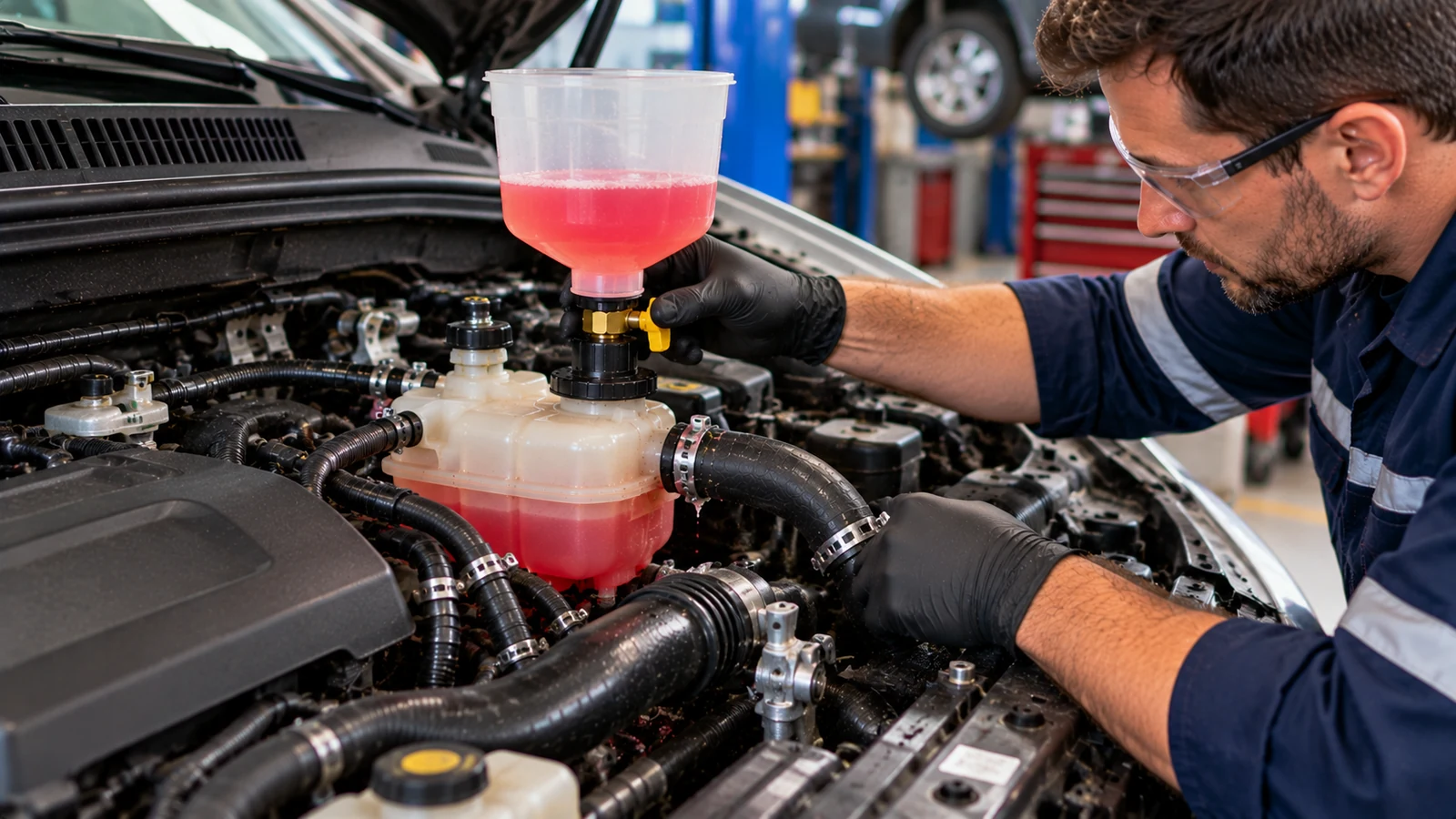
Some causes of a sweet burning smell are realistic DIY projects. Others involve enough disassembly or engine work that factory procedures become essential.
Repairs a Careful DIYer May Be Able to Handle
Depending on access and experience, common home-garage repairs include:
- Replacing an accessible coolant hose.
- Replacing a damaged clamp.
- Replacing a correctly rated pressure cap.
- Replacing an accessible expansion tank.
- Replacing an accessible thermostat housing.
- Refilling and bleeding the cooling system correctly.
After any repair, pressure-test the system if possible and monitor the cold coolant level over several heat cycles.
Bleeding deserves particular attention. Air trapped in the cooling system can cause inconsistent heater performance, temperature fluctuations, localized hot spots, or coolant being pushed from the reservoir.
Jobs That Need Factory Procedures
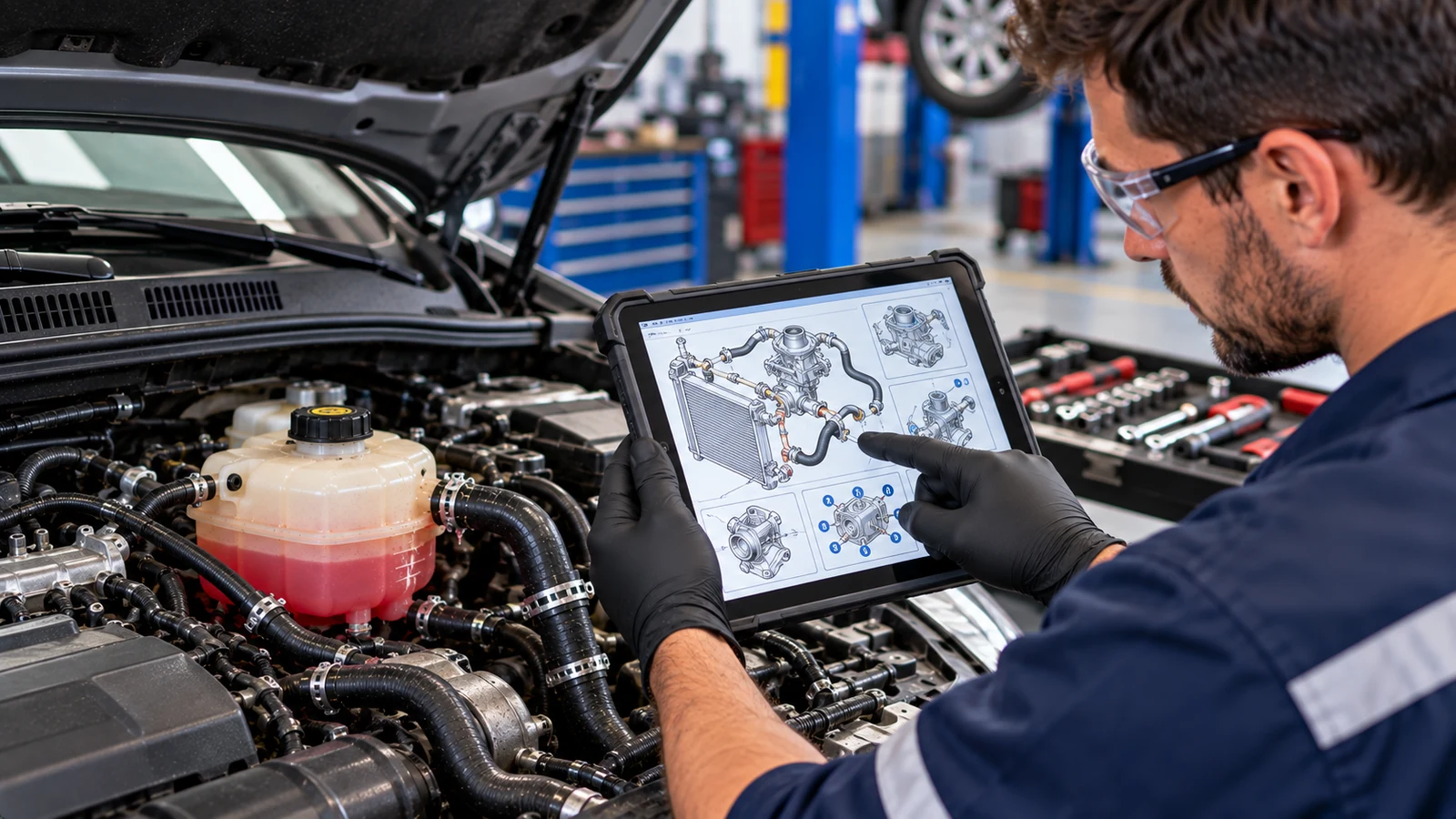
Heater-core replacement, timing-driven water pumps, intake-manifold work, EGR cooler repairs, cylinder-head removal, and head-gasket replacement can depend on procedures that differ significantly between engines.
Typical information you may need includes:
- Tightening torque.
- Bolt sequence.
- Sealant locations.
- Cooling-system capacity.
- Coolant specification.
- Filling and bleeding procedure.
- Component removal order.
- Timing marks.
- Electrical connector locations.
- Hose routing.
For Volkswagen vehicles, you can narrow the Volkswagen workshop manuals catalog to resources such as the 2008-2012 Volkswagen Golf Mk6 GTI manual.
The same approach works with Audi repair manuals and the 2009-2013 Audi A4 Quattro 8K2 workshop manual.
For BMW repairs, start from the BMW factory service manuals catalog and match the vehicle carefully. The 2012-2018 BMW 3 Series F30 repair manual is one model-specific example available in the supplied inventory.
The Volvo workshop documentation inventory includes the 2004-2013 Volvo XC90 AWD factory manual, which provides a vehicle-matched starting point before major cooling-system disassembly.
The same principle applies to performance and premium SUVs. Porsche repair manuals include the 2015-2016 Porsche Macan workshop manual, while Land Rover service manuals include the 2015-2017 Land Rover Discovery Sport L550 manual.
The point is not that these vehicles all fail in the same way. It is the opposite. Once diagnosis identifies the leaking component, match the repair procedure to the actual engine and model rather than copying it from another vehicle.
Hybrids and EVs Need Extra Caution
Hybrid vehicles can have more than one liquid-cooling circuit. In addition to the engine cooling system, some vehicles use separate coolant circuits for power electronics or other components.
This makes it important to identify which reservoir and circuit is losing fluid before dismantling anything.
The supplied AutoServicePlus inventory includes Toyota repair manuals and the 2010-2013 Toyota Prius factory workshop manual for model-specific repair work.
The Ford factory manuals catalog includes the 2005-2008 Ford Escape 4WD workshop manual. The source material specifically highlights this generation as an example where correctly identifying the vehicle’s powertrain matters before following a cooling-system procedure.
For newer hybrids, Honda service manuals include the 2020-2022 Honda CR-V Hybrid workshop manual.
Electrified Chevrolet coverage is also present through Chevrolet workshop manuals and the 2011-2013 Chevrolet Volt repair manual.
High-voltage components change the safety rules. Do not treat brightly marked high-voltage cables and associated components like ordinary 12-volt wiring.
If the odor appears to come from the high-voltage battery area and is acrid, chemical, or burning-plastic rather than syrup-like, especially with smoke, hissing, or popping, stop the vehicle, move occupants away, and contact emergency services. Do not investigate the battery pack yourself.
How to Clear the Smell After the Leak Is Repaired
A repaired leak does not always mean the odor disappears immediately.
Coolant can remain on:
- Engine components
- Exhaust heat shields
- Splash panels
- Carpet
- Carpet underlay
- HVAC surfaces
- Cabin air filters
- The inside of the windshield
After an under-hood repair, carefully clean spilled coolant from accessible cold surfaces.
Following a heater-core or cabin leak, dry the carpet and underlay thoroughly, clean the inside glass, and consider replacing the cabin air filter.
If the smell disappears and then returns after several drives, do not assume it is old residue. Recheck the coolant level and inspect the repair for continued leakage.
Preventing Another Coolant Leak
Cooling-system problems are easier to deal with before they become overheating events.
Useful habits include:
- Check coolant only when the engine is cold.
- Investigate repeated coolant loss instead of continually topping it up.
- Use the coolant specification required by the vehicle manufacturer.
- Do not mix coolants simply because their colors look similar.
- Inspect hoses, clamps, reservoirs, and radiator seams periodically.
- Replace deteriorated belts that affect water-pump operation.
- Keep the radiator area free from heavy debris.
- Watch for any change in the normal temperature-gauge position.
- Recheck the coolant level after cooling-system repairs.
- Follow the correct bleeding procedure whenever you open the system.
A faint sweet smell can be the earliest warning of a leak. Finding it while coolant loss is still small is much easier than diagnosing the same vehicle after it has overheated.
Conclusion
A sweet burning smell from a car should put coolant leakage near the top of the diagnostic list, but the smell alone does not identify the failed part.
Use its location to narrow the search. Cabin odor points toward the heater system. Under-hood odor suggests an external cooling-system leak. Persistent sweet white exhaust raises concern about an internal leak. Steam and a rising temperature gauge mean the situation has become urgent.
Start with a cold inspection, check the fluid level, inspect the complete cooling circuit, and pressure-test the system when necessary. If coolant is disappearing without an external leak, move to combustion-gas and engine testing.
Simple hose, clamp, cap, or accessible thermostat repairs may be manageable in a home garage. Heater cores, timing-driven water pumps, internal coolers, cylinder-head work, and hybrid cooling systems require much more attention to model-specific procedures.
Diagnose first, use the correct repair information for the exact vehicle, refill with the specified coolant, bleed the system properly, and confirm the level remains stable after the repair.
Commonly Asked Questions About a Sweet Burning Smell
Why Does My Car Smell Like Maple Syrup?
A maple-syrup or sugary smell commonly points to engine coolant. Glycol-based coolant has a naturally sweet odor, and the smell becomes especially noticeable when leaking coolant reaches hot engine or exhaust surfaces.
If it is strongest inside the cabin, investigate the heater circuit. If it is strongest under the hood, start with the hoses, radiator, thermostat housing, water pump, reservoir, and pressure cap.
Can A Car Smell Sweet Without Overheating?
Yes. A small coolant seep may produce a strong smell long before enough coolant has been lost to affect engine temperature.
Monitor the coolant level when the engine is cold. If the level keeps falling, you need to find the leak even if the temperature gauge stays normal.
Is It Safe to Drive with A Sweet Burning Smell?
It depends on the other symptoms.
A faint smell with normal engine temperature and no steam may allow cautious driving while diagnosing the issue. Stop driving if the temperature rises, coolant escapes rapidly, the windshield is coated with heater-core vapor, or persistent white exhaust suggests an internal leak.
Can A Leaking Heater Core Make the Windshield Fog?
Yes. Coolant vapor from a leaking heater core can leave a slippery film on the inside of the windshield. It may resemble ordinary condensation at first but tends to smear and return.
A strong sweet smell, falling coolant level, and damp front carpet make a heater-core or heater-hose problem more likely.
What Does Sweet-Smelling White Exhaust Mean?
Persistent sweet-smelling white exhaust after the engine has warmed can indicate coolant entering the combustion chambers or exhaust stream.
Potential causes include a failed head gasket, cracked cylinder head, intake-manifold gasket problem on applicable engines, or EGR cooler leakage on engines equipped with one.
Confirm the fault with testing before major engine disassembly.
Can Transmission Fluid Smell Sweet Too?
Fresh automatic transmission fluid can have a slightly sweet odor, which makes it one of the easier fluids to confuse with coolant.
Burned transmission fluid usually becomes sharper and more acrid. It is also oily, while coolant has a more water-like consistency.
Why Does the Sweet Smell Appear Only After I Park?
Under-hood airflow stops when the vehicle is parked, while engine components remain hot. A very small seep may then drip onto a hot surface and evaporate.
Heat soak after shutdown can also reveal coolant venting from a weak pressure cap or an overheating system.
Can Spilled Coolant Smell for Several Days After Service?
Yes. Coolant spilled during a refill or repair may remain on engine or exhaust components and smell as the residue heats up.
The odor should gradually disappear. If the coolant level drops or the smell persists, inspect for an active leak.