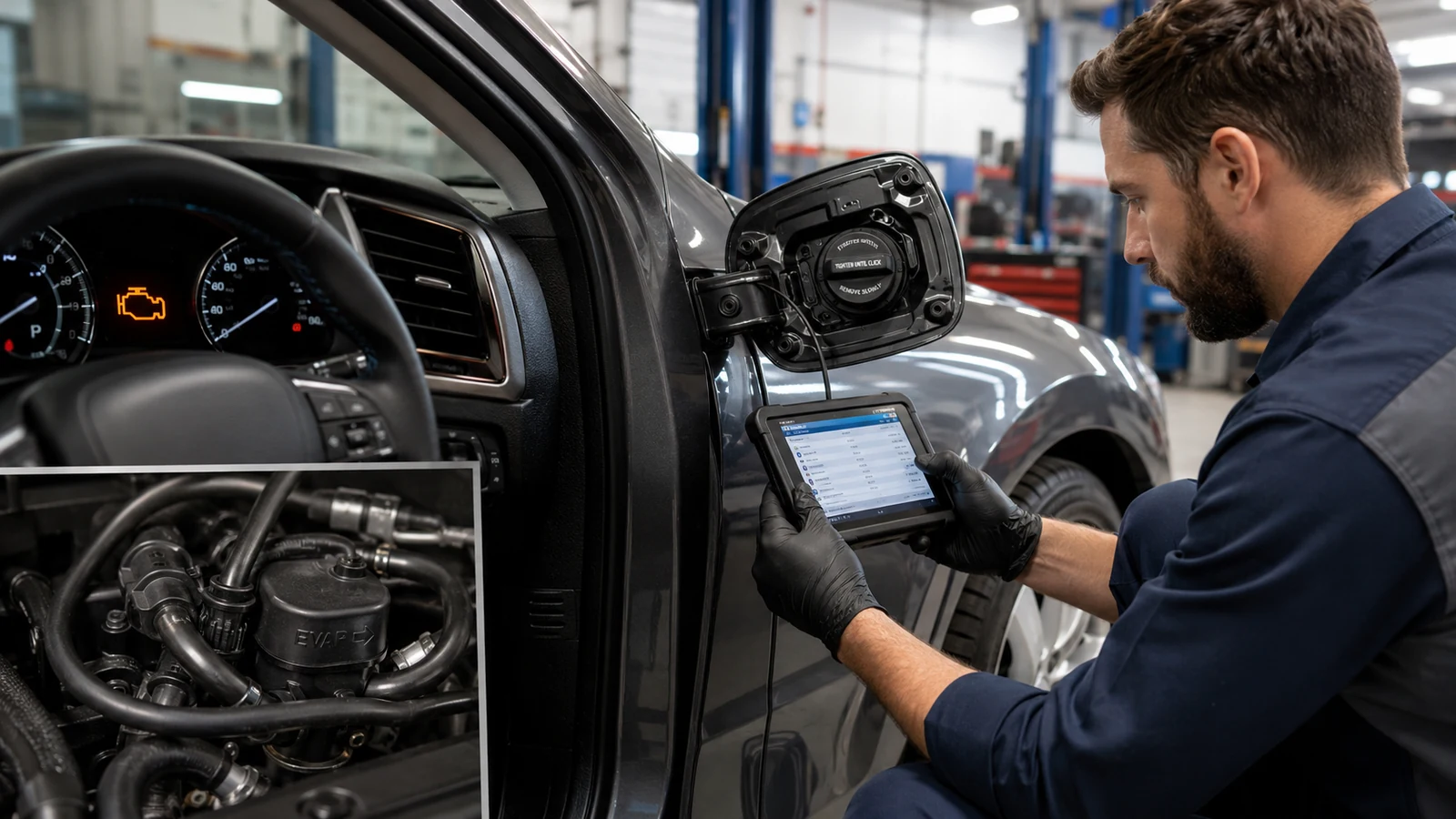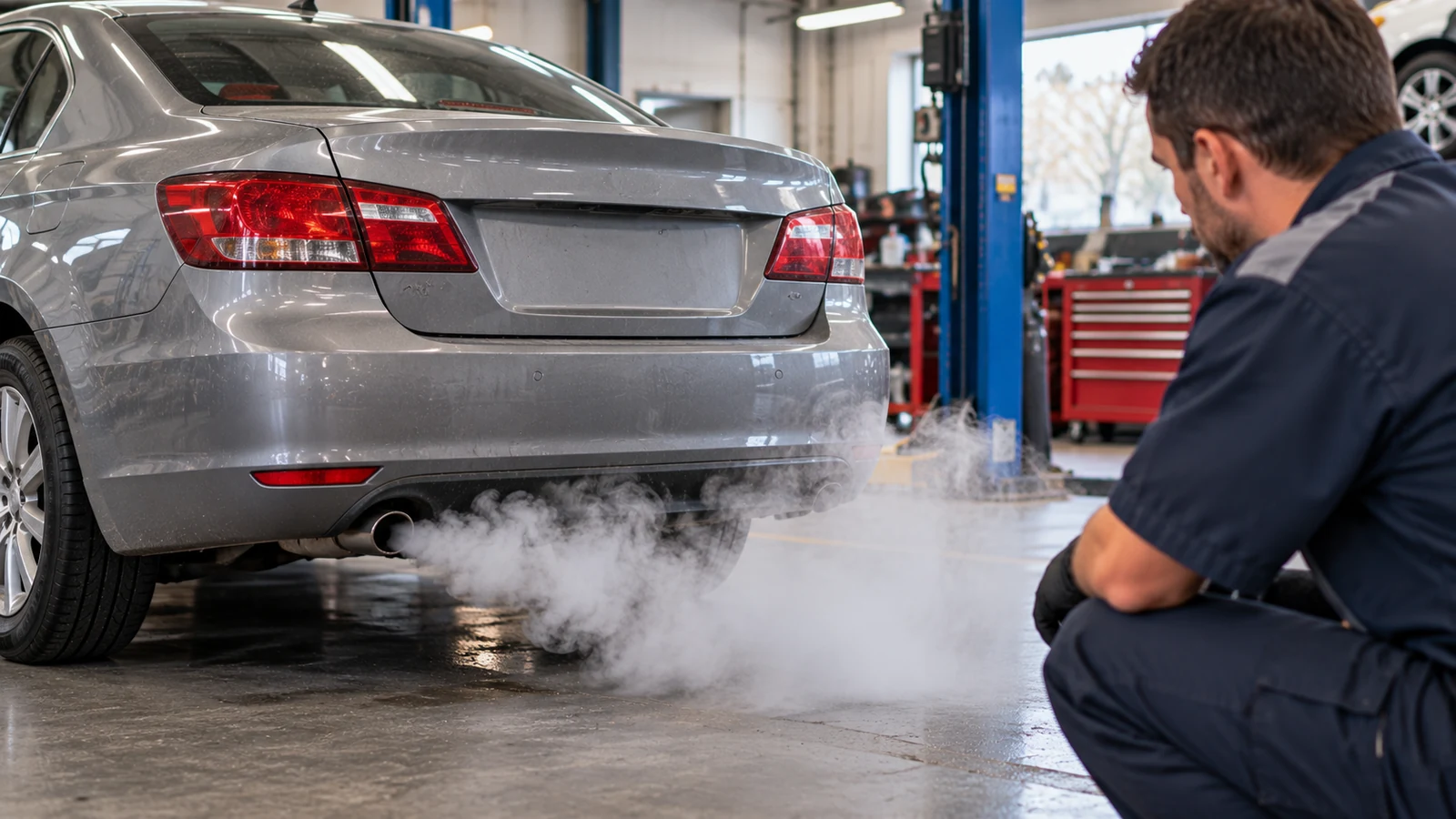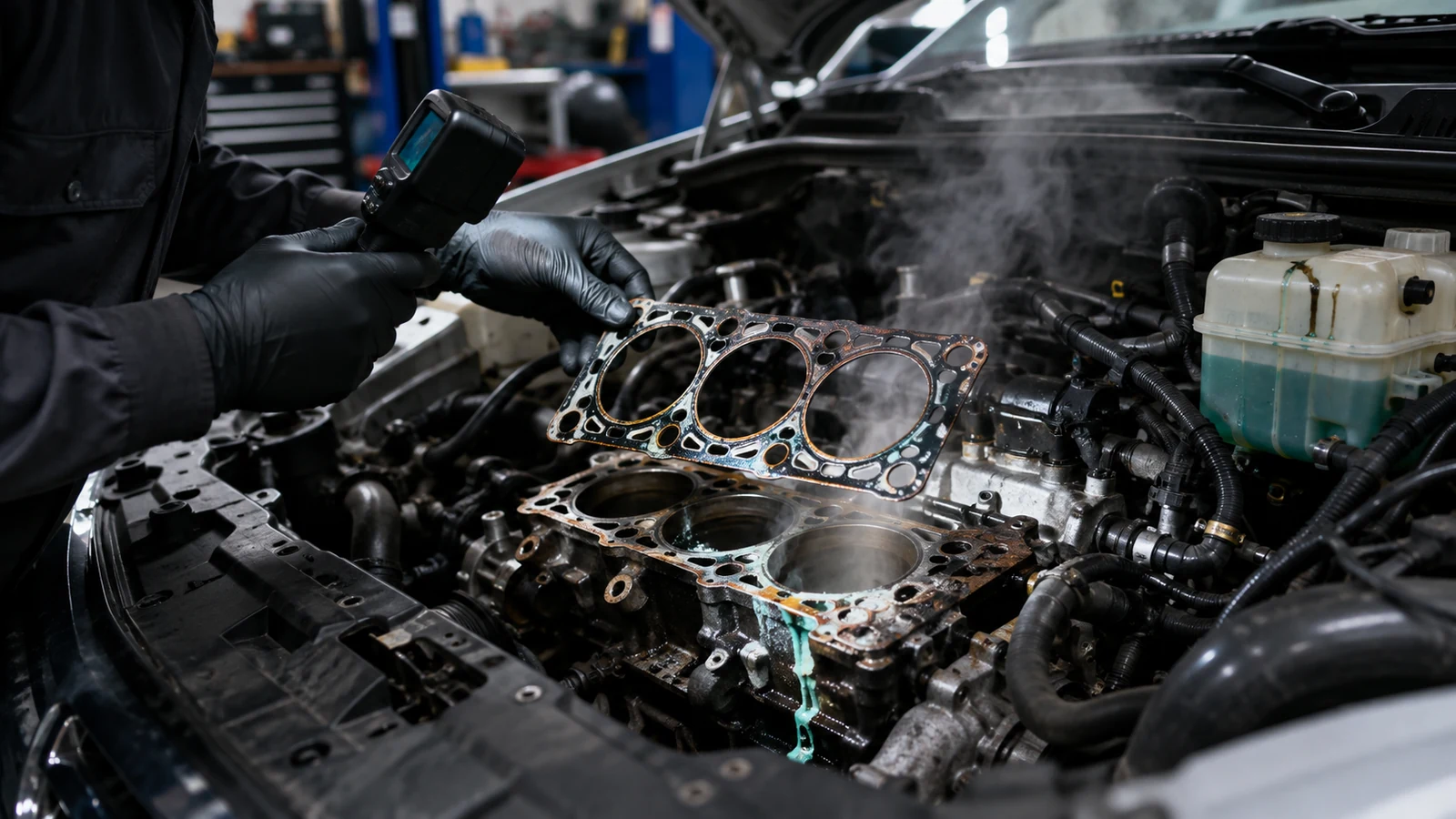
A blown head gasket can turn a normal drive into overheating, coolant loss, rough running, or an engine you shouldn’t drive. The gasket is thin, but it must seal combustion pressure while keeping coolant and engine oil in their proper passages.
The first clue is usually not the gasket itself. It is the condition that stressed the seal, such as overheating, low coolant, detonation, or poor clamping.
This guide explains seven common failure paths, how to separate cause from symptom, and what to check before replacing parts.
What Causes a Blown Head Gasket: 7 Failure Paths to Check
A head gasket fails when heat, pressure, surface movement, corrosion, or incorrect assembly overcomes the seal between the cylinder head and engine block. Overheating is the most common cause, but it is not the only one. The better question is: what made the gasket lose its seal, and what must be corrected before installing another gasket?
| Cause | What happens | Common clue | Best next check |
|---|---|---|---|
| Severe overheating | Head and block expand unevenly | Temperature spike | Find cooling fault, check flatness |
| Low coolant | Local hot spots develop | Coolant level drops | Pressure-test for leaks |
| Cooling fault | Heat cannot leave fast enough | Fan, thermostat, pump issue | Test failed circuit |
| Detonation | Pressure spikes hit fire ring | Pinging or high-load failure | Check ignition, fuel, boost |
| Poor clamping | Gasket loses sealing load | Failure after engine work | Verify bolts and surfaces |
| Corrosion or age | Sealing area deteriorates | Slow seepage | Inspect mating faces |
| Prior repair error | Root cause remains | Repeat failure | Recheck machining and procedure |
Overheating warps sealing surfaces
Overheating is the leading cause of head gasket failure. Excessive heat makes the cylinder head and block expand, and severe overheating can distort the head enough to reduce sealing pressure across the gasket.
Once a small path opens near a combustion chamber, cylinder pressure can enter a coolant passage, or coolant can enter a cylinder. The leak may grow with repeated heat cycles.
Do not stop at “the engine overheated.” Find why it overheated. A failed fan, low coolant, a restricted radiator, a stuck thermostat, a weak water pump, a leaking cap, or a damaged hose may have started the failure.
Low coolant creates hot spots
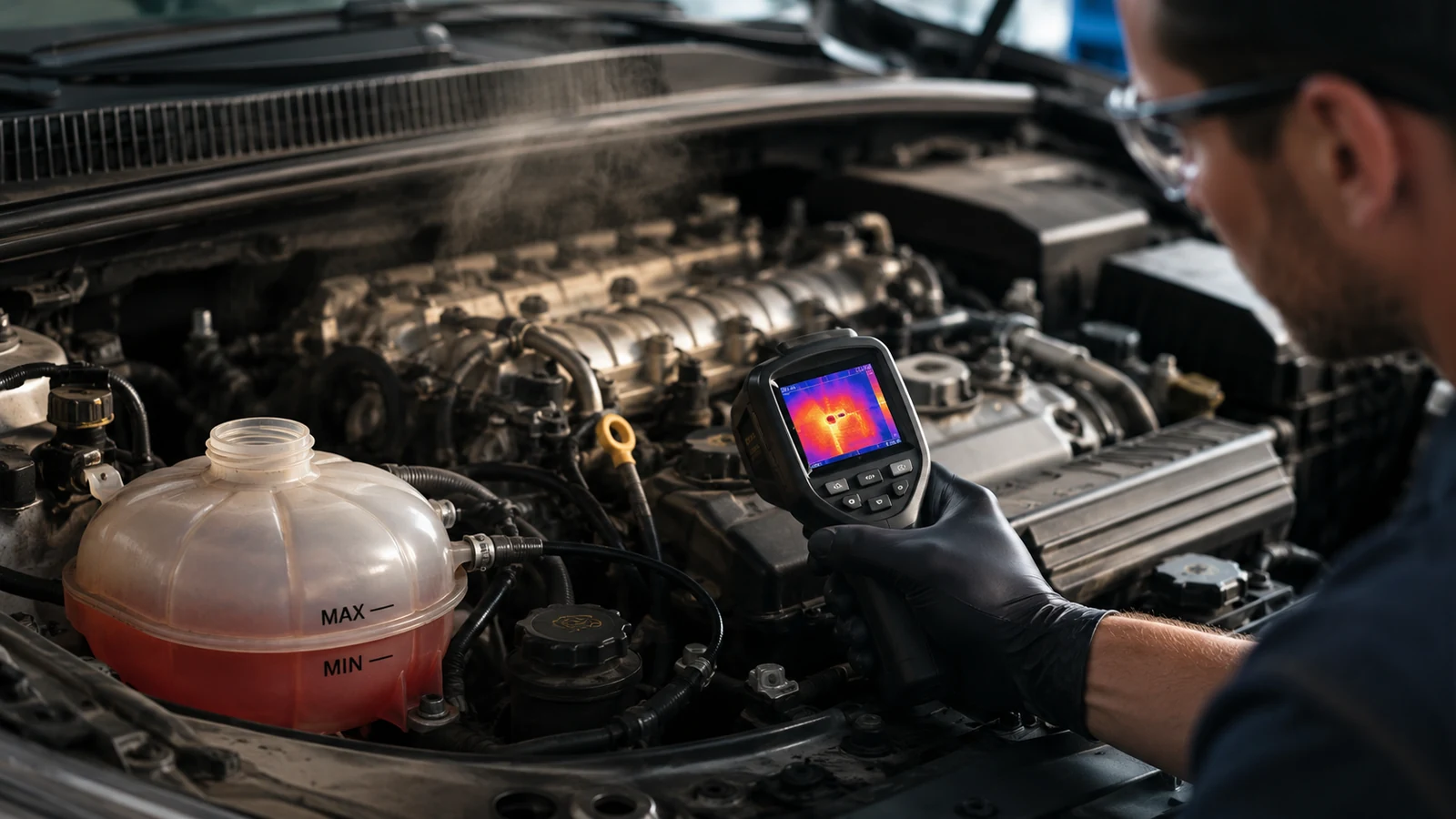
Low coolant reduces the system’s ability to carry heat away from the cylinder head. Air can occupy parts of the cooling circuit, creating localized hot spots before the dashboard gauge shows an obvious problem.
Treat unexplained coolant loss as a fault, not a nuisance. Check hoses, the radiator, the water pump, the reservoir, the heater circuit, and engine seams. If there is no visible leak, test for internal loss before continuing to drive.
Cooling faults keep heat trapped
A cooling system can be full and still fail. A thermostat that stays closed restricts flow, a weak pump may not circulate enough coolant, a blocked radiator reduces heat transfer, and a failed fan can cause overheating at idle or low speed.
This is why replacing the gasket without testing the cooling system is risky. The new gasket may face the same condition that damaged the old one.
Use a vehicle-specific test order rather than replacing likely parts. AutoServicePlus explains how OEM diagnostic flowcharts help technicians test faults in sequence.
Detonation spikes cylinder pressure
A head gasket must also contain combustion pressure. Detonation creates abnormal pressure spikes that can damage the fire-ring area and allow combustion gas to escape. Fel-Pro specifically identifies detonation as another cause of head gasket failure.
Potential triggers include incorrect ignition timing, fuel that does not meet engine requirements, an excessively lean condition, or excessive boost on a faulty or modified forced-induction engine.
If the gasket failed without a clear overheating history, check for knock or combustion-control problems. Stored codes can help, but follow the specified trouble-code diagnostic steps instead of treating a code as proof of one failed part.
Poor clamping breaks the seal
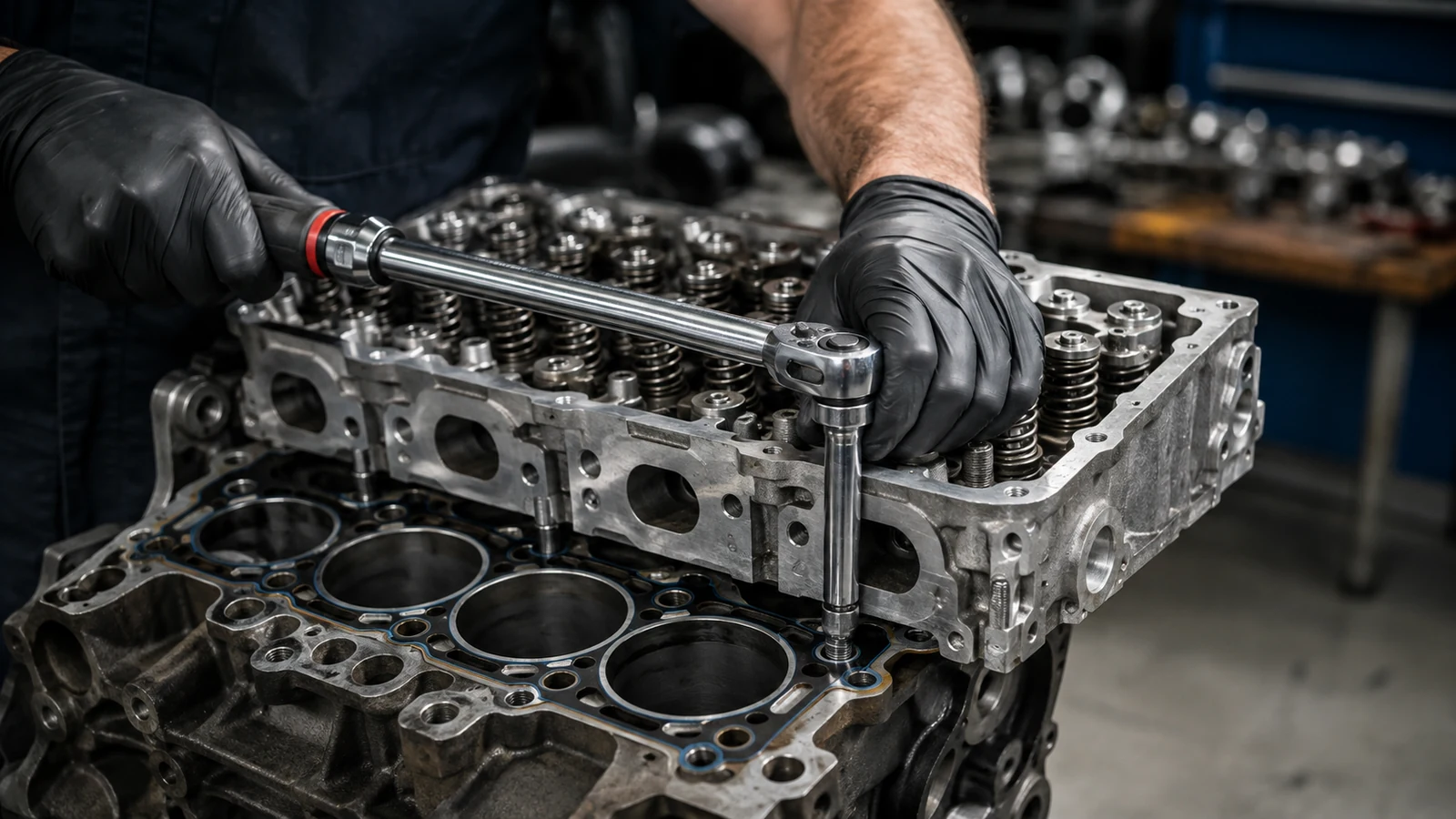
The gasket depends on precise clamping force. Cylinder-head bolts must keep the head, gasket, and block tightly joined while the engine heats, cools, and develops pressure.
Failure can follow an incorrect tightening sequence, skipped torque stages, reused fasteners that require replacement, contaminated threads, or poor surface preparation. A gasket also cannot reliably seal a warped or damaged mating face.
If failure occurs soon after engine work, verify the factory bolt procedure, head and block flatness, and required surface condition before blaming the replacement gasket.
Corrosion weakens the gasket area
Proper coolant protects metal surfaces and manages temperature. Old, contaminated, incorrect, or heavily diluted coolant can contribute to corrosion around passages and sealing areas.
Corrosion may leave pitting beside a coolant opening, making the gasket’s job harder. The leak can begin as a slow seep and worsen over time.
Use the coolant type and service procedure specified for the vehicle. If the head comes off, inspect both mating surfaces instead of assuming a new gasket will compensate for pitting or erosion.
A poor prior repair repeats failure
A second head gasket failure often points to an unresolved cause. The first repair may have replaced the gasket without correcting overheating, checking the head for warpage, inspecting the block, or following the correct clamping procedure.
This is where avoiding wrong part replacement matters. A failed gasket is a visible result, but the underlying fault may be elsewhere.
Repeat failures can also follow missed cracks, contaminated surfaces, or poor cooling-system bleeding after reassembly. Recheck the full failure chain before installing another gasket.
Cause or symptom? Check the sequence
A blown head gasket can cause overheating, and overheating can cause a blown head gasket. The event sequence helps separate the two.
If a hose split, coolant dropped, and temperature rose before misfire or white exhaust appeared, the cooling failure likely came first. If the system rapidly pressurizes, repeatedly pushes coolant out, and tests positive for combustion gas, the gasket or another combustion-seal fault may already be driving the overheating.
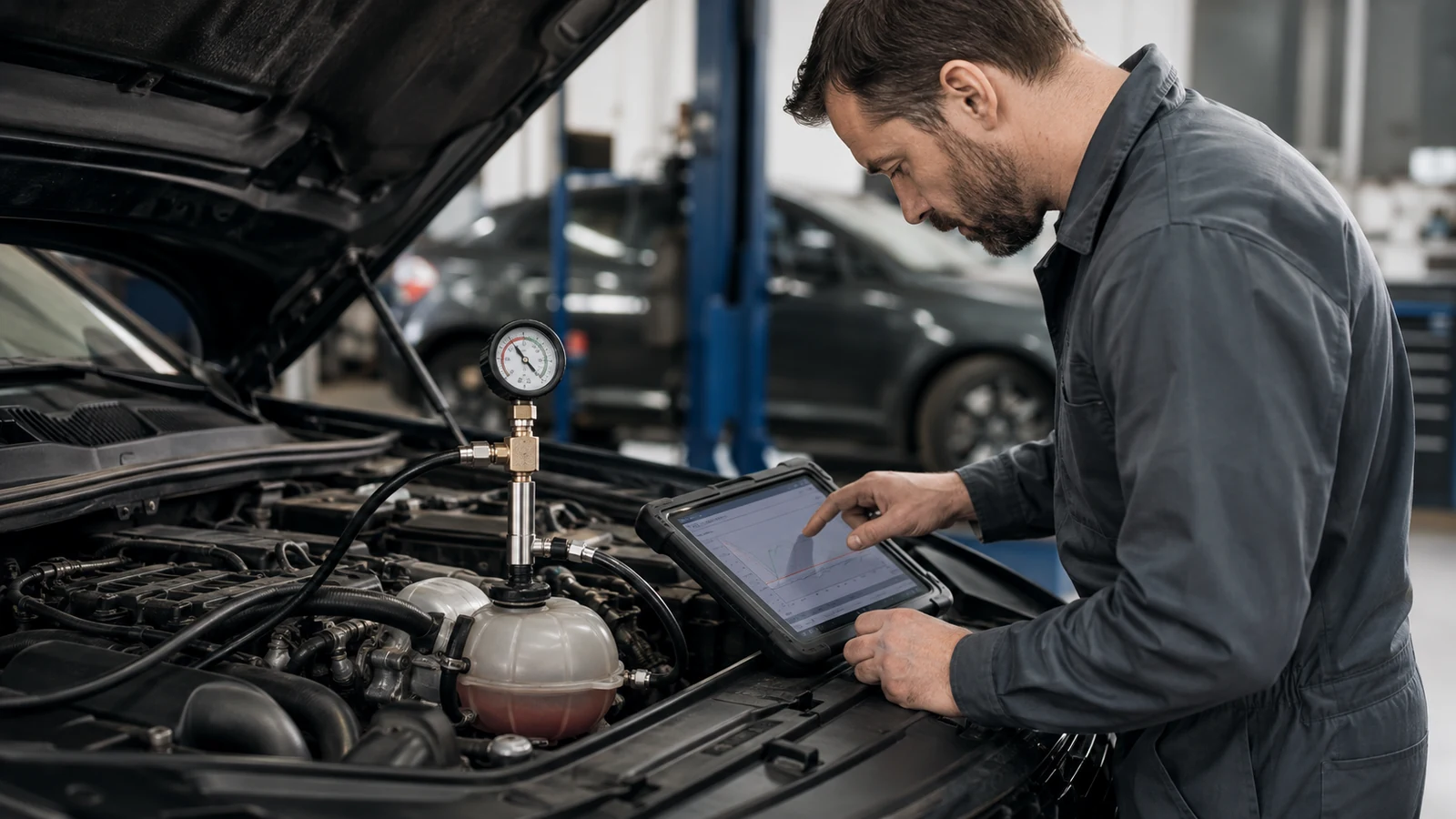
Do not use one sign by itself. Milky oil is not present in every failure, and bubbles can have causes besides a head gasket leak. NAPA and AutoZone recommend confirming the fault with tests such as cooling-system pressure checks, combustion-gas testing, compression testing, or leak-down testing.
Diagnose before replacing parts
Start with a cold engine. Confirm coolant level, inspect for visible leaks, and check the radiator, hoses, reservoir, cap area, water pump, and fan operation. Never remove a pressurized cooling-system cap when the engine is hot.
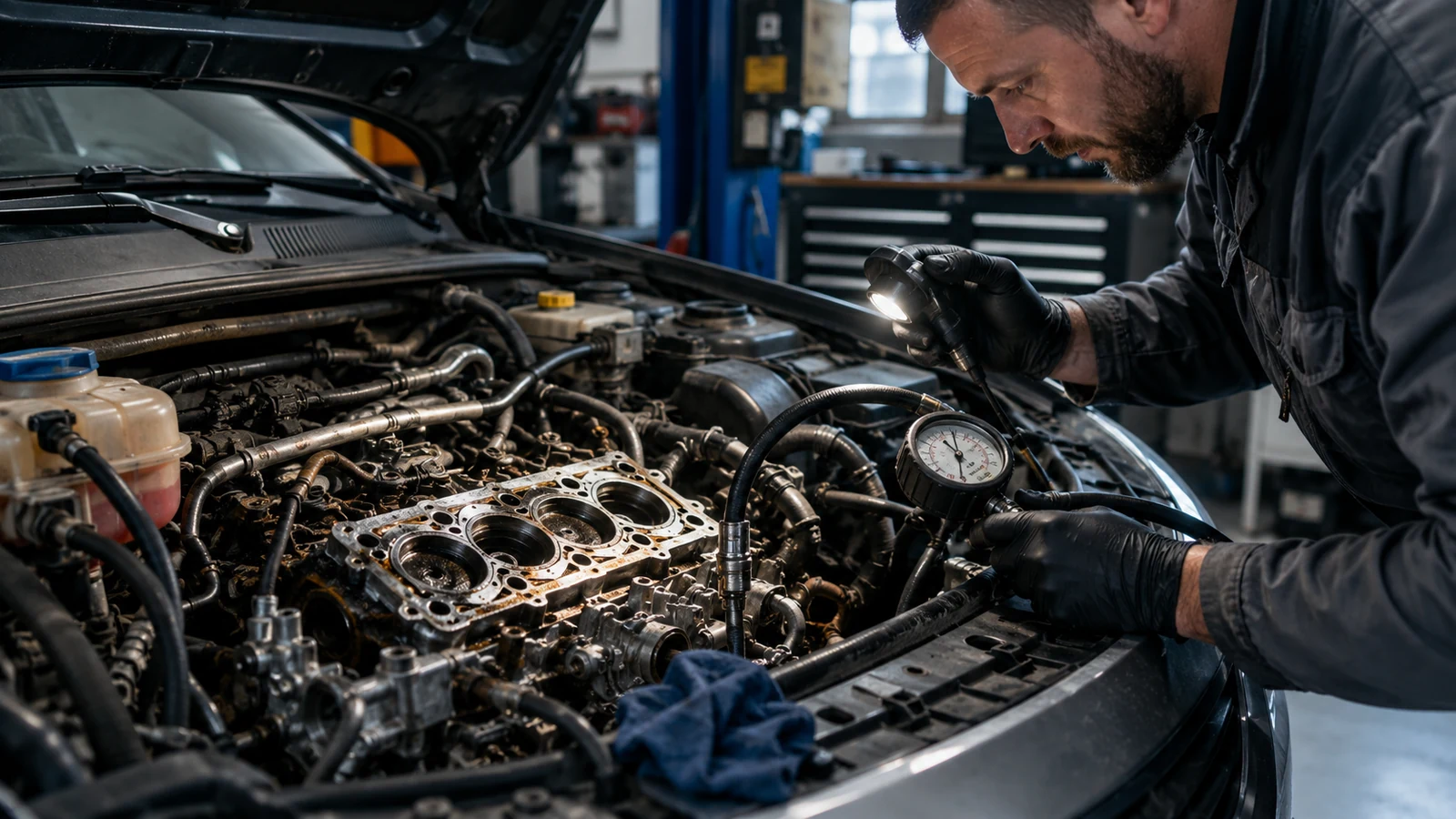
Next, pressure-test the system when appropriate. If pressure falls with no external leak, investigate internal leakage. A combustion-gas test can check for exhaust gases in the coolant, while compression or leak-down testing can help locate a cylinder sealing problem.
If the engine misfires, compare the misfire pattern with cooling symptoms instead of automatically replacing ignition parts. AutoServicePlus has a guide to factory-manual engine misfire diagnosis that reinforces symptom-based testing.
When to stop driving
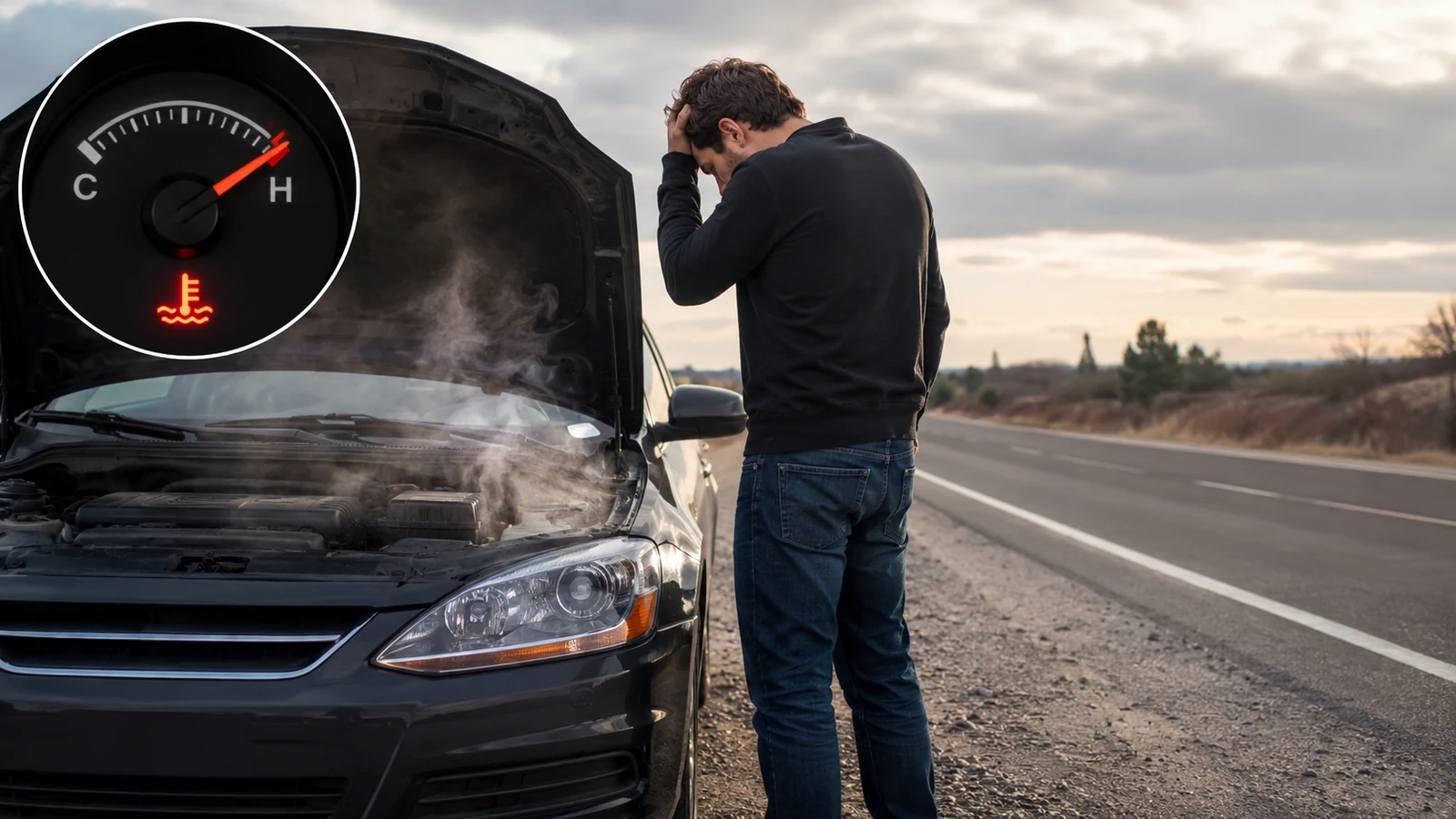
Stop driving if the temperature warning appears, the gauge climbs into the hot range, coolant is being expelled, the engine begins misfiring badly, or persistent white exhaust vapor appears after warm-up. Continuing to drive can increase the risk of warped surfaces and more extensive engine damage.
Even a small suspected leak deserves prompt testing. The fact that the engine starts and moves does not mean the sealing failure is stable.
Prevent the next failure
Prevention starts with the cooling system. Keep coolant at the correct level, use the specified coolant, repair leaks early, and investigate temperature changes rather than repeatedly adding fluid.
After a confirmed failure, check the root cause before reassembly. Inspect the cylinder head and block sealing surfaces, verify fasteners and torque procedures, and correct the cooling or combustion fault that damaged the gasket.
The goal isn’t just to install a new seal. It is to restore the heat control, surface condition, combustion control, and clamping force that let the seal survive.
Commonly Asked Questions About the Causes of a Blown Head Gasket
Can a head gasket blow without the engine overheating?
Yes. Overheating is the most common trigger, but it is not the only one. Severe detonation can create sharp combustion-pressure spikes that damage the gasket’s fire-ring area. Incorrect cylinder-head bolt torque, reused torque-to-yield bolts where replacement is required, poor surface preparation, or an uneven head or block can also reduce clamping force enough for a leak to start.
Some engines may also develop failures after long-term corrosion or repeated thermal cycling. If the engine never ran hot, don’t assume the gasket failed for no reason. Before installing a new gasket, check ignition, fueling, boost control, cooling-system pressure, surface flatness, and the exact factory tightening procedure.
Does low coolant cause a blown head gasket?
Low coolant can contribute directly because it reduces the cooling system’s ability to carry heat away from the cylinder head and combustion areas. Once coolant level falls far enough, air pockets and localized hot spots can develop even before the dashboard gauge shows an obvious problem.
The aluminum cylinder head may expand or distort more than intended, reducing the gasket’s ability to keep combustion pressure, oil, and coolant separated. The key is to find out why the coolant dropped. Check for leaks in the hose, radiator, water pump, heater core, reservoir, cap, and external engine components. If coolant disappears with no visible leak, test for an internal leak rather than repeatedly topping off the system.
Can a bad thermostat cause a head gasket to fail?
Yes, indirectly. A thermostat stuck closed can restrict coolant flow to the radiator, causing engine temperature to rise quickly. Repeated or severe overheating can distort the cylinder head, damage the gasket’s sealing layers, and reduce clamping at critical combustion areas.
A thermostat that opens late or only partially can create a slower version of the same problem. Still, replacing the thermostat alone is not enough after a head gasket failure. Also check the radiator, fan operation, water pump, coolant passages, pressure cap, and coolant level.
If the engine overheated badly, measure the cylinder head for flatness before reassembly so the new gasket isn’t installed against a distorted surface.
Will a blown head gasket always make the oil milky?
No. A head gasket can fail in several ways, and not every failure connects coolant with the oil system. A leak may allow combustion gas into a coolant passage, coolant into one cylinder, compression between adjacent cylinders, or oil to escape externally.
In those cases, the dipstick can still look normal. Milky oil is an important warning sign when coolant and oil mix, but its absence does not rule out a failed gasket.
Look at the full symptom pattern. Unexplained coolant loss, repeated overheating, cold-start misfire, persistent cooling-system pressure, white exhaust vapor after warm-up, and low cylinder compression all deserve testing. Confirm the fault with appropriate pressure, combustion-gas, compression, or leak-down tests.
Can I keep driving with a suspected blown head gasket?
Driving is risky because a small seal leak can become a much larger engine problem. Combustion gas entering the cooling system can push coolant out and trigger rapid overheating. Coolant entering a cylinder can cause misfires, contaminate the catalytic converter, or, in severe cases, fill enough of the cylinder to cause mechanical damage.
Coolant mixed with engine oil can also reduce lubrication. If the temperature gauge rises, the warning light comes on, coolant is expelled, the engine runs rough, or the exhaust produces persistent white vapor, stop driving and have it diagnosed.
Even when the engine still feels normal, testing the cooling system and combustion seal early can prevent a repair from becoming more expensive.