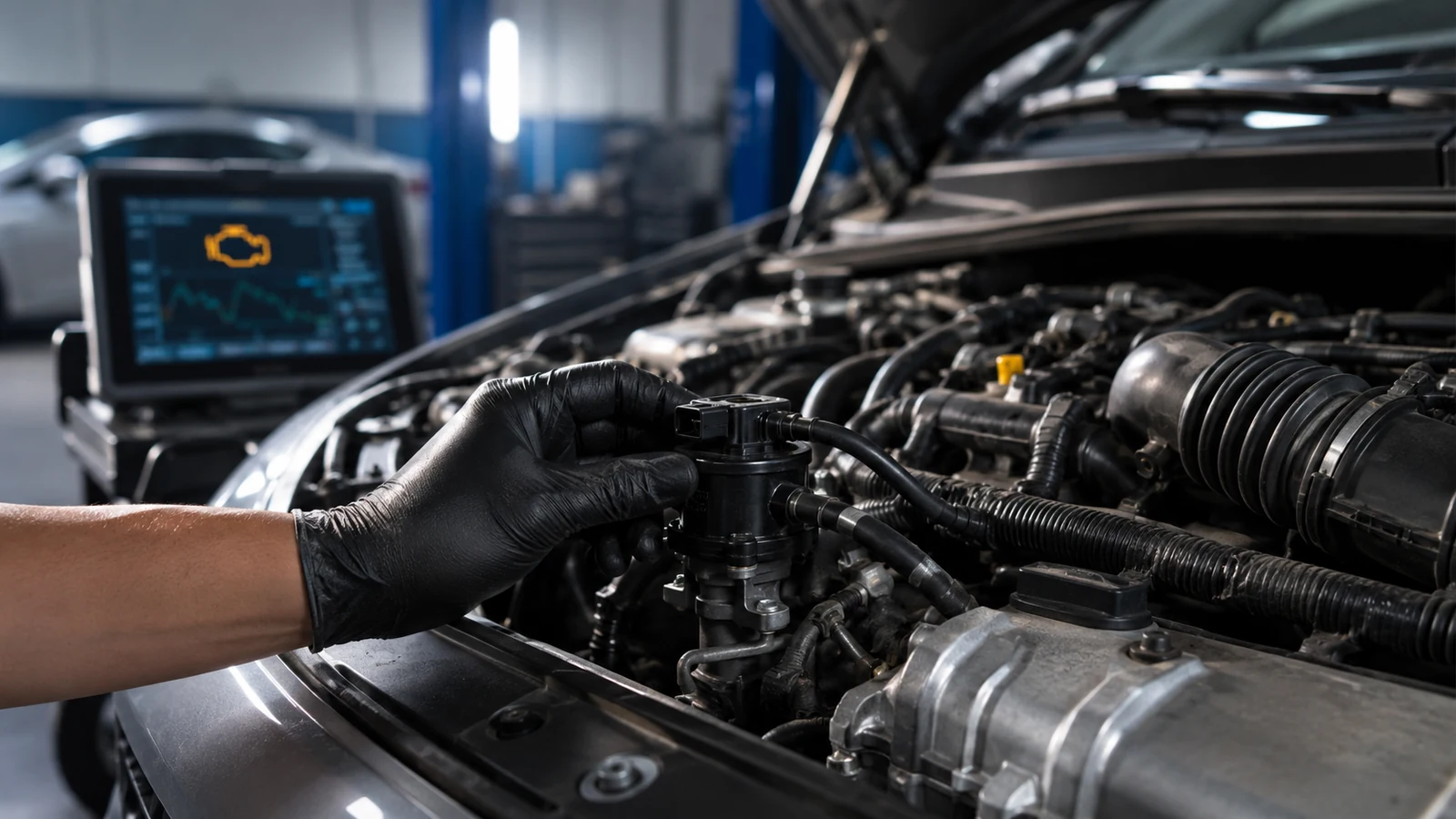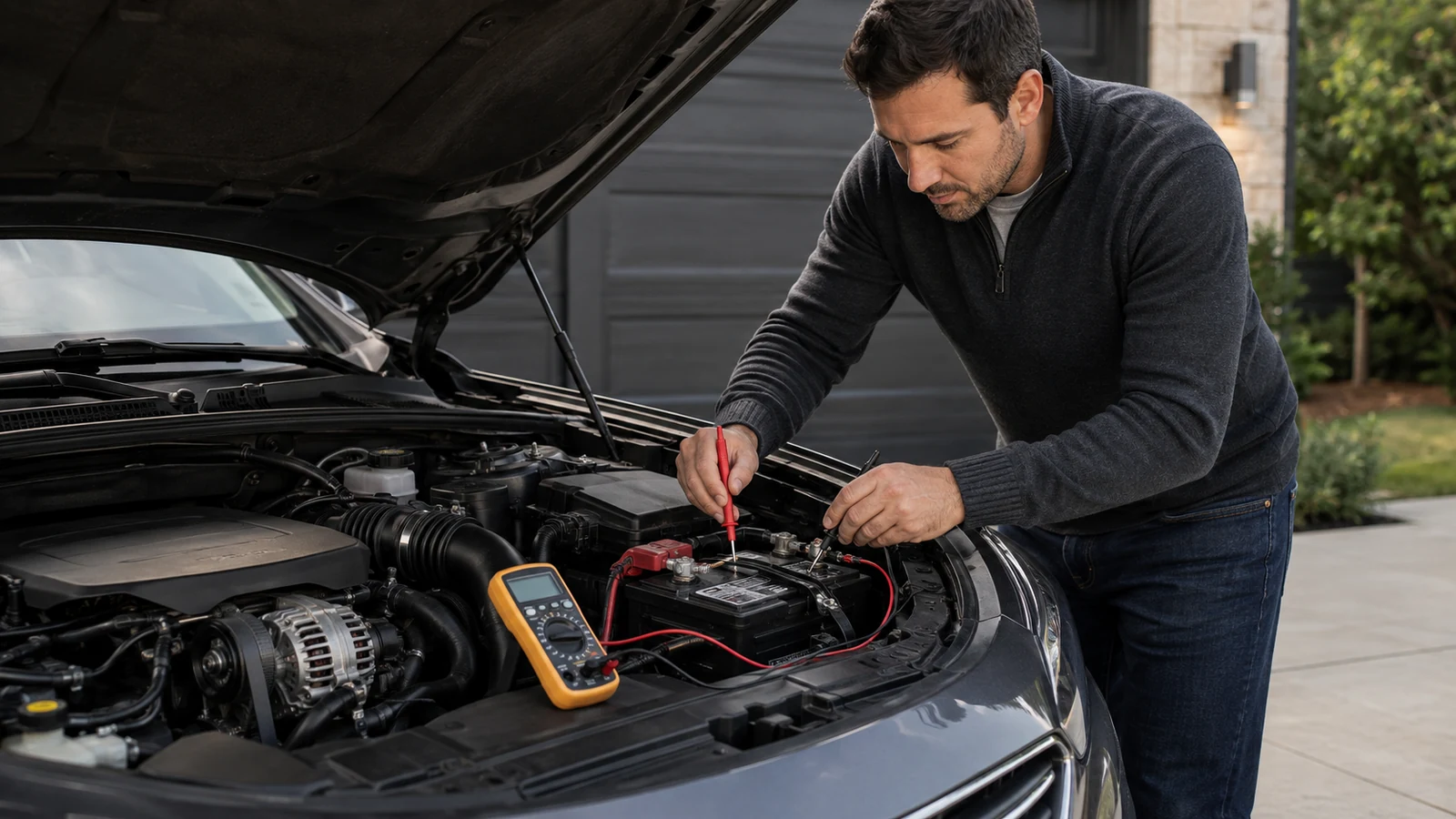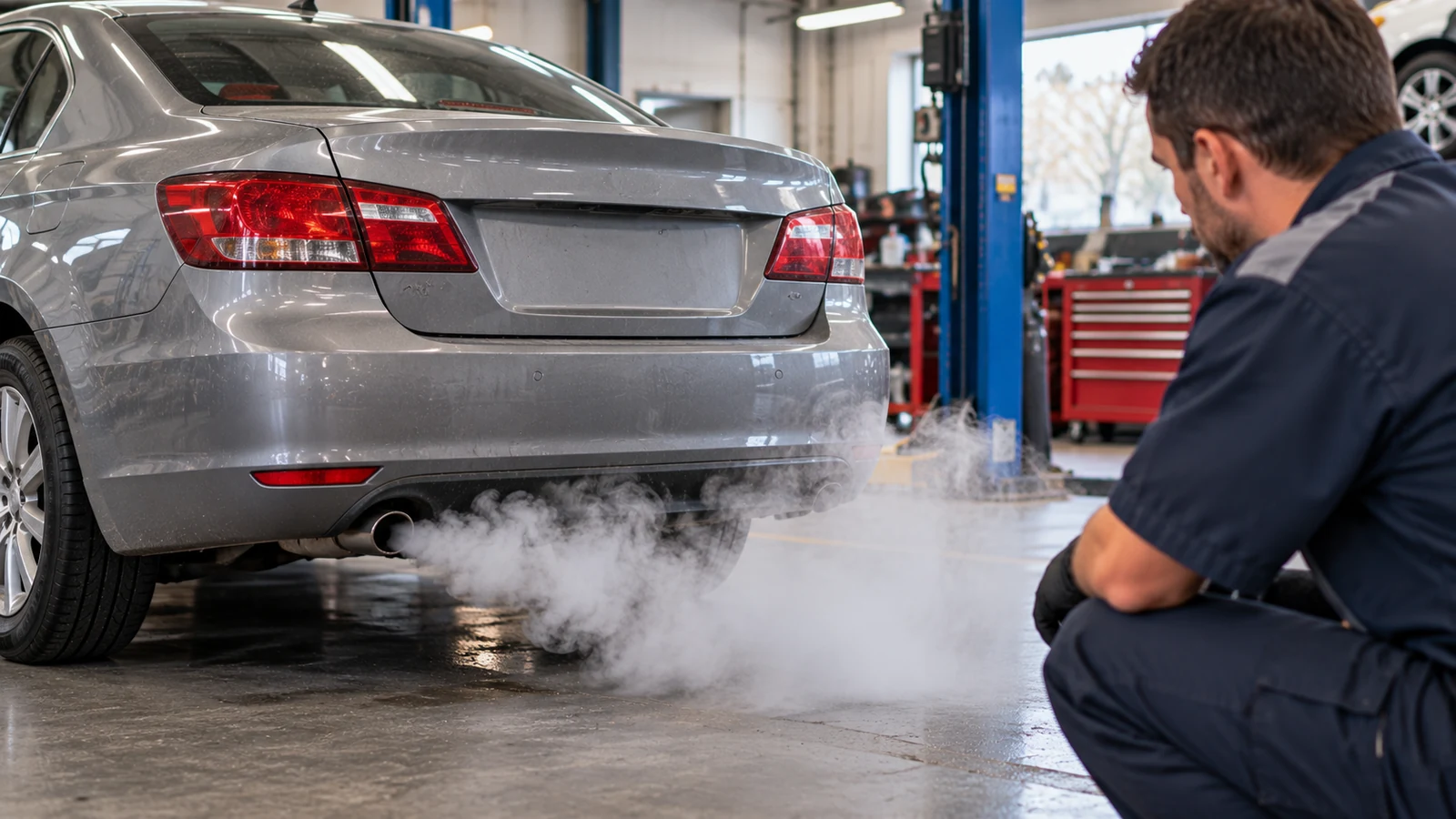
A falling coolant level with no puddle under the car can be easy to dismiss at first. Add persistent white exhaust smoke, unexplained overheating, a rough cold start, or bubbles in the coolant reservoir, and a blown head gasket becomes a much more serious possibility.
The difficulty is that none of these symptoms proves the diagnosis by itself. A leaking intake gasket, failed oil cooler, weak radiator cap, cracked cylinder head, ignition problem, or simple condensation can create surprisingly similar clues.
A head gasket repair is also too expensive and labor-intensive to approach by guessing. The sensible process is to understand what type of internal leak the symptoms suggest, rule out cheaper faults, and use pressure, combustion-gas, compression, or leak-down testing before dismantling the engine.
Always start with a cold engine. A cooling system affected by combustion pressure can become highly pressurized, so never remove a radiator or expansion-tank cap from a hot engine.
Key Takeaways
- Persistent sweet-smelling white exhaust, unexplained coolant loss, overheating, continuous coolant bubbles, and milky oil are major warning signs.
- The symptoms depend on where the head gasket has failed. A breach between cylinders behaves differently from coolant leaking into a cylinder.
- One symptom isn’t enough to confirm the problem because several less expensive faults can mimic head gasket failure.
- A cooling-system pressure test, combustion leak test, compression test, or leak-down test provides much stronger evidence.
- If overheating, coolant-contaminated oil, heavy misfiring, or severe white smoke is present, continuing to drive can turn a gasket repair into major engine damage.
- Cylinder-head work should follow engine-specific torque stages, bolt sequences, timing procedures, flatness limits, and cooling-system bleeding instructions.
Which Symptoms Point Most Strongly to a Blown Head Gasket?
Several symptoms together matter far more than any single clue.
| What you notice | What it may indicate | How useful is the clue? |
|---|---|---|
| Thick white exhaust after the engine is warm | Coolant entering a combustion chamber | Strong when combined with coolant loss |
| Coolant level keeps falling with no external leak | Internal coolant loss | Strong but not head-gasket-specific |
| Constant bubbles in coolant | Combustion gas entering cooling system | Strong, especially from a cold start |
| Engine repeatedly overheats | Cooling-system pressurization or circulation problem | Important but many faults can cause it |
| Milky oil on the dipstick | Coolant mixing with engine oil | Serious sign |
| Oily film in coolant | Oil entering cooling system | Serious but oil coolers can mimic it |
| Two neighboring cylinders have low compression | Gasket breach between cylinders | Strong diagnostic clue |
| Brief rough running after a cold start | Coolant entering one cylinder overnight | Useful when paired with coolant loss |
| Radiator hose becomes hard soon after cold start | Combustion pressure entering coolant | Useful clue |
| Oil or coolant along the head-to-block seam | External gasket leak | Useful after leaks from above are ruled out |
The most convincing diagnosis usually combines symptoms with test results. White exhaust plus coolant loss is suspicious. White exhaust, coolant loss, continuous reservoir bubbles, and a positive combustion-gas test are much more persuasive.
Why Head Gasket Symptoms Can Look So Different
The head gasket sits between the engine block and cylinder head. It has to seal combustion pressure while also separating coolant and oil passages.
Most modern engines use multi-layer steel gaskets, while composite designs are common on many older engines. Regardless of construction, the gasket performs several jobs at once.
It seals:
- The combustion chambers.
- Engine coolant passages.
- Pressurized and return oil passages.
- The outer joint between the cylinder head and block.
Because these areas sit next to each other, the exact location of a failure determines what crosses the damaged section.
Coolant Leaking Into A Cylinder
If the gasket fails between a coolant passage and the combustion chamber, coolant can enter the cylinder.
Common signs include:
- Persistent white exhaust after warm-up.
- A sweet smell from the exhaust.
- Gradual coolant loss without an obvious external leak.
- A rough or misfiring cold start that improves after several seconds.
- A spark plug that looks unusually clean, pale, crusty, or wet compared with neighboring plugs.
A small leak can allow coolant to seep into the cylinder while the vehicle is parked. The engine may stumble during the next cold start as that coolant is burned.
Combustion Gas Entering the Cooling System
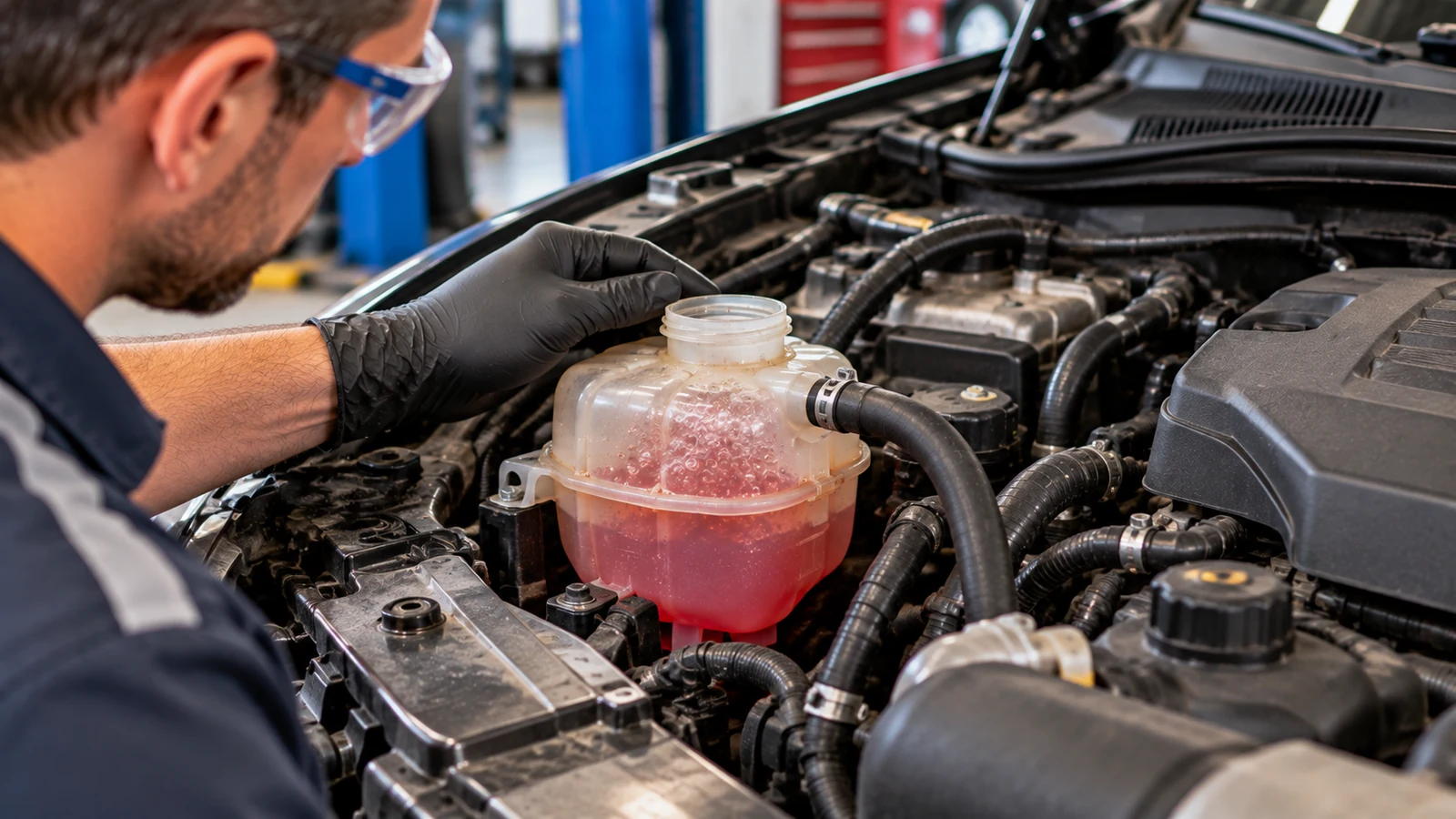
Pressure can also travel in the opposite direction. Combustion gas may escape from a cylinder into a coolant passage.
This can cause:
- Continuous bubbles in the reservoir or radiator.
- Cooling hoses becoming unusually firm soon after a cold start.
- Coolant being forced into or out of the overflow container.
- Temperature spikes.
- Poor coolant circulation caused by gas pockets.
- Heater output that changes as air moves through the system.
Some trapped air after coolant service is normal. A continuing stream of bubbles after the system should have purged itself is more concerning.
A Breach Between Neighboring Cylinders
A gasket can fail directly between two cylinder bores.
Instead of coolant loss, the main symptoms may be:
- Rough idle.
- Noticeable loss of engine power.
- Misfire codes.
- Low compression in two neighboring cylinders.
- Compression pressure leaking from one cylinder into the next.
This failure may produce no white smoke and no milky oil at all.
Oil and Coolant Mixing
A damaged section between an oil passage and coolant passage can allow the fluids to mix.
Coolant-contaminated engine oil may become light brown, creamy, or milky. Oil entering the cooling system may leave a greasy brown film or sludge in the reservoir.
Milky residue only under the oil filler cap is less conclusive. Short trips and cold weather can create condensation beneath the cap while the oil on the dipstick remains normal.
Rule Out Problems That Can Imitate a Blown Head Gasket
Before removing a cylinder head, check the faults that can produce similar symptoms.
| Possible fault | Head-gasket-like symptom | Useful distinction |
|---|---|---|
| Cold-weather condensation | Cream under oil cap | Dipstick stays normal, and coolant level is stable |
| Normal cold-start exhaust vapor | White exhaust | Thin, odorless vapor disappears as exhaust warms |
| Intake manifold gasket leak | Coolant loss and white smoke | Applies where coolant passes through the intake |
| EGR cooler leak | White smoke and coolant loss | More relevant to engines using coolant-fed EGR coolers |
| Oil cooler failure | Oil and coolant mixing | Combustion tests may remain normal |
| Cracked cylinder head or block | Nearly any gasket symptom | Often confirmed only after disassembly and testing |
| Worn piston rings | Low compression and smoke | Smoke is normally blue-gray; leak-down enters crankcase |
| Burned or leaking valve | Low compression or misfire | Leak-down air appears at intake or exhaust |
| Ignition or injector fault | Misfire and rough running | Compression remains normal |
| Weak pressure cap | Coolant pushed from reservoir | Cap fails pressure test without combustion gas present |
| Faulty coolant-temperature sensor | Apparent overheating | Scan temperature and actual temperature disagree |
A cracked head is especially possible after severe overheating. Replacing a gasket without checking the cylinder-head sealing surface and condition can lead to another failure shortly afterward.
Diagnose the Problem From Least Invasive to Most Conclusive
A good diagnostic sequence avoids dismantling the engine until the evidence justifies it.
Start With Coolant, Oil, Exhaust And Visible Leaks
With the engine completely cold:
- Check the coolant level.
- Inspect the reservoir for oil contamination.
- Check the engine-oil dipstick for coolant contamination.
- Inspect hoses, radiator connections, the thermostat housing, the water pump, the intake area, and the head-to-block joint.
- Start the engine and observe the exhaust as it warms.
- Note any misfire, rough running, unusual coolant movement, or temperature behavior.
Locate an external cooling-system leak before assuming coolant is entering the engine.
Vehicle layout matters even at this stage. For Chevrolet applications, the supplied Chevrolet workshop manual library can help identify cooling-system components and engine-specific access points. AutoServicePlus also contains a 2011–2013 Chevrolet Cruze factory workshop manual for matching Cruze applications.
Check Codes and Inspect The Spark Plugs
There is no universal diagnostic trouble code that means “blown head gasket.”
Instead, you may find:
- P0300 for random or multiple-cylinder misfires.
- P0301 through P0308 for individual-cylinder misfires.
- P0217 for an engine over-temperature condition.
The physical cylinder order matters. A pair of misfire codes does not automatically mean those cylinders sit beside each other.
Remove and organize the spark plugs in cylinder order if the repair procedure permits it. A cylinder burning coolant may leave one plug looking noticeably different from the others.
For model-specific cylinder identification and service procedures, the supplied Honda workshop manuals include applications such as the 2012–2016 Honda Civic FB/FG workshop manual and 2016–2018 Honda Civic FC/FK workshop manual.
The same principle applies to Nissan engines. Use the matching Nissan workshop manual library rather than assuming cylinder numbering or disassembly details, with the supplied 2002–2012 Nissan-Datsun Altima workshop manual serving as one model-specific example.
Pressure-Test the Cooling System
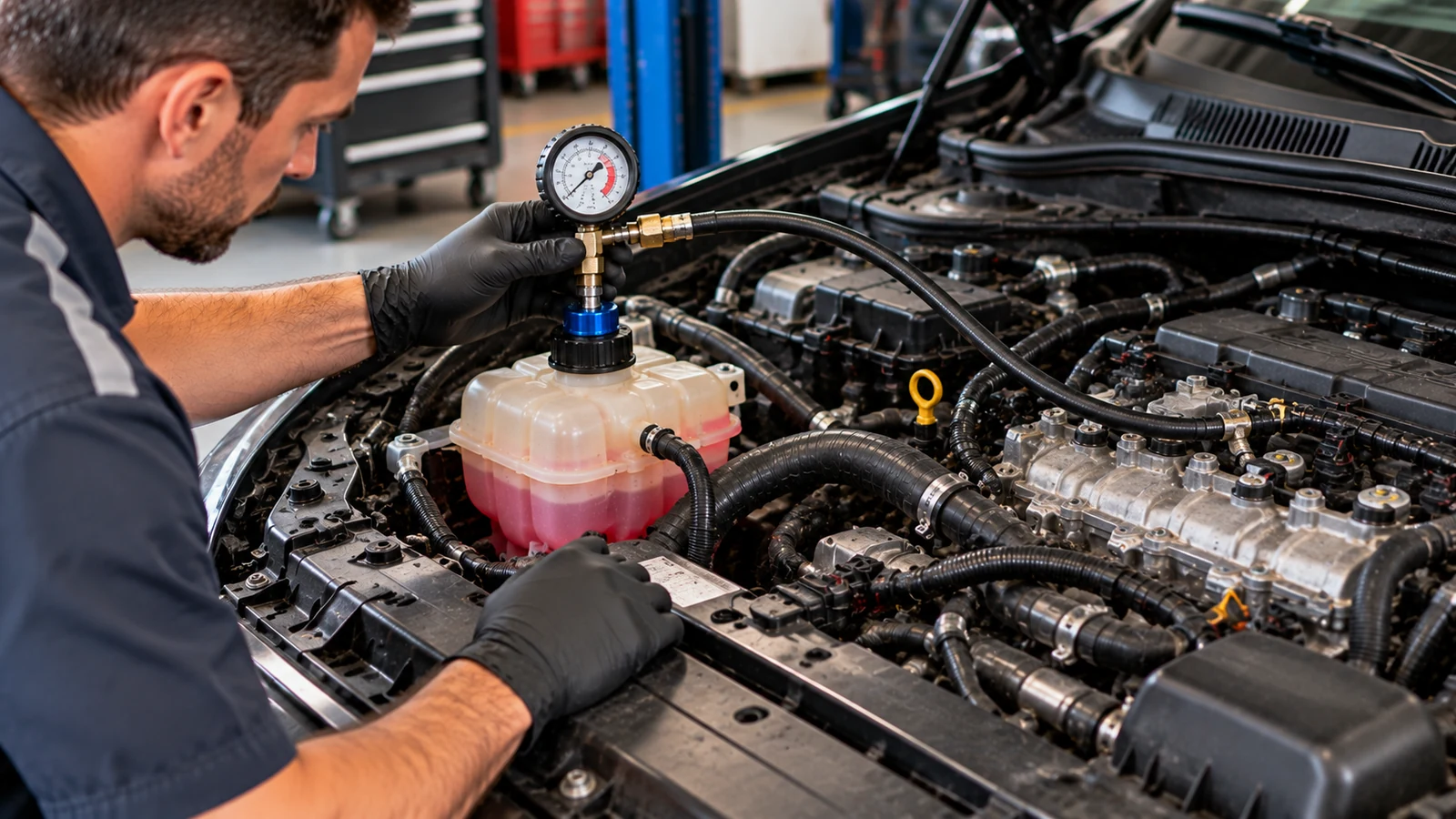
A cooling-system pressure tester pressurizes the cold system to the vehicle-specified value.
If pressure falls:
- Search carefully for an external leak.
- Check the water pump and housing joints.
- Inspect hose connections and radiator seams.
- Check around the head-to-block joint.
- If you find no external leak, investigate internal coolant loss.
With the spark plugs removed, an internal coolant leak may sometimes show itself as coolant entering a cylinder while the cooling system remains under pressure.
Never exceed the specified test pressure.
Pressure testers can often check the pressure cap as well. This matters because a cap that cannot hold the required pressure can cause boiling or coolant overflow without a head gasket failure.
On larger Chevrolet applications, access, coolant routing, and pressure specifications should come from the exact service information. The supplied 2014–2018 Chevrolet Tahoe/Suburban workshop manual is one example of model-specific documentation available in the AutoServicePlus inventory.
Use A Combustion Leak Test to Check The Coolant
A combustion leak tester, commonly called a block tester, checks the air above the coolant for combustion gases.
The tester typically draws vapor through a chemical test fluid. Follow the kit manufacturer’s color chart because fluid types can differ.
For a useful result:
- Begin with a cold engine so the cooling system can be opened safely.
- Prevent liquid coolant from entering the test fluid.
- Test as the engine warms.
- Repeat under the conditions recommended by the test kit if you suspect an intermittent leak.
A clear positive result is strong evidence that combustion gas is reaching the cooling system.
A negative result does not absolutely exclude a small leak that appears only under specific load or temperature conditions.
Compare Cylinder Compression
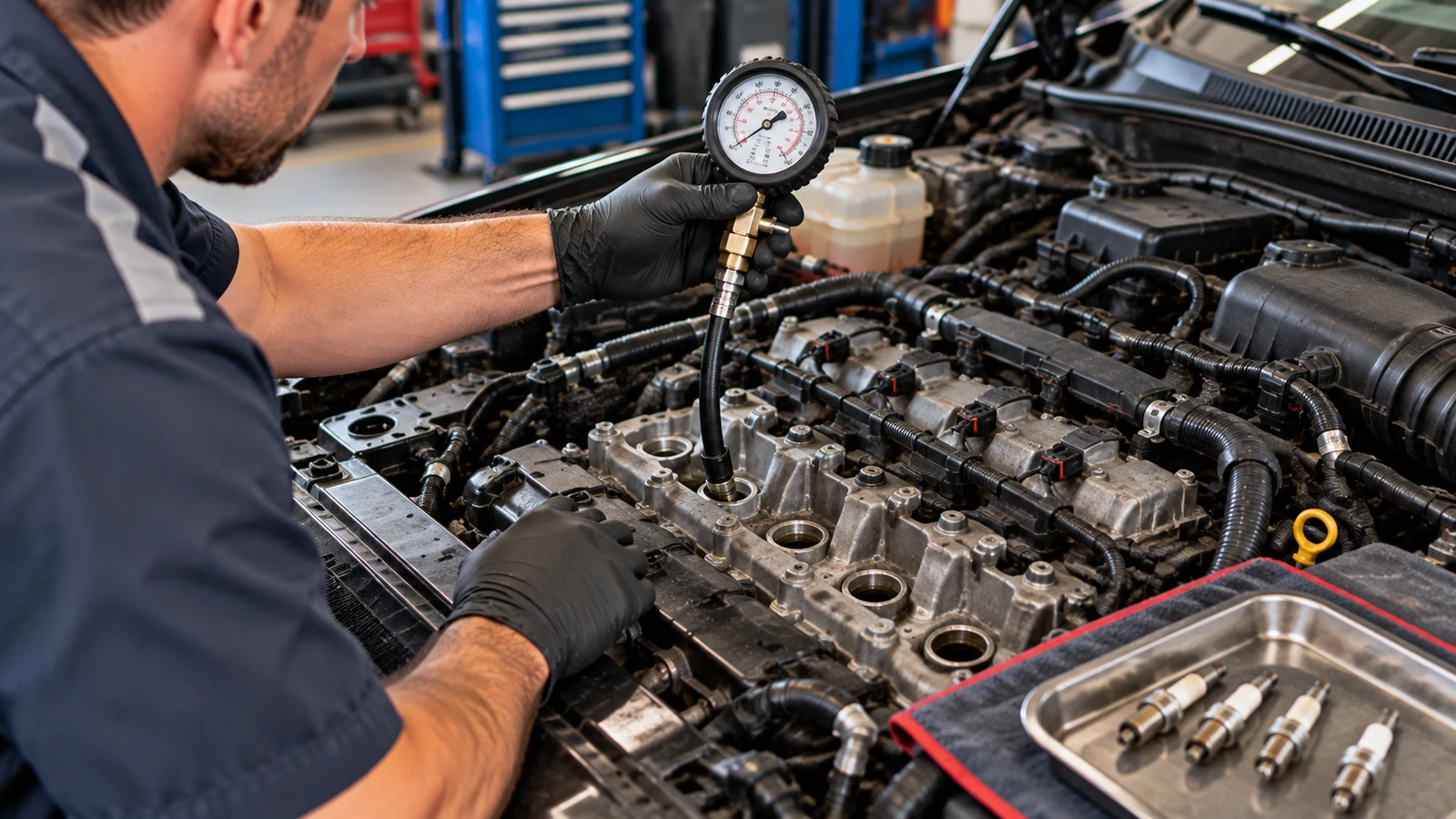
A compression test is particularly valuable if the engine runs roughly or stores cylinder-specific misfire codes.
After disabling fuel and ignition per the vehicle procedure, test each cylinder under consistent conditions.
The comparison between cylinders matters more than one isolated number.
Two adjacent cylinders with similarly low readings can point toward a gasket breach between them. One low cylinder has more possible causes, including valves, rings, or a localized gasket problem.
A wet compression test can help separate ring wear from other causes. If adding a small amount of oil significantly increases compression, ring sealing becomes a stronger suspect.
Use A Leak-Down Test to Identify The Pressure Path
A cylinder leak-down test goes a step further. Compressed air is introduced into a cylinder positioned at top dead center on the compression stroke.
Where the air escapes helps identify the fault:
- Bubbles in coolant suggest a path into the cooling system.
- Air at a neighboring spark-plug hole supports a breach between cylinders.
- Air at the oil filler or dipstick tube points toward piston-ring leakage.
- Air at the intake indicates an intake-valve leak.
- Air at the exhaust indicates an exhaust-valve leak.
Because cylinder pressure can rotate the crankshaft if the piston is not positioned correctly, follow the test equipment instructions carefully and keep tools and hands clear.
Can You Drive With Suspected Head Gasket Failure?
There is no reliable safe-mileage figure for a blown head gasket.
A small external seep may remain stable for some time, while a breach that pumps combustion gas into the cooling system can cause rapid overheating. Coolant leaking into a cylinder or into the oil creates additional risks.
Continuing to drive can lead to:
- Severe overheating.
- Cylinder-head warping.
- Cylinder-head cracking.
- Coolant-contaminated engine bearings.
- Hydrolock if enough coolant enters a cylinder.
- Catalytic-converter damage from prolonged coolant burning.
- A repair that becomes significantly larger than the original gasket job.
Arrange a tow rather than driving if:
- The temperature reaches the red zone.
- The engine is heavily misfiring.
- Thick white smoke continues after warm-up.
- The dipstick shows coolant-contaminated oil.
- Coolant level is extremely low.
- The oil-pressure warning light comes on.
If the temperature starts rising while driving, reduce engine load, switch off the air conditioning, move somewhere safe, and shut the engine down. Do not open the cooling system until it has fully cooled.
What A Proper Head Gasket Repair Actually Involves
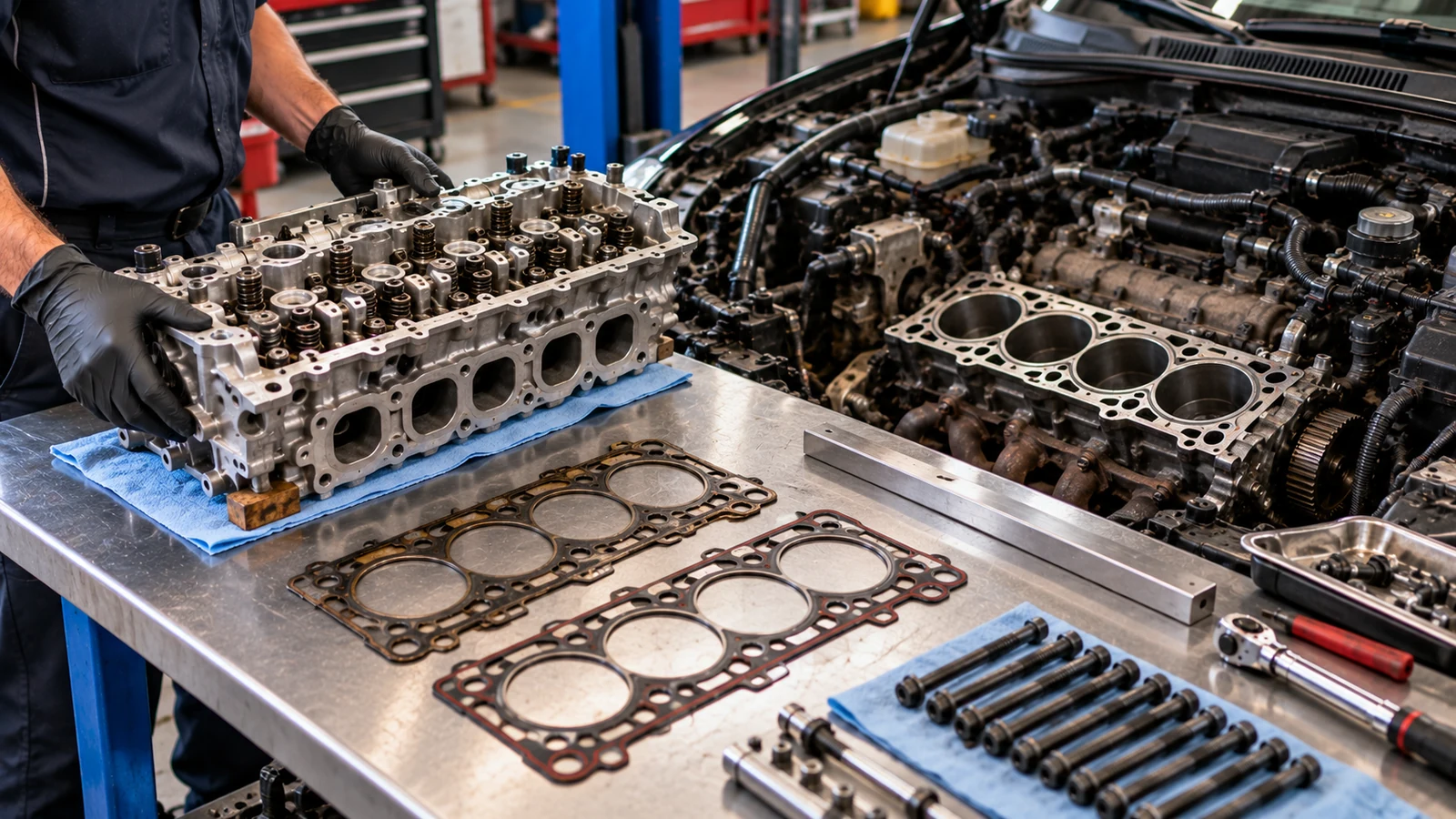
A lasting repair is more than replacing the gasket itself. The technician must determine why the old gasket failed and confirm that the sealing surfaces are still usable.
A typical repair may involve:
- Confirming the diagnosis.
- Draining coolant and engine oil.
- Removing intake, exhaust, accessory, and timing components required for cylinder-head access.
- Loosening the cylinder-head bolts in the specified sequence.
- Removing the cylinder head.
- Inspecting the gasket and combustion chambers.
- Checking the head and block sealing surfaces.
- Measuring cylinder-head flatness against the manufacturer’s limit.
- Crack-testing or resurfacing the head when necessary.
- Installing the correct replacement gasket.
- Replacing head bolts where the design requires new bolts.
- Tightening bolts to the specified torque and angle stages.
- Re-establishing camshaft and crankshaft timing correctly.
- Refilling the engine with fresh oil and coolant.
- Bleeding air from the cooling system.
- Retesting for leaks, overheating, misfires, and combustion gases.
The original cause must be corrected at the same time. Installing a new gasket without fixing a thermostat, water pump, fan, coolant-loss problem, or other overheating cause risks repeating the failure.
Why Head Gasket Repair Costs Vary So Much
The gasket itself is only one part of the cost.
Labor can increase substantially when:
- The engine has two cylinder heads.
- Timing components must be removed.
- Engine accessories or manifolds restrict cylinder-head access.
- The head needs machining.
- A cracked cylinder head needs replacement.
- New torque-to-yield bolts are required.
- Replace additional seals, belts, tensioners, fluids, or related parts while access is available.
- Overheating has already damaged bearings or other engine components.
Because the source material does not provide a universal price range, estimate the repair for the exact engine rather than assign a generic cost.
Chemical Head Gasket Sealers are Not Equivalent to A Mechanical Repair
A head gasket sealer may slow a minor leak temporarily in some situations, but it cannot straighten a warped cylinder head, repair a crack, restore damaged bolt clamping force, or correct the cooling-system problem that caused overheating.
Deposits can also affect narrow cooling passages.
For an engine worth repairing properly, removing the cylinder head, checking the sealing surfaces, and reinstalling the components to specification is the more complete approach.
A Repair Plan Needs Factory Specifications

Never guess measurements or procedures in a cylinder-head repair.
These include:
- Cylinder-head bolt tightening sequence.
- Initial torque values.
- Additional angle-tightening stages.
- Whether bolts can be reused.
- Cylinder-head flatness limits.
- Gasket orientation.
- Timing marks.
- Camshaft and crankshaft positioning.
- Sealant application points.
- Coolant specification and capacity.
- Cooling-system bleeding sequence.
Engine family matters more than the badge on the vehicle.
For BMW applications, start with the BMW workshop manual library and select the exact engine and model. The supplied 2012–2018 BMW 3 Series F30 factory workshop manual is one example where model-specific repair documentation is more appropriate than a generic cylinder-head torque chart.
The same issue appears across multiple generations of one vehicle line. AutoServicePlus provides Hyundai workshop manuals as well as separate coverage for the 2005–2010 Hyundai Tucson JM and 2010–2016 Hyundai Tucson/ix35 LM. Do not assume two Tucson generations share the same head-removal sequence, engine layout, or specifications.
Hybrid and conventional versions also need to be distinguished. The supplied Ford workshop manuals include a 2005–2008 Ford Escape 4WD workshop manual and a separate 2013 Ford Fusion FWD Hybrid workshop manual. The correct manual should match the actual powertrain before you begin any engine or cooling-system procedure.
Vehicle-Specific Head Gasket Considerations
Any engine can suffer head gasket damage after severe overheating, but the source material identifies a few applications where vehicle-specific context is particularly useful.
Subaru 2.5-Liter EJ-Series Applications
The source article notes that many Subaru 2.5-liter EJ-series engines from the late 1990s through around 2011 developed a reputation for head gasket problems.
It also distinguishes the failure pattern: some earlier applications were associated more with internal leakage and overheating, while later examples could develop slower external oil or coolant seepage at the head-to-block joint.
This makes visual inspection and exact engine identification important.
AutoServicePlus provides a Subaru workshop manual library plus model-specific documentation covering several relevant model ranges, including the 2003–2010 Subaru Forester workshop manual and 2003–2012 Subaru Legacy workshop manual.
The supplied inventory also includes a 2003–2012 Subaru Outback factory workshop manual and 2003–2011 Subaru Impreza workshop manual. Confirm the exact engine before applying gasket, bolt, timing, or machining specifications.
Third-generation Toyota Prius
The source also discusses head gasket concerns reported around 2010–2015 Toyota Prius models using the 1.8-liter 2ZR-FXE engine. It notes that some hybrid specialists associate these failures with EGR-system carbon buildup and increased combustion temperatures.
Reported symptoms can include:
- Gradual coolant loss.
- Rough running or misfire after a cold start.
- White exhaust.
- Overheating as the problem progresses.
Because the Prius combines engine service with hybrid-specific safety considerations, generic instructions are particularly inappropriate.
Start with the supplied Toyota workshop manuals. AutoServicePlus provides a 2010–2013 Toyota Prius factory workshop manual covering part of the source’s relevant generation.
The inventory also contains a 2001–2009 Toyota Prius workshop manual and a separate 2012–2013 Toyota Prius V workshop manual. These separate destinations reinforce why you should confirm the Prius generation and body variant rather than treating every Prius procedure as interchangeable.
Other Platform Examples Where Engine Matching Matters
The same principle applies even when a model is not being identified here as especially prone to head gasket failure.
European platforms can offer several engines within one model range. The supplied Volkswagen workshop manuals include the 2008–2012 Volkswagen Golf Mk6 GTI workshop manual. Use the matching engine information for head-bolt procedure, timing access, cooling layout, and disassembly rather than a general Volkswagen procedure.
Likewise, the Audi workshop manual library contains model-specific service information such as the 2009–2013 Audi A4 Quattro 8K2 workshop manual. Its inclusion here is for model-specific repair information, not as a claim that the A4 is inherently prone to head gasket failure.
Engine configurations can differ just as much across manufacturers. AutoServicePlus lists Volvo workshop manuals alongside a 2003 Volvo XC90 2.5T AWD workshop manual, so repair procedures match the actual engine rather than being inferred from another Volvo platform.
For newer SUVs, the same rule applies. The Land Rover workshop manual library includes a 2015–2017 Land Rover Discovery Sport L550 workshop manual. It should be used to verify component removal, timing, cooling-system service, and engine-specific specifications before cylinder-head work begins.
How to Reduce the Risk of Another Head Gasket Failure
Most prevention focuses on controlling engine temperature and correcting cooling-system problems early.
Useful habits include:
- Check coolant level only when the engine is cold.
- Investigate recurring coolant loss instead of repeatedly topping up.
- Use the coolant type specified for the vehicle.
- Replace coolant at the required interval.
- Repair thermostat, water pump, radiator, pressure cap, and fan problems promptly.
- Stop driving if the engine begins to overheat.
- Address persistent misfires or abnormal combustion problems.
- Follow the correct cylinder-head tightening procedure whenever you dismantle the engine.
- Bleed the cooling system correctly after repairs.
A new gasket cannot compensate for a cooling system that still has the fault responsible for the original overheating.
Conclusion
The clearest signs of a blown head gasket are not one isolated symptom but a pattern: persistent sweet white exhaust, unexplained coolant loss, bubbles or early pressure in the cooling system, repeated overheating, abnormal compression, or oil and coolant contamination.
Before ordering parts or removing the cylinder head, rule out external leaks, condensation, oil-cooler problems, ignition faults, radiator-cap problems, and other lookalikes. Then use the appropriate pressure, combustion-gas, compression, or leak-down test to confirm where the engine is losing its seal.
Once the failure is confirmed, match the repair information to the exact vehicle and engine. Head-bolt stages, angle specifications, timing procedures, surface limits, coolant requirements, and bleeding procedures are engine-specific details, and getting them right is what separates a lasting repair from another failed gasket.
Commonly Asked Questions About Head Gasket Failure Symptoms
What Are the First Signs of A Blown Head Gasket?
Early signs can include gradual coolant loss with no visible leak, a faint sweet smell from the exhaust, an occasional rough cold start, temperature fluctuations, or a small oil or coolant seep at the head-to-block joint.
Early leaks can be intermittent, so you may need to repeat testing if symptoms occur only when the engine is fully hot or under load.
Does White Smoke Always Mean The Head Gasket Is Blown?
No.
Thin white vapor from a cold exhaust is normal condensation and should disappear as the system warms. Persistent thick white exhaust with a sweet smell is more suspicious for coolant burning, especially if the coolant level is also falling.
An intake gasket or EGR cooler can also allow coolant into the intake or exhaust on certain engine designs.
Can A Head Gasket Fail Without Mixing Oil and Coolant?
Yes.
The gasket can fail between a cylinder and coolant passage, between neighboring cylinders, or at an external edge without creating any oil-and-coolant mixture.
Milky oil is only one possible failure pattern.
Can A Blown Head Gasket Cause A Check Engine Light?
Yes, indirectly.
A leaking gasket may produce random or cylinder-specific misfire codes, and an overheating engine may record an over-temperature code. No universal diagnostic code directly identifies a failed head gasket.
Use the codes to decide what to test next rather than treating them as proof.
How Do I Check for A Blown Head Gasket At Home?
Begin with the engine cold.
Check coolant level, inspect the dipstick and reservoir, look for external leaks, watch the exhaust after warm-up, and scan for stored trouble codes. Spark-plug inspection can identify a suspicious cylinder.
A combustion leak tester and cooling-system pressure tester provide stronger evidence. Compression and leak-down tests are useful when cylinder sealing is also in question.
Can A Compression Test Prove The Head Gasket Is Bad?
It can provide strong evidence but does not identify every type of failure.
Two neighboring cylinders with unusually low compression can indicate a gasket breach between them. A coolant-to-cylinder leak may still require pressure testing, combustion-gas testing, or leak-down testing to confirm.
Why Can The Engine Still Run Normally With A Damaged Head Gasket?
A small leak may only open at a particular temperature, cylinder pressure, or engine load.
Some failures begin as minor external seeps or allow only a small amount of coolant into a cylinder overnight. As the damaged area grows, symptoms can become much more obvious.
Is Head Gasket Sealer A Permanent Repair?
It should not be treated as equivalent to a proper mechanical repair.
A sealer cannot correct a warped cylinder head, repair a cracked casting, restore damaged sealing surfaces, or fix the overheating problem that caused the gasket to fail.
Is A Blown Head Gasket Worth Repairing?
That depends on the vehicle’s overall condition, value, and the amount of secondary damage.
A gasket failure caught before major overheating or oil contamination may be repairable without replacing the engine. A cracked head, extensive overheating damage, contaminated bearings, or multiple unrelated vehicle problems can change the economics substantially.
Should The Cylinder Head Always Be Checked When Replacing The Gasket?
Evaluate the sealing surface according to the engine’s repair procedure.
Severe overheating can distort or crack the cylinder head. Installing a new gasket without checking the head against the specified limits can allow the same problem to return.