You filled the tires, started the car, and the tire pressure light is still staring back at you. That warning can mean a tire is still underinflated, the pressure dropped again, or the Tire Pressure Monitoring System hasn’t accepted the change.
Start with the actual cold tire pressure, not the number you remember adding at the pump. A correct pressure reading is the fastest way to separate a tire problem from a TPMS problem.
The right diagnosis follows a simple order. Check pressure, compare it with the door placard, watch how the light behaves, then investigate leaks, reset requirements, and sensor faults.
Why Won’t My Tire Pressure Light Go Off: Follow These 7 Checks
A tire pressure light that stays on after inflation usually points to one of a few causes: the pressure is still wrong, the tires were checked warm, a slow leak dropped the pressure again, the system needs driving time or a relearn, or a TPMS sensor has a fault. Work through the checks below in order so you do not replace parts before confirming the basics.
| What you see | Most likely cause | Best next check |
|---|---|---|
| Light stays solid after adding air | One tire is still below the required pressure | Check all tires cold against the door placard |
| Light returns the next morning | Temperature drop or slow leak | Recheck the same tires before driving |
| Light flashes, then stays solid | TPMS malfunction | Scan the system and test sensor communication |
| Light appeared after tire service | Relearn or sensor ID issue | Follow the vehicle-specific TPMS procedure |
| One tire keeps losing pressure | Puncture, valve, wheel, or bead leak | Inspect and pressure-test that tire |
Check pressure when the tires are cold
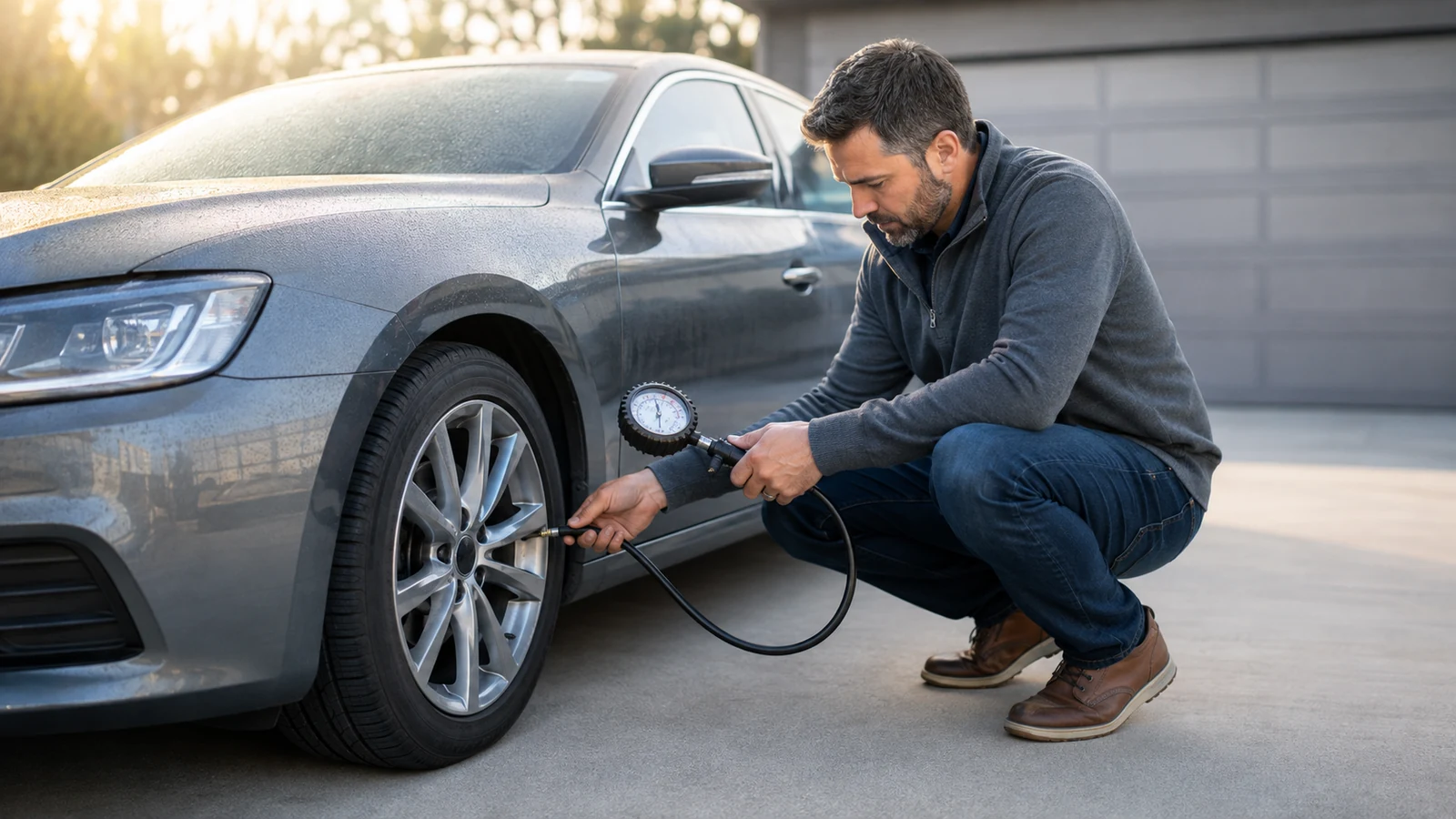
Tire pressure changes as the tires heat during driving. For the most accurate comparison, check them after the vehicle has been parked for several hours. The recommended pressure is a cold inflation pressure, so a warm reading can make a slightly low tire look correct.
Check every road tire with a reliable gauge. If your vehicle monitors a full-size spare, check that tire too. Do not assume the dashboard display is the only reading that matters.
If the warning disappears after a cold-pressure correction, the TPMS was likely doing its job. If the light returns, note how quickly the pressure drops. That timing can point toward a leak.
Use the door placard, not the sidewall
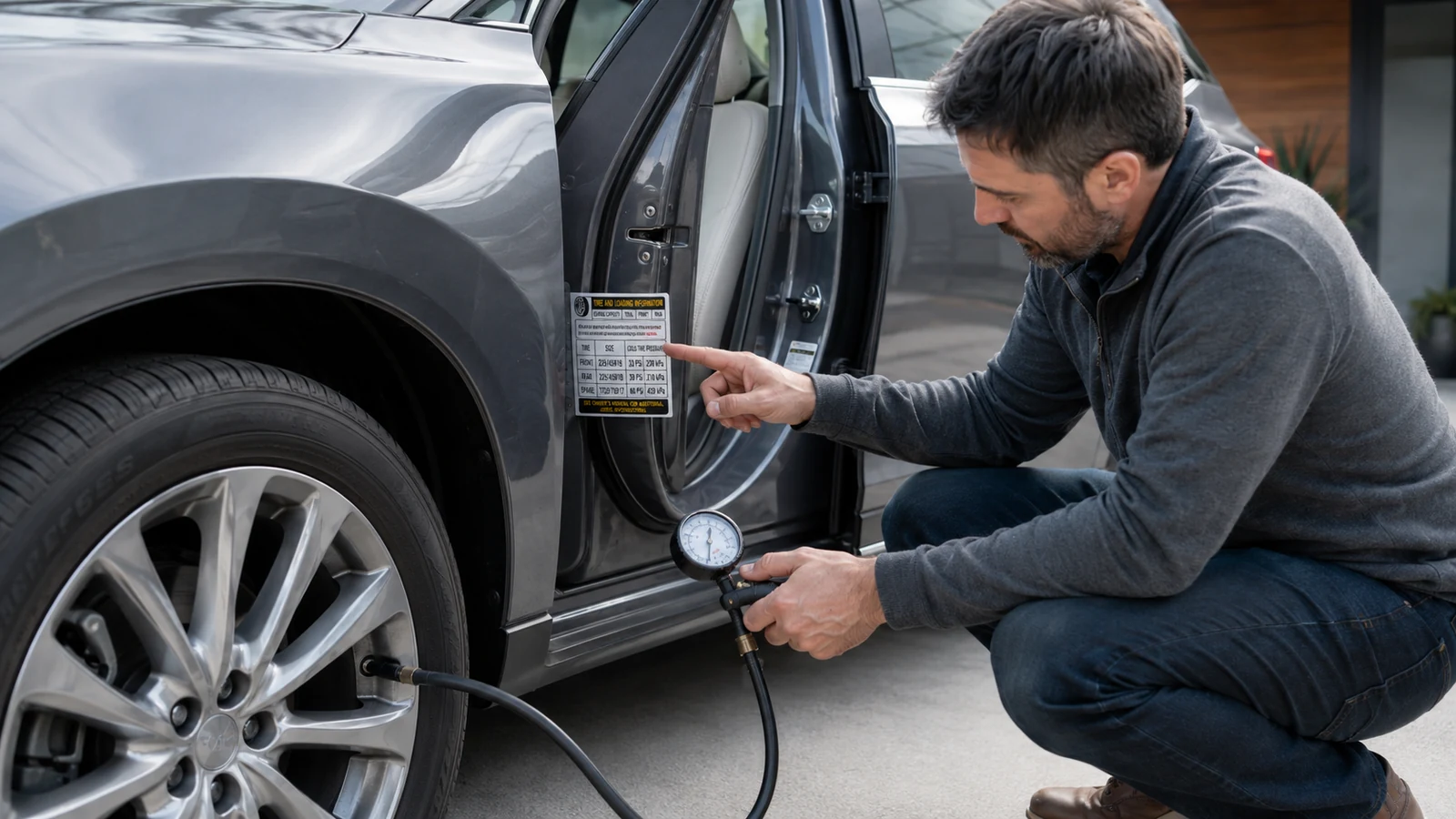
The correct PSI usually comes from the vehicle’s tire information placard, often on the driver-side door jamb. The pressure molded into the tire sidewall is not your normal target pressure.
Front and rear pressures can also differ. Fill each position to the vehicle manufacturer’s recommended PSI, then recheck with the same gauge.
This simple step matters because a tire can look normal and still be low enough to trigger a warning. TPMS is designed to alert you to significant underinflation, not to replace routine pressure checks.

Give the TPMS time to update
Some vehicles update the warning quickly. Others need a short drive before the sensors transmit fresh pressure data or the indirect system recalibrates. Vehicle-specific procedures can differ, so the owner’s manual should guide the reset process.
After setting cold pressures correctly, start the vehicle and follow the owner’s manual procedure. If the manual calls for a drive cycle, use that process instead of repeatedly adding more air.
Do not overinflate a tire just to make the light disappear. If the pressure is correct and the light stays solid, move on to the next checks instead of chasing the warning with extra PSI.
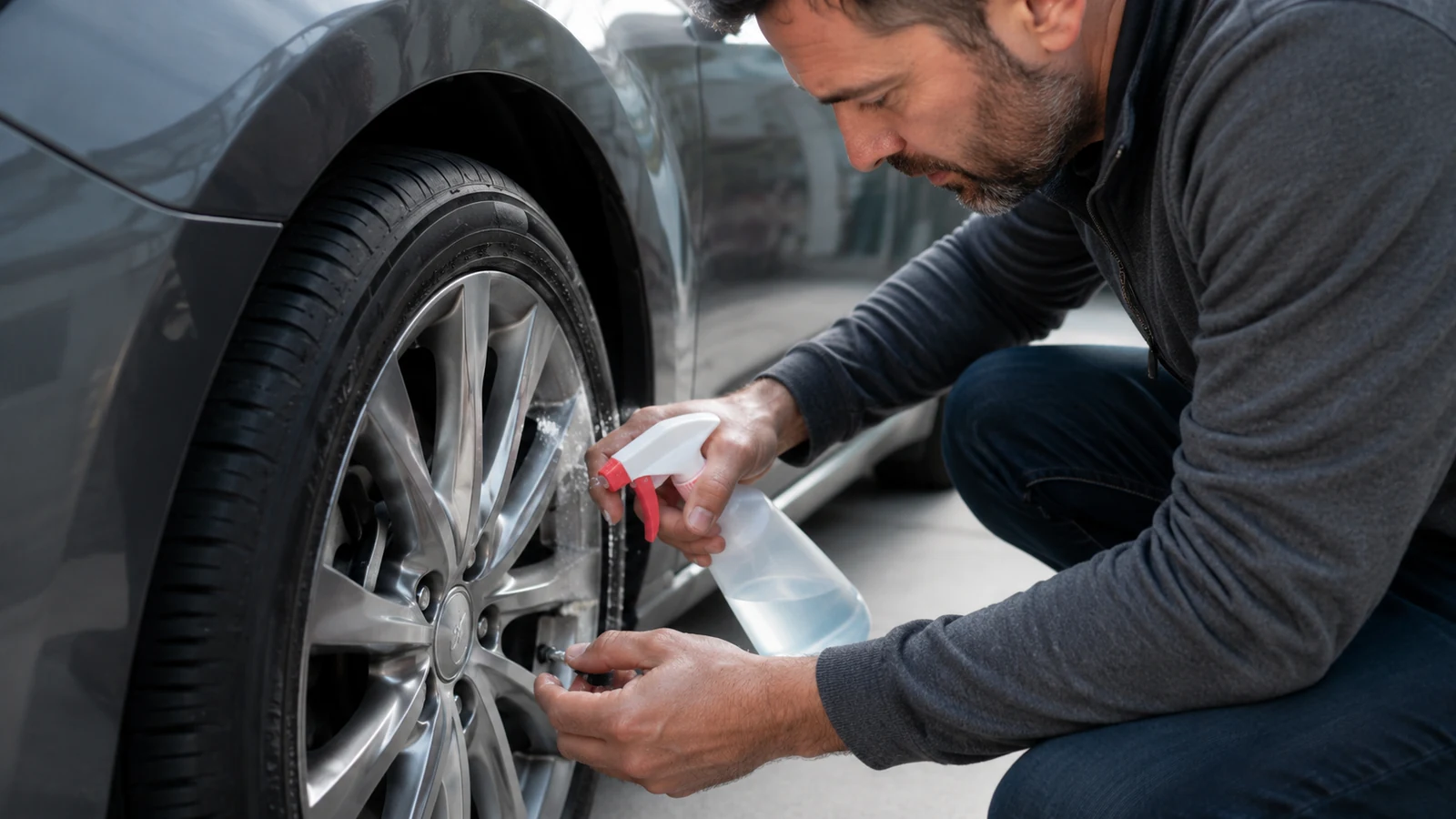
Check for a slow air leak
A tire that was correct yesterday can be low again today. Small punctures, leaking valve stems, corrosion at the wheel bead, or wheel damage can cause gradual pressure loss.
Record the cold pressure in each tire, then compare it again later under similar conditions. A repeated drop in one position is more useful than a one-time reading.
If the same tire keeps losing pressure, repair the leak before resetting the TPMS. Repeated resets only hide the pattern temporarily. NHTSA also recommends regular pressure checks because TPMS does not replace normal tire maintenance.
Read the warning-light behavior
A solid TPMS light commonly indicates low tire pressure. A light that flashes for about 60 to 90 seconds after startup and then stays illuminated indicates a TPMS malfunction on systems that use the combined warning telltale.
That distinction prevents wasted effort. If the light flashes first, adding air may not solve the underlying issue because the system may not be receiving valid sensor or system data.
At that point, system diagnosis becomes more important. AutoServicePlus’s guide to testing a vehicle sensor correctly can help you understand why you should verify a sensor before replacing it.
Consider relearn and sensor faults
Direct TPMS systems use pressure sensors at the wheels, while indirect systems infer pressure changes using wheel speed and other vehicle data. After tire rotation, wheel replacement, or sensor-related service, some systems require a TPMS relearn or reset.
If the warning started immediately after tire service, check the vehicle-specific relearn procedure first. Replacement tires, wheels, or incompatible TPMS components can also create system malfunctions.
When scan data is available, use it to see which sensor or system component isn’t communicating. Following a diagnostic flowchart keeps the process organized, and working through trouble codes step by step can prevent you from mistaking a code for proof that one part has failed.
Before buying a new TPMS sensor, make sure the fault is actually at the sensor. This is the same principle behind avoiding a wrong part replacement in any electrical diagnosis.
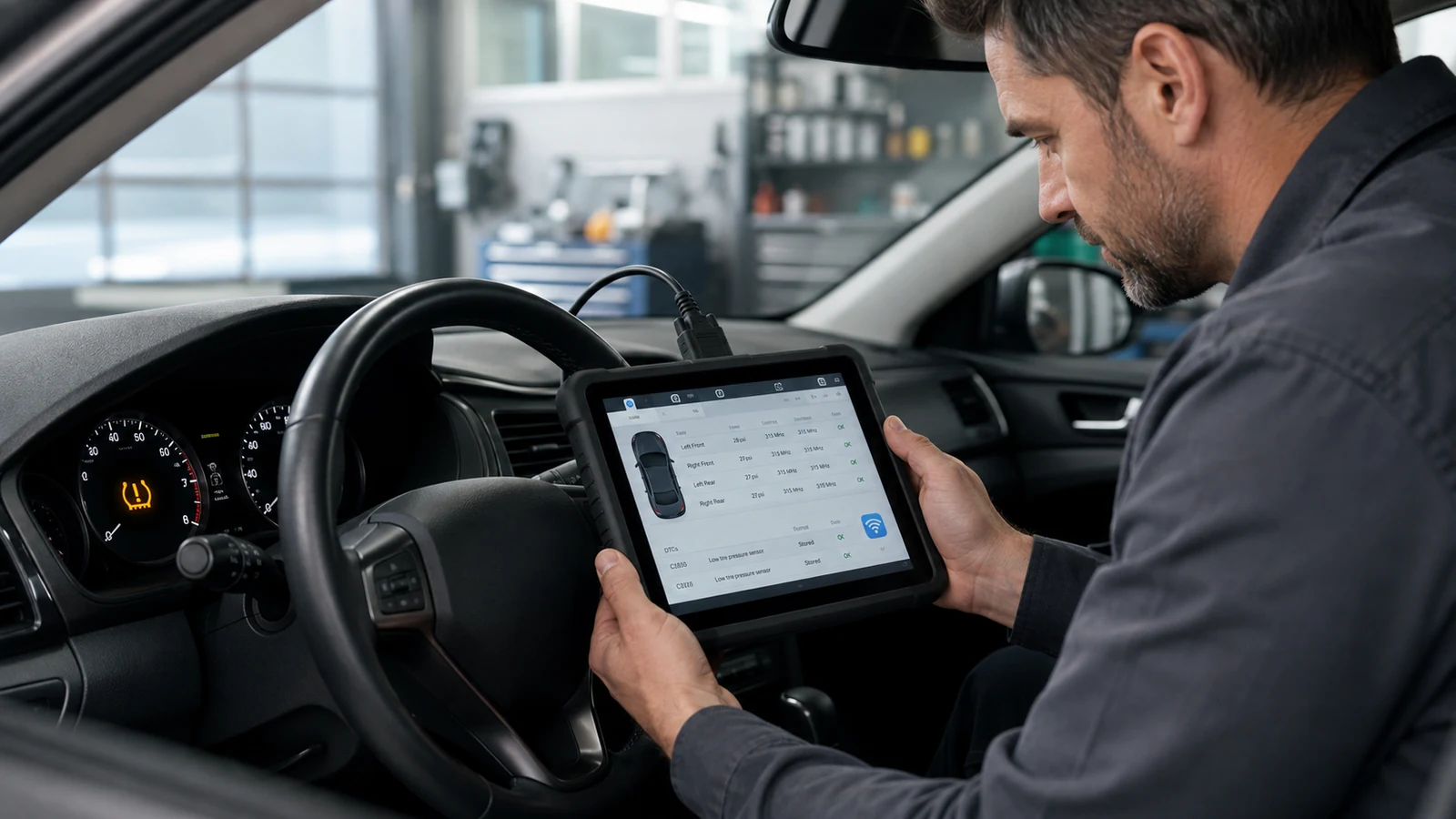
Know when the warning needs diagnosis
If all tires hold the correct cold pressure but the light still flashes or stays on after the specified reset or drive procedure, the system needs deeper diagnosis. The problem may involve a wheel sensor, programming, receiver communication, incompatible replacement components, or an indirect TPMS calibration issue.
Do not ignore a persistent warning just because the car feels normal. When a TPMS malfunction indicator is active, the system may not detect or report low pressure as intended.
The best next step is to verify tire pressure again, document the warning behavior, and use the correct service information for your vehicle. That gives a technician or experienced DIYer a much cleaner starting point than simply replacing the sensor that seems most suspicious.
Commonly Asked Questions About Tire Pressure Light Go Off
Can cold weather keep the TPMS light on?
Yes. Colder air lowers tire pressure, so a tire that was only slightly above the warning threshold in warmer weather may trigger the light after an overnight temperature drop. Check the tires before driving, when they are cold, and compare each reading with the pressure listed on the vehicle placard.
If a tire is low, adjust it to the recommended cold PSI. Then follow the vehicle’s normal TPMS update procedure. If the light comes back repeatedly after you correct the pressure, don’t assume temperature is the only cause.
Track the pressure over several cold checks. One tire losing more pressure than the others can indicate a slow leak.
Can I drive if the tire pressure light stays on?
First, stop somewhere safe and check the actual tire pressures. If one tire is significantly low, driving on it can increase heat, affect handling, and damage the tire. Correct the pressure before continuing if you can do so safely.
If all tires are at the recommended cold pressure but the light flashes and then stays on, the issue may be a TPMS malfunction rather than active underinflation.
The vehicle may still drive normally, but the monitoring system may not reliably warn you of a future pressure loss. Treat the light as unresolved until you’ve checked both the pressure and TPMS operation.
Why did the TPMS light return the next day?
A light that returns after you added air often means the pressure dropped again or the first reading was taken while the tires were warm. Recheck every tire before driving the next morning. Use the door-placard pressure as your target and record the readings.
If one tire loses noticeably more pressure than the others, inspect for a puncture, valve-stem leak, bead leak, or wheel damage. If all pressures remain stable and correct, look at the light pattern and the vehicle’s reset requirements.
A flashing-then-solid warning suggests a system fault, while a solid warning is more consistent with low pressure.
Does a TPMS sensor need to be reset after replacement?
Often, yes, but the exact process depends on the vehicle. A replacement direct-TPMS sensor must work correctly with the vehicle’s monitoring system, and some vehicles require a reset, registration, or relearn procedure after tire or sensor service. Others may require a vehicle-specific driving procedure to update.
Tire rotation can also require position relearning on certain systems. If a warning appeared right after tire or sensor service, check the manufacturer’s procedure before assuming the replacement sensor is defective.
Confirm the sensor is compatible, communicating, and recognized correctly. Replacing hardware without performing the required vehicle-specific procedure can leave the warning active.
Why is the light on when all four tires read correctly?
Start by confirming the pressures when the tires are cold and using a reliable gauge. If the readings match the placard, check whether your vehicle also monitors a spare tire. Next, watch the dashboard warning at startup.
A light that flashes for about a minute before staying on indicates a TPMS malfunction on a combined warning system. The problem can involve sensor communication, compatible replacement equipment, or another system fault.
If the light stays solid, the system may still need its specified drive or calibration procedure. Do not keep adding air above the recommended pressure. Follow the owner’s manual or service information for the exact reset and diagnostic sequence.