A tire pressure warning light can mean more than a dashboard annoyance. It may indicate low pressure, a recent tire change, a sensor problem, or a TPMS that hasn’t finished relearning. Ignoring it can leave you guessing about a real tire issue.
The safest first move is not pressing buttons. Check the tire pressures first, then use the reset or calibration method designed for your vehicle.
This guide shows the practical sequence AutoServicePlus recommends: verify pressure, identify the light pattern, reset or calibrate correctly, allow relearning time, and diagnose the system if the warning returns.
How Do I Reset Tire Pressure Light: Start Here
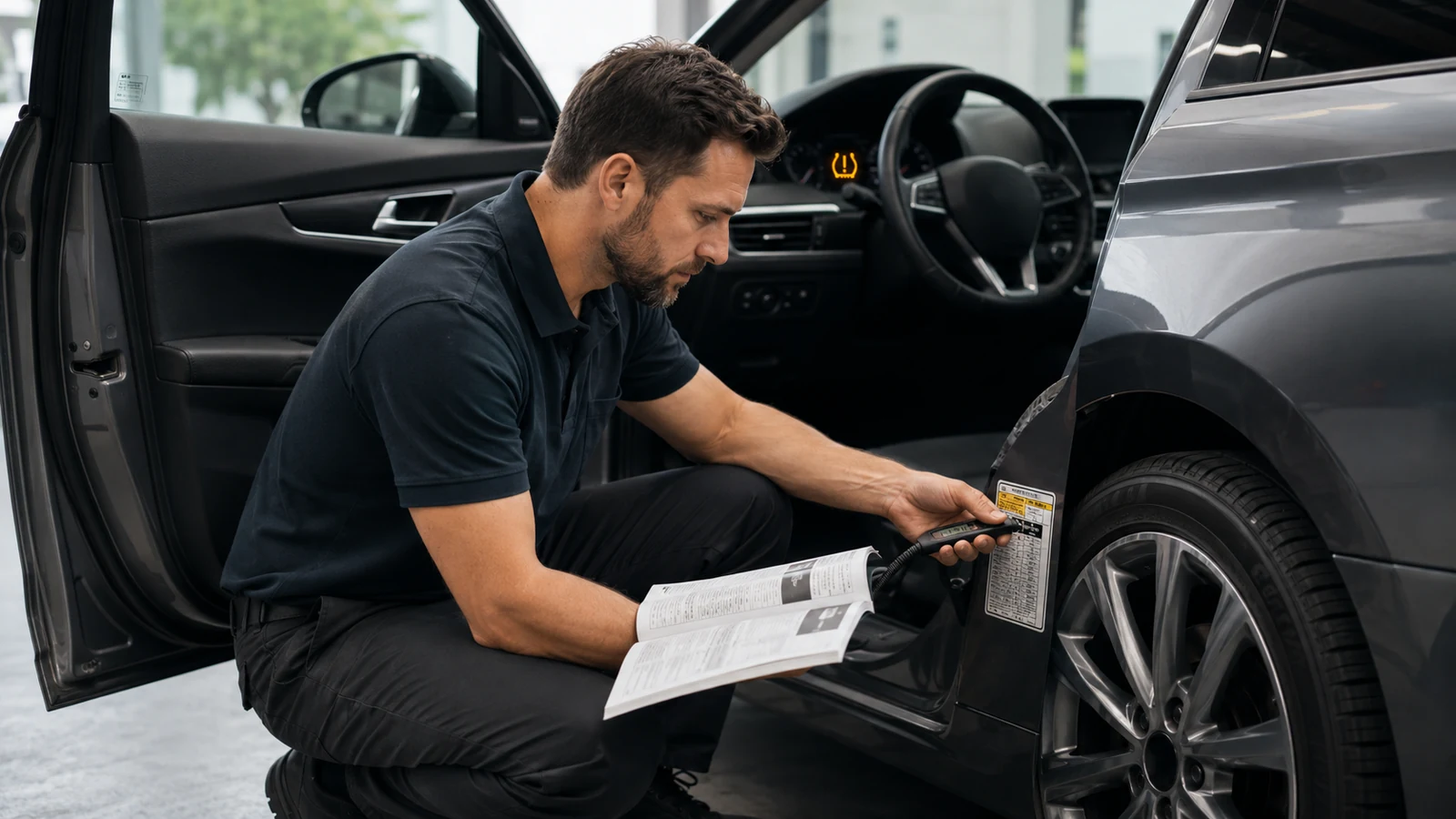
To reset a tire pressure light correctly, start with the manufacturer-recommended cold tire pressure on the door-jamb placard or tire label. Then use the vehicle’s TPMS reset, calibration, or relearn procedure. Some vehicles use a dashboard menu, some finish learning while driving, and procedures differ by model and system design.
| What you see | What it usually points to | Best first action |
|---|---|---|
| Solid tire pressure light | One or more tires may be underinflated | Check all road tires with a gauge and set them to placard pressure |
| Light stays on after adding air | The system may not have updated yet | Confirm cold pressure, then follow the reset or drive cycle |
| Light appears after tire service | Calibration or sensor relearn may be required | Use the model-specific procedure |
| Light flashes, then stays on | The TPMS may have a malfunction | Stop repeating resets and diagnose the system |
| No reset button is visible | The vehicle may use a menu or another relearn method | Check the owner or service procedure |
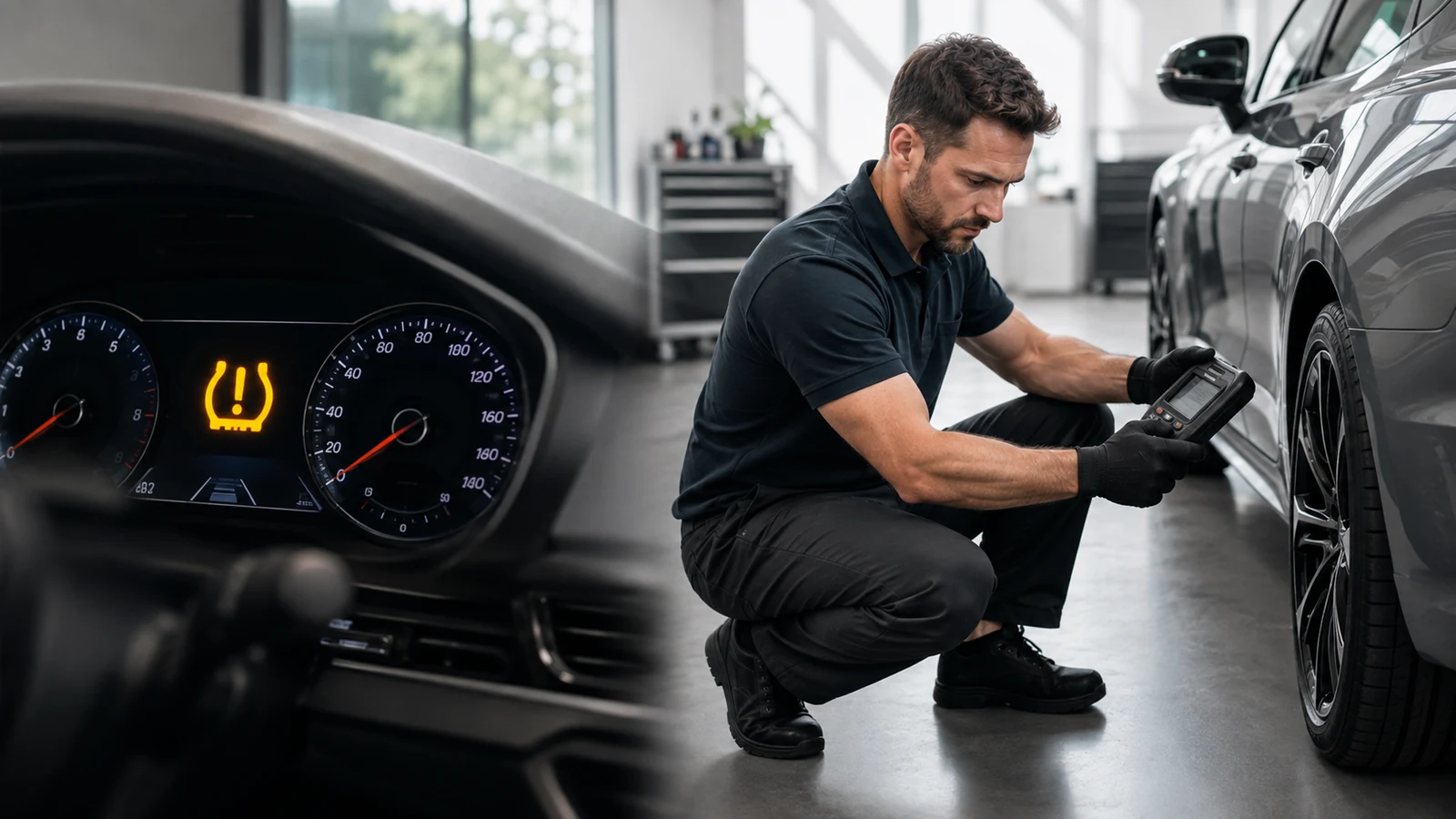
Distinguish between a solid low-pressure warning and a flashing malfunction indication. U.S. TPMS requirements specify a flashing sequence for a detected system malfunction on vehicles using a combined indicator.
Check Tire Pressure Before Resetting
Set the vehicle on level ground and check the tires when they are cold. Use the pressure listed on the vehicle placard or tire inflation label, not a pressure chosen from the tire itself. Federal TPMS information directs drivers to the vehicle manufacturer’s recommended cold inflation pressure, and Ford similarly advises checking tires cold against the pressure listed around the driver-door area.
Check every road tire because one low tire can keep the warning active even when the others look normal. If a tire is visibly damaged, losing air quickly, or will not maintain the specified pressure, address the tire problem before attempting repeated resets.
Temperature changes can also affect pressure. Honda notes that lower ambient temperatures can reduce tire pressure enough to trigger the TPMS indicator, so a warning that appears after a weather change still deserves an actual gauge check.
Use the Correct TPMS Reset Method
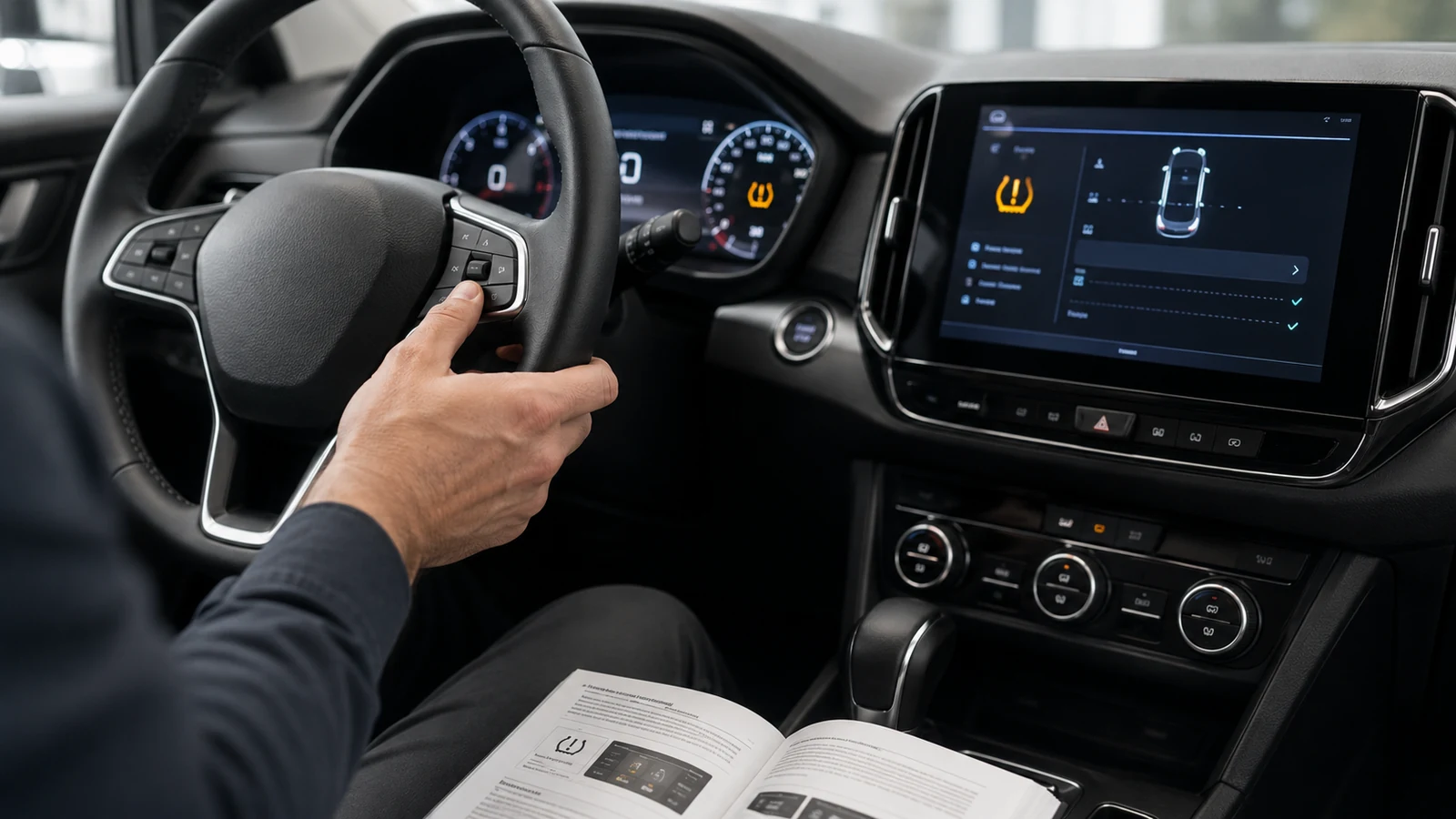
Once the tires are at the correct cold pressure, identify your vehicle’s reset method. The procedure isn’t universal, so copying a sequence from another make or model can waste time or cause an incorrect calibration.
Common approaches include:
- Dashboard or infotainment calibration. Look for vehicle settings, maintenance, tire monitor, or TPMS calibration.
- Dedicated reset control. Some vehicles provide a reset switch or button that must be used with the ignition in a specified mode.
- Relearn during driving. Some systems complete calibration or sensor learning after the reset has been initiated and specified driving conditions are met.
For example, Ford documents models that use a tire monitor menu or dedicated reset control, while Honda documents vehicles that start TPMS calibration through vehicle settings and finish calibration during driving. Those differences make the exact model-year instructions important.
If you are using service information, do not assume a procedure from a similar vehicle is interchangeable. Small equipment or model-year changes can alter the process, which is one reason avoiding common factory repair manual mistakes matters during diagnosis.
Give the System Time to Relearn
A successful reset doesn’t always clear the warning instantly. Some TPMS designs require driving time to finish sensor learning or calibration. Follow the speed and time conditions specified for your own vehicle instead of assuming one universal drive cycle.
Honda, for example, states that calibration on several current models requires roughly 30 minutes of cumulative driving within a specified speed range. Ford documents other systems where the warning can turn off after a much shorter drive above the stated speed.
The important sequence is correct pressure first, reset or calibrate second, required driving third.
If the light turns off and stays off, the system has likely accepted the corrected condition. If it returns, measure the tire pressures again before moving to electrical diagnosis. A tire losing pressure can make a reset appear successful, at least temporarily.
Know What a Flashing Light Means
A solid low-pressure light and a flashing TPMS light do not carry the same message.
For vehicles using a combined warning indicator under U.S. requirements, a detected TPMS malfunction causes the indicator to flash for at least 60 seconds and no longer than 90 seconds before remaining illuminated while the malfunction continues.
That is a strong clue not to keep repeating the reset. Possible causes can include sensor or communication faults, incompatible replacement wheels or sensors, or problems introduced during tire service. Federal TPMS guidance specifically recognizes replacement or alternate wheels and tires as possible sources of TPMS malfunction.
A structured test is more useful than replacing parts by guesswork. When a sensor needs verification, follow a disciplined sensor testing process and compare the results with the correct vehicle service information.
If the Light Comes Back After Reset
When the warning returns, separate tire-pressure problems from TPMS problems. Start by measuring every road tire again. If one has dropped, identify why it is losing pressure before resetting again.
If the pressures remain correct, watch the warning pattern and your service history. A warning after rotation may indicate a relearn requirement on some vehicles. A flashing warning can indicate a system malfunction. A warning after new wheels or sensors may involve compatibility or registration. Ford, for example, requires sensor retraining after rotation on certain configurations.
This is where a diagnostic flowchart can prevent random parts replacement. Work through the symptom in order: verify pressure, identify the warning pattern, check the correct service procedure, retrieve supported fault information, and test the suspect component.
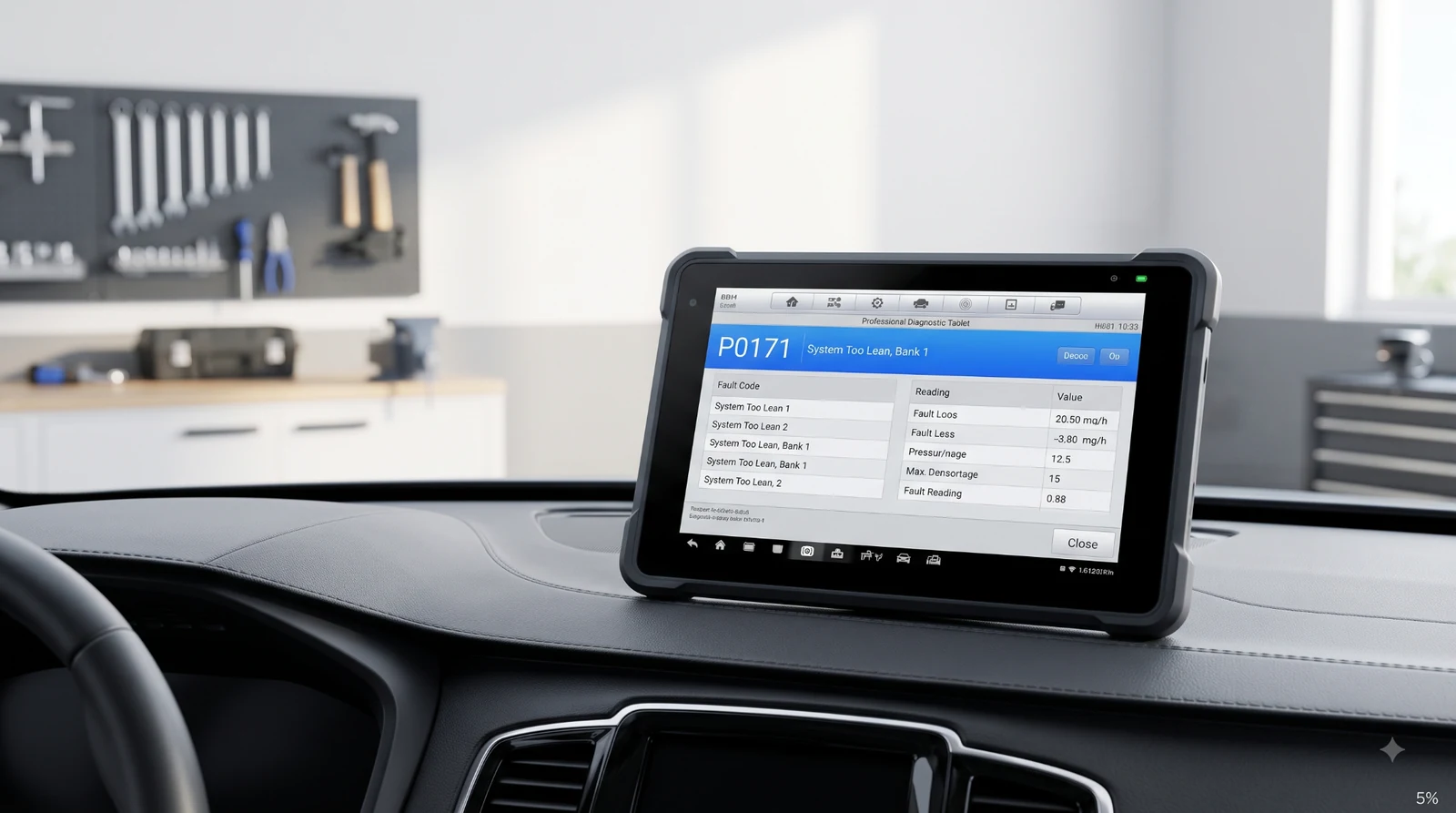
If a scan tool reports a TPMS-related fault, do not replace a sensor simply because its description mentions one. Follow proper trouble-code diagnostic steps so you don’t confuse registration, communication, wiring, receiver, and sensor problems.
Reset After Tire Service When Required
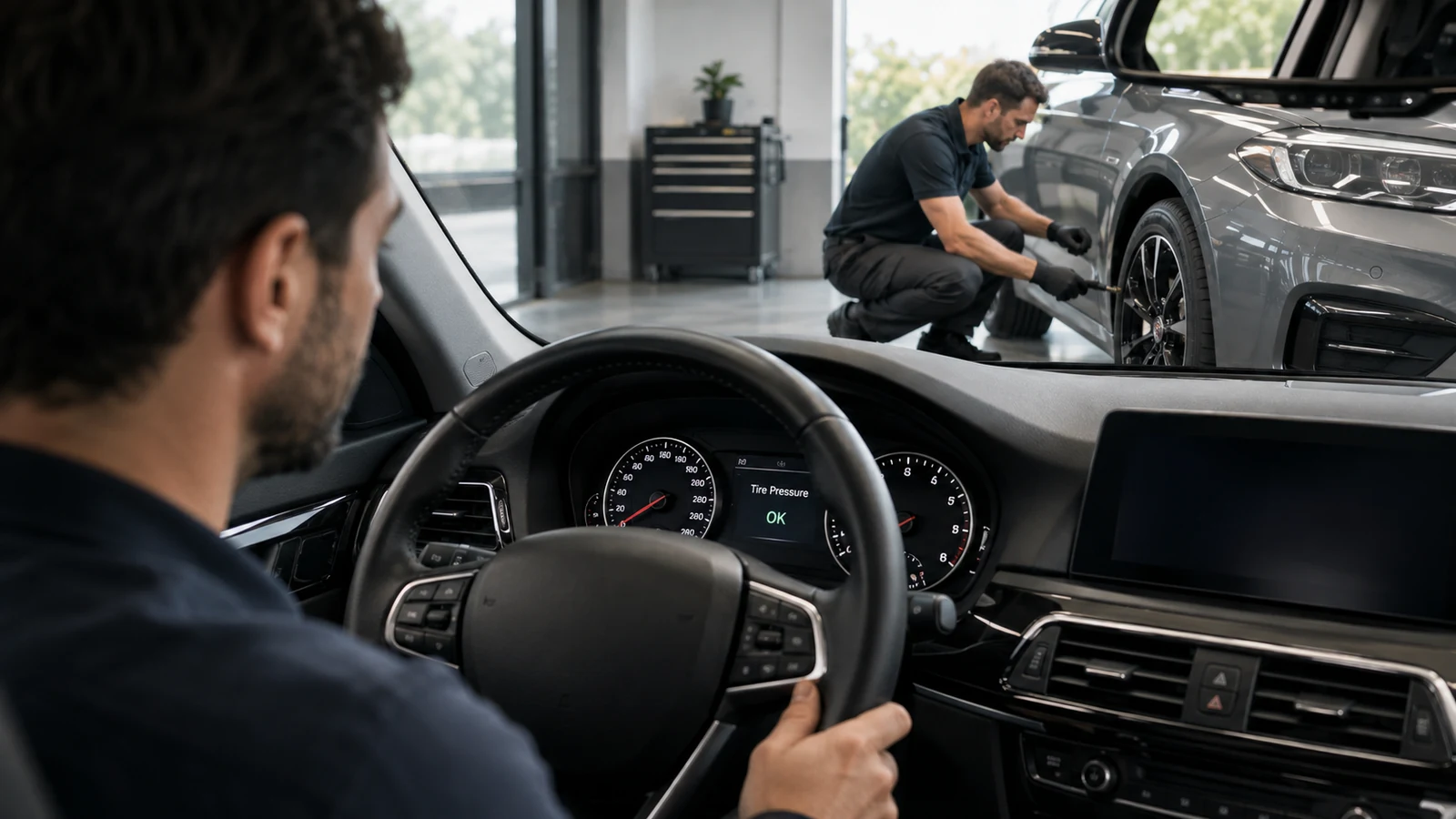
Tire rotation, tire replacement, wheel replacement, and pressure adjustment can change what some TPMS designs need to relearn. Ford and Honda both document reset, calibration, or relearn requirements after certain tire-service operations.
That does not mean every vehicle follows the same method. Ford documentation describes systems that measure pressure through road-tire sensors, while Honda documents models that infer underinflation by comparing wheel and tire rotational characteristics.
The word “reset” can therefore mean different things. One vehicle may need sensor positions relearned. Another may need a new calibration baseline established.
After tire service, confirm that all road tires are set to the specified cold pressure and that the correct wheels and sensors are installed. Then follow the reset or calibration instructions for the exact vehicle.
Stop Resetting When Diagnosis Is Needed
A reset is appropriate when you’ve corrected the tire pressures and the manufacturer calls for calibration or relearning. It does not repair recurring air loss, tire damage, or a TPMS malfunction.
Move to diagnosis if the light repeatedly flashes and stays on, a tire keeps losing pressure, the system will not complete the documented relearn process, or the warning continues despite verified pressure. Ford’s troubleshooting guidance likewise separates a solid low-pressure warning from conditions that require system service.
The practical rule is simple: pressure first, correct procedure second, relearn third, diagnosis fourth. That sequence resets the tire pressure light when needed and helps reveal cases where the dashboard warning points to a deeper problem.
Commonly Asked Questions About to Reset Tire Pressure Light
Why did my tire pressure light come on when it got cold?
Cold weather can lower tire pressure enough to trigger a TPMS warning, especially when a tire was already close to the recommended minimum. Don’t assume the light is caused only by temperature.
Check all road tires when they are cold and compare the readings with the pressure on the vehicle placard. Add air as needed, then follow the vehicle’s reset or calibration procedure if one is required.
Honda notes that ambient temperature changes can affect tire pressure and trigger the warning. If the same tire keeps losing pressure after the weather stabilizes, have it checked for a leak instead of repeatedly resetting the light.
Can I reset the tire pressure light without a reset button?
Yes. Many vehicles don’t have a dedicated TPMS reset button. Some place the calibration command in the instrument cluster or infotainment settings, while others finish relearning after the tires are set correctly and the required driving conditions are met.
The exact method depends on the make, model, year, and TPMS design. Start by setting every tire to the manufacturer’s specified cold pressure. Then check the owner’s manual for terms such as TPMS calibration, tire monitor, tire pressure reset, or sensor relearn.
Avoid trying random sequences from another vehicle. If the correct procedure does not clear the warning, diagnose the cause instead of repeatedly resetting it.
Should I use the tire sidewall PSI to reset TPMS?
No. Use the vehicle manufacturer’s recommended cold tire pressure shown on the tire information placard or label, usually located around the driver-door area. The tire itself is not the correct source for choosing the vehicle’s normal target inflation pressure.
TPMS calibration should start with the vehicle’s specified cold pressure because federal TPMS guidance identifies it as the reference. When practical, check the tires before driving far enough to warm them.
After setting all road tires correctly, perform the reset or calibration method your vehicle requires. If the warning returns, recheck pressure and investigate possible pressure loss or a TPMS fault.
Can a spare tire make the TPMS light stay on?
It can on some vehicles. A compact spare may not contain a compatible monitored sensor, and certain systems cannot complete calibration while the compact spare is installed. Honda, for example, documents models where TPMS calibration cannot be completed with a compact spare fitted.
If the warning appeared after installing a spare, restore the normal repaired wheel and tire when appropriate. Then set the road tires to the specified cold pressure and follow the proper relearn procedure.
Do not assume every spare is monitored because designs differ. If the warning remains after you restore the normal wheel, check the model-specific instructions or diagnose the TPMS for a continuing fault.
Will disconnecting the battery reset the tire pressure light?
Do not rely on disconnecting the battery to reset the TPMS. The warning can relate to tire pressure, calibration, sensor registration, or a detected system fault, so removing battery power does not address those underlying conditions.
Some vehicles can also require system initialization after battery power is restored. Honda, for example, documents warning indicators that may temporarily appear after the battery is reconnected.
The better approach is to check all tires at the specified cold pressure and perform the manufacturer’s TPMS procedure. If the warning returns, investigate pressure loss or a system fault. Use battery-disconnect procedures only when the correct vehicle service information specifically requires them.