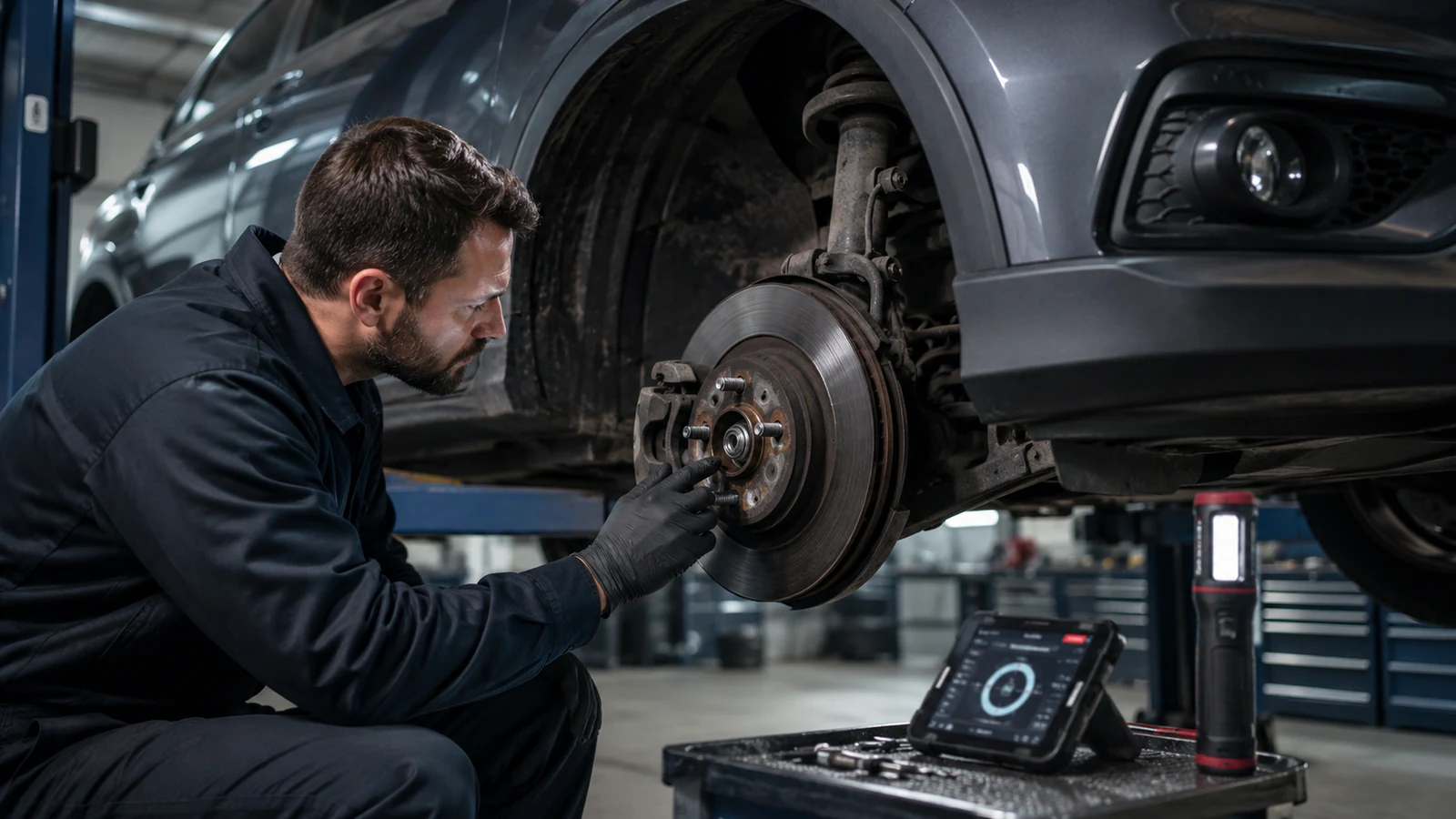
A strange hum near one wheel can be easy to dismiss as tire noise. That gets risky when the sound is actually coming from a worn wheel bearing. Bearing problems can affect wheel rotation, steering feel, and vehicle stability.
One of the strongest clues is noise that follows road speed rather than engine speed. A worn bearing may also sound different as the load on that wheel changes during normal turns.
The safest diagnosis uses several clues, not just one symptom. Below, you’ll learn what to listen for, what can mimic bearing failure, and when the vehicle needs professional inspection.
How to Tell If a Wheel Bearing Is Bad: Follow These Clues
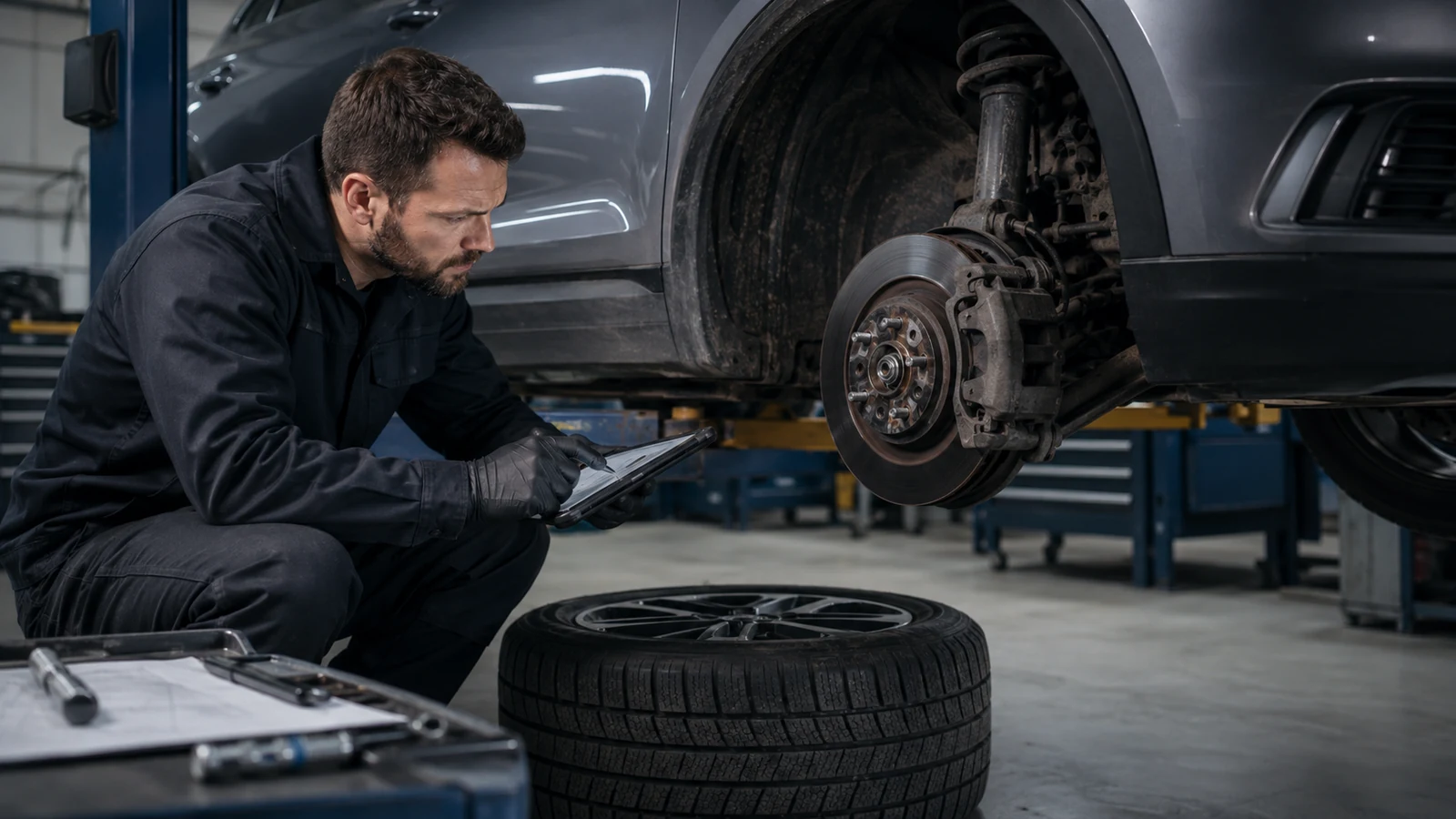
A failing wheel bearing often produces a humming, growling, rumbling, or droning noise that becomes more noticeable as vehicle speed increases. Other clues can include vibration, loose steering feel, uneven tire wear, or an ABS warning. No single symptom proves the bearing is bad, so compare the sound, driving conditions, tire condition, and warning signs before replacing anything.
| Clue | Typical Pattern | Possible Meaning | Best Next Step |
|---|---|---|---|
| Humming or rumbling | Louder as road speed rises | Bearing or tire noise | Compare other symptoms |
| Noise changes in turns | Louder or quieter under normal cornering load | Possible wheel bearing | Note which direction changes it |
| Steering vibration | Felt through wheel, seat, or floor | Bearing, tire, wheel, or suspension issue | Arrange inspection |
| Uneven tire wear | Cupping or irregular tread | Tire, alignment, suspension, or bearing issue | Inspect tire condition first |
| ABS warning | May appear with hub-related sensor faults | Sensor, wiring, encoder, or hub issue | Scan and diagnose the fault |
| Grinding or roughness | Harsh and increasingly obvious | Advanced mechanical problem | Avoid unnecessary driving |
| Loose or unstable feel | Steering feels vague, or wheel area feels abnormal | Possible advanced wear | Get prompt professional inspection |
Listen for Speed-Related Bearing Noise
The first clue many drivers notice is a low hum, growl, drone, or rumble. It may sound like aggressive tire tread or the constant roar you hear on rough pavement.
The important detail is what controls the sound. Wheel bearing noise usually follows vehicle speed because the bearing rotates with the wheel. The noise may become faster, louder, or more noticeable as road speed increases even when engine rpm changes independently.
That separates it from many engine-related sounds. If the noise changes mainly when you accelerate the engine while the vehicle’s road speed stays similar, another component may deserve attention.
Do not assume every road-speed hum means a bearing has failed. Cupped tires, irregular tread wear, wheel problems, and some drivetrain faults can sound surprisingly similar.
That is why good diagnosis combines sound with other clues instead of ordering a hub assembly right away. If you regularly diagnose vehicle noises, learning how to avoid replacing the wrong part can prevent expensive guesswork.

Notice Changes During Normal Turns
Cornering changes how the vehicle’s weight loads the wheels. As a result, a worn bearing may sound louder or quieter during a normal left or right turn.
For example, a noise that changes as the car follows a normal curved road can strengthen suspicion of a wheel bearing issue. It may also help a technician narrow down which side needs closer inspection.
However, direction alone is not enough to identify the failed bearing. Vehicle design, tire noise, suspension geometry, and how sound travels through the body can make the apparent source misleading.
You also don’t need to make sharp steering movements or deliberately weave across the road. Simply pay attention during normal, legal turns while keeping your attention on traffic.
If the noise clearly reacts to normal cornering load and also increases with road speed, the combination is more useful than either clue alone.
Separate Bearing Noise From Tire Noise
Tires are one of the easiest things to confuse with a bad wheel bearing. Uneven tread, cupping, feathering, incorrect pressure, or an aggressive tread pattern can produce a steady hum that changes with speed.
Start with a visual tire check. Look for obviously uneven tread patterns, damaged areas, or major differences between tires. Tire-related noise can also change noticeably when the road surface changes from coarse pavement to smoother asphalt.
Bearing noise may continue with a more consistent mechanical character across different surfaces. It may also react more clearly to changing wheel load during normal turns.
These distinctions are useful, but they are not absolute. A noisy tire and a worn bearing can even exist at the same time.
When symptoms overlap, use a logical process rather than picking the most familiar explanation. A structured diagnostic flowchart can help organize the evidence before you condemn a part.

Check Steering Feel and Vibration
A deteriorating bearing can sometimes send vibration through the vehicle. Depending on the location and severity, the driver may notice it through the steering wheel, seat, or floor.
Vibration alone is weak evidence. Tire imbalance, bent wheels, worn suspension parts, drivetrain problems, and braking issues can create similar sensations.
Look for patterns instead. A vibration that appears with a road-speed hum and changes with wheel load deserves more attention than vibration with no other bearing symptoms.
Advanced bearing wear may also contribute to looseness or vague steering feel. If the vehicle suddenly feels unstable, wanders unexpectedly, or develops obvious looseness, treat that as a safety concern rather than a normal diagnostic experiment.
Hands-on wheel-play testing normally requires safely raising and supporting the vehicle. Because incorrect lifting can cause serious injury, leave that inspection to a qualified technician unless the person performing it has the proper equipment, training, and approved service procedure.
Understand ABS and Traction Warnings
On many modern vehicles, wheel-speed sensing components are located in or around the wheel hub assembly. A hub or bearing problem can therefore appear alongside an ABS or traction-control warning.
The warning light does not automatically mean the bearing has failed. The problem could involve a wheel-speed sensor, wiring, connector, corrosion, an encoder ring, or another part of the ABS circuit.
A technician can compare wheel-speed data and fault codes with the mechanical symptoms. That is much more reliable than replacing a bearing because a dashboard light and humming noise appeared at the same time.
This is also where vehicle-specific information becomes important. Sensor construction, bearing design, fastener procedures, and inspection methods differ between models.
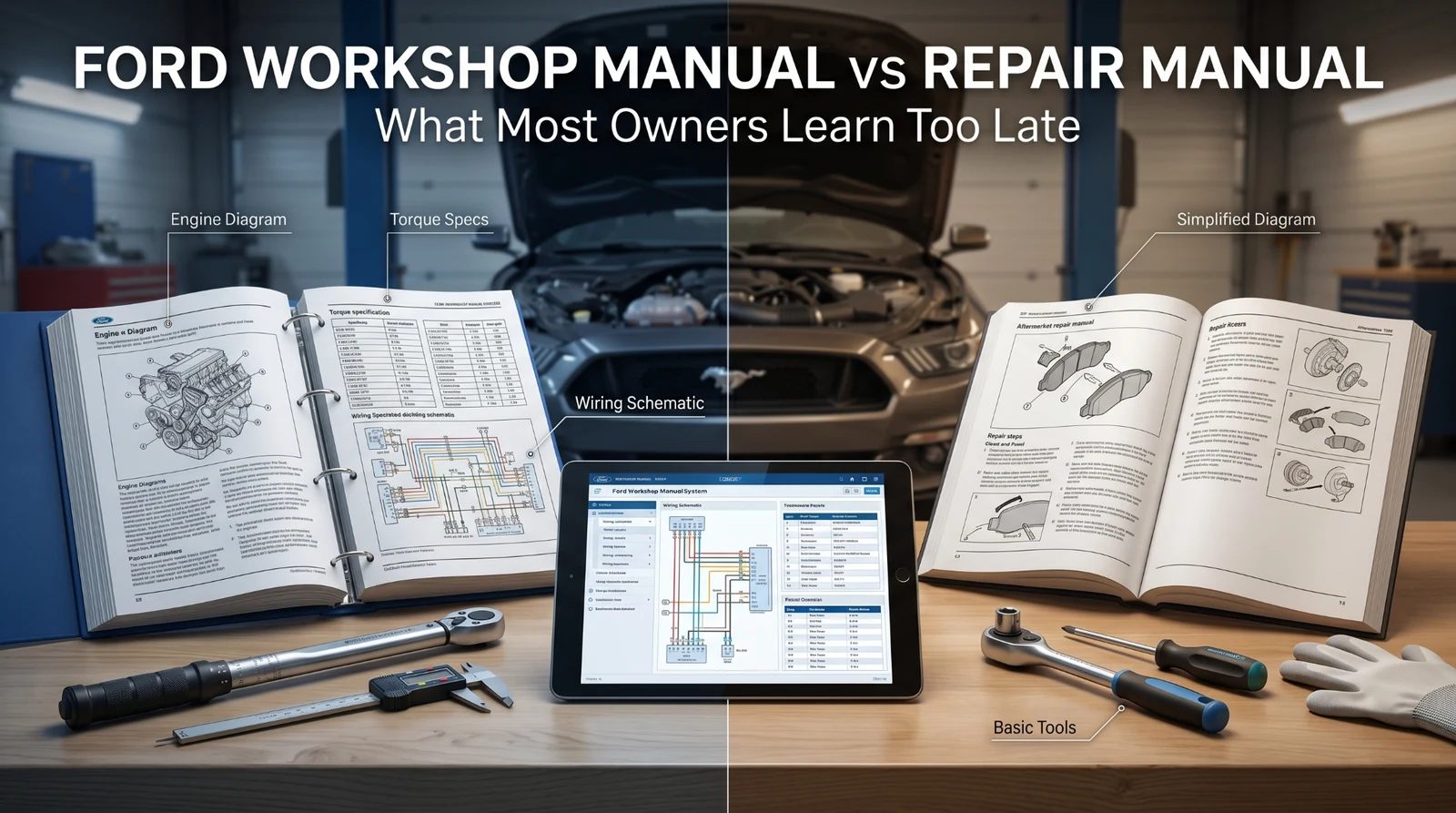
For owners who perform informed DIY diagnosis, the correct factory service manual information can clarify how the manufacturer expects the hub and related systems to be checked.
Confirm the Fault Before Buying Parts
A good diagnosis asks one question repeatedly: What else could create the same symptom?
A speed-related hum could come from a tire. Vibration could come from wheel balance. A metallic sound could come from a brake component. Clicking during a tight turn may point toward a drivetrain joint rather than the bearing.
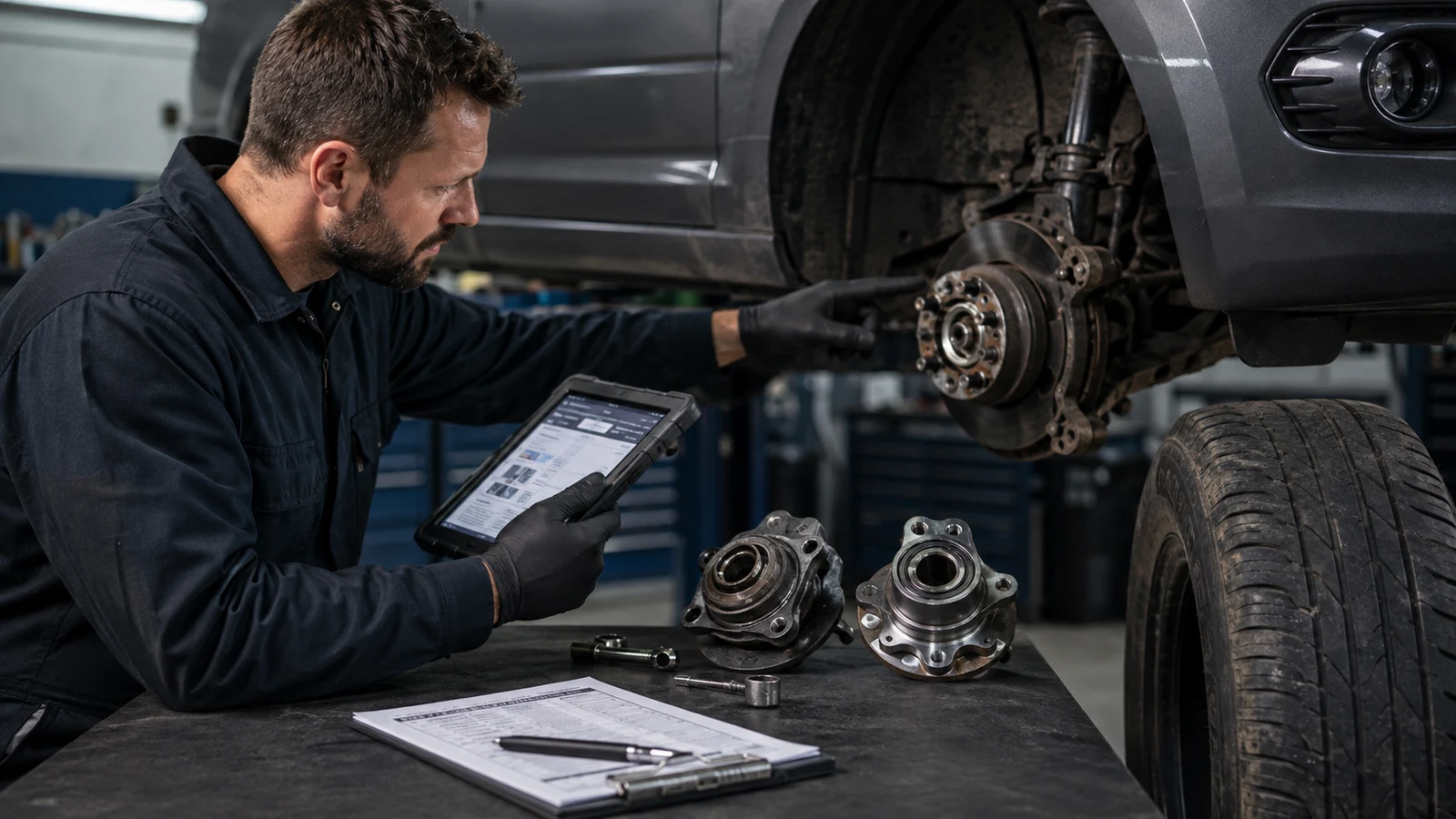
The strongest wheel bearing diagnosis comes from multiple clues that agree. A technician may combine the road-noise pattern with tire inspection, hub condition, wheel play, rotational roughness, scan data, and the manufacturer’s service procedure.
This matters because modern vehicles often use a hub assembly rather than a separately serviceable bearing. Replacing the wrong assembly can be expensive and may not change the original noise at all.
Repair specifications matter too. Bearing and hub work can involve model-specific fasteners, torque values, and installation requirements. Using generic information instead of the correct procedure is one of several factory repair manual mistakes that can create avoidable problems.
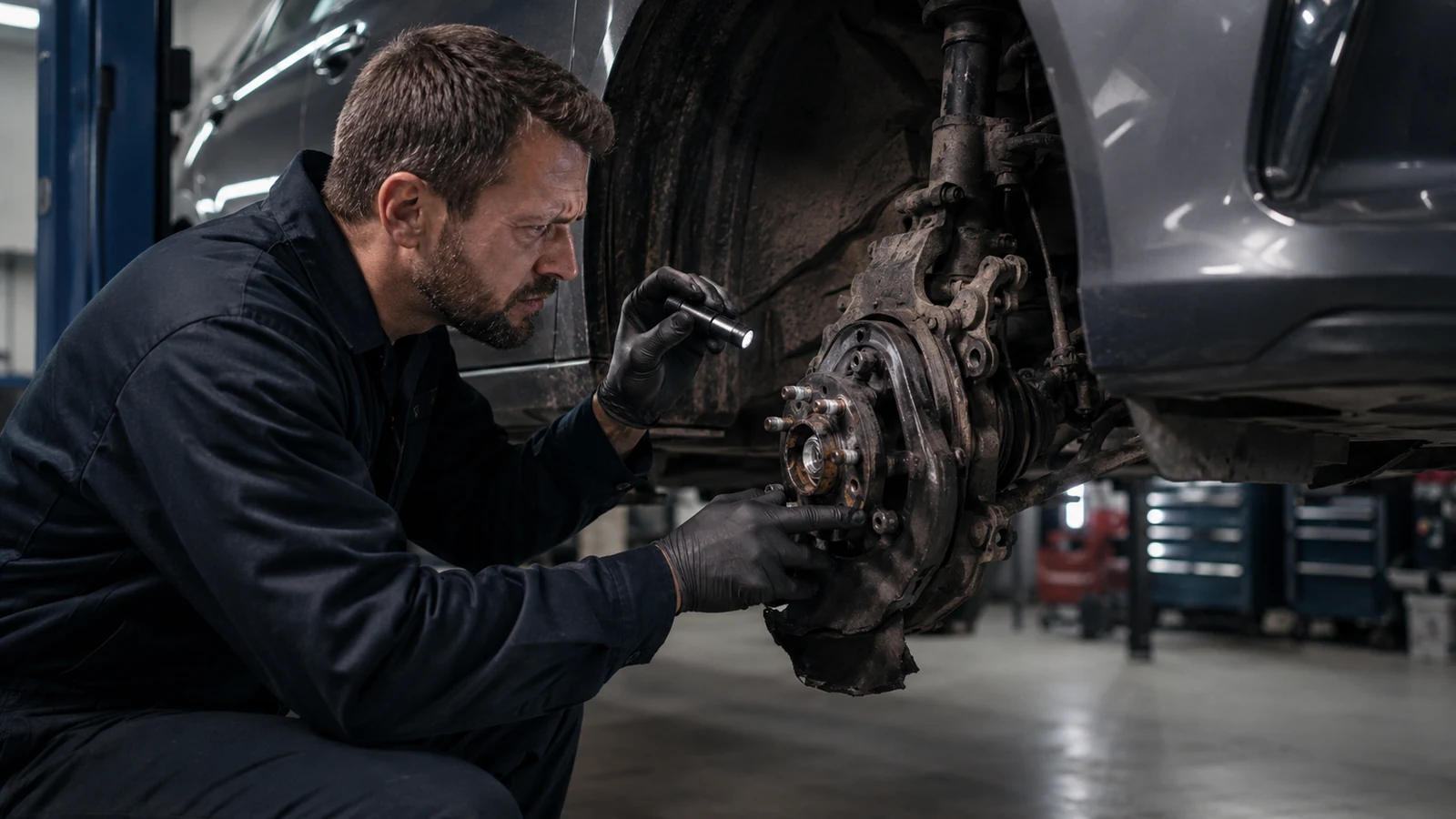
Know When Inspection Becomes Urgent
A mild new hum deserves diagnosis before it becomes worse. Grinding, obvious looseness, increasingly strong vibration, or unstable steering deserve much faster attention.
Do not rely on a mileage estimate to decide how long a noisy bearing can keep working. The remaining life of a damaged bearing cannot be judged accurately from sound alone.
If symptoms are severe, avoid unnecessary driving and arrange professional inspection. If the vehicle feels unstable or the noise suddenly gets much worse, continuing to drive can increase the risk.
Early inspection can also prevent wasted repairs. The mechanic can determine whether the actual source is the bearing, hub, tire, brake assembly, suspension, or another rotating component.
The useful takeaway is simple: follow the pattern, not one symptom. Road-speed noise, changes under normal cornering load, vibration, steering changes, and warning lights become meaningful when several of them point in the same direction.
Commonly Asked Questions About a Bad Wheel Bearing
Can a wheel bearing be bad without any wheel play?
A bad wheel bearing can be noisy before it develops obvious looseness. Early wear often shows up as a hum, growl, or rumble that rises with road speed, while wheel play may still be too small to feel.
That is why a quiet, hands-on check doesn’t automatically rule out the bearing. The pattern matters more: note whether the sound follows vehicle speed, stays present while coasting, and changes during ordinary left or right turns.
Tire wear, brake contact, and drivetrain parts can cause similar noises, so don’t replace the bearing based on sound alone. If the noise persists or gets worse, have a professional inspect the hub and surrounding parts.
Will a bad wheel bearing always turn on the ABS light?
A wheel bearing can fail without turning on the ABS light. The warning appears mainly on vehicles where the wheel-speed sensor or magnetic encoder is part of, or closely integrated with, the hub and bearing assembly.
Even then, mechanical wear may produce noise long before the sensor signal becomes abnormal. If the ABS or traction-control light appears together with a wheel-speed hum, vibration, or roughness, that combination deserves prompt diagnosis.
A scan tool can identify which wheel-speed circuit is reporting a fault, but the code does not prove the bearing itself is bad. Wiring issues, the sensor, corrosion, or a damaged encoder can trigger similar warnings.
How can I tell tire noise from wheel bearing noise?
A bad wheel bearing usually changes with road speed, not engine rpm. The sound is often a steady hum, growl, drone, or rumble that becomes more noticeable as the vehicle moves faster.
Tire noise can behave the same way, especially with cupping or uneven tread wear, so listen for a second clue: bearing noise may change when the vehicle is naturally loaded from side to side during normal turns.
Tire noise often changes more with road surface than steering load. Do not use aggressive swerving as a test. If the source remains unclear, a shop can compare the tires, hub, brakes, and suspension before replacing any parts.
How long can you drive with a bad wheel bearing?
It is risky to keep driving when a wheel bearing is clearly failing because the bearing supports the rotating wheel and hub under load. A faint new hum still deserves timely inspection, while grinding, obvious looseness, worsening vibration, or unstable steering should be treated as urgent.
The safest choice is to stop unnecessary driving and arrange professional inspection rather than trying to “see how long it lasts.” You can’t predict exact remaining life from sound alone.
A bearing can deteriorate gradually, but heat, impact damage, contamination, or loss of internal lubrication can accelerate wear. If the vehicle feels unstable or the noise suddenly becomes severe, don’t keep driving it.
What else can sound like a bad wheel bearing?
Replacing a wheel bearing without confirming the fault can waste money because several problems mimic the same symptoms. Uneven or cupped tires can create a road-speed hum. A brake shield can rub and make a metallic sound.
CV joints, suspension parts, and damaged hubs can also add clicking, vibration, or looseness. Start by matching the symptom to the condition: does the noise rise with road speed, change on normal turns, change during braking, or vary with pavement?
Then inspect tire condition and warning lights. A professional can safely verify hub roughness, play, sensor data, and related components. Diagnosis first is especially important when the bearing is sold only as a full hub assembly.