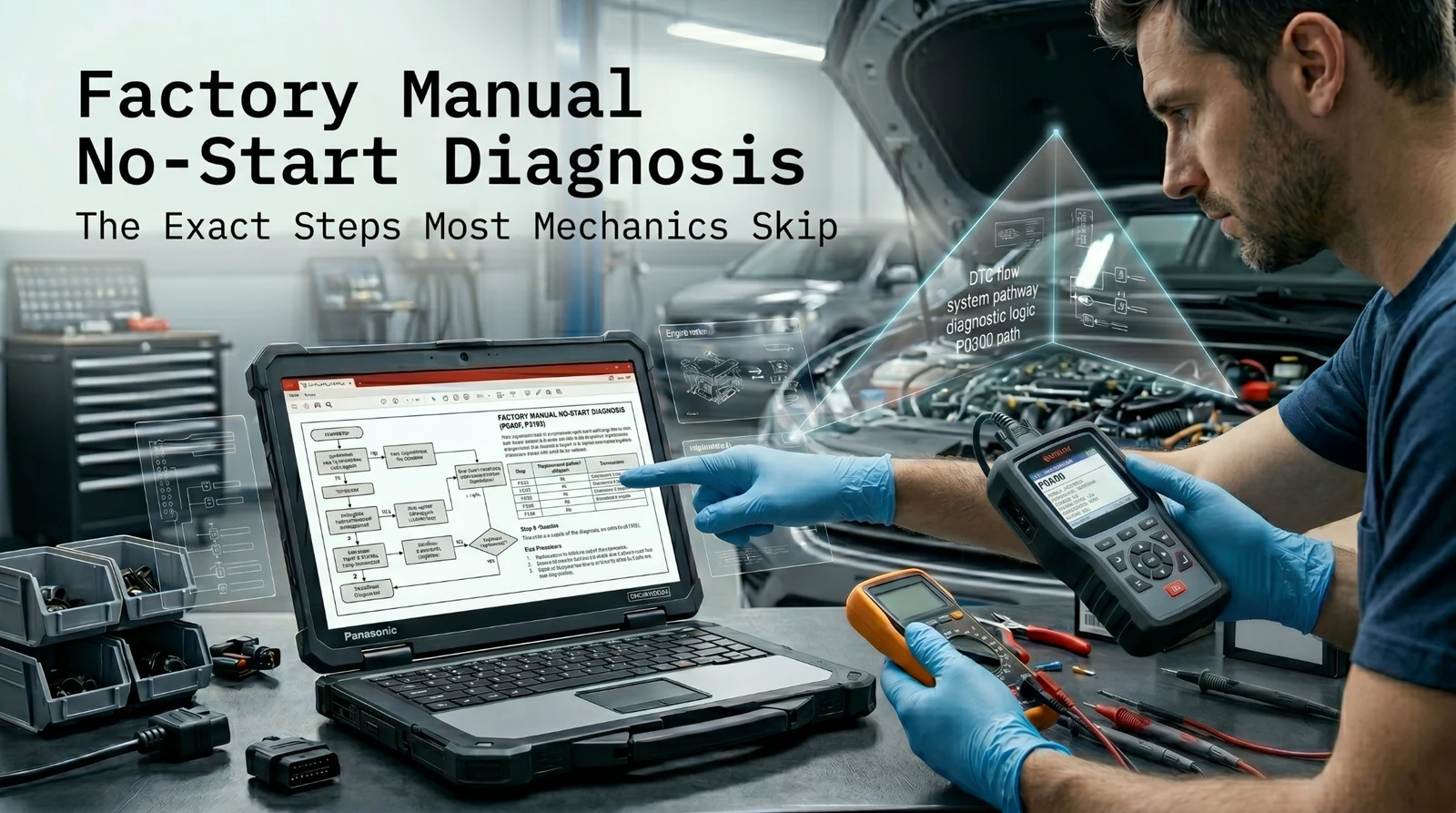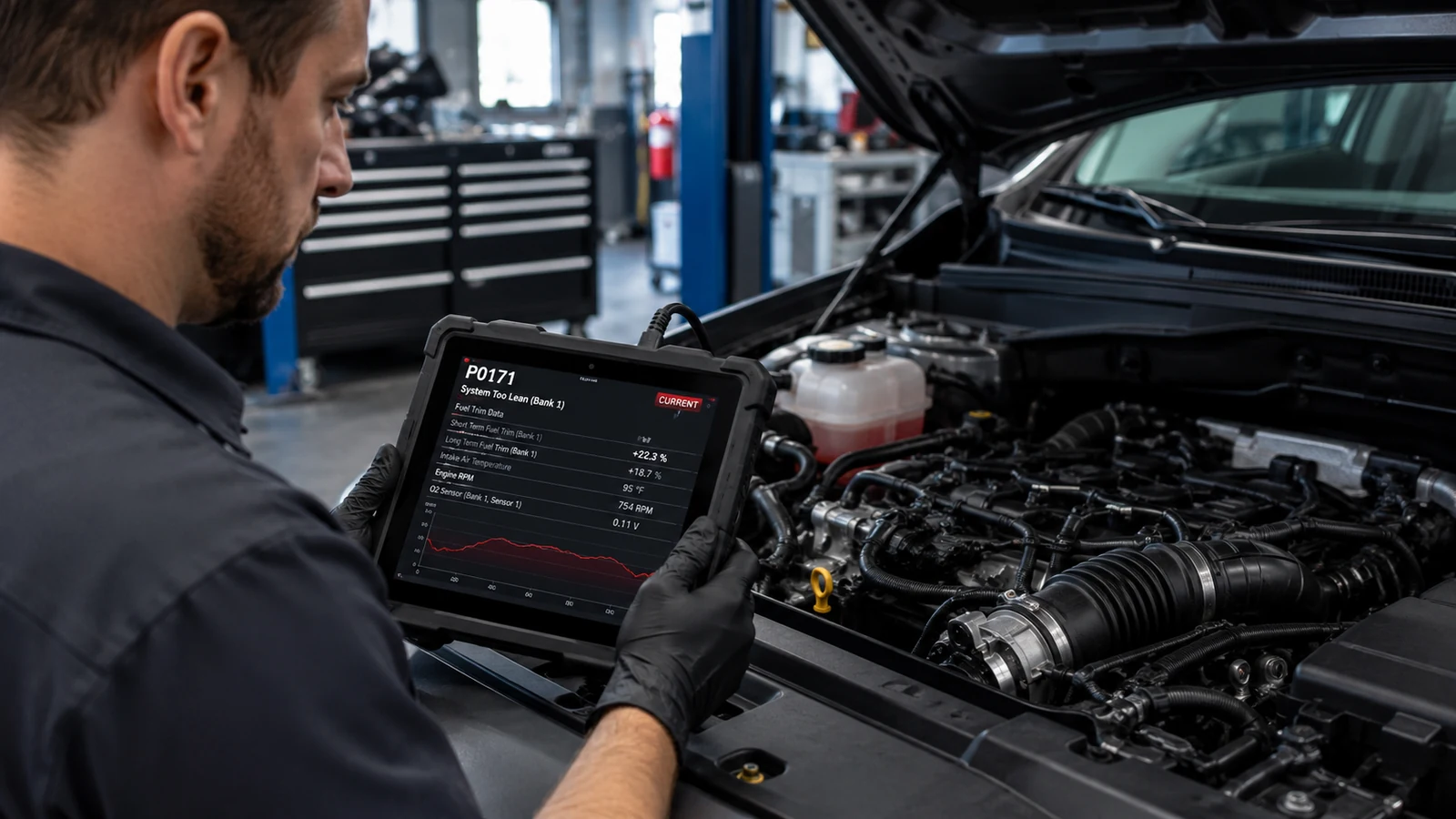
Your check engine light appears, and the scan tool shows code P0171. This trouble code means your engine is running with too much air or not enough fuel. Ignoring it can lead to poor performance, rough driving, and possible engine damage over time.
The cause is not always a bad sensor. A vacuum leak, fuel delivery issue, or air measurement problem can all trigger this code. Finding the real source requires a logical diagnostic process.
This guide explains the common causes of P0171, the symptoms to watch for, and the practical steps technicians use to find the problem.
What Causes Code P0171: Find the Real Reason Your Engine Runs Lean
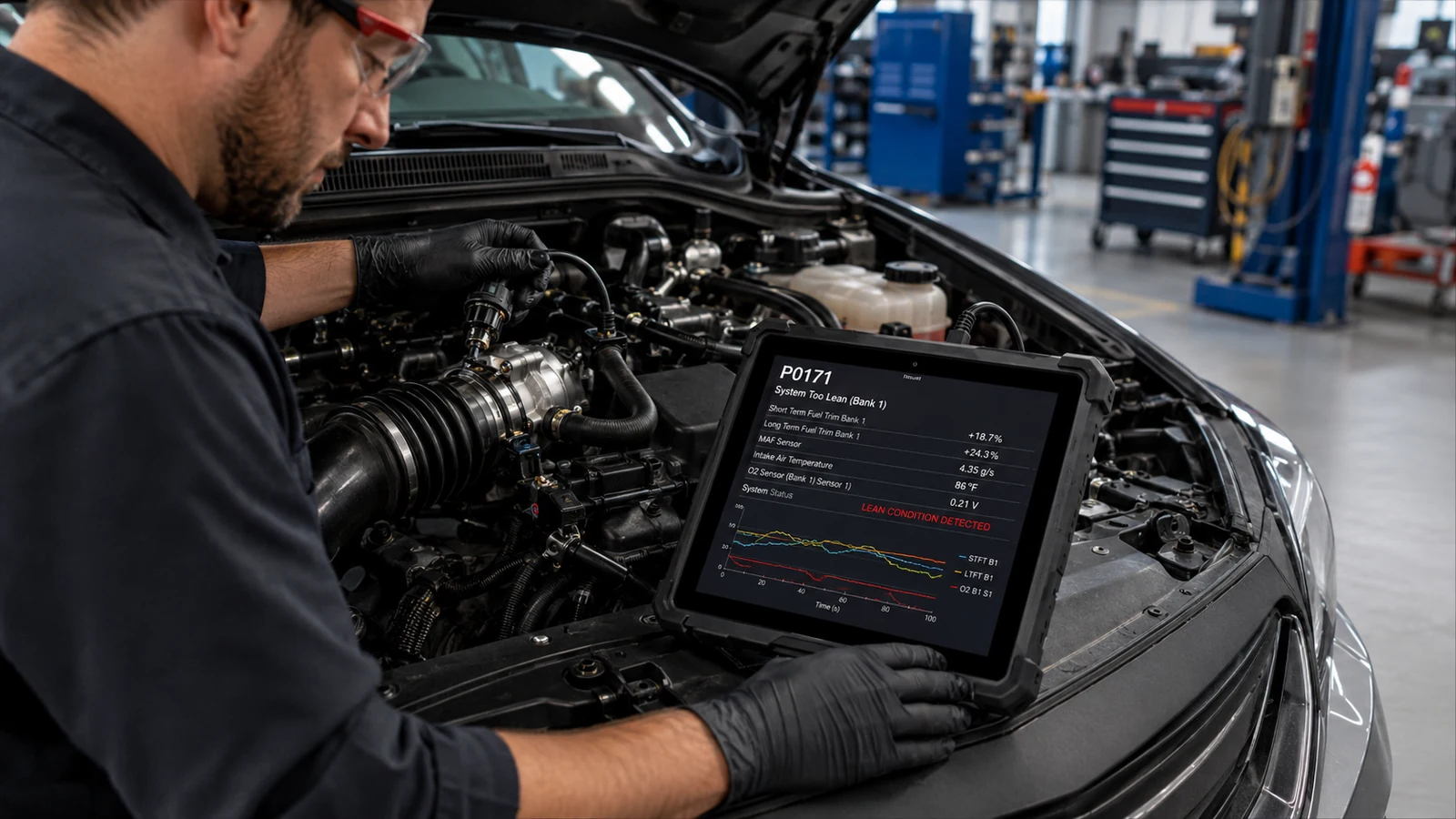
Code P0171 appears when the engine computer detects a lean fuel mixture, meaning the air-to-fuel ratio has more air or less fuel than expected. The oxygen sensors report this condition, and the engine control module adjusts fuel trims to compensate. When those corrections become too large, the P0171 code is stored.
The fastest way to diagnose this code is to avoid replacing parts randomly. Start with air leaks, fuel supply checks, and sensor data. A proper diagnosis can prevent unnecessary repairs and identify the actual fault.
| Possible Cause | What Happens | Common Signs |
|---|---|---|
| Vacuum leak | Extra air enters the engine after the airflow sensor | Rough idle, high fuel trims, hissing noise |
| Faulty MAF sensor | Incorrect airflow measurement affects fuel calculation | Hesitation, poor acceleration |
| Weak fuel pump | Engine receives less fuel than required | Loss of power under load |
| Dirty fuel injectors | Reduced fuel delivery to cylinders | Rough running, misfire symptoms |
| Exhaust leak before O2 sensor | Sensor detects extra oxygen | False lean reading |
| Bad oxygen sensor | Incorrect mixture feedback | Poor fuel economy, unstable readings |
| EVAP system issue | Unmetered vapor enters intake | Idle problems, lean condition |
Vacuum leaks are a common cause
A vacuum leak is one of the first areas to inspect when diagnosing P0171. The engine pulls in air the computer did not measure, making the mixture too lean.
Common leak locations include cracked intake hoses, damaged vacuum lines, failed intake manifold gaskets, and loose connections. The issue is often worse at idle because the engine relies heavily on vacuum during that condition.
A smoke test is one of the most effective ways to locate small leaks. Technicians introduce smoke into the intake system and watch for escaping air.
Check the MAF sensor readings
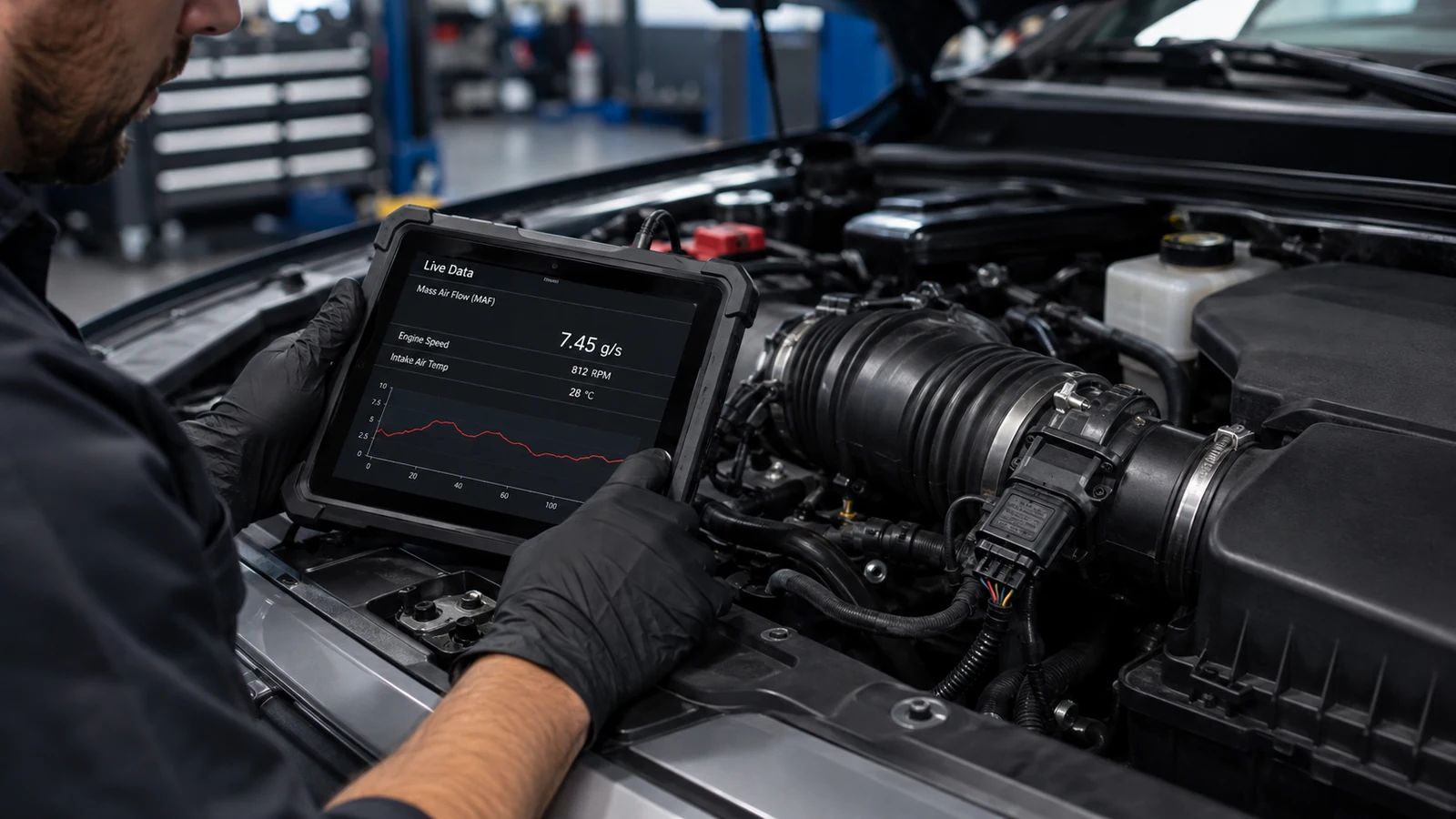
The mass airflow sensor (MAF) measures how much air enters the engine. If it becomes dirty or fails, the engine computer may receive incorrect airflow information.
A contaminated MAF sensor may underreport incoming air. The computer then adds too little fuel, creating a lean condition.
Cleaning the sensor with the correct MAF cleaner can help in some cases. However, testing live data before replacement is the better approach. Replacing a sensor without confirmation can waste money.
Inspect fuel delivery problems
A lean code can also happen when the engine does not receive enough fuel. Low fuel pressure, a weak pump, clogged injectors, or restricted filters may reduce fuel delivery.
Fuel pressure testing helps determine if the fuel system is working correctly. If pressure is below manufacturer specifications, the problem may not be related to air measurement.
For accurate repair procedures, many technicians rely on factory diagnostic information and repair instructions. Resources such as factory service manual guidance can help explain structured troubleshooting methods.
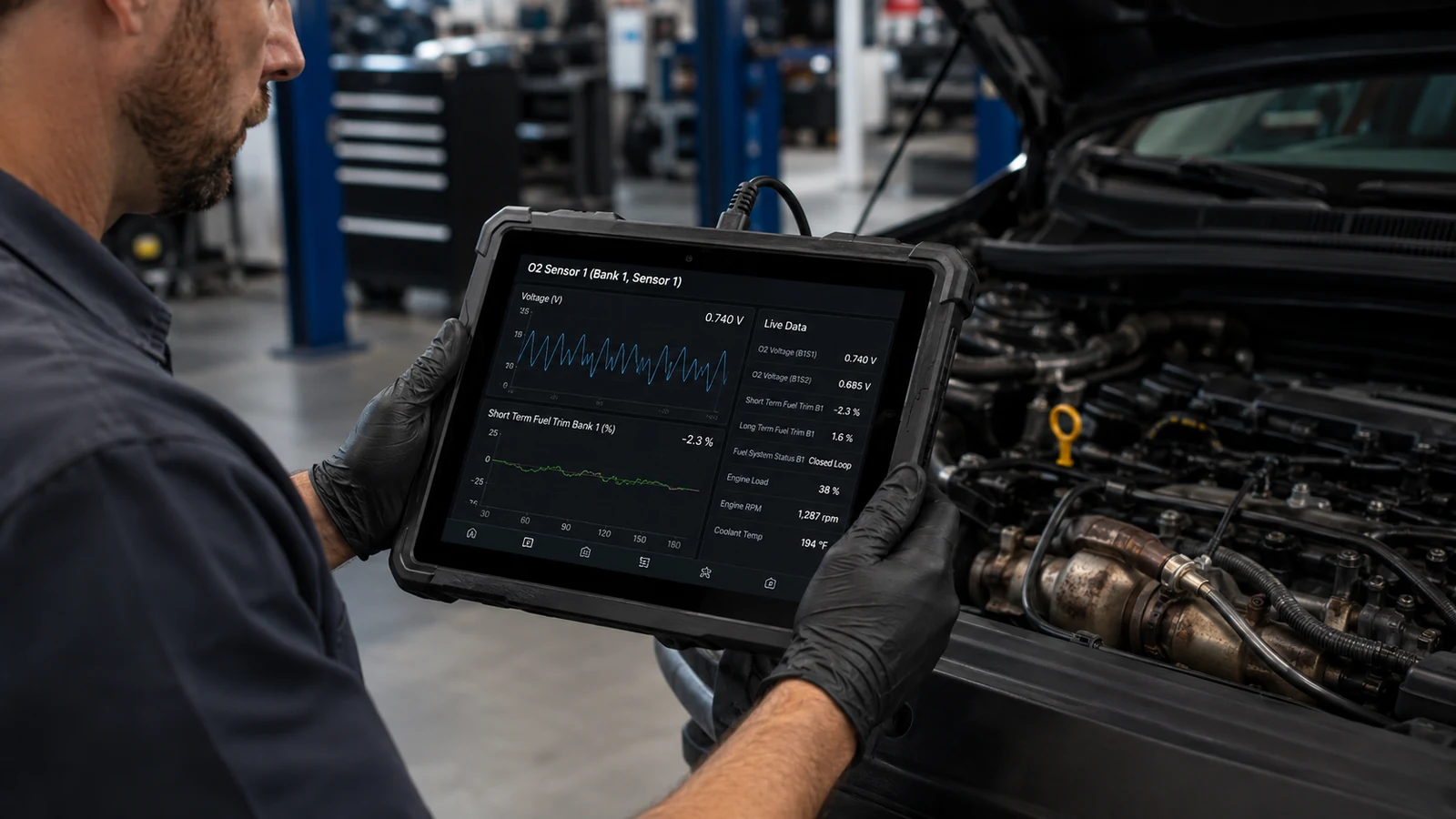
Look at oxygen sensor feedback
The oxygen sensor monitors exhaust oxygen levels and helps the engine adjust fuel delivery. A sensor problem can create incorrect readings that lead to a P0171 diagnosis.
Before replacing an oxygen sensor, check fuel trim data. A sensor that reports a lean condition may actually be working correctly because another issue is causing the engine to run lean.
Sensor testing procedures can help separate a faulty component from a symptom caused by another system. Learn more about vehicle sensor testing methods when checking engine-related faults.
Check EVAP system problems
The EVAP system controls fuel vapors from the fuel tank. Problems such as a stuck purge valve can allow extra vapor or air into the intake system.
A faulty purge valve may create idle issues and contribute to lean conditions. Because EVAP components connect to the intake system, include them in your diagnosis.
Understanding how these systems work can make troubleshooting easier. A guide about what the EVAP system does can provide additional background.
Follow a proper diagnostic order
The biggest mistake with P0171 is replacing parts based only on the code. The code identifies a condition, not a specific failed component.
A practical diagnostic order is:
- Check for vacuum leaks.
- Inspect intake hoses and connections.
- Review MAF sensor readings.
- Test fuel pressure.
- Check injector operation.
- Review oxygen sensor data.
- Inspect EVAP operation.
A step-by-step approach reduces guesswork and prevents repeat repairs.

Symptoms linked to P0171
Drivers may notice several warning signs before or after the code appears:
- Rough idle
- Reduced engine power
- Poor fuel economy
- Hesitation during acceleration
- Engine misfires
- Check engine light
The severity depends on the cause. A small vacuum leak may create mild symptoms, while a fuel delivery problem can affect drivability much more.
Avoid common repair mistakes
Many P0171 repairs fail because people replace the wrong component first. Installing a new oxygen sensor when the engine has a vacuum leak will not solve the actual problem.
Another mistake is ignoring maintenance-related causes. Dirty sensors, aging hoses, and fuel system restrictions can develop slowly and create confusing symptoms.
A diagnostic process based on testing results is more reliable than replacing parts until the warning disappears.
Commonly Asked Questions About the Causes of Code P0171
Can I drive with code P0171?
You may be able to drive for a short time with code P0171, but it depends on the cause and symptoms. If the engine runs smoothly and the issue is minor, you may be able to drive a limited distance.
However, ignoring the problem for a long period can increase repair costs. A lean engine can create higher combustion temperatures and may contribute to performance problems.
If you notice severe hesitation, misfires, stalling, or power loss, you should diagnose it quickly. The safest approach is to identify the cause rather than treat the code as a minor warning.
Is P0171 always caused by a vacuum leak?
No. Vacuum leaks are common, but they are only one possible cause of P0171. The code can also result from low fuel pressure, dirty fuel injectors, a faulty MAF sensor, oxygen sensor issues, or EVAP problems.
Check for a vacuum leak early because it is often easier to find and repair. However, you need proper testing before replacing any component. Checking fuel trims, airflow readings, and fuel pressure can help identify the real source of the lean condition.
How do I fix code P0171?
Fixing P0171 starts with diagnosis, not replacing parts. First, inspect the intake system for leaks, check sensor readings, and verify fuel delivery. If a damaged hose lets extra air in, replacing it may solve the issue.
If fuel pressure is low, the repair may involve the fuel pump or another fuel system component. The correct repair depends on the test results. A systematic approach saves time and avoids unnecessary replacements.
Can a bad MAF sensor cause P0171?
Yes, a faulty or dirty MAF sensor can cause P0171. The engine computer depends on accurate airflow measurements to calculate fuel delivery. If the sensor reports incorrect information, the mixture can become too lean.
Before replacing the MAF sensor, inspect it and compare live data readings with expected values. In some cases, cleaning the sensor may help. In other cases, the sensor may require replacement. Testing prevents unnecessary parts purchases.
Why does P0171 come back after repair?
A returning P0171 code usually means the original cause was not fully corrected. The repair may have addressed a symptom rather than the root cause. For example, replacing an oxygen sensor will not fix a vacuum leak.
Other possible causes include missed intake leaks, incorrect fuel pressure, or another component affecting engine calculations. A complete diagnostic check after repair helps confirm that fuel trims have returned to normal and prevents repeated warning lights.