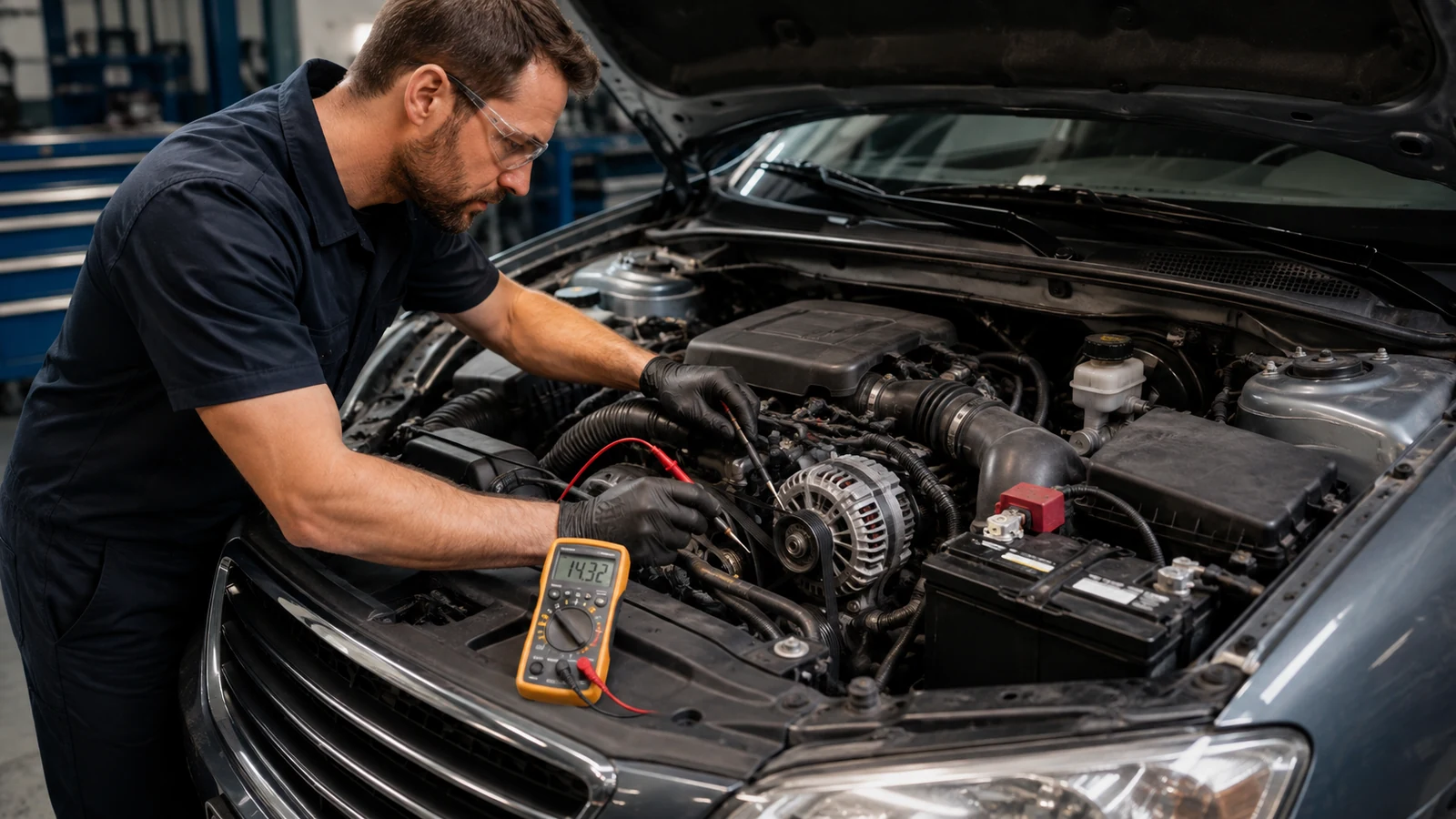
A failing alternator can leave you with a dead battery, dim lights, warning lamps, or a car that suddenly shuts down. The problem is that a weak battery, damaged cable, loose belt, or blown fuse can create many of the same symptoms.
The fastest clue is charging voltage, but one voltage reading isn’t enough. You need to know what the battery and charging circuit are doing under real electrical load.
A reliable diagnosis starts with the battery, then moves to the belt, alternator output, voltage drop, wiring, and load response. These seven tests help you narrow down the fault before buying parts.

How to Check If an Alternator Is Bad: 7 Tests That Prevent Guessing
The goal isn’t simply to prove that charging voltage looks low. It’s to determine why it’s low. A healthy alternator can appear defective when the battery is discharged, or resistance exists in the cables. A failing alternator can also pass a quick idle test. Use the checks below in order so each result makes sense for the next test.
| Check | Normal Clue | Alternator Warning Sign | Check Elsewhere First |
|---|---|---|---|
| Belt and wiring | Belt tight, terminals clean | Noise or unstable pulley | Belt, tensioner, cable |
| Battery at rest | Near full charge | Not an alternator verdict | Charge/test battery |
| Engine running | Voltage rises above resting level | Voltage stays near battery level | Wiring, fuse, control circuit |
| Electrical load | Charging remains controlled | Voltage falls excessively | Belt, connections |
| Voltage drop | Very little loss in cables | Good alternator output but low battery voltage | Positive or ground cable |
| Warning signs | Stable lights and battery lamp off | Flicker, battery lamp, repeated discharge | Battery, wiring, regulator |
| Final confirmation | Output meets vehicle specification | Output fails specified test | Confirm circuit before replacement |
Inspect the Belt and Connections
Start with the engine off. Check the serpentine or alternator belt for cracking, glazing, looseness, contamination, or obvious misalignment. A slipping belt can reduce alternator speed enough to create weak or unstable charging.
Inspect the battery terminals, alternator connections, engine grounds, and visible cables. Look for corrosion, loose fasteners, damaged insulation, or overheated terminals. DENSO recommends checking belt condition, wiring, battery connections, fuses, and fusible links before condemning the alternator.
Don’t overlook the charging circuit’s protection devices. A blown high-amperage fuse or fusible link can interrupt alternator output even when the alternator itself works. If the fuse layout isn’t obvious, use the vehicle’s service information and follow a structured approach to diagnosing fuse box problems.
Check Battery Voltage First
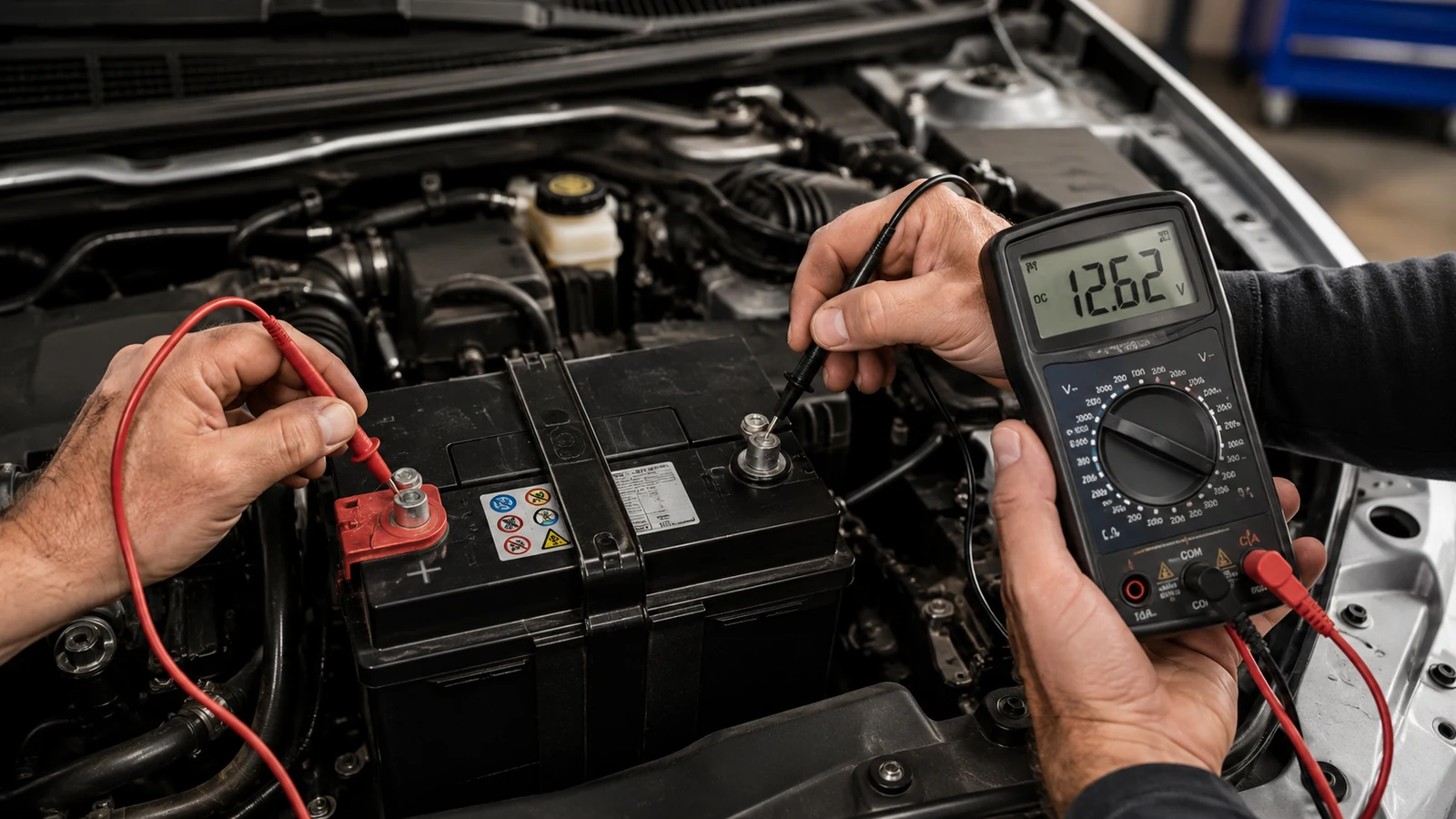
Set a digital multimeter to DC volts and measure directly across the battery posts with the engine off. A badly discharged battery can skew the rest of your charging-system diagnosis.
A fully charged conventional 12-volt battery is commonly around 12.6 volts after its voltage has stabilized. DENSO specifically recommends inspecting, fully charging, and performance-testing the battery before evaluating alternator operation.
If the battery is significantly discharged, charge and test it first. Don’t assume the alternator caused the low state of charge. An old battery, parasitic drain, poor connection, or repeated short trips can produce the same starting complaint.
Measure Charging Voltage Running
Start the engine and measure voltage across the battery again. Then raise engine speed to roughly 2,000 rpm while watching the meter.
As a general reference, DENSO lists approximately 13 to 15 volts during an alternator output test, while also advising technicians to use the vehicle manufacturer’s specifications.
The important clue is what changes between the engine-off and engine-running measurements. If the engine is running but voltage remains close to the battery’s resting voltage, the charging system needs further testing.
Don’t automatically replace the alternator at this point. Computer-controlled charging systems can intentionally vary alternator output. The correct specification and operating conditions for the specific vehicle always take priority.
Add Electrical Load
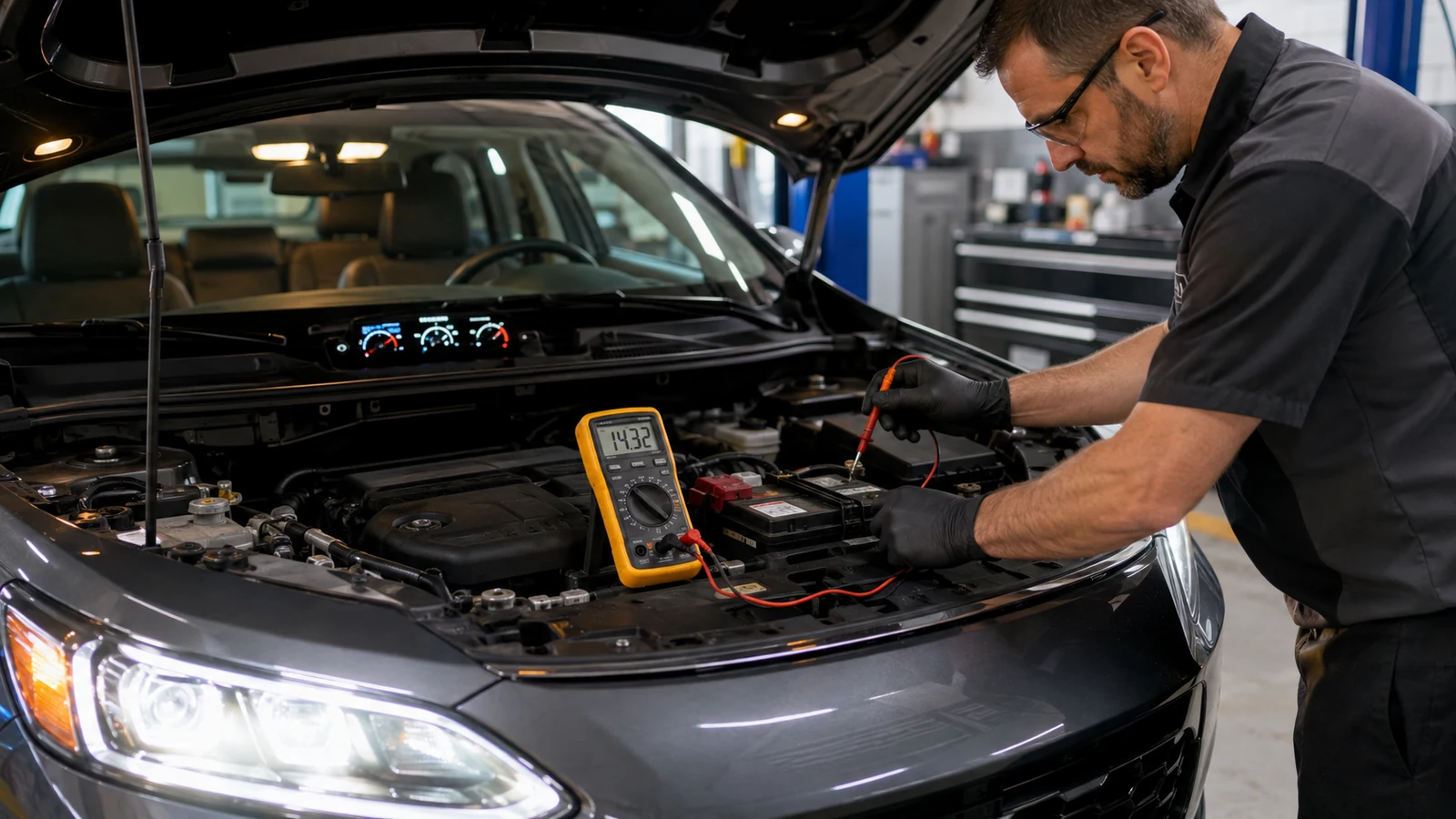
An alternator can look healthy when almost nothing is drawing power. Test it again while the system is working harder.
Turn on several major electrical loads, such as:
- Headlights
- Cabin blower on high
- Rear-window defroster
- Heated seats, if equipped
Bring the engine to the vehicle’s specified test speed and watch the voltage. HELLA recommends testing charging performance with electrical consumers switched on and at increased engine speed.
A weak alternator may produce acceptable voltage with little load but lose control as demand increases. However, a slipping belt or high-resistance cable can produce the same result. That’s why the next test matters.
Test Voltage Drop
A voltage-drop test checks how much voltage is being lost through cables and connections while current is flowing.
For the positive side, measure between the alternator B+ output terminal and battery positive post while the charging system is loaded. For the ground side, measure between the alternator case or ground connection and the battery negative post.
DENSO’s general troubleshooting guidance calls for about 0.2 volts or less on each side during its specified loaded test. An excessive drop indicates resistance in connections or wiring, not necessarily a defective alternator.
If you need to identify a small control-wire terminal before probing it, reading connector views in factory manuals correctly can prevent you from testing the wrong cavity.
Read the Warning Signs Together
Alternator symptoms become more useful when several appear at once.
Common charging-system clues include a battery or charging warning lamp, headlights that change brightness, repeated battery discharge, unusual belt-area noise, electrical accessories behaving inconsistently, or the engine eventually stopping after battery energy is depleted.
Noise alone doesn’t prove the alternator’s electrical section has failed. Bosch notes that an overrunning alternator pulley can develop rough operation or noise and can also interfere with proper charging.
Also remember that the dashboard battery light usually indicates a charging-system problem, not simply a bad battery. The cause can still involve the alternator, regulator, wiring, belt drive, fuse, or control circuit.
Never use the old test of disconnecting a battery cable while the engine is running. HELLA warns that disconnecting terminals while the alternator is running can create voltage peaks that can damage vehicle electronics.
Confirm Before Replacing the Alternator
By now, compare all seven results instead of relying on a single number.
A bad alternator becomes much more likely when the battery is known to be healthy, the belt drives correctly, connections are clean, circuit voltage drop is low, and alternator output still fails the manufacturer’s charging test.
If alternator output is correct at the alternator but noticeably lower at the battery, investigate the cables and connections. If output itself is incorrect, check excitation, sense, communication, and control circuits before replacement on vehicles that use them.
Factory diagnostic flowcharts can save time here. They establish the test order and required specifications for the exact charging system.
A bench or professional charging-system test can provide final confirmation when results remain unclear. DENSO specifically recommends bench testing when appropriate because verifying actual alternator performance can prevent unnecessary replacement.
That last confirmation matters. Diagnosing the system instead of guessing helps you avoid replacing the wrong part, especially when a cable, battery, belt, fuse, or control problem can produce nearly identical symptoms.
Commonly Asked Questions About Checking If an Alternator Is Bad
Can a bad alternator still charge at 14 volts?
Yes. Seeing about 14 volts during one quick test doesn’t prove the alternator is healthy. An alternator may maintain normal-looking voltage when electrical demand is low but fail to supply enough output once the headlights, blower, defroster, and other loads are running.
Intermittent regulator, diode, winding, pulley, or connection problems can also make readings change with temperature or engine speed. Test the battery first, then compare charging performance at idle and increased rpm with electrical loads switched on.
If the voltage looks normal but the battery keeps going dead, check charging current, cable voltage drop, battery condition, and parasitic drain before replacing the alternator.
How long will a car run with a bad alternator?
There isn’t a reliable fixed time. Once the alternator stops supplying enough power, the vehicle begins relying on energy stored in the battery. How long that lasts depends on battery condition, state of charge, vehicle electronics, lighting, blower use, ignition demand, and other electrical loads.
A newer, fully charged battery may keep some vehicles running longer than an old or partially discharged one, but the engine can eventually stall when system voltage drops too low. Driving farther also risks leaving you stranded.
If the charging warning lamp appears with dimming electronics or falling system voltage, test the charging system promptly rather than estimating how many miles remain.
Can a weak battery make a good alternator look bad?
Yes. A deeply discharged or damaged battery can place a heavy demand on the charging system and confuse diagnosis. It may pull charging voltage down, accept current poorly, or lose its charge again soon after the engine stops.
That’s why you should establish battery condition before judging alternator performance. Charge the battery if needed, inspect its terminals, and perform an appropriate battery test. Then check alternator output with a known-good or properly charged battery in the circuit.
If charging voltage and output meet vehicle specifications but the battery repeatedly fails to hold a charge, the battery or another electrical problem may be the real cause, not the alternator.
Why does the battery light come on and off?
An intermittent battery or charging light usually means the charging system isn’t staying within its expected operating condition. Possible causes include a slipping belt, a loose alternator connection, a corroded cable, a failing regulator, a damaged alternator, a poor ground, or a control-circuit problem.
Engine speed and electrical load can affect when the warning appears, so note the conditions. Check belt behavior and connections first, then measure battery and alternator voltage while reproducing the condition, if you can do so safely.
On computer-controlled systems, scan-tool data and stored fault codes may provide additional direction. Don’t replace the battery simply because the battery-shaped warning lamp illuminates.
Can an alternator fail without making noise?
Absolutely. Many alternator failures are electrical and produce no obvious mechanical sound. A failing voltage regulator, rectifier diode, winding, brush assembly, internal connection, or vehicle-side control circuit may reduce charging while the alternator remains quiet.
Conversely, a noisy alternator area doesn’t always mean the alternator’s electrical output has failed because the belt, tensioner, idler, or overrunning pulley may be responsible. Use symptoms only as clues.
Confirm the battery’s condition, measure charging voltage under appropriate operating conditions, apply electrical load, and perform voltage-drop tests.
When those results still don’t identify the fault, a charging-system analyzer, oscilloscope test, current measurement, or bench test can provide stronger evidence.