A TPMS warning light is easy to ignore, but turning it off without finding the cause can leave you with an underinflated tire or a warning system that isn’t working correctly. Simply pressing a reset button isn’t always the right first move.
Start by checking cold tire pressure against the pressure listed on the vehicle placard. The correct pressure comes from the vehicle manufacturer, not the maximum PSI molded into the tire sidewall.
From there, the correct path depends on what the light does. You may need normal inflation, a TPMS reset, a relearn procedure, or sensor diagnosis. Here’s how to tell the difference without unnecessary part replacements.
How to Turn Off TPMS Light: Reset It Safely
To turn off a TPMS light correctly, first determine whether you have low tire pressure or a TPMS system fault. Set every tire to its specified cold pressure, then follow the vehicle’s reset or relearn procedure if required. Some systems clear automatically after driving, while others require a manual reset or calibration process.
| What You See | Likely Meaning | Best Next Step |
|---|---|---|
| Steady TPMS light | One or more tires may be low | Check all cold tire pressures |
| Light comes on during cold weather | Pressure may be near the warning threshold | Correct pressure using the door placard |
| Light remains after adding air | System may need time, reset, or relearn | Follow the model-specific procedure |
| Light appears after tire service | Sensor IDs or positions may need relearning | Perform the correct TPMS relearn |
| Light flashes, then stays on | TPMS malfunction is likely | Diagnose sensors and system communication |
Start With Cold Tire Pressure
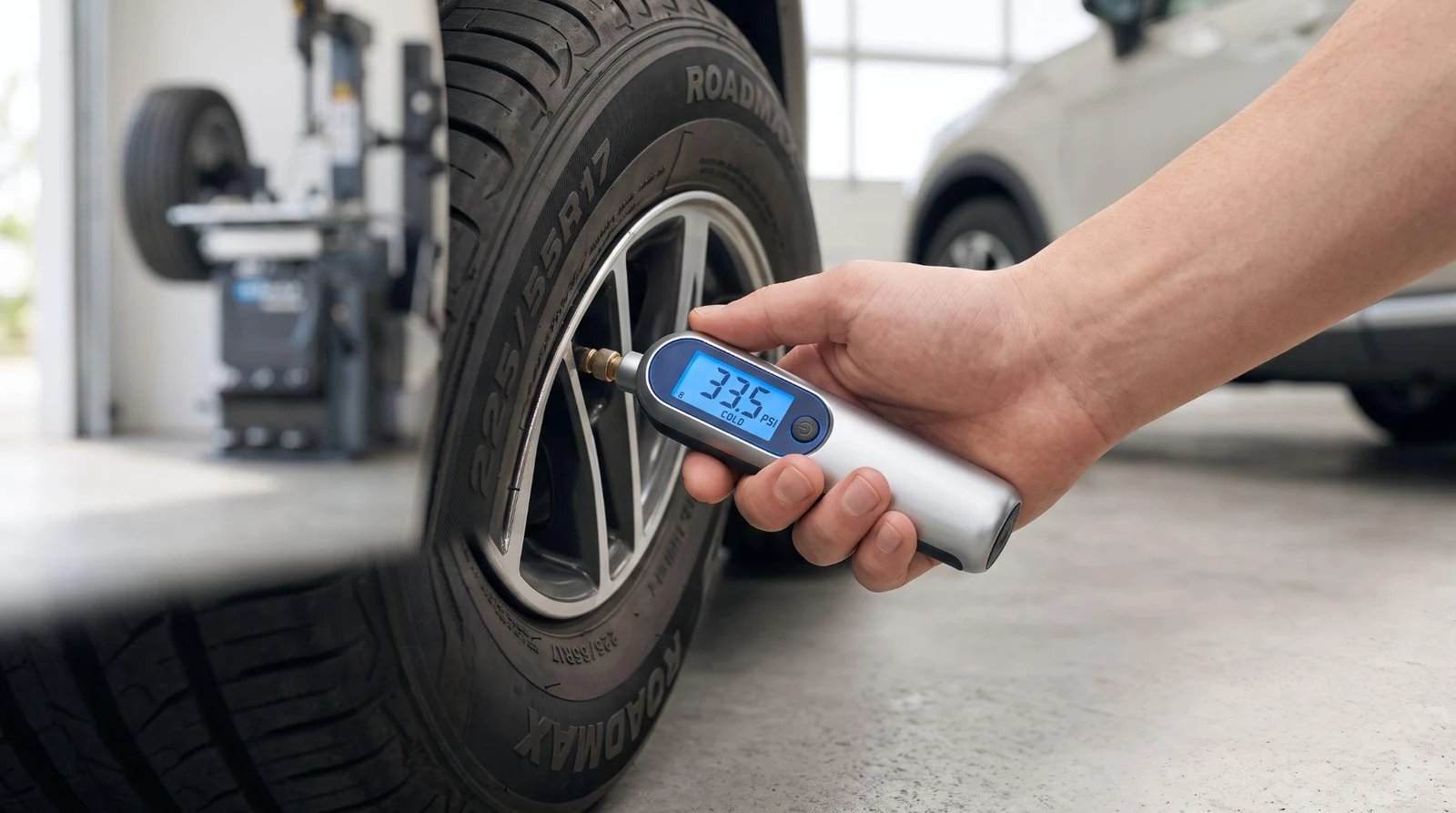
Before resetting anything, park the vehicle long enough for the tires to cool. NHTSA recommends checking tire pressure when the tires are cold, and the manufacturer’s recommended PSI is normally listed on the driver-side tire information label or in the owner’s manual.
Check all four road tires, not just the tire that looks low. Visual inspection alone is unreliable because a significantly underinflated tire may not look obviously flat.
If one tire is low, inflate it to the placard specification and look for signs that the pressure is dropping again. A recurring loss suggests a leak, valve issue, wheel problem, or tire damage that needs attention.
Do not inflate the tire to the maximum PSI printed on its sidewall just to make the light disappear. That number is not the normal inflation target for your vehicle.
Read the Warning Pattern First
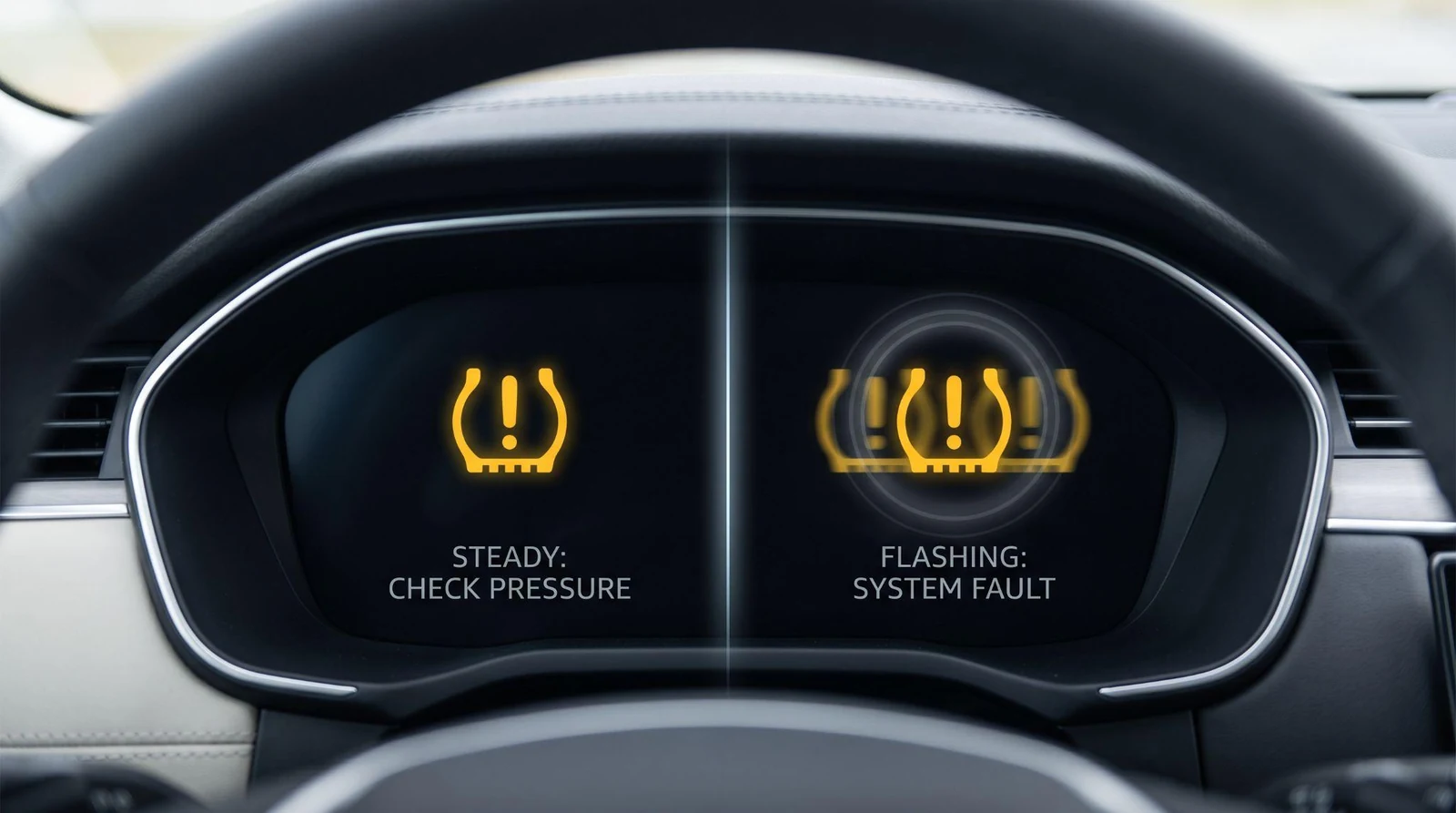
A steady TPMS light generally indicates that the system has detected significant underinflation. Always correct the pressure problem before trying to erase the warning.
Temperature can also affect what you see. A marginally low tire can trigger the warning on a cold morning and then rise enough for the warning to disappear as the tire and ambient temperature increase. NHTSA still recommends checking the tires instead of assuming the warning was false.
A flashing warning needs a different approach. U.S. TPMS requirements provide for a malfunction indication, commonly shown by the TPMS warning flashing for roughly 60 to 90 seconds before remaining illuminated.
That pattern means repeatedly adding air or pressing reset may not solve the problem.

Use the Correct TPMS Reset Method
No universal TPMS reset sequence works on every vehicle.
Some vehicles automatically recognize corrected pressure after driving. Others provide a dashboard setting, steering-wheel menu, dedicated reset control, or manufacturer-specific relearn sequence. Federal TPMS rules specifically allow manufacturers to provide manual reset instructions and procedures in the owner information.
The safe sequence is:
- Check and correct every tire’s cold pressure.
- Turn the ignition on as required by the vehicle procedure.
- Select or activate the specified TPMS reset function if equipped.
- Confirm the reset message or warning-light response.
- Drive the vehicle if the procedure requires a learning cycle.
Some systems need recalibration after tire pressure adjustments, rotations, tire or wheel replacement, or other service. Hyundai, for example, documents vehicle-specific TPMS resetting after several of these procedures, illustrating why the exact process must match the vehicle.
Avoid copying a reset sequence from an unrelated make or model. If you need to confirm a procedure or electrical test, a structured diagnostic flowchart approach can help prevent skipped checks.
Diagnose a Light That Won’t Go Out
Suppose every tire is at the correct cold pressure and the warning remains after the required drive or reset procedure. That’s when to move from inflation checks to TPMS diagnosis.
Direct TPMS systems use pressure sensors associated with the wheels. Indirect systems infer pressure changes using wheel-speed information and other vehicle sensors. The diagnostic path therefore depends on the vehicle’s design.
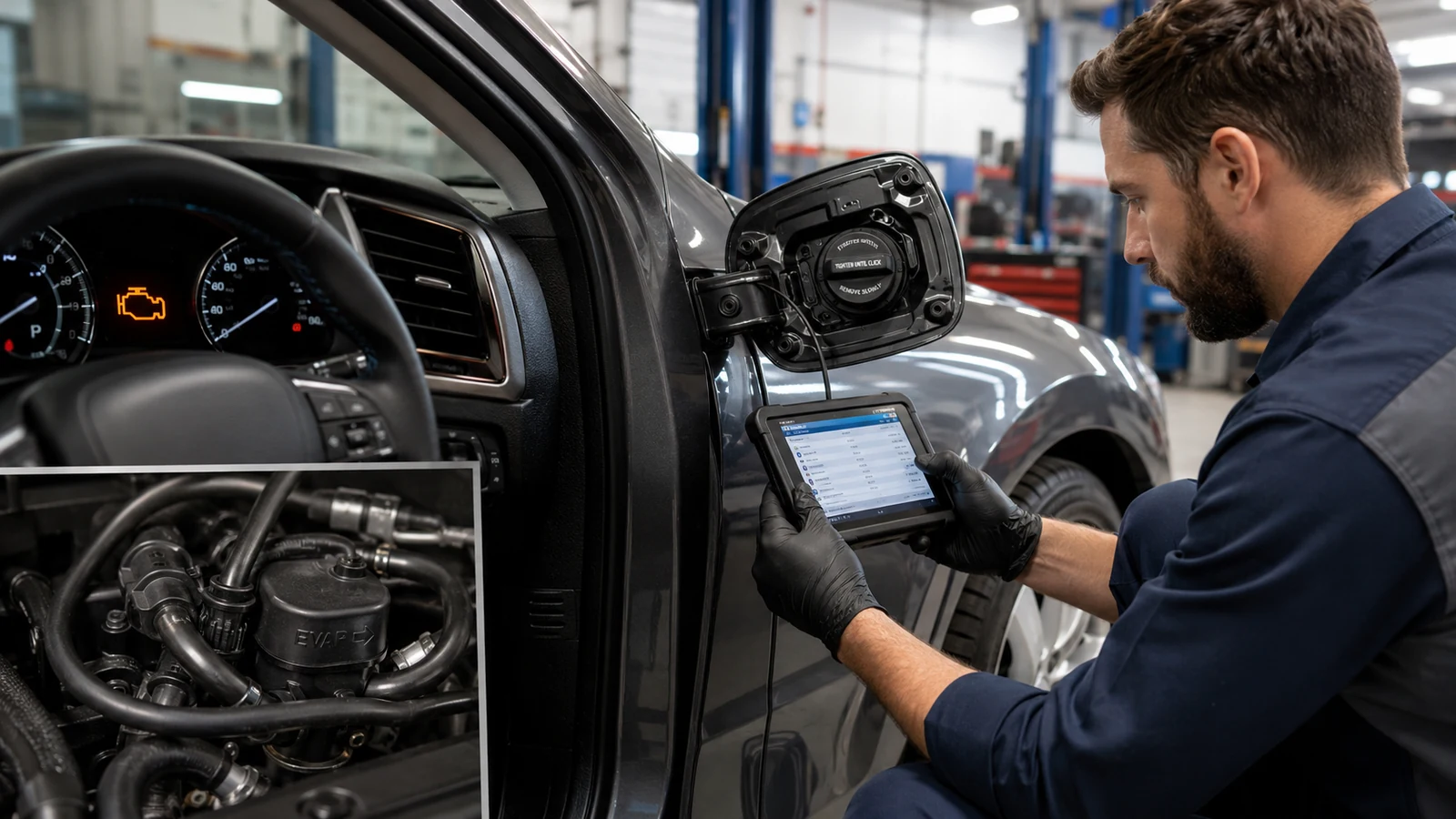
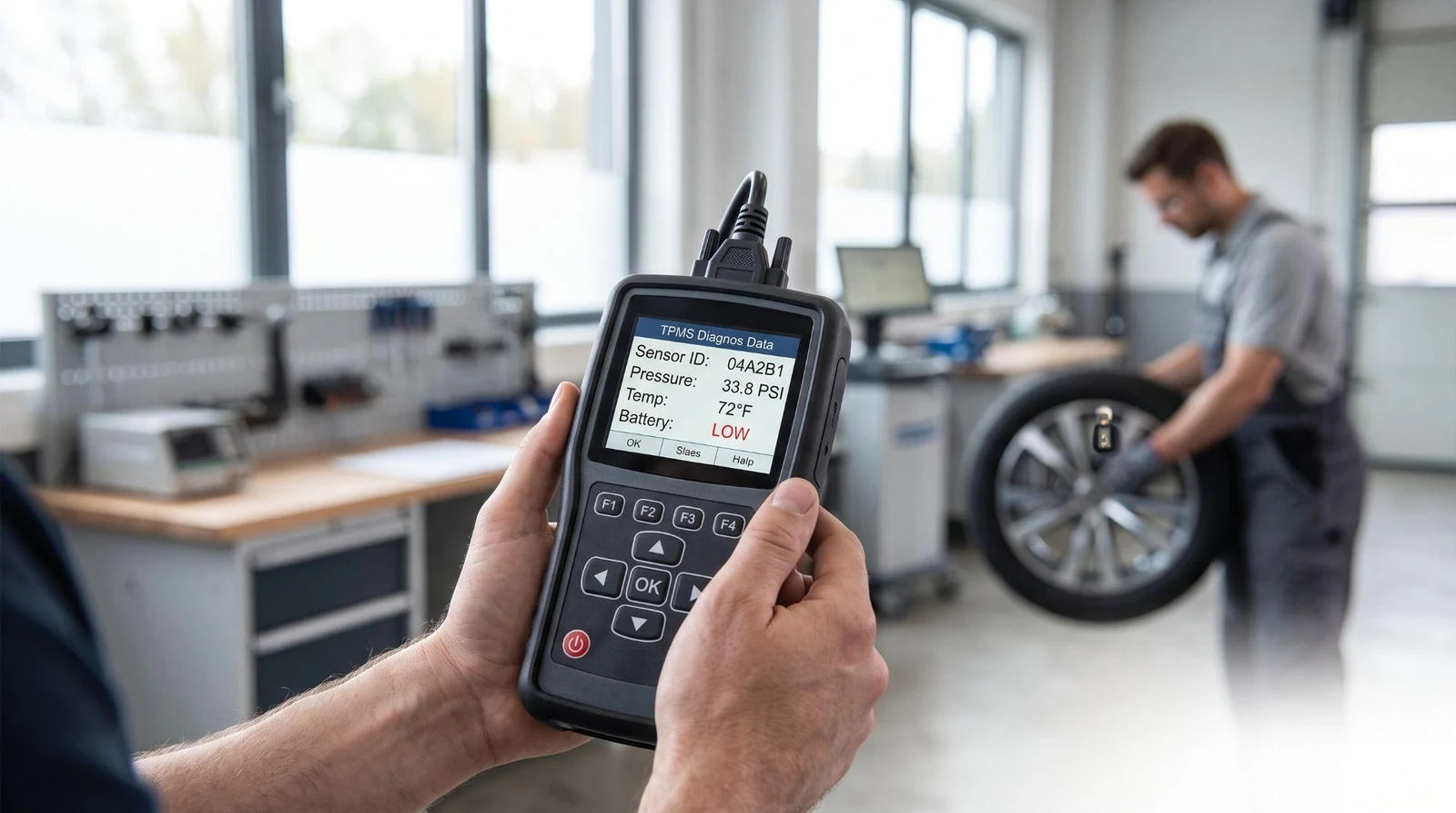
For a direct system, inspect live sensor information where possible. Check whether each sensor is transmitting and whether the vehicle recognizes its ID. A systematic sensor-testing workflow is more reliable than replacing the first sensor you suspect.
If diagnostic trouble codes are available, record them before clearing anything. Follow the proper trouble-code diagnosis steps and use the code as a starting point, not automatic proof that a component has failed.
Check What Changed Before the Warning
If a TPMS problem begins immediately after tire service, start with the work just performed.
Ask whether the tires were rotated, wheels were replaced, a sensor was changed, or a different wheel-and-tire package was installed. Federal TPMS guidance notes that replacement or alternate wheels and tires can affect system operation in some circumstances.
A sensor may also require registration or relearning before the vehicle recognizes it. Replacing another sensor without checking IDs and system data can create a second problem without solving the first.
That is why avoiding wrong-part replacement matters during TPMS diagnosis. Verify the failure before purchasing parts.
Know When Resetting Is the Wrong Move
A reset is appropriate only after you correct the underlying condition and the vehicle’s procedure calls for one. Don’t use it to hide an unresolved low-pressure condition.
If a tire repeatedly loses pressure, deal with the pressure loss first. If the TPMS warning flashes at startup, investigate the system fault. If the warning appeared after wheel or tire work, verify sensor compatibility and relearn requirements.
The goal isn’t simply to make the dashboard symbol disappear. The goal is to restore correct tire pressure and reliable TPMS operation, so the warning can do its job the next time there is a genuine problem.
Commonly Asked Questions About Turning Off the TPMS Light
Can cold weather turn on the TPMS light?
Yes, low temperatures can trigger the TPMS light even when the tires looked fine the day before. Tire pressure drops as ambient temperature falls, so a tire already near the warning threshold may drop low enough to turn the light on overnight.
Check all tires when they are cold, then inflate them to the vehicle manufacturer’s placard pressure. Do not use the maximum pressure printed on the tire sidewall as your target.
If the light disappears after you correct the pressure, keep monitoring the tires for a few days. If one tire keeps losing pressure, inspect it for a leak instead of repeatedly resetting the system.
Will the TPMS light reset itself after inflation?
Sometimes, but not always. Many vehicles turn the TPMS light off automatically after all tires are corrected and the vehicle is driven for a short relearn period. Other vehicles require a reset command through a dashboard menu, a dedicated button, or a manufacturer-specific relearn procedure.
The important part is to correct tire pressure before attempting any reset. If the system stores an incorrect baseline, especially on an indirect TPMS, the warning may return or become less useful. Use the owner’s manual for the exact procedure. If the light flashes before staying on, treat it as a system fault rather than a simple pressure warning.
Why is the TPMS light on with correct pressure?
If all four tires are at the correct cold pressure and the TPMS light remains on, first confirm the pressure gauge is accurate and that you used the placard value. Then consider the system type.
A direct TPMS may have a weak sensor battery, a damaged sensor, a missing sensor ID, or a failed relearn after tire service. An indirect TPMS may need recalibration after pressure changes, rotation, or wheel work.
A scan tool that can read TPMS data can help you identify which sensor isn’t reporting. Don’t replace a sensor just because the warning is on. Confirm the fault first so you don’t pay for a part that wasn’t the cause.
What does a flashing TPMS light mean?
A flashing TPMS light usually indicates a malfunction, not low tire pressure. On vehicles covered by U.S. TPMS requirements, the warning may flash for about 60 to 90 seconds, then stay illuminated when the system detects a fault.
Common causes include a sensor that is no longer transmitting, an incompatible wheel or sensor, a relearn problem, or communication trouble. Check tire pressures anyway, because a TPMS fault can prevent the system from warning correctly about an underinflated tire.
If the flashing pattern returns at each startup, use vehicle-specific diagnostic information or a TPMS-capable scan tool instead of repeatedly resetting it.
Why is the TPMS light on after tire rotation?
A tire rotation can keep the TPMS light on if the vehicle expects sensor positions to be relearned or if the service disturbed a sensor. Some systems learn new positions automatically after driving, while others require a specific relearn sequence.
First set every tire to the correct cold placard pressure. Then follow the vehicle’s documented TPMS reset or relearn procedure.
If the warning started immediately after tire work and the system reports one sensor as missing, inspect that wheel’s sensor data before replacing anything. This is especially important on vehicles that display individual tire positions, because the sensor IDs may need to be reassigned after rotation.