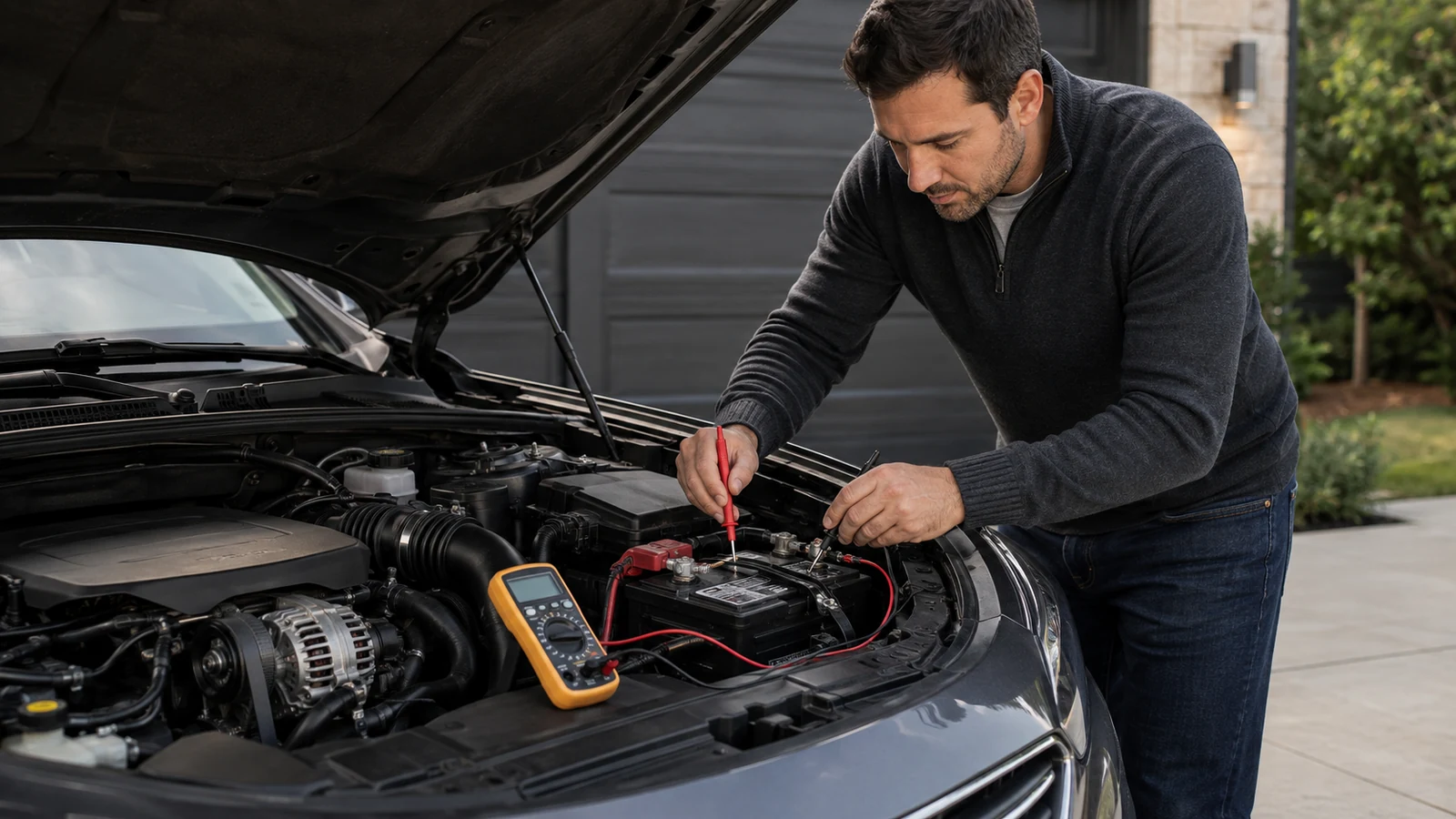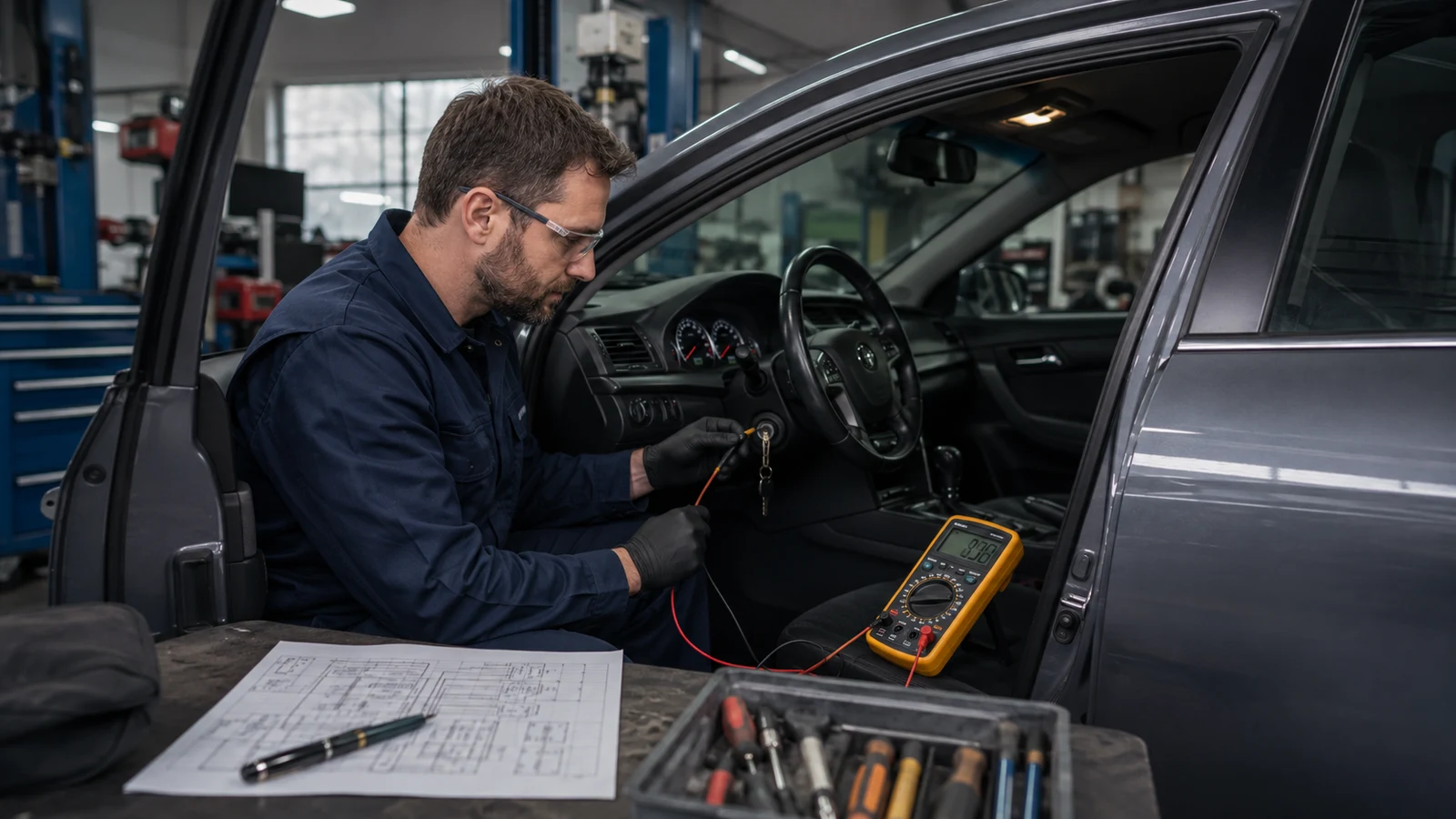
A car that will not crank, loses accessory power, or cuts out unexpectedly can make the ignition switch look guilty. The problem is that batteries, fuses, relays, wiring, and starter-control circuits can create very similar symptoms.
The best clue is not one symptom. It is whether the switch sends the correct electrical path for each key position when checked against the vehicle’s wiring diagram.
This guide shows a safe diagnostic order, the checks that matter, and when to stop before powered steering-column testing. The goal is to confirm the fault before replacing an expensive part.
How to Test an Ignition Switch: 4 Safe Checks First
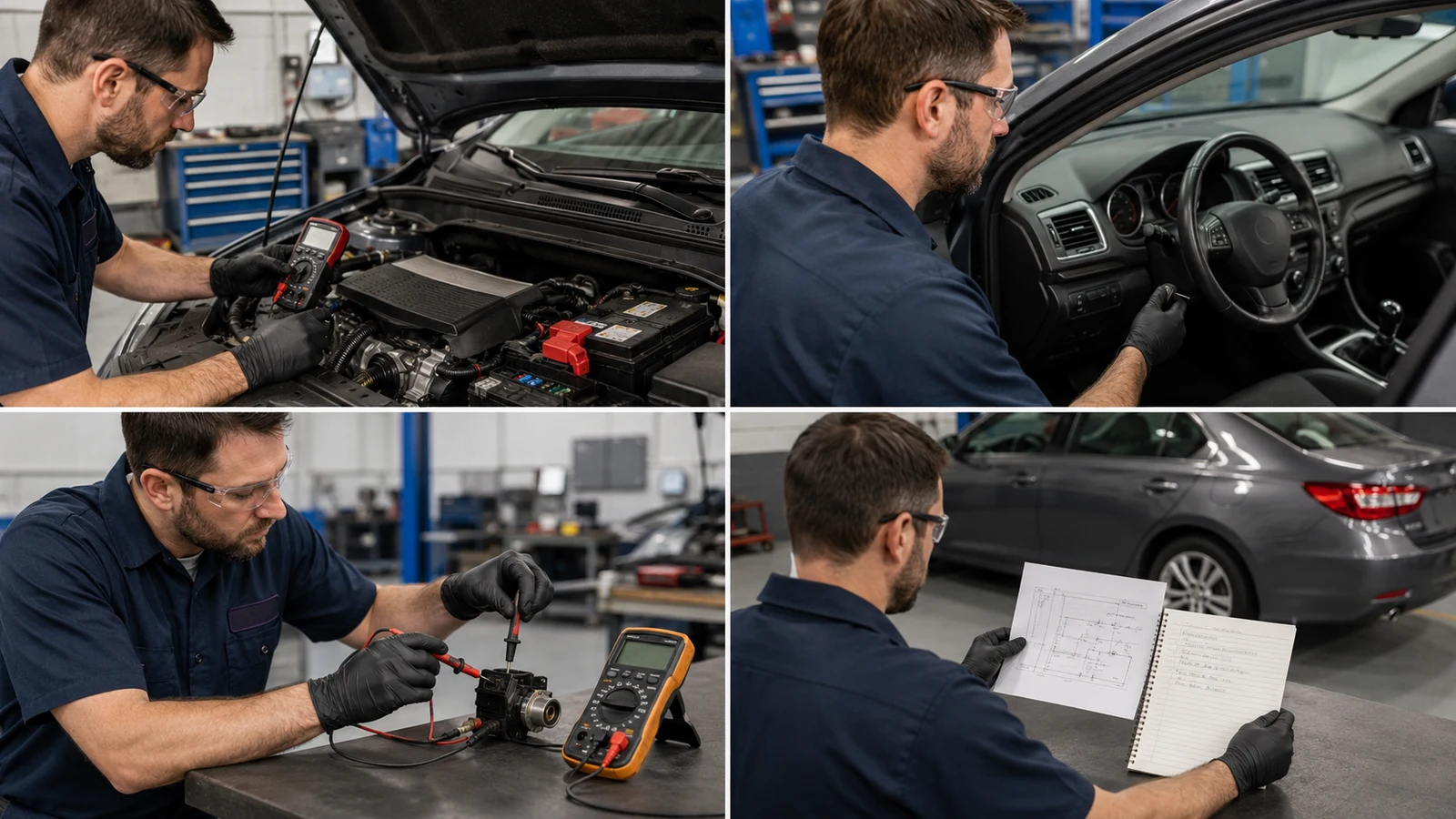
Testing an ignition switch is mainly about verifying power input, circuit selection, continuity, and symptom consistency. Start with low-risk checks before touching the switch itself. Vehicle designs vary, so never assume wire colors or terminal labels. Use the correct wiring diagram and service procedure for the exact year, make, model, and engine.
| Check | What you are confirming | What a bad result may mean |
|---|---|---|
| Battery and main feed | The vehicle has stable electrical power | Battery, cable, fuse, or feed issue |
| Key-position behavior | ACC, RUN, and START act as designed | Switch, linkage, or control issue |
| Disconnected continuity | Internal contacts close where specified | Worn or open switch contacts |
| Symptom comparison | Test result matches the complaint | Another circuit may be at fault |
Record the Symptoms First
Write down exactly what happens when you turn the key. Does the engine fail to crank, crank without starting, lose dashboard power, or cut out while driving? Note whether the problem is constant or intermittent.
Pay attention to which key positions change the symptoms. For example, accessories may work in ACC but disappear in RUN, or the dash may light while the starter remains silent. These observations help narrow the circuit before you remove trim or test a connector.
A symptom that changes with key position is a clue, not proof. A weak battery connection, relay, ignition fuse, starter circuit, or wiring fault can look similar. Follow a structured no-start diagnosis guide before blaming the switch.
Also note whether the fault is constant or intermittent. A problem that changes with key position can make the switch suspicious, but it is still only a clue.
Check Battery and Main Power First
An ignition switch cannot work correctly without a healthy power feed. Check that the battery is charged, the terminals are secure, and the obvious starting-system fuses are intact, per the owner’s manual or service information.
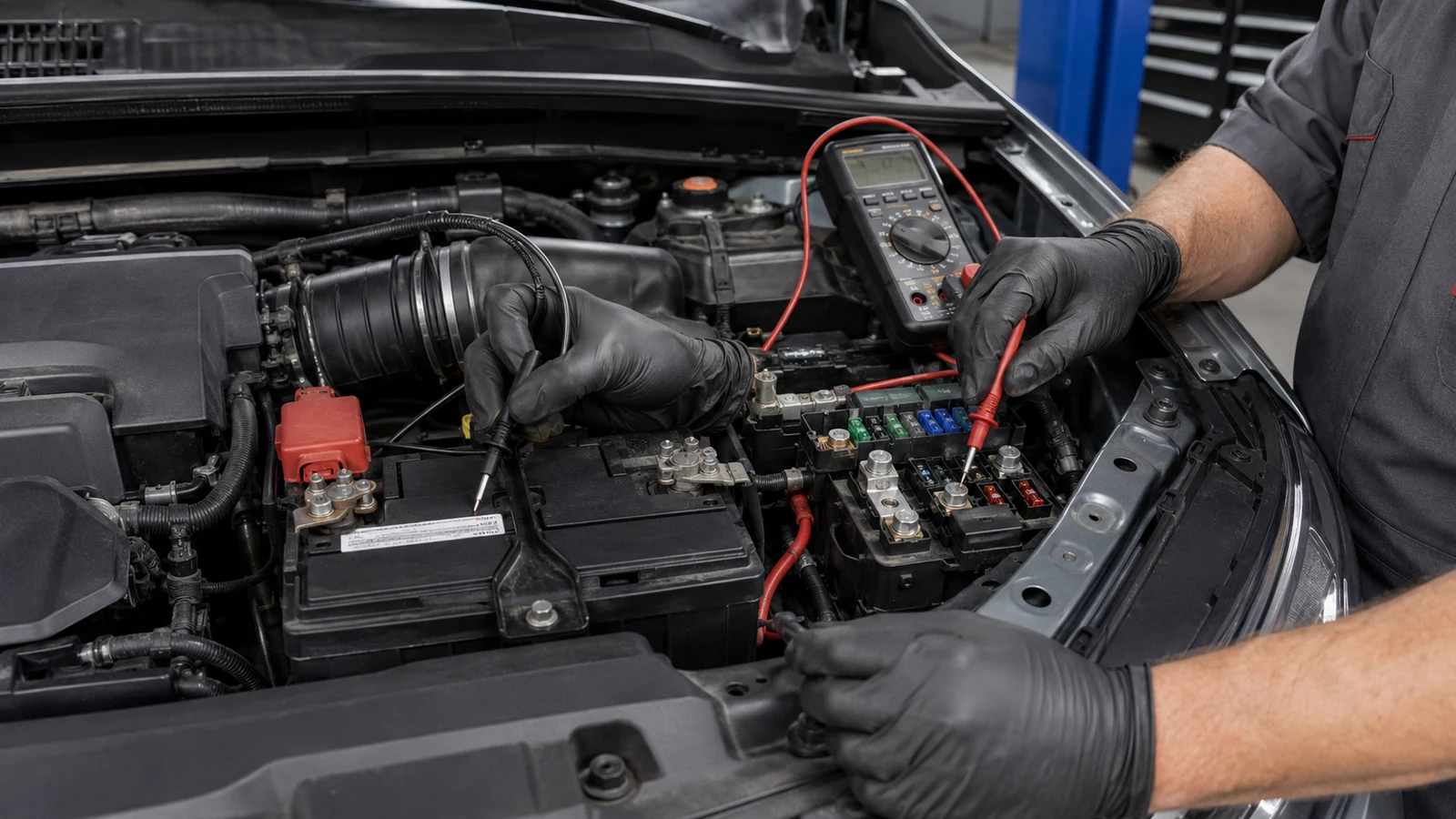
If several unrelated electrical systems are dead at the same time, the problem may be upstream of the ignition switch. A main fuse, fusible link, cable connection, or power distribution fault can remove voltage before it ever reaches the switch.
Use the vehicle’s fuse map rather than guessing. If you see repeated fuse failures or damaged fuse-box connections, review common fuse-box problems before continuing.
Identify the Switch Circuit
Traditional keyed systems often have separate electrical paths for battery feed, accessory, ignition/run, and start. The exact terminals and logic vary by vehicle. Some newer systems also use modules rather than routing all functions directly through the switch.
Use a vehicle-specific diagram to identify what should happen in OFF, ACC, RUN, and START. Do not identify terminals by wire color alone. Manufacturers can change colors and connector layouts between model years.
If a diagram looks confusing, learn the symbols and circuit flow first with this guide to reading a wiring diagram. Correct terminal identification matters more than memorizing generic labels.
Use a Safe Continuity Check
A continuity test can check the switch’s internal contacts without applying vehicle power. Do this only when the electrical switch is safely accessible and disconnected per the manufacturer’s procedure.
First, disconnect vehicle power as specified by the service information. If reaching the switch requires removing steering-column trim, disturbing an airbag connector, or working near supplemental-restraint wiring, do not proceed yourself. Have a qualified adult or technician handle that part.
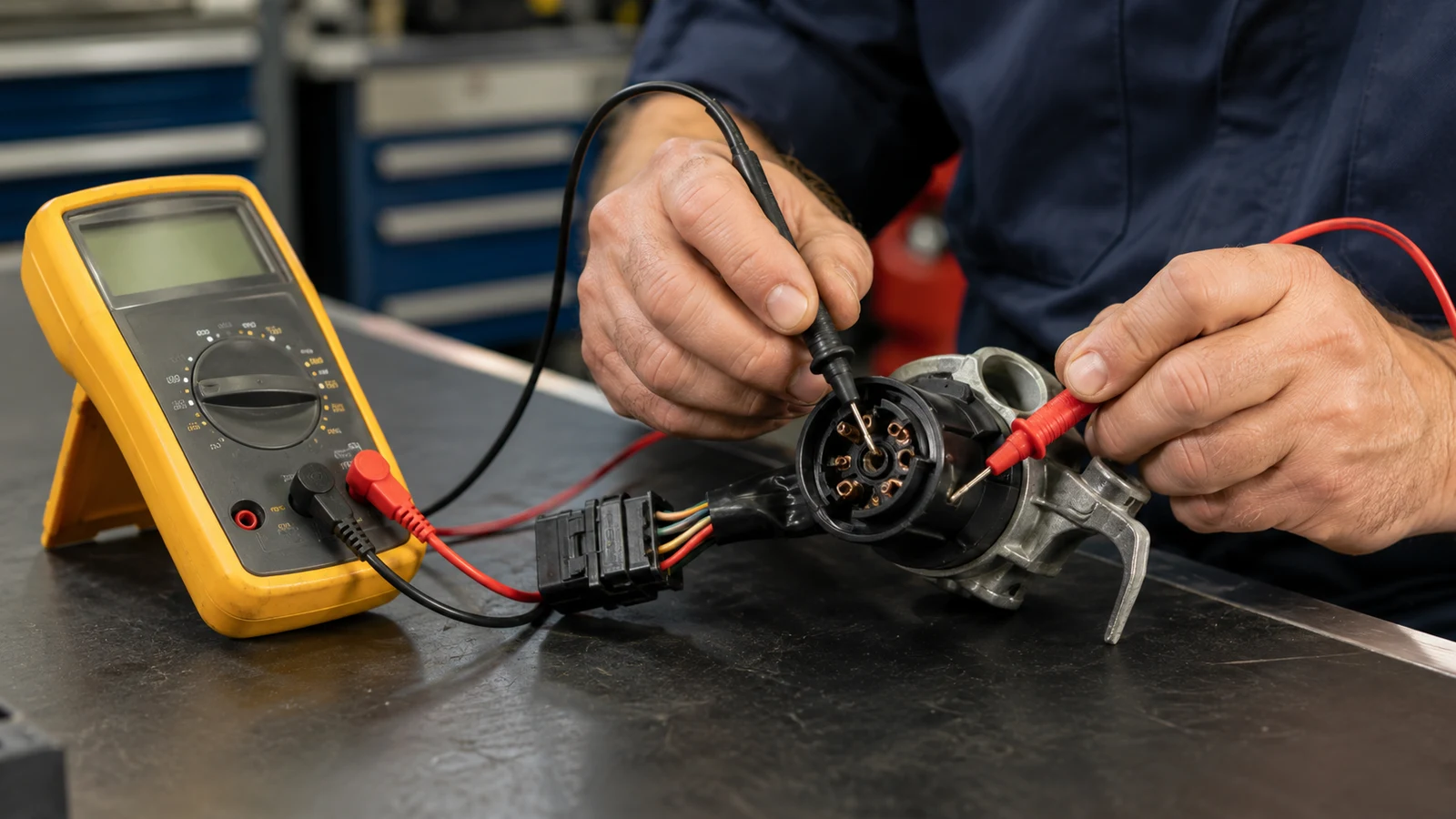
With the switch unplugged, set a digital multimeter to continuity or low resistance. Compare the specified terminal pairs in each switch position with the wiring diagram. A circuit that should be closed should show a stable low-resistance path. A circuit that should be open should remain open.
Do not use a generic resistance number as the pass/fail limit unless the manufacturer gives one. Meter leads, connectors, and switch design can affect the reading.
Compare Each Key Position
The pattern matters more than a single reading. In OFF, switched outputs should behave as the diagram specifies. In ACC, the accessory circuit should change state. RUN should enable the ignition-related path, and START should change the start-request path.
If one expected path never closes, the switch may have worn contacts or a mechanical linkage problem. If every path changes correctly, the switch may be working, and the fault may be somewhere else.
Also watch for inconsistent results. If the meter reading changes while the switch is held still, repeat the check and inspect the disconnected connector for looseness, contamination, heat damage, or poor terminal fit.
Stop Before Powered Column Testing
A disconnected continuity check has limits. A switch can sometimes pass a low-current meter check yet perform poorly under load.
Technicians may use live voltage and voltage-drop testing to find that type of fault. Those tests require a powered circuit and accurate back-probing, often around steering-column wiring. Because a mistake can short a circuit, damage electronics, or disturb restraint-system wiring, leave that stage to a trained technician.
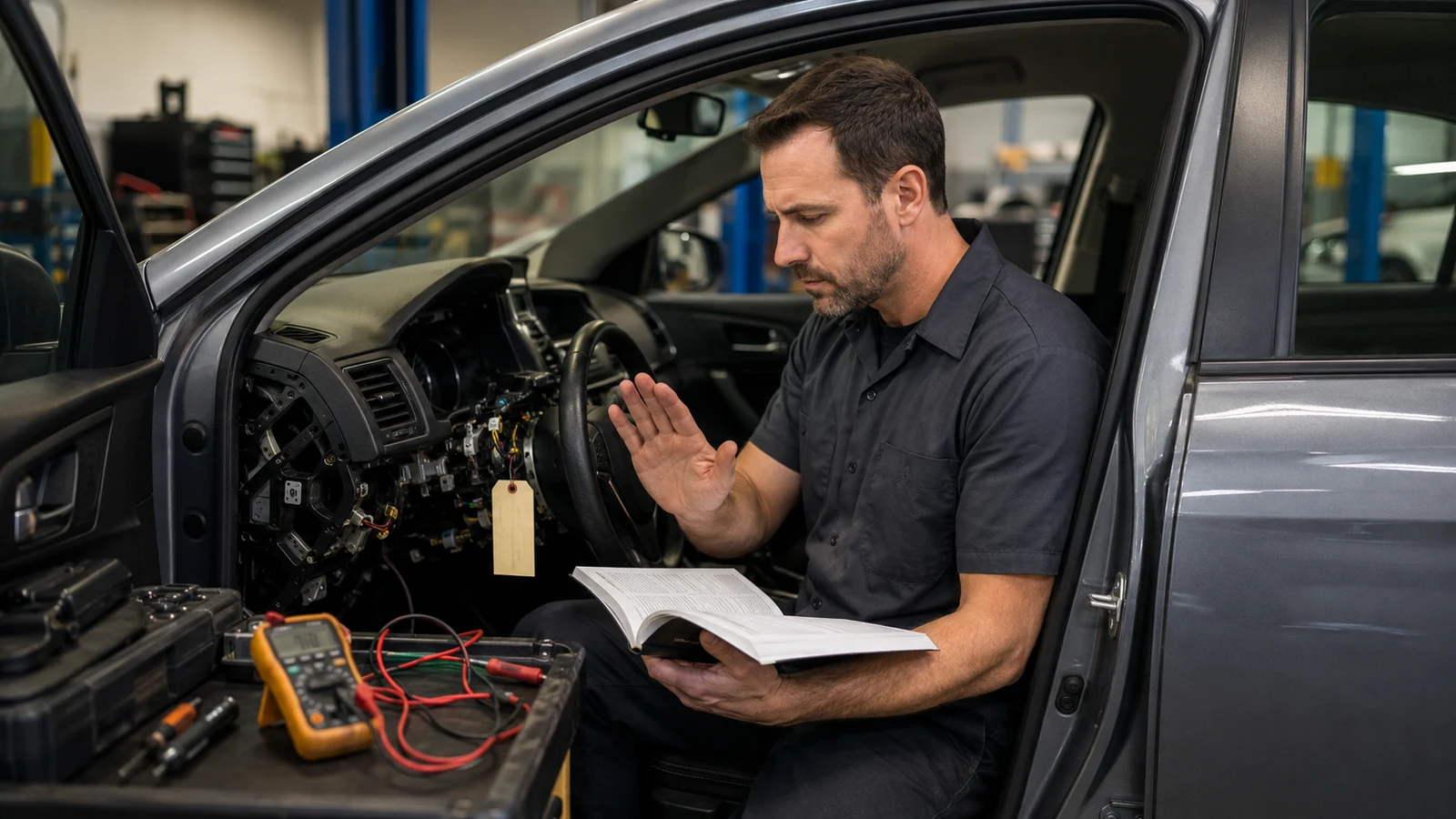
Bring your symptom notes, wiring diagram, and continuity results. That gives the technician useful evidence without repeating the safest checks.
Know When the Switch Is Not the Fault
If the ignition switch behaves correctly in every specified position, keep diagnosing instead of replacing it. Depending on the symptom, the next suspect could be a battery connection, relay, starter circuit, park/neutral switch, clutch switch, module input, security system, or damaged wiring.
This is where a structured diagnostic path prevents wasted parts. Replacing components simply because they are common suspects can become expensive quickly. AutoServicePlus also explains how wrong part replacement happens and why confirming the circuit first saves time.
The best result of an ignition-switch test is not always “bad switch.” It is a clear decision about where the fault is and where it isn’t.
Frequently Asked Questions About Testing an Ignition Switch
Can A Bad Ignition Switch Cause A No-Crank Condition?
Yes. A failing ignition switch can cause a no-crank condition if it doesn’t send the start request through the correct circuit. But no crank does not prove the switch is bad. A weak battery, loose battery connection, blown fuse, faulty starter relay, park/neutral switch, clutch switch, wiring fault, or starter problem can create the same symptom. Start with battery condition and basic power checks, then compare the symptom to your vehicle’s wiring diagram. If the switch passes a disconnected continuity test but the vehicle still will not crank, the fault may be elsewhere in the start circuit. Avoid replacing the switch based on one symptom alone.
Can an Ignition Switch Test Good and Still Be Bad?
Yes. A switch can pass a simple continuity test and still fail intermittently in the vehicle. Continuity only confirms that an internal path can close under a very small meter current. It does not always reveal resistance that appears under normal electrical load, heat, vibration, or a worn mechanical connection. This is why a technician may follow a continuity check with a live voltage or voltage-drop test using the vehicle’s wiring diagram and manufacturer procedure. That powered testing is more sensitive, but it also carries more risk around steering-column wiring and airbag circuits. If the symptom is intermittent and your basic disconnected checks look normal, professional powered testing is the safer next step.
Is the Lock Cylinder the Same As the Switch?
No. The ignition lock cylinder and the electrical ignition switch are related, but they are not always the same part. The lock cylinder is the mechanical part that accepts and turns the key. The ignition switch is the electrical part that routes power or sends control signals as the key moves through ACC, RUN, and START. On some vehicles, they are mounted close together and linked mechanically. On others, the design is different. A key that binds, will not turn, or feels physically loose can point toward the cylinder or linkage. Electrical symptoms such as missing accessory power or an inconsistent start signal can point toward the switch or its circuit.
Do Push-Button Cars Have an Ignition Switch?
Push-button vehicles still have an ignition-control function, but it may not use the traditional key-operated electrical switch found in older cars. The start button often sends a low-current request to a control module, which then checks conditions such as key authorization, brake or clutch input, transmission position, and network status before allowing the engine to start. Because of that design, a traditional BAT-to-ACC-to-IGN continuity test may not apply. Diagnosis usually depends more heavily on scan data, wiring diagrams, fuses, module inputs, and manufacturer test procedures. If your vehicle uses push-button start, confirm the exact system design before treating the button itself as a conventional ignition switch.
Does Jiggling The Key Prove The Switch Is Bad?
It is a useful clue, but it is not enough to condemn the ignition switch by itself. A change in symptoms when you move the key can point to worn switch contacts, a worn lock cylinder, a loose mechanical linkage, or even movement in the connector or wiring. Repeatedly forcing or jiggling the key can also worsen a mechanical problem. Record what changes: dashboard power, accessory operation, crank response, and key feel. Then compare those observations with the vehicle-specific circuit diagram. If you must open the steering column or back-probe powered wires to continue, stop there and have a qualified technician perform the next test safely.