A tire pressure warning light that refuses to disappear can be frustrating, especially after you’ve already added air. The problem is that correct tire pressure and a correctly learned TPMS sensor are two different things. Resetting the system without checking the tires first can also hide the real problem.
Start with the pressure listed on the vehicle’s tire placard, not a random PSI or the maximum pressure printed on the tire. Then identify whether your vehicle needs a simple drive cycle, dashboard initialization, or full sensor relearn.
This guide shows the practical order experienced technicians use. You’ll learn how to reset the tire pressure sensor, recognize a TPMS malfunction, and know when a reset won’t resolve the warning.
How to Reset Tire Pressure Sensor: Get TPMS Right

The safest approach is pressure first, reset second. TPMS procedures vary by manufacturer, model, and model year. Some vehicles automatically relearn sensors after driving, while others provide a dashboard setting or require sensor registration after wheel or sensor replacement. Ford and Toyota manuals, for example, document different initialization and relearning procedures for different vehicles.
| What you see | Likely situation | Best next step |
|---|---|---|
| TPMS light stays solid | One or more tires may be low | Check all cold tire pressures |
| Light remains after adding air | System may need driving time or initialization | Drive, then follow the vehicle reset procedure |
| Light flashes, then stays on | Possible TPMS system malfunction | Diagnose sensors and system faults |
| New sensor or wheel installed | Sensor ID may not be registered | Perform the specified relearn or registration |
| Light returns the next morning | Pressure may be near the warning threshold | Recheck cold pressure and inspect for leakage |
Check Cold Tire Pressure First
Before touching a reset button, check every road tire with an accurate pressure gauge. Measure when the tires are cold whenever possible. Warm tires can show higher pressure than they had before driving.
Use the pressure listed on the driver-side door jamb tire placard or the vehicle manufacturer’s specified value. Ford, for example, directs owners to the tire or door-jamb label for recommended inflation pressure.
Do not use the maximum PSI molded into the tire sidewall as your normal target pressure. The vehicle manufacturer’s specification accounts for the vehicle, tire fitment, load requirements, and handling characteristics.
Check every tire rather than assuming the warning identifies only one. A TPMS warning means you should inspect tire pressure as soon as practical. NHTSA also notes that TPMS does not replace regular manual tire-pressure checks.
If one tire repeatedly loses pressure, resetting the sensor isn’t the real repair. The tire, valve area, wheel, or another part of the assembly may need inspection.
Know What the TPMS Light Is Telling You
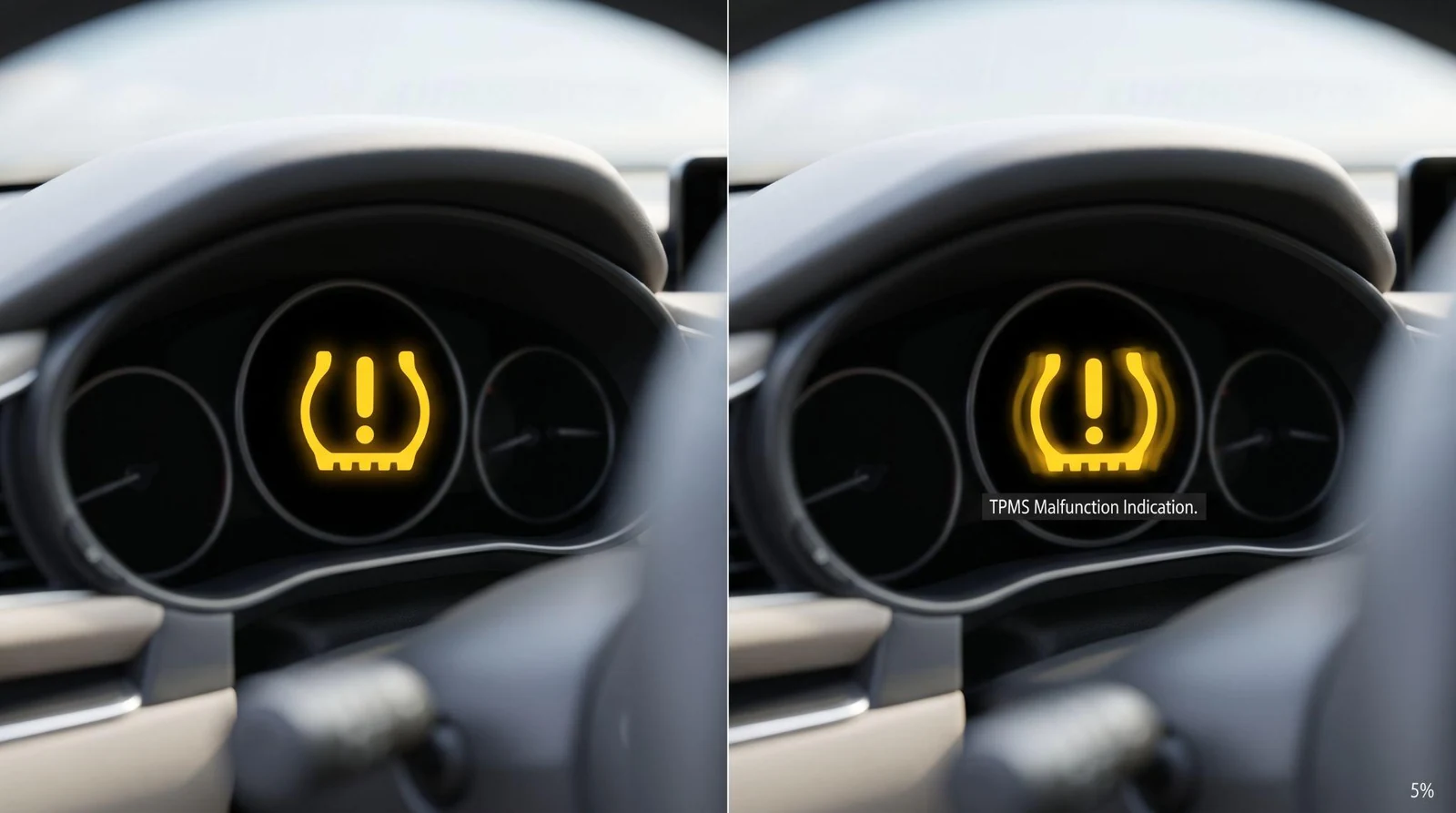
A solid TPMS warning light commonly indicates that the system has detected significant underinflation. After correcting the pressure, the light may need some time to stabilize before it turns off.
A light that flashes for roughly a minute and then remains illuminated points toward a TPMS malfunction rather than ordinary low pressure. NHTSA describes this flashing-then-solid pattern as the malfunction indication used by TPMS-equipped vehicles covered by the federal standard.
That distinction prevents a common mistake: repeatedly resetting a system that actually has a sensor or communication problem.
If the warning is flashing, move from basic pressure correction toward diagnosis. A structured sensor testing process can help separate a pressure issue from a component or signal problem.
Try the Automatic Relearn First
Many modern vehicles can update TPMS information while in motion after the pressures are corrected.
After setting all tires to the specified cold pressure:
- Start the vehicle normally.
- Confirm the TPMS warning is still present.
- Drive under normal, safe road conditions.
- Give the vehicle enough time to detect the sensors again.
- Recheck the warning after the drive.
Do not assume there is one universal speed or drive time. The exact relearn conditions depend on the vehicle.
For example, one current Ford procedure requires that the TPMS training function be enabled, then specifies driving at speeds above 40 km/h for about 10 minutes. Toyota procedures can also involve driving after initialization or sensor registration, with requirements that vary by model.
That variation is why copying a reset sequence from another make, model, or model year can waste time.
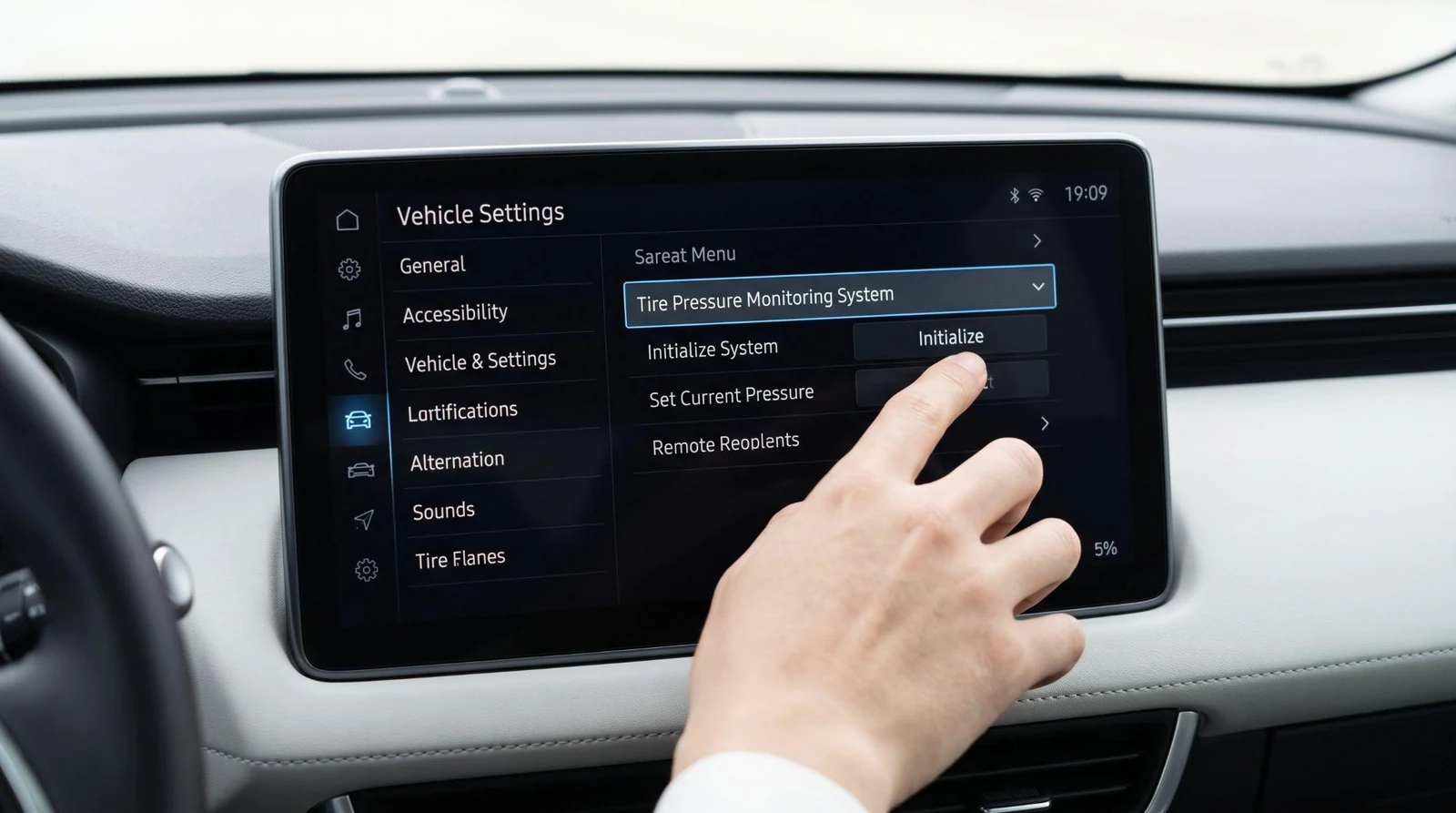
Use the Dashboard TPMS Reset Menu
If normal driving doesn’t clear the warning, check the vehicle settings for wording such as:
- TPMS
- TPWS
- Tire Pressure
- Set Pressure
- Initialize
- Sensor Training
- Tire Rotation
The wording and menu path can differ significantly.
Toyota, for example, documents vehicles in which the TPWS menu provides a pressure-setting or initialization function. Other Toyota models provide separate functions for tire pressure setting, wheel-set changes, and wheel-position registration.
Always correct tire pressure before initializing a system that uses the current pressure as its reference. Some systems establish their warning benchmark during initialization, so initializing at the wrong pressure can produce inaccurate warning behavior. Toyota specifically warns against initializing certain systems before setting the specified pressure.
If the correct menu path is unclear, avoid experimenting with unrelated vehicle settings. Vehicle-specific documentation is more reliable than a generic button sequence. Using the wrong procedure is one of several factory repair manual mistakes that can turn a simple diagnosis into unnecessary parts replacement.
Relearn Sensors After Tire Service
A reset and a sensor relearn are not always the same operation.
After rotating the wheels, replacing a TPMS sensor, installing another wheel set, or making certain tire changes, the vehicle may need to relearn which sensor corresponds to each wheel position.
Toyota documentation, for example, distinguishes pressure initialization from sensor ID registration on some models. New transmitter IDs may need to be registered before the system operates correctly.
Ford procedures also vary. Some current systems offer sensor training through vehicle settings, while certain other Ford procedures use a dedicated training sequence for individual wheel positions.
This is where the exact year, make, model, and TPMS configuration matter.
If tires were just rotated and the dashboard now displays pressures at incorrect wheel positions, the problem may be position learning rather than tire inflation.

When a Reset Won’t Clear the Light
If the tires are correctly inflated and the proper reset procedure has been completed, stop repeating the reset and begin diagnosis.
Possible causes include:
- A sensor that isn’t communicating. The vehicle may be unable to receive data from one of its wheels.
- A replacement sensor that hasn’t been registered. Installing the physical sensor doesn’t always finish the job.
- Incorrect sensor compatibility. A replacement wheel or sensor must work with the vehicle’s TPMS configuration.
- A system fault. Wiring, receiver, module, or communication problems can produce symptoms that look like a simple sensor issue.
- A tire that keeps losing air. The warning can disappear after inflation and return later because the pressure genuinely dropped again.
When the failure isn’t obvious, follow a logical diagnostic flowchart rather than replacing parts based only on the warning lamp.
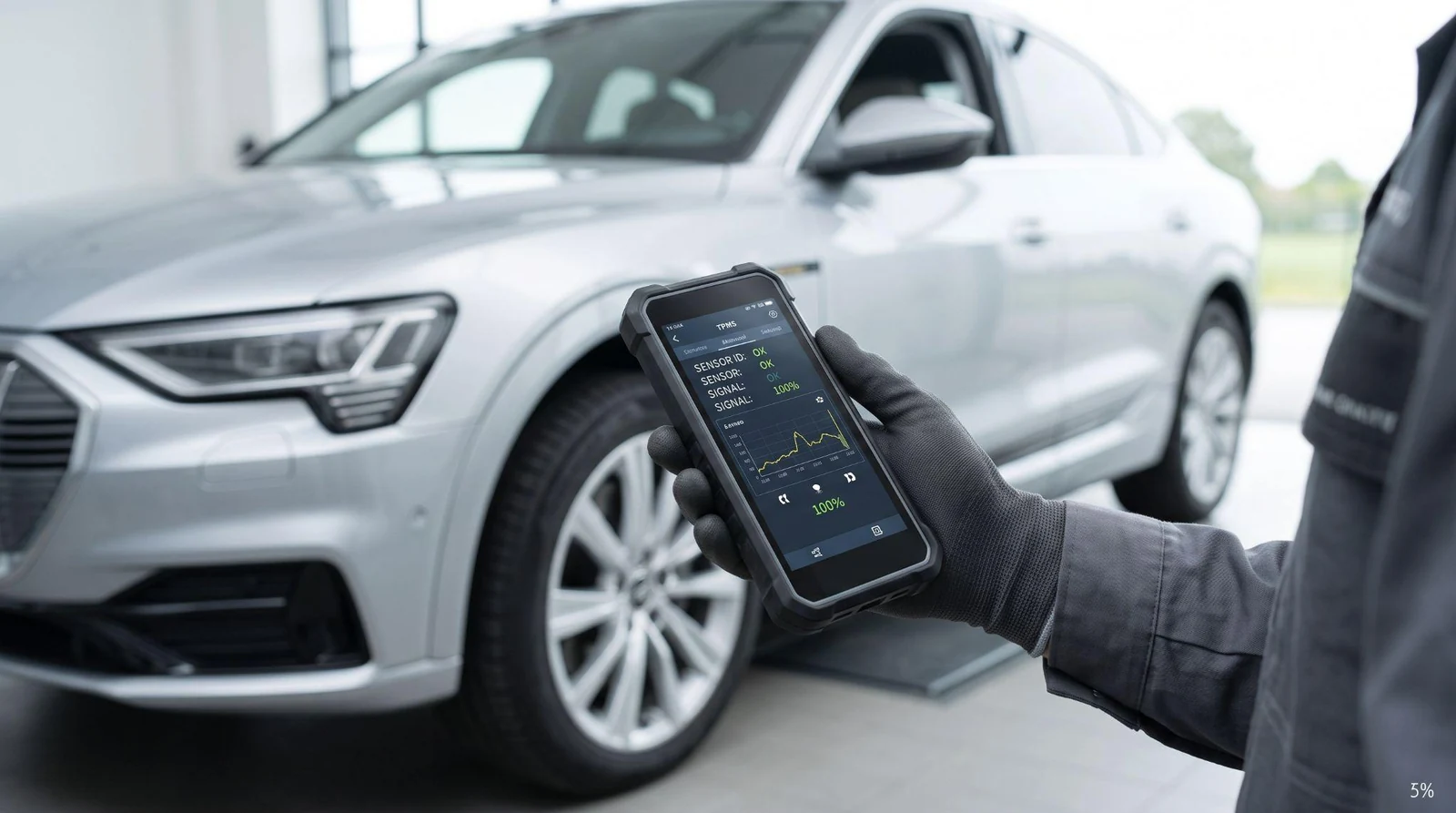
Scan the TPMS Before Buying Sensors
A TPMS-capable diagnostic or service tool may reveal information that the dashboard light cannot.
Depending on the vehicle and tool, a technician may be able to identify a missing sensor signal, a registration issue, a wheel-position problem, or a stored diagnostic trouble code.
If a code is present, don’t immediately replace whatever component appears in its description. A trouble code identifies the area or condition the control system detected. It still needs diagnosis.
Following proper trouble code diagnostic steps can prevent an unnecessary sensor replacement when the actual issue lies elsewhere.
This becomes especially important when multiple tires or sensors were recently serviced.
Avoid These TPMS Reset Mistakes
The fastest TPMS repair usually comes from avoiding shortcuts.
Don’t reset before checking pressure. A warning light is useful information. Confirm the physical tire condition first.
Don’t inflate every tire to the sidewall maximum. Use the vehicle’s specified cold inflation pressure.
Don’t copy another vehicle’s button sequence. Procedures can change even within the same manufacturer.
Don’t assume rotation and sensor replacement require identical steps. Some vehicles distinguish initialization, position relearning, and sensor ID registration.
Don’t ignore a flashing warning. A flashing-then-solid TPMS indicator can signify a system malfunction rather than simple underinflation.
Don’t replace sensors just because a reset failed. Confirm sensor communication and registration first.
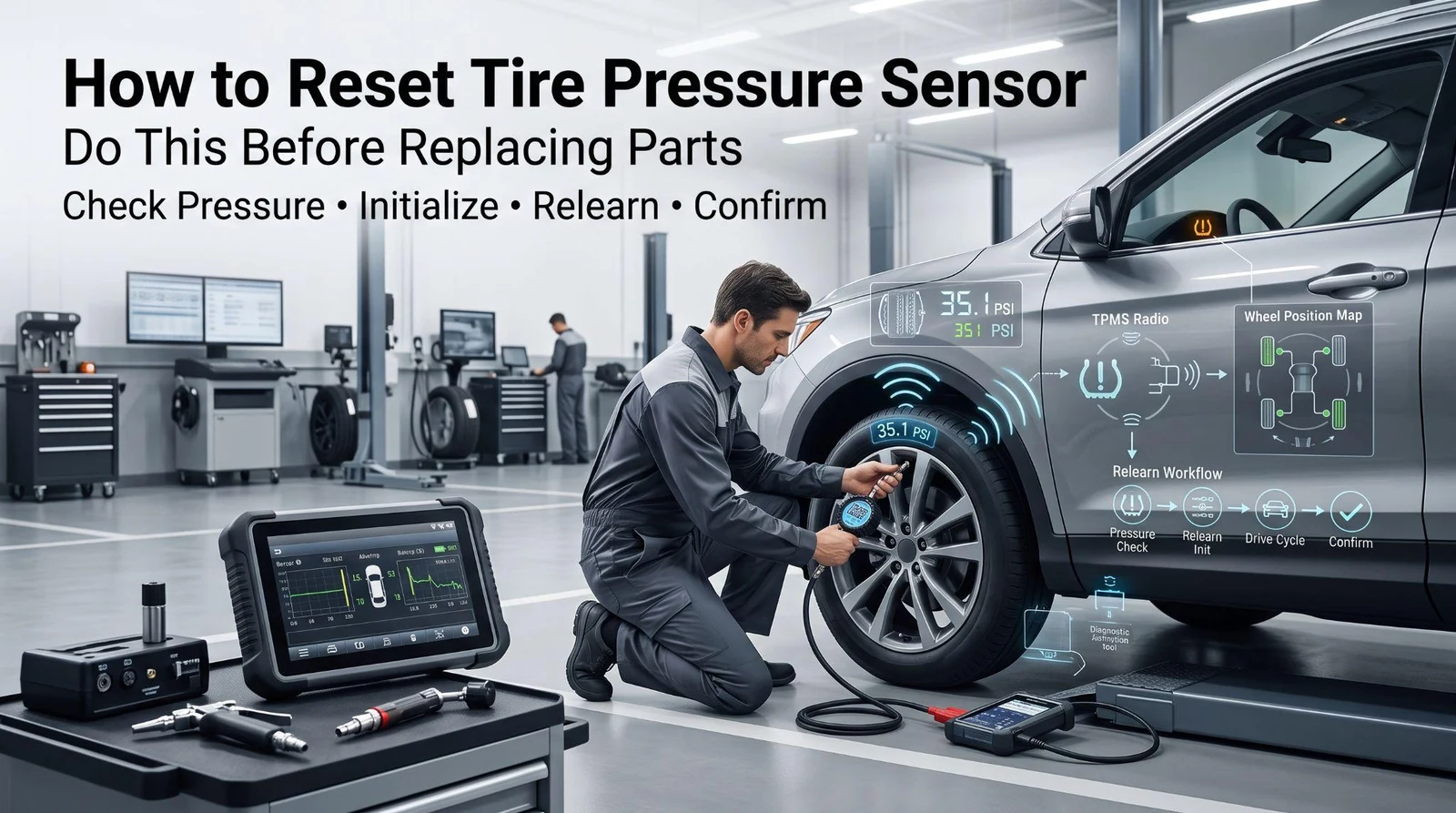
The practical sequence is simple: verify the tires, identify the warning type, use the correct vehicle-specific reset method, then diagnose only if the warning remains.
Commonly Asked Questions About the Reset Tire Pressure Sensor
Will TPMS Reset After I Add Air?
Sometimes, but not immediately. If the warning appeared because a tire was genuinely underinflated, correcting all tires to the specified cold pressure may allow the system to clear the warning after the vehicle has been driven.
The exact behavior depends on the vehicle. Ford notes that some systems can take several minutes of driving after proper inflation before the warning goes out, while other vehicles require an initialization or training procedure.
Check every tire first, replace the valve caps, and drive normally. If the light remains, look up the model-specific TPMS procedure. If it flashes before staying on, investigate a system malfunction instead of repeatedly adding air.
Can I Reset TPMS Without a Special Tool?
Yes, on many vehicles. Some systems relearn automatically while driving, and others provide an initialization or tire-pressure-setting function through the dashboard. A special TPMS tool becomes more likely to be needed when a replacement sensor must be activated, identified, programmed, or assigned to a wheel position.
Procedures vary enough that the owner’s manual or factory service information should decide the method. Toyota documentation, for example, separates pressure initialization from sensor ID registration on certain models.
If you haven’t replaced sensors or wheels, start by setting the correct cold tire pressure and checking the vehicle menu before assuming you need additional equipment.
Why Is My TPMS Light On With Correct Pressure?
The system may not have updated yet, the pressure may have been measured while the tires were warm, or the vehicle may need initialization after tire service. A repeated warning can also mean one tire is slowly losing pressure.
More importantly, look at how the warning behaves during startup. A TPMS indicator that flashes for approximately 60 to 90 seconds and then remains illuminated indicates a system malfunction under the federal TPMS warning requirements.
Check pressures again when the tires are cold. If they match the vehicle specification, follow the correct initialization procedure. If the warning flashes or keeps recurring, diagnose the system rather than repeatedly resetting it.
Do TPMS Sensors Need Relearning After Rotation?
Some vehicles do, while others can determine wheel locations automatically or use a menu-based registration process. Rotation matters because the vehicle may need to associate each sensor with its new wheel position, especially when individual tire pressures are displayed on the dashboard.
Toyota specifies initialization or wheel-position procedures after rotation on certain models, while Ford documents training procedures for some vehicles. Follow the procedure for the exact model year rather than assuming all vehicles from one brand work the same way.
If pressure values appear beside the wrong wheel after rotation, position relearning is more likely than a failed pressure sensor.
Why Does the TPMS Light Keep Coming Back?
A returning warning usually means the underlying condition hasn’t been resolved. Start by checking all tires cold and recording their pressures. If one tire repeatedly drops, have the tire and valve area inspected instead of resetting the warning every time.
If pressures remain stable, observe the dashboard light at startup. A flashing-then-solid warning points toward a TPMS malfunction rather than ordinary low inflation. Recent tire or wheel work also matters, as a new sensor may need to be registered or relearned.
When pressure is correct and the proper relearn procedure still fails, diagnostic testing is more useful than another reset attempt or guessing which sensor needs replacement.