Low tire pressure can change how your car steers, brakes, and handles. It can also increase tire wear and heat buildup. A tire may look normal while still being significantly underinflated, so appearance alone isn’t a reliable check.
The first move isn’t simply adding random amounts of air. Check the correct cold-tire PSI first, then measure every tire with an accurate gauge. That tells you whether you’re dealing with normal pressure loss or a problem that needs diagnosis.
The process is straightforward when you follow it in the right order. Below, you’ll learn how to find the correct PSI, inflate safely, interpret a TPMS warning, identify repeat pressure loss, and know when a tire needs professional attention.
How to Fix Low Tire Pressure: 6 Checks That Matter
Fixing low tire pressure starts with confirming the manufacturer’s specification, not guessing from the tire itself. Then compare all four tires, correct the pressure while they’re cold, and watch what happens afterward. A recurring pressure warning can point to a leak, valve issue, or TPMS fault rather than a tire that simply needed air.
| What You Find | Likely Situation | Best Next Step |
|---|---|---|
| One tire is slightly low | Normal loss or small leak | Inflate and monitor it |
| All tires are slightly low | Temperature change or overdue check | Inflate all to placard PSI |
| One tire is much lower | Puncture or active leak possible | Inspect before driving far |
| Pressure drops again soon | Slow leak likely | Have tire and valve checked |
| TPMS stays solid | Pressure may still be incorrect | Recheck all tires cold |
| TPMS flashes, then stays on | Monitoring system fault possible | Diagnose the TPMS system |
Find the Correct Cold-Tire PSI
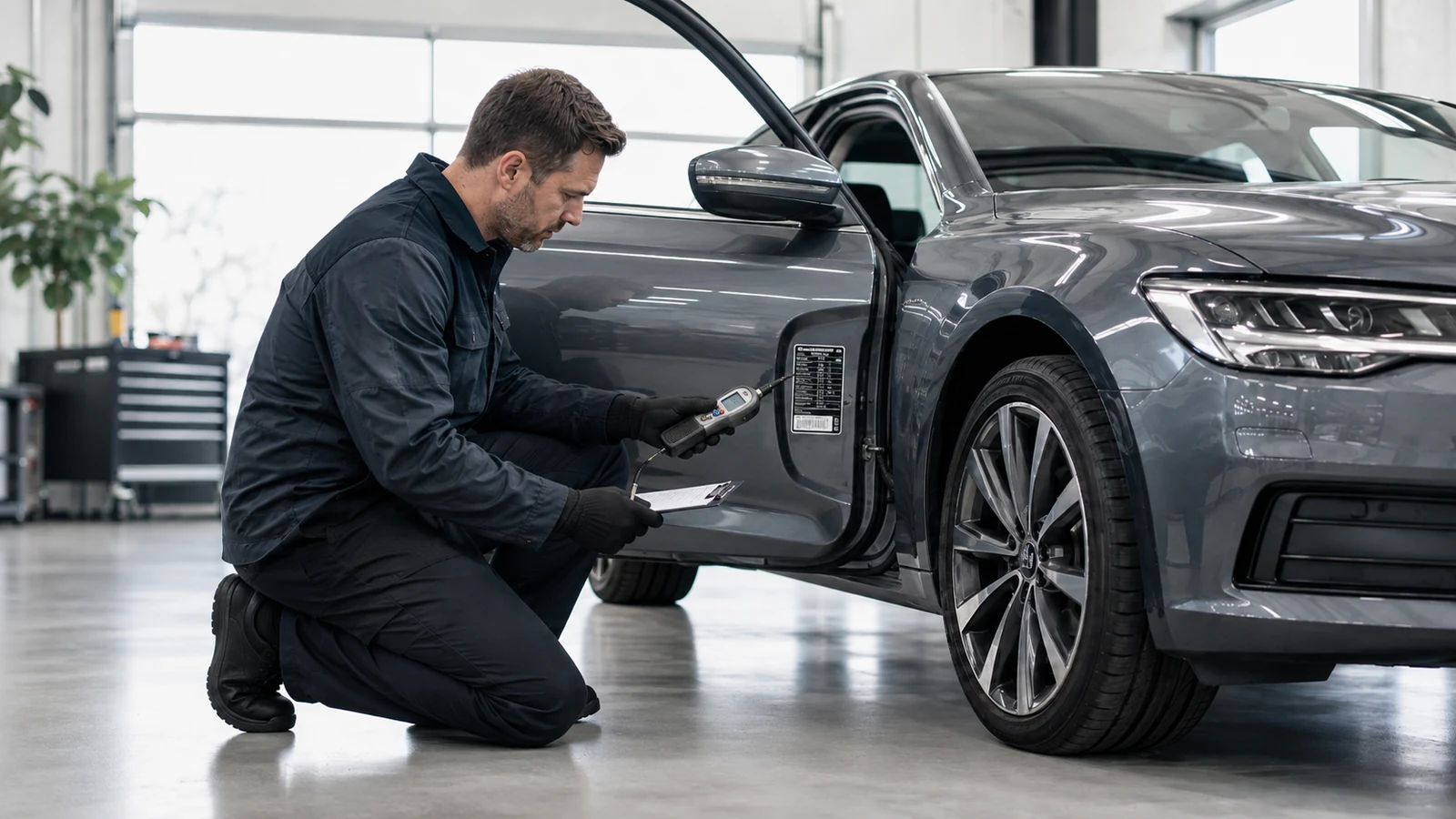
Open the driver’s door and look for the tire information placard on the door frame or pillar. It normally lists the recommended cold inflation pressure for the front and rear tires.
Use that specification rather than copying the maximum pressure molded onto the tire sidewall. Federal TPMS guidance also bases the system around the vehicle manufacturer’s recommended cold tire inflation pressure.
“Cold” generally means checking before substantial driving has heated the tires. Pressure naturally increases as tires warm during driving, so releasing air from a hot tire can leave it underinflated later.
If you can’t find the placard or need model-specific tire procedures, use the owner’s or factory documentation as your next reference. AutoServicePlus explains why factory service manuals can help DIY mechanics when maintenance procedures vary between vehicles.

Measure All Four Tires
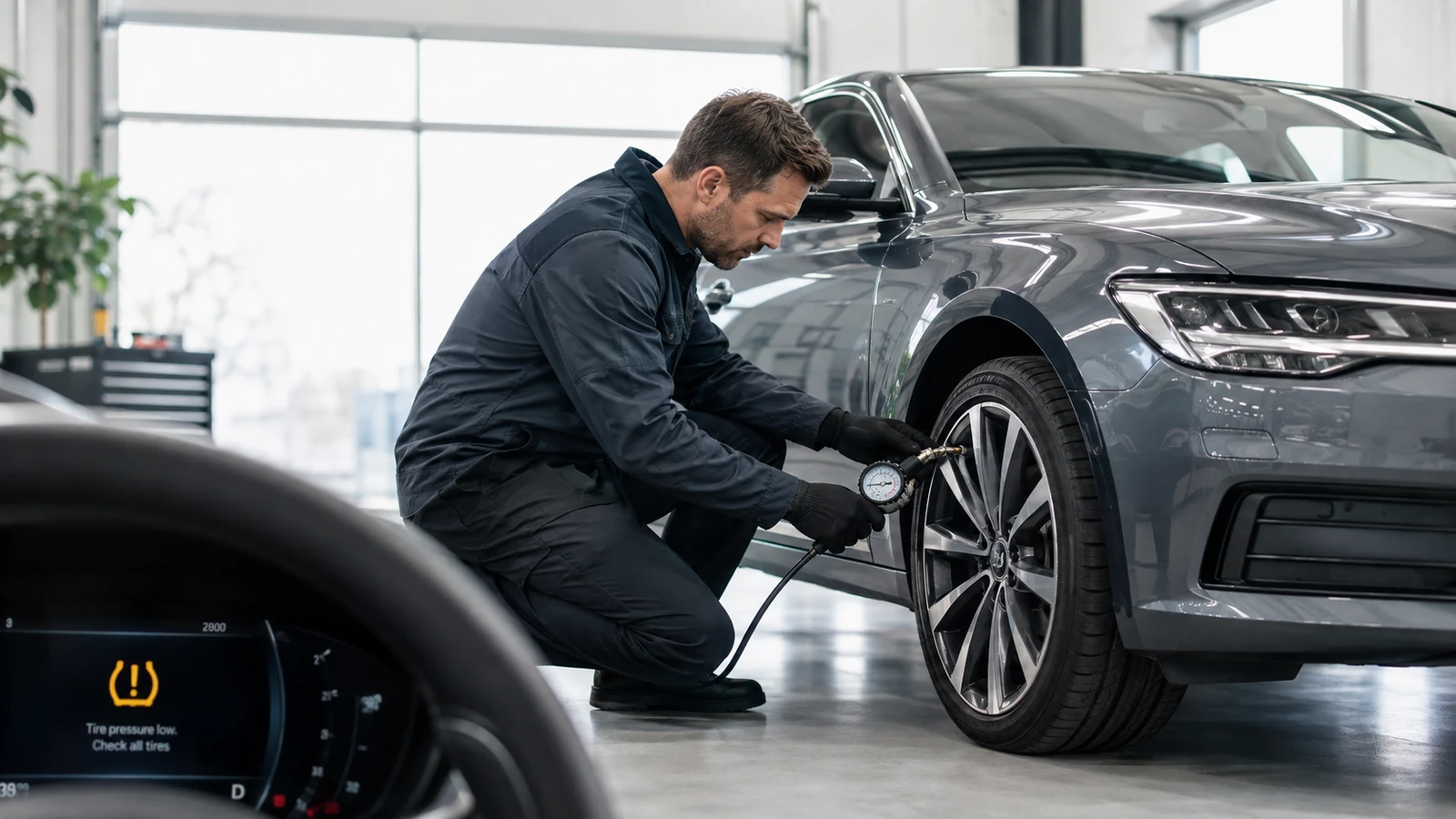
Remove the valve cap and press a reliable tire gauge firmly onto the valve stem. Record the reading, then repeat the process for every road tire.
Don’t stop after finding the tire that triggered the warning. Comparing all four pressures gives you diagnostic information.
For example, four tires that are each a little low after a major temperature drop suggest a different problem from one tire that is 8 PSI below the others.
Cold weather can reduce tire pressure enough to trigger the TPMS warning, especially if the pressure was already close to the warning threshold. NHTSA advises checking the actual pressure even if the warning disappears as the vehicle warms up.
Add Air in Small Amounts
Connect an air source and add air briefly. Remove it, check the gauge again, and continue until you reach the vehicle’s specified cold PSI.
Avoid filling by feel. A tire’s shape isn’t precise enough to tell you when you’ve reached the correct pressure.
If you overshoot slightly, release a small amount of air and measure again. Once the reading is correct, reinstall the valve cap.
Repeat this process for every tire that needs adjustment. Front and rear specifications can differ on some vehicles, so don’t assume every position requires exactly the same PSI.
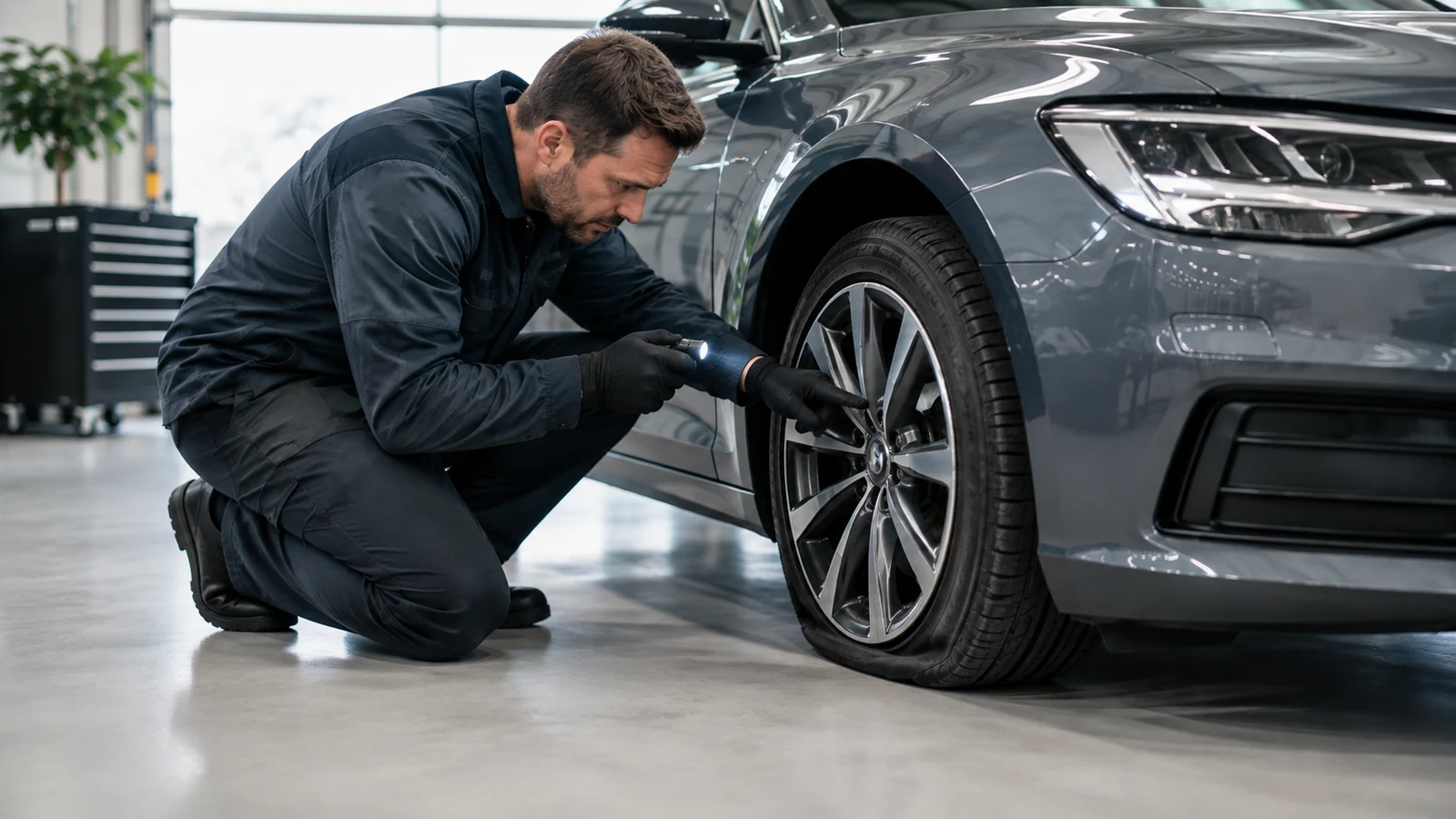
Check Why One Tire Is Much Lower
A large difference between one tire and the other three deserves attention. Simply inflating it may temporarily hide the real problem.
Look for obvious problems such as an embedded object, damaged tread, valve trouble, or visible wheel and tire damage. Don’t remove an object lodged in the tire before you can properly assess it, since doing so may increase the rate of air loss.
If there isn’t an obvious cause, use the same logic found in step-by-step diagnostic flowcharts: confirm the symptom, compare measurements, isolate the affected area, and verify the repair afterward.
A tire that becomes severely low again needs inspection rather than repeated top-offs.
Recheck the TPMS Warning
After correcting the pressure, start the vehicle and check the dashboard.
A solid low-pressure warning generally means the system has detected significant underinflation. Depending on the vehicle, the light may clear after you correct the inflation or after the system receives updated pressure information while driving.
A warning that flashes for roughly 60 to 90 seconds and then stays illuminated can indicate a TPMS malfunction rather than ordinary low pressure.
That distinction matters. Adding more air won’t repair a failed sensor.
If the pressure is correct but the monitoring system keeps reporting a fault, review sensor-testing basics before assuming the sensor needs replacement.
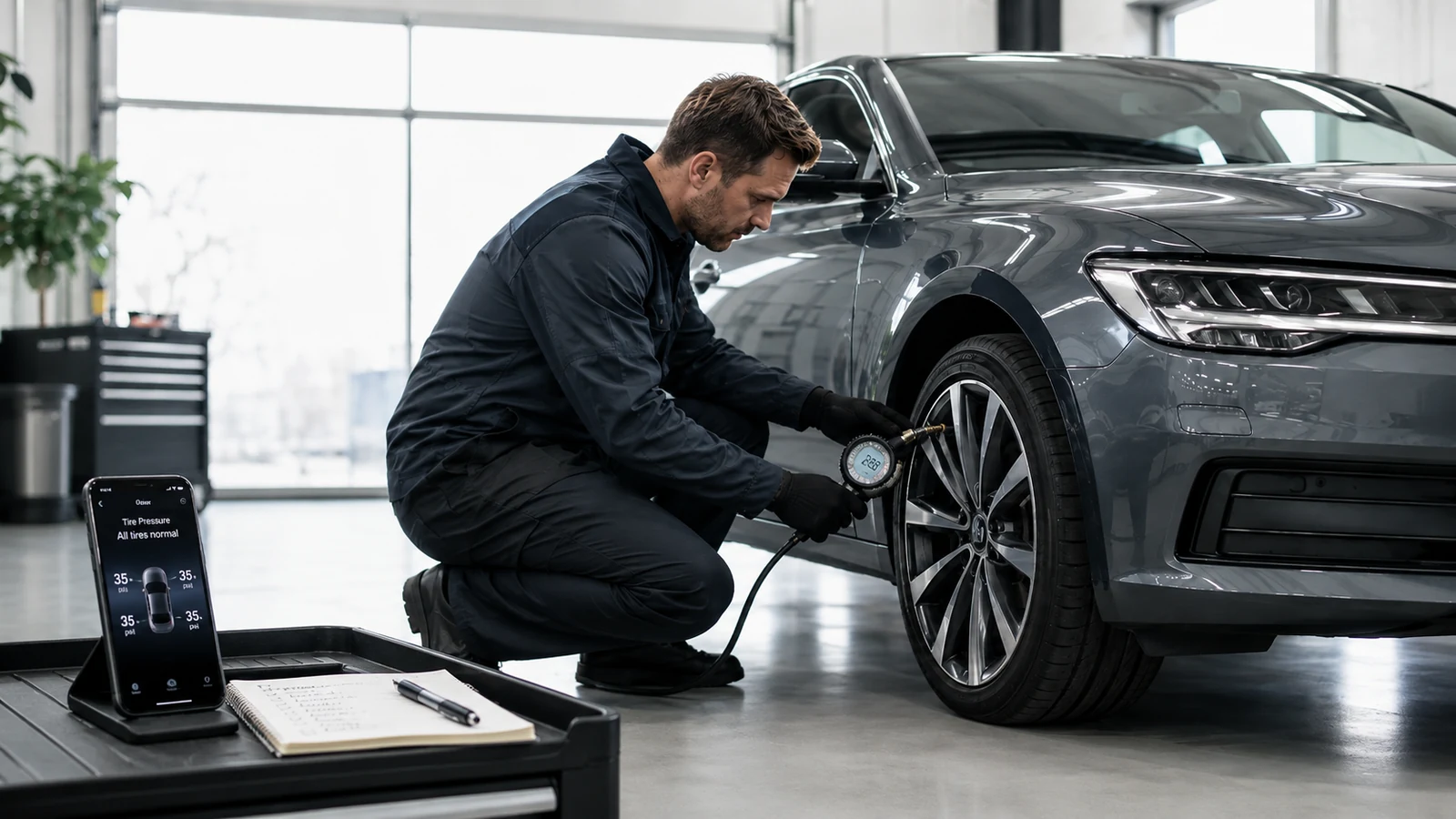
Monitor the Pressure After Inflation
One successful inflation doesn’t prove the tire is fixed.
Check the pressure again when the tires are cold, especially if one tire was noticeably lower than the others. A repeat drop can indicate a slow puncture, a leaking valve, a wheel-sealing problem, or another source of air loss.
Focus on the pattern of pressure loss. A tire that repeatedly needs air while the other three remain stable gives you stronger evidence of a localized problem.
For vehicles that store diagnostic information related to the pressure-monitoring system, following structured trouble-code diagnostic steps can help separate an actual air-pressure problem from an electronic TPMS fault.
When You Should Avoid Driving
Don’t continue driving normally just because you can add air.
If a tire is extremely low, won’t hold pressure, has visible structural damage, or rapidly loses the air you just added, it needs proper inspection. Significant underinflation can increase heat buildup and affect vehicle handling and stopping performance.
The same applies when the steering suddenly feels different, or the vehicle pulls strongly after a pressure warning appears.
Your goal isn’t simply to turn off the dashboard light. The goal is to restore the correct cold pressure and confirm why the pressure became low.
Commonly Asked Questions About Fixing Low Tire Pressure
Can I drive with the low tire pressure light on?
A low tire pressure light means you should check the tires as soon as practical, not assume they’re safe just because they still look inflated. TPMS systems warn when a tire becomes significantly underinflated, and visual inspection alone may not reveal the pressure loss.
Check every tire with a gauge and compare the readings with the driver’s-door placard. If a tire is only slightly low and has no visible damage, correcting the pressure may resolve the warning.
If it’s extremely low, damaged, or losing air quickly, avoid driving normally. Inspect the underlying leak or tire problem first.
Why did my tire pressure suddenly drop overnight?
Temperature is one common reason, particularly when several tires lose similar amounts of pressure at the same time. Tire pressure falls as the surrounding temperature falls, which can push a marginally low tire below the TPMS warning threshold. NHTSA notes that a warning can appear on cold mornings and disappear after the tires warm, but you should still check the pressure.
If only one tire drops substantially while the others stay stable, don’t automatically blame the weather. That pattern is more consistent with a localized issue such as a slow puncture, valve leak, or sealing problem. Inflate it correctly and monitor its cold pressure.
Should I use the PSI printed on the tire?
Use the vehicle manufacturer’s recommended cold inflation pressure for normal inflation, which is commonly displayed on the tire-information placard near the driver’s door. The number molded into the tire sidewall serves a different purpose and shouldn’t automatically replace the vehicle’s specified pressure.
Federal TPMS requirements also define recommended cold pressure according to the vehicle placard or tire inflation label. Check whether your vehicle specifies different pressures for the front and rear positions.
Measure the tires before substantial driving whenever possible. Using the correct vehicle specification helps you avoid solving an underinflation warning by accidentally creating an overinflation problem.
Why does my TPMS light stay on after adding air?
Start by measuring all tires again rather than assuming the TPMS needs resetting. One tire may still be below specification, or you may have adjusted the pressure while the tires were warm. Some systems also need time to drive before they receive updated sensor information.
Pay attention to how the warning behaves. A solid warning usually points back to tire pressure, while a light that flashes for about 60 to 90 seconds before staying illuminated can indicate a TPMS malfunction.
If all cold pressures match the vehicle specification and the warning persists, check the vehicle-specific reset, relearn, or sensor diagnostic procedure.
How often should I check tire pressure?
A useful baseline is to inspect tire pressure at least once a month while the tires are cold, and to check again before demanding or longer trips. NHTSA recommends monthly tire inspections and emphasizes that TPMS doesn’t replace normal tire maintenance.
Extra checks make sense after large temperature changes or after a tire has recently needed inflation. Monitoring becomes especially important when one tire repeatedly loses pressure faster than the others.
Write down the PSI if necessary so you can compare readings over several days. That simple history helps distinguish normal gradual pressure changes from a persistent leak that needs a tire, valve, or wheel inspection.