A leaking or damaged radiator can quickly turn a normal drive into an overheating problem. The difficult part is knowing whether the radiator itself has failed and how much the repair should cost. A cheap-looking leak can also lead to a much larger bill if the engine overheats.
Current repair estimates show radiator replacement often costs more than many drivers expect. The price depends heavily on the vehicle, parts choice, labor access, and any damage found during diagnosis.
This guide explains realistic radiator replacement costs, what changes the price, when replacement makes sense, and what to check before you approve the work.
How Much to Replace a Radiator: Know Before You Pay
For many vehicles, radiator replacement costs around the low-to-mid four figures once you add parts and labor. A current nationwide estimate places the average at $1,361 to $1,541, with roughly $366 to $538 for labor and $995 to $1,004 for parts. Your actual quote can be lower or substantially higher depending on the vehicle and location.
| Cost item | Typical current reference | What changes it |
|---|---|---|
| Total radiator replacement | $1,361-$1,541 average | Vehicle, location, radiator design, labor access |
| Labor | $366-$538 | Shop rate, disassembly, cooling-fan or front-end access |
| Radiator parts | $995-$1,004 average estimate | OEM vs. aftermarket, integrated components, vehicle class |
| Lower-cost vehicle example | Toyota Corolla: $890-$1,046 | Simpler part and labor requirements |
| Higher-cost vehicle example | Ford F-150: $1,556-$1,749 | Larger assembly and vehicle-specific labor |
Why Your Quote Can Be Higher
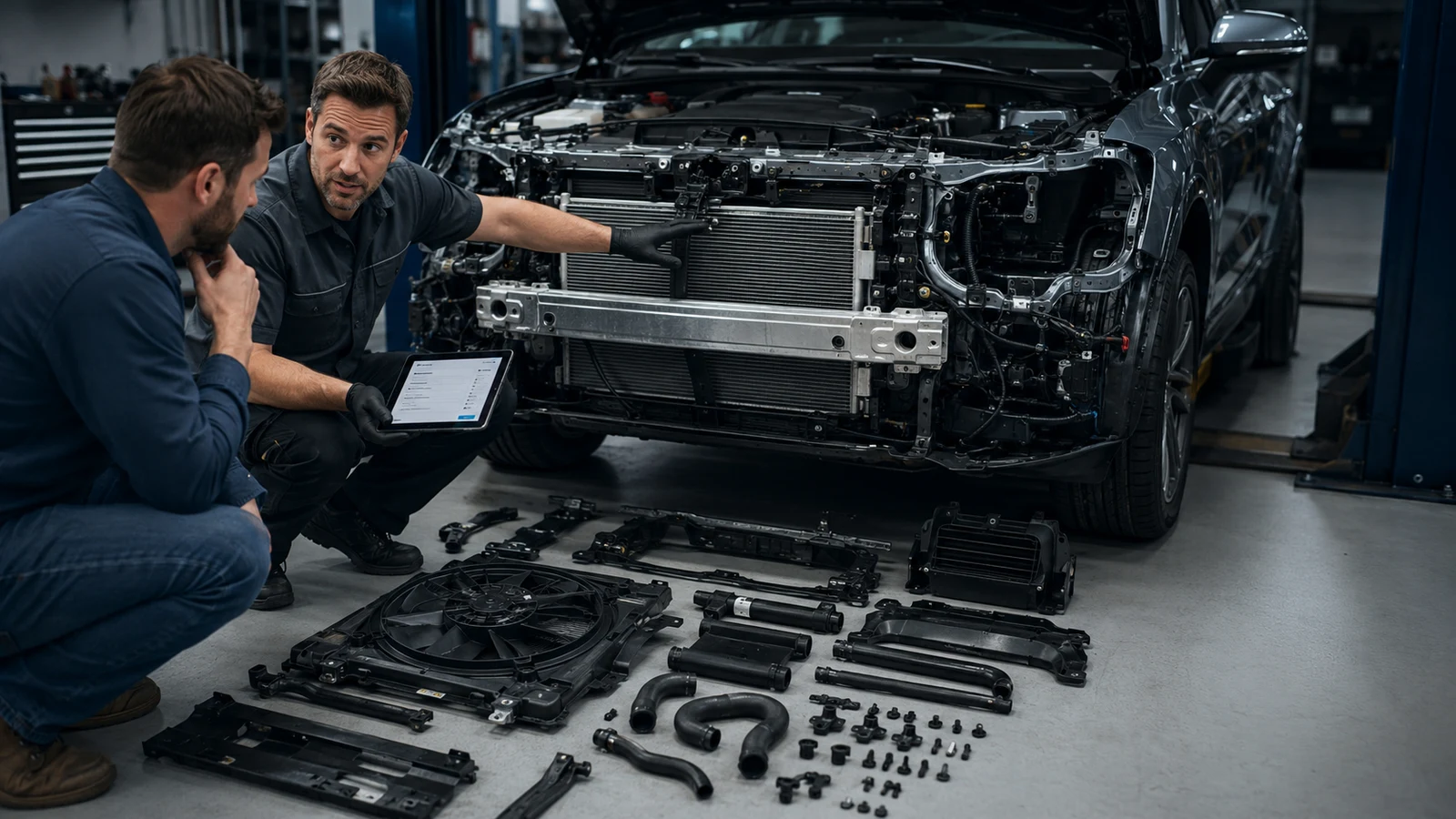
Vehicle design is one of the biggest price factors. On some cars, the radiator is relatively easy to access. On others, the technician may need to remove covers, supports, cooling fans, intake pieces, or other front-end components before the radiator can come out.
Radiator construction matters too. A basic aftermarket radiator may cost less than an OEM unit. Some applications use more complex assemblies or require vehicle-specific fittings and connections. Trucks, luxury vehicles, performance models, and tightly packaged engine bays can all push the price upward.
Labor rates also vary by region and shop type. A higher hourly rate does not automatically mean the quote is unreasonable. The important question is how many labor hours the job calls for and what procedures are included.
Finally, the shop may find worn hoses, a weak radiator cap, damaged mounts, contaminated coolant, or another cooling-system problem. Those items should be explained separately. A good estimate shows what is required now and what is only recommended.
Confirm the Radiator Is the Problem
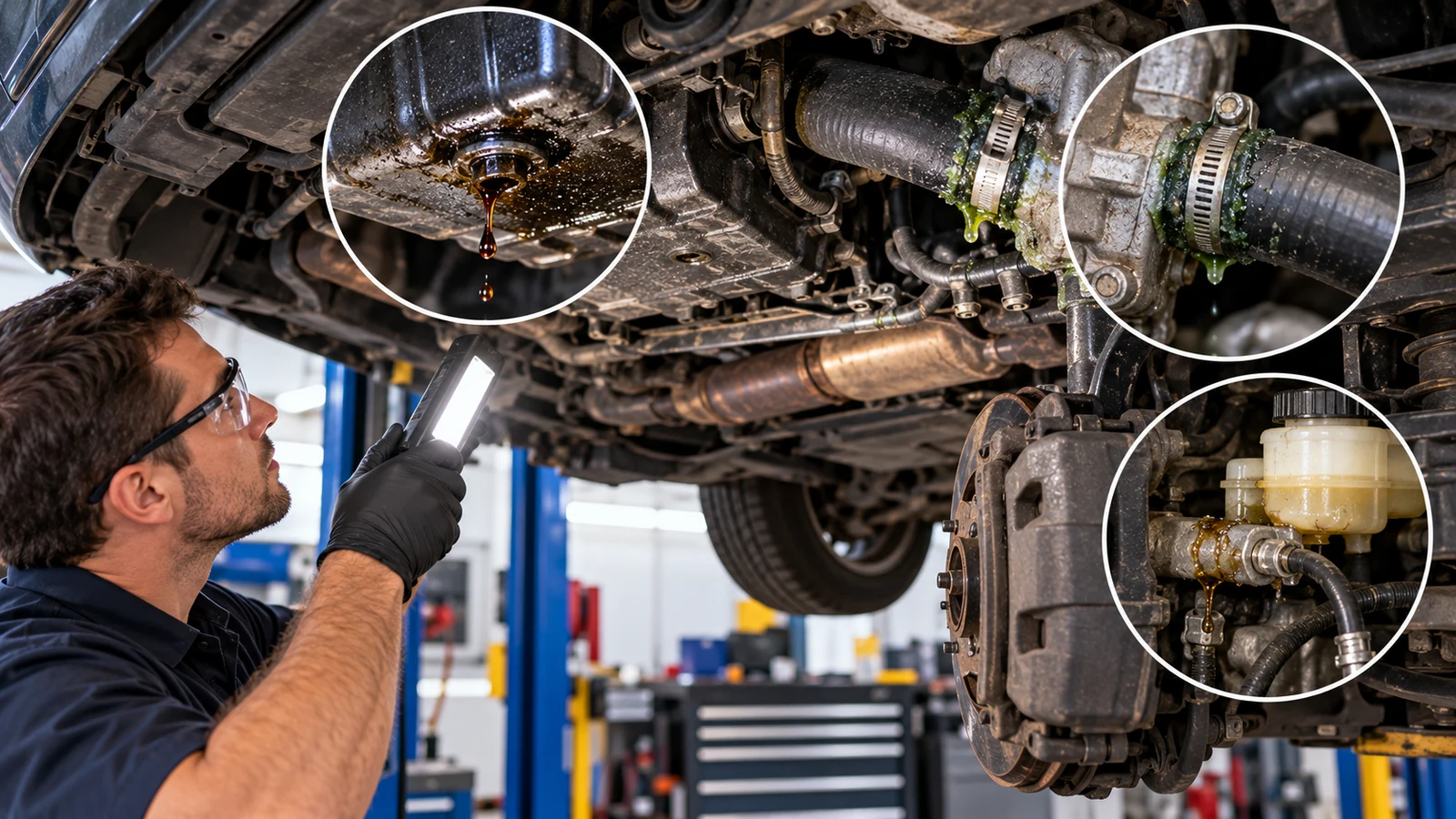
A coolant puddle does not automatically mean the radiator needs replacement. Coolant can escape from hoses, clamps, the water pump, the thermostat housing, the reservoir, the heater circuit, or other seals.
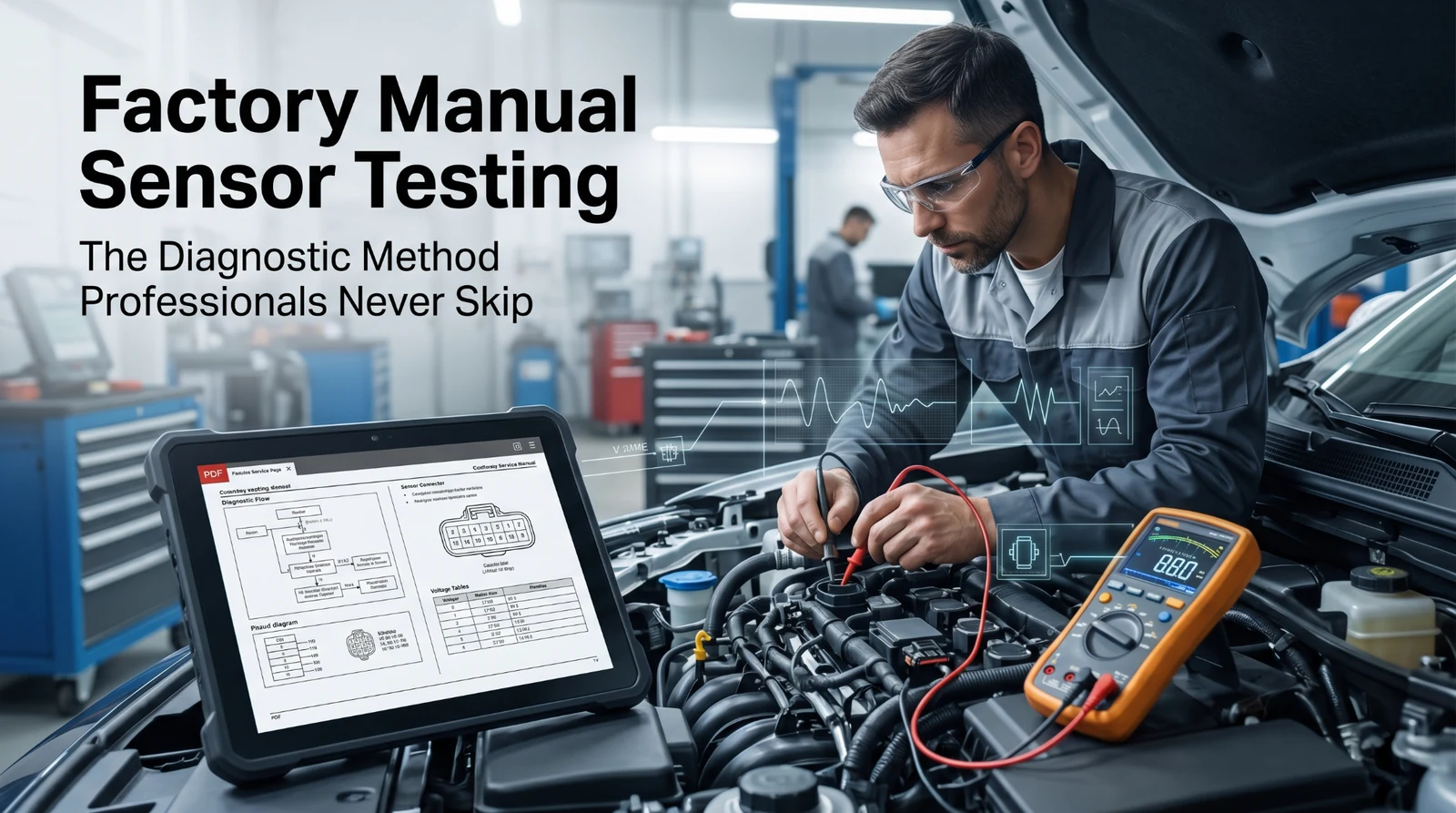
Start by identifying why the coolant is leaking. A technician may inspect the cooling system cold, look for dried coolant residue, check hose condition, and pressure-test the system to find a hard-to-see leak.
The radiator becomes a stronger suspect when the leak is clearly coming from a cracked tank, damaged core, corroded seam, or another non-serviceable area. Internal restriction or severe physical damage can also justify replacement.
Diagnosis matters because replacing the wrong part wastes money and may leave the real overheating problem untouched. If the engine has already overheated, the inspection should also look for signs of related engine damage before the car goes back on the road.
Repair a Leak or Replace the Radiator?
Not every cooling-system leak requires a new radiator. A loose clamp, failed hose, or bad cap may be a smaller repair. If the radiator has a minor issue that a professional can repair, the cost can sometimes be lower than a full replacement.
Replacement usually makes more sense when the radiator has a cracked plastic tank, a damaged core, a recurring seam leak, heavy corrosion, or a repair unlikely to last. Age and overall condition matter too. Paying to patch one weak area may not be good value if another section is close to failing.
Before choosing, compare the leak source, radiator condition, repair durability, and the cost of an installed replacement. A guide to radiator leak repair costs can help you distinguish a minor cooling-system repair from a full replacement.
Avoid relying on stop-leak products as a substitute for diagnosis. They don’t correct structural damage, and the right repair depends on where the system is actually losing coolant.
What Proper Replacement Should Include
A proper radiator replacement starts with confirming the failure. The technician then drains the cooling system, removes the components blocking access, disconnects the radiator and hoses, and installs the replacement unit.
After installation, the system needs the correct coolant type and mixture for the vehicle. It must also be filled and bled correctly so trapped air does not interfere with coolant circulation or heater performance.
The shop should recheck for leaks after the system reaches operating temperature. Cooling fans, hoses, clamps, the cap, thermostat operation, and other nearby components may also need inspection.
Ask whether the quote includes coolant, bleeding the system, pressure testing, and a post-repair leak check. Those details make two estimates easier to compare. A lower quote can become less attractive if the shop adds necessary steps later as separate charges.
How to Check a Radiator Quote
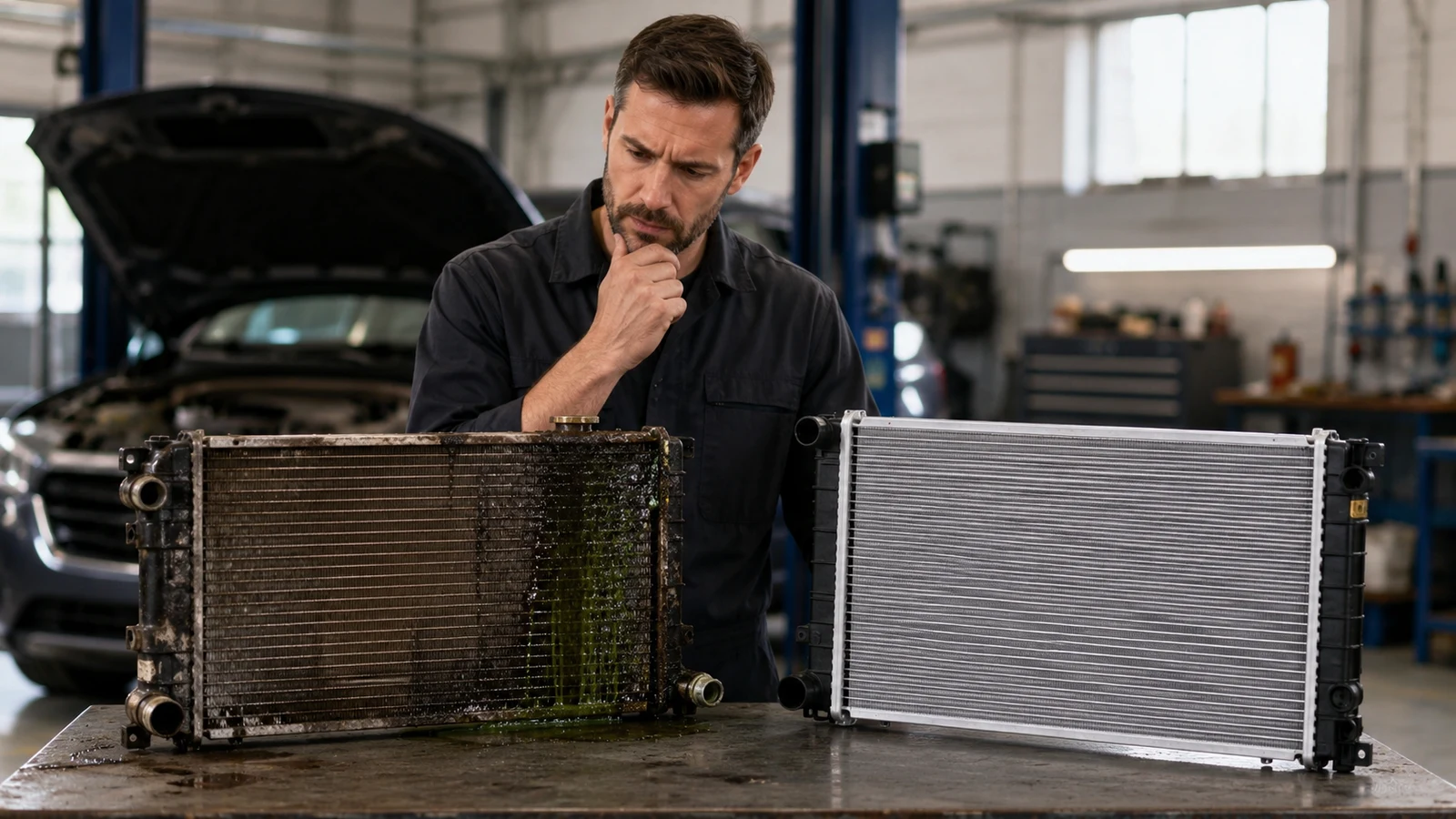
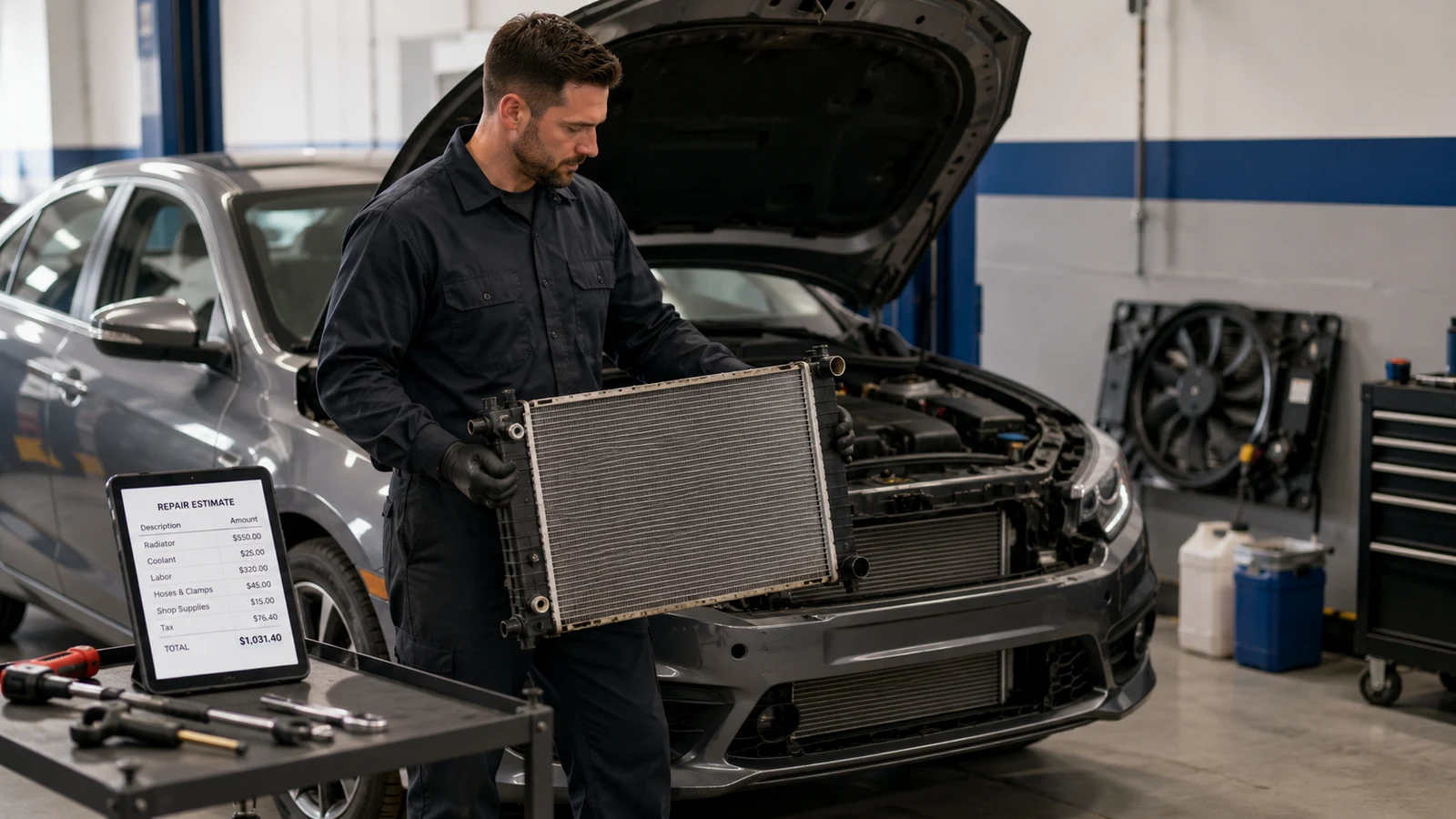
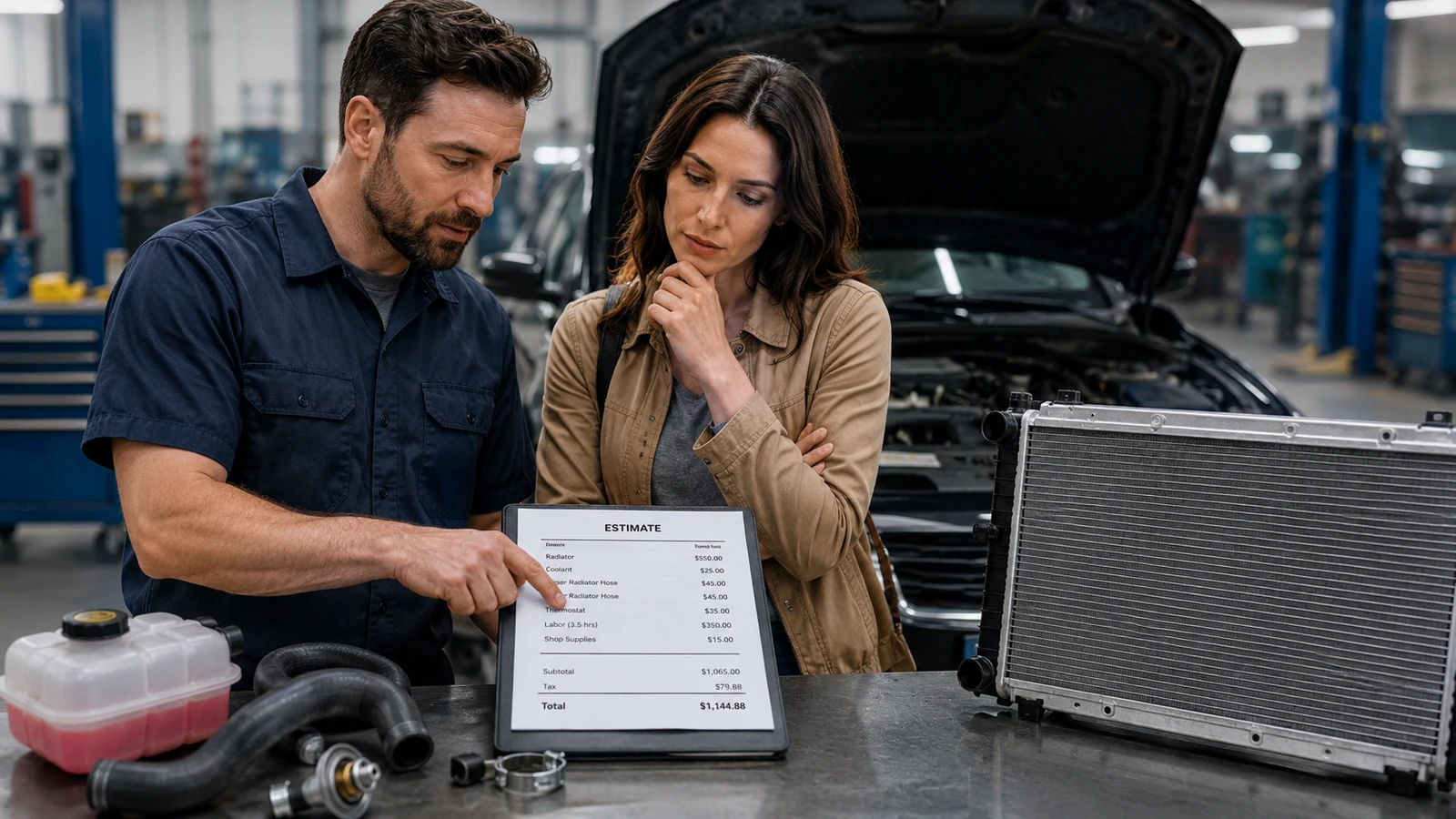
Start with an itemized estimate. It should identify the radiator, labor, coolant, shop supplies, taxes, and any additional parts. If the shop recommends hoses, a thermostat, or another component, ask why.
Next, confirm the radiator brand or part type. OEM parts can cost more, while quality aftermarket radiators may reduce the bill. The best choice depends on availability, warranty, vehicle age, and how long you plan to keep the car.
Then compare the estimate with a vehicle-specific range, not a broad average. For context, current published figures can vary from under $1,000 on some common cars to well above $1,500 on trucks and more complex applications.
Finally, ask what caused the radiator to fail. Age-related damage differs from damage caused by a cooling fan problem, contaminated coolant, collision impact, or chronic overheating. Correcting the cause lowers the chance of paying for the same type of failure again.
When Overheating Changes the Cost
Radiator replacement is much cheaper than repairing major damage caused by severe overheating. Low coolant can prevent the engine from controlling temperature, and continued driving can increase the risk of expensive engine problems.
If the temperature warning appears, the gauge moves into the hot zone, or the vehicle is actively overheating, stop driving as soon as it is safe and shut off the engine. Do not open a hot cooling system.
An overheated car may need more than a radiator. The shop may check for coolant loss, pressure problems, thermostat or water-pump faults, and possible engine damage. If you are concerned about the consequences of repeated overheating, review the common causes of a blown head gasket before approving only the visible leak repair.
The Number to Use for Your Budget
If you need a working budget, about $1,350 to $1,550 is a reasonable current national reference for radiator replacement, but do not treat it as a fixed price. Many common vehicles fall below that range, while trucks and difficult applications can exceed it.
The most useful next step is not finding the lowest number online. It is getting a vehicle-specific diagnosis and an itemized quote that confirms the radiator is actually the failed component.
That approach protects you from two costly mistakes: replacing a radiator that was not bad and approving a low estimate that leaves out necessary labor, coolant, or related cooling-system work.
Frequently Asked Questions About Replacing a Radiator
Can I Drive With A Leaking Radiator?
Driving with a leaking radiator is risky because coolant loss can cause the engine to overheat. A small leak may become larger as the system heats and builds pressure, so the fact that the car still runs does not mean it is safe for a normal trip. Watch for a temperature warning, rising gauge, coolant smell, or visible coolant loss. If the engine starts overheating, pull over safely and shut it off. Do not open the radiator cap while the system is hot. The safer choice is to have the leak diagnosed promptly and use a tow when the vehicle cannot maintain normal temperature or coolant level.
Is It Cheaper To Repair or Replace A Radiator?
Repair can be cheaper when the problem is limited to a serviceable leak or when the radiator itself is not the failed part. A loose clamp, damaged hose, or faulty cap may cost much less than radiator replacement. Replacement is usually the better value when the radiator has a cracked plastic tank, damaged core, severe corrosion, repeated seam failure, or several weak areas. Ask the shop to show where the leak originates and explain how durable a repair would be. Compare the repair price with the installed cost and warranty of a new radiator. The lowest upfront option isn’t always cheaper if the leak returns soon.
Why Is Radiator Replacement So Expensive?
Radiator replacement can be expensive because the bill includes much more than the visible radiator. The part itself may be costly, especially for newer vehicles, trucks, luxury models, or applications that use vehicle-specific fittings and assemblies. Labor increases when you must remove covers, cooling fans, supports, or other components to access it. The job also requires draining coolant, installing the new radiator, refilling with the correct coolant, bleeding trapped air, and checking for leaks. Taxes, shop supplies, hoses, clamps, or other failed cooling-system parts can add to the total. An itemized estimate helps you see which costs are essential and which recommendations are optional.
How Do I Know If I Need A New Radiator?
You may need a new radiator when testing confirms a leak or restriction inside the radiator, rather than elsewhere in the cooling system. Common evidence includes coolant escaping from a cracked tank, damaged core, corroded seam, or another area that cannot be repaired reliably. Repeated overheating can also occur when the radiator is badly restricted, although thermostats, water pumps, fans, and low coolant can create similar symptoms. That is why visual inspection alone is not enough. A shop can inspect the system, check hose condition, pressure-test for leaks, and verify cooling performance. Replace the radiator only after you’ve traced the failure to the radiator itself.
Does Radiator Replacement Include New Coolant?
A proper radiator replacement normally requires draining at least part of the cooling system, so fresh or recovered coolant must be added before the vehicle returns to service. However, invoices and shop policies differ, so do not assume coolant is included in the advertised labor price. Ask whether the estimate covers the correct coolant specification, the required quantity, system bleeding, and a final leak check. Some vehicles need special filling or bleeding procedures to remove trapped air. The shop may also recommend a broader coolant service if the old fluid is contaminated or overdue for replacement. Confirm these details before approving the work so the final invoice does not surprise you.