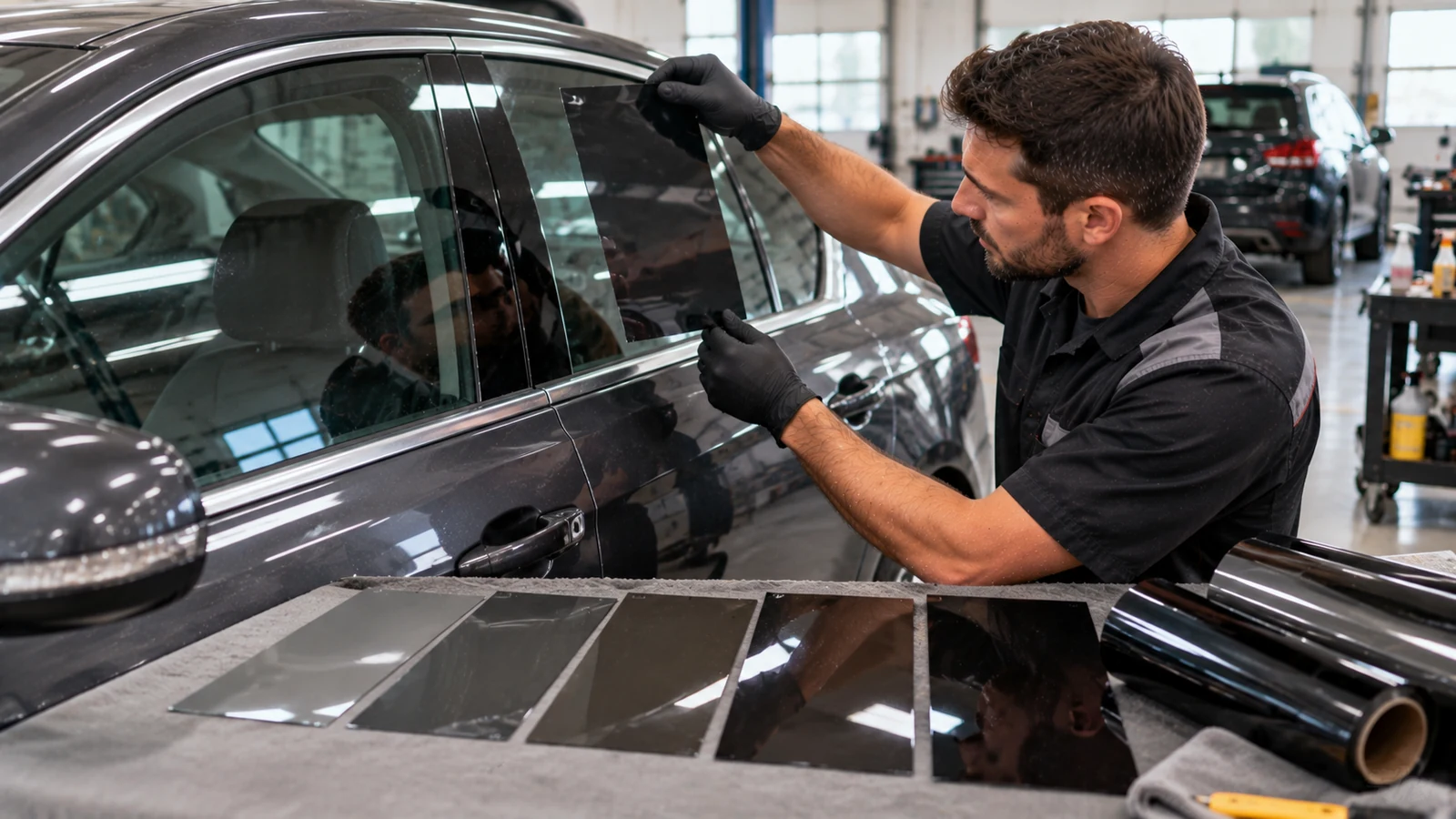
If you are trying to work out how much does car tint cost, the film itself is only part of the quote. Film technology, the number and shape of the windows, existing tint removal, glass preparation, labor, and the vehicle’s design can all affect the final price.
A basic dyed tint may cost roughly $100 to $250 for a full vehicle, while premium nano-ceramic film can reach $400 to $800 or more. High-end crystalline or spectrally selective films can cost $500 to $900+.
The cheapest option is not automatically the best value. A useful comparison also considers heat rejection, UV protection, expected life, electronic compatibility, installation difficulty, and the condition of the existing glass.
How Much Does Car Tint Cost by Film Type?
Window tint prices rise as film construction and solar-control performance improve.
| Window Film Type | Typical Full-Vehicle Cost | Heat and UV Characteristics | Expected Lifespan |
|---|---|---|---|
| Dyed film | 100–250 | Basic heat absorption; approximately 95%–98% UV protection | 2–4 years |
| Metallized film | 150–350 | Reflective heat control; approximately 98%–99% UV protection | 5–7 years |
| Carbon film | 250–500 | Better heat control than basic dyed film; approximately 99% UV protection | 8–10 years |
| Nano-ceramic film | 400–800+ | Up to roughly 90% infrared rejection and 99%+ UV protection | Often sold as a long-life or lifetime product |
| Crystalline / spectrally selective film | 500–900+ | High solar rejection while maintaining greater visible-light transmission | Often sold as a long-life or lifetime product |
These are general full-car pricing ranges from the supplied source, not guaranteed shop quotes. Actual prices depend heavily on the vehicle and installation.
Dyed film is the budget option
Dyed polyester film is normally the least expensive choice. It darkens the glass and provides privacy without the material cost of more advanced tint.
Its main disadvantage is durability. Lower-cost dyed films can fade or develop a purple appearance as they age, particularly after years of strong sun exposure.
Metalized tint improves heat control
Metalized film contains small metallic particles designed to reflect solar energy. It generally offers stronger heat control and better durability than basic dyed tint.
The tradeoff is electronic compatibility. Metallic construction can potentially interfere with signals used by equipment such as GPS, radio, and other wireless systems, making non-metallic alternatives preferable on some vehicles.
Carbon tint offers a middle ground
Carbon film sits between entry-level products and premium ceramic film. It generally provides better durability, color stability, and heat management than basic dyed tint without relying on metallic particles.
For many owners, this pricing tier offers a practical compromise between initial cost and long-term performance.
Ceramic tint costs more because the film is more advanced
Nano-ceramic tint uses non-conductive ceramic particles rather than metallic layers. Premium ceramic products can reject a large percentage of infrared heat while also blocking most UV radiation.
Because ceramic tint doesn’t rely on conductive metallic particles, it’s also attractive for vehicles where owners want strong solar control without adding a metallic film around antennas and electronic systems.
Crystalline film prioritizes heat rejection with a lighter appearance
Spectrally selective or crystalline films are generally among the most expensive options. Their purpose is not simply to make the glass extremely dark.
They are designed to reject a substantial amount of solar energy while allowing comparatively high levels of visible light through the glass. This can help when heat control matters more than a dark appearance.
What Changes the Final Window Tint Price?
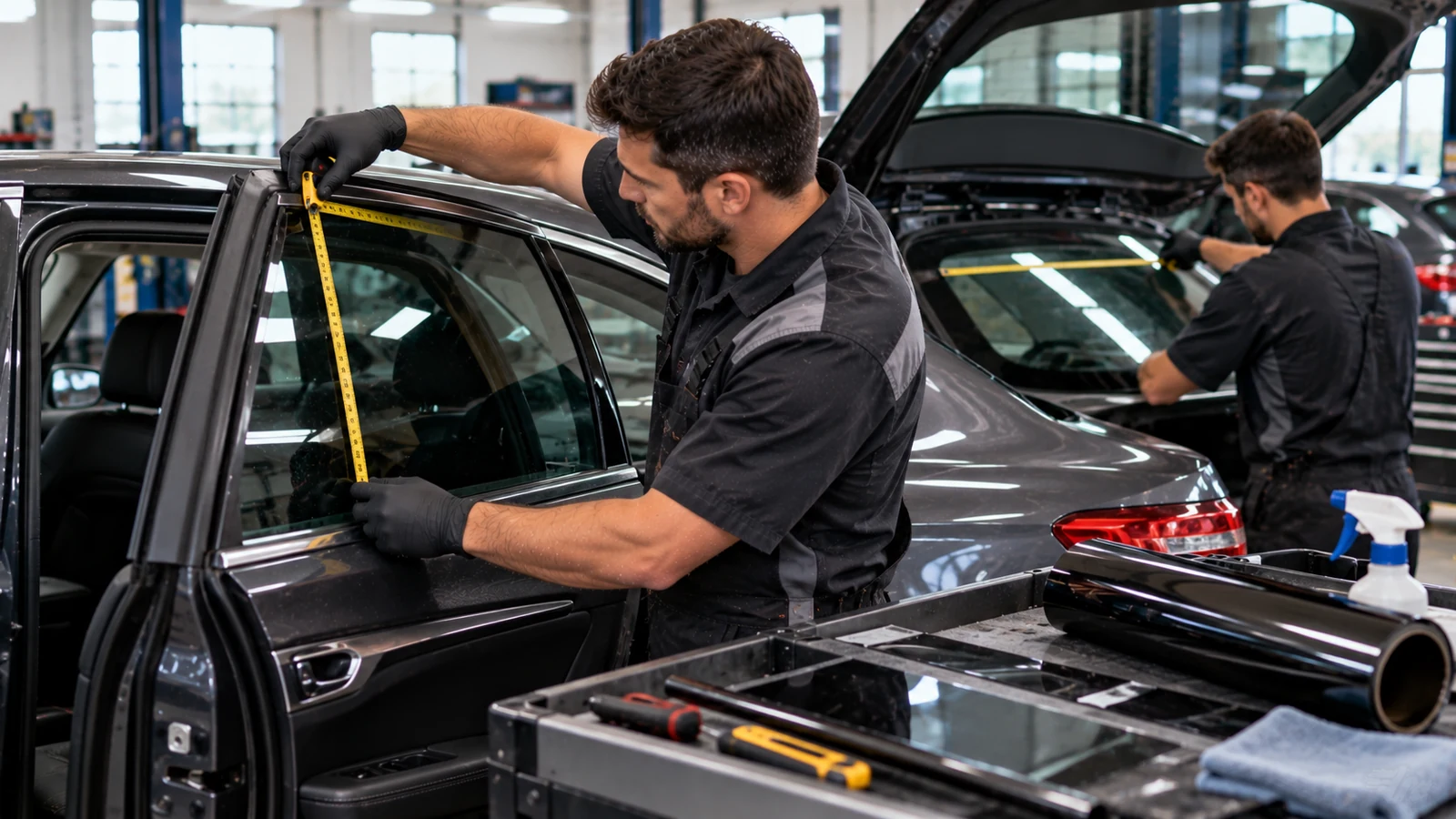
Two cars receiving the same film can still receive very different quotes. Installers must account for material area, preparation, access, window shape, existing tint, and the time required to achieve clean edges.
Vehicle size and number of windows
A compact two-door vehicle normally requires less film than a sedan, SUV, or minivan with additional quarter glass.
For example, a shop working on a conventional sedan can use vehicle-specific service information from the Ford workshop manual catalog and, when needed, a resource such as the2005–2007 Ford Five Hundred 2WD workshop manual when door trim or glass-channel access is required.
The same principle applies to a vehicle covered by the Toyota repair manual catalog. For example, a technician working around the door glass of an older sedan can refer to the 1986–1987 Toyota Cressida Sedan workshop manual before disturbing trim, switches, or window hardware.
Larger passenger vehicles add more glass area and often more individual pieces of glass. The Honda service manual catalog includes minivan documentation such as the 1997–2002 Honda Odyssey LX workshop manual, which can help when installation requires trim access around a larger multi-window body.
SUV design can create another set of access considerations. Owners and technicians working with vehicles in theJeep workshop manual collection can use model-specific documentation, such as the1996–2002 Jeep Wrangler workshop manual, to understand door hardware before removing or loosening components.
Glass curvature increases installation difficulty
Rear windows and hatch glass are rarely flat. Tint film often has to be heat-shrunk to follow compound curves without fingers, creases, or excessive tension.
A deeply curved rear window can therefore take considerably more time to install than relatively flat side glass.
Old film can add another $100 to $200
Removing failed tint is not the same as peeling off a decal.
Old adhesive can remain bonded to the glass, and rear windows may contain delicate defroster elements. The supplied source places professional old-film removal at approximately $100 to $200, depending on the amount of work involved.
Bubbling, purple discoloration, adhesive contamination, and multiple layers of previously installed film can all increase preparation time before the new tint is applied.
Labor is a major part of the bill
The source estimates that professional installation labor can account for about 50% to 60% of the invoice.
That labor includes more than placing film on glass. A proper installation can involve:
- Cleaning and decontaminating the glass
- Cutting or plotting the film
- Heat shrinking curved pieces
- Positioning film around seals and trim
- Squeegeeing out installation solution
- Finishing edges
- Inspecting for debris, fingers, creases, and contamination
This explains why two shops quoting the same nominal film type can have substantially different prices.
Legal tint limits can affect the job
Visible light transmittance, or VLT, describes the percentage of visible light passing through the tinted glass.
A lower VLT number means darker glass.
The supplied source notes that front-side-window requirements in many U.S. applications may fall around the 20% to 35% VLT range, but tint laws vary by jurisdiction, window position, and vehicle classification. Always confirm the applicable local requirements before selecting a film darkness.
VLT itself may not change the film price much, but installing an illegal tint can create inspection or enforcement problems later.
Vehicle Layout Matters More Than Many Buyers Expect
When comparing tint estimates, body design can matter almost as much as the car’s size. Curved hatch glass, frameless windows, large quarter windows, integrated electrical elements, and tightly fitted trim can add installation time.
Coupes, sports cars, and complex rear glass
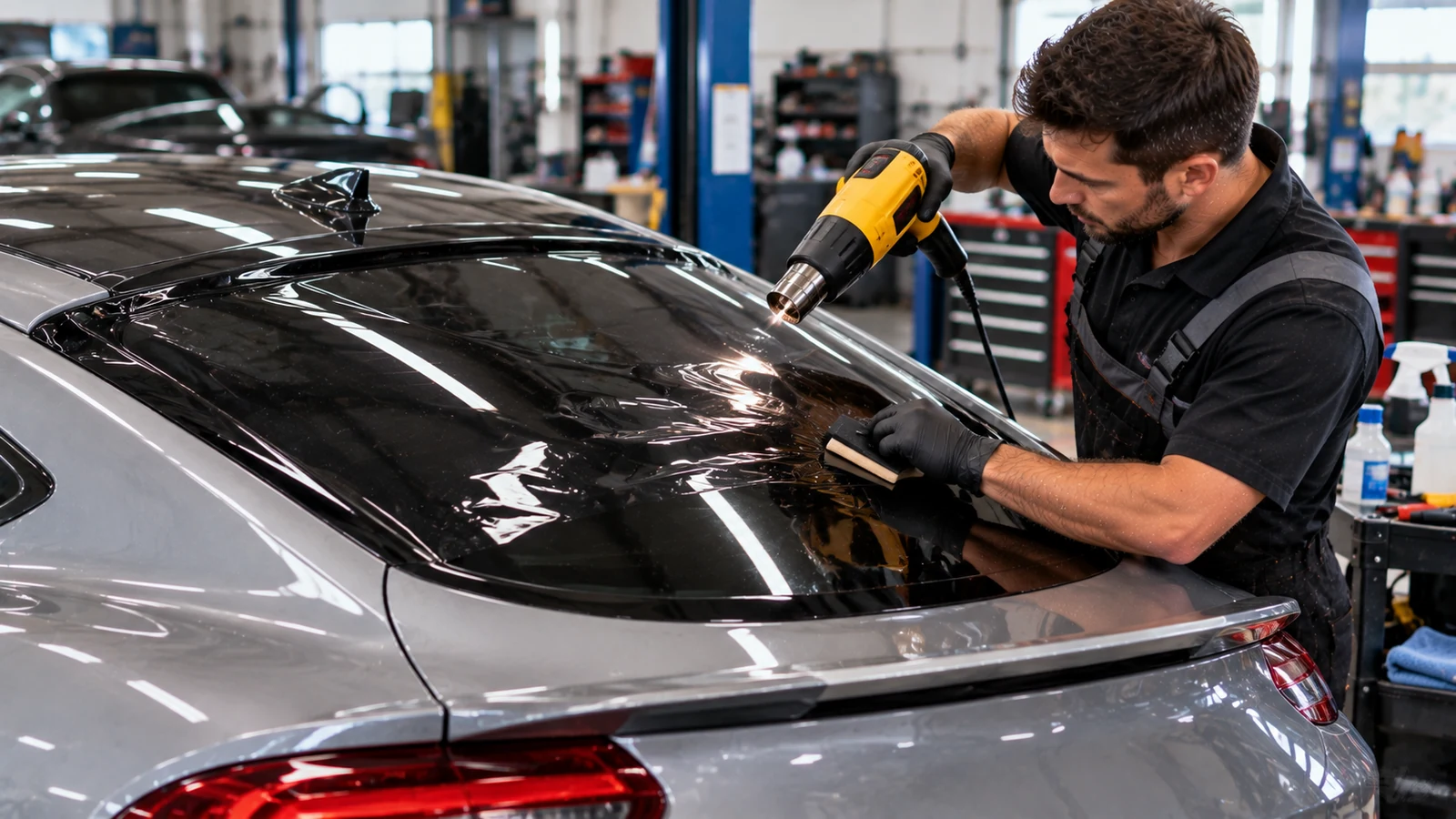
Sports cars often combine limited working space with strongly curved rear glass.
The Chevrolet service manual catalog includes vehicles such as the 2014–2017 Chevrolet Corvette C7 workshop manual. The C7 is a useful example of why you should consider rear-glass curvature and hatch-area trim when evaluating tinting labor.
Frameless door glass creates another consideration because the top edge of the film must be finished carefully. The Hyundai workshop manual catalog includes the 1996–2001 Hyundai Tiburon RC-series workshop manual for technicians who need model-specific door and glass service information.
Luxury fastbacks and sports sedans can also combine large rear glass with extensive interior trim. The Porsche repair manual catalog includes resources such as the 2010–2013 Porsche Panamera 4S workshop manual for vehicle-specific service reference.
Electronic components also deserve attention when selecting film. The BMW workshop manual catalog and the 1999–2000 BMW 528i E39 workshop manual provide model-specific documentation that can help identify trim and electrical systems before work begins.
Minivans and SUVs usually mean more glass
Minivans can require substantially more film than compact cars because they may have front and rear door glass, sliding-door windows, quarter glass, and a large rear window.
The Nissan workshop manual catalog includes vehicles such as the 1999–2002 Nissan-Datsun Quest Minivan SE workshop manual for model-specific trim and glass-related service information.
SUVs and crossovers also commonly use large side and rear glass areas. The Land Rover repair manual catalog includes documentation such as the 2015–2017 Land Rover Discovery Sport L550 workshop manual for technicians who need to understand the surrounding trim before disassembly.
The practical point is simple: do not estimate tint cost using vehicle length alone. Window count, individual pane size, trim accessibility, and rear-glass shape all matter.
Conventional sedans can still differ significantly
A four-door sedan may sound straightforward, but door-card design, glass run channels, beltline weatherstrips, switches, and rear-glass construction still vary between vehicles.
The Acura repair manual catalog includes service documentation such as the 2004–2008 Acura TL workshop manual for model-specific interior and door procedures.
Similarly, technicians working on vehicles covered by the Lexus workshop manual catalog can refer to documentation such as the 2007–2012 Lexus ES 350 workshop manual before removing interior trim.
This is one reason a shop may want the exact year, model, and body style before providing a firm tint quote.
DIY Window Tint vs Professional Installation
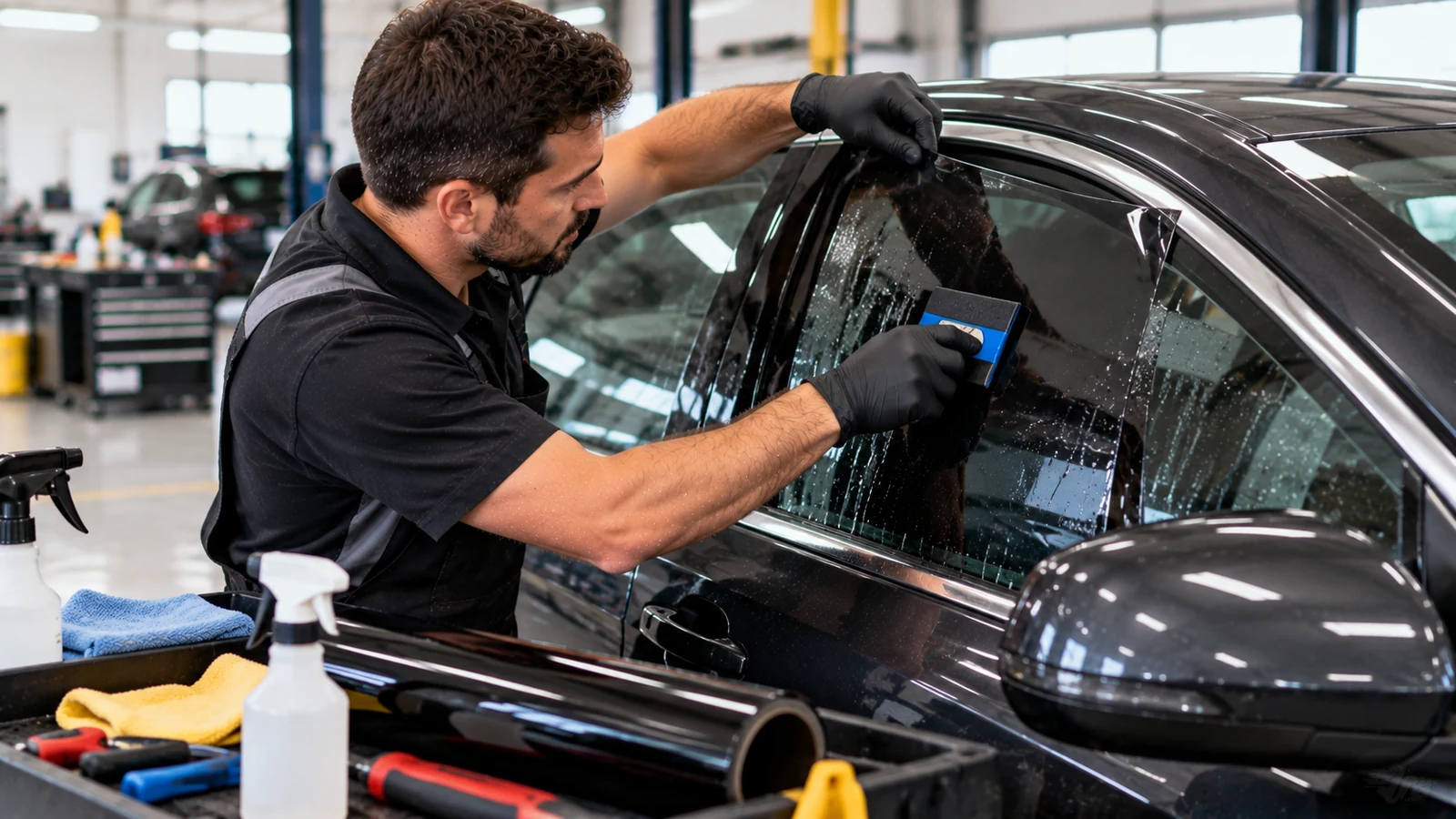
DIY kits can reduce the initial expense considerably, but installation quality depends heavily on preparation and technique.
| Factor | DIY Tint Kit | Professional Installation |
|---|---|---|
| Typical initial cost | About 30–80 | Roughly 200–800 depending on film and vehicle |
| Cutting | Hand-cut or pre-cut pieces | Often computer-cut or professionally trimmed |
| Working environment | Garage or driveway | Controlled shop environment |
| Dust contamination risk | Higher | Lower |
| Heat shrinking experience | Owner dependent | Experienced installer |
| Rear defroster risk | Higher if scraping/removing old film incorrectly | Usually handled with dedicated removal techniques |
| Warranty | Usually limited to film product, if any | May include installer or manufacturer coverage |
| Rework risk | Owner absorbs failed material and time | Usually handled under shop workmanship policy |
DIY makes the most sense on simple glass
DIY installation is more realistic when the vehicle has relatively flat, easy-to-access glass and no existing film that needs difficult removal.
The installer still needs a clean work area, a suitable squeegee, cutting tools, slip solution, and a heat gun where shrinking is required.
Even a small piece of dust trapped under the adhesive can remain visible after curing.
Professional installation is easier to justify on difficult vehicles
Paying a shop becomes more attractive when the vehicle has:
- Highly curved rear glass
- Large hatch glass
- Frameless windows
- Difficult-to-access quarter glass
- Old adhesive or failed tint
- Sensitive rear defroster lines
- Complicated interior trim
- A premium ceramic or selective film that would be expensive to waste
A failed DIY attempt can erase much of the initial saving if the film must be purchased twice.
Old Tint Removal Can Change the Budget
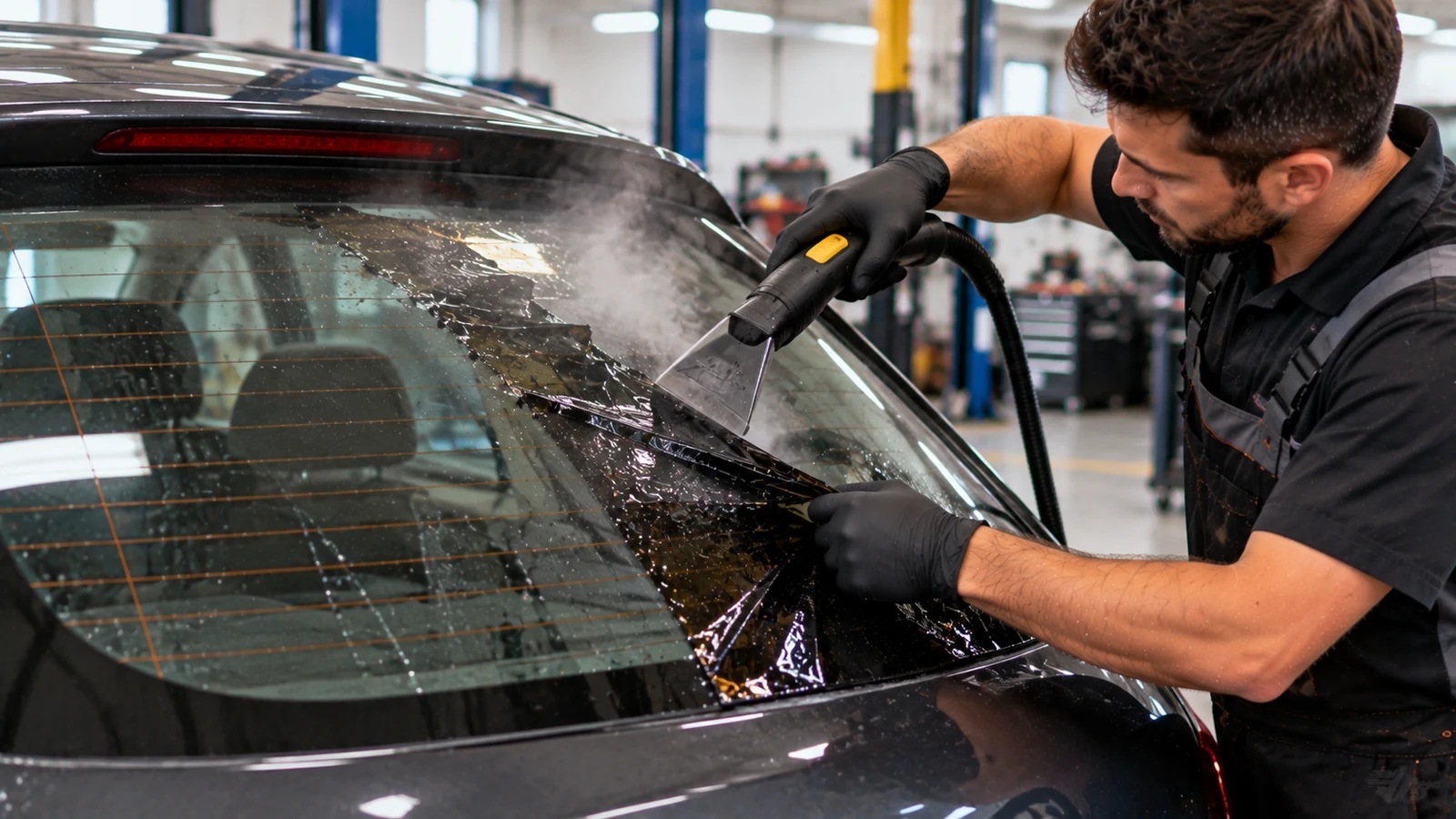
Now: Removing old tint from rear defroster glass
Evaluate existing tint before comparing new-film prices.
A vehicle with clean, untinted glass is much faster to prepare than one with bubbling film and hardened adhesive across every window.
Rear glass deserves particular care because defroster heating elements may be attached to the inside surface. Aggressive scraping can damage those lines.
Professional removal typically relies on controlled heat, steam, adhesive-softening methods, and careful surface cleaning. According to the supplied source, old-film removal can add around $100 to $200 before the cost of installing new film.
Ask the tint shop whether its quoted price includes:
- Existing film removal
- Adhesive cleanup
- Rear-glass preparation
- Replacement film
- Installation labor
- Warranty coverage
A low advertised tint price can look very different once you add removal and preparation.
When a Workshop Manual Matters During Tint Installation
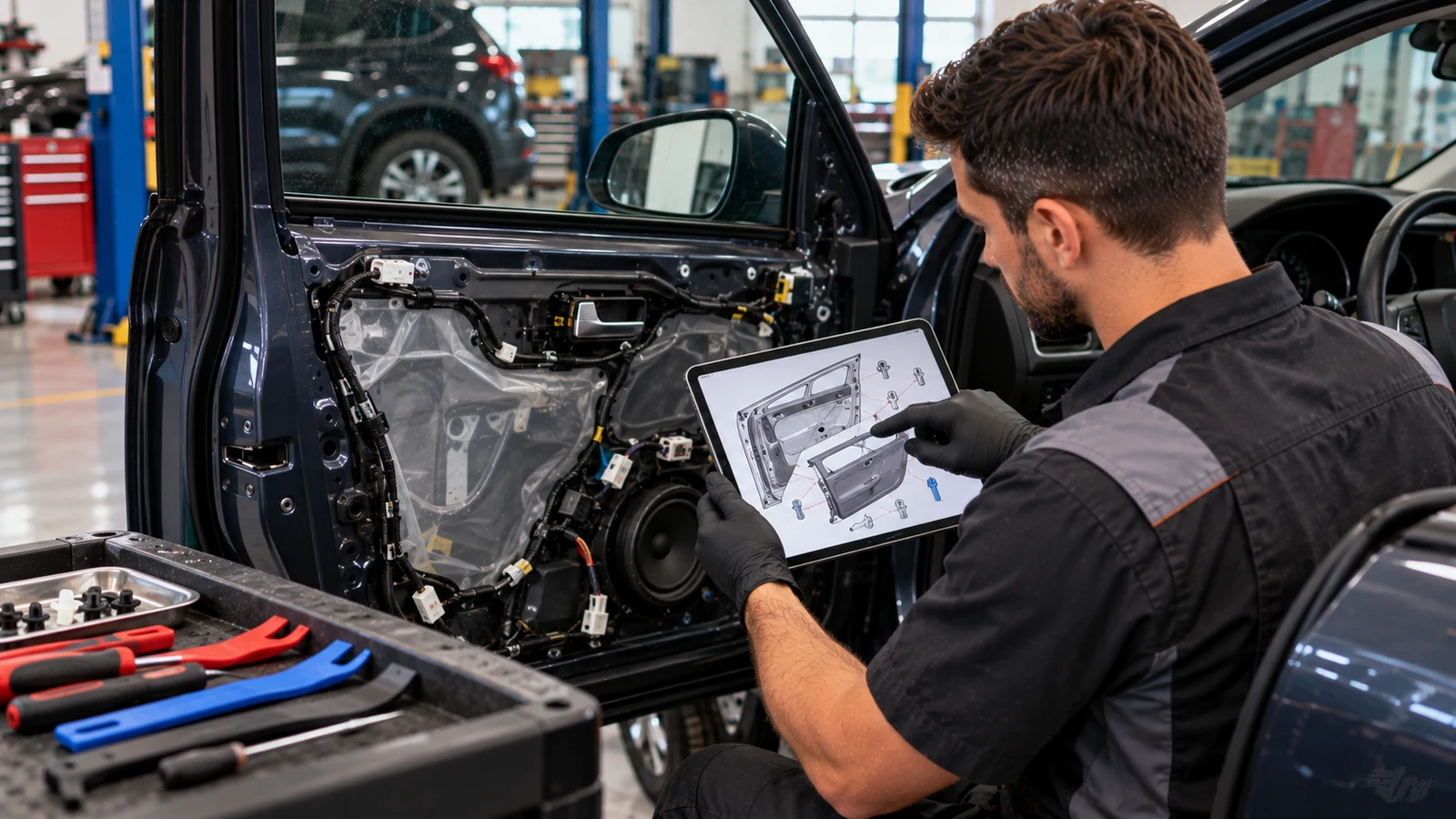
Tinting usually doesn’t require major mechanical disassembly. However, some installation methods involve loosening beltline seals, interior door trim, hatch trim, switches, or related components.
That is where vehicle-specific workshop information becomes useful.
A workshop manual may help a technician identify:
- Hidden trim screws
- Door-card retaining clips
- Electrical connectors
- Power-window switch wiring
- Window regulator locations
- Weatherstrip attachment points
- Rear-hatch trim fasteners
- Defroster and antenna connections
Check model-specific trim before pulling door panels
Different manufacturers use different clip arrangements and electrical layouts.
For vehicles covered by the Audi workshop manual catalog, a model-specific resource such as the 1988–1991 Audi 90 workshop manual can help you identify the correct disassembly sequence before you disturb the door trim.
The same approach is useful with the Volkswagen service manual catalog. A technician working on a later sedan can consult the 2010–2019 Volkswagen Jetta Mk6 workshop manual instead of guessing where clips, fasteners, and connectors are positioned.
Older vehicles can require just as much care. The Subaru repair manual catalog includes model-specific documentation such as the 1986–1987 Subaru L-Series 3-door 4WD workshop manual for technicians working around period-specific door and glass hardware.
Luxury vehicles deserve careful electrical and trim preparation
Premium interior panels can be costly to replace if hidden clips or electrical connectors are damaged.
The Mercedes-Benz workshop manual catalog includes model-specific service information such as the 2004–2005 Mercedes-Benz E 320 4MATIC Sedan workshop manual.
Similarly, the Volvo repair manual catalog contains vehicle-specific documentation, including the 2003–2005 Volvo S60 workshop manual.
The purpose of using a manual is not to make window tinting unnecessarily complicated. It is to avoid damaging trim or electrical components when access requires more than routine glass cleaning.
Modern vehicle trim should not be removed by guesswork
Even when the tint itself is straightforward, modern door panels may incorporate multiple switches, harnesses, speakers, locks, and control components.
The Cadillac workshop manual catalog includes resources such as the 2013–2015 Cadillac ATS workshop manual for model-specific service reference.
For compact crossovers, the Buick repair manual catalog includes the 2022–2023 Buick Encore GX workshop manual.
Technicians servicing vehicles in theKia workshop manual catalog can also consult a model-specific document, such as the2006–2010 Kia Optima workshop manual, when trim removal or window-system access is required.
Using the correct service information is particularly worthwhile when an installer is unfamiliar with the vehicle.
How Long Does Window Tint Installation Take?
A complete professional tint installation on a passenger car usually takes approximately 2 to 4 hours according to the supplied source.
The job may take longer when:
- Existing film has to be stripped
- Adhesive residue is difficult to remove
- Rear glass requires extensive heat shrinking
- The vehicle has numerous small quarter windows
- Interior trim needs careful removal
- Glass requires additional cleaning or contamination removal
When old tint must be removed first, the source estimates that total shop time can extend to approximately 4 to 6 hours.
A vehicle should therefore be assessed before assuming that every full-car tint job can be completed in the same amount of time.
Caring for Newly Installed Window Tint
Fresh film needs time to bond and dry.
The source recommends keeping the windows rolled up for approximately 3 to 5 days after installation. Lowering the glass too early can catch the upper film edge and cause peeling or movement.
Some moisture or temporary haziness may also be visible while the installation solution dries. Follow the tint manufacturer’s and installer’s specific curing instructions rather than trying to press or scrape the film yourself.
Once cured, clean the interior glass with products and materials appropriate for aftermarket window film.
Common Window Tint Cost Mistakes
A good tint decision requires more than comparing the lowest advertised price.
Comparing shops without comparing film type
A $200 dyed-film quote and a $500 ceramic-film quote are not directly comparable. Ask what film technology and product line each shop is installing.
Ignoring old-film removal
If the vehicle already has failed tint, include removal in the budget before comparing shops.
Choosing darkness without checking local rules
Dark tint may look appealing, but permitted VLT can vary by window position and jurisdiction.
Assuming every vehicle costs the same
A sedan, minivan, SUV, coupe, and hatchback can have very different amounts of glass and different installation difficulty.
Removing door trim without service information
Forcing an unfamiliar door panel can break clips, damage a moisture barrier, pull wiring, or create extra repair work unrelated to the tint itself.
Buying premium film but cutting corners on installation
High-quality ceramic film cannot compensate for contaminated glass, poor heat shrinking, damaged edges, or careless installation.
Conclusion
So, how much does car tint cost? A realistic range starts around $100 to $250 for basic dyed film and can rise to $400 to $800+ for nano-ceramic tint or $500 to $900+ for premium crystalline or spectrally selective film.
The final price depends on more than the film brand or darkness. Vehicle size, glass curvature, window count, labor, existing tint removal, preparation, and access around trim can all affect the quote.
Compare the actual film technology, ask what preparation and removal work is included, confirm the applicable VLT rules, and use vehicle-specific repair information before disturbing unfamiliar door or hatch trim. That gives you a much more useful comparison than choosing a tint package by price alone.
Frequently Asked Questions
How Much Does It Cost to Tint A Four-Door Sedan?
A typical four-door sedan may cost around $200 to $450 with good-quality dyed or carbon film. Premium nano-ceramic tint may cost approximately $400 to $800, depending on the glass, film product, and local labor charges.
Is Ceramic Tint Worth the Higher Cost?
Ceramic tint offers much stronger heat and UV control than entry-level dyed film and doesn’t rely on metallic particles. It can make sense for owners prioritizing heat rejection, durability, and electronic compatibility. The best value still depends on the vehicle and budget.
How Much Does Old Window Tint Removal Cost?
The supplied source estimates professional tint removal at about $100 to $200, plus the cost of installing replacement film.
The final figure depends on how many windows are affected and how difficult the remaining adhesive is to remove.
Does Darker Tint Cost More?
Not necessarily. The underlying film technology usually affects price more than VLT alone.
A premium lighter ceramic film can cost considerably more than a very dark basic dyed film.
What Does VLT Mean?
Visible light transmittance is the percentage of visible light that passes through the tinted window.
A 35% VLT film allows more visible light through than a 20% VLT film. Always compare the chosen shade with the applicable tint regulations for the vehicle and location.
How Long Does A Full Tint Job Take?
A typical professional full-car installation takes approximately 2 to 4 hours. Removing old tint first can extend total service time to around 4 to 6 hours.
Can I Roll The Windows Down After Tinting?
The supplied source recommends leaving the windows closed for roughly 3 to 5 days so the adhesive can cure properly. Follow the installer’s instructions because actual curing conditions can vary.
Can Tint Damage A Rear Defroster?
The film itself is not normally the main risk. Damage is more likely during careless removal of old film or adhesive if tools are used directly against delicate defroster elements.
This is one reason rear-window tint removal is often better handled by an experienced installer.
Why Do SUVs and Minivans Often Cost More To Tint?
They generally have more glass area and can include additional quarter windows, large rear glass, or multiple door windows. More film and additional installation time can raise the quote.
Do I Need A Workshop Manual Just To Tint Windows?
Not for a straightforward installation with no trim removal.
A vehicle-specific workshop manual becomes useful when door cards, beltline weatherstrips, hatch trim, switches, or other components must be loosened to access the area properly. It can show how those parts are retained and reduce the risk of avoidable damage.