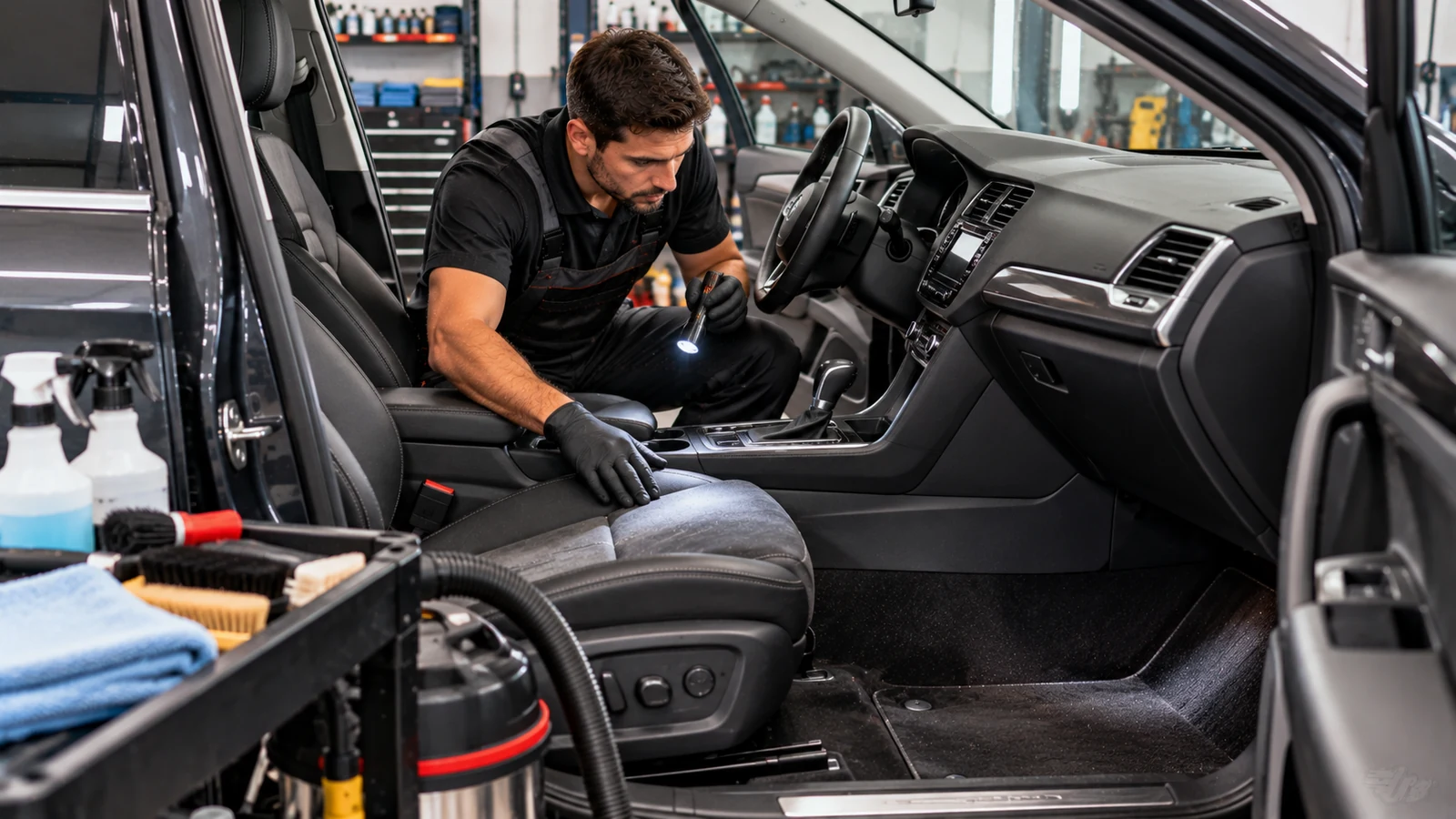
Interior car detailing cost depends on more than visible dirt. A shop normally considers cabin size, the level of contamination, upholstery and trim materials, the amount of extraction or steam work required, and whether seats or interior panels must be moved to reach hidden areas. A light sedan clean may stay near the lower end of the price range, while a heavily soiled three-row vehicle can require several hours of labor and specialized odor or stain treatment.
For most readers, the useful question is not simply “What does detailing cost?” It is “Which level of service does this interior actually need?” The guide below breaks down typical package prices, common add-ons, DIY economics, and when vehicle-specific workshop information matters.
Typical Interior Detailing Prices
A basic interior service typically costs $75 to $125, while deeper cleaning packages usually range from $125 to $225. Full restoration-style work with extraction, steam cleaning, stain treatment, or extensive conditioning can reach $225 to $350+. Severe odor, mildew, or contamination work may rise to $300 to $500+ depending on the scope.
| Service Level | Typical Price | What It Usually Covers | Best Fit |
|---|---|---|---|
| Basic interior clean | 75–125 | Vacuuming, glass, dash and trim wipe-down, mats, door jambs | Light dust and routine upkeep |
| Standard deep clean | 125–225 | Fabric shampoo, spot extraction, leather cleaning, trim protection | Moderate dirt, crumbs, stains |
| Full interior restoration | 225–350+ | Hot-water extraction, steam work, leather conditioning, stain treatment | Neglected or heavily soiled cabins |
| Odor or mold remediation | 300–500+ | Deeper cleaning plus targeted odor, duct, headliner, or seat-removal work | Smoke, mildew, major spills |
Those ranges are most useful as starting points. Detailers often inspect carpet condition, seat crevices, cargo areas, and headliners before confirming a final quote because the same vehicle can require very different labor depending on its condition.
What Actually Determines the Final Price?
Interior detailing is labor-driven. Two vehicles of similar age can receive very different estimates if one needs only vacuuming and surface cleaning while the other has pet hair locked into carpet, old food spills, or moisture beneath the seats.
Cabin Size and Seating Layout
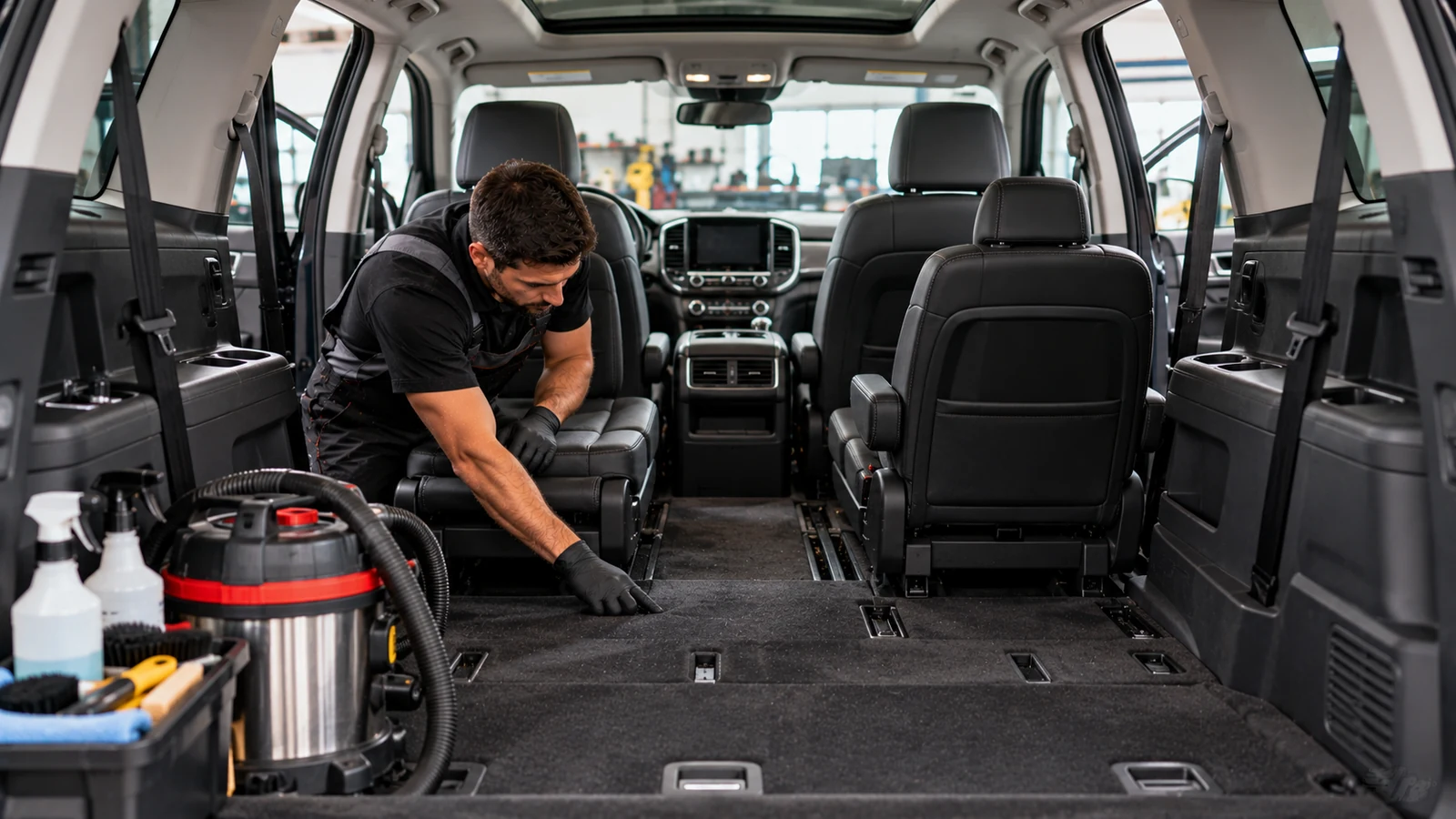
Larger interiors cost more because they have more material to clean. Compared with a compact car, a crossover, full-size SUV, truck, or minivan may have additional seating rows, longer carpet runs, more door trim, and a larger cargo area. The source pricing guidance places common size surcharges at roughly $20 to $40 for mid-size vehicles, $40 to $70 for full-size SUVs and trucks, and $60 to $100+ for three-row SUVs and minivans.
This is especially true for multi-row vehicles. AutoServicePlus offers broaderHonda workshop manual coverage and a vehicle-specific1997–2002 Honda Odyssey LX factory manual, both useful examples of the documentation needed when a large family cabin requires seat or trim access. The same logic applies to Nissan service-manual coverage and the 1997–2002 Nissan Quest GXE workshop manual for a minivan-style interior.
Other larger-cabin examples in the supplied inventory include Buick workshop manuals with the 2008–2013 Buick Enclave AWD repair manual, Cadillac factory service information with the 2007–2013 Cadillac Escalade AWD manual, Kia repair-manual coverage with the 2016 Kia Sorento UM workshop manual, and Volvo workshop manuals with the 2004–2013 Volvo XC90 AWD manual. These examples matter because added rows and cargo space usually increase vacuuming, extraction, drying, and inspection time.
Upholstery, Trim, and Interior Materials
Cleaning method changes with material. Fabric can hold liquid and dirt below the visible surface, so a deeper job may require shampooing and hot-water extraction. Leather needs a more controlled cleaner and conditioning process. Delicate suede-like materials require lower-moisture handling and soft agitation rather than aggressive scrubbing.
Material sensitivity matters most in vehicles with more complex trim and center-console assemblies. Before moving seats or panels, owners can use BMW workshop manuals and model-specific documentation such as the 1999–2000 BMW 528i E39 repair manual; Audi factory manuals and the 1988–1991 Audi 90 workshop manual; or Porsche repair documentation, such as the 2010–2013 Porsche Panamera 4S 970 manual.
The same principle applies when working around switches, trim, or seat electronics in vehicles covered by Lexus workshop manuals and the 2004–2006 Lexus RX 330 FWD manual, Mercedes-Benz factory manuals and the 2010–2013 Mercedes-Benz GLK 350 manual, or Chevrolet service documentation and the 2014–2017 Chevrolet Corvette C7 manual. The point isn’t that every vehicle needs disassembly, but that the cleaning approach should match the materials and components actually present.
Dirt Level, Pet Hair, Spills, Smoke, and Moisture
Condition can outweigh vehicle size. A compact cabin with dense pet hair or a soaked seat cushion may take longer than a clean SUV. Detailers may charge separately when contamination requires repeated vacuuming, extraction, odor treatment, or careful headliner work.
The source article lists pet hair, deep carpet staining, leather restoration, smoke odors, and headliner stains as common reasons a standard package costs more.
Interior Detailing Package Costs Compared
The easiest way to choose a service is to match the package to the interior condition rather than defaulting to the most expensive option.
Basic Cleaning
A basic package is appropriate when the cabin has dust, crumbs, light debris, and minor marks but no major stains or odors. It generally focuses on vacuuming, glass, mats, dashboard surfaces, and accessible trim.
This level is best treated as maintenance. It will improve a reasonably clean interior, but it is not designed for liquid trapped in seat foam, ground-in carpet contamination, or persistent smoke odor.
Standard Deep Cleaning
A deeper package adds more time for fabric shampooing, targeted extraction, leather cleaning, and trim treatment. This is usually the practical middle ground for daily-driven vehicles with visible use but no severe contamination.
The main value here is controlled cleaning below the surface. A stain that looks small may extend into carpet fibers or seat fabric, so extraction can matter more than repeated surface scrubbing.
Full Restoration and Remediation
A restoration-level service is intended for interiors with extensive staining, neglected carpet, heavy contamination, or problems that require access beneath seats or trim. Specialized odor and mildew work sits at the upper end because it can involve multiple cleaning stages, longer drying time, and additional treatment of ducts, headliners, or hidden areas.
A higher price does not automatically mean better value. The right package is the least extensive service that solves the actual problem without leaving contamination behind.
Add-On Prices for Common Interior Problems
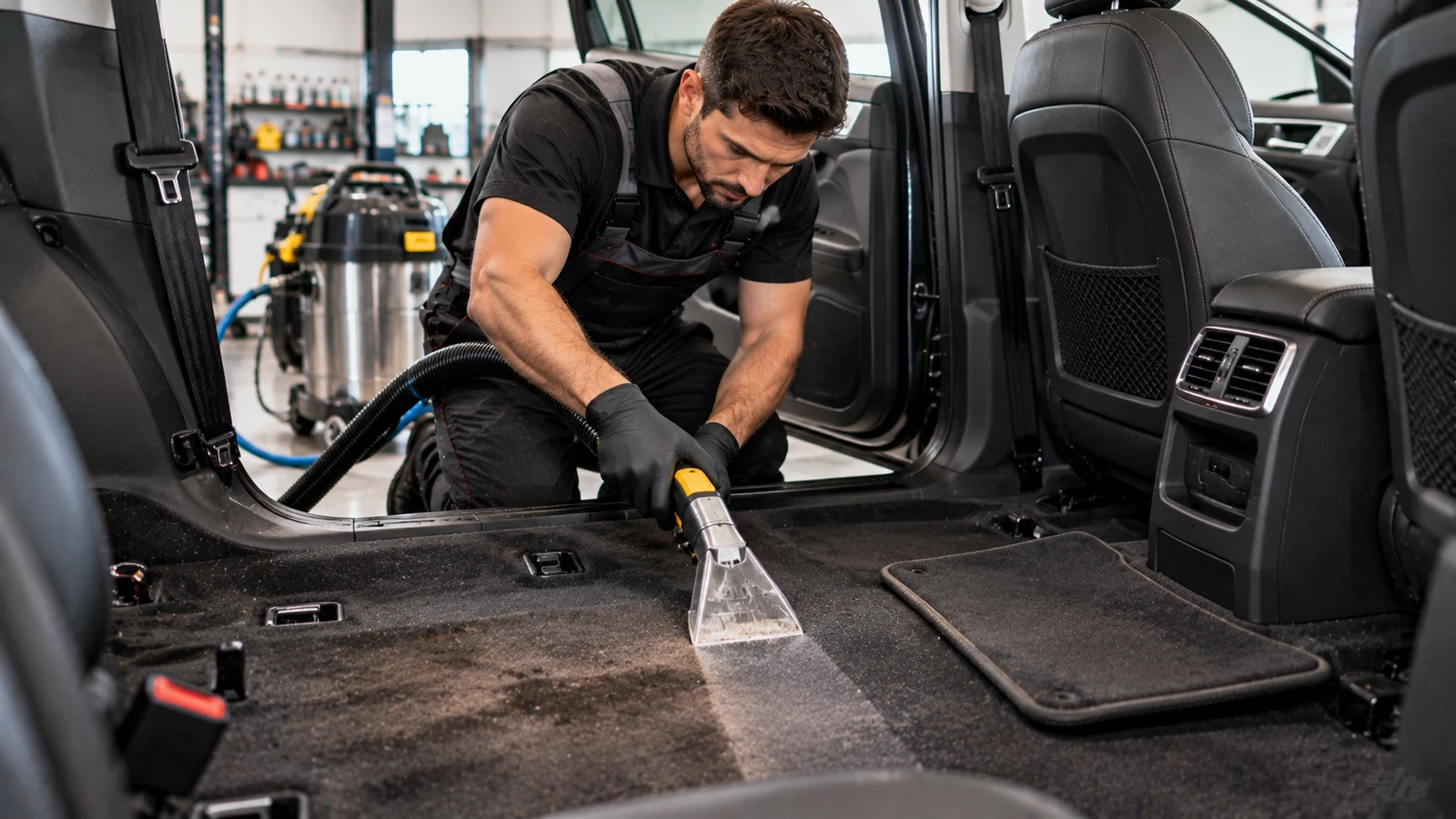
Many detailers separate specialized tasks from the base package. The source pricing gives the following typical add-on ranges.
| Add-On Service | Typical Extra Cost | Why It Adds Labor |
|---|---|---|
| Pet hair removal | 30–75 | Hair can lock into carpet and seat fabric |
| Hot-water carpet extraction | 45–90 | Requires deeper wet cleaning and extraction |
| Leather deep clean and conditioning | 40–80 | Adds material-specific cleaning and conditioning |
| Ozone odor treatment | 60–120 | Adds a separate odor-treatment cycle |
| Headliner spot cleaning | 35–70 | Requires low-moisture, controlled cleaning |
A quote can also rise when several add-ons overlap. For example, a vehicle with pet hair, a stained second row, and lingering smoke odor may require much more time than one with only a single carpet stain.
When Spot Cleaning Makes More Sense Than Full Detailing
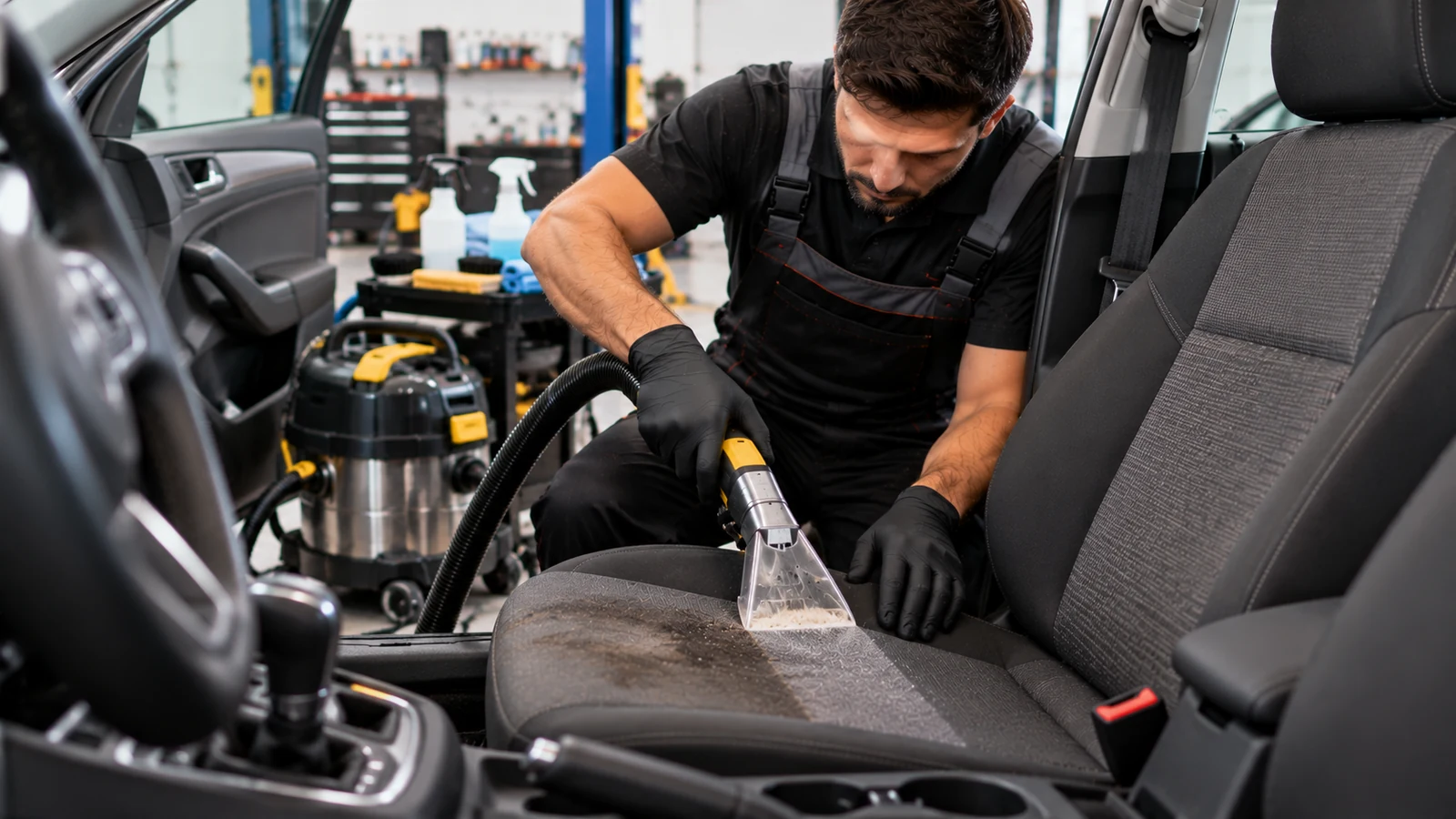
A full interior package is not always necessary. If the cabin is already clean and the problem is localized, targeted cleaning can save money. The source article places individual seat extraction or isolated stain removal at about $35 to $75 in many cases.
Spot cleaning is especially reasonable for a single coffee spill, muddy footwell, small cargo-area stain, or one affected seat. Older interiors can also benefit from a conservative approach because excessive wetting or repeated panel removal may create more risk than the stain itself.
For older vehicles, vehicle-specific references can be valuable before pulling trim. The supplied inventory includes Toyota workshop manuals and the 1986–1987 Toyota Cressida Sedan manual, Hyundai repair-manual coverage and the 1996–2001 Hyundai Tiburon RC-series manual, Volkswagen workshop manuals and the 1985–1992 Volkswagen Jetta manual, plus Ford factory repair information and the 2005–2007 Ford Five Hundred 2WD manual. In older cabins, knowing where retainers, fasteners, and wiring are located can be more important than using a stronger cleaner.
DIY Interior Detailing vs Professional Service
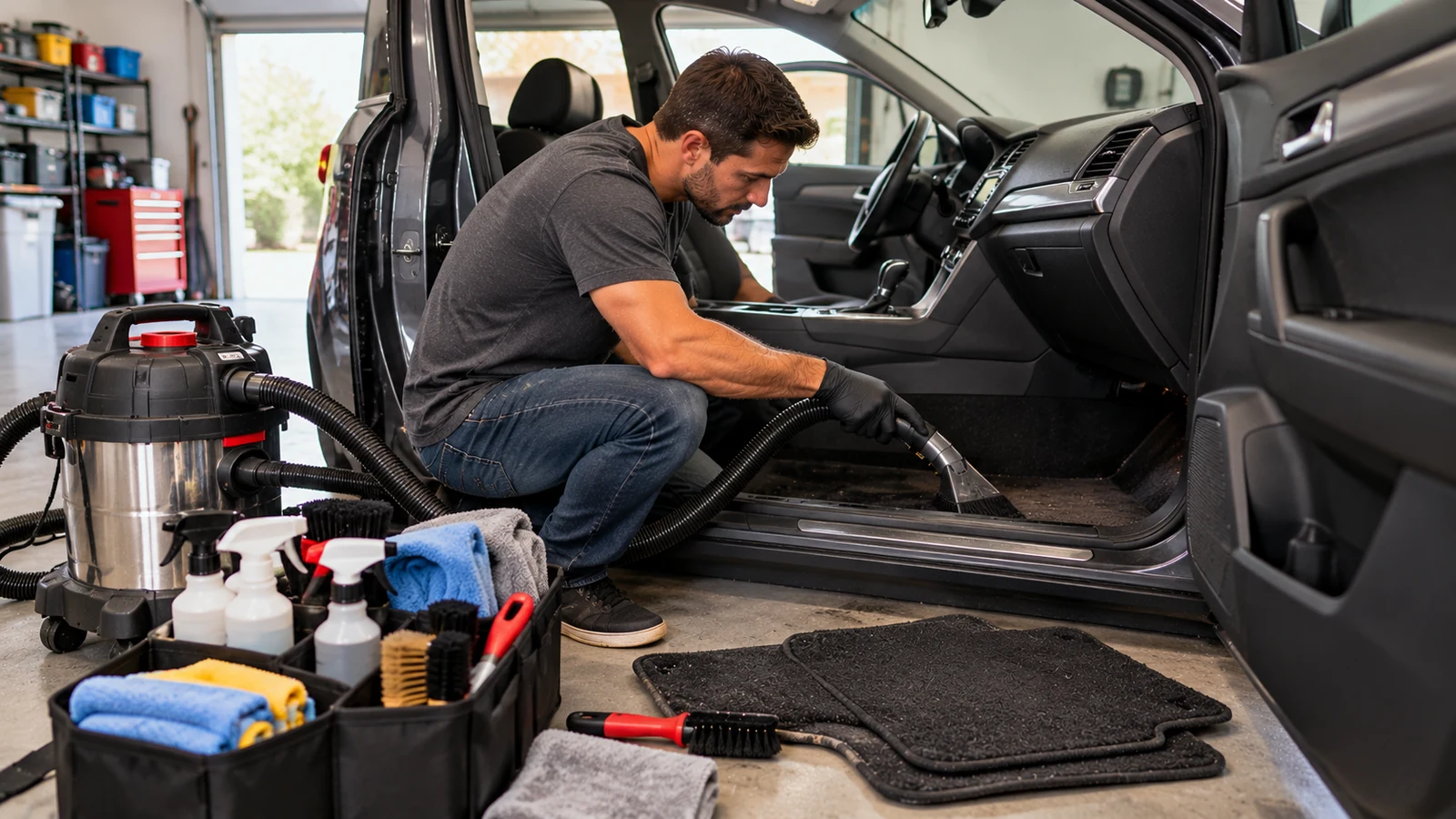
DIY can be economical if the interior is only moderately dirty and you already own basic equipment. Professional service becomes more attractive when the work involves deep extraction, persistent odors, delicate materials, or interior disassembly.
| Comparison | DIY Detailing | Professional Detailing |
|---|---|---|
| Up-front equipment | About 60–150 for brushes, cleaners, vacuum or rental equipment | Equipment included in service price |
| Cleaning consumables | About 20–40 per cleaning | Included |
| Typical time | Roughly 3–6 hours of hands-on work | About 1.5–4 hours of shop turnaround in the source comparison |
| Equipment level | Consumer wet/dry vacuum, brushes, rental cleaner | Commercial extraction, steam, and odor-treatment equipment |
| Best use | Routine dirt, fresh spills, maintenance cleaning | Deep stains, heavy contamination, difficult odors |
These figures come from the source comparison and should be treated as planning ranges rather than fixed market quotes.
A Practical DIY Sequence
- Remove loose items and floor mats.
- Vacuum from the top of the cabin downward, including seat seams and carpet edges.
- Test the chosen cleaner on a hidden area before treating a large surface.
- Work on one material at a time so fabric, leather, plastics, and glass receive the correct treatment.
- Extract stains with controlled moisture rather than saturating carpet or seat foam.
- Allow damp areas to dry thoroughly before reinstalling mats or closing the vehicle for long periods.
- Stop before removing seats or trim unless you have the correct vehicle-specific procedure.
The last step is where many DIY jobs shift from cleaning to repair. If reaching contamination requires disconnecting a seat, center console, door panel, or electrical connector, factory documentation becomes much more important.
Safe Deep Cleaning: When a Workshop Manual Matters
Modern interiors can contain seat wiring, SRS-related connectors, electronic modules, switches, and hidden fasteners. The NXT source specifically emphasizes workshop manuals for trim diagrams, seat-removal safety, electrical protection, and correct fastener reassembly.
Seat Removal and SRS-Related Wiring
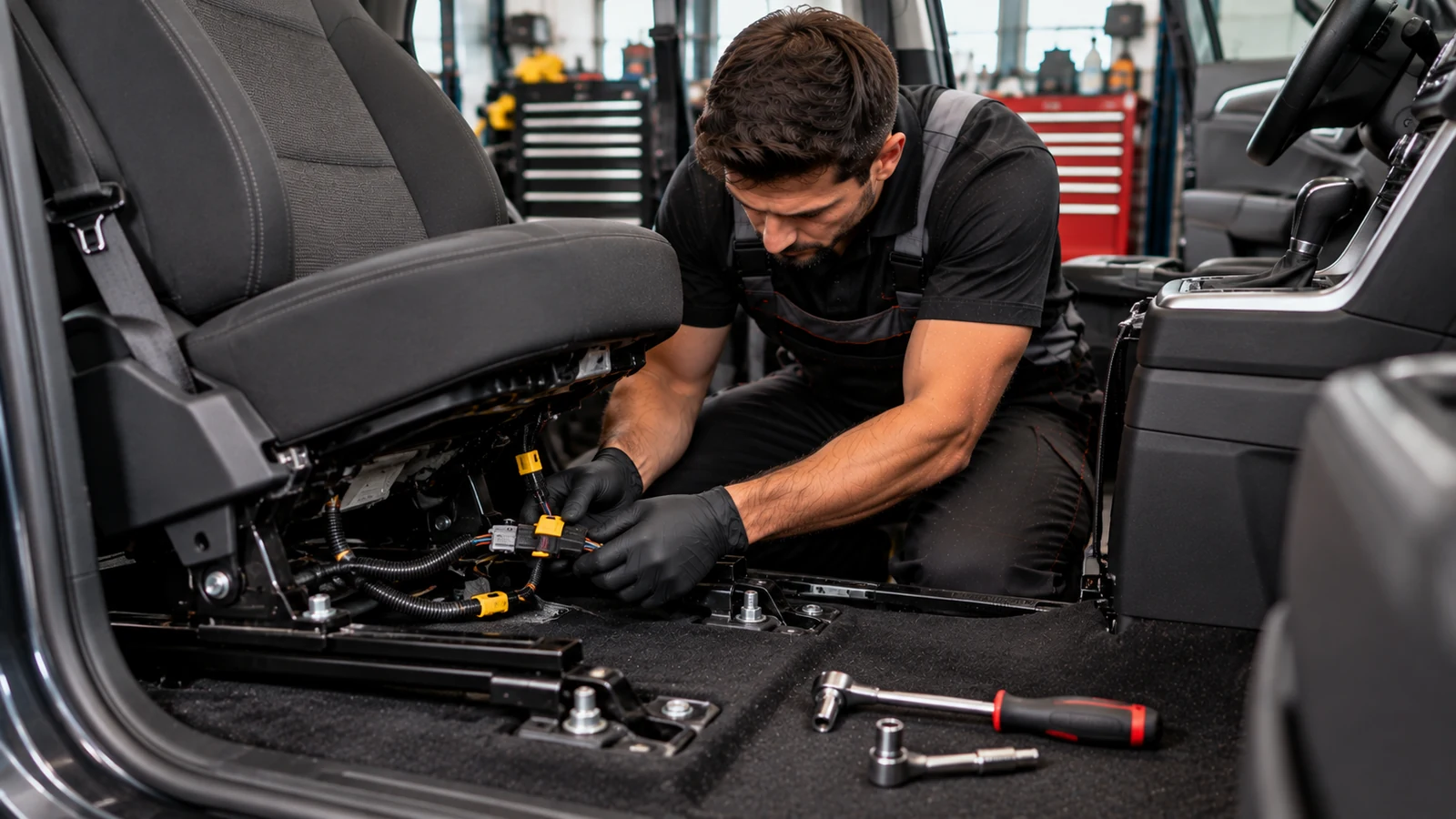
Removing a seat can make deep carpet cleaning easier, but it can also expose electrical connectors and restraint-system components. The correct procedure may require a specific battery-disconnect sequence, connector handling steps, and reinstallation torque values.
For example, Acura workshop-manual coverage includes the 2007–2013 Acura MDX factory manual, while Mazda service-manual coverage includes the 2013–2014 Mazda CX-5 AWD manual. Vehicle-specific information matters because the safest removal sequence comes from the documentation for the exact model, not a generic video.
Trim, Console, and Door-Panel Disassembly
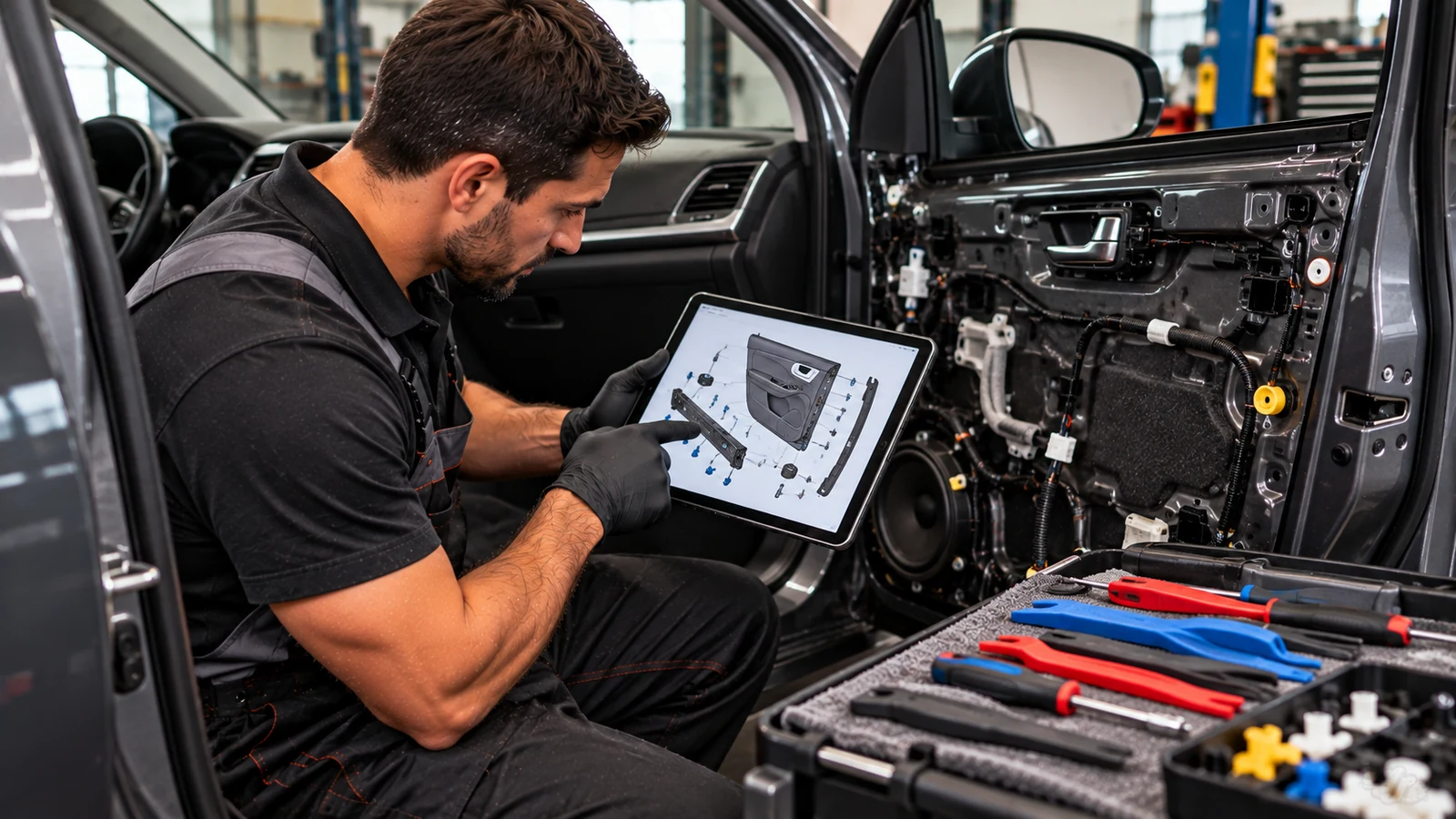
Deep cleaning sometimes requires access under console edges, door trim, carpet sections, or cargo-area panels. Hidden screws and retaining clips are easy to damage if you pull panels in the wrong direction.
Owners working on vehicles covered by Land Rover workshop manuals can use a model-specific reference such as the 2010–2013 Range Rover Sport LS manual. For trail-oriented vehicles, Jeep service documentation and the 1996–2002 Jeep Wrangler workshop manual can help identify the correct sequence before lifting interior trim or carpet.
Hidden Components Beneath Carpet and Cargo Trim
Moisture is a bigger concern when wiring, modules, ducts, or connectors sit below the surface being cleaned. Heavy extraction should therefore be controlled, with special care around areas where the vehicle documentation identifies sensitive components.
The supplied AutoServicePlus inventory also includes Subaru workshop-manual coverage and the 1986–1987 Subaru L-Series 3-door 4WD manual. That kind of model-specific information is most useful when an older or utility-oriented interior needs deeper access, and you want to avoid breaking aged trim or disturbing hidden wiring.
How to Choose the Right Workshop Manual Before Interior Disassembly
If the job stays on visible surfaces, you may never need a repair manual. If it involves seat removal, console disassembly, door panels, cargo trim, or carpet lifting, use a manual that matches the exact vehicle.
Check the following before starting:
- Year, make, and model: Interior layouts and fastener locations can change across generations.
- Body style and trim: A sedan, wagon, coupe, or SUV may use different panels, seat hardware, or wiring.
- Seat and restraint-system procedures: Confirm the specified battery and connector steps before unplugging seat wiring.
- Exploded trim diagrams: These help locate hidden screws, clips, and panel engagement points.
- Reassembly specifications: Use the correct tightening sequence and torque values where the manufacturer provides them.
- Component locations: Check for electrical modules, HVAC ducts, or harnesses before applying water or extraction solution.
The manual should support the cleaning job, not complicate it. Use it only where disassembly or component protection makes factory information relevant.
Conclusion
Interior car detailing cost depends on service level, vehicle size, material type, and interior condition. A lightly used sedan may need only a 125 maintenance clean, while a heavily soiled or odor-affected cabin can move well beyond $300 once extraction, restoration, and specialized treatments are added.
For DIY work, stay conservative with moisture and avoid unnecessary disassembly. When deep cleaning requires seats, trim panels, consoles, or carpet to come out, use the workshop manual for the exact vehicle so cleaning does not turn into an electrical, trim, or restraint-system repair.
Frequently Asked Questions
How Much Does Interior Car Detailing Cost on Average?
For a standard vehicle, a basic interior clean is commonly around $75 to $125. A deeper cleaning package often falls around $125 to $225, while full restoration work can reach $225 to $350+. Severe odor or contamination treatment may cost more.
Why Do SUVs, Trucks, and Minivans Usually Cost More to Detail?
They generally have more carpet, more seating area, and larger cargo spaces, so detailers spend more time vacuuming, cleaning, extracting, and drying. The source article describes size-related surcharges from about $20 to $100+, depending on vehicle size and layout.
How Much Does Pet Hair Removal Add?
Pet hair removal is commonly listed as an extra $30 to $75. The final amount depends on how much hair is present and how tightly it is embedded in the carpet or upholstery.
Can Detailing Help With Smoke or Mildew Odors?
Professional detailing can address serious odor problems with deeper cleaning and targeted odor treatment. The source lists ozone treatment at about $60 to $120 as an add-on, while broader odor or mold remediation packages can cost substantially more.
Is Diy Interior Detailing Worth It?
It can be. If you already own a wet/dry vacuum and basic brushes, the source estimates roughly $20 to $40 in cleaning consumables for a DIY session. Professional service becomes more attractive when stains are deep, odors are persistent, or the interior needs specialized equipment.
Should I Remove The Seats for A Deep Interior Clean?
Only when the contamination actually requires access underneath them, and you have the correct vehicle-specific procedure. Seat removal can involve restraint-system wiring, electrical connectors, and specific reinstallation requirements, so it should not be treated as a routine cleaning step.
Is Leather Interior Detailing More Expensive Than Fabric Cleaning?
It can be if the service includes dedicated leather cleaning and conditioning. The source lists leather deep cleaning and conditioning at around $40 to $80 as a targeted add-on, while fabric interiors may require shampooing or extraction depending on stain depth.