If you are trying to determine how much CarShield costs, the advertised monthly payment is only one part of the calculation. Vehicle age, mileage, coverage level, deductible, excluded repairs, diagnostic charges, and maintenance documentation can all affect what you ultimately spend.
Based on the reference pricing in this guide, CarShield service contracts generally range from $99 to $150 per month. Some contracts may also require an initial payment of roughly $100 to $200, while deductibles are commonly $0, $50, or $100, depending on the plan.
For a vehicle owner, mechanic, or DIY enthusiast, the useful question is not simply, “What is the monthly payment?” It is whether the total contract cost makes sense compared with the repair risk of the specific vehicle.
What Does CarShield Cost?
A reasonable starting budget is about $1,188 to $1,800 per year in monthly contract payments, before considering deductibles or other out-of-pocket expenses.
Here is the basic cost structure used in this comparison:
| Cost Item | Reference Range | What It Means |
|---|---|---|
| Monthly contract payment | $99-$150 | Recurring cost based on vehicle and coverage |
| Possible initial payment | $100-$200 | May apply when activating the contract |
| Deductible | $0, $50, or $100 | Paid when a covered repair is performed |
| Contract duration | Month-to-month or 24-60 months | Depends on the contract structure |
| Diagnostic or tear-down costs | Potential additional expense | Owner may be responsible if the claim is not covered |
| Maintenance and wear items | Usually separate | Routine service is not the same as breakdown coverage |
The actual amount can therefore be higher than the advertised monthly price. A driver who needs several repairs may pay multiple deductibles, while another owner might pay premiums for years without needing a major covered repair.
That is why comparing total expected spending is more useful than focusing only on the monthly rate.
What Actually Changes Your Total CarShield Cost?
CarShield pricing is not identical for every car. The vehicle and the contract you choose both affect the quote and your potential long-term costs.
Vehicle age and mileage
Older and higher-mileage vehicles generally carry more mechanical risk. A vehicle with more than 100,000 miles may therefore be priced differently from a newer car with substantially lower mileage.
Mileage also matters because many expensive repairs become more likely as components accumulate wear. When comparing plans, consider not only today’s odometer reading but also how many miles you expect to add during the contract.
Make, model, and mechanical complexity
A basic compact car and a luxury AWD vehicle do not necessarily present the same repair exposure.
Vehicles with complex electronics, turbocharging, sophisticated suspension, AWD or 4WD systems, and expensive drivetrain components may cost considerably more to repair. This can influence the contract quote and should also influence your decision about self-funding repairs.
Deductible selection
The deductible determines how much you contribute when an approved repair is performed.
A contract with a lower monthly payment but a higher deductible may not necessarily be cheaper if the vehicle makes several repair visits. When comparing quotes, calculate both numbers together instead of evaluating them separately.
Diagnostic and tear-down charges
Some mechanical failures cannot be confirmed without partial disassembly.
The reference material notes that an engine or transmission diagnosis may require two to six hours of tear-down labor. If the eventual failure is excluded from the contract, that diagnostic labor can become an owner expense.
Before authorizing major disassembly, ask who pays diagnostic charges if coverage is declined.
Maintenance history
A service contract is not a substitute for routine maintenance.
Document oil changes, fluid services, filters, scheduled inspections, and other required maintenance. If the administrator requests proof that the vehicle was properly maintained, missing records can complicate a claim.
Keeping invoices, mileage records, parts receipts, and service dates in one place can reduce uncertainty later.
Comparing CarShield Coverage Tiers
| Plan | Estimated Monthly Cost | General Coverage Focus |
|---|---|---|
| Diamond | $129-$149 | Broad exclusionary-style coverage including major mechanical and electrical systems |
| Platinum | $119-$139 | Major mechanical systems, suspension, brakes, AC, and electrical components |
| Gold | $109-$129 | Powertrain plus selected supporting components |
| Silver | $99-$119 | Basic engine, transmission, and drive-axle protection |
| Aluminum | $109-$129 | Electronics, sensors, modules, infotainment, and related systems |
The lowest monthly plan is not automatically the best fit. A vehicle with complicated electronics may have a different risk profile from a high-mileage vehicle where powertrain coverage is the main concern.
Review the exact component list and exclusions rather than relying only on the plan name.
Build a Four-Year Repair Budget Before You Buy
Monthly prices can look manageable until you multiply them across several years.
The following examples show the contract payments alone over 48 months:
| Monthly Payment | 48-Month Cost | With Three $100 Deductibles |
|---|---|---|
| $99 | $4,752 | $5,052 |
| $119 | $5,712 | $6,012 |
| $129 | $6,192 | $6,492 |
| $150 | $7,200 | $7,500 |
These examples do not include any initial activation payment, excluded maintenance, fluids, diagnostic charges, or non-covered repairs.
A simple way to compare the options is to calculate:
Monthly payment × expected ownership period + estimated deductibles + likely excluded maintenance
Then compare that figure with the amount you would otherwise keep in a dedicated vehicle repair fund.
For example, setting aside $129 each month would accumulate $3,096 over two years. That money remains available for maintenance or repairs, but self-funding also means accepting responsibility if a large repair arrives before the fund has grown enough.
The better financial structure therefore depends on your vehicle, repair ability, available emergency funds, and tolerance for unpredictable repair bills.

What a Service Contract May Not Pay For
One of the most important steps when evaluating CarShield cost is separating mechanical breakdown coverage from ordinary vehicle ownership expenses.
Routine maintenance and wear items
Common maintenance items such as oil changes, filters, spark plugs, brake pads, wiper blades, belts, and similar wear components should not automatically be assumed to be covered.
These expenses continue even while you are paying the monthly contract fee.
Pre-existing mechanical problems
A problem that existed before coverage began may be excluded.
This is particularly important when purchasing coverage for a vehicle that already has warning lights, abnormal noises, fluid leaks, transmission symptoms, overheating history, or another unresolved condition.
Damage related to neglected maintenance
The reference material identifies overheating damage, oil starvation, and insufficient maintenance documentation as situations that can create coverage problems.
For owners of older cars, detailed service records can therefore be almost as important as the contract itself.
Cosmetic and corrosion-related repairs
Body appearance, interior trim, rust, corrosion, and other non-mechanical concerns may fall outside mechanical breakdown coverage.
Read the contract before assuming a broad-sounding plan covers every problem on the vehicle.
CarShield vs. Self-Funded Repairs
A service contract and a repair savings account handle risk differently.
| Factor | Service Contract | Self-Funded Repairs |
|---|---|---|
| Monthly expense | Fixed recurring payment | Amount chosen by owner |
| Major covered breakdown | Contract may absorb much of the covered cost | Owner pays directly |
| Deductible | May apply per repair visit | None |
| Claim approval | Required | Not applicable |
| Repair exclusions | Contract-specific | Owner controls spending |
| Maintenance expenses | Usually separate | Paid from owner’s funds |
| DIY repairs | May be restricted by contract requirements | Owner has more flexibility |
| Financial predictability | More predictable monthly cost | Repair timing can be unpredictable |
The self-funded approach can work particularly well for an owner who performs routine maintenance and some repairs independently. You can instead put monthly contract money into a dedicated repair account.
However, this approach transfers the repair risk back to the owner. An expensive engine, transmission, electrical, or drivetrain failure could occur before enough money has accumulated.
The most useful comparison is therefore vehicle-specific, not universal.

Why Workshop Manuals Matter Even With Coverage
A workshop manual helps the owner or technician understand what the manufacturer expects during diagnosis, maintenance, disassembly, and reassembly.
Confirming maintenance requirements
Maintenance records become more useful when they are tied to the correct procedures and service requirements.
Factory documentation can help identify appropriate fluid specifications, maintenance operations, service sequences, and component inspection procedures.
Diagnosing the problem before major disassembly
Factory troubleshooting information can help separate an electrical or sensor fault from a larger mechanical failure.
That can be valuable before approving expensive exploratory labor.
Checking torque specifications and assembly procedures
Incorrect fastener torque can cause leaks, stripped threads, distorted parts, or unsafe assembly.
Vehicle-specific workshop information provides the specifications and tightening sequences needed for critical components.
Finding hidden fasteners and electrical connections
Exploded diagrams and removal instructions can identify trim clips, harness connectors, brackets, retainers, and fasteners that may not be obvious during disassembly.
This is particularly useful when a DIY repair involves dashboard components, body trim, cooling systems, suspension, engine accessories, or electrical modules.
Vehicle-Specific Repair Planning
Because vehicle make and model influence both repair complexity and contract pricing, it makes sense to compare coverage with the actual factory repair information available for your car.
The supplied AutoServicePlus inventory covers a broad range of manufacturers and model-specific workshop manuals.
Mainstream Cars and Family Vehicles
Ford: Owners comparing service-contract costs for Ford vehicles can review available Ford workshop manuals before estimating which maintenance and repair procedures they could handle independently. For larger SUVs and 4WD systems, the Ford Expedition 4WD factory workshop manual is an example of model-specific documentation that can support repair planning.
Chevrolet: Before comparing a contract quote with potential shop expenses, Chevrolet repair manuals can help owners understand the service information available for their vehicle. Owners working on full-size SUVs can refer to the Tahoe and Suburban factory repair manual for vehicle-specific procedures.
Toyota: Drivers who prefer to budget for maintenance directly can browse Toyota workshop manuals to identify documentation for their model and generation. The 2015 Toyota Camry XV50 workshop manual provides a specific example for owners planning Camry service or diagnosis.
Honda: A repair-cost comparison is easier when you know which procedures require professional equipment and which you can reasonably handle in a home garage. AutoServicePlus provides Honda repair manuals, including a 2017-2023 Honda CR-V workshop manual for model-specific service planning.
Hyundai: For Hyundai owners nearing the end of factory coverage or planning long-term maintenance,Hyundai workshop manuals offer another source of vehicle-specific repair information. The 2015-2016 Hyundai Sonata LF repair manual can support diagnosis and service planning for that generation.
Nissan: Transmission and drivetrain concerns can make repair-cost planning particularly important, so owners can review available Nissan repair manuals for their exact vehicle. The 2008-2013 Nissan Rogue 4WD workshop manual is one relevant example from the current catalog.
Volkswagen: Owners comparing recurring contract payments with independent maintenance costs can browse Volkswagen workshop manuals for model-specific service documentation. For Jetta owners, the 2010-2019 Volkswagen Jetta Mk6 repair manual can help identify factory repair procedures before estimating labor requirements.
Premium and European Vehicles
Premium vehicles can complicate the comparison because specialized systems and repair labor can increase the financial consequences of a breakdown. Factory information is especially useful when deciding what you can diagnose yourself and what to refer to a specialist.
BMW: AutoServicePlus lists BMW workshop manuals covering numerous generations and configurations. The BMW 7 Series F01/F02 factory repair manual is one example for owners assessing the potential scope of repairs before comparing contract costs.
Audi: Vehicle-specific procedures are valuable when working with sophisticated electrical, drivetrain, and AWD systems. Owners can review Audi repair manuals, including the Audi A8L Quattro 4H8 workshop manual.
Mercedes-Benz: Owners evaluating long-term repair expenses can use Mercedes-Benz workshop manuals to research the factory procedures available for their model. The Mercedes-Benz ML 350 factory repair manual provides model-specific information for that SUV.
Porsche: Specialized vehicles make accurate repair planning especially useful before deciding how much financial risk to self-fund. The Porsche repair manuals collection includes documentation such as the 2015-2016 Porsche Macan workshop manual.
Land Rover: Owners can compare service-contract costs against vehicle-specific maintenance and diagnostic needs using available Land Rover workshop manuals. A relevant example is the Discovery Sport L550 factory repair manual.
Lexus: For owners balancing professional servicing with DIY maintenance, Lexus repair manuals can provide the factory-level information needed to estimate repair scope. The Lexus GX 460 factory workshop manual supports model-specific repair planning.
Volvo: Vehicle-specific procedures can help owners understand a repair before approving labor or deciding to handle part of the work themselves. AutoServicePlus carries Volvo workshop manuals, including the Volvo XC90 R Design AWD repair manual.
Cadillac: Owners evaluating extended protection for a Cadillac can first examine available Cadillac repair manuals to understand the service information available for their exact model. The 2016 Cadillac ATS and ATS-V workshop manual is one example from the supplied inventory.
Trucks, SUVs and AWD or 4WD Vehicles
Trucks and AWD or 4WD vehicles add additional drivetrain and chassis systems to consider when building a repair budget.
Jeep: Owners can explore Jeep workshop manuals when planning maintenance for drivetrain, suspension, or other vehicle systems. The 2014 Jeep Grand Cherokee WK2 repair manual provides factory information for a widely used SUV platform.
Subaru: AWD vehicles benefit from model-specific procedures when servicing drivetrain and chassis systems. The Subaru repair manuals collection includes the 2010-2013 Subaru Legacy workshop manual for generation-specific repair information.
GMC: Truck and SUV owners can review GMC workshop manuals when comparing independent repair planning with a monthly service contract. The GMC Sierra Denali AWD factory repair manual is a useful example for owners dealing with a full-size AWD truck platform.
DIY Repair or Professional Shop: How to Decide
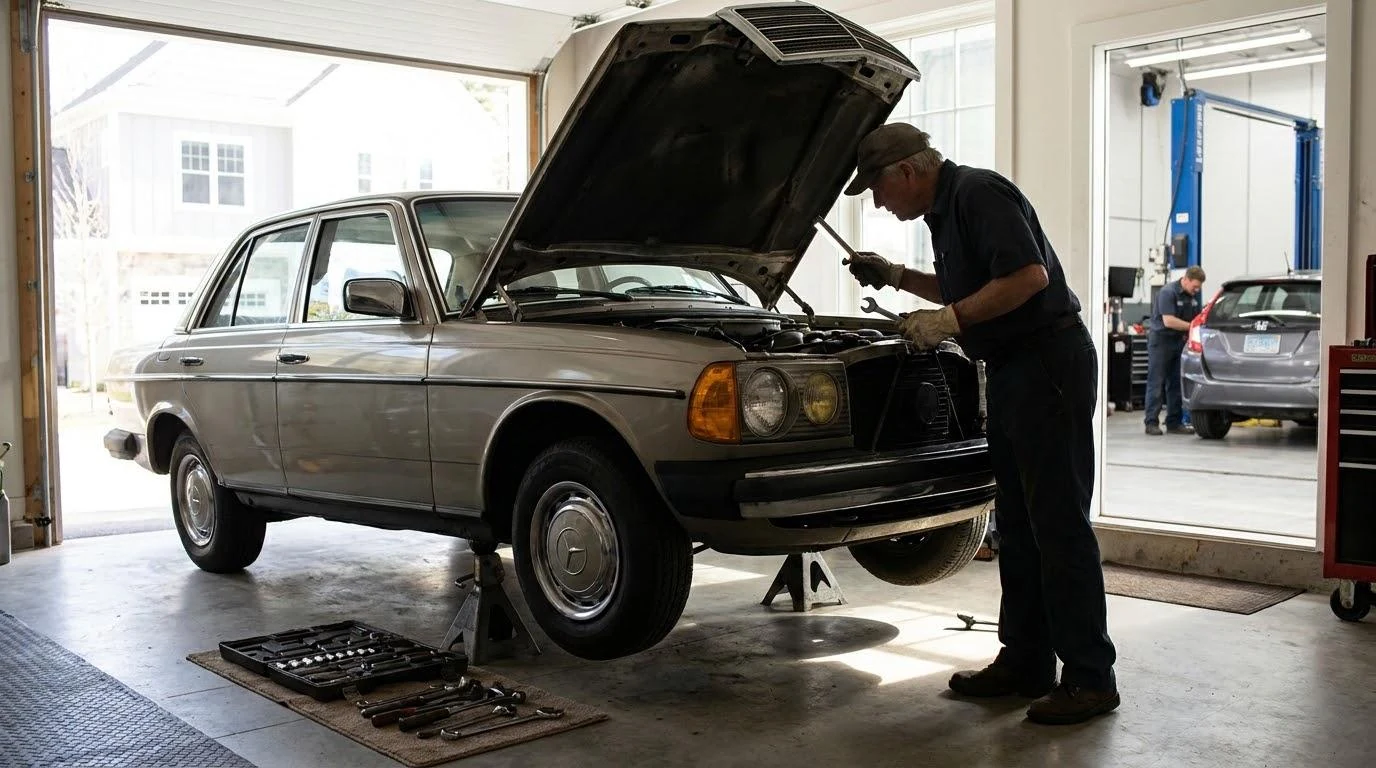
Self-funding doesn’t mean you have to do every repair at home.
A practical strategy is to divide repairs into three groups:
- Routine maintenance you can confidently perform. Oil and filter service, some fluid changes, basic inspections, and other straightforward procedures can reduce labor expense when performed correctly.
- Repairs that require factory information but manageable tools. Sensors, accessible electrical components, brakes, cooling-system parts, or selected suspension repairs may be practical for experienced DIY owners when the correct procedure is available.
- Repairs that require professional equipment or expertise. Internal transmission work, major engine repairs, advanced electronics, specialized alignment procedures, and other complex jobs may still belong in a qualified workshop.
A factory manual remains useful in all three situations. Even when a shop performs the repair, understanding the procedure helps you discuss labor, parts, diagnostic steps, and potential additional work more effectively.
How to Choose the Right Workshop Repair Manual
A manual is useful only if it matches the vehicle being repaired.
Before relying on service documentation, confirm the following:
- Model and generation: Similar-looking vehicles may use different components or procedures.
- Engine and transmission: Verify that the documentation includes the installed drivetrain.
- Electrical information: Look for wiring diagrams, connector information, grounds, and diagnostic procedures where applicable.
- Torque specifications: Tighten critical fasteners to the manufacturer-specified values and sequences.
- Component diagrams: Exploded views help identify seals, clips, retainers, hidden fasteners, and assembly order.
- Removal and installation procedures: Detailed steps reduce the risk of damaging surrounding components during disassembly.
For a complicated repair, verify the exact vehicle configuration before buying parts or beginning work.
Questions to Ask Before Signing a CarShield Contract
A short checklist can prevent an attractive monthly quote from becoming an expensive misunderstanding later.
Ask the contract provider:
- What is the exact monthly payment for this VIN and mileage?
- Is there an initial payment or activation charge?
- What deductible applies to each repair visit?
- Which parts and systems are specifically excluded?
- Are diagnostic and tear-down charges covered if the claim is denied?
- What maintenance records must I retain?
- Do fluids, seals, hoses, belts, brake components, or other wear items have exclusions?
- Can I choose my repair facility?
- Is prior authorization required before diagnosis or disassembly?
- What cancellation or transfer fees apply?
- Is there a waiting period before coverage begins?
- Is there a maximum payout per claim or over the contract term?
Get the answers from the written contract rather than relying only on a sales conversation.
Conclusion
When asking how much CarShield costs, start with the estimated $99 to $150 monthly payment, but do not stop there.
Calculate the cost across the entire period you expect to own the vehicle, then add deductibles and consider expenses that may remain outside the contract. Review maintenance requirements, diagnostic-charge rules, exclusions, and claim procedures before signing.
Finally, compare that total with the alternative of building your own vehicle repair fund and using accurate factory workshop information for maintenance and diagnosis.
The right approach depends on the individual vehicle. A realistic repair budget, complete service records, and model-specific technical information give you a much stronger basis for making that decision than the monthly price alone.
Frequently Asked Questions
How Much Does CarShield Cost Per Month?
Using the reference pricing for this guide, CarShield contracts generally cost about $99 to $150 per month. The actual quote can vary according to vehicle age, mileage, make, model, coverage level, and deductible.
Is There A Carshield Down Payment?
The reference material lists initial payments or activation amounts of approximately $100 to $200 in some cases. Review your specific quote to determine whether this is an additional fee, deposit, or first payment.
What Deductible Does CarShield Charge?
Common deductible options discussed in the reference material are $0, $50, and $100 per repair visit. Your contract should specify the exact deductible that applies.
Does Carshield Cover Normal Maintenance?
Routine maintenance and ordinary wear items should not be assumed to be covered. Oil changes, filters, brake pads, spark plugs, wiper blades, and similar service items are generally treated separately from mechanical breakdown protection.
Can A Carshield Claim Be Denied Because of Maintenance History?
Maintenance documentation can affect coverage when the vehicle’s condition or the cause of failure is in question. Keep receipts and service records showing you completed scheduled maintenance.
Is Carshield Cheaper Than Paying For Repairs Yourself?
It depends on the vehicle and what repairs occur.
A $119 monthly contract costs $5,712 over four years before deductibles and other expenses. An owner who self-funds keeps that monthly amount available for repairs, but also accepts the risk of paying directly for a major breakdown.
Compare the full contract cost against the likely repair needs, condition, mileage, and complexity of your specific vehicle.
Does A Workshop Manual Still Help If I Use A Professional Mechanic?
Yes. Factory repair information can help you understand diagnostic steps, required parts, torque specifications, service procedures, and the expected scope of the repair.
It can also help you review a repair estimate or confirm the shop is addressing the correct system.