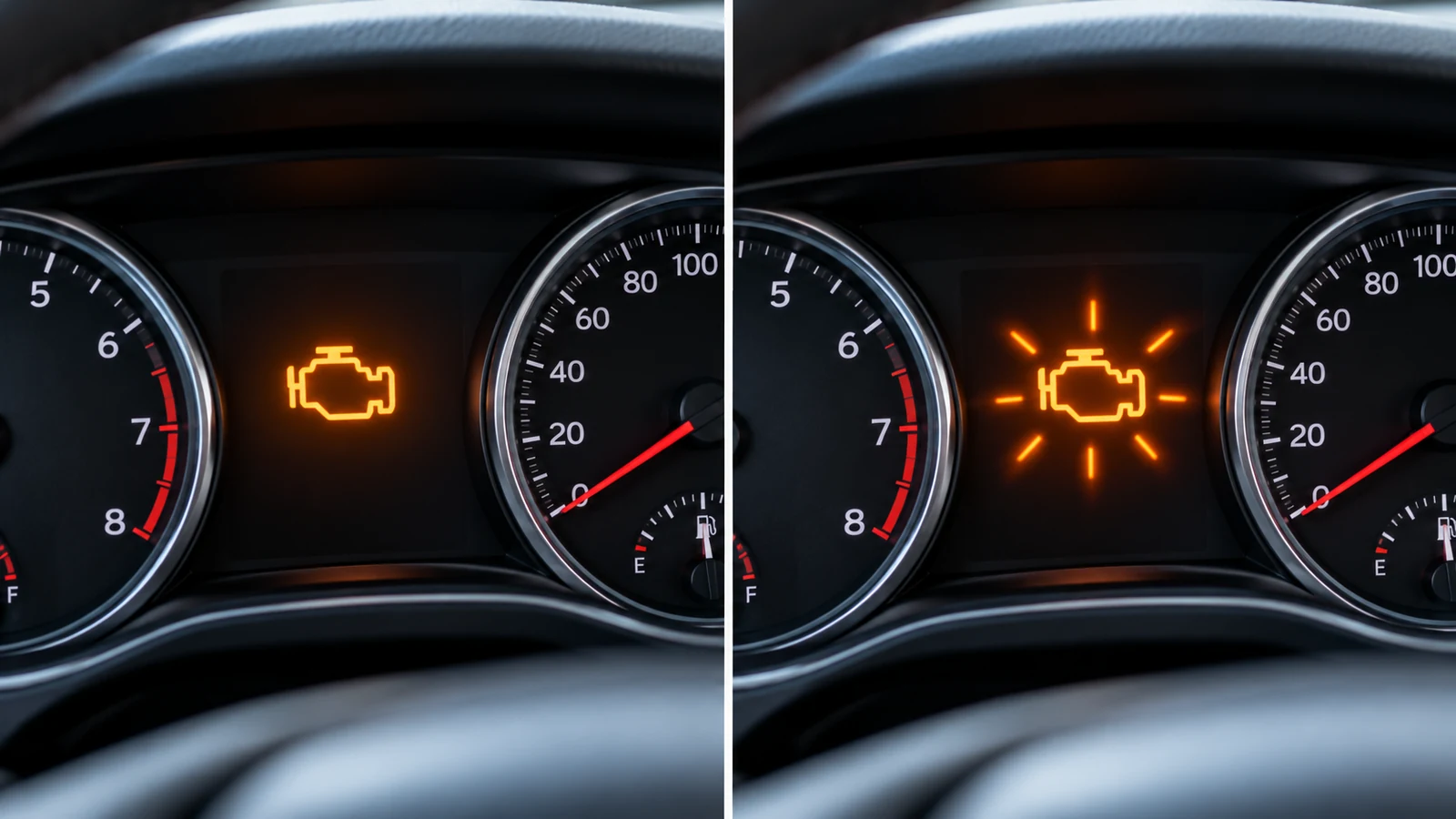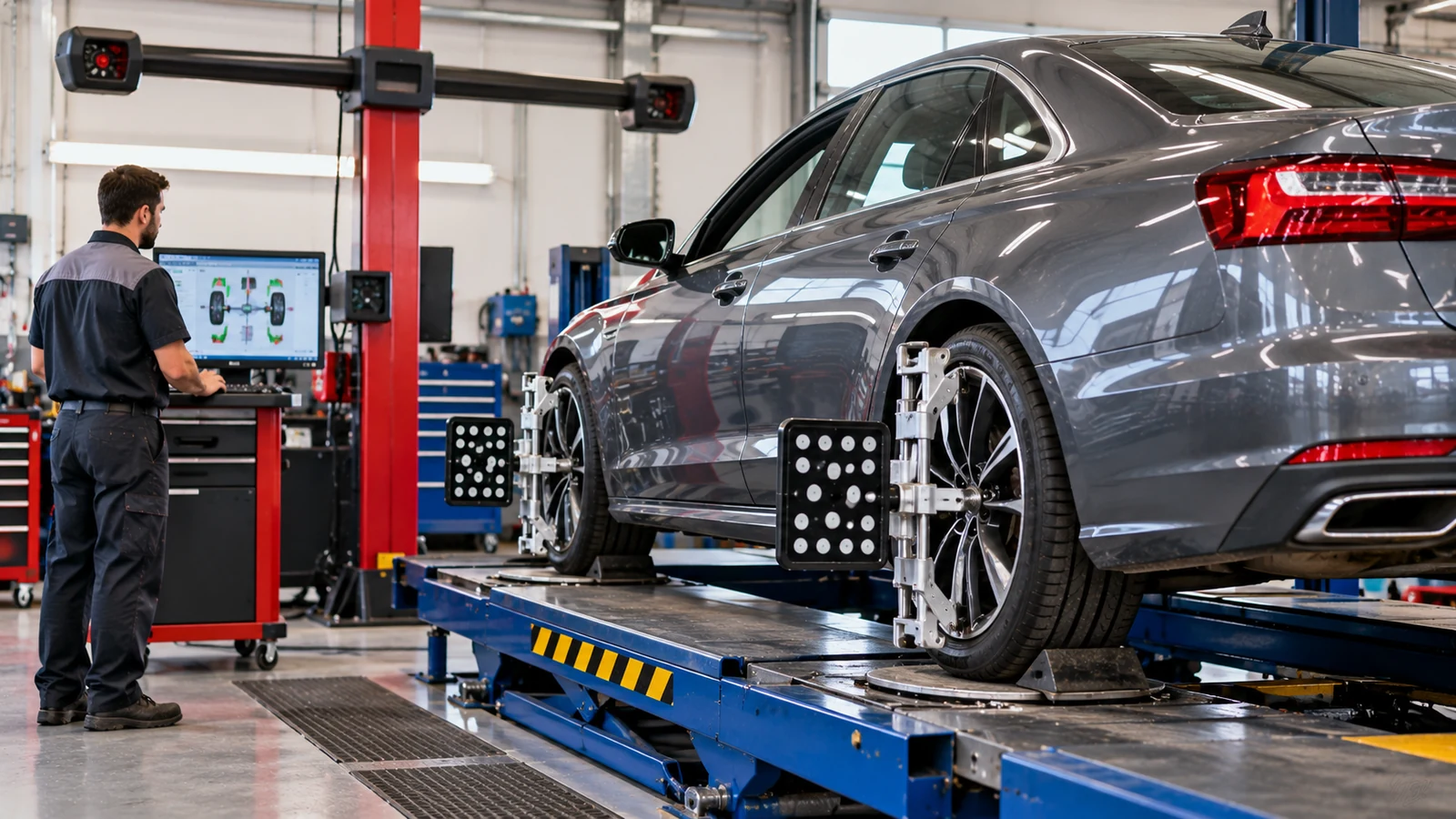
If your steering wheel no longer sits straight, the car drifts on a level road, or the tires are wearing unevenly, a wheel alignment is often one of the first services worth checking. Prices can vary significantly because “alignment” can mean anything from a basic front-wheel toe adjustment to a full four-wheel geometry correction with electronic sensor calibration.
For most vehicles, a front-wheel alignment costs about $50 to $100, while a full 4-wheel alignment generally runs $100 to $200+. A vehicle that requires ADAS camera, radar, or steering-angle calibration can add $150 to $300+. The final bill also depends on suspension wear, seized adjustment hardware, vehicle design, and local labor rates.
This guide explains what you are paying for, when a basic alignment is enough, when the job becomes more complex, and how vehicle-specific workshop information can help you avoid paying for the wrong service.
Car Alignment Cost at a Glance
The service type is the biggest factor in estimating car alignment cost.
| Alignment service | Typical cost | What it generally covers | Common use case |
|---|---|---|---|
| Front-wheel or 2-wheel alignment | 50–100 | Front toe and any available front camber adjustment | Vehicles with a non-adjustable rear axle |
| Thrust-angle alignment | 70–130 | Front alignment referenced to the rear thrust line | Vehicles where the rear axle is fixed but must be checked |
| Four-wheel alignment | 100–200+ | Front and rear geometry measurement and adjustment where available | Independent-rear-suspension, AWD, 4WD, and many modern cars |
| ADAS recalibration add-on | 150–300+ | Camera, radar, or steering-angle sensor calibration as required | Vehicles with driver-assistance systems |
| Lifetime alignment package | 100–250 | Repeated alignments under the provider’s package terms | High-mileage drivers or vehicles frequently exposed to rough roads |
A low advertised price may cover only the alignment measurement and a straightforward adjustment. If the technician finds worn steering parts, seized eccentric bolts, damaged bushings, or a need for electronic calibration, the final invoice can be higher.
What a Wheel Alignment Actually Changes
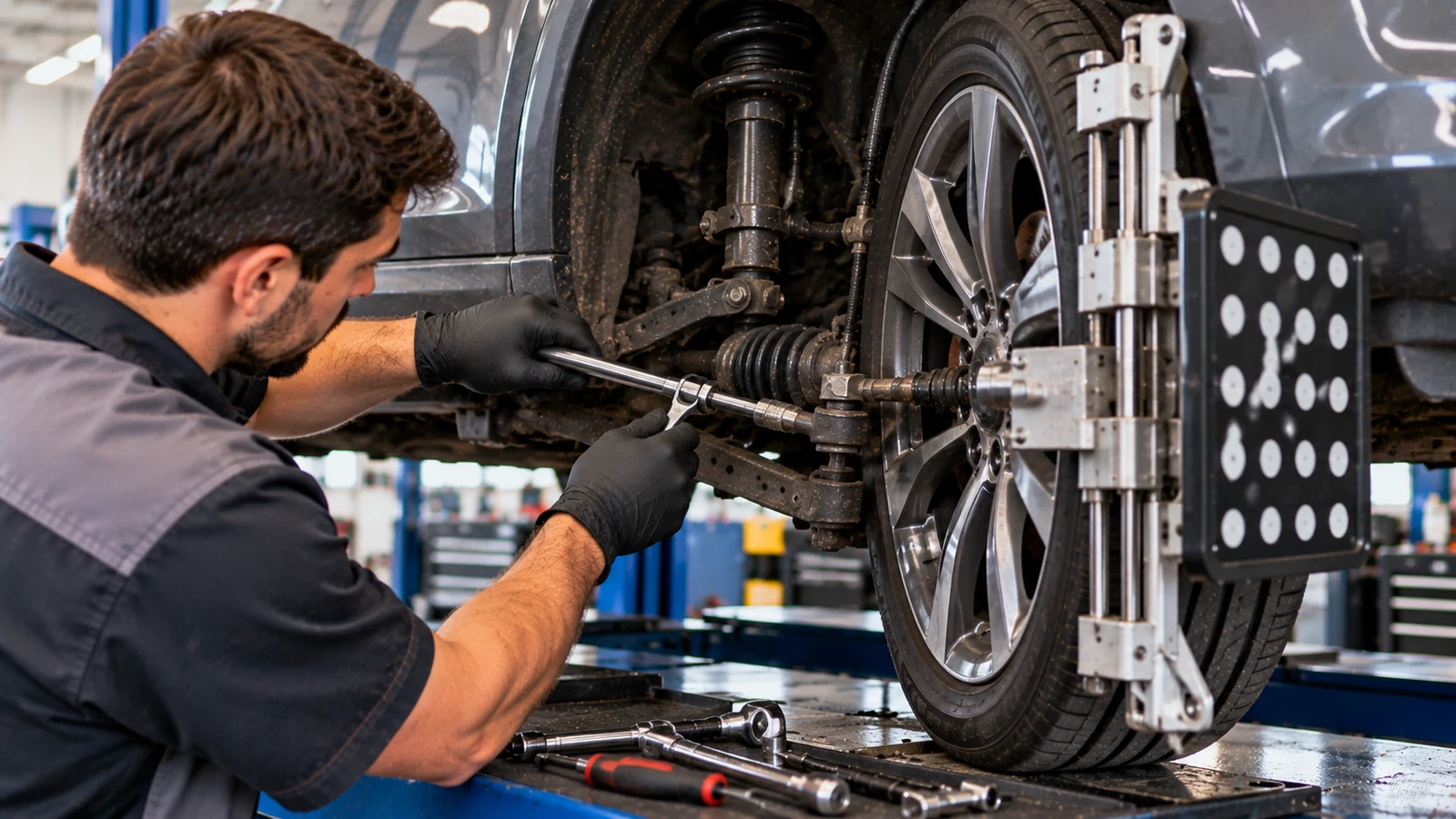
Wheel alignment measures and corrects the angles that determine how the tires sit and track relative to the vehicle. The three terms you will hear most often are toe, camber, and caster.
Toe controls how the tires point
Toe describes whether the front edges of the tires point slightly toward each other or away from each other. Incorrect toe is a major cause of tread feathering and rapid tire wear. It is commonly adjusted through the steering tie rods.
Camber controls the tire’s vertical tilt
Camber is the inward or outward tilt of the tire when viewed from the front of the vehicle. Excessive positive or negative camber can wear one shoulder of the tire faster than the rest.
Not every vehicle provides a simple factory camber adjustment. Some designs use eccentric bolts or other adjusters, while others may require repairing a bent or worn component before the angle returns to specification.
Caster affects steering stability and return
Caster describes the forward or rearward slope of the steering axis when viewed from the side. It influences straight-line stability and how naturally the steering wheel returns toward center.
Because suspension designs differ, the shop should compare measured values against the correct specifications for the exact vehicle rather than relying on a generic target.
2-Wheel, Thrust-Angle, or 4-Wheel Alignment: Which One Fits?
A 2-wheel alignment is not automatically inferior to a 4-wheel alignment. The correct service depends on what can actually be adjusted on the vehicle.
If the rear suspension is fixed and non-adjustable, the technician may only need to adjust the front while checking the rear thrust line. If the vehicle uses independent rear suspension with adjustable rear toe or camber, a full 4-wheel alignment is usually the more complete approach because the rear wheels must be positioned correctly before the front is finalized.
This is why vehicle-specific repair information matters. A shop can measure all four wheels, but the manual tells the technician which angles are adjustable, where the adjusters are located, and what specifications apply.
Passenger and family vehicle examples
AutoServicePlus covers a wide range of common passenger cars and family vehicles. These examples show why you should check the exact model and chassis before choosing an alignment service.
| Vehicle coverage | Practical alignment use |
|---|---|
| Ford workshop manuals and the 2005-2007 Ford Five Hundred AWD manual | Useful for confirming front and rear geometry limits, adjustment points, and torque values before aligning an AWD sedan. |
| Toyota factory manuals and the 2015 Toyota Camry XV50 workshop manual | Helps verify the correct alignment specification for the exact Camry chassis after tire, steering, or suspension work. |
| Honda workshop manuals and the 2011-2017 Honda Odyssey manual | Provides a model-specific reference for geometry checks on a family vehicle that may see heavy passenger and cargo use. |
| Hyundai repair manuals and the 2003-2008 Hyundai Tiburon GK manual | Helps identify the correct adjustment procedure and suspension fastener information for this chassis. |
| Volkswagen workshop manuals and the 2010-2019 Volkswagen Jetta Mk6 manual | Useful when checking model-year-specific alignment values and any related suspension or subframe procedures. |
| Mazda factory manuals and the 2019 Mazda CX-3 workshop manual | Gives technicians a vehicle-specific source for alignment limits, fastener torque, and suspension inspection information. |
Why Alignment Quotes Vary So Much
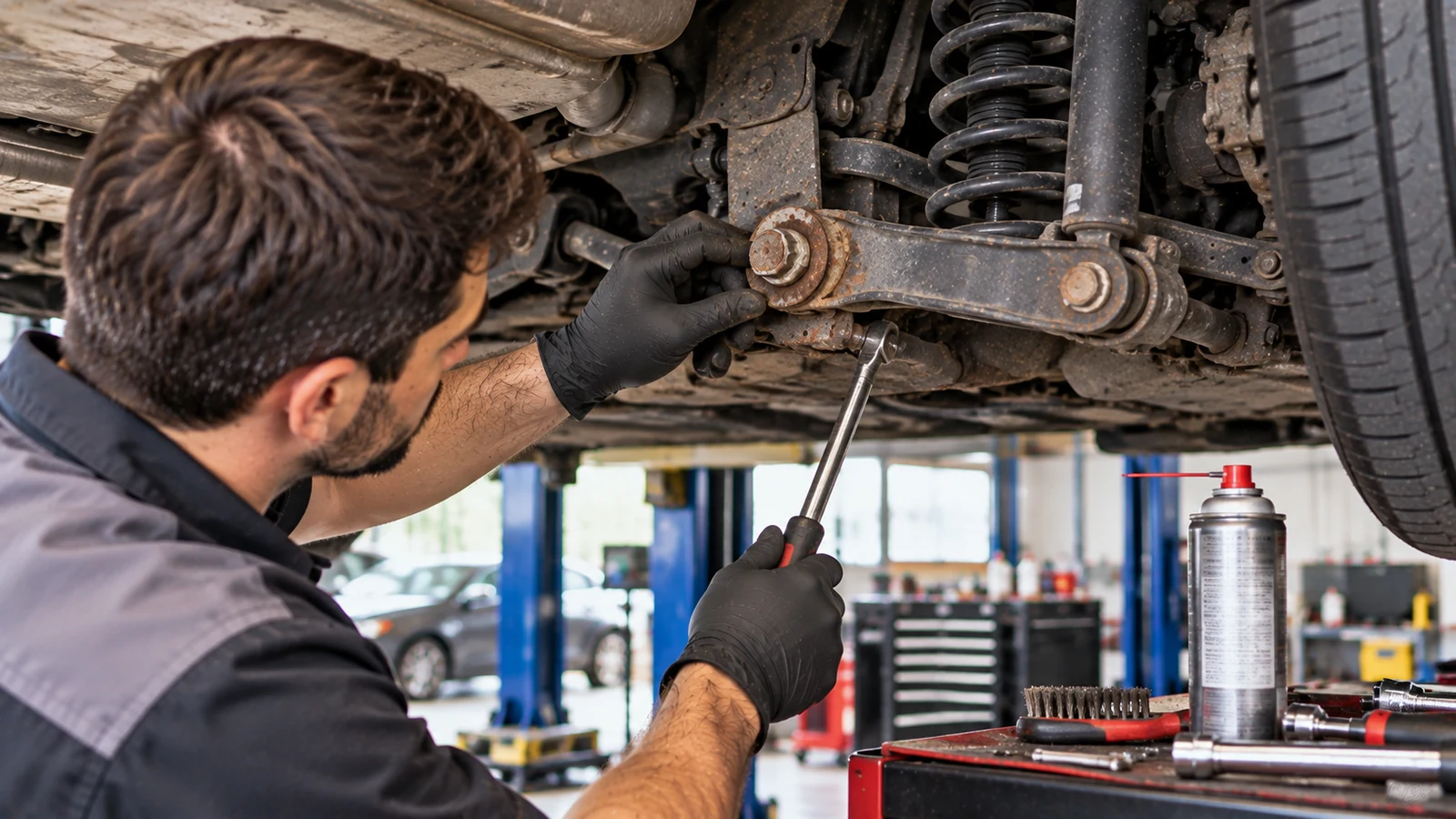
Two vehicles can arrive at the same shop with similar tire wear and leave with very different bills. The alignment machine itself is only part of the job.
Shop type and labor rate
Reference pricing puts dealership labor around $150 to $220 per hour, independent shops around $100 to $160 per hour, and national tire chains around $80 to $130 per hour. Those hourly rates apply to any extra work needed before completing the alignment.
A straightforward alignment may stay near the advertised package price. A vehicle that needs seized hardware freed, worn parts replaced, or extra diagnostic work can quickly exceed it.
Rusted or seized adjustment hardware
Tie-rod jam nuts and rear eccentric bolts can seize from corrosion. If a technician must spend extra time applying penetrating oil, heating hardware, or replacing damaged adjusters, labor costs increase.
The important point is that alignment cannot correct mechanical looseness. If a ball joint, tie-rod end, control-arm bushing, or wheel bearing allows the wheel to move under load, the geometry will not stay where the technician sets it.
Modified ride height and suspension changes
Lowering springs, lift kits, altered control arms, and other suspension changes can move alignment angles away from the factory range. In those cases, the shop may need additional setup and adjustment time before it can determine whether the vehicle can be brought back within the intended geometry.
ADAS and steering-angle calibration
Modern driver-assistance systems can add a second stage to the job. If the vehicle requires steering-angle sensor, camera, or radar calibration after the mechanical alignment, the shop needs compatible diagnostic equipment and the correct calibration procedure.
This is one reason a $100 alignment and a $350 or $450 alignment invoice can both be reasonable, depending on the vehicle and the work actually required.
Performance and precision chassis examples
Some vehicles require more precise chassis setup, ride height, loading conditions, or all-wheel geometry. The correct workshop manual helps the shop follow the model-specific procedure rather than treating every car the same.
| Vehicle coverage | Practical alignment use |
|---|---|
| Chevrolet service manuals and the 2014-2017 Corvette C7 workshop manual | A useful reference for performance-chassis geometry, adjustment procedures, and suspension fastener specifications. |
| BMW factory manuals and the 1999-2000 BMW 528i E39 manual | BMW procedures may specify vehicle loading before measurement, so the model manual should be checked before the alignment begins. |
| Audi workshop manuals and the 1988-1991 Audi 90 manual | Helps confirm the correct toe and suspension setup for the exact Audi platform rather than using a generic AWD target. |
| Porsche repair manuals and the 1983 Porsche 911 SC Cabriolet manual | Useful for checking ride-height-related preparation, rear geometry, and adjustment procedures on an older performance chassis. |
| Acura factory manuals and the 2009-2014 Acura TL AWD manual | Gives a model-specific reference when all-wheel-drive geometry and suspension work need to be checked together. |
| Lexus repair manuals and the 2006-2012 Lexus IS 250 RWD manual | Helps verify factory angle ranges, adjuster locations, and fastener requirements for the RWD chassis. |
When AWD, SUVs, and Solid Axles Change the Alignment Plan
Drivetrain alone does not determine the correct alignment service, but rear suspension design matters a great deal. A vehicle with an adjustable independent rear suspension can require a very different procedure from a truck or 4x4 with a solid axle.
For a solid rear axle, rear toe and camber may not be conventional service adjustments. The technician may instead check the rear axle position and thrust line, then adjust the front. On an independent rear suspension, the rear toe and camber may need correction before finalizing the front alignment.
AWD vehicles also benefit from accurate four-wheel tracking because all four tires are part of the drivetrain system. The vehicle’s service information should still provide the exact procedure and allowable specifications.
AWD, 4x4, and utility vehicle examples
| Vehicle coverage | Practical alignment use |
|---|---|
| Nissan repair manuals and the 1993-1998 Nissan Quest workshop manual | Useful for confirming which rear angles are adjustable and which front settings to correct on the Quest platform. |
| Jeep factory manuals and the 1996-2002 Jeep Wrangler manual | Helps distinguish solid-axle toe, steering-wheel centering, and caster-related checks from a typical independent-suspension alignment. |
| Subaru workshop manuals and the 2015 Subaru WRX STI manual | Provides a model-specific reference for four-wheel geometry on an AWD performance platform. |
| Mercedes-Benz workshop manuals and the 2004-2005 E 320 4MATIC manual | Useful for checking the exact chassis procedure, factory angle limits, and any required setup steps before measurement. |
| Volvo workshop manuals and the 2006-2010 Volvo S40 T5 AWD manual | Helps verify front and rear geometry and suspension inspection requirements for the AWD model. |
| Land Rover service manuals and the 2015-2017 Discovery Sport L550 manual | Provides vehicle-specific information for suspension setup, alignment specifications, and related service procedures on the L550 platform. |
Symptoms: Alignment Problem or Something Else?

Not every steering or vibration complaint means the car needs an alignment. Reviewing the symptom before authorizing service can prevent unnecessary work.
| Symptom | Alignment may be involved? | What else should be checked |
|---|---|---|
| Steering wheel is off-center while driving straight | Yes | Inspect steering and suspension parts before adjustment |
| Vehicle consistently pulls or drifts on a level road | Yes | Check for worn or loose steering and suspension components |
| Inner or outer shoulder tire wear | Yes | Camber, toe, bushings, and related suspension condition |
| Feathered or heel-toe tire tread | Yes | Toe setting and steering linkage condition |
| Steering feels loose or wanders | Possibly | Tie rods, ball joints, bushings, and wheel bearings |
| Vibration mainly at highway speed | Not necessarily | Tire balance and steering or suspension condition |
| Vibration mainly while braking | Usually not an alignment diagnosis | Brake rotor condition should be investigated separately |
Alignment is most convincing when steering position, vehicle tracking, and tire wear patterns all point to a geometry problem. Vibration by itself deserves a broader diagnosis.
DIY Checks Before You Pay for an Alignment
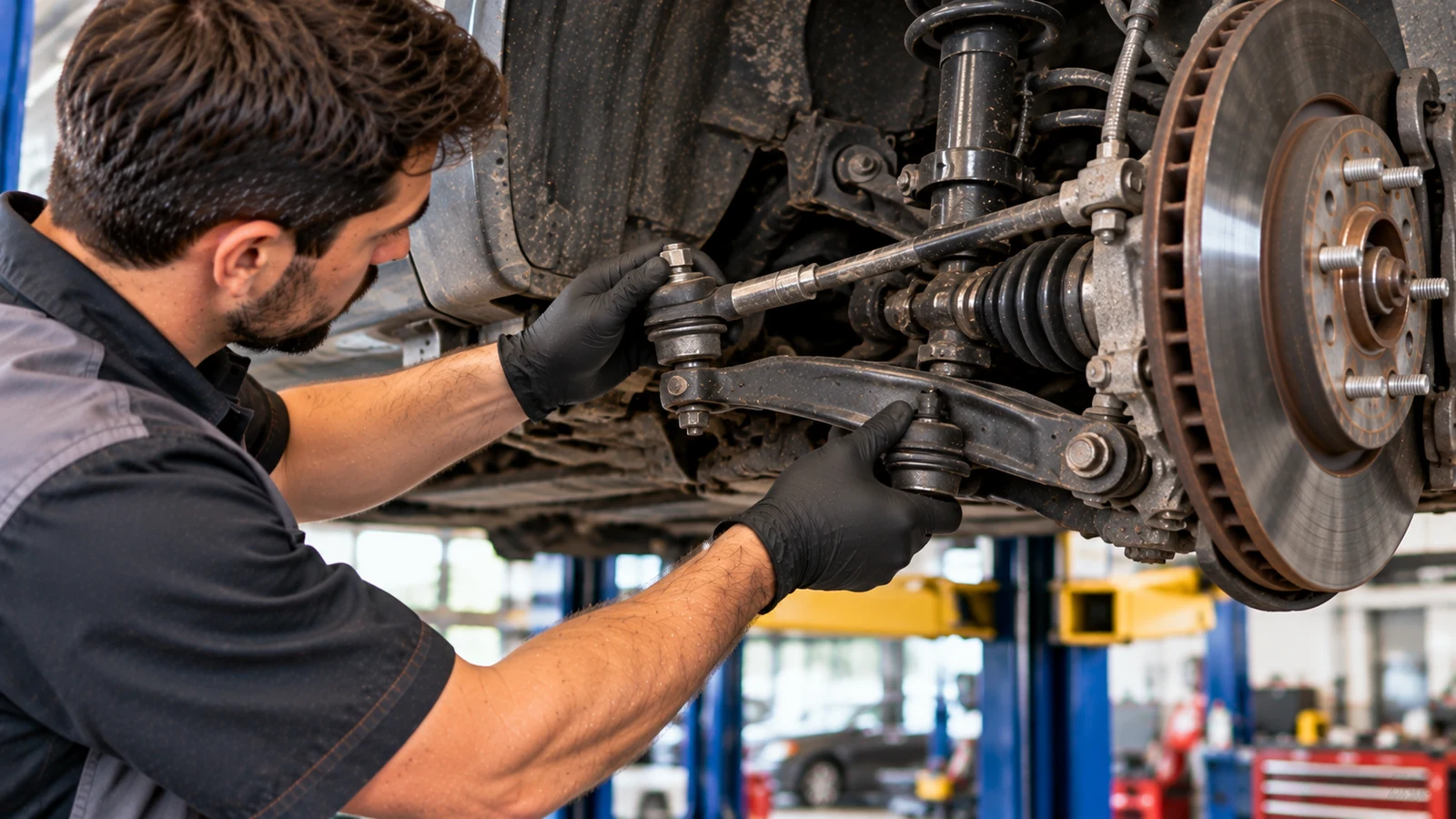
A home inspection can help you avoid paying for an alignment you can’t complete because of worn parts. You do not need a professional alignment rack to check the basics.
- Inspect the tread across the full width of each tire. Look for feathering, heel-toe wear, or one-sided shoulder wear.
- Check steering and suspension looseness. Worn tie-rod ends, ball joints, control-arm bushings, or wheel bearings can prevent an accurate setting.
- Look for impact-related suspension issues. If a curb strike or other impact has pushed camber or another angle out of range, the damaged or displaced part may need attention before alignment.
- Note recent steering or suspension work. Steering rack, tie-rod, control-arm, bushing, or related repairs are good reasons to verify alignment afterward.
- Tell the shop about modifications. Lift kits, lowering springs, and other suspension changes can affect the geometry and the amount of adjustment required.
- If attempting a DIY baseline check, work on level ground. String-line measurements are highly sensitive to setup error and wheel runout.
This inspection is not meant to replace the alignment machine. It is to make sure the vehicle is mechanically ready for alignment.
DIY Alignment vs. Professional Alignment
DIY string alignment can be useful for a rough baseline, especially after steering work or on a project vehicle. For a daily driver, professional equipment offers much better repeatability and access to complete four-wheel measurements.
| Comparison | DIY string/gauge setup | Professional computerized alignment |
|---|---|---|
| Initial equipment cost | About 30–80 | Shop equipment can cost 15,000–50,000+ |
| Cost per alignment | No shop charge after buying tools | Commonly 100–200+ for a 4-wheel service |
| Typical accuracy from source | About ±1/16 inch or 0.10° toe | About ±0.01° |
| Time | Roughly 2-4 hours | Roughly 30-60 minutes in normal conditions |
| Camber/caster measurement | Requires extra gauges | Measured by the alignment system |
| ADAS or SAS calibration | Not available with a basic string setup | May be available with appropriate diagnostic equipment |
| Best use | Baseline setup, race or off-road adjustments, pre-checks | Daily drivers and vehicles requiring exact OEM settings |
A DIY check can tell you that the vehicle is badly out of range, but it does not replace model-specific specifications, professional measurement, or electronic calibration where required.
How Factory Workshop Manuals Help Before and After Alignment
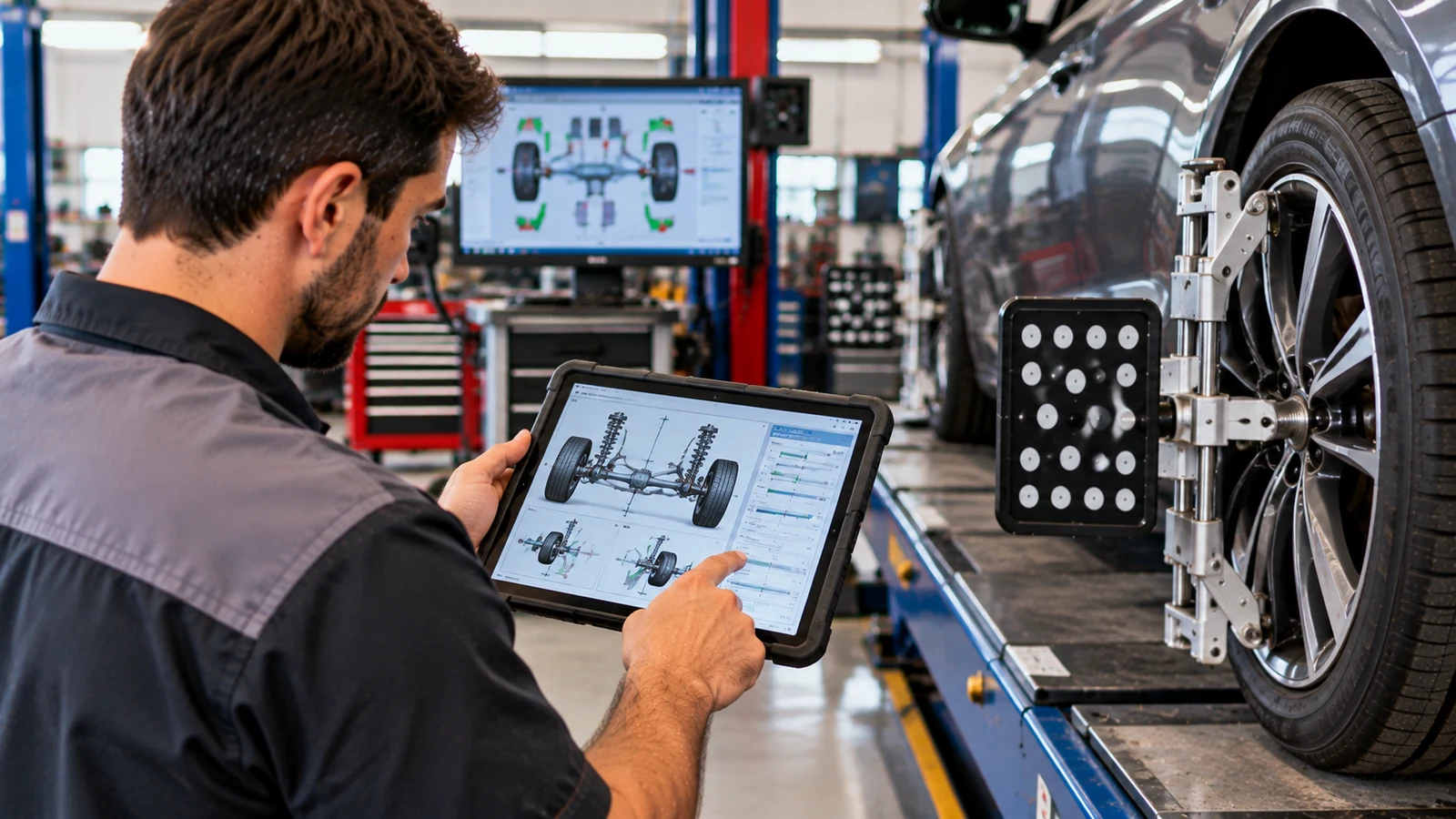
A factory workshop manual is most valuable when the alignment is part of a larger repair rather than a simple tire-shop visit. It gives the technician the information needed to prepare the vehicle correctly and verify that the final settings match the manufacturer’s procedure.
Useful manual information can include:
- Exact toe, camber, and caster limits, including nominal values and allowable ranges.
- Fastener torque specifications for tie-rod jam nuts, eccentric bolts, strut-to-knuckle hardware, and related suspension parts.
- Pre-alignment setup requirements, such as specified vehicle loading or ride-height checks where the manufacturer calls for them.
- Suspension inspection procedures for ball joints, wheel bearings, bushings, and steering linkage.
- Steering-angle sensor reset steps after mechanical alignment.
- ADAS calibration procedures where camera or radar systems must be recalibrated after the chassis geometry changes.
This is especially important after suspension replacement, subframe work, steering rack replacement, or another repair that changes wheel position. The manual does not replace the alignment rack, but it tells the technician what the rack readings should be and what procedure to follow to achieve them.
When a Basic Alignment Is Enough, and When It Is Not
A basic alignment is often reasonable when the vehicle has no loose suspension parts, the tires are in usable condition, and the required angles can be adjusted normally.
A more involved diagnostic or repair visit makes sense when:
- the alignment readings cannot be brought into specification;
- an adjuster is seized or damaged;
- a control arm, tie rod, ball joint, bushing, or wheel bearing has play;
- the vehicle has been lowered, lifted, or otherwise modified;
- the steering wheel remains off-center after adjustment;
- the vehicle has ADAS or steering-angle systems that require calibration;
- tire wear returns quickly after a recent alignment.
In those situations, paying only for another alignment may not solve the root cause. You must address the underlying mechanical or calibration issue first.
Conclusion
For most drivers asking how much a car alignment costs, a realistic starting point is $50 to $100 for a front alignment and $100 to $200+ for a 4-wheel alignment. The quote rises when the vehicle has worn or seized suspension parts, modified ride height, complex front and rear geometry, or ADAS calibration requirements.
The cheapest alignment isn’t always the best value, and the most expensive quote isn’t automatically excessive. Confirm what service the vehicle needs, repair worn parts first, and use the correct model-specific workshop information when factory geometry, torque values, setup procedures, or electronic calibration are part of the job.
Frequently Asked Questions
How Much Does A Standard Car Alignment Cost?
A front-wheel alignment typically costs $50 to $100. A complete 4-wheel alignment generally costs $100 to $200+. Vehicles that need ADAS or steering-angle calibration can add $150 to $300+.
How Do I Know If My Car Needs an Alignment?
Common signs include an off-center steering wheel, consistent pulling or drifting on a level road, feathered tread, rapid inner or outer shoulder wear, and a wandering steering feel. Perform a suspension inspection if there is looseness or impact damage.
What Is the Difference Between 2-Wheel and 4-Wheel Alignment?
A 2-wheel alignment primarily corrects the front geometry and is appropriate when the rear suspension is not adjustable. A 4-wheel alignment measures all four wheels and adjusts rear geometry where the vehicle design allows it, then sets the front relative to the corrected rear thrust line.
Does Wheel Alignment Include Tire Balancing?
No. Alignment changes suspension and steering geometry. Tire balancing corrects uneven mass in the wheel-and-tire assembly. Shops may sell both services together, but they solve different problems.
How Long Does A Professional Wheel Alignment Take?
A normal computerized alignment often takes 30 to 60 minutes. It can take longer if adjustment hardware is seized, worn suspension parts must be addressed, or ADAS calibration is required.
Is A Lifetime Alignment Package Worth It?
The reference price range is about $180 to $250. It can make financial sense for drivers who keep a vehicle for several years, drive high annual mileage, or regularly travel on rough roads. The value depends on the provider’s terms and how often you would otherwise pay for an alignment.
Can I Align A Car Myself?
You can perform a basic string or gauge alignment at home, especially for rough toe setup, but the source estimates a DIY setup at $30 to $80 and several hours of work. A professional alignment provides more precise multi-wheel measurement and can support electronic calibration where the shop has the required equipment.