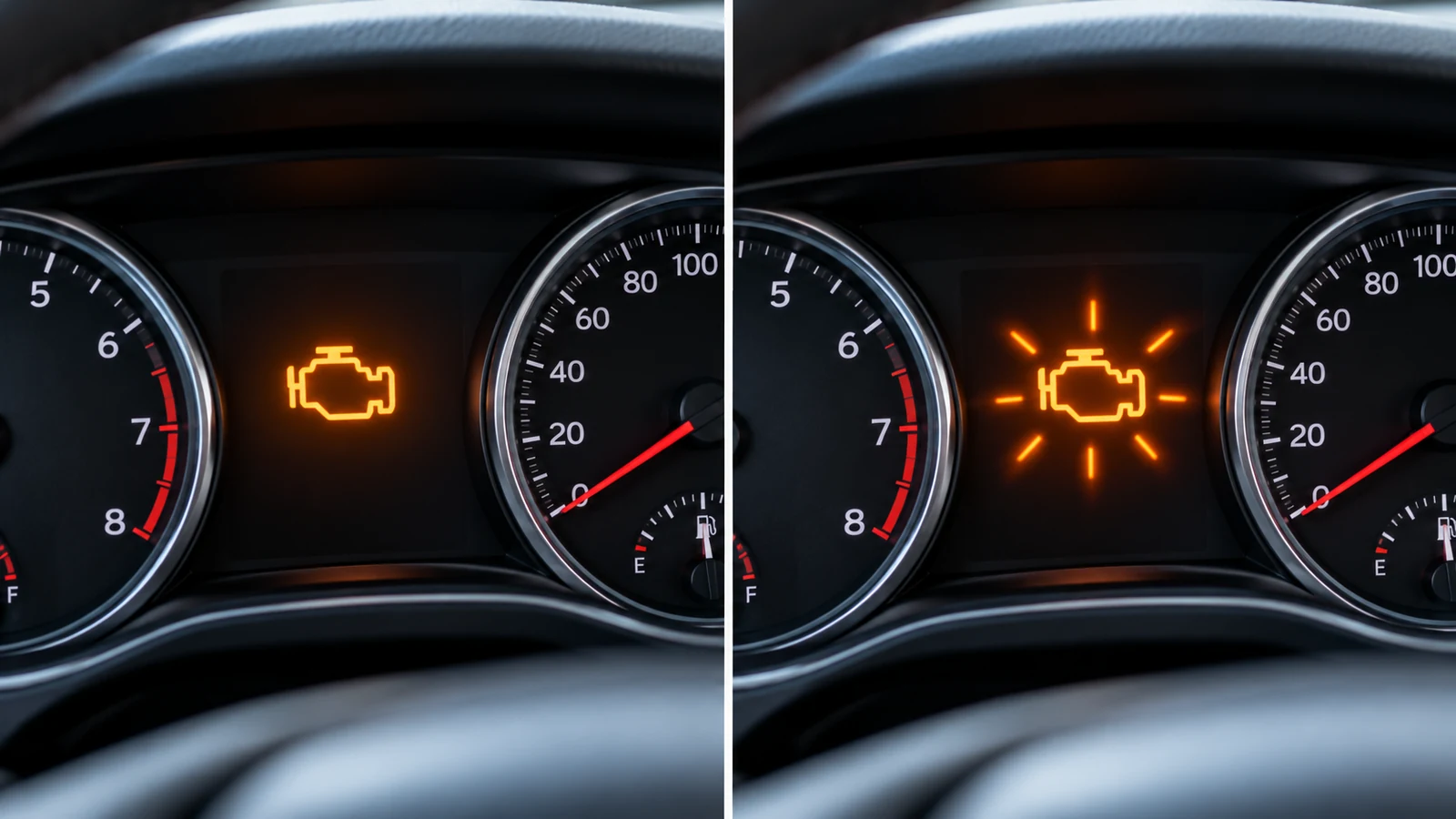
A check engine light can mean anything from a minor emissions leak to a misfire serious enough to damage the catalytic converter. The quickest way to judge the urgency is to look at how the light behaves.
A steady check engine light usually means the powertrain control system has confirmed a fault and stored a diagnostic trouble code. If the vehicle runs normally and there are no red warning lamps, you generally have time to arrange diagnosis soon. A flashing check engine light is different. On most gasoline vehicles, it indicates an active misfire severe enough to put the catalytic converter at risk, so reduce engine load and stop driving as soon as it is safe.
The light itself does not tell you which part has failed. Proper diagnosis still requires the stored codes, freeze frame data, symptom checks, and, when needed, the factory test procedure for the exact vehicle.
Steady and Flashing Lights Mean Different Urgency
| Check Engine Light Behavior | What It Usually Means | Driving Guidance | Best First Step |
|---|---|---|---|
| Steady or solid | A fault has been confirmed and stored | Usually acceptable for a short period if the vehicle runs normally | Read the codes and diagnose soon |
| Flashing while the engine runs | An active fault, usually a catalyst-damaging misfire | Stop driving as soon as you can do so safely | Reduce load, pull over, shut the engine off |
| Flashes under load, then turns steady | Misfire severity crossed the damaging threshold under load | Treat it as a flashing-light event | Avoid further load and diagnose promptly |
| Comes on, then later turns off | An intermittent fault may no longer be occurring | Do not assume the problem is gone | Scan for stored, pending, and history information |
| Illuminates at key-on before starting | Normal bulb-check behavior on most vehicles | No concern if it goes out after starting | Observe the normal startup sequence |
The practical difference is time. A steady light usually gives you time to investigate. A flashing light means the vehicle may be causing expensive secondary damage while you continue driving.
Key Takeaways
- A steady MIL means a fault has been confirmed and stored. Diagnose it soon, but the light alone usually does not mean an immediate roadside emergency.
- A flashing MIL while the engine is running usually points to a severe active misfire that can overheat the catalytic converter.
- A DTC identifies the failed system or monitor. It does not prove which part should be replaced.
- Preserve codes and freeze frame data before clearing memory. Resetting the light can erase diagnostic evidence and reset emissions readiness.
What to Do in the First Five Minutes

Before reaching for a scanner or buying parts, decide whether the vehicle is safe to keep running.
If The Check Engine Light Is Steady
Ease off aggressive driving and watch how the vehicle behaves. If it idles smoothly, accelerates normally, the temperature gauge is stable, and no red warning is present, a short drive is generally reasonable.
Check for simple clues. If the light appeared soon after refueling, make sure the fuel cap is installed and tightened correctly. Look for an air-intake duct left loose after service, an obviously unplugged electrical connector, or a recent repair that could be related.
A steady light becomes more urgent if the engine shakes, hesitates, smells strongly of raw fuel, loses power, overheats, or the light starts flashing.
If The Check Engine Light Is Flashing
Reduce throttle immediately. Avoid hard acceleration, towing, steep climbs, and high engine load. Check the temperature gauge and other warning lamps, then move to a safe stopping place.
Once safely stopped, shut the engine off and note what was happening when the flashing began. Vehicle speed, engine load, whether the engine was hot or cold, and whether the problem appeared only during acceleration can all help later.
Do not clear the codes before diagnosis. A flashing event can store valuable misfire data and freeze frame information that may disappear when memory is reset.
If A Red Warning Light Appears At The Same Time
A red oil-pressure, coolant-temperature, brake, or charging warning can take priority over a steady amber check engine light. For example, a steady MIL alongside an overheating warning should be treated as an overheating problem first.
The check engine light is an emissions and powertrain warning. It should not be used to overrule a more immediate red safety or engine-protection warning.
| Other Warning | What It Can Indicate | Practical Priority |
|---|---|---|
| Red oil-pressure warning | Oil pressure may be below a safe level | Stop the engine as soon as safely possible |
| Red coolant-temperature warning | Engine overheating | Pull over and shut down safely |
| Red brake-system warning | Low fluid, parking-brake status, or hydraulic fault | Check immediately before continuing |
| Battery/charging warning | Charging-system fault | Minimize driving because the vehicle may stall as voltage falls |
| ABS warning | Anti-lock braking fault | Brake braking may remain, but diagnose soon |
| Transmission warning or reduced-power message | Powertrain protection strategy or transmission fault | Drive cautiously only if safe; stop if operation becomes abnormal |
If the vehicle enters reduced-power or limp mode with the MIL on, do not treat the power loss as a separate nuisance. The controller may be deliberately limiting torque or engine speed to protect the powertrain, and the stored codes are needed to identify why.
Why the Same Lamp Can Be Steady, Flashing, or Intermittent
The check engine light is formally the malfunction indicator lamp (MIL). The vehicle’s onboard diagnostic system controls it. The engine or powertrain controller continuously runs monitors for systems such as misfire detection, fuel control, oxygen-sensor operation, catalytic-converter efficiency, evaporative emissions, airflow measurement, and other emissions-related functions.
On U.S.-market gasoline passenger vehicles and light trucks, OBD-II became standard from the 1996 model year. European EOBD requirements followed later for petrol and diesel passenger cars. The details vary by manufacturer, but the steady-versus-flashing distinction is broadly useful on modern combustion-engine vehicles.
How A Steady Light Gets Switched On
Many faults use logic that requires a problem to be detected more than once before the MIL stays on. The first failure may create a pending code. If the monitor fails again under the required conditions, the controller can confirm the DTC and illuminate the lamp.
That is why a steady light doesn’t always mean the fault happened the moment you first saw it. The controller may have been watching the condition across more than one drive.
Why A Severe Misfire Makes The Light Flash
During a misfire, some of the fuel delivered to a cylinder may leave the combustion chamber unburned. That fuel enters the exhaust and can react inside the catalytic converter, sharply raising converter temperature.
When the controller calculates that the misfire rate is high enough to threaten the catalyst, it can command the MIL to flash. If the misfire rate later falls below that damaging threshold, the flashing may stop, and the lamp may remain steady because the fault is still stored.
A light that flashes only during hard acceleration or hill climbing therefore should not be dismissed because it becomes steady at cruise. Engine load often changes how severe the misfire becomes.
Startup Bulb Checks and Lights That Switch Off By Themselves
With the ignition on and the engine not yet running, the MIL normally illuminates as part of the bulb check. It should go out after the engine starts if no qualifying fault is present.
Some vehicles also use specific key-on, engine-off blink patterns to report emissions readiness. A blink pattern with the engine off is not the same as a flashing MIL while the engine is running, so check the vehicle-specific owner’s manual or service information.
An intermittent fault can also turn the lamp off after repeated successful drive cycles. OBD-II logic can switch the MIL off after three consecutive drive cycles in which the fault does not reappear under the required conditions, while the code history may remain in memory for roughly 40 warm-up cycles afterward. That is why you should still scan a light that disappears on its own.
Common Causes Behind Each Check Engine Light Pattern
The light pattern helps with urgency, but it is not a parts diagnosis. The same symptom can have several electrical, fuel, air, or mechanical causes.
Faults more often associated with a steady light
Common steady-light causes include:
- A loose, damaged, or missing fuel cap causing an EVAP leak.
- Cracked EVAP hoses, a sticking purge valve, or a vent-valve fault.
- Oxygen-sensor circuit or response problems.
- Mass-airflow sensor contamination, intake leaks, or unmetered air.
- A thermostat that keeps the engine below expected operating temperature, often associated with P0128.
- Catalyst-efficiency faults such as P0420 or P0430.
- Mild or intermittent misfires that have not reached the catalyst-damaging threshold.
- Wiring, connector, ground, or sensor-circuit faults.
The exact component locations and test values are vehicle-specific. For example, Toyota workshop manuals can provide the manufacturer sequence for an EVAP, oxygen-sensor, or fuel-trim fault, while the 2018-2023 Toyota RAV4 XA50 factory workshop manual is the more useful reference when the diagnosis must match that exact platform.
The same principle applies to Ford service documentation and a model-specific reference such as the 2013 Ford Fusion AWD workshop manual. A generic P0171 definition may say the mixture is lean, but the factory procedure identifies the expected data, test conditions, connector locations, and next checks for that vehicle.
For European vehicles, Volkswagen workshop manuals and the Volkswagen Golf Mk8 factory repair manual help translate a generic emissions symptom into a platform-specific diagnostic path. The same applies to BMW workshop information and the BMW 3 Series F30 factory manual.
Faults commonly associated with a flashing light
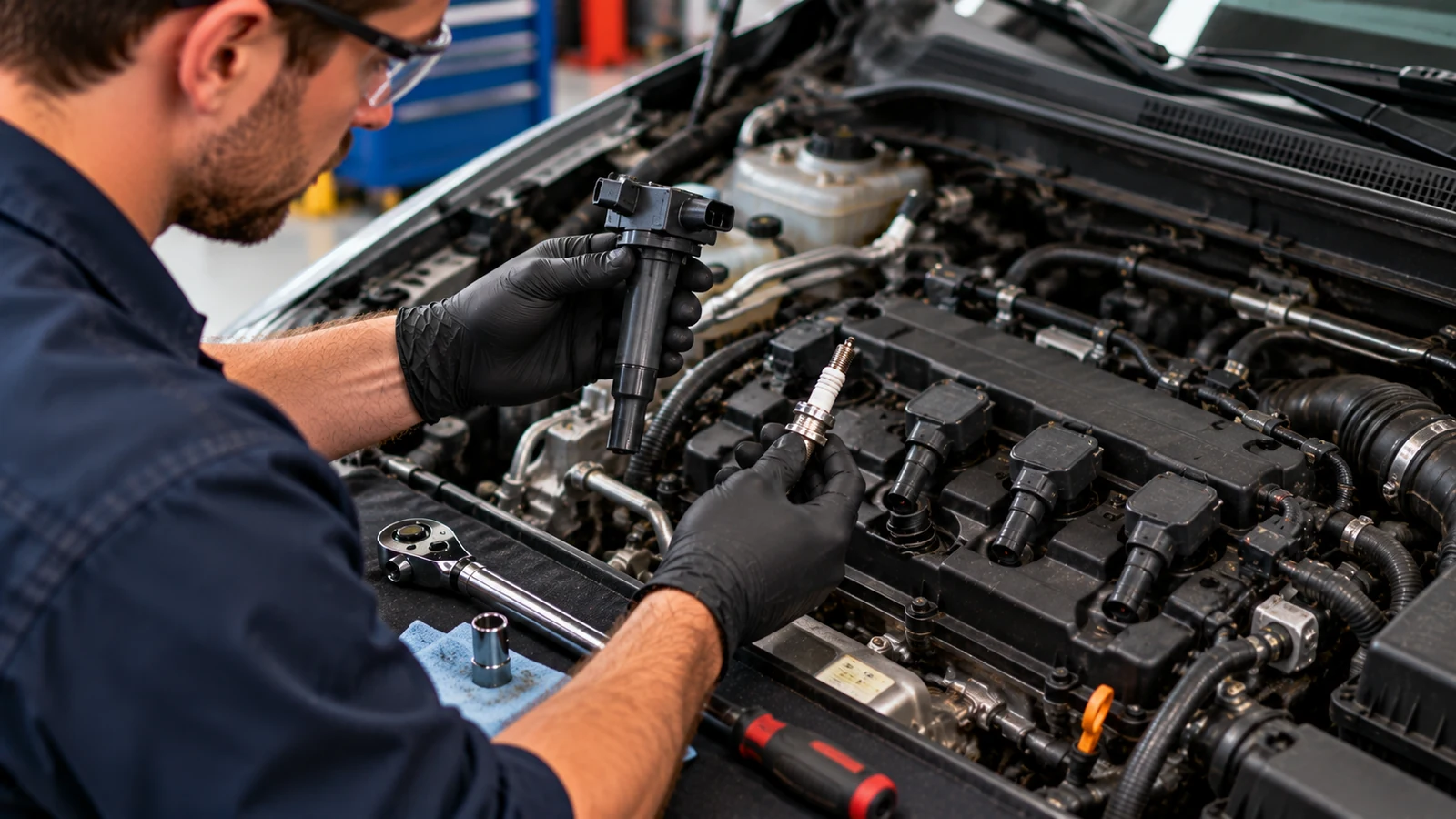
A flashing MIL is most commonly linked to a severe active misfire. Likely causes include:
- A failed ignition coil or coil-on-plug unit.
- A worn, fouled, damaged, or incorrectly gapped spark plug.
- A stuck, restricted, electrically faulty, or leaking fuel injector.
- A large vacuum or intake leak affecting one cylinder or bank.
- Low compression caused by a mechanical engine fault.
- Damaged wiring, poor grounds, or connector problems in ignition or injector circuits.
Misfire DTCs commonly run from P0300, indicating random or multiple-cylinder misfire, through P0301 to P0308, where the last digit identifies a cylinder.
Do not assume a P0302 automatically means “replace cylinder 2 coil.” Swapping known-good components, checking spark plug condition, confirming injector operation, measuring compression when required, and inspecting wiring are more reliable than guessing parts.
Read the Codes Before Clearing Anything
A code reader is useful because it turns a warning lamp into diagnostic evidence. Connect the scan tool to the 16-pin diagnostic link connector, usually located under the dashboard, and record everything before erasing anything.
Pending, Confirmed, and Permanent DTCs
A pending code usually means a monitor has failed but has not yet met the conditions required to illuminate the MIL. A confirmed or stored code has met the criteria for the warning lamp. Many newer vehicles can also retain permanent codes that you can’t simply erase with a scan tool; they clear after you repair the fault and the relevant monitor runs successfully.
OBD-II codes follow a standard basic format. The first letter identifies the system, such as P for powertrain, and the following digits narrow the fault family and indicate whether the code is generic or manufacturer-specific.
Manufacturer-specific definitions matter. Hyundai workshop manuals can be useful when a generic scanner description is too broad, and the 2016 Hyundai Sonata Hybrid factory manual is the better reference when the fault involves that vehicle’s gasoline engine, hybrid controls, or related wiring.
Similarly, Kia workshop manuals can clarify enabling conditions and test sequences that a generic code list leaves out. For a vehicle-specific example, the 2019-2023 Kia Forte workshop manual can guide circuit checks, component locations, and repair verification for that platform.
Why Freeze Frame Data Matters
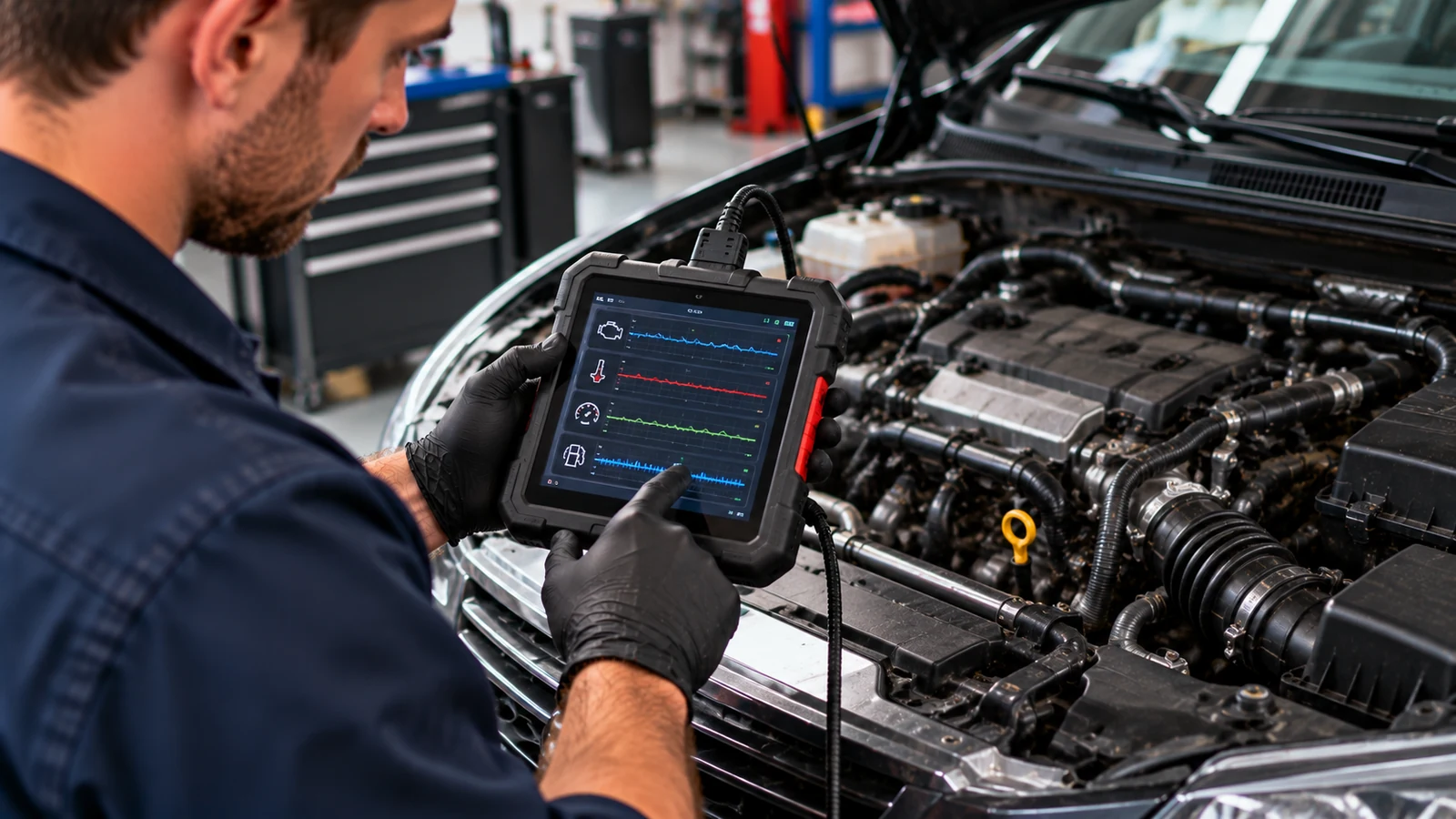
When a qualifying DTC sets, the controller can save a snapshot of operating conditions called freeze frame data. Depending on the vehicle and fault, it may include engine speed, vehicle speed, coolant temperature, calculated load, fuel trims, and other values.
A misfire at cold idle suggests a different diagnostic direction than one that appears only at highway speed under heavy load. That is why clearing codes first is a poor diagnostic habit.
For exact data interpretation, Nissan workshop manuals provide model-specific thresholds and procedures, while the 2024 Nissan Sentra B18 repair manual is the relevant reference for that model. Subaru factory workshop information serves the same purpose, with the 2020 Subaru Forester SK manual providing platform-specific diagnostic detail.
Common Code Families and Sensible Next Checks
| Code Family | What It Points Toward | Useful First Checks |
|---|---|---|
| P0300-P0308 | Random or cylinder-specific misfire | Plugs, coils, injector operation, vacuum leaks, compression, wiring |
| P0420/P0430 | Catalyst efficiency below threshold | Confirm misfires are fixed; inspect exhaust leaks and sensor behavior |
| P0171/P0174 | System too lean | Intake leaks, MAF readings, fuel delivery, fuel trims |
| P0440-P0457 | EVAP system faults | Fuel cap, EVAP hoses, purge valve, vent valve, leak testing |
| P0128 | Coolant temperature below regulating temperature | Thermostat operation and coolant-temperature data |
| P0130-P0167 | Oxygen-sensor circuits and heaters | Wiring, heater power/ground, sensor response |
| P0100-P0104 | Mass-airflow sensor circuit | Intake leaks, sensor contamination, wiring, signal values |
The DTC identifies the system or monitor that failed. It does not prove which component must be replaced.
A Better Diagnostic Workflow: Prove the Fault Before Buying Parts
A disciplined process reduces repeat repairs and protects useful evidence.
- Record the light behavior. Note whether it is steady, flashing, intermittent, or only flashes under load.
- Check other warnings and symptoms. Temperature, oil-pressure warnings, reduced power, rough running, smoke, and fuel odor can change the urgency.
- Inspect recent or obvious causes. Check the fuel cap, intake ducting, recently disturbed connectors, battery connections, and recent repair areas.
- Scan all modules that are relevant. Record confirmed and pending codes plus freeze frame data before clearing anything.
- Use the exact manufacturer definition. Generic code descriptions are a starting point, not the complete test procedure.
- Test the circuit or system before replacing parts. Confirm power, ground, signal, mechanical condition, and commanded operation as appropriate. If the procedure involves opening a pressurized fuel system, use the manufacturer’s pressure-release and fire-safety steps.
- Verify the repair. Recreate the conditions that set the fault, recheck pending codes, and allow the relevant monitor to run.
This is where exact service information prevents wasted parts. Mazda workshop manuals can provide the correct inspection sequence for fuel, ignition, and sensor faults, while the 2019 Mazda CX-3 factory manual narrows the procedure to that vehicle.
For larger gasoline SUVs, Chevrolet workshop documentation and the 2021-2023 Chevrolet Tahoe/Suburban repair manual can confirm connector views, cylinder identification, and system tests, rather than relying on generic diagrams. GMC workshop manuals and the 2020 GMC Sierra factory repair manual serve the same role for that truck platform.
The workflow also matters when the powertrain enters reduced-power mode. Dodge workshop manuals and the 2015-2018 Dodge Charger factory manual can help separate ignition, fuel, sensor, and control-system causes. For related Chrysler-platform diagnostics, Jeep workshop manuals and the 2014 Jeep Cherokee KL repair manual provide model-specific procedures rather than a one-size-fits-all code interpretation.
Why Clearing the Light Is Not a Repair
Clearing codes with a scanner or disconnecting the battery may switch the warning off, but it does not correct the condition that set the code.
A reset can also erase freeze frame information and return emissions readiness monitors to incomplete. That matters during diagnosis and during OBD-based emissions inspection. A lit MIL can cause an inspection failure, while too many incomplete monitors can lead to a rejection and a return visit. Readiness often requires multiple trips and mixed driving conditions to complete again, and some vehicles can take several days. A battery disconnect may also trigger model-specific relearn procedures.
After a real repair, the most useful confirmation is that the fault does not return and the required monitor completes successfully.
If a new sensor has already been installed and the same code comes back, do not immediately replace the sensor again. The real problem may be a connector, wiring fault, incorrect part, air leak, mechanical issue, or a required relearn or setup step.
This is also why disconnecting the battery as a first response is usually counterproductive. It can remove evidence you need and may create additional relearn work without changing the original fault.
Where Factory Workshop Manuals Matter Most
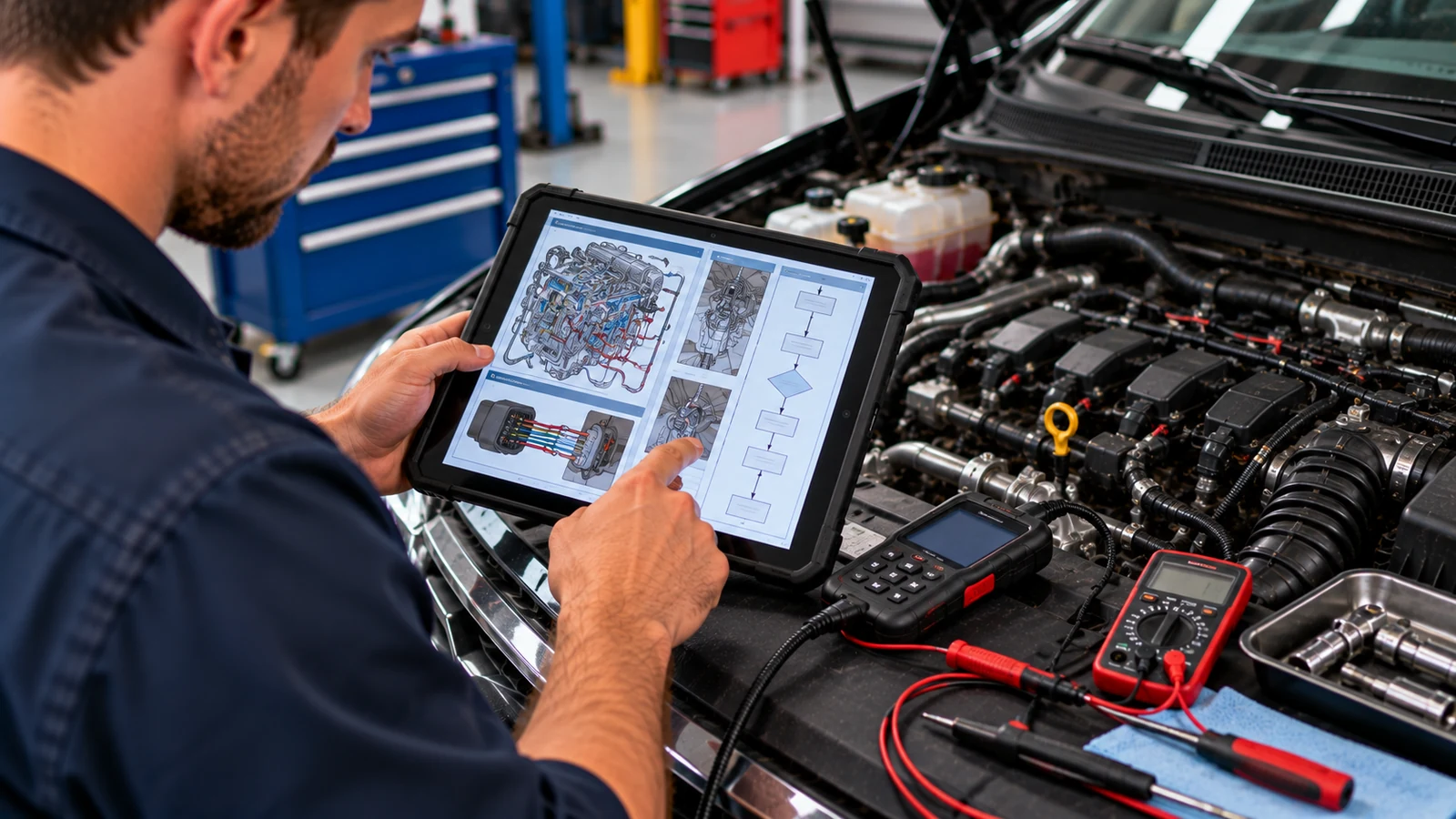
A generic scanner often gives a short definition. A factory workshop manual can add the conditions required for the monitor to run, the conditions that set the DTC, connector pinouts, component locations, expected measurements, test steps, torque values, and post-repair verification.
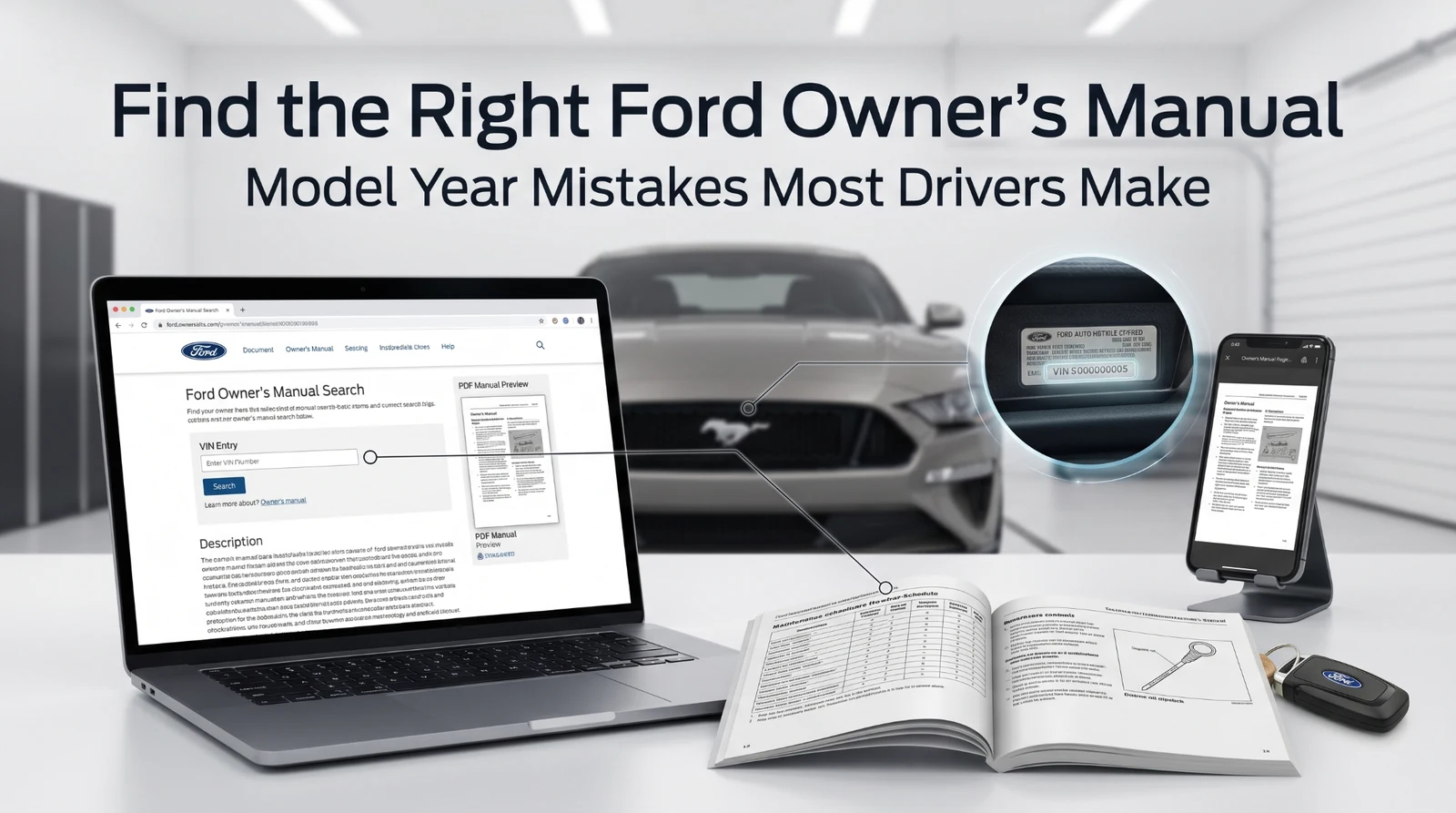
The manual must also match the correct model, engine, drivetrain, emissions package, and production version. Use the VIN and build information where the service documentation requires it. Mid-year changes can alter wiring, sensor locations, connector pinouts, or test values, so vehicle-specific information matters most once diagnosis goes beyond a basic visual check.
European Diagnostic Systems and Model-Specific Test Procedures
For VAG vehicles, Audi workshop manuals can support manufacturer-specific DTC and wiring work, while the 2013 Audi A4 Quattro Allroad 8KH factory manual provides the exact platform context.
For compact European platforms, Mini workshop manuals can clarify manufacturer-specific component locations and test routines, while the 2013 Mini Cooper S Paceman R61 factory manual provides model-specific testing information.
Diesel aftertreatment adds another layer. Mercedes-Benz workshop manuals can be used to distinguish engine-management faults from DPF, SCR, sensor, or dosing-system faults, while the 2013 Mercedes-Benz GL 350 BlueTEC factory manual is a relevant model-specific reference.
Likewise, Volvo workshop manuals can help when a fault requires manufacturer-specific circuit or component information. The 2013 Volvo S60 T5 AWD workshop manual gives a direct service reference for that configuration.
Special Cases: Hybrids, Diesels, and Complex Powertrains
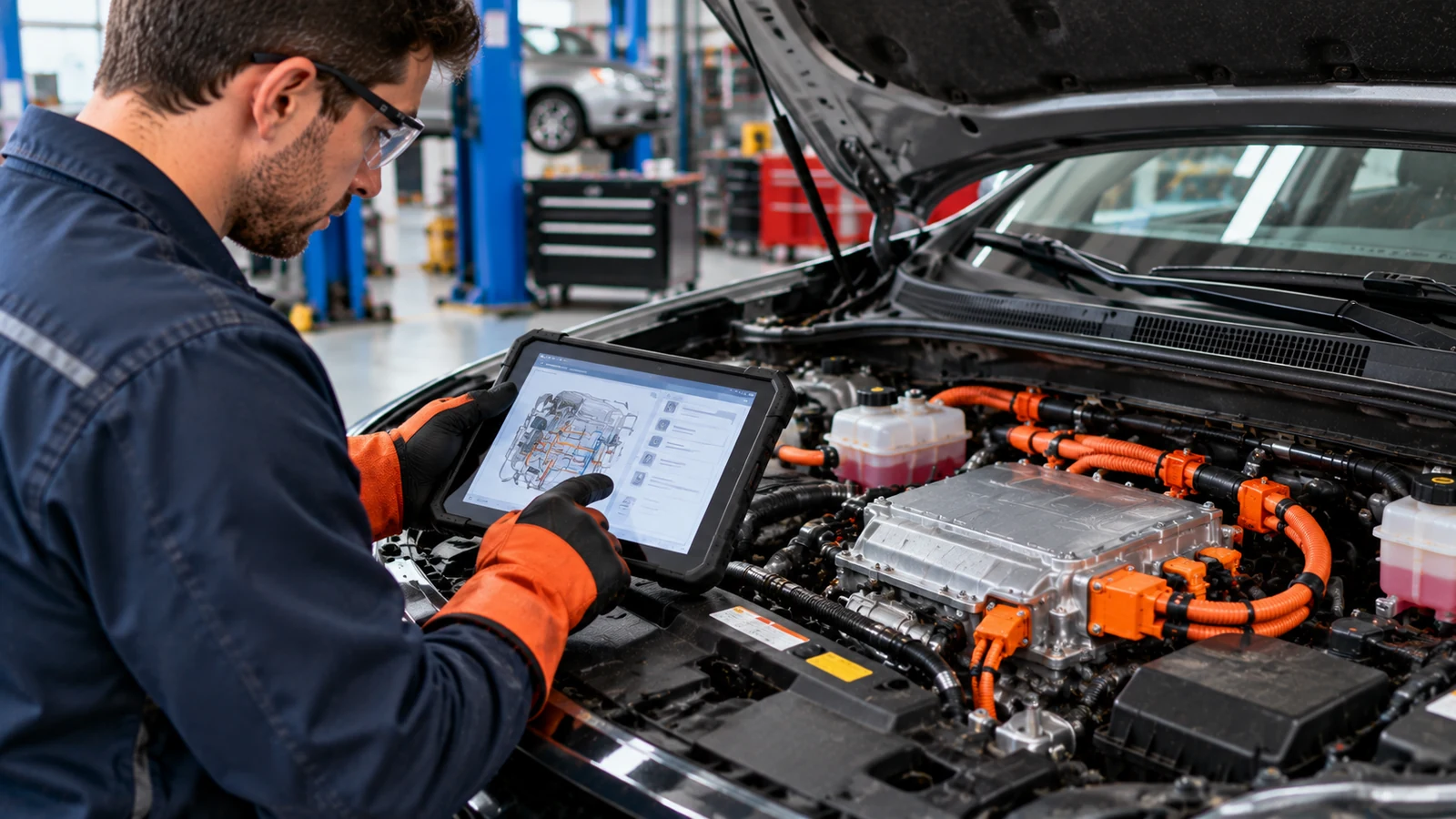
The steady-versus-flashing guidance is most directly associated with gasoline-engine misfire monitoring, but other powertrains can combine the MIL with additional warning lamps and messages.
Hybrids still have a gasoline engine and can set normal OBD misfire, fuel-control, and emissions codes. They also have high-voltage systems with separate warnings and safety procedures. A check engine light does not authorize working around orange high-voltage components without the manufacturer shutdown procedure and appropriate training.
Diesels may combine the MIL with DPF, SCR, DEF/AdBlue, or reduced-power warnings. The correct next step is to scan the vehicle and identify the actual system involved rather than assuming that a refill or regeneration will solve every warning.
Battery-electric vehicles don’t have combustion-engine misfires, so a flashing MIL caused by catalyst-damaging combustion misfire doesn’t apply in the same way. Manufacturers handle their faults through manufacturer-specific warning messages and diagnostic systems.
Modern premium and performance vehicles can also have tightly integrated engine, transmission, emissions, and chassis controls. Land Rover workshop manuals and the 2020-2023 Land Rover Defender factory manual help when you need to trace a warning across interconnected systems.
The same need for platform-specific data applies to Porsche workshop manuals and the 2015-2016 Porsche Macan repair manual, as well as Jaguar workshop manuals and the 2016-2019 Jaguar F-Pace X761 factory manual. In these cases, the code should be treated as the beginning of a test sequence, not as a replacement-parts instruction.
Preventive Maintenance That Reduces Avoidable Check Engine Lights
No maintenance plan can prevent every sensor or wiring failure, but basic service removes several common triggers:
- Replace spark plugs at the specified interval and use the correct plug type and gap.
- Keep the air filter properly seated and the intake system sealed.
- Tighten the fuel cap correctly after refueling and replace it if the seal is damaged.
- Maintain the battery and charging system so low voltage does not complicate electronic diagnosis.
- Repair known misfires, leaks, and sensor-circuit faults before they create secondary problems.
- Follow the model-specific maintenance schedule rather than relying on a universal interval.
Preventive work is especially valuable with misfires. A worn plug that first causes an occasional steady-light P030x code can become a severe under-load misfire later if the underlying problem is ignored.
Conclusion
A steady vs. flashing check engine light is mainly a difference in urgency. A steady light means a confirmed fault needs diagnosis soon. A flashing light, especially while the engine is running, usually means an active misfire severe enough to threaten the catalytic converter, so reduce load and stop safely.
After that first safety decision, treat the warning as diagnostic evidence. Save the codes and freeze frame, test the system instead of guessing at parts, and use vehicle-specific workshop information when the generic code definition is not enough. That approach gives DIY owners and technicians the best chance of fixing the actual fault without creating a second one.
Frequently Asked Questions
Can A Loose Gas Cap Make the Check Engine Light Flash?
Usually not. A loose or leaking fuel cap creates an evaporative-emissions fault, which normally produces a steady MIL. If the light is flashing while the engine is running, treat it as a possible severe misfire instead of assuming the fuel cap caused it.
How Far Can I Drive With A Flashing Check Engine Light?
Only as far as needed to reach a safe stopping place. Reduce engine load, pull over safely, and shut the engine off. Continuing to drive can overheat and damage the catalytic converter.
Is A Steady Check Engine Light Safe To Ignore For A Few Weeks?
No. A steady light is usually less urgent than a flashing light, but it still represents a confirmed fault. Delaying diagnosis can worsen fuel economy, performance, emissions, or another component problem.
Why Did the Light Flash During Acceleration and Then Stay Steady?
The misfire rate may have crossed the catalyst-damaging threshold while the engine was heavily loaded. When you eased off the throttle, the misfire rate dropped, and the flashing stopped, but the fault remained stored. Diagnose it before repeating the same high-load condition.
What Does P0300 Mean Compared With P0301?
P0300 indicates a random or multiple-cylinder misfire. P0301 identifies cylinder 1, P0302 cylinder 2, and the sequence continues for additional cylinders. The code identifies where the controller detected the symptom; testing is still needed to find the cause.
Should I Replace The Catalytic Converter After A Flashing-Light Event?
Not automatically. First diagnose and repair the misfire. A converter may be damaged, but replacing it before you correct the misfire can expose the new converter to the same overheating problem. Also rule out sensor faults and exhaust leaks before condemning the catalyst.
Is It Normal For The Check Engine Light To Come On Before Starting?
Yes. A steady MIL with the ignition on and engine off is normally part of the bulb check. It should go out after starting if no qualifying fault is present. Check vehicle-specific blink patterns with the engine off against the owner’s or service information.
Can I Clear The Code To See If It Comes Back?
You can, but record the codes and freeze frame first. Clearing memory can erase useful evidence and reset emissions readiness monitors. Diagnose the cause rather than using the reset itself as a repair.