When an engine runs hotter than normal, warms up too slowly, loses cabin heat, or leaves coolant traces around the front of the engine, two parts often top the suspect list: the thermostat and the water pump.
They work in the same cooling circuit, but they fail differently. A thermostat controls when coolant can circulate through the radiator. The water pump provides the circulation itself. That overlap is why a stuck thermostat and a weak pump can both cause overheating, even though the clues around the fault are usually different.
The safest approach is to diagnose the pattern before replacing parts. A thermostat is often relatively accessible, while a water pump may be buried behind covers or tied into a timing-drive job. Replacing the wrong component wastes labor, coolant, and time, and the original fault may continue to damage the engine.
Safety first: never remove a radiator cap or expansion-tank cap from a hot pressurized cooling system. Keep hands and tools away from belts and fans, and remember that an electric cooling fan can start without warning.
Thermostat or Water Pump?
The fastest way to separate the two is to look at when the temperature problem occurs and whether there are mechanical signs around the pump.
| Symptom or test result | Thermostat more likely | Water pump more likely |
|---|---|---|
| Overheats soon after warm-up at almost any road speed | Yes, especially stuck closed | Possible with severe circulation loss |
| Takes too long to warm up and runs cool on the highway | Yes, especially stuck open | Not typical |
| P0128 stored | Often points to thermostat regulation, low coolant, or ECT issues | Not typical |
| P0597, P0598, or P0599 stored | Electronic thermostat circuit is a strong lead | Not related |
| Coolant at the pump weep hole | No | Strong sign of pump seal failure |
| Grinding, growling, or pulley wobble | No | Strong sign of pump bearing failure |
| Overheats mostly at idle and improves with engine speed | Less typical | Possible weak circulation, but check the cooling fan |
| Heater gets warmer when engine speed increases | Less typical | Possible low pump flow, low coolant, or trapped air |
| Engine hot but radiator outlet hose remains relatively cool | Strong clue for stuck-closed thermostat | Less typical |
| Overheating continues after thermostat replacement | Recheck installation, rating, and trapped air | Pump becomes a stronger suspect |
No single symptom is absolute. Low coolant, air pockets, a failed fan, a clogged radiator, a bad temperature sensor, or a head-gasket problem can create the same basic complaint.
Understand What Each Part Is Supposed to Do
A conventional thermostat is a temperature-sensitive valve. Many use a wax element that expands as coolant temperature rises. Most begin opening somewhere around 180–195°F (82–90°C), although the correct rating depends on the engine.
When the engine is cold, the thermostat restricts radiator flow so the engine can reach operating temperature quickly. As temperature rises, the valve opens and sends more coolant through the radiator.
The water pump has a different job. Its impeller moves coolant through the engine, cylinder head, heater circuit, and radiator. Depending on the vehicle, the pump may be driven by an accessory belt, timing belt, timing chain arrangement, or an electric motor controlled by the engine computer.
This distinction explains the most useful diagnostic clue: a bad thermostat changes where coolant is allowed to flow, while a bad pump reduces or stops how much coolant is being moved.
Failure Patterns That Point Toward the Thermostat
A failing thermostat can cause rapid overheating when stuck closed or slow warm-up and weak cabin heat when stuck open. Intermittent or electronically controlled thermostats may require live temperature data, diagnostic codes, and vehicle-specific testing to confirm the fault.
A Thermostat Stuck Closed Usually Causes Rapid Overheating
A thermostat that doesn’t open traps hot coolant in the engine instead of letting it reach the radiator. The engine may warm normally at first, then continue climbing past its normal operating range.
Common clues include:
- Overheating within a relatively short drive.
- High temperature at both low and high road speeds.
- A radiator or outlet hose that stays cooler than expected while the engine itself is hot.
- Coolant pushing into the overflow reservoir or boiling if the problem is severe.
- Cabin heat that may remain hot for a while because many heater circuits receive coolant before the thermostat opens.
Do not keep driving a vehicle that appears to have a thermostat stuck closed. The temperature can rise quickly enough to damage gaskets, cylinder heads, and other engine components.
A Thermostat Stuck Open Causes Slow Warm-Up And Weak Heat
A thermostat can also fail in the open position. Coolant then flows through the radiator from startup, so the engine may take too long to reach its intended operating temperature.
Typical symptoms include:
- A gauge that rises slowly or stays below its usual position.
- Temperature that drops during steady highway driving.
- Weak cabin heat, especially in cold weather.
- Longer windshield clearing time because the heater output is reduced.
- P0128 on vehicles that monitor how quickly the engine reaches thermostat-regulated temperature.
Poor heater output alone is not enough to condemn the thermostat. Low coolant, an air-locked heater core, or poor circulation can create a similar complaint.
Intermittent and Electronically Controlled Thermostats Need More Testing
A thermostat may open late, open only partway, or stick intermittently. In those cases, the gauge can appear normal on one trip and run hot on another. Live coolant-temperature data is more useful than the dashboard gauge because many gauges are intentionally damped and do not show small temperature changes.
Some modern thermostats also use an electric heating element. A fault in that circuit can trigger codes such as P0597, P0598, or P0599. For Chevrolet applications, the supplied Chevrolet workshop manuals provide the starting point for vehicle-specific cooling-system and wiring information. AutoServicePlus also lists a 2011–2013 Chevrolet Cruze workshop manual and a separate 2013 Chevrolet Cruze J300 manual, which are more appropriate than relying on a generic thermostat wiring diagram when diagnosing an electronic thermostat fault on a matching vehicle.
Failure Patterns That Point Toward the Water Pump
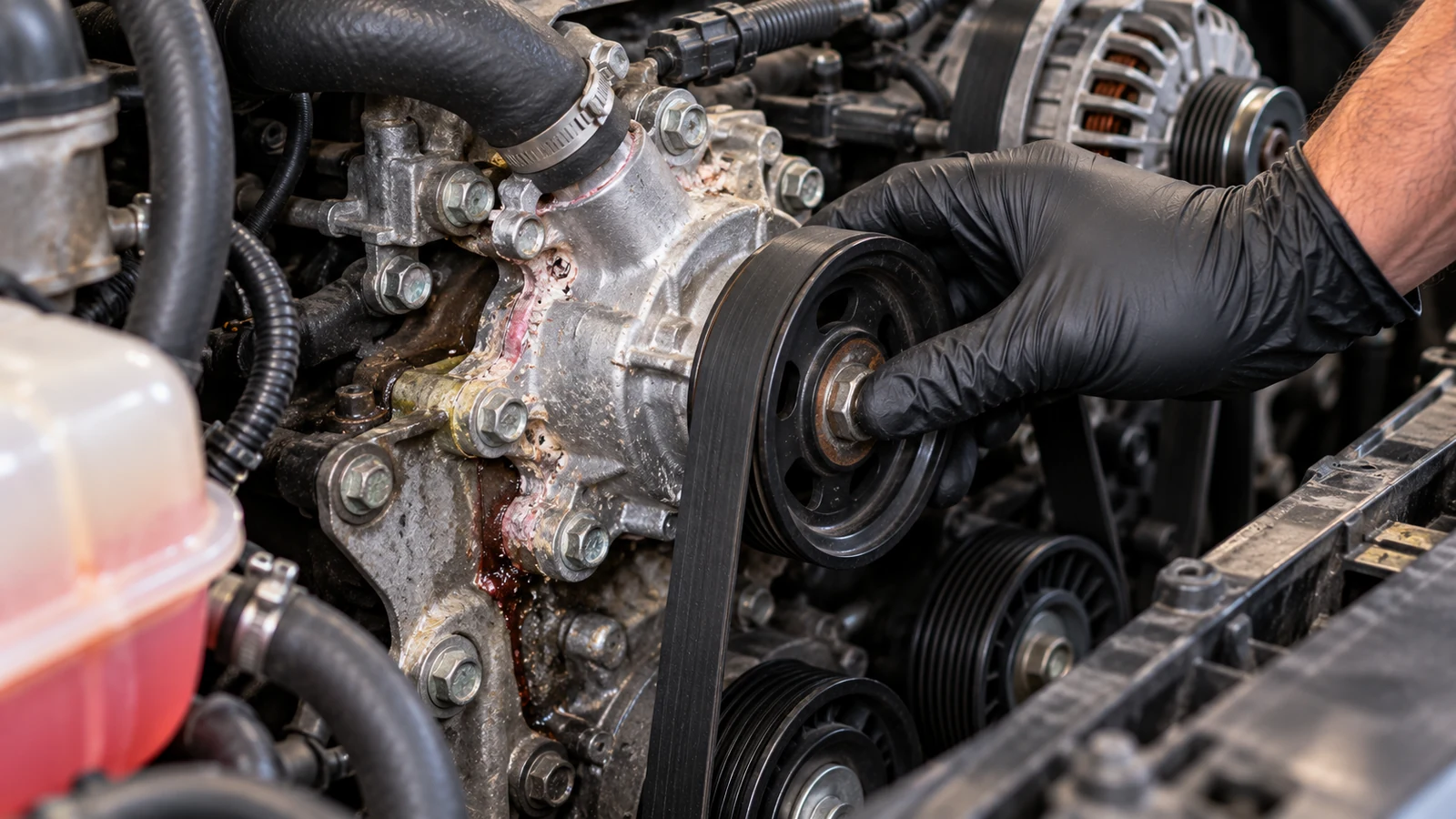
A failing water pump may show coolant leaks, bearing noise, pulley play, or reduced coolant circulation from a damaged impeller. These symptoms can overlap with other cooling-system faults, so confirm the leak source, pulley condition, coolant flow, and vehicle-specific pump design before replacing the pump.
Coolant Around the Weep Hole or Housing Is an Important Clue
Many mechanical water pumps have a weep hole that can show leakage when the internal shaft seal begins to fail. Look for fresh coolant, dried crusty residue, or staining below the pump.
Also inspect the gasket or O-ring area where the pump meets the engine. A leak at the housing joint is not the same as an internal shaft-seal failure, but either can reduce coolant level enough to cause overheating.
Follow any wet trail upward before blaming the pump. A leaking hose connection, thermostat housing, or fitting above the pump can make the pump look guilty.
Bearing Noise and Pulley Movement Point Toward Mechanical Pump Wear
A belt-driven pump uses a bearing to support its shaft and pulley. As that bearing wears, it may produce:
- A whine or growl that changes with engine speed.
- Grinding or rumbling from the pump area.
- Belt chirp caused by pulley misalignment.
- Noticeable pulley play when checked with the engine off.
Idler pulleys, alternators, and belt tensioners can make similar noises. If access permits, remove the belt and rotate suspected pulleys by hand. Roughness or play at the pump supports the diagnosis.
A Damaged Impeller Can Reduce Circulation Without an External Leak
Not every failing pump leaks. An impeller can corrode, erode, crack, or slip on its shaft. In that situation, the pump may still turn but move less coolant than the engine requires.
A useful pattern is overheating that is worse at idle and improves when engine speed rises. Cabin heat may also become stronger when the engine is revved. Before calling the pump bad, confirm the coolant level and make sure the radiator fan is operating.
The exact pump position and drive arrangement vary by engine. Before removing covers or assuming the pump is accessory-belt driven, check model-specific service information for the vehicle.
A Practical Diagnostic Sequence Before Replacing Parts
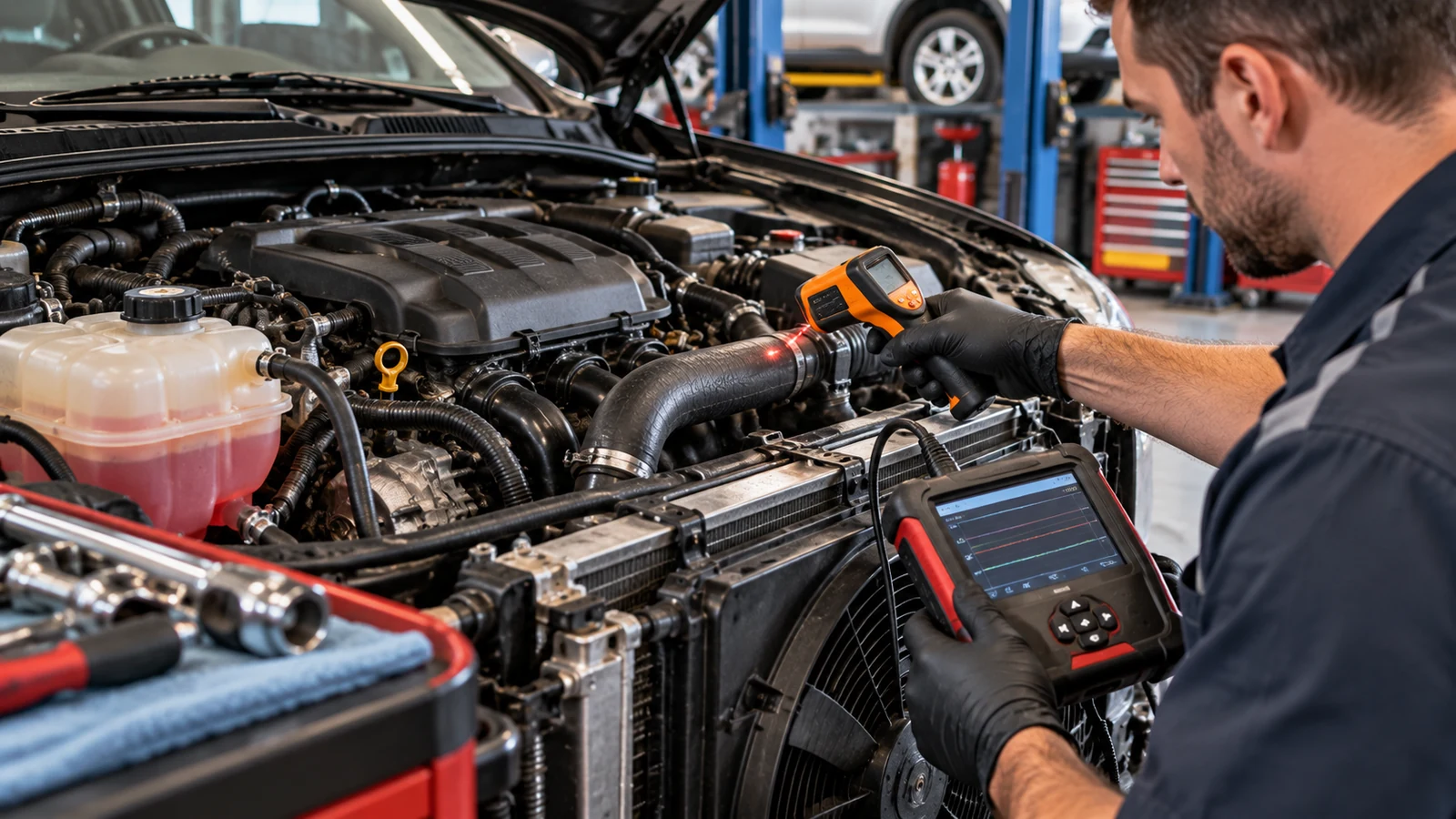
Work from simple observations toward tests that require disassembly. A basic OBD-II scanner with live data, an infrared thermometer, a flashlight, and a cooling-system pressure tester can separate many thermostat and water-pump problems without guessing.
1. Start With A Cold Visual Inspection
Check the coolant level only when the engine is completely cold. Look around the reservoir, radiator, hose joints, thermostat housing, pump area, and the ground beneath the vehicle.
A low coolant level can create both thermostat-like and pump-like symptoms because air enters the system and circulation becomes inconsistent.
If pump access is limited, use the exact manual for the vehicle to locate inspection points before removing parts.
2. Watch Coolant Temperature From A Cold Start
Connect a scan tool and monitor engine coolant temperature while the engine warms.
A healthy system normally shows a steady temperature rise followed by stabilization near the engine’s normal range.
Patterns to watch for:
- Very slow warm-up: thermostat may be stuck open.
- Temperature climbs continuously beyond normal: the thermostat may be stuck closed, circulation may be weak, or another cooling fault may be present.
- Normal on the road but hotter at idle: check fan operation and coolant circulation before deciding the pump is bad.
Record stored trouble codes before clearing them.
3. Compare Engine and Radiator Hose Temperatures
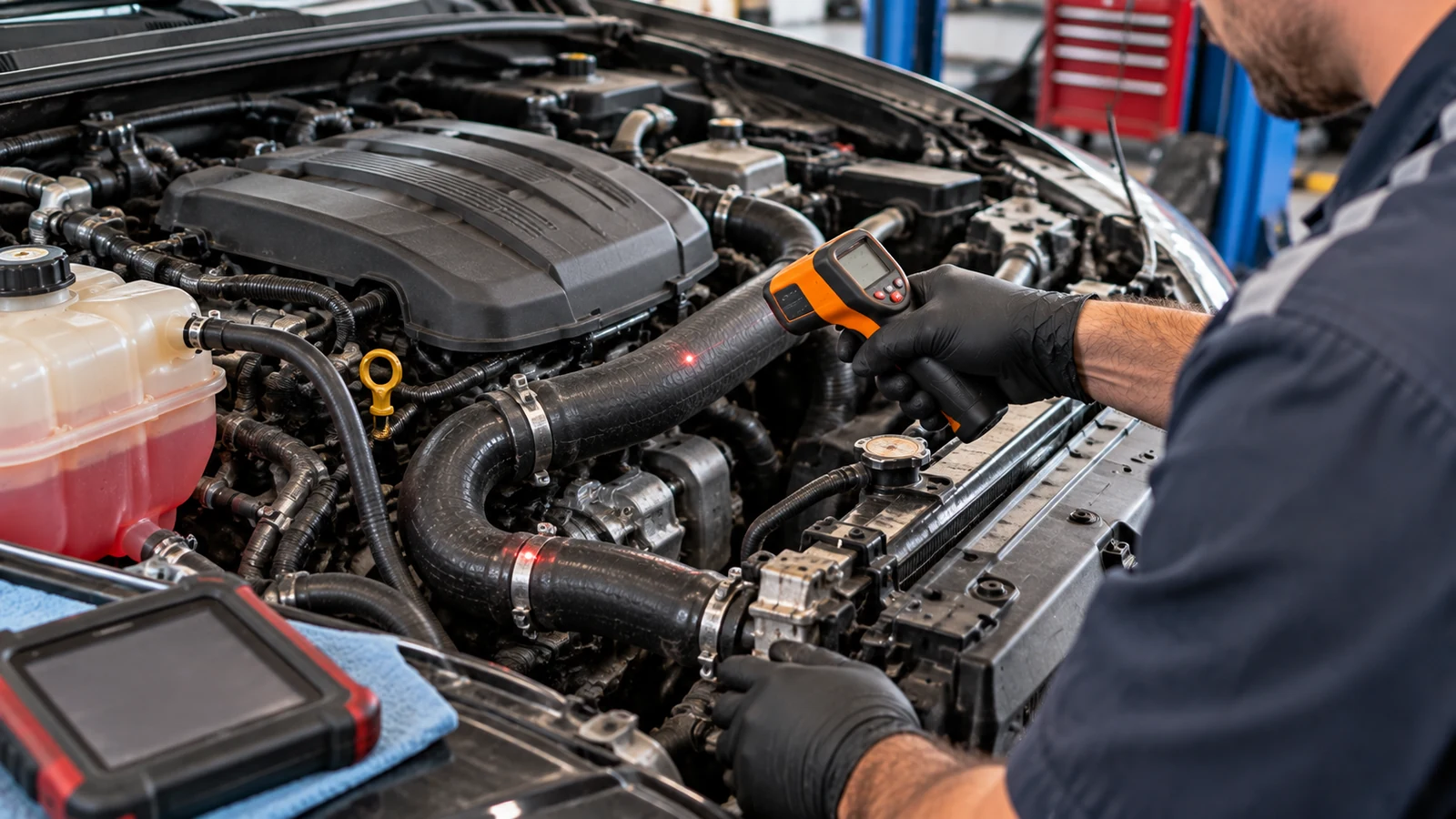
Use an infrared thermometer rather than grabbing hot hoses.
On many conventional systems, the hose carrying coolant from the engine toward the radiator remains relatively cool during early warm-up. When the thermostat opens, that hose temperature rises quickly. The return hose should warm afterward but normally remains cooler because the radiator has removed heat.
A hot engine with a comparatively cool radiator outlet path strongly suggests the thermostat is not opening. A radiator hose that warms almost immediately from a cold start can suggest a thermostat stuck open.
Hose routing is not universal. Before interpreting readings, verify the flow path in a vehicle-specific manual. For example, AutoServicePlus lists a 2008–2013 Nissan-Datsun Rogue 2WD manual for matching applications.
4. Compare Heater Output At Idle and Higher Engine Speed
With the engine fully warm, transmission in Park or Neutral, and parking brake applied, set the heater to full hot.
If the heater becomes clearly warmer when engine speed is raised, coolant circulation may be marginal. Check level and air bleeding first. If those are correct, the pump becomes a stronger suspect.
If the heater stays weak at all speeds while the engine itself also runs cool, a thermostat stuck open is more likely.
5. Inspect the Pump, Belt, and Pulley With the Engine Off
Once the engine is cold and shut down:
- Locate the pump and determine what drives it.
- Look for coolant traces at the pump, weep hole, and housing joint.
- Inspect the belt for glazing, cracking, or coolant contamination.
- If accessible, check the pump pulley for movement.
- With the belt removed where appropriate, rotate the pulley by hand and feel for roughness.
- Inspect the tensioner and nearby idlers so another bearing is not mistaken for the pump.
Never remove timing covers or disturb a timing belt without the correct procedure for the engine.
6. Pressure-Test the Cooling System
A cooling-system pressure tester can reveal leaks that are difficult to see when the engine is cold and depressurized. Pump the system only to the vehicle’s specified test pressure.
If pressure drops, look for leaks at hoses, radiator seams, the thermostat housing, the pump, the heater circuit, and other joints. A failing pump seal may begin dripping from the weep hole during the test.
Test the radiator or expansion-tank cap where the equipment allows. A weak cap can lower the effective boiling point and create symptoms that resemble a more serious cooling-system fault.
7. Bench-Test A Conventional Thermostat If Needed
Once you remove a thermostat, you can test it in heated water.
- Note the rated opening temperature marked on the thermostat.
- Suspend it in water without letting it sit on the bottom of the container.
- Heat the water gradually while monitoring temperature.
- Watch for the valve to begin opening around its rated point, then continue opening as the temperature rises.
Do not reuse a thermostat that stays closed, is already open when cool, or opens far from its intended range.
Problems that Can Mimic Either Failure
Replacing parts before checking these look-alikes is one of the most common ways to waste time diagnosing a cooling system.
Low Coolant or Trapped Air
Low coolant can prevent the pump from maintaining a solid column of liquid. Trapped air after a repair can also create hot spots, erratic temperature readings, and weak heater output.
If you recently opened the cooling system, proper bleeding should be one of your first checks.
Cooling Fan or Radiator Problems
A failed cooling fan commonly causes overheating in traffic while the vehicle behaves better at road speed. That pattern can be mistaken for a weak pump.
A radiator restricted internally by deposits or externally by debris can also reduce heat transfer even when both the thermostat and pump are functioning.
Faulty Engine Coolant Temperature Sensor
The engine coolant temperature sensor provides data used by the engine computer and, on many vehicles, the instrument display. A bad reading can make a healthy engine appear too hot or too cold and can affect fan operation.
Compare the scan-tool temperature with an infrared reading at a suitable cooling-system point, then test the sensor to the manufacturer’s specifications.
Head-Gasket Leakage
Combustion gases entering the cooling system can create pressure spikes, air pockets, coolant loss, and overheating. Bubbles in the reservoir, unexplained coolant loss, and white sweet-smelling exhaust are warning signs.
If those symptoms are present, a combustion-leak test is a better next step than replacing another thermostat or pump.
Drive-belt Problems
If the water pump is driven by the accessory belt, a slipping or broken belt can reduce or stop pump speed. The charging warning light may appear at the same time if the belt also drives the alternator.
Always determine what the belt drives before assuming the pump itself has failed.
Trouble Codes and Electronic Cooling-System Faults
Diagnostic trouble codes can narrow the search, but a code identifies a circuit or operating condition, not automatically the failed part.
| Code | General meaning | Diagnostic direction |
|---|---|---|
| P0128 | Coolant temperature below thermostat regulating temperature | Thermostat stuck open or opening late, low coolant, or ECT issue |
| P0125 | Insufficient coolant temperature for closed-loop operation | Slow warm-up and related temperature-control problems |
| P0597 / P0598 / P0599 | Thermostat heater control circuit fault | Electronic thermostat, connector, wiring, or control circuit |
| P2600 | Coolant pump control circuit open | Electric pump circuit, relay, fuse, wiring, or pump |
| P2601 | Coolant pump range/performance fault | Electric pump performance or control problem |
| P0217 | Engine coolant over-temperature | Overheating from any cause, including thermostat or pump failure |
For electronically controlled systems, electrical testing matters as much as mechanical inspection. Use the correct wiring diagram, connector views, power and ground checks, and any specified activation test before condemning the component.
BMW is a good example of why the manual must match the engine. Some BMW six-cylinder engines use an electric water pump with an electronically controlled thermostat. If the vehicle uses that system, start with the BMW workshop manual library and choose the exact application. The supplied inventory includes manuals for the 2012–2018 BMW 3 Series F30, 2011–2013 BMW X5 xDrive35i E70, and 2009–2015 BMW 7 Series F01/F02. Confirm the exact engine and cooling-system configuration before applying any electric-pump diagnostic procedure.
Vehicle Designs That Change the Diagnosis
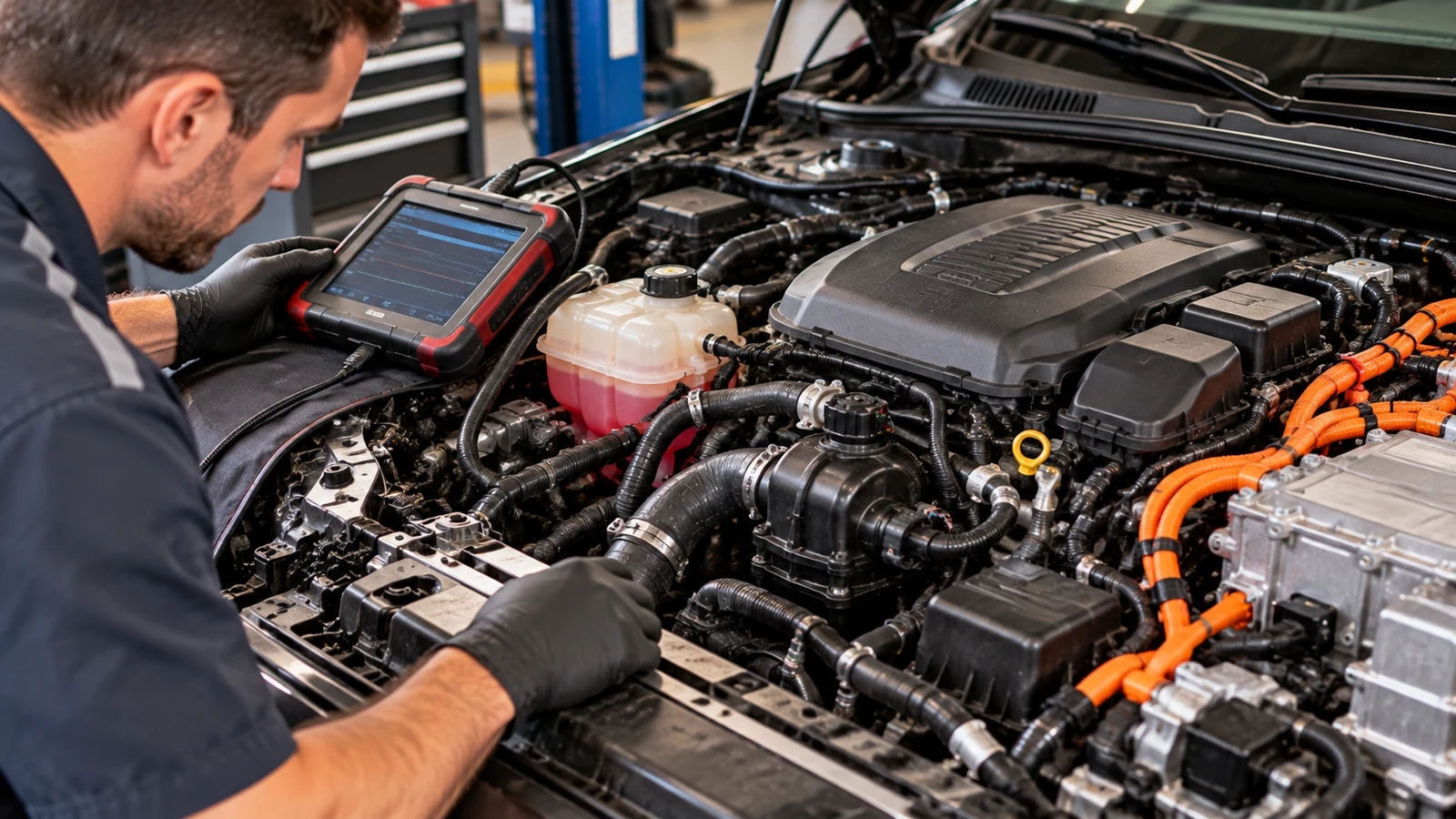
The basic symptom patterns are useful, but modern cooling systems do not all follow the same layout. Pump drive type, thermostat location, electrical control, and the number of cooling loops can change both the test procedure and the repair.
Volkswagen and Audi Combined Pump-and-Thermostat Arrangements
Some Volkswagen and Audi 1.8L and 2.0L turbocharged gasoline engines use a combined water-pump and thermostat-housing assembly. On an engine with that arrangement, a leak or temperature-control fault can involve the shared module rather than two completely separate service jobs.
Use Volkswagen workshop manuals or Audi workshop manuals to confirm the layout for the exact engine. Relevant supplied manuals include the 2008–2012 Volkswagen Golf Mk6 GTI, 2010–2019 Volkswagen Jetta Mk6, 2012–2013 Volkswagen Golf R 4Motion, 2006–2013 Audi A3 Quattro 8PA, and 2009–2013 Audi A4 Quattro 8K2. The presence of a manual in the inventory does not mean every engine in that model range uses the same module, so engine identification still comes first.
Hybrid Vehicles May Have More Than One Cooling Circuit
Hybrid vehicles can use electric pumps for the engine, inverter, or separate thermal-management circuits. That means a pump-related fault code or overheating complaint must be tied to the correct coolant loop.
The Toyota Prius is a useful example because different generations and variants require generation-specific procedures. AutoServicePlus supplies Toyota workshop manuals plus separate coverage for the 2001–2009 Toyota Prius, 2010–2013 Toyota Prius, 2012–2013 Toyota Prius PHV, and 2012–2013 Toyota Prius C.
The same caution applies to other hybrid applications. The supplied Ford workshop manuals include a 2005–2008 Ford Escape 4WD manual, while the Honda workshop manual library includes a 2020–2022 Honda CR-V Hybrid manual. Before working near high-voltage components, follow the vehicle’s prescribed isolation and safety procedure.
Different Engines in The Same Model Can Use Different Cooling Layouts
A model name alone is not enough to determine pump drive, thermostat location, coolant capacity, or bleeding method. The same vehicle line can use different gasoline, diesel, hybrid, or market-specific engines.
Hyundai Tucson coverage in the supplied inventory illustrates why generation and engine matching matter. Start with Hyundai workshop manuals and compare the specific application, such as the 2005–2010 Hyundai Tucson JM manual or the 2010–2016 Hyundai Tucson/ix35 LM manual.
The same rule applies outside the source examples. For a matching Honda application, a model-specific manual is more useful than a generic cooling-system diagram, and use Nissan workshop manuals to verify the exact hose routing, pump drive, torque specifications, and bleeding steps for a Nissan repair rather than assuming they match another manufacturer.
Should You Replace the Thermostat, the Water Pump, or Both?
Replace only the part that testing supports unless the design or labor overlap makes combined replacement sensible.
Replacing both can be reasonable when:
- The water pump is driven by the timing belt and the timing service is due.
- The thermostat is built into or directly attached to the pump housing.
- Both parts are original, and the cooling system is already drained for a major repair.
- The engine has suffered severe overheating, and the thermostat’s condition is uncertain.
Replacing only the thermostat is reasonable when the warm-up pattern clearly points to a thermostat problem, and the pump has no leak, bearing noise, pulley play, or circulation symptoms.
Replacing only the pump is reasonable when there is clear pump leakage, bearing wear, or confirmed low circulation while thermostat operation is normal.
For any of these repairs, the factory procedure matters because torque values, seal type, bolt sequence, coolant specification, belt routing, and bleeding method can vary. Even familiar platforms should be checked against vehicle-specific documentation, not memory.
Why the Workshop Manual Matters Before Reassembly
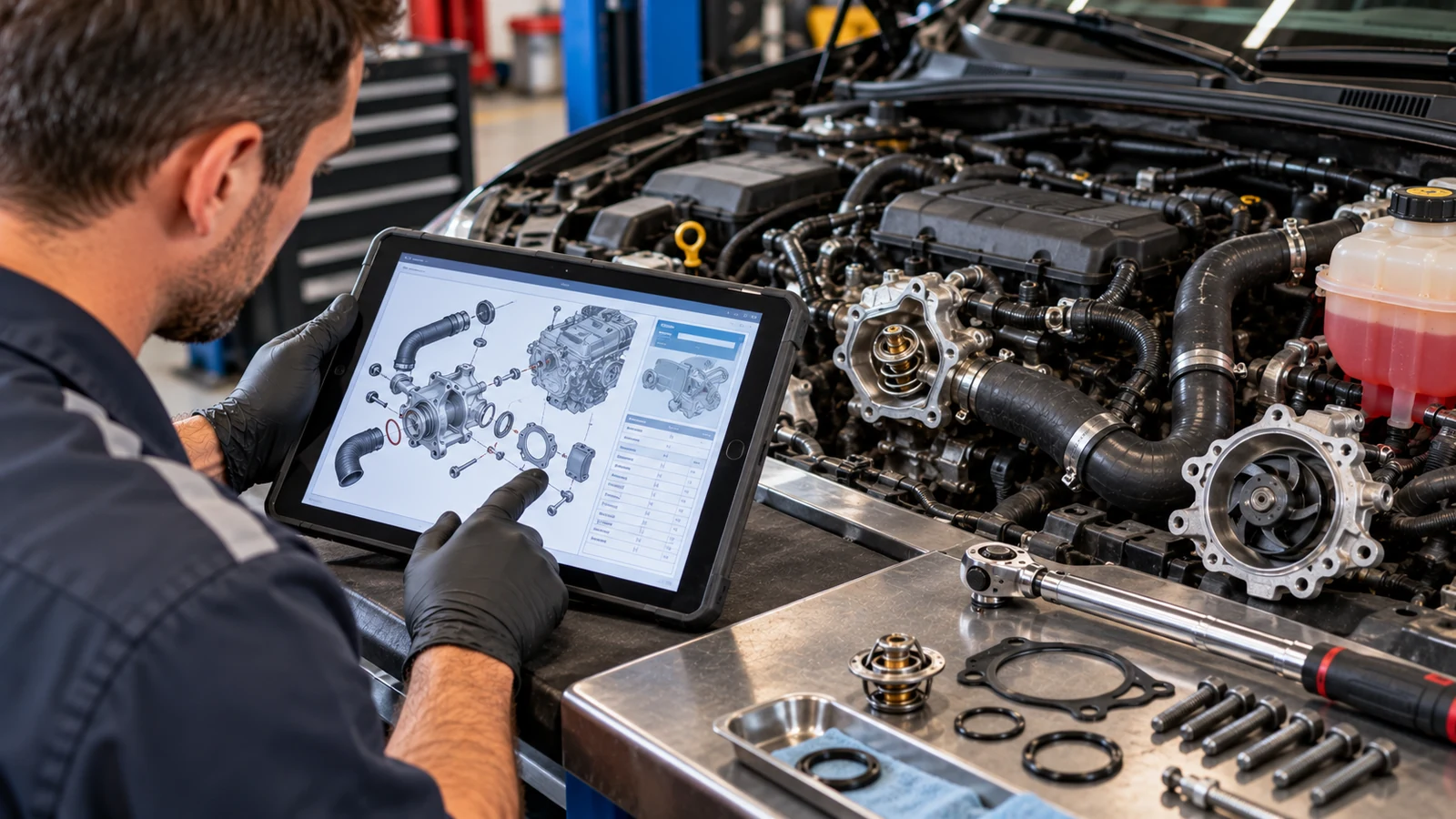
The hardest part of cooling-system work is often not removing the failed component. It is putting the system back together correctly and proving that the repair is complete.
A factory workshop manual can help confirm:
- Water-pump removal sequence and access points.
- Thermostat orientation and housing assembly.
- Bolt torque and tightening order.
- Gasket, O-ring, or sealant requirements.
- Accessory or timing-belt routing.
- Cooling-system capacity and coolant specification.
- Air-bleeding procedure.
- Electrical connector pinouts for controlled thermostats or electric pumps.
- Activation tests or diagnostic flowcharts where supported.
For common non-hybrid applications, the same principle applies. A matching Honda Civic FC/FK workshop manual can prevent assumptions about component access, and the supplied Nissan-Datsun Altima workshop manual and Nissan-Datsun Rogue 2WD workshop manual provide vehicle-specific references for matching applications.
Can You Keep Driving With a Bad Thermostat or Water Pump?
It depends on how the fault affects engine temperature, but you should never treat overheating as safe to monitor indefinitely.
- Thermostat stuck open: usually not an immediate overheating emergency, but the engine may run too cool, cabin heat may be weak, fuel consumption can increase, and a fault code may remain active.
- Thermostat stuck closed: stop driving. The engine can overheat quickly.
- Water pump with a small leak but normal temperature: the vehicle may still run normally for a short time, but coolant loss can accelerate suddenly.
- Noisy or wobbling pump: repair is urgent. A deteriorating bearing can damage the belt drive.
- Any red-zone temperature or high-temperature warning: pull over safely and shut off the engine.
Do not repeatedly refill coolant and continue driving without finding the leak. An overheated engine can turn a modest cooling-system repair into a much larger engine repair.
How to Reduce Future Thermostat and Water Pump Problems
Cooling-system maintenance cannot prevent every failure, but it can reduce corrosion and reveal trouble earlier.
- Check coolant level only when the engine is cold.
- Use the coolant specification required for the vehicle.
- Replace coolant at the correct service interval for the vehicle.
- Keep accessory belts and tensioners in good condition.
- Bleed the system correctly after any repair that lets air in.
- Investigate small coolant leaks before the system loses enough coolant to overheat.
- Learn the vehicle’s normal warm-up behavior so changes are easier to notice.
Conclusion
If you are trying to decide whether your thermostat or water pump is failing, focus on the pattern rather than the part name. A stuck-closed thermostat usually causes overheating soon after warm-up, while a stuck-open thermostat causes slow warm-up and weak heat. A failing mechanical water pump is more likely to show coolant leakage, bearing noise, pulley play, or weak circulation.
Confirm the diagnosis with coolant-level checks, live temperature data, hose-temperature comparison, heater behavior, pump inspection, and a pressure test. Then use the workshop procedure for the exact vehicle and engine before draining coolant or removing parts. That final step matters because pump drive type, thermostat location, torque values, coolant specification, and bleeding procedure can change significantly between vehicles.
Commonly Asked Questions About How to Tell if a Thermostat or Water Pump Is Failing
Can A Bad Thermostat Damage The Water Pump?
Usually not directly. The thermostat does not drive the pump. However, a thermostat stuck closed can cause severe overheating, and the extra heat and pressure can stress seals and other cooling-system components, including a pump that is already worn.
Should I Replace The Thermostat When Replacing The Water Pump?
Sometimes. It makes the most sense when labor overlaps, the thermostat is part of the pump housing, the cooling system is already drained, or the engine has overheated badly. If the components are separate and testing shows the thermostat works correctly, replacing it automatically is not always necessary.
What Does A Failing Water Pump Sound Like?
A mechanical pump with a worn bearing may whine, growl, rumble, or grind. A wobbling pulley can also cause a belt chirp or squeal. Similar noises can come from idlers, tensioners, or the alternator, so confirm the source before replacing the pump.
Can A Bad Thermostat Cause No Heat Inside The Car?
Yes. A thermostat stuck open can keep engine coolant below its normal operating temperature, which reduces heater output. Low coolant, trapped air, a restricted heater core, or weak circulation can also cause poor heat.
Why Is the Engine Still Overheating After A New Thermostat?
Possible causes include trapped air after refilling, incorrect thermostat installation, the wrong thermostat rating, a weak water pump, a failed cooling fan, a clogged radiator, a bad pressure cap, or a head-gasket problem. Recheck the diagnosis instead of replacing the thermostat again.
How Can I Test A Thermostat Without Removing It?
Watch live coolant temperature from a cold start and compare it with radiator-hose temperature using an infrared thermometer. A hose that heats very early may indicate a thermostat stuck open, while a hot engine with a comparatively cool radiator outlet path can indicate a thermostat stuck closed. Confirm hose routing for the engine before interpreting the result.
Can an Electric Water Pump Fail Without Leaking?
Yes. An electric pump can fail electrically or lose performance without showing a visible leak. Codes such as P2600 or P2601 can help guide testing, but check wiring, fuses, relays, connectors, and grounds before replacing the pump.