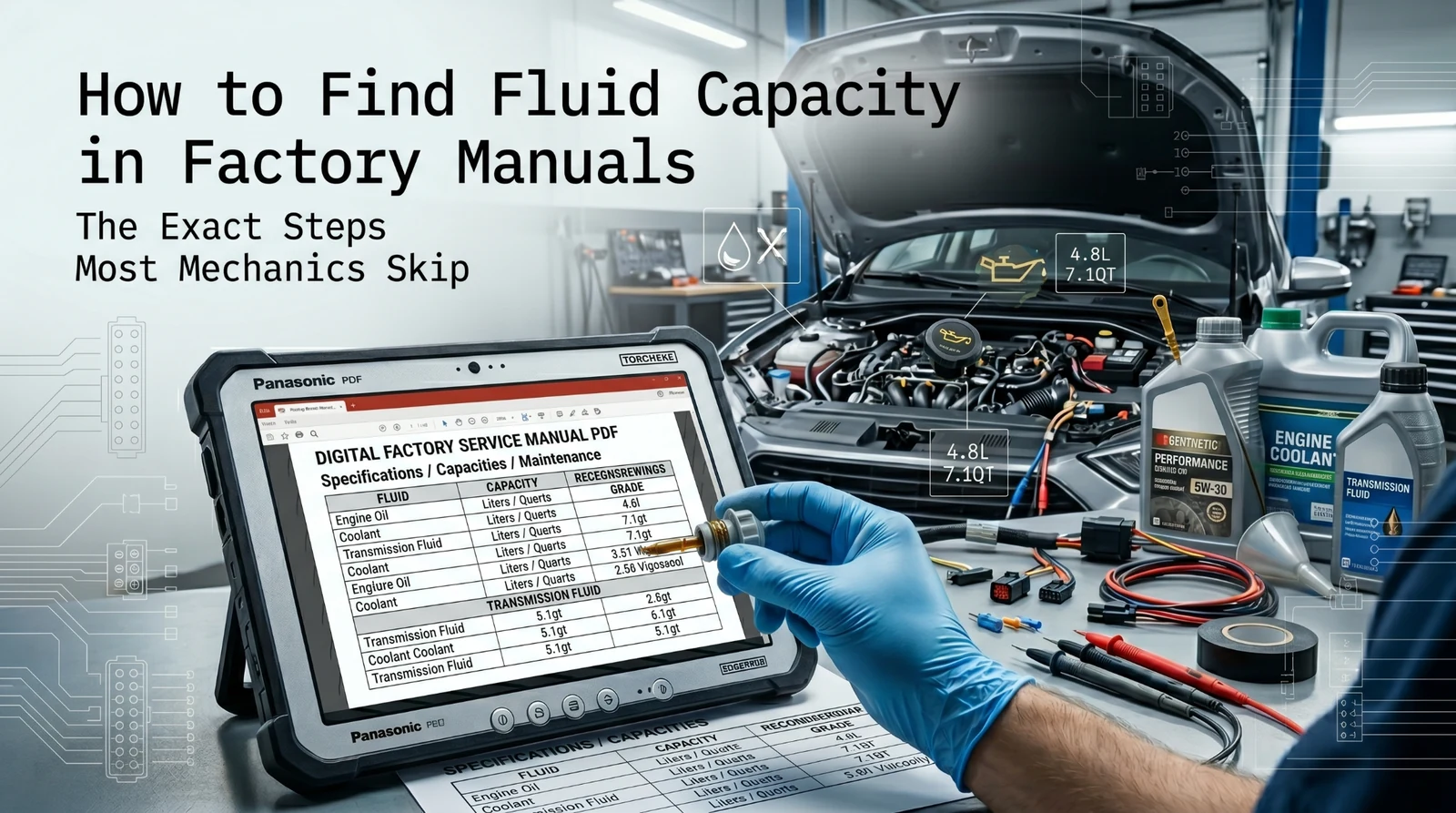
Most people looking for fluid capacity in factory manuals don’t realize they’re looking in the wrong section entirely. One wrong capacity figure, one wrong fluid, and you could be facing a seized transmission or a coolant system failure. The risk is real.
Find accurate data in the “Specifications,” “Capacities,” or “Maintenance” chapters at the manual’s start or end. These centralize volumes, types, and viscosities. Distinguish between “dry fill” and “refill” to avoid overfilling.
This guide walks through exactly how to locate that data, what each section means, and why trusting only a factory source matters more than most people think.
How to Find Fluid Capacity in Factory Manuals: What the Index Won’t Always Tell You

Factory service manuals are built for professional technicians, not casual readers. Every piece of data is in there, but the layout assumes you already know where to look. This article focuses specifically on locating fluid capacity data across the key systems in a vehicle.
Understanding how these manuals are structured saves you time and prevents costly errors during maintenance.
The “Specifications” Chapter Is Where the Numbers Live
Before you scroll through repair procedures, go straight to the source. Most factory manuals organize their fluid capacity data inside a dedicated chapter.
Every factory service manual includes a specifications section, usually labeled General Specifications, Maintenance Data, or “Fluid Specifications. This is your primary destination when you need exact volumes.
Here is what you will typically find inside:
- Engine oil capacity (with and without filter change)
- Coolant system capacity (total and service refill)
- Transmission fluid capacity (automatic and manual, separately listed)
- Brake fluid reservoir (fill-to-max notation)
- Power steering fluid (if applicable)
- Differential and transfer case fluid (especially important on 4WD and AWD vehicles)
The key detail most people miss: factory manuals often list two separate figures for the same system. For example, an engine oil entry might show 4.2 quarts “without filter” and 4.5 quarts “with filter.” Always use the “with filter” number during a standard oil change.
| Fluid System | Typical Manual Section Label | Unit Used |
|---|---|---|
| Engine Oil | Engine Specifications / Lubrication | Quarts / Liters |
| Coolant | Cooling System Specifications | Quarts / Liters |
| Automatic Transmission | Drivetrain Specifications | Quarts / Liters |
| Manual Transmission | Drivetrain / Lubrication | Pints / Liters |
| Brake Fluid | Brake System Specifications | Fill to the MAX mark |
| Differential Fluid | Axle / Final Drive Specifications | Pints / Liters |
How to Navigate the Index to Find Fluid Data Fast
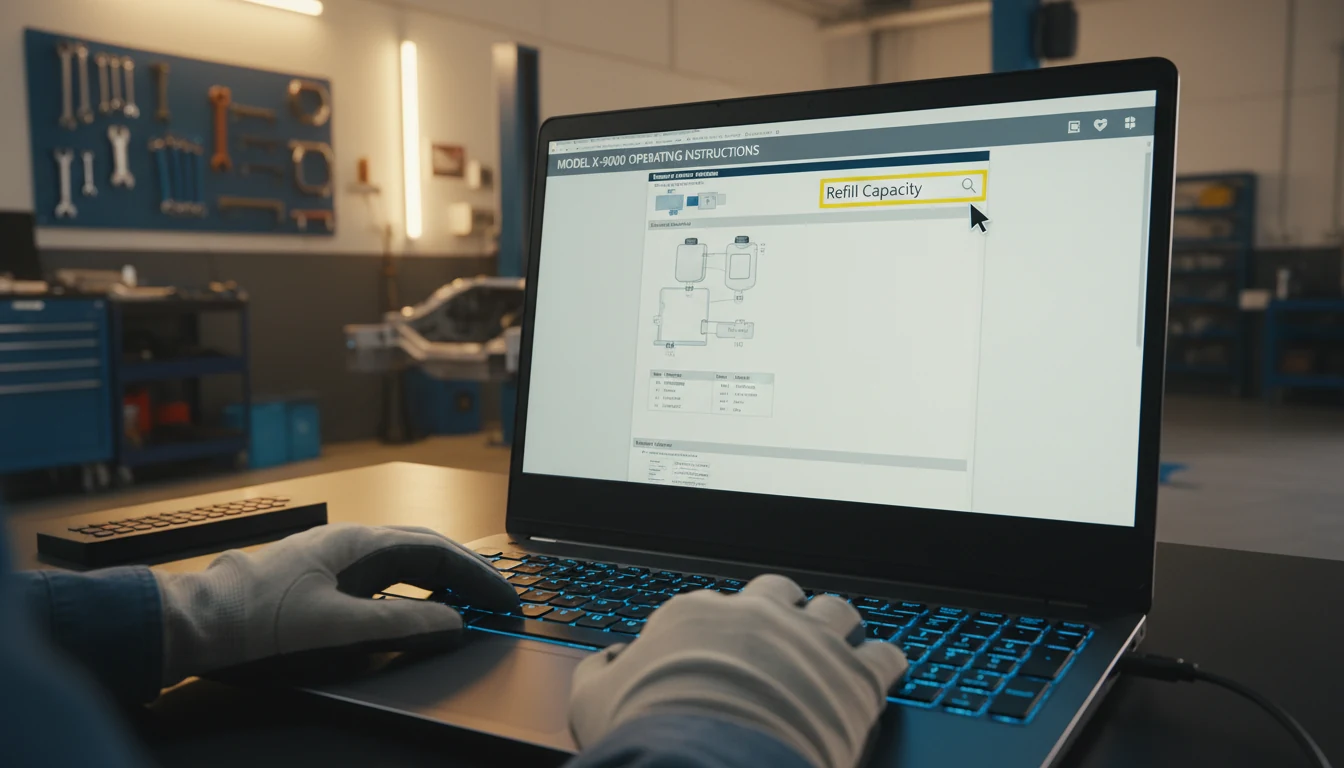
The index of a factory manual is your fastest navigation tool. Knowing the right search terms cuts the time in half.
When using a physical or digital factory manual, open the index and search for these specific terms rather than browsing the chapters.
Look for any of the following index entries:
- “Fluid capacities” (most common grouping, often its own table)
- “Specifications” (usually a dedicated chapter near the front or back)
- “Lubrication and maintenance” (covers most fluid types in one section)
- “Refill capacities” (used in Ford, GM, and Chrysler manuals specifically)
- “Maintenance schedule” (fluid types and intervals listed together)
If you are working with a digital PDF version of the manual, use Ctrl+F to search for “fluid capacity” or “refill capacity.” Most factory PDFs are searchable, which means you can skip the index entirely and land on the exact table in seconds.
One thing worth noting: some older factory manuals split fluid data across chapters. For a vehicle like a 1990s Nissan pickup, for example, transmission fluid specs might be in the drivetrain chapter while engine oil data is in the lubrication chapter. Cross-referencing the index prevents you from missing a critical spec.
If you are serious about doing this right every time, it also helps to understand why DIY mechanics need factory service manuals in the first place, since owner’s manuals and aftermarket guides often omit the detail factory documents include.
Reading Fluid Capacity Tables Without Misreading the Data
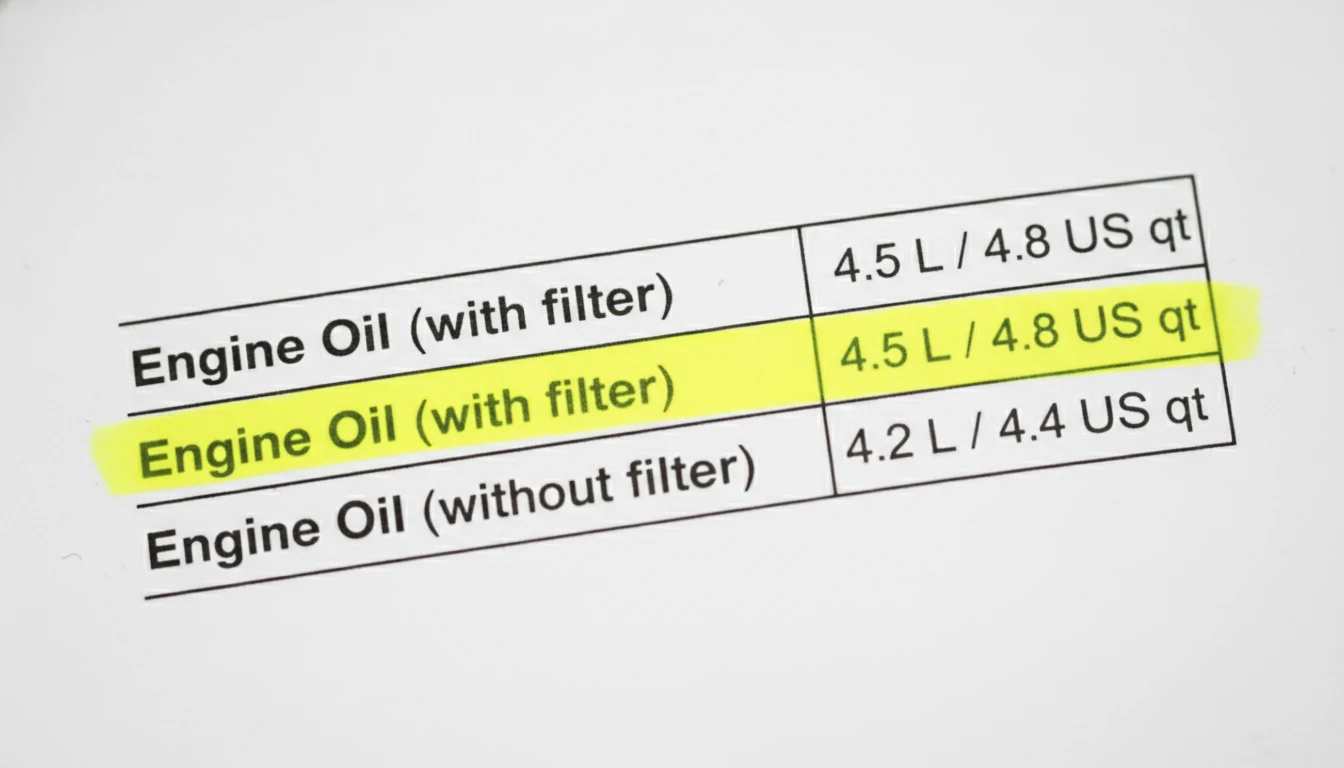
Even after you find the right table, it is easy to misread a factory manual capacity entry if you are not paying attention to the conditions listed.
Factory capacity tables are packed with footnotes and conditional entries. A number without its condition is an incomplete number.
Here is what to watch for when reading a fluid capacity table:
- “With filter” vs. “without filter” entries for engine oil (always use the “with filter” figure)
- “Total capacity” vs. “service fill” for automatic transmission (total includes the torque converter, service fill is what goes in during a fluid change)
- “Dry fill” vs. “refill” for differentials (dry fill is for a fresh build, refill is for a fluid change)
- Vehicle variant notes (turbocharged engines often require more oil than naturally aspirated versions of the same model)
- Regional variants (some manuals list metric and imperial units side by side, so confirm which column applies to your market)
This is exactly the kind of nuance that separates a proper repair from a guessed one. A 2020 Honda Civic 1.5L turbocharged engine, for instance, lists 3.5 quarts without a filter and 4.2 quarts with a filter. Using the wrong figure results in either overfilling or underfilling, both of which have real mechanical consequences.
Before starting any fluid service, reviewing a factory manual PDF checklist can help you avoid exactly these kinds of oversights.
Why Factory Manual Fluid Data Beats Online Lookup Tools
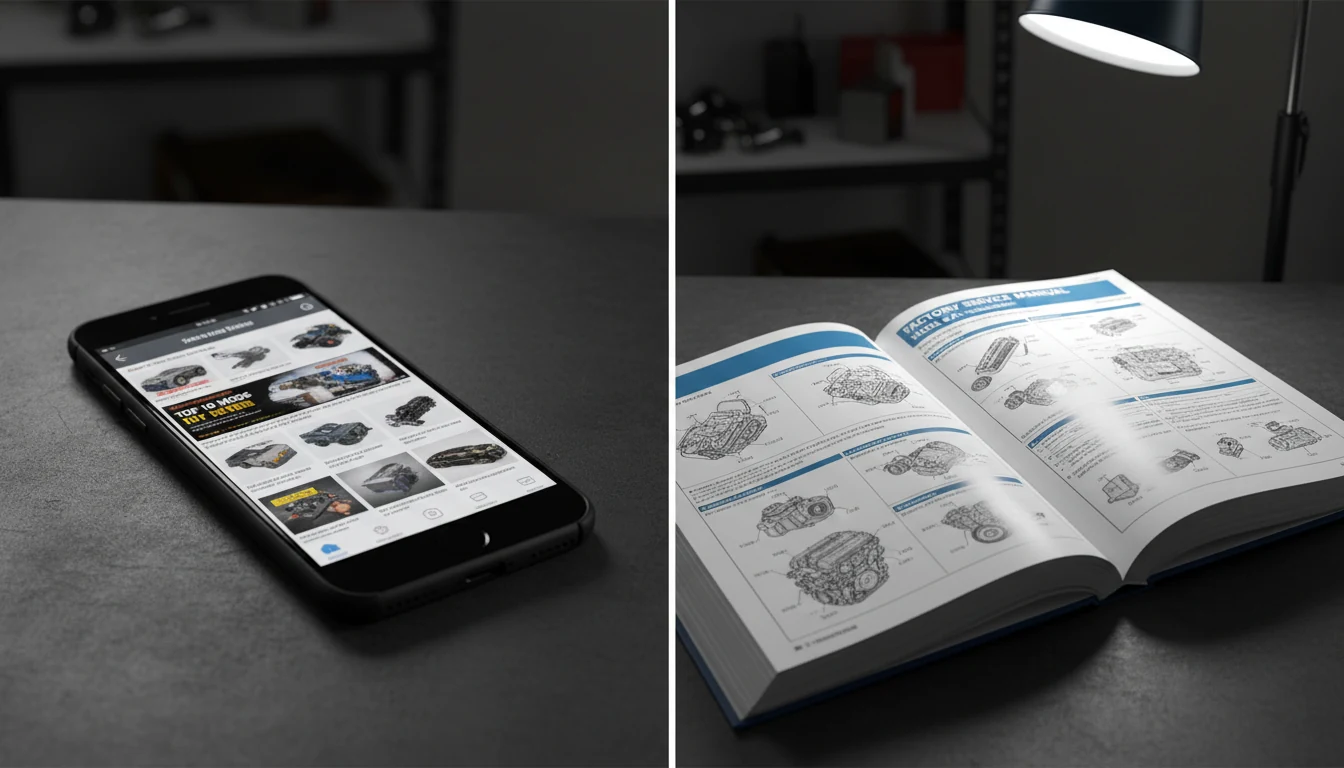
It is tempting to just search online for a fluid capacity figure, but there are genuine risks to that approach that most people underestimate.
Third-party fluid databases and auto parts store lookup tools pull from aggregated data, not the original factory source. That creates small but meaningful risks for your vehicle.
Here is a breakdown of why factory manuals remain the most reliable source:
- Online tools may not account for mid-year production changes. For example, a 1998 Subaru Outback 2.5L required 4.2 quarts of oil, but a later production run of the same year bumped that to 4.5 quarts. A factory service bulletin captured that change; a generic lookup tool often does not.
- Turbocharged and modified engine variants are frequently listed under the same model in online databases, creating confusion about which capacity applies.
- Aftermarket parts like larger oil pans or aftermarket differential covers change the fluid capacity from the factory spec entirely. The manual reflects the stock build only.
- Factory manuals include fluid type specifications alongside capacity. An online tool might tell you to add 10 quarts of ATF, but the factory document also tells you it must be a specific Dexron or Mercon variant, not just any ATF on the shelf.
This is also why common mistakes when using factory repair manuals often stem from trusting a secondary source rather than the original document itself.
Locating Fluid Capacity for Specific Systems in the Manual
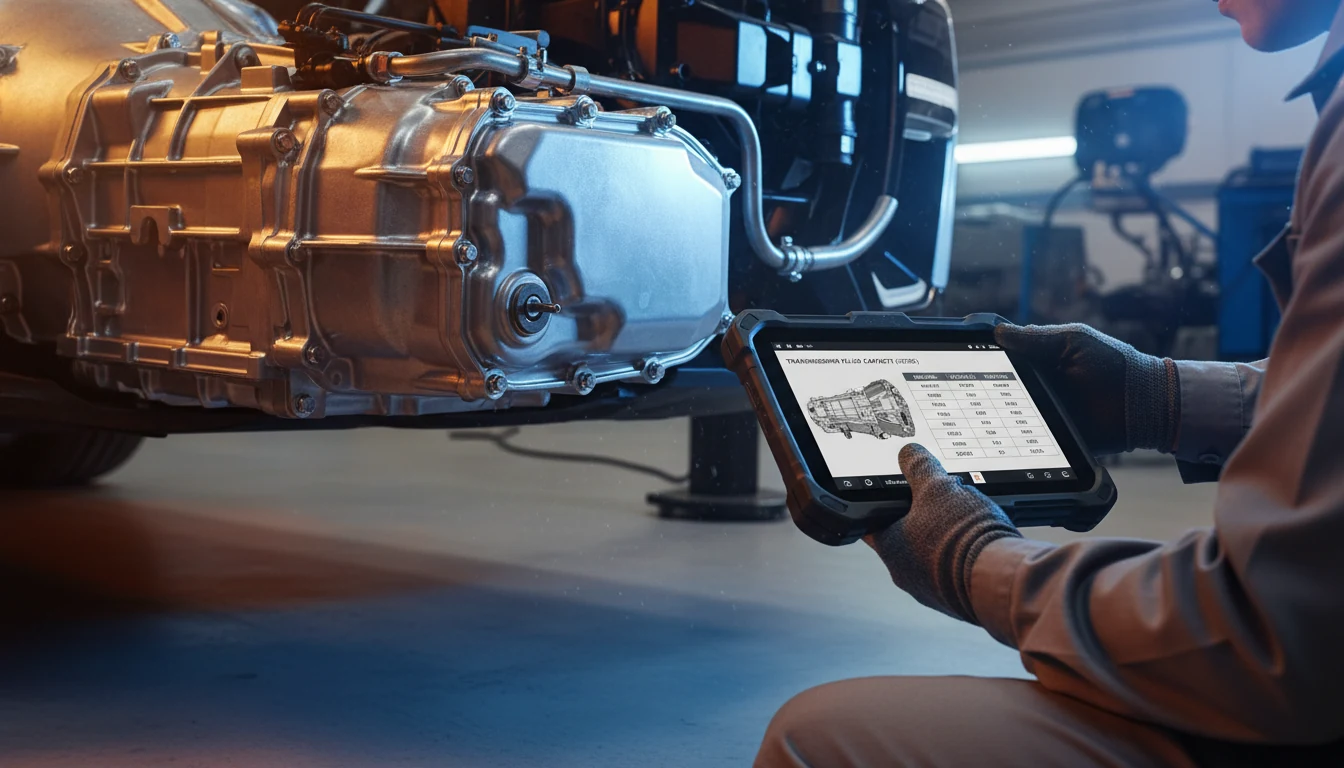
Not every fluid system is in the same chapter. Knowing where each type lives saves real time on a job.
Transmission, differential, and cooling system data are frequently in separate chapters from engine oil data. Here is a quick reference for where to look by system.
Engine Oil: Found in the “Engine” chapter or the main “Specifications” table at the front or back of the manual. Look for lubrication system diagrams nearby.
Coolant Capacity: Located in the “Cooling System” chapter. The table will list total system capacity and may separate it by engine variant (for example, 2.0L vs. 2.5L engines in the same vehicle line).
Automatic Transmission Fluid: In the “Automatic Transaxle” or “Drivetrain” chapter. Remember to look for both total and service refill figures.
Manual Transmission Fluid: Also in the drivetrain chapter. Older manuals may call it “gearbox oil” and list the API rating (GL-4 or GL-5) alongside the volume.
Brake Fluid: In the “Brake System” chapter. Most modern manuals list brake fluid as a “fill to MAX mark” instruction rather than a fixed volume.
Differential and Transfer Case: Found in the axle or four-wheel drive chapter. These entries are especially important because some factory manuals list multiple differential options with different capacities for the same vehicle.
Understanding how factory manuals reduce the risk of wrong part replacement also applies to fluid selection. Using a fluid that does not meet the factory specification can damage seals and components just as surely as using the wrong physical part. You can read more about that connection in this piece on how factory manuals reduce the problem of wrong-part replacements.
Quick Reference: Common Fluid Capacity Ranges by System
These figures are general ranges only. Always verify with your specific factory manual before servicing.
| Vehicle System | Typical Capacity Range | Notes |
|---|---|---|
| Passenger Car Engine Oil | 4 to 6 quarts | Turbocharged engines often operate in the upper range |
| Heavy-Duty Diesel Engine Oil | 15 to 25 liters | Varies significantly by engine displacement |
| Automatic Transmission (total) | 8 to 12 quarts | Service refill is often 4 to 6 quarts |
| Manual Transmission | 2.5 to 5 quarts | Pints common in older factory manual listings |
| Engine Coolant | 6 to 10 quarts | The total system includes the heater core and the recovery tank |
| Rear Differential | 1.3 to 2.8 liters | Front differential varies on AWD/4WD models |
Conclusion
Finding fluid capacity in a factory manual is straightforward once you know which section holds the data and how to read the entries without missing the conditions attached to each figure. Go to the specifications chapter first, check the index for “refill capacities” or “fluid capacities,” and always confirm whether the figure you are looking at is a total fill or a service refill.
The factory manual exists precisely so you do not have to guess. Every fluid, every volume, every viscosity grade is documented there for your exact vehicle. Use it as your primary source, and cross-reference with factory service bulletins if your vehicle has had any technical updates since the original manual was printed.
Frequently Asked Questions
Where exactly is fluid capacity listed in a factory service manual?
Fluid capacity data in most factory manuals is located in the “Specifications” or “General Data” chapter, often near the front or back of the document.
You will typically find it in a formatted table listing each fluid system, along with its volume and fluid type.
Some manufacturers place it inside the relevant chapter instead, for example, coolant capacity inside the cooling system chapter.
The quickest way to locate it in a digital manual is to search “fluid capacity” or “refill capacity” using the PDF search function. Always check for footnotes attached to each figure, since conditions like “with filter” or “service fill” change the number you should actually use.
Can I use the owner’s manual fluid capacity instead of the factory service manual?
The owner’s manual lists basic fluid capacities, but the factory service manual is more detailed and more reliable.
Owner’s manuals often round figures or omit variant-specific data, especially for turbocharged engines, AWD differentials, or vehicles with multiple engine options.
The factory service manual accounts for each configuration separately and includes fluid type specifications alongside the capacity. For routine oil changes, the owner’s manual is usually sufficient.
For transmission, differential, or coolant work, the factory manual is the safer reference, since the consequences of using the wrong figure are much higher.
Why do factory manuals list two different capacity numbers for the same fluid system?
Most fluid systems have a “total capacity” and a “service refill capacity,” and factory manuals list both for accuracy.
The total capacity includes everything in the system, including what remains in components like the torque converter or heater core that does not drain during a normal service.
The service refill figure is the amount you add during a fluid change. Using the total figure when you should use the service refill figure is one of the most common mistakes in transmission and coolant work. Always confirm which figure applies to the type of service you are performing before adding any fluid.
Do factory manuals include fluid capacity for turbocharged engine variants separately?
Yes, most factory manuals list turbocharged engine variants separately from naturally aspirated versions, especially for engine oil.
Turbocharged engines generate more heat and have additional oil circuits, which means they typically require a higher capacity.
A manual may list the same model with a 4.2-quart engine oil capacity for the base engine and a 4.8-quart capacity for the turbocharged version.
Mixing these figures up is easy if you do not check the variant column in the table. Always confirm the exact engine code or displacement for your specific vehicle before reading the capacity figure.
Is the fluid capacity in older factory manuals still accurate for modern fluids?
The volume figures in older factory manuals remain accurate because the system’s physical size has not changed.
A 1995 transmission still holds the same number of quarts it always did. What may be outdated is the specific fluid grade or brand recommendation. Modern fluid formulations often exceed older specifications, and in some cases, the original fluid type has been superseded by a newer equivalent.
Use the factory manual for the volume figure, but check for any technical service bulletins that may have updated the fluid specification for your model.
This is especially relevant for older vehicles using fluid grades that have been reformulated or discontinued.