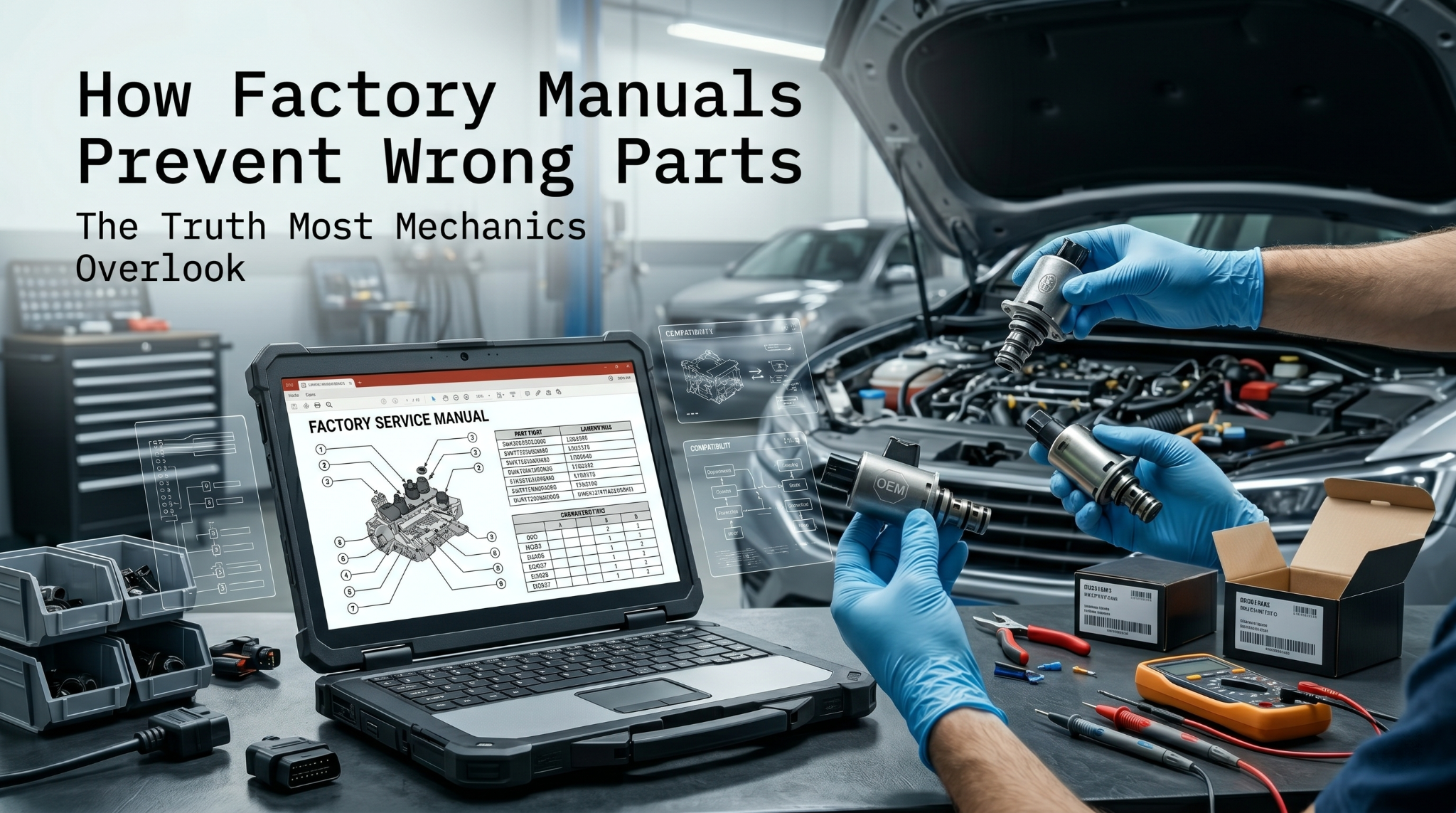
Every year, thousands of repairs fail because factory manuals are ignored, and the wrong part ends up selected for replacement. Skipping these documents does not just waste time. It can reduce vehicle reliability and double the original repair fee.
These manuals provide OEM part numbers, exploded diagrams, and compatibility data to eliminate guesswork. By standardizing workflows with precise torque specs, they prevent the installation of incompatible parts.
This article covers the exact features inside factory manuals that prevent wrong replacements, how to use them before ordering any part, and what most technicians overlook every single time.
How Factory Manuals Reduce Wrong Part Replacement: What Is Really at Stake Inside Every Repair
Most people assume a part is a part. That assumption is exactly what leads to more wrong replacements than anyone admits. Factory manuals are official documents produced by the vehicle manufacturer for each specific make, model, year, and trim level.
They do not estimate. They specify. From OEM part numbers to torque clearances, nothing is left open to interpretation. Generic catalog databases simply cannot match this level of precision.
Why Part Numbers in Factory Manuals Are Non-Negotiable
Guessing a part number is the fastest way to order the wrong component. A brake caliper from a 2017 model may look identical to the 2019 version but carry a different bore size. Without the exact OEM code from a factory manual, that difference is invisible until the repair fails.
Key benefits of using factory-listed part numbers:
- Eliminates aftermarket guesswork and cross-referencing errors
- Matches the replacement part to the original manufacturer’s specification exactly
- Reduces the chance of ordering a visually similar but functionally different component
- Saves time by cutting out the return-and-reorder cycle entirely
- Helps both DIY mechanics and professionals order with confidence the first time
For non-professional users, the guide “Why DIY Mechanics Need Factory Service Manuals” explains how to locate and apply these numbers without a shop background.
Exploded Diagrams: The Visual That Stops Wrong Replacements

A written description of a part can mislead. A detailed exploded diagram almost never does. Factory manuals include multi-angle views that show every component in its exact assembly position, confirming not only what the part looks like but also how it fits and what surrounds it.
| Diagram Feature | How It Reduces Wrong Replacement Errors |
|---|---|
| Part position reference | Confirms installation direction and orientation |
| Adjacent part visibility | Prevents confusing similar nearby components |
| Assembly sequence numbering | Ensures correct removal and reinstall order |
| Callout labels with part numbers | Links the visual directly to the exact OEM code |
| Exploded layering | Reveals hidden or internal components not visible externally |
Mechanics who skip these diagrams often install parts in the wrong orientation or miss a retaining clip. The diagram removes that risk completely and should be the first stop before any part replacement begins.
Model-Year Matching: The Detail That Changes Everything
One of the most overlooked causes of wrong part replacement is model-year misidentification. A vehicle can have three different versions of the same component across a five-year production run. Factory manuals account for mid-cycle updates, production changes, and region-specific differences that generic databases simply cannot replicate.
Common model-year pitfalls that factory manuals prevent:
- Using a pre-facelift sensor in a post-facelift trim level
- Installing a transmission filter designed for a different fluid type
- Ordering a fuel pump calibrated for an incorrect fuel pressure specification
- Applying a gasket rated for an earlier engine variant to a revised unit
The resource, “Common Mistakes When Using Factory Repair Manuals,” explains exactly how these year-specific errors occur and how to catch them before a repair begins.
Torque Specs and Part Fitment: A Pair You Cannot Separate
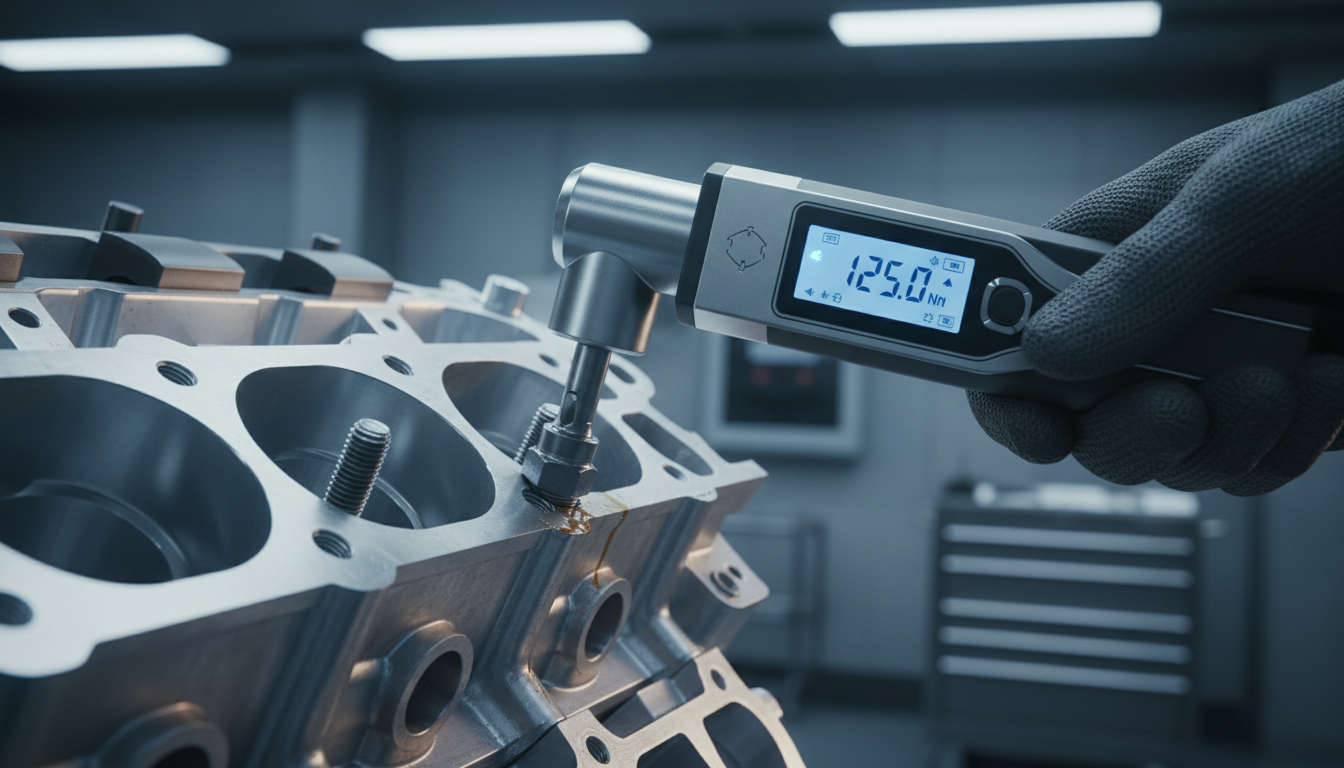
Installing the right part incorrectly is still a failed repair. Factory manuals pair correct part identification with precise installation specifications. Torque values, thread types, and clearance tolerances are documented alongside each part listing so that fitment is never a separate step.
What factory-specified fitment data includes:
- Torque values in both Newton-meters and foot-pounds for every fastener
- Lubrication requirements that must be applied before installation
- Clearance tolerances for moving or rotating components
- Thread size and pitch listed per individual fastener
- Re-use or replace designations for seals, gaskets, and snap rings
This level of detail is what separates factory manuals from third-party guides. Generic repair databases rarely include this kind of specificity, and that gap is where the most costly wrong replacements originate.
How to Use Factory Manuals Before Ordering Any Part
The best time to open a factory manual is before you touch the vehicle. Many wrong part replacements happen because the identification step is skipped entirely. A structured pre-order process using the manual takes under ten minutes and prevents hours of rework.
A step-by-step approach to using factory manuals before ordering:
- Confirm the VIN-decoded build code of the specific vehicle
- Locate the relevant system section inside the factory manual
- Cross-reference the exploded diagram with the physical component on the vehicle
- Note the exact OEM part number from the diagram callout label
- Check for any superseded part numbers or related service bulletins
The Factory Manual PDF Checklist Before Starting Repairs provides a ready-to-use checklist to make this five-step process even faster for every job.
What Ford Manuals Reveal About Part Specificity

Ford is one of the strongest real-world examples of how factory manuals prevent wrong part replacement at scale. Their documentation is known for granular callouts across multiple generations of vehicles, covering platform-level differences even within the same nameplate.
A manual for a specific F-150 trim, for instance, will note engine-specific sensor variants not shared with other configurations in the same model year. That precision directly reduces technician error across independent shops and dealerships alike.
For a closer look at how this documentation is structured, the article “What Ford Service Manuals Include and Why Mechanics Use Them” provides detailed insight.
Conclusion
Factory manuals are not passive reference documents. They are active tools that prevent wrong part replacement by providing exact OEM numbers, visual assembly diagrams, year-specific compatibility data, and precise installation specifications.
Every wrong replacement avoided saves money, time, and the frustration of a repeat repair visit. The more consistently a factory manual is consulted before ordering any part, the fewer mistakes reach the vehicle.
That is not a theory. It is what experienced technicians have proven over decades of accurate repair work. The manual is always the right first stop.