A blinking tire pressure light can be more confusing than a steady warning. You may check the tires, find normal pressure, and still see the light flash every time you start the vehicle. That pattern deserves attention.
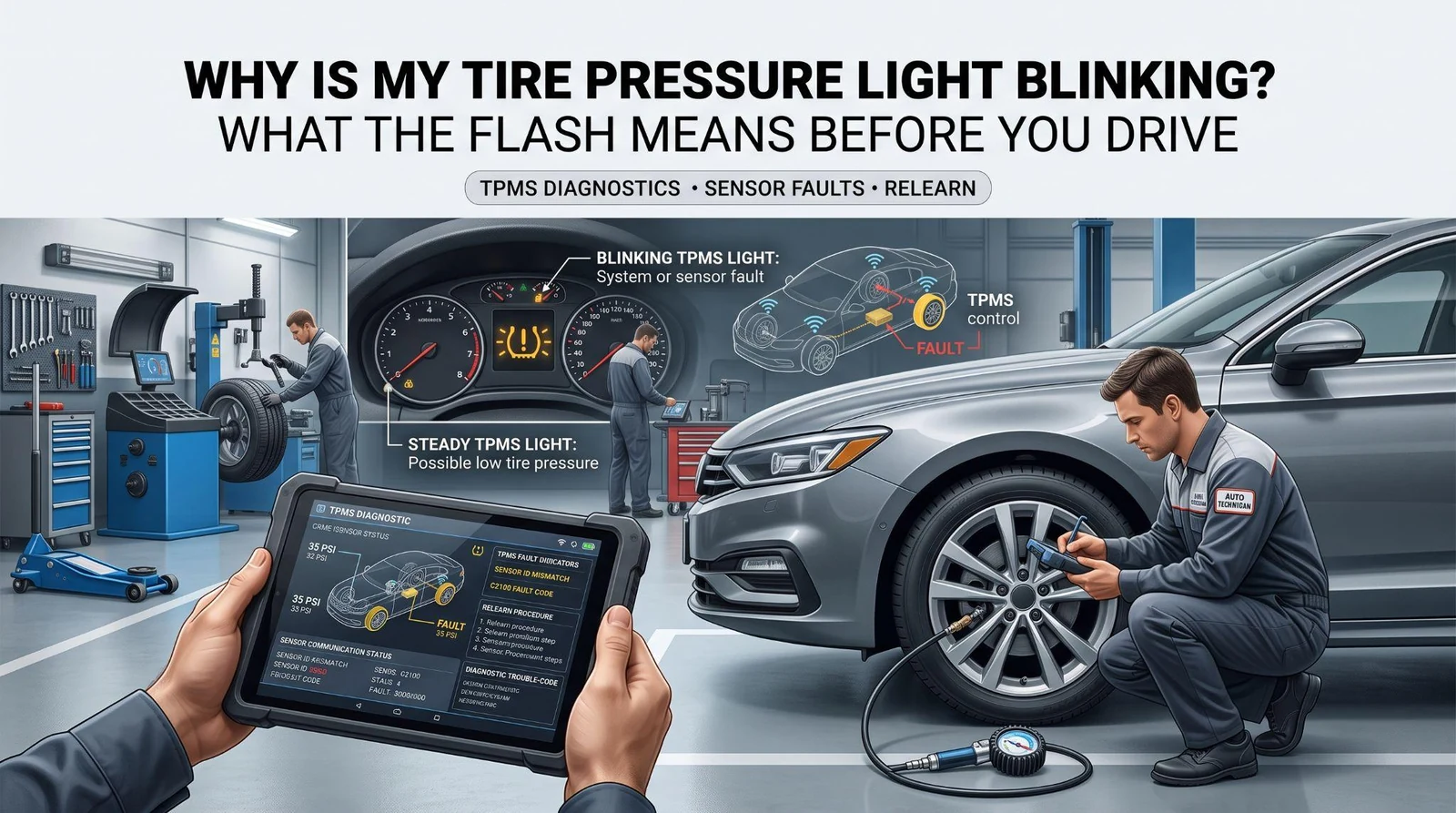
The first clue is how the light behaves. A steady TPMS light commonly points toward low tire pressure. A light that flashes for about a minute before staying on usually points toward a problem inside the tire pressure monitoring system itself.
This guide shows you how to separate pressure problems from sensor faults, recent tire-service issues, and TPMS relearn problems. You’ll also see which checks should happen before anyone starts replacing parts.
Why Is My Tire Pressure Light Blinking: Read This First
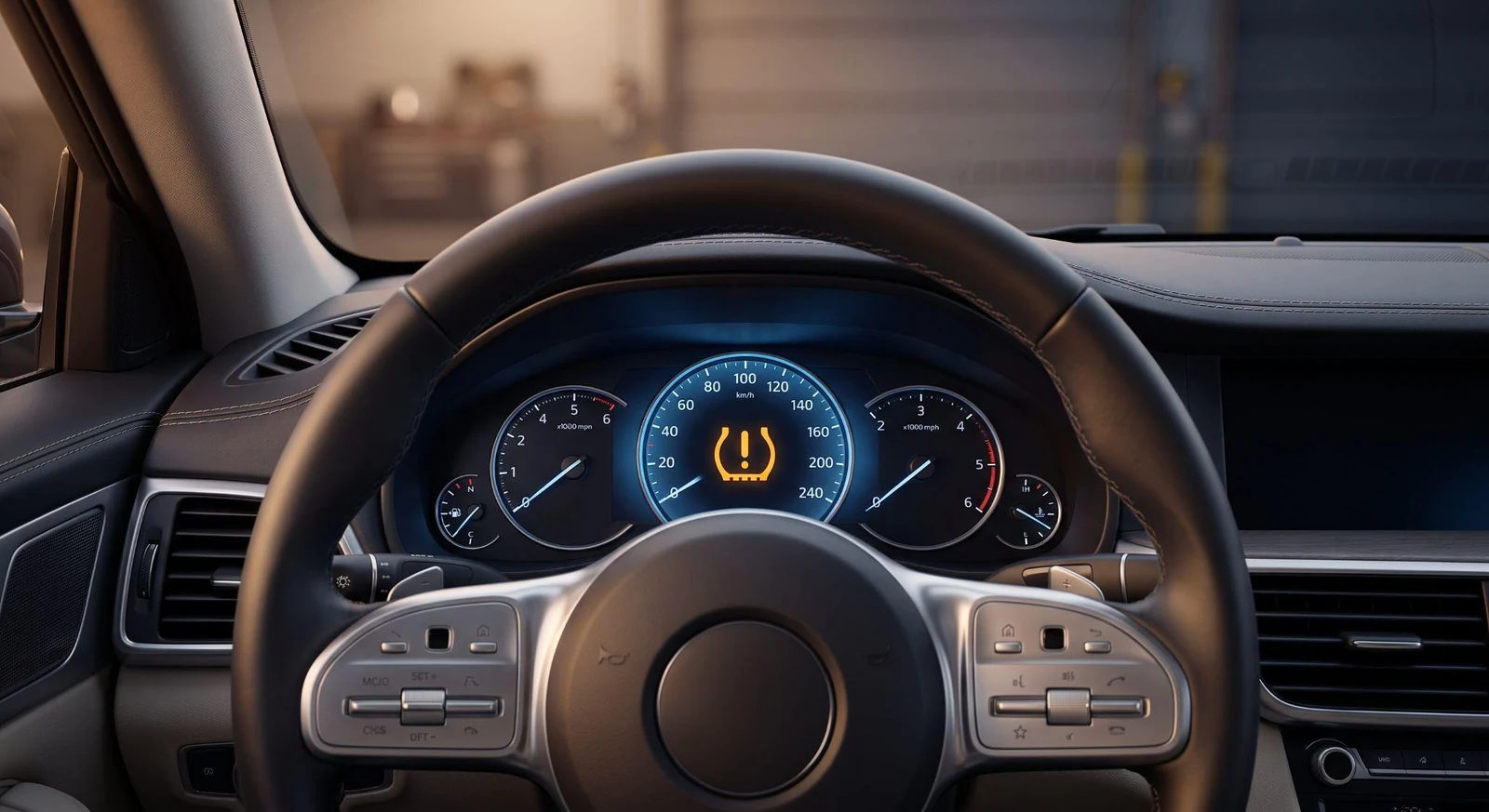
The blinking pattern matters because the same dashboard symbol can report two different problems. Low tire pressure and a TPMS malfunction require different diagnostic paths. On vehicles using a combined warning lamp, a system malfunction can make the symbol flash for 60 to 90 seconds and then remain illuminated.
| What the TPMS Light Does | Likely Meaning | First Action |
|---|---|---|
| Stays solid after startup | One or more tires may be underinflated | Check all tires cold |
| Flashes 60 to 90 seconds, then stays on | TPMS system malfunction | Check pressure, then diagnose sensors/system |
| Comes on during cold weather, then disappears | Pressure may be near the warning threshold | Verify cold tire pressure |
| Starts blinking after wheel or tire work | Sensor, compatibility, or relearn issue may exist | Review recent service and relearn procedure |
| One tire reading is missing | Sensor communication may have failed | Scan individual TPMS sensors |
Start With the Blink Pattern
Turn the vehicle on and watch the warning light closely. Don’t rely on remembering what it did during yesterday’s drive.
A solid light from the beginning usually means the system has detected significantly low tire pressure. A light that flashes for roughly one minute and then stays illuminated indicates a TPMS malfunction on systems following the federal combined-telltale standard. This sequence normally returns at subsequent startups while the malfunction remains.
That distinction can prevent wasted diagnostic work. Adding air may correct a genuine low-pressure warning, but it generally won’t repair a failed sensor or communication fault.
Also watch the vehicle’s information display. Some models show individual pressures, a “Service TPMS” message, or dashes where a tire reading should appear. Those details can help narrow the fault.
Check Tire Pressure Before Electronics
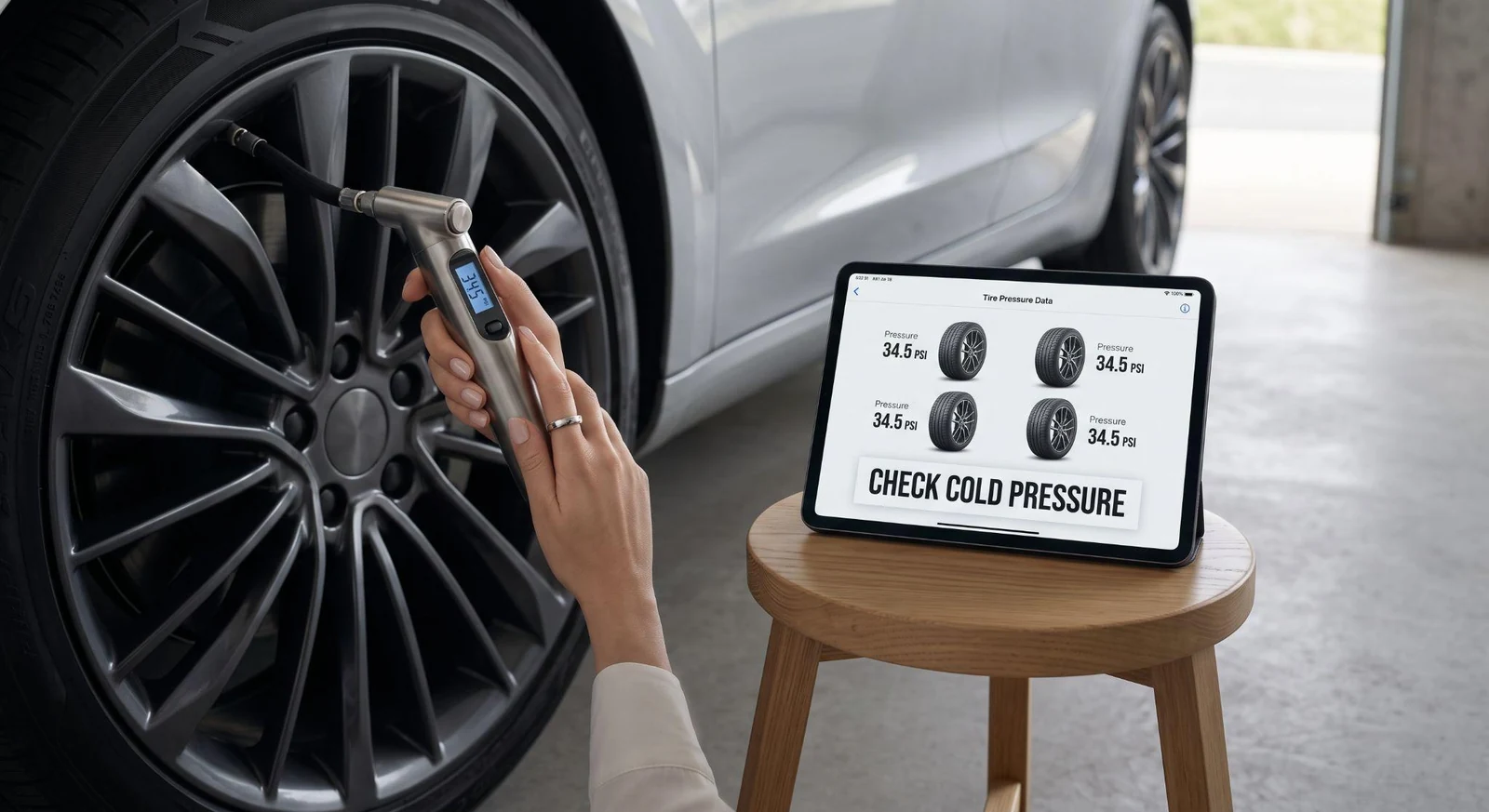
Even when the light blinks, check the actual tire pressure first. A TPMS fault doesn’t prove that all four tires are safely inflated.
Measure each tire when it is cold, ideally before a long drive. Use the recommended pressure printed on the vehicle’s tire information label, usually found on the driver-side door jamb. Don’t use the maximum pressure molded into the tire sidewall as your target. NHTSA specifically recommends checking cold pressure against the vehicle placard.
If one tire is low, inspect it for an obvious puncture, valve leak, or other damage rather than repeatedly adding air.
Cold weather also matters. Pressure can drop as temperatures fall, causing a marginally low tire to trigger the warning in the morning before pressure rises while driving.
Why the TPMS Can Malfunction
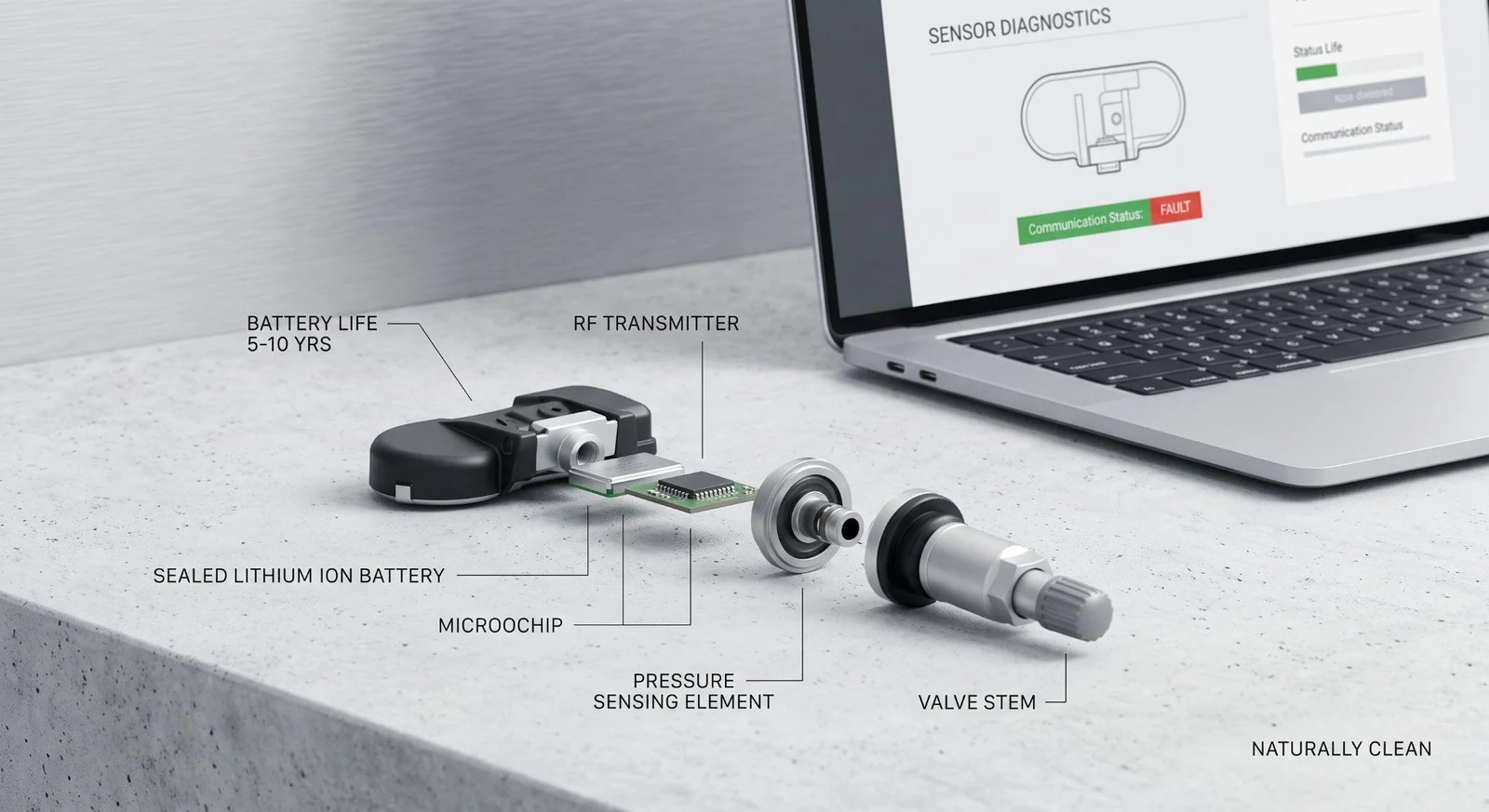
Most direct TPMS systems use pressure sensors at the wheels that transmit information to the vehicle. A blinking warning means the vehicle has detected that this monitoring process isn’t functioning correctly.
Common causes include a failed TPMS sensor, a dead sensor battery, a damaged sensor, a communication problem, an incompatible replacement wheel, or a missing sensor. Some vehicles can also report temporary communication interference. Manufacturer documentation shows that replacement wheels, alternate tires, missing sensors, and radio interference can produce TPMS faults on certain models.
Sensor age deserves attention on older vehicles. Schrader, a TPMS component manufacturer, reports an average original sensor battery life of roughly five to ten years, although actual life varies. The battery is normally sealed inside the sensor.
Before assuming the sensor is bad, test automotive sensors to understand why measured data should come before parts replacement.
Why Tire Service Can Trigger It
Think about what happened immediately before the light started blinking.
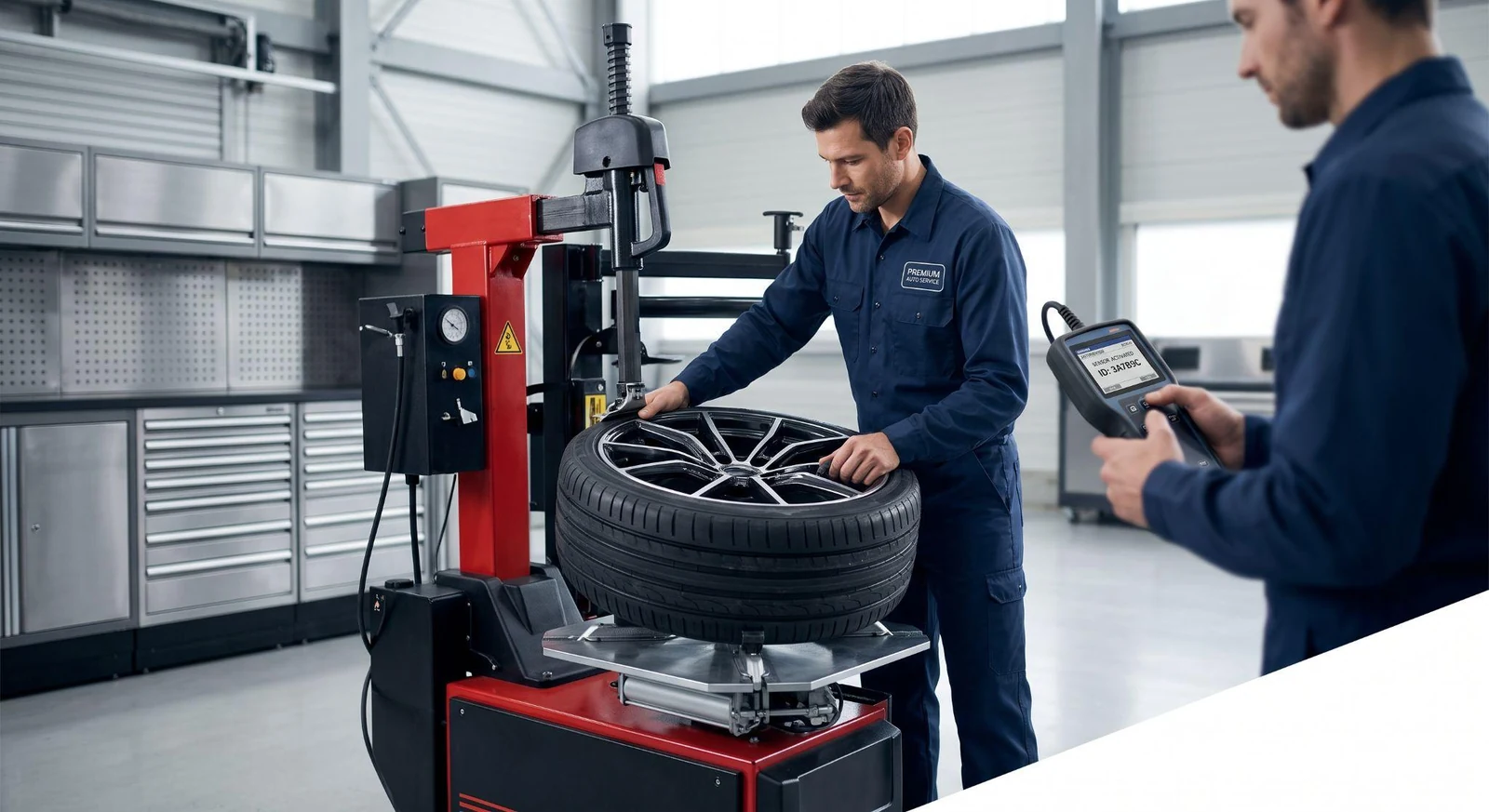
If the tires were recently replaced, rotated, repaired, or mounted on different wheels, the system may need a TPMS reset or sensor relearn. A sensor may also have been damaged during tire service, or a replacement sensor may not be correctly registered with the vehicle yet.
Procedures differ considerably between makes and models. Some vehicles automatically relearn sensors while driving. Others require a menu command, a specific training procedure, or dedicated TPMS equipment. Ford, for example, documents different reset and relearn procedures across its vehicle lines.
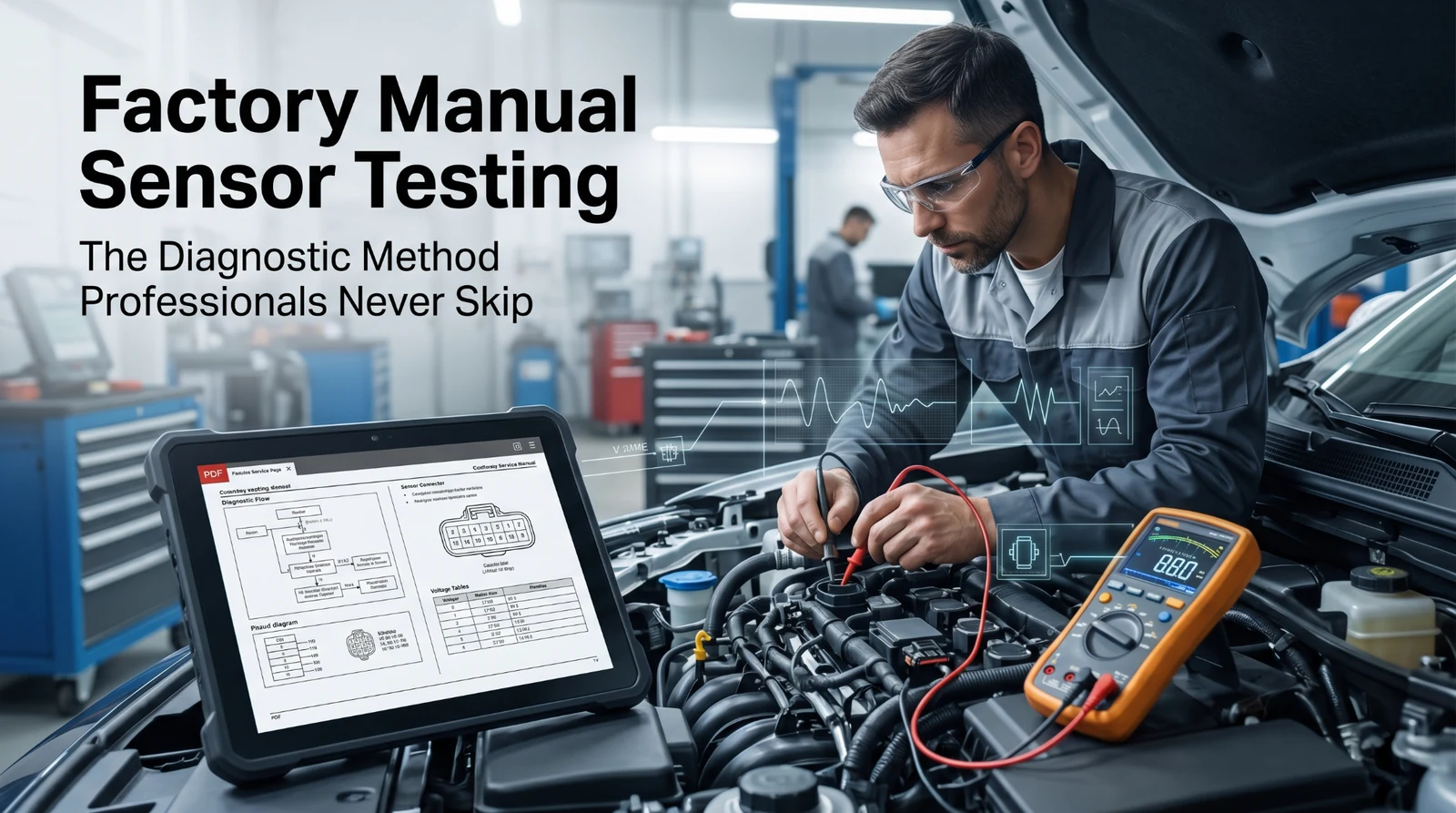
That is why randomly copying a reset sequence from another model can create confusion. Vehicle-specific factory diagnostic flowcharts can help technicians follow the intended process instead.
Test the Sensor Before Replacing It
A blinking TPMS light doesn’t automatically mean you need four new sensors.
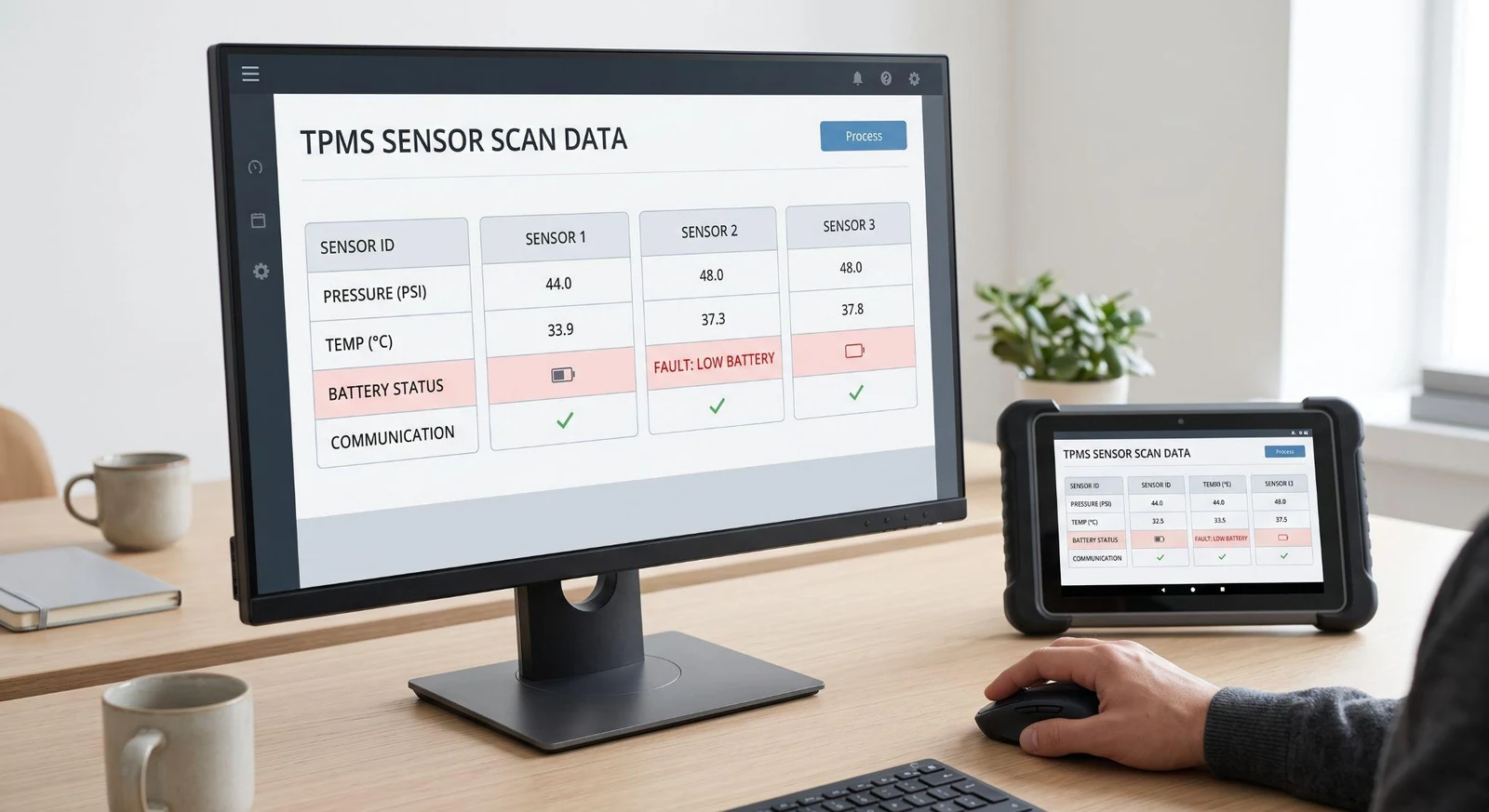
A technician can use a compatible TPMS scan or activation tool to check whether each wheel sensor responds and transmits useful information. Depending on the vehicle and tool, that data may include pressure, sensor identity, and other diagnostic information.
If three sensors respond and one does not, the diagnosis becomes much narrower. If all four sensors respond but the vehicle still reports a malfunction, the problem may involve sensor registration, the receiver, wiring, software logic, or another system component.
This is where a structured diagnostic sequence matters. If a TPMS-related diagnostic code is available, follow trouble-code diagnosis in order instead of replacing whichever component seems most likely.
The goal is simple: prove the failed part before buying it.
Reset, Relearn, or Repair?
These terms often get treated as though they mean the same thing, but they don’t always describe the same operation.
A reset may tell the vehicle to establish or store a new tire-pressure baseline. A relearn can involve teaching the vehicle the identities or locations of its wheel sensors. A repair addresses the actual malfunction, such as replacing a failed sensor.
Manufacturer procedures vary. Hyundai documents systems that adjust tire pressures first and then store them through a vehicle menu, while Ford documents vehicles that require sensor training or driving for the system to relearn information.
So a reset button cannot revive a sensor that no longer transmits.
Diagnosis first also helps you avoid replacing the wrong part, especially when a warning appears immediately after other wheel or tire work.
When You Should Stop Driving
A blinking TPMS warning indicates a monitoring-system problem, but you still need to consider the physical condition of the tires.
If a tire is visibly flat, rapidly losing pressure, damaged, or the vehicle suddenly feels unstable, reduce speed and pull over to a safe location. A malfunctioning TPMS may not provide the low-pressure warning you normally depend on. NHTSA also emphasizes that TPMS does not replace manual pressure checks.
If all tires are properly inflated and undamaged, the blinking light may be an electronic or sensor fault rather than an immediate loss of tire pressure. It still needs diagnosis because the monitoring system may not warn you correctly if a tire later becomes underinflated.
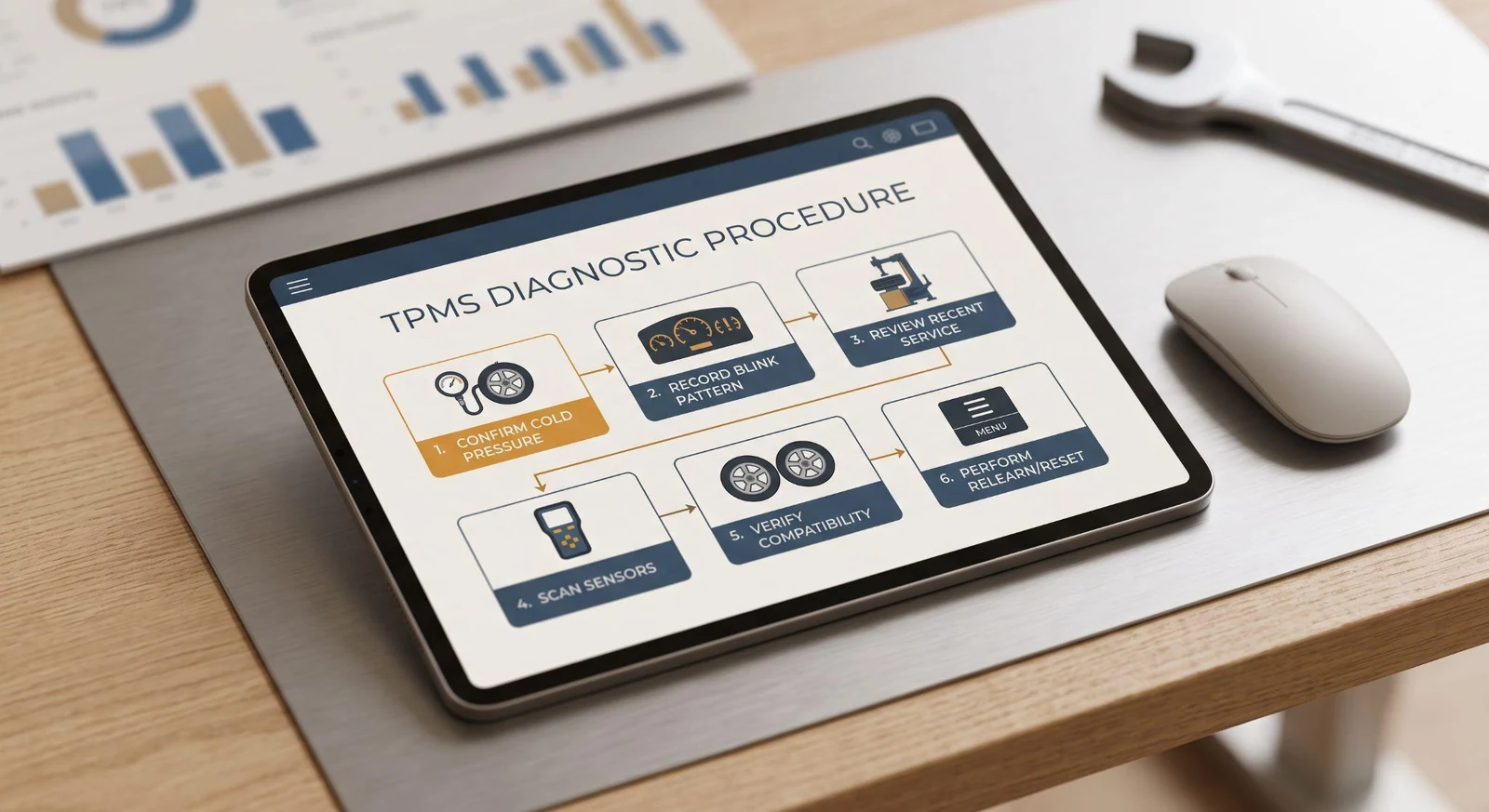
What a Proper Diagnosis Includes
A useful TPMS diagnosis should answer several questions instead of ending with “the light is on.”
First, confirm the cold pressure in every tire. Then record exactly how long the warning flashes and whether it remains solid.
Next, check for recent tire rotations, wheel replacements, tire repairs, sensor replacements, or spare-tire installation. Some spare wheels don’t contain a compatible TPMS sensor, which can affect system behavior on certain vehicles.
After that, test each TPMS sensor and retrieve applicable system faults using equipment appropriate for the vehicle. Verify that replacement sensors and wheels are compatible, then perform the manufacturer-specified reset or relearn only when required.
This sequence separates pressure, sensor, communication, and relearn problems without guessing.
The Fastest Decision Path
If you’re asking, “Why is my tire pressure light blinking?” use the warning pattern to choose your next move.
First, check every tire’s cold pressure. Correct any genuine pressure problem using the vehicle placard.
If the light still flashes for roughly a minute before staying on, treat it as a TPMS malfunction rather than assuming the tires only need more air. Have the individual sensors and the system checked.
If the warning began after tire or wheel service, verify sensor compatibility and the correct reset or relearn procedure before authorizing replacement parts.
That approach gives you more than clearing a dashboard light: a working monitoring system that can warn you when tire pressure becomes unsafe.
Commonly Asked Questions About the Tire Pressure Light Blinking
Can I drive with a blinking tire pressure light?
You may be able to move the vehicle if all tires are properly inflated and undamaged, but don’t treat the blinking light as harmless. A flashing TPMS light often indicates a monitoring system malfunction, which means it might not warn you if a tire later loses pressure.
Check every tire manually with an accurate gauge before continuing. If any tire is flat, damaged, rapidly losing pressure, or the vehicle feels unstable, stop driving and address the tire problem first. If the tires check out, have a TPMS diagnosis done rather than relying on the warning system until the malfunction is corrected.
Why is my TPMS light blinking when the tires are full?
Correct tire pressure doesn’t guarantee that the TPMS itself is working. A blinking light can indicate a sensor or system malfunction even when all four tires contain the recommended amount of air.
Causes may include a failed wheel sensor, a weak sensor battery, a communication problem, an incompatible wheel or sensor, or a sensor that hasn’t been relearned after service. Start by confirming cold pressure against the driver-door placard.
Then watch whether the warning flashes for about a minute and stays on. If it does, testing each wheel sensor is more useful than repeatedly adding air or clearing the warning without diagnosing its cause.
Why did my tire light start blinking after new tires?
A TPMS warning that begins immediately after new tires or wheel work makes the recent service an important diagnostic clue. A sensor could have been damaged, replaced with an incompatible unit, left unregistered, or moved to a new wheel position that requires relearning.
Some vehicles also require a TPMS reset after tire replacement or rotation, while others relearn automatically under specific conditions. Ford documentation, for example, shows that procedures vary between models.
First, verify that all tire pressures are correct. Then confirm the replacement wheels and sensors match the vehicle and perform only the reset or relearn procedure specified for that exact year and model.
Will adding air stop a blinking TPMS light?
Adding air can turn off a steady low-pressure warning when underinflation caused the problem, but it usually won’t correct a persistent blinking sequence caused by a TPMS malfunction.
The key step is to check the tires rather than assuming the flashing symbol reflects their actual pressure. On systems using the combined malfunction indicator, the warning can flash for 60 to 90 seconds and remain illuminated when the monitoring system detects a fault.
Inflate any low tires to the vehicle’s specified cold pressure. If pressure is correct but the blinking returns at startup, diagnose the sensors and TPMS electronics instead of continuing to add air.
How do I know if a TPMS sensor is bad?
The strongest evidence comes from testing the sensor rather than judging only by the dashboard light. A compatible TPMS scan or activation tool can check whether each wheel sensor responds.
If several sensors communicate normally while one repeatedly fails to respond, that wheel becomes the main suspect. Sensor age may also support the diagnosis because sealed TPMS sensor batteries eventually wear out. Schrader estimates an average battery life of about five to ten years for original sensors, though actual lifespan varies.
A proper diagnosis should also consider sensor registration, recent wheel work, receiver communication, and vehicle-specific fault codes before installing a replacement sensor.