Copper-free brake pads are now a normal part of replacement brake service, not a specialty option. Since January 1, 2025, brake pads and shoes sold in California and Washington have been limited to less than 0.5% copper by weight. Manufacturers have broadly reformulated their friction materials around that standard, so many drivers encounter copper-free pads even outside those two states.
The important point is that copper-free describes composition, not overall brake-pad quality. It doesn’t tell you whether a pad is ceramic, semi-metallic, or organic, or how quiet, durable, or heat-resistant it will be. A good brake job still depends on choosing the correct friction characteristics for the vehicle, inspecting the rotors and hardware, and following model-specific service procedures.
For DIY owners and technicians, the safest approach is to treat the pad, rotor, caliper, hardware, and factory service data as one system. This guide explains how to identify compliant copper-free brake pads, interpret the markings, choose a suitable pad family, and service the brakes without relying on generic specifications.
Key Takeaways
- Copper-free means less than 0.5% copper by weight. For the current Better Brakes standard, look for LeafMark Level N with three leaves.
- “Eco” is not a technical certification. Use the compliance marking rather than package wording alone.
- Copper-free and ceramic are different ideas. Organic, semi-metallic, and ceramic pads can all meet the copper limit.
- Friction rating still matters. The edge code helps identify normal-temperature and high-temperature friction characteristics.
- Vehicle-specific service data remains essential. Rotor limits, caliper fastener torque, electronic parking-brake procedures, and bleeding requirements vary by model.
- Hybrid and EV brake wear can look different. Regenerative braking reduces friction-brake use, which can increase the importance of corrosion and slider inspection.
What Makes a Brake Pad Copper-Free?
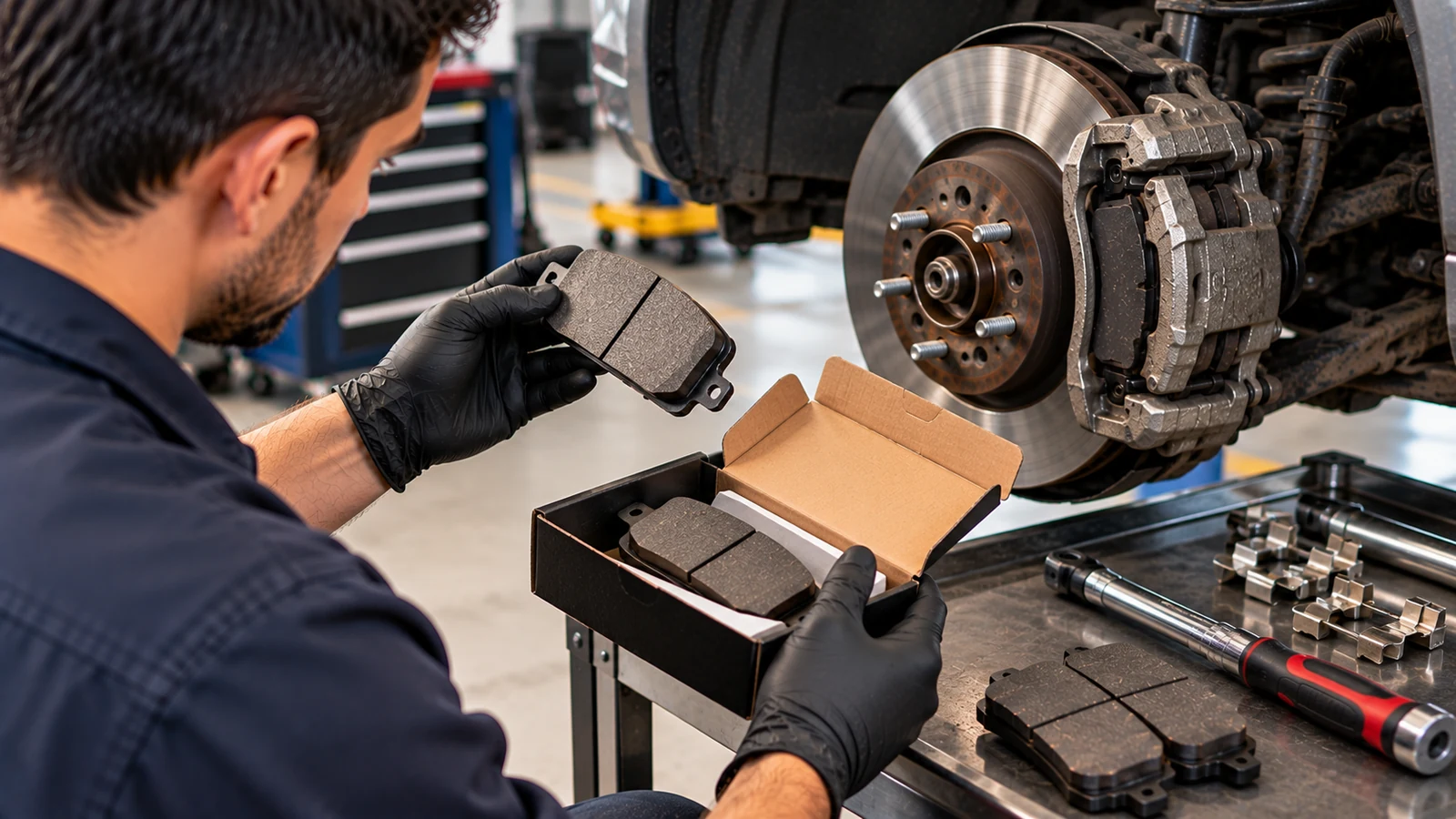
A brake pad qualifies as copper-free under the final Better Brakes phase when its friction material contains less than 0.5% copper by weight. This is a composition requirement. It does not define the pad as ceramic, organic, or semi-metallic.
That distinction matters when shopping. A ceramic pad may still need its compliance rating checked, and a semi-metallic pad can be copper-free if its formulation uses other metallic and friction-control ingredients. The same applies to organic or NAO formulations.
The practical buying check is simple: look for LeafMark Level N, shown with three leaves. That marking confirms the final copper threshold. If a package only says “green,” “eco,” or “low dust,” those claims do not by themselves confirm copper content.
Why Brake-Pad Formulations Had to Change
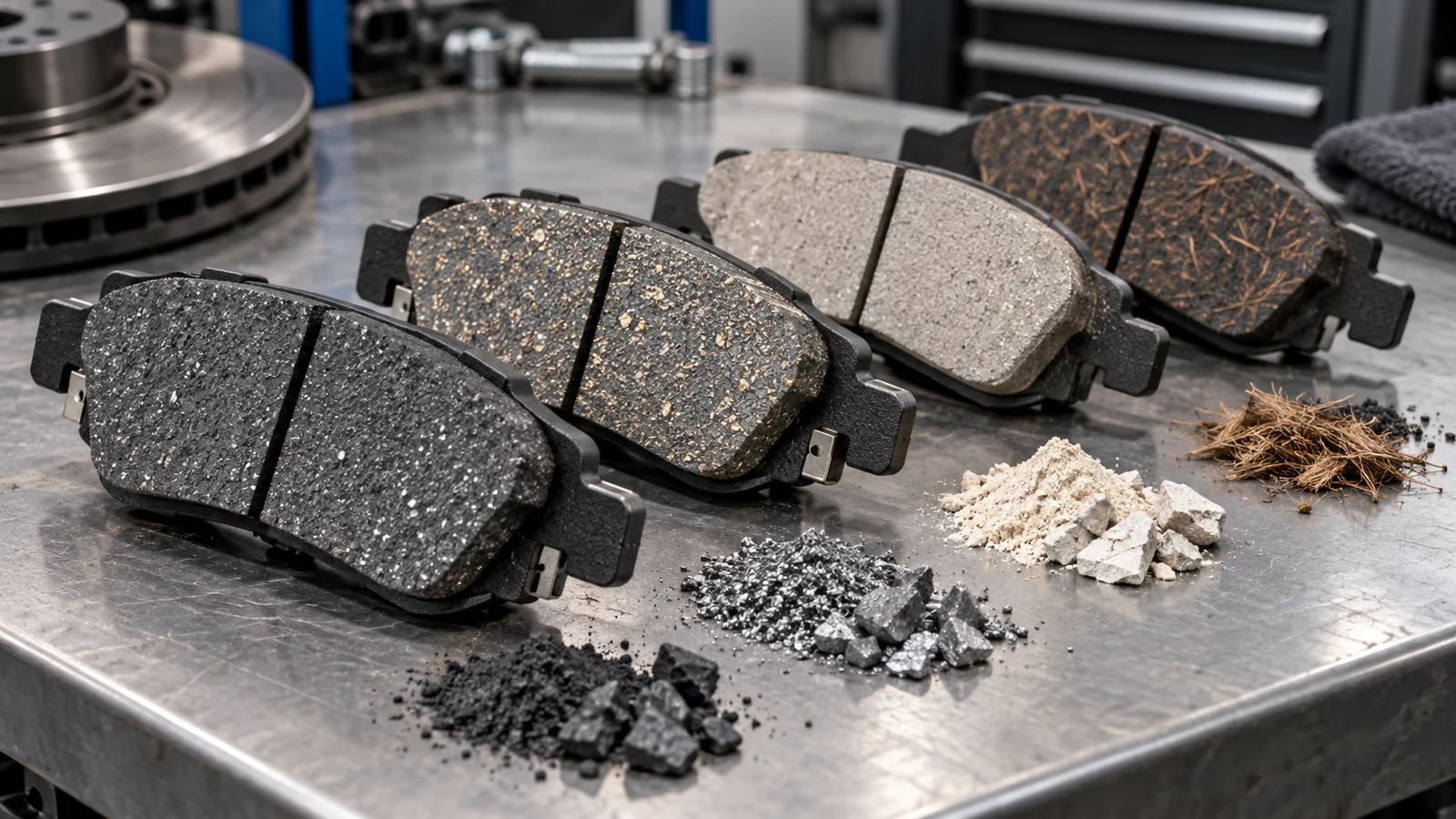
Manufacturers didn’t leave copper out of older friction materials by accident. It helped manage several characteristics that matter during braking, including heat transfer, friction stability, wear behavior, and vibration control. Removing it therefore required manufacturers to rebalance the whole friction recipe rather than simply leave one ingredient out.
What Copper Used to Do in the Friction Material
| Brake-pad requirement | Role copper could play | Typical reformulation approach |
| Heat control | Help move heat away from the friction surface | Graphite and other thermally conductive ingredients |
| Stable friction | Help maintain consistent friction as temperature changes | Rebalanced abrasives, lubricants, fibers, and fillers |
| Wear resistance | Contribute to pad and rotor durability | Ceramic, mineral, aramid, and other wear-resistant fibers |
| Noise control | Help damp vibration that can become squeal | Tuned compressibility, graphite, shims, and formulation changes |
Because these functions interact, two Level N pads can behave differently even though both satisfy the same copper limit. The LeafMark confirms compliance. It does not rank stopping power, noise, dust, service life, or rotor friendliness.
What Commonly Replaces Copper
Modern copper-free formulas can use combinations of graphite, steel or stainless-steel particles, ceramic or mineral fibers, aramid fibers, glass fibers, abrasives, lubricants, and fillers. There is no single universal substitute.
That is why established application data matters. A formulation developed for a commuter sedan does not necessarily have the same heat and wear priorities as one intended for a heavier SUV, pickup, or performance car. For example, service data for a Volkswagen Golf Mk6 GTI, 2013 Audi S6 Quattro, or BMW 335i Sedan E90 is more useful than assuming every copper-free street pad should behave the same way.
Why Regulators Focused on Copper in Brake Dust
Every braking event removes a small amount of material from the pad and rotor. That dust settles on roads, then rain can carry it through storm drains into streams, rivers, and lakes. Copper is useful inside a friction material, but once it reaches waterways, it can affect aquatic organisms.
Before the phase-down took effect, estimates cited in the source material put brake-related copper releases at roughly 1.3 million pounds in California in 2010 and about 250,000 pounds in Washington in 2011. California projections suggested that changing brake-pad composition could reduce copper in urban runoff by as much as 61%.
Copper-free pads do not eliminate brake dust. The regulatory change mainly alters what that dust contains, while the earlier Level A rules also restricted asbestos and several heavy metals. This is why good brake-service cleanup still matters even with a modern Level N pad.
How to Verify Compliance Without Trusting Marketing Claims
The Better Brakes rules were phased in over time. California passed SB 346 in 2010, and Washington adopted its Better Brakes Law in the same period. The rules first restricted several hazardous substances, then lowered allowable copper content in stages. A later national Copper-Free Brake Initiative aligned environmental regulators and industry groups around the same general phase-down timeline, but that national initiative is voluntary.
Better Brakes Phase-Down Timeline
| Effective date | Main requirement | LeafMark level |
| January 1, 2015 | 0.1% or less by weight of asbestos, cadmium, hexavalent chromium, lead, and mercury | Level A, one leaf |
| January 1, 2021 | Level A limits plus copper below 5% by weight | Level B, two leaves |
| January 1, 2025 | Earlier limits plus copper below 0.5% by weight | Level N, three leaves |
The binding copper limits come from California and Washington law. In practice, manufacturers often reformulate broader product lines rather than maintaining separate formulations for those states, so compliant pads are widely available elsewhere. Regional requirements can change, so check local rules when legal compliance is the question.
LeafMark and the Friction Edge Code Tell You Different Things
Two markings are useful, but they answer different questions:
- LeafMark Level N tells you the pad meets the less-than-0.5% copper threshold and the earlier restricted-material limits.
- The friction edge code describes tested friction characteristics at normal and higher temperatures.
Do not use one as a substitute for the other. A pad can have a suitable friction rating but lack the Level N copper rating, or it can meet Level N while having friction behavior that doesn’t best match a particular vehicle.
Copper-Free, Low-Dust, and Euro 7 Are Separate Issues
A copper-free pad is not automatically a low-dust pad. Level N addresses copper content, while dust output depends on the complete pad-and-rotor system.
The source material also notes that Euro 7 introduces brake-particle limits for new vehicles in Europe. For most passenger cars, the cited PM10 limit is 7 mg/km, while battery-electric vehicles are cited at 3 mg/km. The limits apply to newly type-approved cars and vans from November 29, 2026, and to all new vehicles from November 29, 2027.
Those Euro 7 limits are vehicle and brake-system type-approval requirements, not a LeafMark-style rating on an individual replacement pad. A pad can therefore be copper-free without making any separate claim about Euro 7 brake-particle performance.
Choosing Copper-Free Brake Pads for Real Driving Conditions
The best pad is not determined by the word “copper-free.” Start with fitment and the vehicle’s original braking requirements, then choose a friction-material family that suits how the vehicle is used.
Organic, Semi-Metallic, and Ceramic Pads
| Pad family | Typical traits | What to check on a copper-free replacement |
| Organic / NAO | Often quiet with a softer feel, but can wear faster and create darker dust | Confirm Level N rather than assuming the formula is compliant |
| Semi-metallic | Strong bite and heat capability, with possible increases in noise or dust | Verify the exact application and copper rating |
| Ceramic | Commonly quiet, low-dust, and long-wearing | Ceramic construction alone does not prove copper-free status |
For higher-load or higher-heat applications, brake condition and correct specifications matter even more. A Porsche Macan workshop manual or Mercedes-Benz C 300 4MATIC factory manual can help confirm the vehicle-specific procedure, hardware arrangement, and service values before you fit parts.
Read the Friction Rating Before You Change Pad Characteristics
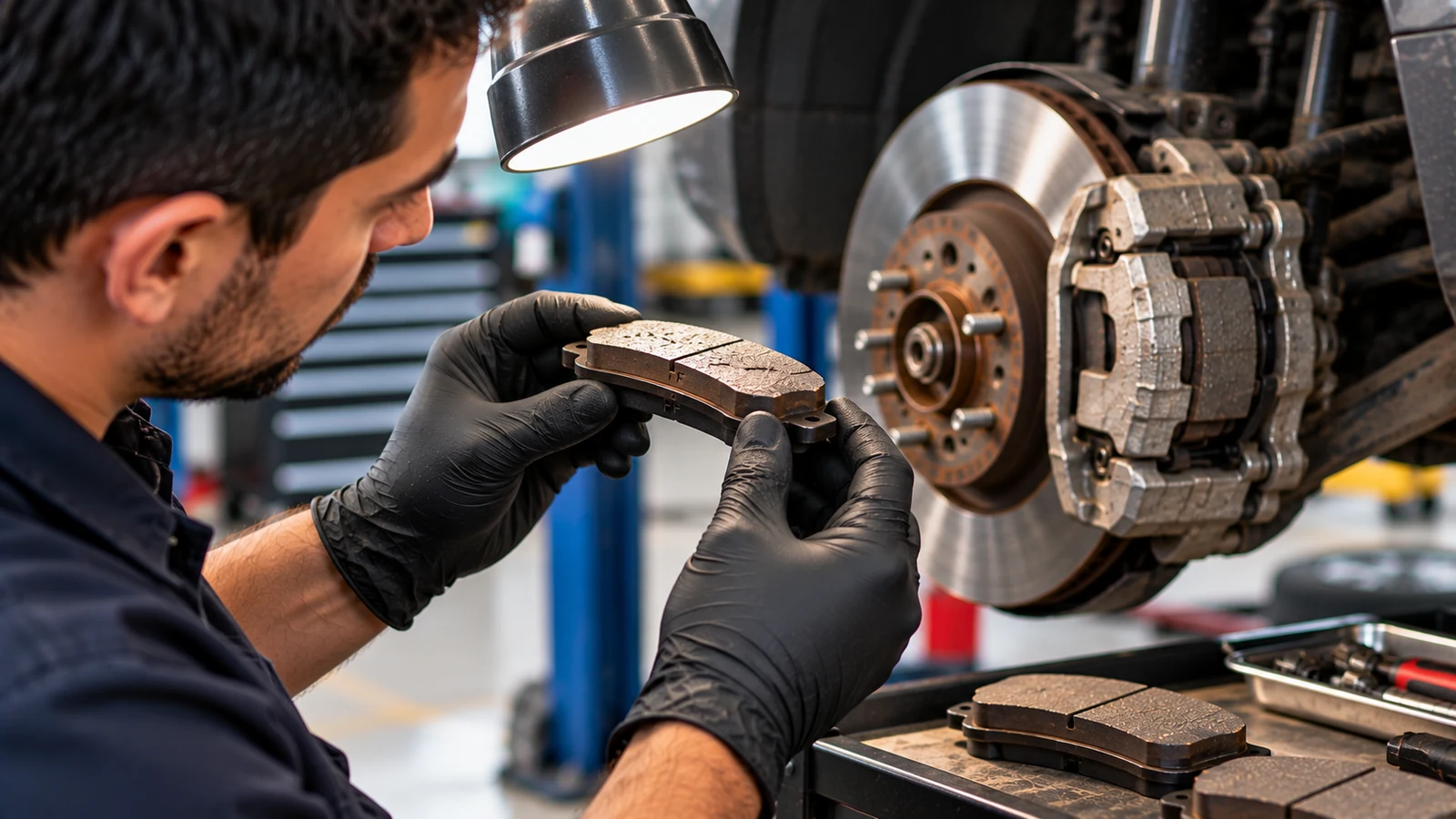
Most brake pads carry an edge code that includes a two-letter friction rating. The first letter represents the tested friction level at roughly 200 to 400°F. The second represents the level at roughly 300 to 650°F.
| Letter | Coefficient of friction range |
| C | Up to 0.15 |
| D | Over 0.15 to 0.25 |
| E | Over 0.25 to 0.35 |
| F | Over 0.35 to 0.45 |
| G | Over 0.45 to 0.55 |
| H | Over 0.55 |
An FF rating, for example, indicates similar friction classification in the normal and hotter test ranges. The letters don’t tell you how dusty, quiet, or long-lasting the pad will be, and they don’t confirm copper content. They are one part of matching replacement friction behavior to the original application.
Heat, Noise, Dust, and Rotor Wear Are Formulation-Specific
Copper-free formulations can perform very well, but laboratory comparisons haven’t shown universal behavior for every replacement chemistry. Some formulations match copper-containing references closely, while others trade off wear or vibration depending on the ingredients used.
That makes rotor inspection essential whenever you change pads. Measure rotor thickness at several points and compare the result with the correct service limit. Performance-oriented vehicles such as the 2013 Audi S6 and 2008-2012 Golf GTI show why application-specific brake data matters when heat and braking demand are higher.
Service Checks to Make Before Installing New Pads
Brake-pad replacement is not just a remove-and-refit job. Before installing a different formulation, confirm the vehicle identity, measure the rotors, inspect caliper movement, and check the correct torque values and electronic procedures.
Confirm the Exact Vehicle and Brake Package
Year and model name alone are not always enough. Engine, drivetrain, trim, brake package, and production changes can alter pad shape, caliper design, rotor dimensions, and service instructions.
For older vehicles, use a manual that matches the actual application rather than a generic procedure. AutoServicePlus currently offers model-specific examples, including the 1997-2002 Honda Odyssey LX manual, 2005-2008 Ford Escape 4WD manual, 2011-2013 Chevrolet Cruze manual, 2005-2010 Hyundai Tucson JM manual, 2007-2010 Kia Rondo manual, and 1999-2001 Toyota Camry Solara SE manual.
These manuals help confirm service limits, fastener torque, component layout, and any model-specific sequence before work begins.
Inspect Rotors, Hardware, and Caliper Movement
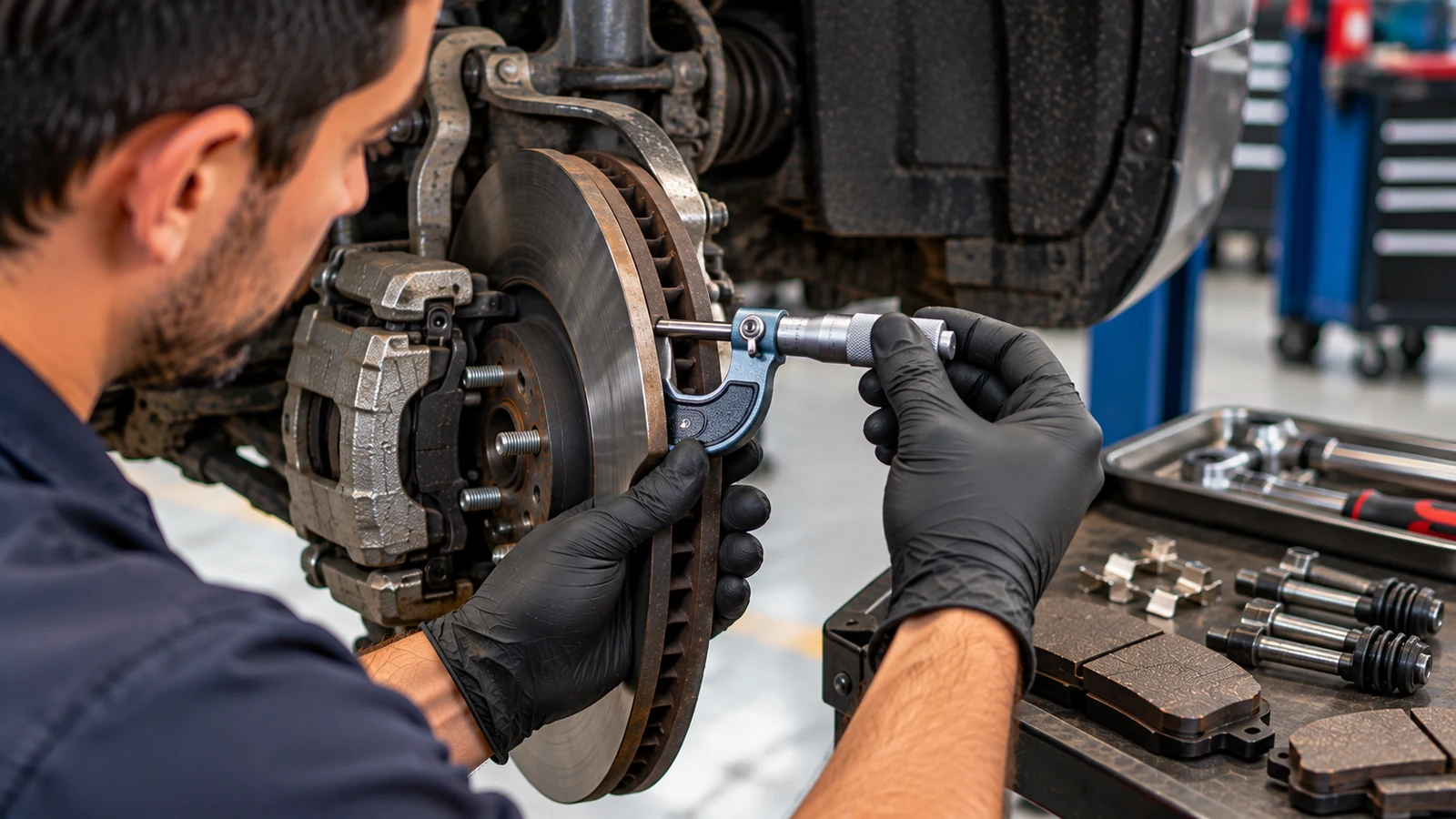
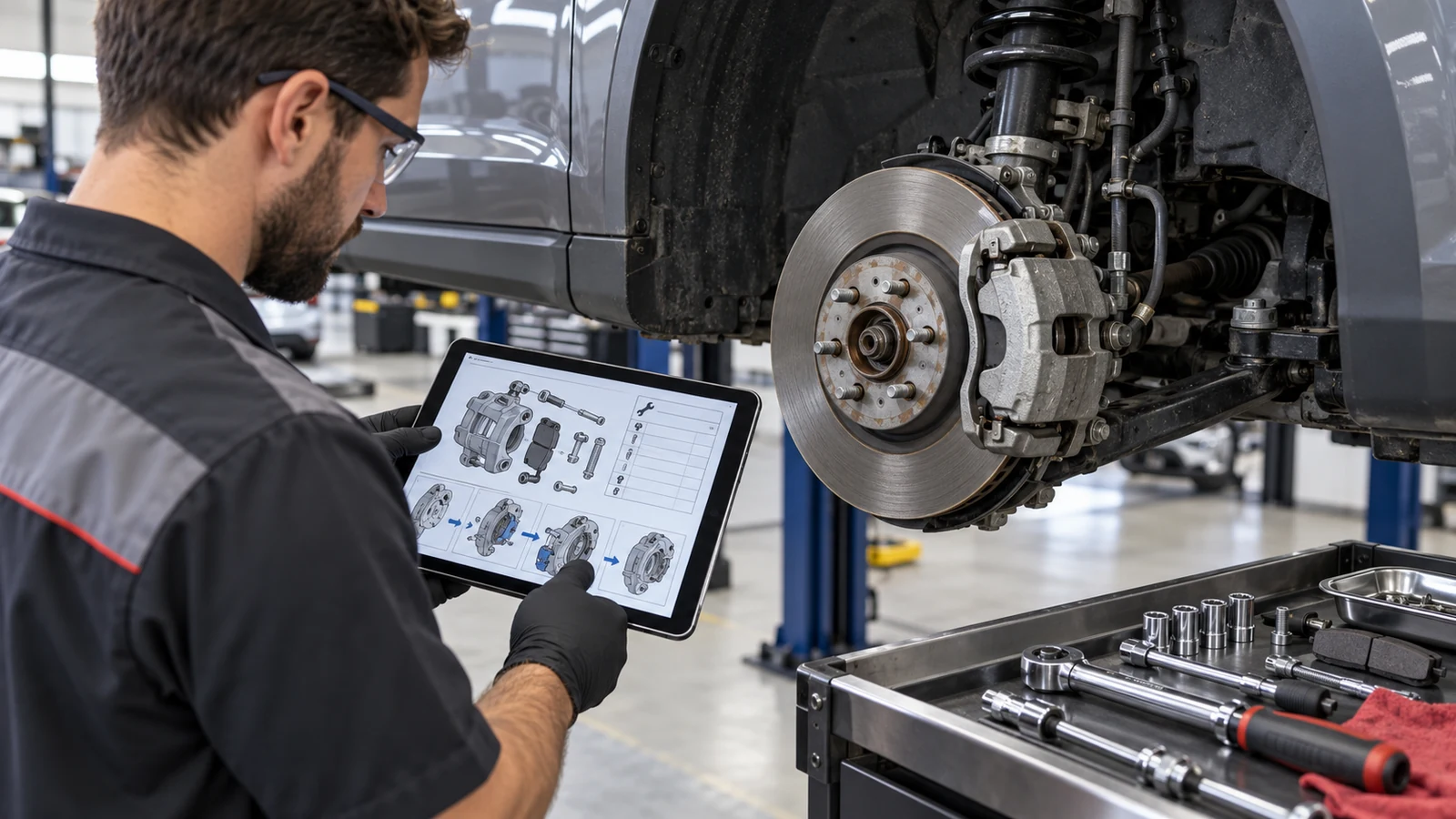
Don’t use fresh pads to hide an existing brake problem. Before assembly, lift the vehicle only at the manufacturer’s approved jacking points and support it correctly. Review the brake assembly layout so clips, shims, guide pins, and other hardware return to their intended positions.
- Measure rotor thickness and compare it with the vehicle’s service limit.
- Check the rotor for heavy scoring, heat damage, or an uneven friction surface.
- Inspect slide pins, bracket contact points, boots, clips, and shims.
- Investigate uneven pad wear instead of simply replacing the thinner side.
- Confirm whether the rear brake uses an electronic parking brake and requires a service mode before retracting the piston.
- Tighten guide-pin and caliper-bracket fasteners to the manual’s specified torque, not by feel.
Vehicles with more complex chassis or braking systems are another reason to work from factory procedures. The 2013-2014 Acura RDX AWD manual, 2013-2015 Cadillac ATS manual, and 2013-2014 Mazda CX-5 AWD manual give technicians a model-specific reference instead of relying on a universal brake-service sequence.
Handle Brake Dust as a Contaminant
Copper-free does not mean dust-free. Pads and rotors still shed fine particles during normal braking, so cleanup should keep that dust out of the air and out of storm drains.
- Do not blow the assembly clean with compressed air.
- Lightly wet dusty areas before wiping so particles are less likely to become airborne.
- If you need to vacuum, use HEPA filtration rather than a standard shop vacuum.
- Dispose of used wipes and collected debris according to local requirements, rather than washing residue into a gutter or drain.
These practices matter even with a Level N pad because the brake system still generates particulate wear.
Bed the New Pads According to the Pad Manufacturer
Bedding creates an even transfer layer between the pad and rotor. A common approach uses a series of moderate decelerations with cooling intervals, but follow the pad manufacturer’s instructions, as procedures vary by formulation.
After assembly, pump the pedal before moving the vehicle so the pads seat against the rotors and firm pedal resistance returns. Check the brake-fluid reservoir level and inspect for warning lights or an unexpectedly soft pedal before driving. Diagnose a soft pedal, hydraulic warning, or ABS fault rather than treating it as normal post-service behavior.
Avoid hard braking until the pads are properly bedded and braking behavior is consistent.
Older Vehicles, Trucks, Hybrids, and EVs Need Different Attention
Copper-free replacement pads may be installed on vehicles designed long before the final copper limits existed, as well as on vehicles where regenerative braking changes how often the friction brakes are used. The pad chemistry may be newer, but the service procedure still belongs to the vehicle.
Older Vehicles: Match the New Pad to the Original Brake System
A vehicle built before the copper phase-down may have been engineered around an earlier pad formulation. Installing a modern Level N pad is normal, but it makes correct fitment and friction matching more important.
Older examples such as the 1987-2006 Jeep Wrangler and 2004-2013 Volvo XC90 AWD show why a workshop manual should verify the actual brake setup, service limit, and hardware arrangement for the model being repaired.
Pickups and Heavy Vehicles Put More Heat Into the Brakes
Vehicle mass, payload, towing, repeated braking, and long descents can push friction materials harder. That does not mean a copper-free pad is unsuitable. It means the pad formulation, rotor condition, and original brake specification need to match the job.
For truck service, references such as the 2007-2013 Ford F-150 4WD manual and 1997-2013 RAM 2500 4WD manual help you check model-specific fastener torque, component layout, and brake-service procedures rather than carrying over passenger-car assumptions.
Hybrids and EVs Can Wear Brakes Differently
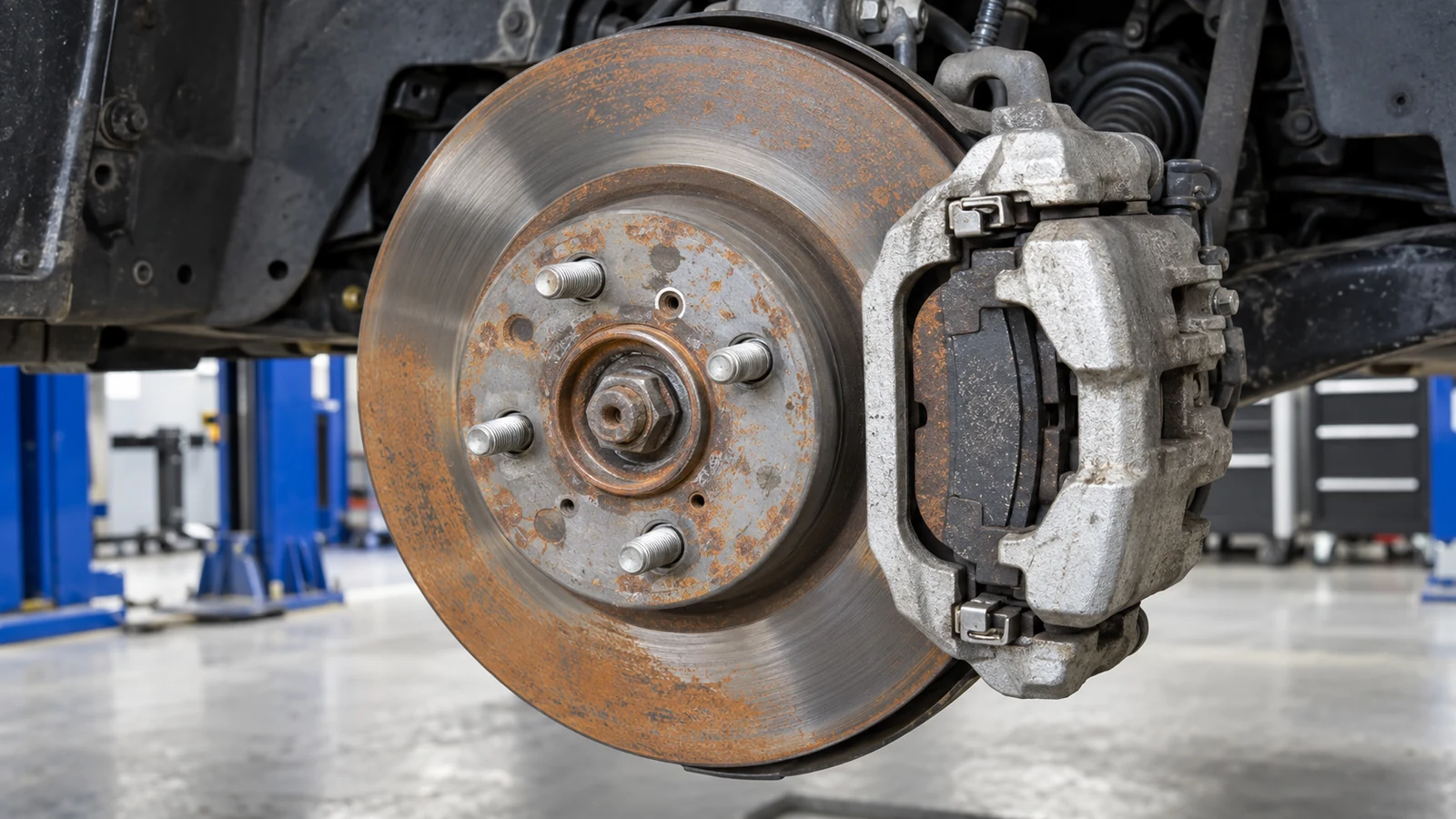
Regenerative braking lets the electric drive system handle part of the vehicle’s deceleration, so the friction brakes may be used less often. Pads and rotors can therefore last longer, but lower use can make corrosion, sticking slider pins, and hardware condition more important.
Hybrid and EV brake systems may also require scanner commands, electronic service modes, or specific bleeding procedures. Examples in the current AutoServicePlus inventory include the 2001-2009 Toyota Prius, 2011-2013 Nissan Leaf, 2017+ Chevrolet Bolt EV, 2014-2018 Ford C-MAX Hybrid, 2014-2015 Hyundai Sonata Hybrid, 2000-2013 Honda Insight, and 2010-2013 Lexus RX 450h AWD.
For these vehicles, inspect the friction brakes by condition and service requirements rather than assuming low mileage since the last pad change means the system needs no attention.
Manufacturer-Specific Brake Service References
Brake-pad dimensions, rotor limits, caliper hardware, fastener torque, parking-brake procedures, and hydraulic service steps vary by manufacturer and model. The brand libraries below are useful starting points when the exact model manual has not yet been selected.
| Manufacturer library | Why it is useful for brake service |
| Toyota workshop manuals | Conventional, hybrid, and model-specific brake procedures |
| Honda workshop manuals | Caliper, rotor, hydraulic, and hybrid service information |
| Ford workshop manuals | Passenger-car, SUV, truck, and hybrid brake coverage |
| Chevrolet workshop manuals | Conventional, performance, truck, and EV service data |
| Hyundai workshop manuals | Model-specific pad, rotor, and hybrid procedures |
| Kia workshop manuals | Vehicle-specific mechanical and hydraulic brake information |
| Volkswagen workshop manuals | Caliper, rotor, electronic, and performance-model procedures |
| Audi workshop manuals | High-performance and electronic brake-system service data |
| BMW workshop manuals | Chassis-specific brake hardware and service sequences |
| Mercedes-Benz workshop manuals | Model-specific brake procedures and electronic system checks |
| Porsche workshop manuals | Performance brake service and model-specific specifications |
| Nissan workshop manuals | Conventional and EV brake service references |
| Lexus workshop manuals | Conventional and hybrid brake-system procedures |
| Volvo workshop manuals | SUV and passenger-car brake service data |
| Jeep workshop manuals | Older and newer 4x4 brake-system procedures |
| RAM workshop manuals | Pickup and heavy-duty brake service information |
The workbook also contains useful model-specific manuals outside those brand links. For example, the Mitsubishi Outlander Sport AWD manual and Subaru Outback manual can support SUV and AWD brake work when you need to check component layouts and torque values against the exact vehicle.
Common Mistakes When Switching to Copper-Free Pads
Several errors cause more trouble than the copper-free formulation itself:
- Buying on the word “eco” alone. Confirm Level N if the copper limit is important.
- Assuming ceramic means copper-free. Material family and copper compliance are separate classifications.
- Ignoring the friction edge code. The replacement should suit the original braking characteristics.
- Installing pads on worn rotors. Measure thickness and compare it with the service limit.
- Replacing only one side of an axle. Pads should be replaced as complete axle sets.
- Reusing damaged or corroded hardware. Clips, shims, sliders, and boots affect pad movement and noise.
- Forcing an electronic parking-brake piston. Check the required service mode first.
- Using compressed air on brake dust. Keep particulate contamination controlled.
- Guessing fastener torque. Brake torque values are vehicle-specific.
- Skipping bedding instructions. A poor transfer layer can contribute to inconsistent braking behavior.
Conclusion
Treat copper-free brake pads as a modern compliance standard, not a shortcut for judging overall pad quality. Verify Level N when the copper threshold matters, then choose a pad whose friction characteristics suit the original brake system and the way the vehicle is used.
The quality of the service matters just as much as the pad label. Measure the rotors, inspect caliper movement and hardware, use the correct torque values, follow electronic service procedures where required, bed the pads to the manufacturer’s specifications, and control brake dust. When specifications are uncertain, use the factory workshop information for the exact vehicle instead of applying a generic value.
Frequently Asked Questions
Are Copper-Free Brake Pads As Effective As Conventional Pads?
They can be. Performance depends on the complete friction formulation, not copper content by itself. Copper previously contributed to heat control, friction stability, wear behavior, and vibration damping, so manufacturers use other ingredients to recover those functions. Correct application, rotor condition, installation, and bedding remain important.
How Do I Know A Brake Pad Is Truly Copper-Free?
Look for LeafMark Level N, shown with three leaves. That level indicates the pad meets the less-than-0.5% copper threshold along with the earlier restricted-material requirements. Marketing phrases such as “eco” or “low dust” are not substitutes for the compliance marking.
Do Copper-Free Pads Wear Rotors Faster?
Not automatically. Test results vary by formulation. Some copper-free materials perform similarly to copper-containing references, while others show different wear behavior depending on the replacement ingredients. Check rotor condition and minimum thickness at every pad service regardless of pad chemistry.
Can Copper-Free Pads Be Mixed with Older Pads on The Same Axle?
No. Replace pads as a complete axle set so left and right braking characteristics stay matched. If one side is much more worn than the other, diagnose the cause, such as a sticking slider, corroded bracket contact point, or binding piston, before installing the new set.
Do Copper-Free Pads Require A Special Installation Method?
The basic mechanical process is similar to other brake-pad replacements, but the exact vehicle procedure still controls the job. Use the correct jacking points, service modes, torque values, lubrication points, and hardware arrangement, then follow the pad manufacturer’s bedding instructions.
Are Copper-Free Pads Legally Required Everywhere in The United States?
The binding less-than-0.5% copper limits discussed here come from California and Washington. Copper-free pads are widely sold elsewhere because manufacturers have broadly reformulated product lines, but you should check local legal requirements separately.
What Is the Difference Between Copper-Free and Low-Dust Brake Pads?
Copper-free refers to copper content. Low-dust refers to how much visible or measurable friction debris a formulation tends to produce. A Level N pad can still create brake dust, and a pad marketed as low-dust does not automatically meet the copper limit.
Does Euro 7 Make Copper-Free and Low-Dust the Same Thing?
No. Euro 7 introduces brake-particle emissions limits for vehicle type approval, while LeafMark Level N identifies the copper-content limit in friction material. They address different characteristics.